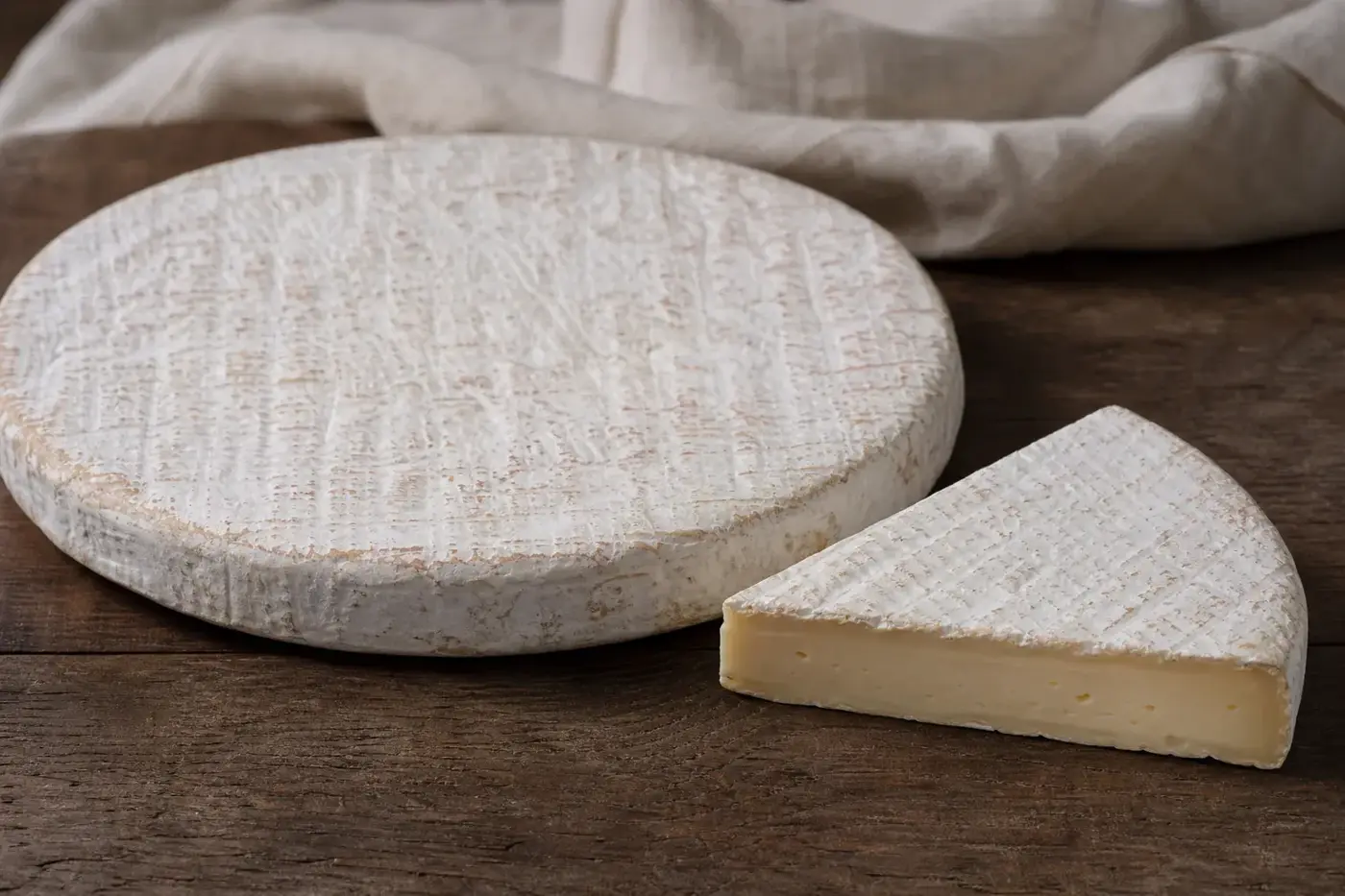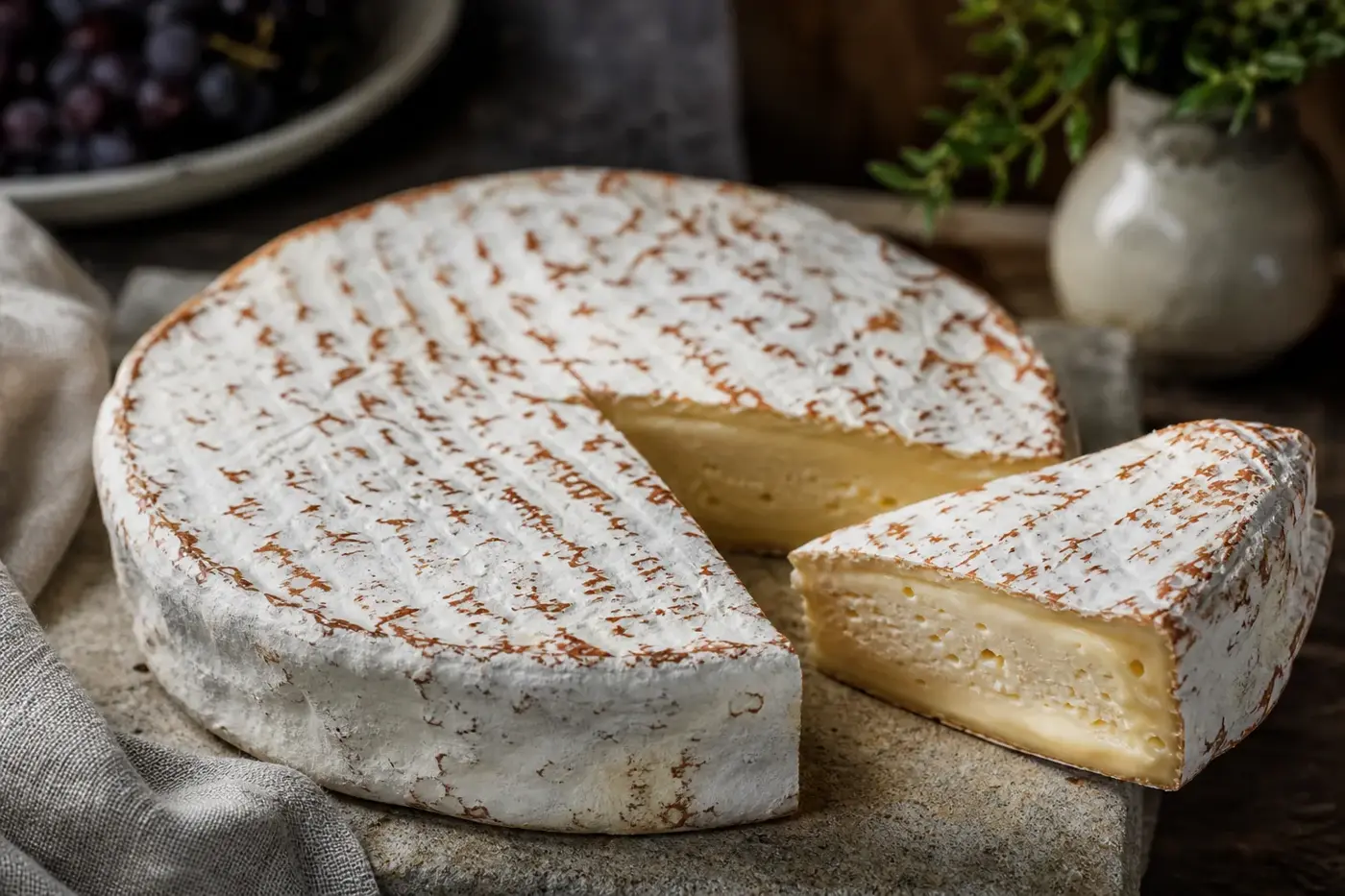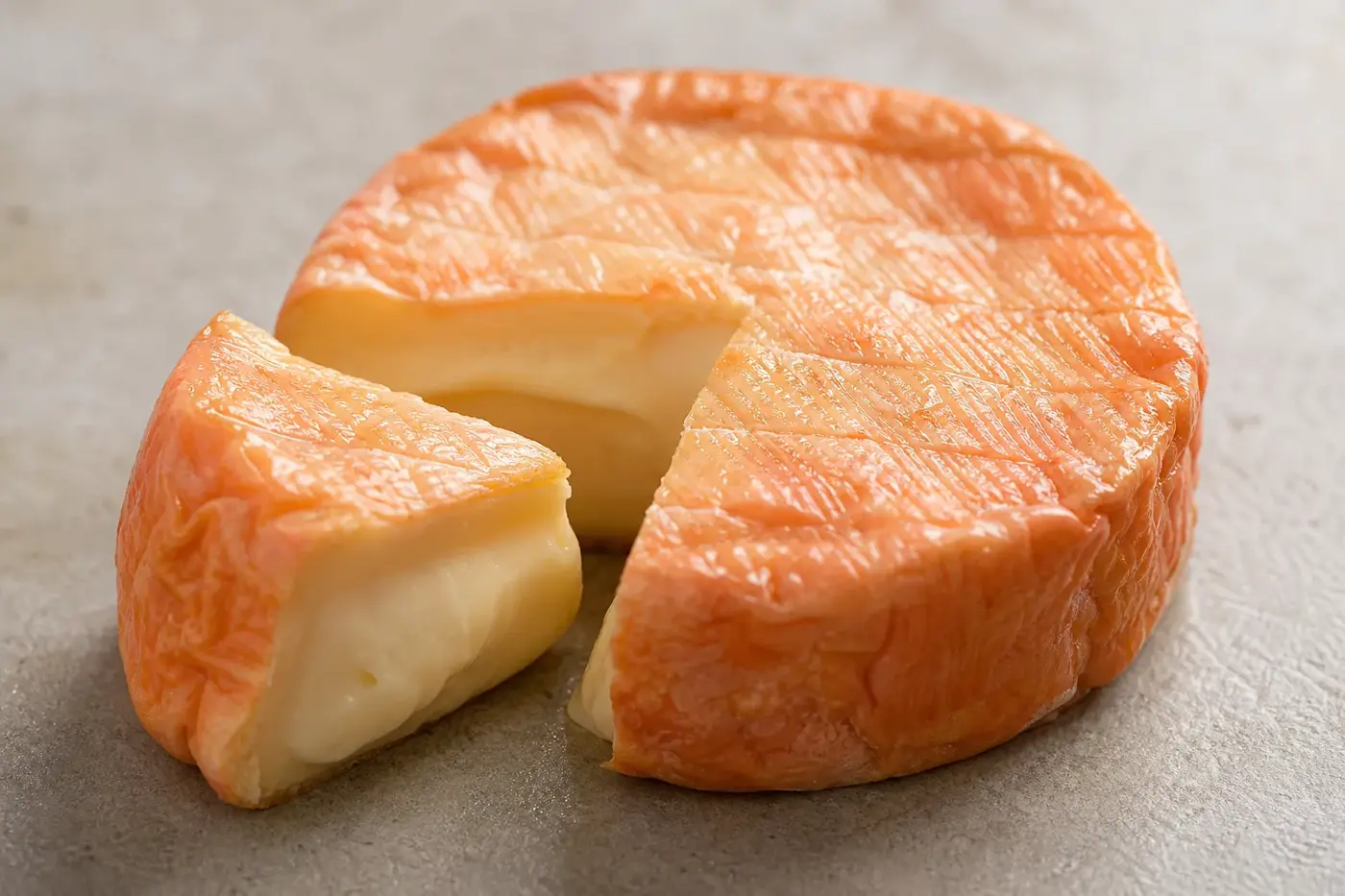
The smell reaches you before the knife does. Beneath the rind, though, Époisses is pale, supple and gentler than that entrance suggests. Water, Marc de Bourgogne and repeated washing build its unmistakable surface; slow lactic coagulation and patient care shape this soft cow’s milk cheese, named after a Burgundy village. [1, 4]
| What you want to know | The useful details |
|---|---|
| Name to look for | Époisses, its familiar and registered name. [2] |
| Registration authority and register ID | EU: European Commission; register ID unspecified here. Great Britain: Defra; register entry Époisses. [2, 3] |
| Protection | Great Britain: registered PDO from 31 December 2020. EU current register status, and protection in Northern Ireland, Switzerland and the United States: unconfirmed here. Information date: November 2026. [2, 3] |
| Binding French specification | Annex to Décret n° 2010-1092 of 15 September 2010. [1] |
| Where it may legally be made | Specified communes in Côte-d’Or, Yonne and Haute-Marne, France. [1] |
| Milk and coagulant | Whole cow’s milk; rennet. Permitted milk treatments unspecified here. [1] |
| Minimum maturation | Four weeks, according to the designation’s producer organisation. [4] |
| Sizes | Cylinders weighing 250 to 350 g or 700 to 1,100 g. [1] |
| Pregnancy guidance | United Kingdom: NHS foods to avoid in pregnancy. Information date: November 2026. [7] |
Follow your nose, but give your mouth a say
Époisses does not arrive quietly. The Syndicat de Défense de l’Époisses, the designation’s producer organisation, describes a penetrating, animal aroma, followed by fruity sweetness and a creamy sensation in the mouth. The rind makes the announcement; the cheese beneath lowers its voice. [4]
Give yourself time to meet both. Notice the aroma, taste a small piece of the interior, then try some rind, provided the maker identifies it as edible. Your first mouthful need not conduct the entire interview.
If you are discovering washed-rind cheeses, Époisses helps you separate smell, texture and flavour. An emphatic aroma can sit alongside a soft, yielding texture. Taste the surface and centre separately, and you give each part a chance to show you what it brings.
Take the village name back to Burgundy
Follow the name and you reach the village of Époisses in Burgundy. The production territory stretches beyond it, through permitted communes in parts of Côte-d’Or, Yonne and Haute-Marne. The French specification sets out those boundaries: a village name with a wider geographical story. [1]
At the counter, that registered name matters. Defra records Époisses as a registered Protected Designation of Origin, or PDO, in Great Britain, effective from 23:00 on 31 December 2020. Its entry also gives the original EU registration date: 21 June 1996. [2]
Another legal strand is the EU’s 2008 regulation approving amendments to the Époisses specification, recorded on EUR-Lex as in force. That instrument and the Great Britain register entry have separate scopes. Neither should be read as a single statement of worldwide protection. [3]
Start with the actual food name, before the rind colour or handsome box catches your eye. Then read the maker’s milk-treatment and storage information. For help with the terminology, turn to protected cheese names; reading a cheese label takes you through the practical details before you bring it home.
Meet the women who carried the craft forward
Local memory places a religious community in the sixteenth-century village at the beginning of the Époisses story. The producer organisation describes that attribution as oral tradition. It credits the farming women of the Auxois with carrying the knowledge forward and developing the cheese’s production practices. [4]
Those women deserve their place at the centre of the story. They preserved a craft while refining how it was done. Formal recognition followed later: the French decree of 2010 identifies 14 May 1991 as the original appellation decree’s date, and Defra records EU registration in 1996. [1, 2]
You can appreciate these strands without pressing them into one account. The religious community belongs to remembered regional origins; the farming women have a recognised role in passing on knowledge. The legal documents supply the dates of official recognition, adding to the human story rather than taking its place.
Discover the delicate beginning beneath that rind
For a cheese with such presence, Époisses begins delicately. At least 16 hours of predominantly lactic coagulation turn milk into curd, the gel from which the cheese is formed. The French specification requires whole cow’s milk and rennet. [1]
“Lactic” gives you a clue to that unhurried setting. Acid develops during the long process, with rennet, the required milk-setting preparation, working within it. Rennet alone does not define how this cheese takes shape. [1]
The producer organisation describes fragile curd draining naturally through perforated moulds. The liquid released is whey. [4] Long before you encounter the assertive rind, someone must handle that delicate structure with care.
Wondering about milk treatments? Raw, thermised and pasteurised cheese explains the wider distinctions. For the Époisses in front of you, its own label is the place to start: do not assume every example uses milk treated in the same way.
Watch patience build the washed rind
First comes dry salting. Repeated washes follow, using water progressively enriched with Marc de Bourgogne as the cheese matures for at least four weeks, according to the producer organisation. Here, too, the process takes its time. [4]
That managed maturation is called affinage. The organisation links the washes to the development of the rind’s colour, aroma and flavour. [4] When you look at the surface, you are seeing part of the cheese’s development, not merely its covering.
The French specification attributes the colour to surface bacteria and prohibits colouring. Permitted shades run from orange ivory to brick red. The surface must be shiny, whether smooth or slightly wrinkled. [1]
Look closely and enjoy those details, but do not expect colour to answer every question. Ask the cheesemonger about the maturity of the particular cheese. Their assessment helps you choose one suited to the day you intend to serve it.
Ask for the texture you love
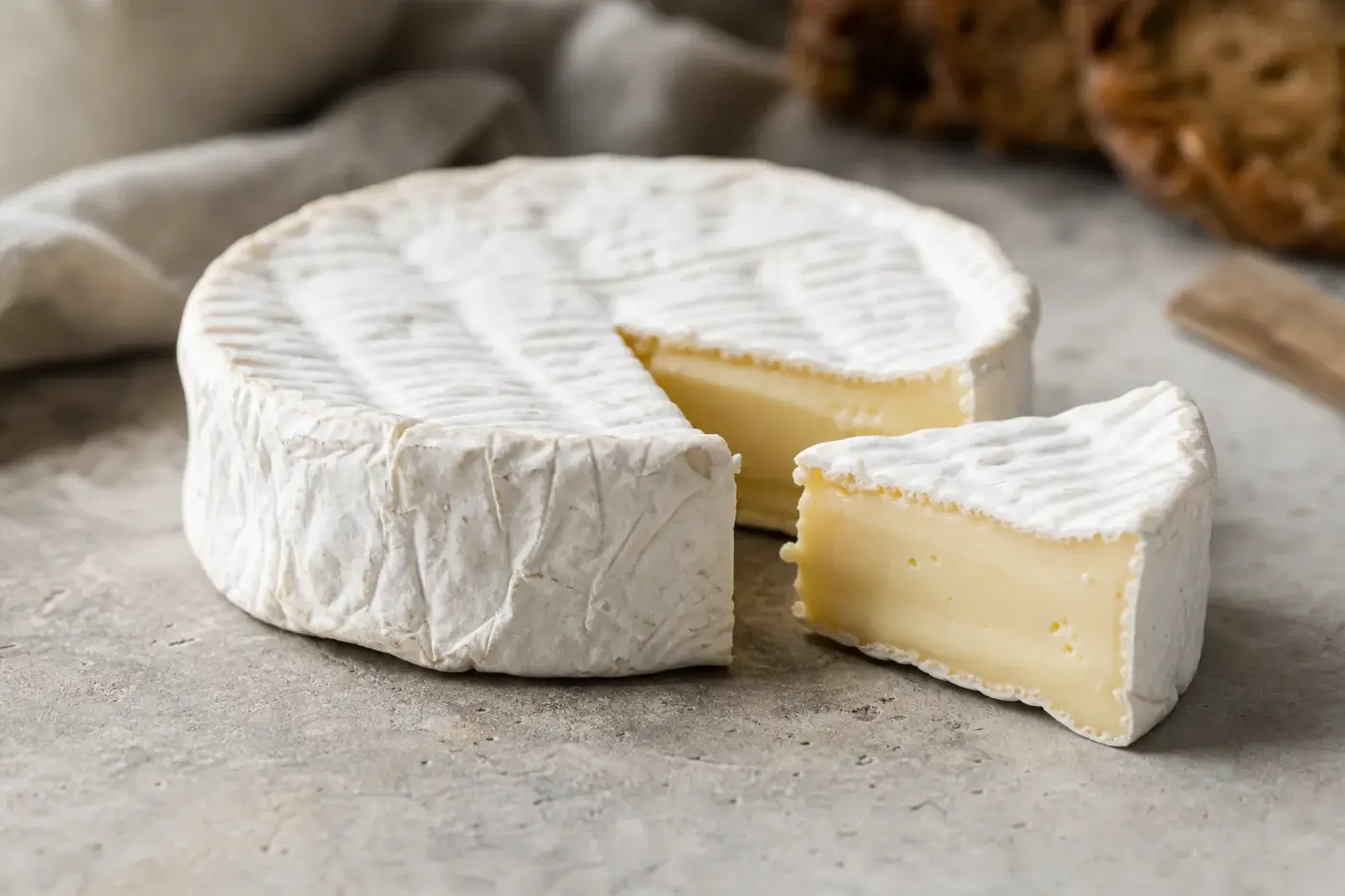
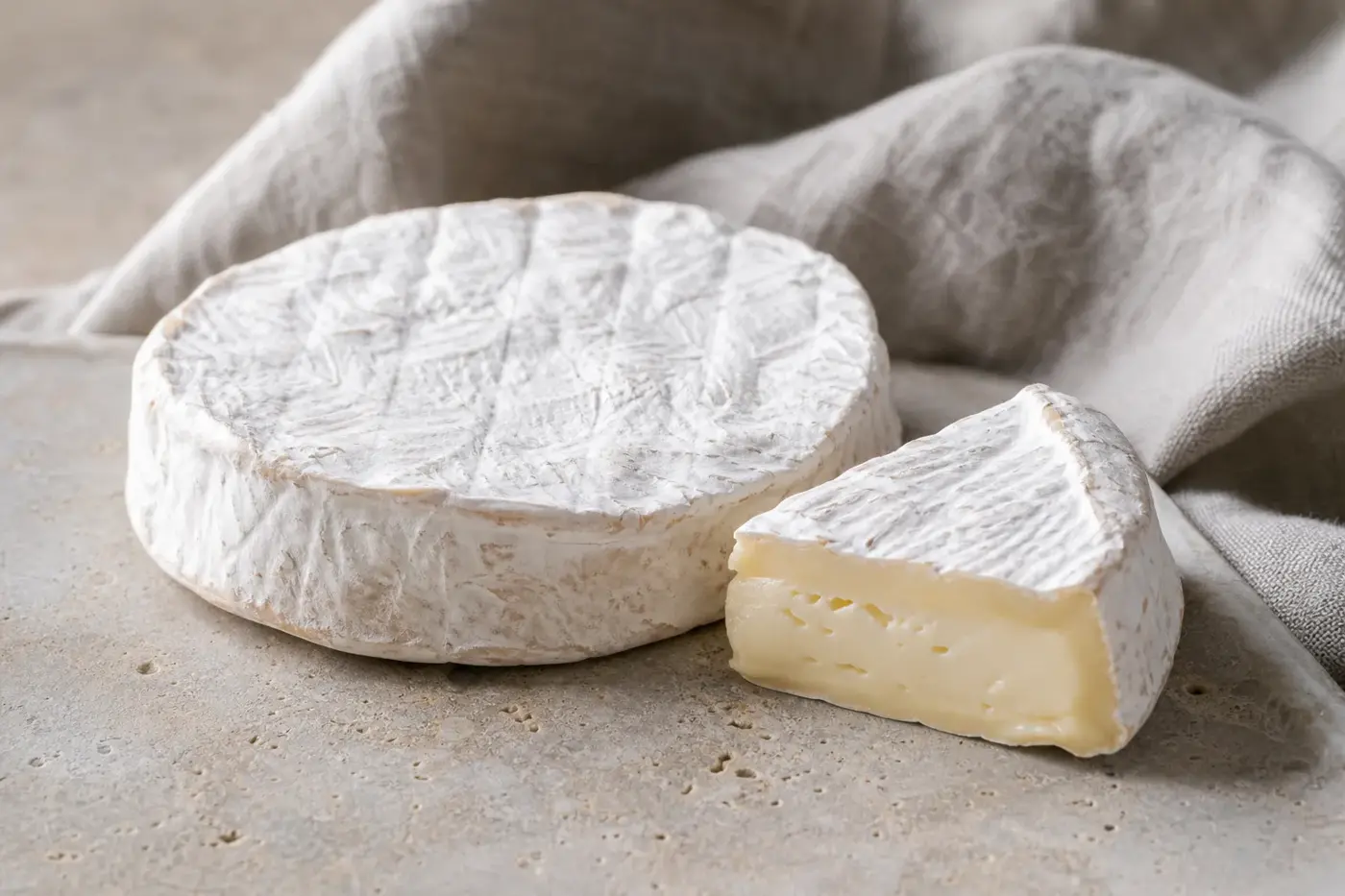
Époisses has a specified shape: a low cylinder with flat faces. Inside, the French specification describes a light beige paste, soft, supple and lightly salted. For all the rind’s presence, what lies beneath is rather gentle. [1]
The producer organisation’s tasting description puts fruity sweetness alongside the powerful aroma. [4] If texture matters most to you, ask how the particular cheese has developed. Ask, too, how the seller would serve it.
“Your strongest, please” leaves a cheesemonger surprisingly little to go on. If you want small wedges beside bread, say so. If you would rather have a yielding cheese to spread, that is a different and much more useful request.
Ripeness is a conversation, not a competition for the loudest smell. Tell the seller when you plan to eat the cheese and which consistency you enjoy. You give them a clear brief, and give yourself a better chance of taking home the cheese you wanted.
Choose for the day, and keep the label
Decide when you will serve your Époisses before choosing it. Ask whether the cheese offered will be ready, then read its label, packaging and storage directions. For a first purchase, try: “I would like it supple and ready to eat, rather than holding it at home to develop further.”
The UK NHS advises keeping your fridge at 5 °C or below, following pack instructions and observing the use-by date. Its listeriosis guidance says to use chilled ready-to-eat food within two days of opening, unless the packaging says otherwise. Let those instructions guide your plans. [6]
If you move the cheese out of its original packaging, keep the directions with it. A photograph of the label means you still have the date and handling information to hand. There is no need to rely on memory.
For wrapping and fridge organisation, consult how to store cheese at home alongside the instructions supplied with your cheese. Keep the product’s own directions close throughout storage and serving. They remain useful long after you have put the packaging aside.
Take off the chill while keeping an eye on time
Bring out only the portion you intend to serve. Let it lose some refrigerator chill while you arrange the bread and plates. You do not need to put the whole purchase on display.
Keep this limit firmly in view: UK NHS guidance says to eat ready-to-eat foods within four hours of taking them out of the fridge. That is the agency’s general limit, not a suggested warming time. [6] Follow any more restrictive product instructions.
A plain plate, bread and a suitable serving utensil are enough. If the cheese holds its shape, offer portions containing both centre and edge. If the seller recommends spooning it, serve it that way rather than trying to cut neat wedges.
Before eating the rind, read the maker’s directions. Where it is identified as edible, taste a little with the paste and decide how much you enjoy. Keep all wrapping and packaging separate from the food.
Begin with bread, then explore Burgundy
Start with plain bread: a baguette or an uncomplicated country loaf. It gives you a straightforward way to compare the interior with a bite containing rind. Save competing flavours until you have had a chance to taste the cheese itself.
For adults of legal drinking age who choose alcohol, white Burgundy is a useful starting suggestion. Red Burgundy offers another comparison. Ask for wine to accompany a pronounced washed-rind cheese, then follow your preference: a regional match is an invitation, not homework.
Offer still or sparkling water alongside either choice, and keep alcoholic servings small. The NHS advises avoiding alcohol during pregnancy. [7] If you are driving, taking medicines that interact with alcohol or recovering from alcohol dependence, do not drink; consult current official advice for your circumstances.
For more on matching texture and flavour, explore cheese and wine pairing. Begin simply, leaving Époisses room to make its impression. Once you know which parts of its character you most enjoy, you can try further combinations.
Set Époisses beside Langres and look closely
Start at the top of Langres, where its defining hollow gives you a useful clue. INAO calls it a fontaine or cuvette and describes Langres as a soft, washed-rind cow’s milk cheese. Its production territory surrounds the Bassigny pastures and Langres plateau, principally in Haute Marne; current protection status by jurisdiction remains unconfirmed here. [5]
| What to look for | Époisses | Langres |
|---|---|---|
| Shape | A low cylinder with flat faces. [1] | Cylindrical to slightly conical, with a hollow on top. [5] |
| Rind | Orange ivory to brick red. [1] | Golden yellow to reddish brown. [5] |
| Inside | Light beige, soft and supple. [1] | White paste that becomes creamy as it matures. [5] |
These differences help you recognise each cheese at the counter and choose a texture you will enjoy. If you plan to taste them together, ask for examples at comparable readiness. Try the centre, the area beneath the rind and the surface separately, giving both cheeses the same attention.
This page summarises published guidance from the official sources it cites. It is not medical advice. Guidance differs between countries and changes over time, so check the current source for where you live, and ask your doctor, midwife, pharmacist or dietitian about your own circumstances.
Take extra care when food safety matters most
United Kingdom, November 2026: NHS pregnancy advice says not to eat soft cheese made from unpasteurised milk unless cooked until steaming hot. It also advises against soft cheese with a white coating and soft blue cheese unless cooked until steaming hot. Read the linked guidance for the full categories and exceptions. [7]
The NHS listeriosis guidance identifies pregnant people and people with weakened immunity as groups at higher risk of serious illness. It stresses chilled storage, use-by dates and keeping raw foods separate from ready-to-eat foods. Those practical details matter alongside your choice of cheese. [6]
For advice about your particular Époisses, show its label to your doctor, midwife or dietitian and consult current official guidance for your country. Have its milk treatment and storage instructions ready, and explain whether you intend to eat it cold or thoroughly cooked. That makes the conversation about the cheese you actually have, rather than its name alone.
Questions people ask
What does Époisses taste like?
The producer organisation describes a penetrating, animal aroma followed by fruity sweetness and a creamy sensation. The cheese beneath the rind is gentler in flavour than its smell suggests.
Is Époisses made with pasteurised milk?
The French specification requires whole cow’s milk, but the permitted milk treatments have not been verified. Check the treatment declared on the label of the individual cheese.
Can you eat the rind of Époisses?
Check the maker’s directions before eating the rind. If the maker identifies it as edible, you can taste a little with the cheese beneath it.
How should Époisses be stored?
The UK NHS advises keeping the fridge at 5 °C or below, following the pack’s instructions and observing the use by date. Its listeriosis guidance says to use chilled ready to eat food within two days of opening unless the packaging says otherwise.
Can I eat Époisses during pregnancy?
The NHS advises pregnant people not to eat soft cheese made from unpasteurised milk unless it is cooked until steaming hot. It also advises against soft cheese with a white coating and soft blue cheese unless cooked until steaming hot. See the NHS guidance on foods to avoid in pregnancy at nhs.uk for the full categories and exceptions.
Sources
- Légifrance. Décret n° 2010-1092 du 15 septembre 2010 relatif à l’appellation d’origine contrôlée « Epoisses », Articles 1 and 2 and annexed specification, 2010. Retrieved November 2026. Official text.
- Department for Environment, Food & Rural Affairs. Époisses, Great Britain protected food names register entry, published 4 January 2021; retrieved November 2026. Register entry.
- European Commission. Commission Regulation (EC) No 942/2008 of 25 September 2008 approving non-minor amendments to the specification for a name entered in the register of protected designations of origin and protected geographical indications (Époisses (PDO)), 2008; EUR-Lex status retrieved November 2026. Official regulation.
- Syndicat de Défense de l’Époisses. Histoire; Saveurs; Fabrication; Les règles fondamentales de l’AOP Époisses, undated website sections, retrieved November 2026. An industry source representing the designation’s producers. Producer organisation’s website.
- Institut national de l’origine et de la qualité. Langres, undated product record, retrieved November 2026. Official product description.
- NHS. Listeriosis, reviewed 10 November 2023; live guidance retrieved November 2026. Official guidance.
- NHS. Foods to avoid in pregnancy, reviewed 15 June 2026; retrieved November 2026. Official guidance.
Research combined official legal and register records, attributed producer-organisation descriptions and NHS guidance; serving and drink suggestions are editorial recommendations, not recorded tastings.
Last checked: November 2026
Last checked November 2026.
The editors suggest you read next