Penicillium roqueforti: How Blue Cheese Gets Its Veins
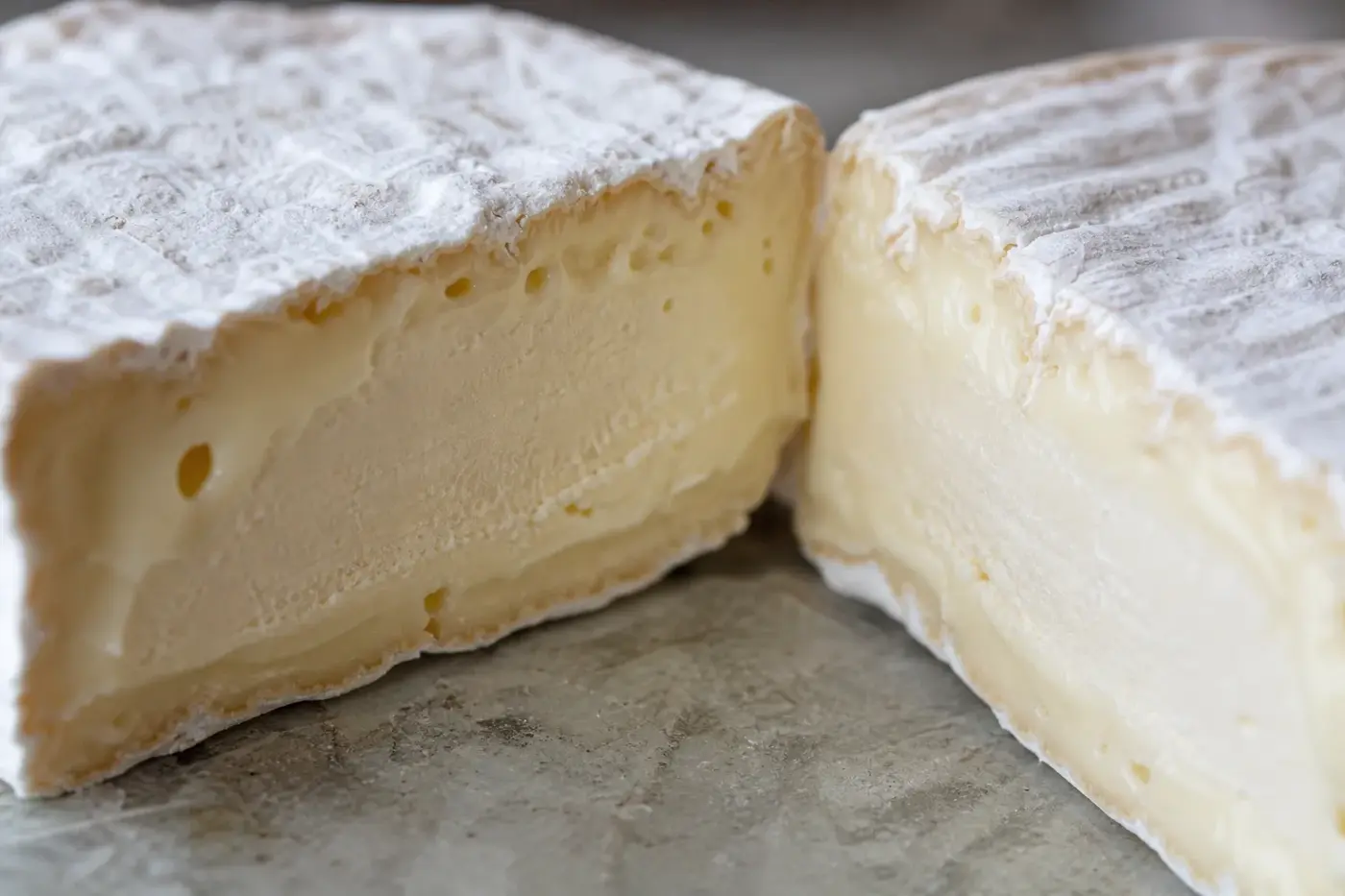
Your knife reveals branching veins, flecks and pockets of blue-green against pale cheese.
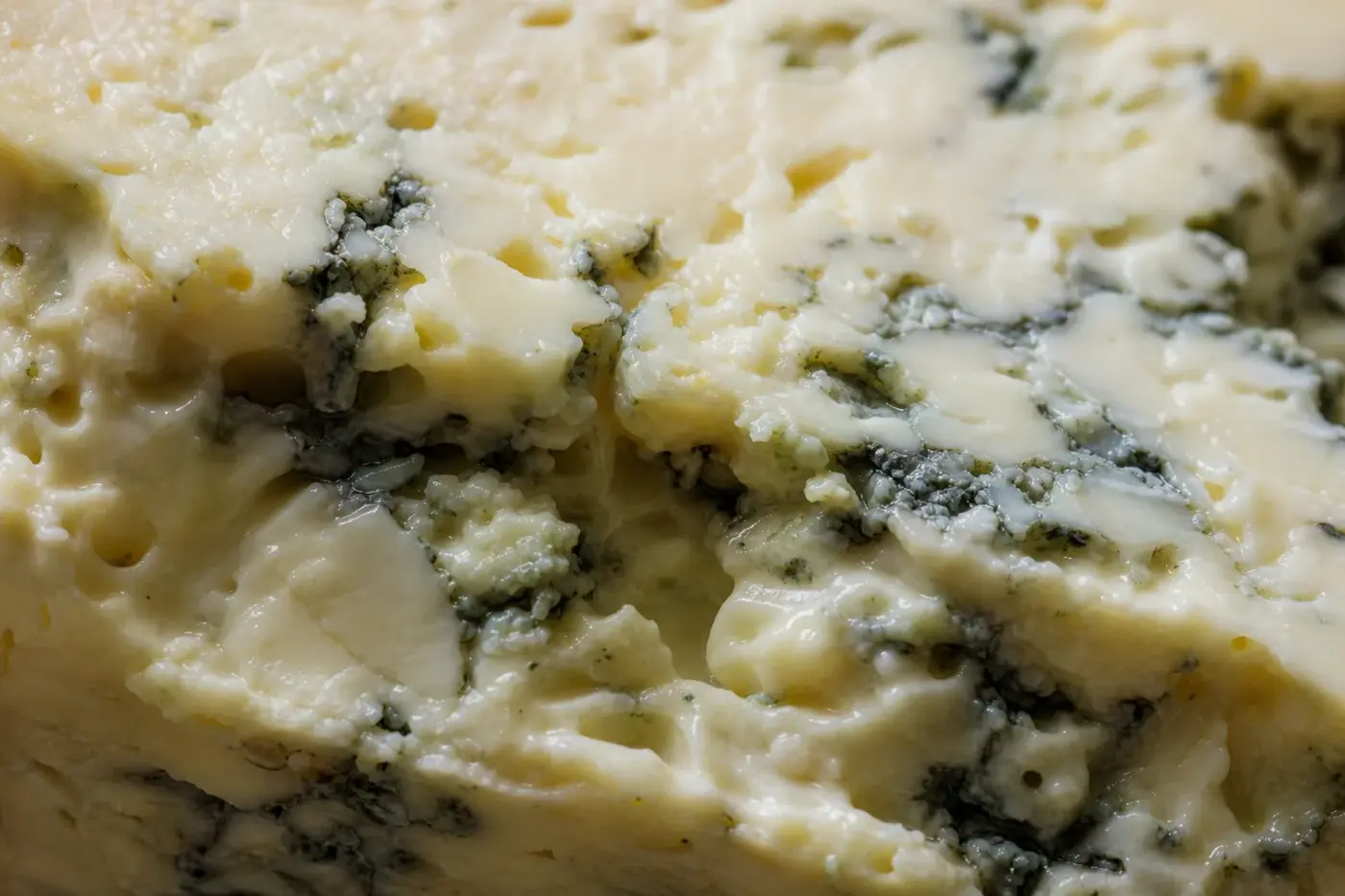
Your knife reveals branching veins, flecks and pockets of blue-green against pale cheese. Those coloured spaces began as gaps in the curd, waiting for oxygen to reach them. Once it does, Penicillium roqueforti grows along their surfaces, while its enzymes transform the surrounding fat and protein. The pattern you see and the flavour, aroma and texture you enjoy belong to the same transformation.[2][7][8]
This page summarises published guidance from the official sources it cites. It is not medical advice. Guidance differs between countries and changes over time, so check the current source for where you live, and ask your doctor, midwife, pharmacist or dietitian about your own circumstances.
Meet the mould behind your blue
Behind many blue cheeses is Penicillium roqueforti. Species Fungorum records its accepted scientific name as Penicillium roqueforti Thom. Cheesemakers use commercial cultures containing selected strains, each chosen for its particular growth and ripening characteristics.[1][2][4]
The species tells you which organism is involved. The strain helps determine what it does. Experiments have found differences between mould populations in how they occupy cheese cavities and break down fat and protein. Choosing a culture helps design a cheese, just as choosing the milk and handling the curd do.[2][5]
This mould has two connected jobs: producing visible blue growth and supplying enzymes that change the cheese around it. Both happen during maturation. But colouring the cavities and transforming the paste are distinct processes, even when you encounter them in the same mouthful.[3][5]
Start with spores, then give them a chance
Cheesemakers introduce the mould in a preparation containing spores. These microscopic reproductive cells are where growth can begin. The step is called inoculation, and its timing depends on the cheese and the maker’s method.[7][8]
The Stilton product specification linked from the Great Britain register allows P. roqueforti to be added to the milk, sprayed onto the curds, or introduced by both routes. Roquefort’s French specification requires powders or cultures prepared from traditional strains isolated in the microclimate of its defined caves. These are the requirements in the November 2026 specifications.[7][8]
Spores offer the possibility of blue, not a finished pattern. The young cheese still needs internal space for the mould to grow, plus access to air. You can have the culture in the curd long before those familiar veins appear.[8]
For the surrounding steps, from setting milk to draining curd, see how cheese is made. Those early changes prepare the cheese for the mould’s later ripening work.
Leave breathing room between the curds
Picture pieces of curd settling together, leaving spaces between them. Curd is the coagulated material that becomes cheese; whey is the liquid drained away. How those pieces settle establishes the internal structure and helps determine where blue mould can grow.[7][8]
Roquefort’s specification explicitly connects draining without pressing to the formation of regular openings. These become growing surfaces inside the cheese. Part of the eventual blue pattern therefore takes shape during manufacture, before the cheese ever reaches the cave.[7]
Stilton also develops without applied pressure. Its specification describes tiny airways around the curd pieces, followed by surface sealing that initially restricts oxygen entry. The rooms are ready, but nobody has opened the doors.[8]
Think of rooms and passages, rather than a solid block waiting to turn blue. The fungus matters as much as the space. Experiments measuring how successfully different P. roqueforti populations occupy cheese cavities show that their characteristics affect how well they use the available openings.[2]
A needle makes way for air
Piercing connects the cheese’s interior to the outside air. Needles open channels, allowing oxygen to reach the mould in and around the gaps already formed between the curds.[7][8]
Inoculation and piercing are different jobs, not two ways of doing the same thing. One introduces the organism; the other changes its access to air. Roquefort’s specification identifies piercing as the step that aerates the cheese and supports mould development.[7]
Yet the veins do not simply trace straight needle tracks. Growth also spreads through accessible spaces between curd pieces. Look at a cut face and you see the combined effects of internal structure, piercing pattern and mould growth.[2][7]
More air is not always better. Roquefort eventually receives protective wrapping to slow mould growth while maturation continues. The maker adjusts oxygen access as the cheese develops, rather than leaving it continuously exposed.[7]
Every blue has its own pattern
You might find green-blue flecks, branching lines or larger patches. All belong to blue cheese. Roquefort’s specification describes green-blue veining; Stilton’s describes blue-green mould radiating through an open-textured interior.[7][8]
Some of that variation starts with the fungus. Experimental genetic research has found substantial colour differences among P. roqueforti offspring, alongside variation in traits relevant to cheesemaking. A species name does not promise you one particular shade.[3]
The maker shapes the pattern too. The Roquefort industry body names strain choice, culture concentration, piercing and cave ripening among the factors distinguishing makers’ cheeses. Needle size and number vary between methods, changing how air reaches the interior.[10]
Age adds another layer. Colour develops as the cheese’s composition changes, with visible blue recording growth in accessible cavities. Fat and protein breakdown contribute separately to flavour, although both processes depend on the organism and its maturing conditions.[2][5]
Beyond the blue, flavour takes shape
The mould does much more than decorate the openings. Its enzymes act on two major constituents of cheese: fat and protein. Researchers call these processes lipolysis and proteolysis.[4][6]
Follow the fat towards the aroma
Lipolysis breaks down milk fat, releasing free fatty acids. These contribute to flavour and provide material for further aroma development. How far the process goes depends partly on the culture used.[4]
One study compared three commercial P. roqueforti cultures in an ewe’s-milk blue cheese. It examined lipolysis, proteolysis and volatile compounds together. That captures something important about ripening: changing the mould culture can affect several aspects of the same kind of cheese.[4]
Another study made experimental Roquefort-type cheeses with strains from different fungal populations. It found substantial effects on compounds responsible for aroma, flavour and texture. Choosing a culture changes maturation’s chemistry, not merely how quickly your cheese turns blue.[5]
Follow the protein into the paste
Proteolysis breaks proteins into smaller fragments, including peptides. Free amino acids also accumulate during ripening. As the protein structure changes, so does the body of the cheese.[6]
Research reported at the 2017 American Dairy Science Association meeting followed blue cheese through 28 weeks of ripening. Enzymes from the coagulant and milk could explain early protein breakdown; fungal enzymes became particularly important later. Researchers also identified peptides that could be produced by the mould’s enzymes.[6]
Maturation, then, is more than waiting for coloured veins to arrive. Enzymes from different sources contribute at different stages, changing the cheese over time. For the coagulant’s earlier part in the process, see rennet explained.
The blue mould keeps company
P. roqueforti is not working alone. The Stilton specification identifies the starter culture and coagulant separately before describing the blue mould. Each has its own job within the same cheesemaking process.[8]
The experimental Roquefort-type study also examined other microorganisms in the cheese. Fungal population affected bacterial diversity slightly, without changing the abundance of the principal microorganisms measured. The mould could therefore create differences in the finished cheeses while their wider microbial populations remained broadly similar.[5]
Milk treatment is another, separate choice. Roquefort uses raw ewe’s milk; Stilton uses pasteurised cow’s milk. You can explore the distinctions in raw, thermised and pasteurised cheese.[7][8]
Into Roquefort’s caves, then on to Stilton
Roquefort begins with raw, whole ewe’s milk and an unpressed, uncooked curd, as its French specification requires. Its mould cultures come from traditional strains associated with the defined cave environment of Roquefort-sur-Soulzon. Here, place is part of the process.[7]
Natural fissures called fleurines bring cool, humid air into those caves. INAO describes these passages as maintaining the caves’ particular microclimate. Conditions outside and inside the cheese work together: the cave provides the ripening environment, while curd openings and piercing give the mould access to the interior.[9]
Roquefort must spend at least two weeks exposed without protective wrapping in the specified caves. Maturation then continues under wrapping, with at least 90 days in total from manufacture. That first cave-ripening phase is only part of its longer development.[7]
Stilton takes another route. It uses pasteurised cow’s milk, with curd milled into pieces and salted before moulding, followed by controlled maturation. Its specification describes a slightly crumbly cheese when young and a softer version at maturity.[8]
The same mould species does not make these cheeses alike. Milk, curd handling, aeration and maturation give it different conditions to work in. Those choices help shape what reaches your plate.[5][7][8]
Bread has a place in the cave story
Bread has a documented place in Roquefort’s mould history. A population-genomics study combined genetic analysis with experiments on cheesemaking traits, including spore production on bread. The researchers identified bread as a traditional medium for multiplying the culture.[2]
The Roquefort-associated population produced more spores on bread than the other populations examined. Researchers interpreted this as useful in an older production system in which bread helped multiply the mould culture. Bread, it turns out, had a cheese-related job long before you reached for a slice.[2]
The cave connection remains explicit in Roquefort’s specification, which links traditional strains to the local cave microclimate. Bread cultivation and cave ripening belong to different parts of that history. One multiplies the culture; the other provides conditions for growth in cheese.[7]
Today, selected commercial cultures are part of cheesemaking practice, as research comparing commercial preparations demonstrates. Makers can choose cultures with different ripening characteristics. There is no single universal source of blue mould.[4]
Chosen cheese mould is not a guide to household growth
The mould deliberately introduced into blue cheese is different from unexpected mould on stored food. Identification, production controls and the intended product all matter. A similar colour cannot tell you that an unwanted growth is the selected cheesemaking culture.[1][7][11]
For England, Northern Ireland and Wales, the Food Standards Agency’s current household guidance advises against eating food that is obviously rotten or unexpectedly mouldy. Removing visible growth cannot guarantee removal of unseen toxins, it explains. The agency particularly highlights vulnerable groups.[11]
NHS pregnancy guidance advises avoiding soft blue-veined cheeses, including Roquefort, unless cooked until steaming hot. That applies whether the milk is pasteurised or unpasteurised. November 2026 is the reference point for this guidance here.[12]
The NHS also identifies weakened immunity as a risk factor for serious listeriosis. It lists blue-veined cheeses among foods associated with infection. If you are in that group, consult its current guidance and your clinical team.[13]
November 2026 is the reference point for these UK sources. For a household decision about unexpected growth, follow mould on cheese: when to cut and when to bin. For the separate bacterial concern, see Listeria and cheese safety.
Questions people ask
How do the blue veins form in cheese?
Spaces form between pieces of curd as the cheese is made. Piercing lets oxygen reach the mould, which grows along the surfaces of those spaces.
How does the mould affect the flavour and texture?
Its enzymes break down fat, releasing fatty acids that contribute to flavour and aroma. They also break down protein, changing the body of the cheese as it ripens.
What is the difference between Roquefort and Stilton?
Roquefort uses raw ewe’s milk and cultures from traditional strains associated with the caves of Roquefort sur Soulzon. Stilton uses pasteurised cow’s milk, with curd milled and salted before moulding.
Can I eat cheese that has grown unexpected mould?
For England, Northern Ireland and Wales, the Food Standards Agency advises against eating food that is unexpectedly mouldy. See its current household guidance, which explains that removing visible growth cannot guarantee removal of unseen toxins.
Can I eat blue cheese during pregnancy?
NHS pregnancy guidance advises avoiding soft blue cheeses, including Roquefort, unless cooked until steaming hot. See the current NHS pregnancy guidance for its advice.
Sources
[1] Royal Botanic Gardens, Kew, Species Fungorum. Penicillium roqueforti Thom, name record 213525. Current database record, accessed November 2026. Name record.
[2] Molecular Ecology. “Independent domestication events in the blue-cheese fungus Penicillium roqueforti.” 2020. Population-genomic research with experimental phenotypic assays. Research record and abstract.
[3] Genome Biology and Evolution. “Identification of quantitative trait loci (QTLs) for key cheese making phenotypes in the blue-cheese mold Penicillium roqueforti.” 2025. Research article.
[4] Italian Journal of Food Science. “Evaluation of lipolysis and volatile compounds produced by three Penicillium roqueforti commercial cultures in a blue-type cheese made from ovine milk.” 2017. Publisher’s research record.
[5] International Journal of Food Microbiology. “Strong effect of Penicillium roqueforti populations on volatile and metabolic compounds responsible for aromas, flavor and texture in blue cheeses.” 2021. Publisher’s research record.
[6] American Dairy Science Association. 2017 Annual Meeting Abstracts. Research abstract reporting blue-cheese proteolysis during 28 weeks of ripening and experimental identification of fungal-enzyme products. 2017. Conference abstract, not a full research paper. Abstract collection.
[7] French Ministry of Agriculture and INAO. Cahier des charges de l’appellation d’origine protégée « Roquefort ». Version published in the official agricultural bulletin on 12 February 2026, associated with the order of 6 February 2026. Specification.
[8] Department for Environment, Food and Rural Affairs. Stilton Cheese: product specification. Undated document currently linked from the Great Britain register entry for Stilton Blue Cheese, checked November 2026. Specification.
[9] INAO. Roquefort. Official product and geographical explanation, current page accessed November 2026. Product record.
[10] Confédération Générale de Roquefort. FAQ. Undated industry-body account, accessed November 2026. Used for its account of differences between makers’ methods. Industry FAQ.
[11] Food Standards Agency. Home food fact checker. Updated 21 August 2026; applies to England, Northern Ireland and Wales. Section “Can you still eat food if you remove the mouldy part?” Official guidance.
[12] NHS. Foods to avoid in pregnancy. Current online guidance, accessed November 2026. Section “Cheese, milk and other dairy”. Official guidance.
[13] NHS. Listeriosis. Page reviewed 10 November 2023, current online version accessed November 2026. Official guidance.
This desk-researched article brings together official production specifications, fungal taxonomy, experimental cheesemaking research and current UK public-health guidance.
Last checked: November 2026
Last checked November 2026.
The editors suggest you read next