Why Is Cheese Creamy, Crumbly or Elastic?
You take a bite and the cheese falls into moist crumbs.
You take a bite and the cheese falls into moist crumbs. A moment later, they turn smooth in your mouth. Another cheese holds on in a stretchy strand, apparently reluctant to let you finish. Behind both experiences is a protein framework holding water and fat, shaped as the curd forms, drains, acidifies and is worked, then changed again by ageing.[1,2,7]
Inside your next mouthful
Inside most cheeses, proteins called caseins do the structural work. In milk, they gather into particles called micelles, with calcium phosphate helping hold their internal structure together. Cheesemaking connects those particles into a network. This transformation, called coagulation, turns flowing milk into a gel.[1,2]
That gel becomes curd, with protein strands enclosing fat and holding liquid in the spaces between them. Some liquid drains away as whey, carrying dissolved substances with it. What remains is a concentrated structure whose behaviour depends on its ingredients and their arrangement.[3,5,7]
Try looking beyond “hard” and “soft”. How much force starts a crack, how far can your cheese bend, and does it spread smoothly under your tongue? A firm bite may quickly crumble; a softer cheese may yield but stay together. Dairy scientists measure these as separate properties of cheese structure.[7]
You can follow the transformation from milk onwards in how cheese is made. Each stage helps shape the bite you eventually take.
Two routes from milk to curd
Rennet begins by removing a stabilising part of κ-casein from the surface of casein micelles. This preparation of milk-coagulating enzymes lets the particles gather into a connected structure. Calcium conditions help determine how the gel develops and how strong it becomes.[1,2]
Acid takes a different route to the same broad destination: a gel. As acidity rises, caseins lose electrical repulsion and calcium phosphate dissolves out of the micelles. The proteins can then associate, forming an acid gel with a different balance of mineral connections, protein interactions and water retention.[1,2]
Many cheeses use both routes. Rennet may form the first gel, with starter bacteria producing acid later in manufacture. So “acid-set” and “rennet-set” describe starting mechanisms, not complete texture recipes. Experimental comparisons need controlled milk treatment and processing conditions for that distinction to mean anything.[2]
Want a closer look at the enzyme’s part in proceedings? Follow it through rennet explained.
Cut, stir, drain: where the bite begins
Cutting the gel opens escape routes for whey. The pieces contract and expel it through a process called syneresis. Cutting, heating and stirring work together, so curd size alone cannot tell you how much moisture your finished cheese will keep.[3,4]
In experiments with renneted gels, temperature and pH had particularly strong effects on syneresis. They also interacted: the effect of heating depended on the curd’s acidity. Increased agitation had a smaller effect under the conditions tested.[3]
More drainage does not necessarily mean more damage. A study using an 11-litre cheese vat examined cutting intensity alongside stirring speed, measuring syneresis and solids lost into whey. Water escaping is one thing; fragments of curd or fat going with it are quite another.[4]
Pressing brings the pieces together and helps establish the cheese’s body. Take Lancashire: its specification combines repeated whey drainage with milling and light pressing. The firmness you taste develops through that whole sequence, not pressing force alone.[11]
Creaminess has more than one ingredient
When cheese feels creamy, you are sensing more than its fat content. Water, fat, protein concentration and the way the cheese breaks down in your mouth all contribute. Among otherwise comparable cheeses, more moisture generally means a less concentrated protein framework. Reducing fat can leave that framework more dominant.[5,7]
Arrangement matters just as much as amounts. Research on cream cheese follows an acid gel through shearing, heating and dewatering. Those steps turn the initial coagulum into a product whose firmness, stickiness and cohesiveness can each be assessed separately.[5]
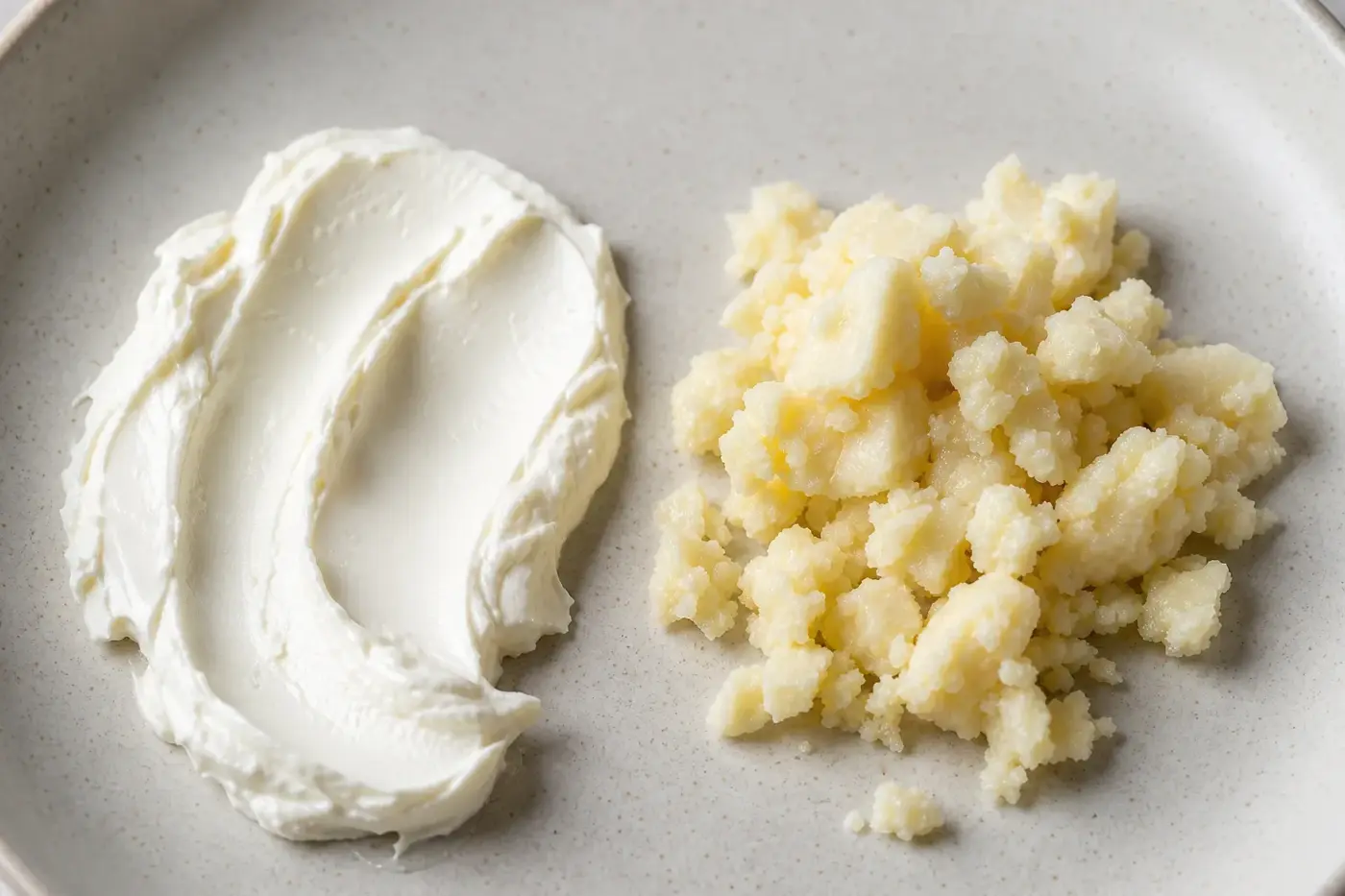
A fine, smooth structure helps explain why one fresh cheese feels creamy and another grainy. A study of acid-coagulated fresh cheeses explicitly distinguished smooth from grainy textures. It used instrumental measurements alongside sensory assessment.[6]
Give your own description that same attention. Does the cheese spread readily, turn smooth as you chew, or leave a coating? Each observation captures a different part of eating it. None points neatly to a single ingredient as the cause.[5,6]
What gives cheese room to bend?
How flexible is your curd? Part of the answer lies in calcium associated with casein. Acidification changes that association, altering the protein framework’s freedom to rearrange. The timing of acid development matters, not just the final acidity.[1,7]
Moderate demineralisation can make curd more flexible. Too much acidification can instead produce a short texture that breaks rather than extends. Acidity is not a simple dial you turn towards softness, stretchiness or crumble.[7]
Mozzarella experiments bring calcium and acidity into the same picture. In one study of reduced-fat mozzarella, a manufacturing change lowered pH and increased the melted cheese’s stretchability and flowability. That result describes those experimental cheeses and procedures, not a pH target for every mozzarella.[9]
Another mozzarella study reduced calcium relative to protein while keeping pH similar. Moisture and protein breakdown increased. Acidity, mineral balance and ripening work together, so changing one can affect the others.[10]
Lancashire’s lovely lesson in moist crumble
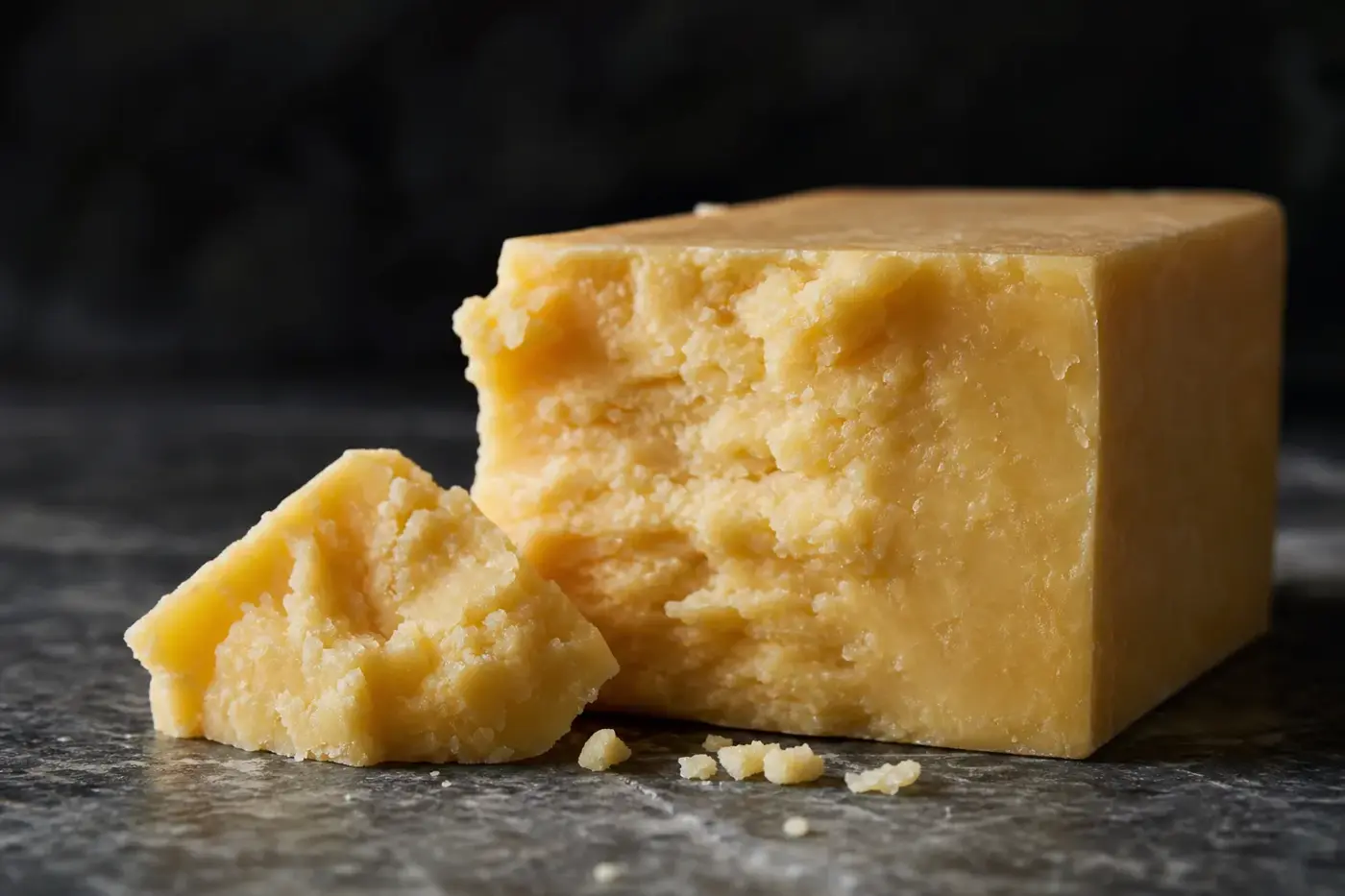
A crumbly cheese breaks before it bends very far. Low pH, reduced calcium association and protein breakdown can all help produce this short structure. Moisture loss can make cheese firmer, but dryness alone cannot explain why your piece fractures.[7]
Lancashire brings that distinction to life, because the name covers contrasting textures. The published specification for Beacon Fell Traditional Lancashire Cheese describes a smooth, silky body with a loose, open texture. Its mature version is described as reasonably spreadable.[11]
The specification records repeated breaking and draining of curd, blending curds of different ages, fine milling and light pressing. It also distinguishes the traditional cheese from an acid, crumbly Lancashire variety. Its criticism of that variety expresses the applicant group’s position; the useful distinction here is between textures.[11]
When you taste crumbly Lancashire, consider acidity and how the curd pieces join, as well as moisture. Your piece can break into moist fragments, then become smooth as you chew. “Crumbly” describes the fracture. “Creamy” describes another part of the very same mouthful.[7,11]
The hot work behind mozzarella’s stretch
Mozzarella gets its aligned structure from an extra operation: stretching the curd while it is hot and sufficiently plastic. This is pasta filata, meaning stretched curd. Working the heated curd reorganises its protein framework into an aligned arrangement.[8]
Before that can happen, the curd needs a suitable balance of acidity and casein-associated calcium. Enough mineral connections must loosen to let the structure move, while enough continuity remains to hold it together. Heat then lets the curd deform as it stretches.[8,9]
No single acidity figure captures that balance. Milk composition, acidification method, calcium retention and stretching conditions all influence the result. Mozzarella research treats them as interacting factors: elasticity takes more than heat.[9,10]
Look at the fibres exposed when you tear a fresh cheese, then consider the long strands of melted pizza cheese. Both tell you something about structure, but under different conditions. The mozzarella guide takes you further into the cheese itself.[8]
Salt does more than season your cheese
Salt enters the watery portion of cheese, so its concentration relative to moisture matters. It can affect drainage, protein interactions, and the organisms and enzymes involved in ripening. When and how it enters the curd also shapes its effect.[8,10,11]
In the Lancashire specification, salt comes after milling. Earlier drainage and acid development have already done much to shape the curd. Salting acts on that existing structure, rather than replacing control of the stages before it.[11]
Salt also influences protein breakdown. Published mozzarella research discusses how enzyme activity depends on salt conditions and pH together. Salt content alone therefore cannot tell you the pace of ripening.[10]
Nor can saltiness on your tongue tell you the whole structural story. When you compare cheeses, moisture distribution, acidity and the enzymes present still belong in the explanation.[8,10]
What time does to the texture
As cheese ripens, enzymes cut casein proteins into smaller fragments. Called proteolysis, this changes how well the framework resists pressure and holds together. Calcium redistribution and moisture changes happen alongside it.[7,10]
The outcome depends on the starting cheese. A moist structure may become softer and stickier; a firmer one may become shorter and more likely to fracture. Meanwhile, moisture loss during maturation can make cheese firmer even as enzymes break down its proteins.[7]
Mozzarella research shows those changes working together particularly clearly. At similar pH, experimental cheeses with less calcium relative to protein had greater moisture and more extensive proteolysis. Their later texture reflected both the structure formed during manufacture and the changes during storage.[10]
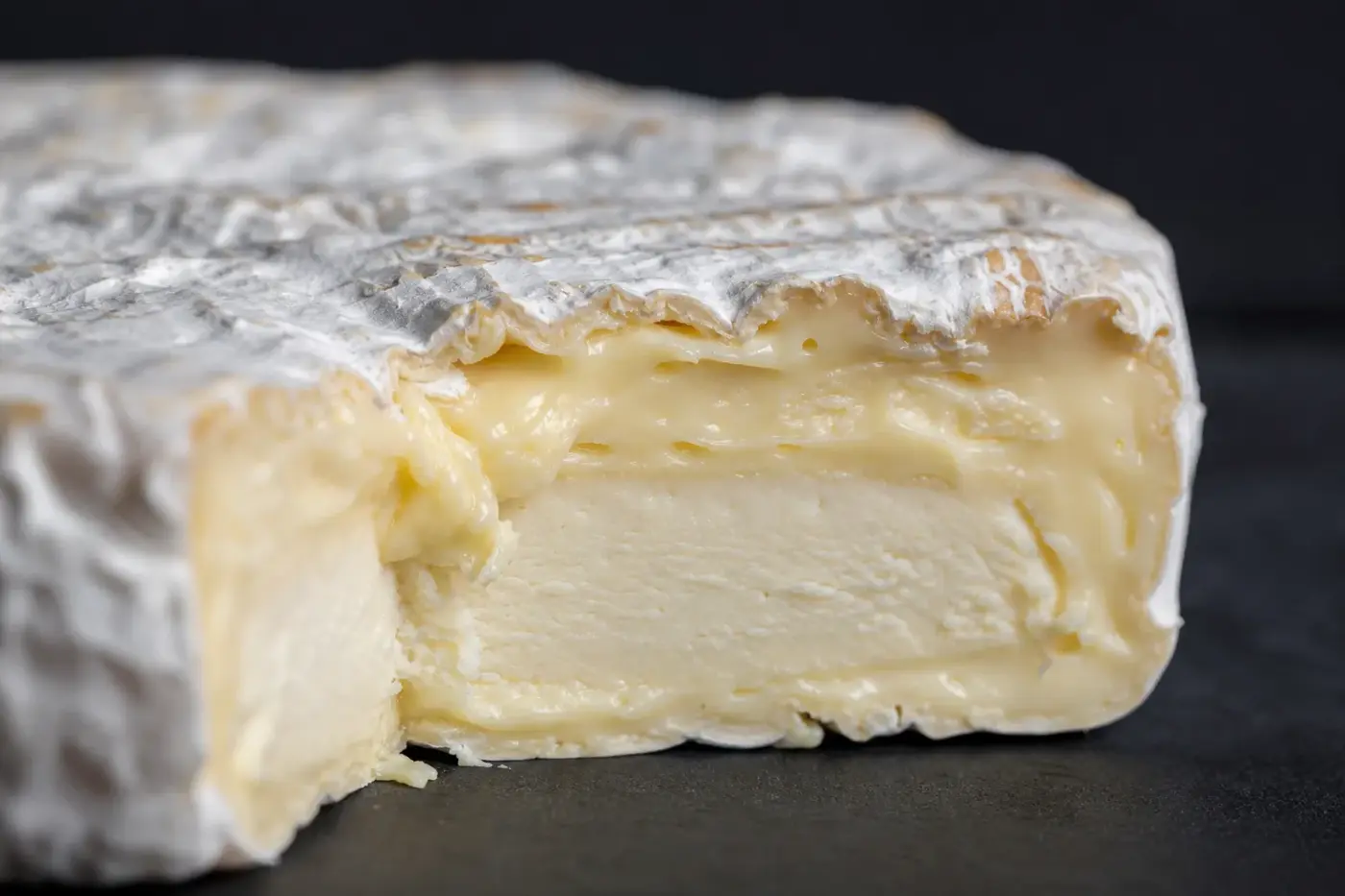
For a contrasting tasting exercise, compare the paste near a soft-ripened cheese’s rind with its centre. Describe each separately, rather than giving the whole portion one texture. You can explore the style in the Brie guide, alongside these general structural principles.
Four texture families to meet at the cheeseboard
Each family has recognisable structural tendencies. Processing and ripening still create substantial differences within it. Use these factors to guide your comparisons rather than settle them.[5,6,7,8,11]
| Texture family | What shapes the texture | What you can look for |
|---|---|---|
| Fresh acid-coagulated | Acid gel, retained moisture, smoothing or shearing.[5,6] | Does it feel smooth or grainy? How easily does it spread? |
| Soft-ripened | Initial moisture and protein structure, followed by ripening.[7] | How does the centre compare with the outer paste? |
| Crumbly | Acidity, mineral balance, curd joining, moisture, protein breakdown.[7,11] | How easily does it fracture? Are the fragments moist? |
| Stretched-curd | Suitable mineral balance and acidity, followed by hot working and alignment.[8,9] | Look for directional tearing, cohesion and resistance when you pull |
When choosing a style, describe the behaviour you want. Ask for a cheese that spreads, breaks into distinct pieces, or gives you a cohesive, yielding bite. Each request says more than “something soft”, that admirably broad cheeseboard ambition.
Your turn: taste the creaminess, crumble and stretch
Compare your samples under similar conditions, because temperature changes cheese texture.[7] Use small portions and record whether each is fridge-cold or has warmed slightly. Different styles need not share one ideal serving temperature.
- Look at a fresh cut or break. Is the paste continuous, grainy, open or fibrous?
- Press gently with a fork. Does it spread, bend, spring back or fracture?
- Chew a small piece. Do the fragments stay distinct or quickly become a smooth mass?
- Give different parts their own turn. Examine the centre and outer paste of a soft-ripened cheese separately. With stretched curd, compare cutting with tearing.
- Describe each quality separately. Moist crumble, smooth coating and elastic resistance can coexist. Give each its own description.
For food safety, follow the Food Standards Agency’s November 2026 guidance for England, Northern Ireland and Wales: keep your fridge between 0 and 5 °C and follow packaging instructions. Keep chilled food out for the shortest possible time during preparation, with a maximum of four hours.[12] Take out only the portions you need.
General information only, not medical advice: follow the official guidance where you live.
Questions people ask
Can a cheese be both crumbly and creamy?
Yes. A cheese can break into moist fragments and then become smooth as you chew. Crumbly describes how it fractures, while creamy describes another part of the same mouthful.
What makes mozzarella stretchy?
Mozzarella curd is heated and stretched when it is sufficiently plastic, aligning its protein framework. Its acidity and calcium balance also matter, along with the stretching conditions.
Does more fat always make cheese creamier?
Creaminess is a sensation, not simply a measure of fat. Water, protein concentration and the way cheese breaks down in the mouth also contribute.
Why is cheese curd cut?
Cutting opens routes for whey to escape as the curd contracts. Heating and stirring also affect drainage, so curd size alone cannot tell you how much moisture the finished cheese will retain.
Does ageing make cheese softer or crumblier?
It can do either, depending on the starting cheese. Ripening enzymes break down casein proteins, while changes in moisture can also affect firmness and fracture.
Sources
- Journal of Dairy Science, “Effect of Insoluble Calcium Concentration on Rennet Coagulation Properties of Milk”, 2007. Experimental work examining acidification, gel development and microstructure.
- International Journal of Food Properties, “Gelation properties of partially renneted milk”, published online 2016. Experimental comparison involving acid-induced and rennet-induced gelation.
- Journal of Dairy Science, “Factors Affecting Syneresis of Renneted Milk Gels”, volume 55, issue 7, 1972, pages 913 to 918.
- Journal of Dairy Science, “Effects of Cutting Intensity and Stirring Speed on Syneresis and Curd Losses During Cheese Manufacture”, 2008.
- Journal of Dairy Science, “Effects of processing conditions on the texture and rheological properties of model acid gels and cream cheese”, 2018.
- International Dairy Journal, “Texture attributes of acid coagulated fresh cheeses as assessed by instrumental and sensory methods”, 2021, article 104939.
- U.S. Dairy Export Council, U.S. Cheese Reference Manual, technical sections on texture, functionality and melting, undated retrieved edition. Scientific technical guidance, rather than an experimental paper.
- Food Technology and Biotechnology, “Mozzarella Cheese Stretching: A Minireview”, 2021. Used for orientation and synthesis; experimental verification remains subject to the checks recorded below.
- International Dairy Journal, “Effect of pH and calcium level on the biochemical, textural and functional properties of reduced-fat Mozzarella cheese”, 2004.
- Journal of Dairy Science, “Effect of pH and Calcium Concentration on Proteolysis in Mozzarella Cheese”, 2002.
- Department for Environment, Food and Rural Affairs, Product specification for Beacon Fell Traditional Lancashire Cheese, revision published November 2023, sections 2, 4 and 5.
- Food Standards Agency, How to chill, freeze and defrost food safely, published 18 December 2017, section 1, applicable to England, Northern Ireland and Wales.
Researched through published dairy science, scientific technical guidance, the Lancashire product specification and official food-handling advice, with retrieval limits recorded for editorial review.
Last checked: November 2026
Last checked November 2026.
The editors suggest you read next
Where Cheese Flavour Comes From: The Chemistry Explained
Your knife slips through a bloomy-rind cheese.