Acid Set vs Rennet Set Cheese
Dip your spoon into quark, then grate a hard cheese.
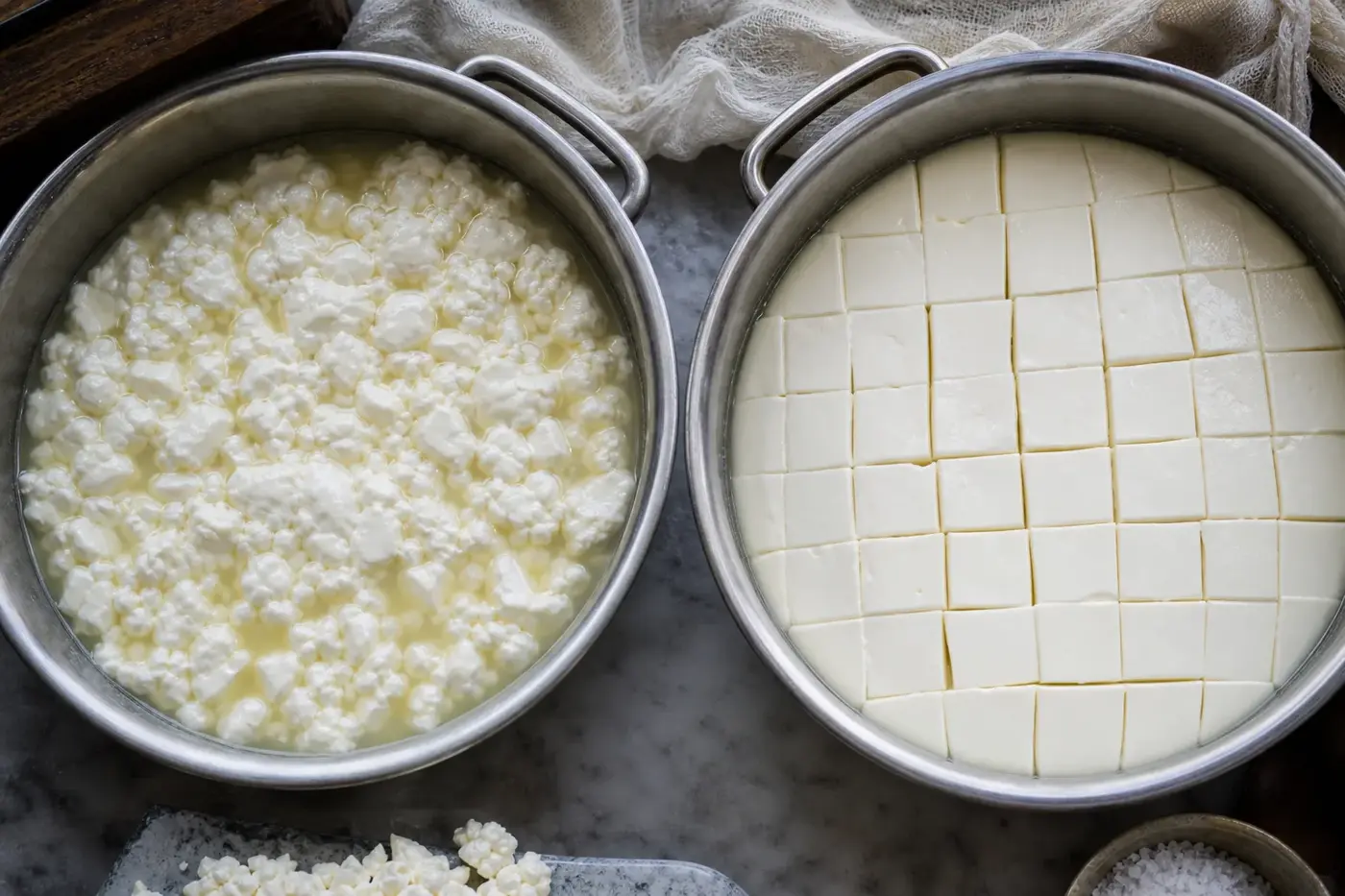
Dip your spoon into quark, then grate a hard cheese. Soft and yielding, firm and grating: milk has taken two very different paths. Cheesemakers guide those textures by lowering pH until casein proteins gather together, or using rennet enzymes to remove part of their protective surface layer. Many cheeses use both, with the balance shaping drainage, texture and what happens when you turn up the heat.[1,3,6]
The essentials, before you lift the lid
- Casein reaches its approximate isoelectric point around pH 4.6.[3]
- In one milk experiment, rennet gels were stronger at pH 6.4 than at pH 6.7, but weakened with further acidification.[4]
- After the first curd has been removed, heating the whey can recover proteins for ricotta.[11]
Inside the milk: a quiet little world
Before you see a curd, milk already has an intricate structure. Its casein proteins sit in tiny suspended particles called micelles, each containing several kinds of casein and calcium phosphate. These are assemblies, not individual protein molecules floating separately. Calcium phosphate helps organise them, with water occupying the spaces inside.[1,2]
On the surface, kappa-casein has portions that attract water and project outwards. Think of this layer as keeping neighbouring micelles at a polite distance, before anyone gets too familiar. Coagulation disrupts that arrangement, letting particles gather into larger aggregates and, under suitable conditions, a continuous gel.[13]
Acid and rennet disturb this arrangement differently, which matters for your cheese. X-ray scattering experiments on milk at different pH values found changes in both micelle dimensions and calcium phosphate structure. You are starting with a responsive protein and mineral system, not an inert powder waiting to thicken.[2]
How acidity gathers the curd
A cheesemaker has two routes towards acidity. Starter cultures, microorganisms selected for cheesemaking, convert lactose, milk's sugar, into lactic acid. Alternatively, acid can go straight into the milk. Both lower pH, the measure of acidity, but fermentation brings microbial activity along too.[6]
As acidity rises, casein loses much of its electrical repulsion and calcium phosphate becomes more soluble. The particles can move closer and gather together. Around pH 4.6, casein reaches its approximate isoelectric point, where its overall net electrical charge is close to zero.[3]
Keep that number in mind, but do not treat it as a universal setting instruction. Experiments with reconstituted casein micelles show strong aggregation near this region, while heated milk can coagulate with acid at a higher pH. That is why heat-assisted paneer production belongs beside cultured acid cheeses, without being quite the same process.[3,9]
Rennet makes a small cut with big consequences
Rennet works by making a precise cut. It is a preparation of milk-clotting enzymes, including the important enzyme chymosin, which cuts kappa-casein at a particular bond. In bovine kappa-casein, that bond sits between the amino acids phenylalanine 105 and methionine 106. The projecting portion escapes into the surrounding liquid, leaving the micelle less protected against aggregation.[1]
The remaining particles then join into a network that traps liquid and fat. What looks like one setting period to a cheesemaker actually contains two events: enzymatic cleavage, then aggregation and gel development. Calcium availability, temperature and the milk's acidity all influence that second stage.[4,5,6]
Rennet can therefore set milk well before it reaches casein's isoelectric point. You can explore enzyme sources in rennet explained. Here, the useful distinction is what the enzyme does to the protein surface, rather than where it came from.[1,4]
Acidity, calcium and temperature need each other
More acid does not automatically give you a firmer set. In an experiment using reconstituted skimmed milk, modest acidification to pH 6.4 produced stronger rennet gels than at pH 6.7. Further acidification progressively weakened them as micellar calcium was lost. These variables work together, rather than taking turns.[4]
| What changes | When acid leads the way | When rennet leads the way |
|---|---|---|
| Acidity | Reduces electrical repulsion and dissolves micellar calcium phosphate.[3] | Modest acidification can help a gel form; greater mineral loss can weaken it.[4] |
| Calcium | Moves from micelles into the liquid as acidification continues.[3] | Both available soluble calcium and mineral retained in micelles affect aggregation and firmness.[4,5] |
| Temperature | Changes the route to gelation, particularly when whey proteins have been heated.[6] | Affects how quickly particles aggregate, as well as enzyme activity.[5,13] |
Temperature still has work to do after the enzyme has acted. In experiments on already renneted micelles, aggregation was slow at 25 °C and below, then increased as temperature rose. Isolating that physical effect helps explain why setting depends on more than how much rennet you add.[5]
Why acid and rennet share the vat
Acid and rennet are often partners, not rivals. Rennet supplies the initial gel while starter bacteria keep producing acid during setting, draining and later handling. The timing of that acidification affects how much calcium stays with the curd and how the curd behaves.[4,7]
Cheddar gives you a clear documented example. The process described in the US standard combines a culture that produces lactic acid with clotting enzymes, then continues acidity development while the drained curd is handled in slabs. Calling it rennet-set identifies its main setting mechanism. It does not mean acid has been left out.[7]
The balance can lean towards acid instead. The University of Guelph's teaching classification distinguishes acid-coagulated cheeses from predominantly enzyme-coagulated ones, with processing choices affecting moisture and acidity. When you read a method, ask what drives setting, when acid develops and how the curd is handled afterwards.[9]
Cutting, draining and pressing: the curd takes shape
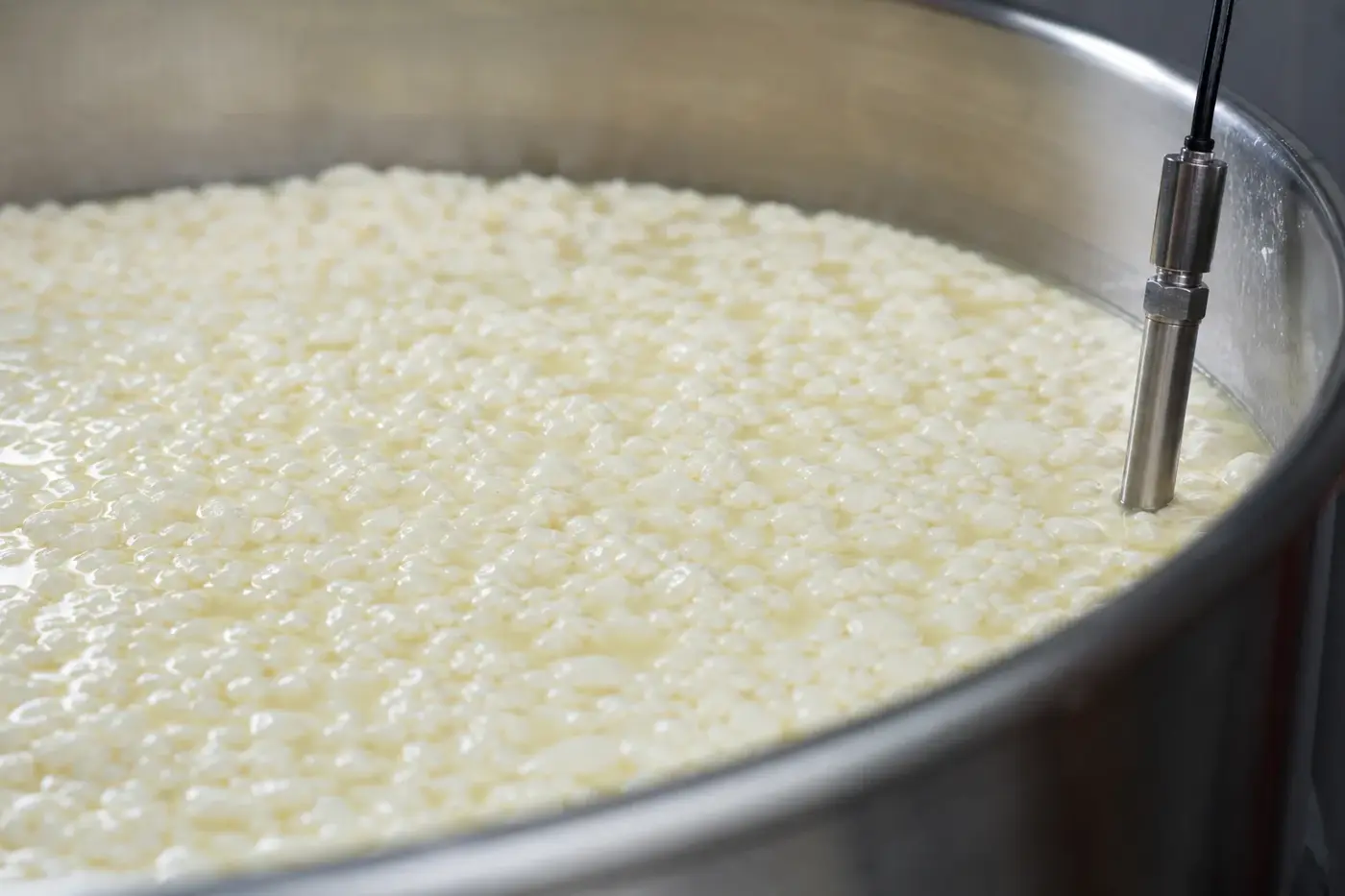
A gel is a beginning, not a finished cheese. Cutting opens more surface through which whey, the liquid separating from the curd, can escape; stirring and heating then help control moisture loss. Before cutting, the cheesemaker needs sufficient gel strength. Otherwise, broken particles can carry valuable milk solids into the whey.[6,7]
Fresh cheeses led by acid need handling that suits their relatively delicate gels. Draining can leave you with something moist and spoonable, while curds formed through heat and acid may be collected and pressed into a coherent block. Paneer makes the point neatly: pressing is not a privilege reserved for rennet curds.[9,10]
Equally, a rennet gel need not become a heavily pressed cheese. Follow the sequence: setting, whey removal, then consolidation. In Cheddar's described US process, slabs are cut into pieces, salted and pressed only after substantial drainage and acid development have already happened.[6,7]
The textures and flavours on your plate
You will get further by thinking in tendencies than in two fixed textures. Acid-coagulated quark sits at the fresh, moist end of the range, while a cooked, drained rennet curd can support a hard cheese. Yet paneer made with heat and acid can be firm, and rennet coagulation also serves softer cheeses. Cheese is not especially fond of tidy filing systems.[6,8,9,10]
Acidification contributes acidity, but it does not write the whole flavour story. Cultures and ripening matter too, as microbial activity and enzymes change the cheese's components during maturation. The setting agent helps establish the conditions for flavour development, rather than supplying a complete tasting note.[6]
Even within one style, your choice and concentration of acid matter. A paneer experiment using reconstituted milk compared citric, tartaric and malic acids at three concentrations. Increasing acid strength reduced moisture and several sensory scores, while acid type also changed composition and texture results. Those findings belong to that experimental system, but show why “acid-set” alone cannot predict your finished bite.[10]
Meet paneer, quark, Cheddar and Parmesan
Put paneer beside quark and the differences become easier to grasp. Paneer combines heat with acid and can be pressed; quark belongs to the acid-coagulated fresh-cheese group. Calling both simply soured milk misses the contribution of heating and the different handling that follows.[9,10]
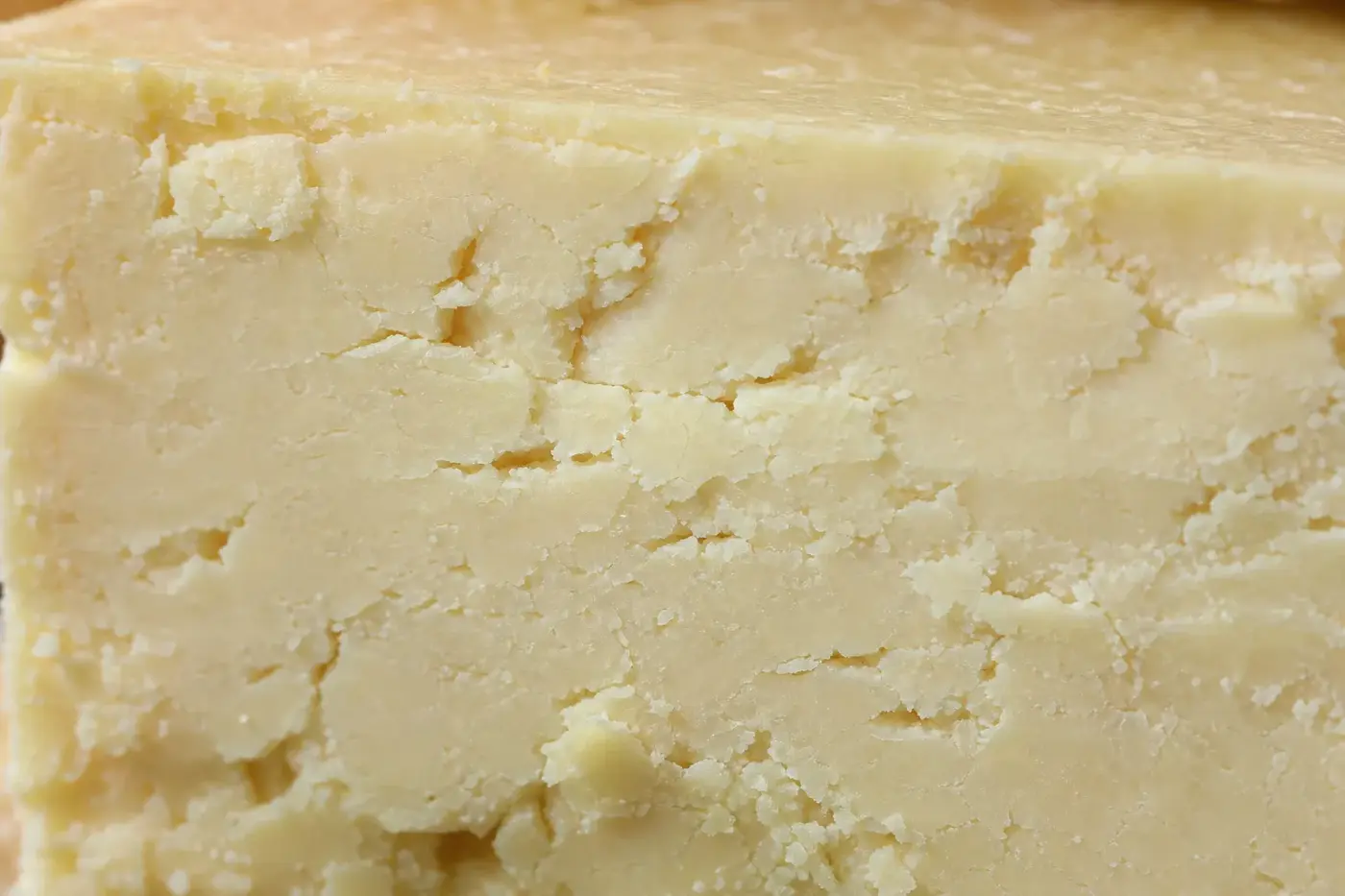
For Parmesan, Parmigiano Reggiano gives you a specific production reference. The consortium's published production standards describe fermented whey culture, calf rennet, breaking and cooking the curd, then moulding and maturation. Its description of a finely granular paste that breaks into slivers connects the work in the vat with the texture you encounter.[8]
The process in the US standard for Cheddar combines rennet setting and acid development, with curd handled in slabs before milling and pressing.[7] These examples bring the methods to life without suggesting every recipe is identical. Look at a production method and you can see the balance of acid, enzymes and handling.
Whey gets a second chapter
Once a rennet curd has been lifted away, there is still something worth recovering. The whey contains proteins that were not captured in the casein network. Heating can unfold them so they associate and can be collected as a second product. Milk curd formation and whey protein recovery therefore begin with different materials.[6,11]
In whey-based ricotta, heat and acidity act on a protein mixture different from intact milk. An experimental study of sheep's whey tracked recovery of beta-lactoglobulin and alpha-lactalbumin during heat coagulation. Concentrating the whey increased recovery of these protein fractions, directly demonstrating the contribution of whey proteins to the resulting curd.[11]
Some ricotta processes include milk, which brings casein into the mixture too. Paneer, by contrast, starts with milk and retains casein alongside whey proteins denatured by heat. Your revealing questions are “which liquid went into the vat?” and “which proteins were recovered?”, not simply whether somebody added acid.[9,11]
In your kitchen: melting, freshness and maturation
Cook with heat-and-acid cheeses such as paneer and they tend to hold their shape rather than flow. Denatured whey proteins help explain their usefulness as cooking cheeses. Acid-coagulated quark, meanwhile, is normally encountered fresh, with moisture and acidity central to its character.[9]
Rennet setting opens a different range of possibilities, including cheeses intended for long maturation. It also allows networks that soften and flow, although their behaviour depends on pH, mineral balance and subsequent changes to the protein. For you as a cook, “rennet” alone tells less than those properties considered together.[8,12]
One experiment brings that complexity into focus. Researchers warmed laboratory rennet curds at different pH values; those at pH 4.8 changed from predominantly solid-like to predominantly liquid-like behaviour at about 43 °C. That temperature describes those experimental curds. It is not a universal melting temperature for cheese.[12]
For the bigger journey after setting, explore milk to cheese. Coagulation establishes a protein network, then drainage, salting and maturation reshape it. Follow that whole sequence and you will understand far more about whether a cheese will spread, slice, grate or flow than two tidy boxes can tell you.[6,7,8,12]
Questions people ask
What is the difference between acid setting and rennet setting?
Acid setting lowers pH, reducing the electrical repulsion between casein particles so they can aggregate. Rennet uses enzymes to remove part of the particles' protective surface layer, allowing them to form a network.
Are paneer and quark made in the same way?
Both belong in the acid cheese comparison, but their routes differ. Paneer uses heat with acid and can be pressed, while quark belongs to the fresh acid coagulated cheese group.
Does Cheddar use both acid and rennet?
The process described in the US standard combines a lactic acid producing culture with clotting enzymes. Acidity continues to develop as the drained curd is handled in slabs before milling and pressing.
How is ricotta made from whey?
After an initial rennet curd is removed, the remaining whey still contains proteins not captured in the casein network. Heating unfolds these proteins so they can associate and be collected as a second product.
Why does paneer hold its shape when heated?
Heat and acid cheeses such as paneer tend to hold their shape rather than flow when heated. The participation of denatured whey proteins helps explain their usefulness as cooking cheeses.
Sources
-
European Biophysics Journal, “Structure of casein micelles studied by small-angle neutron scattering”, volume 24, 1996. Original scattering experiments and explanation of chymosin cleavage. Research paper.
-
Food Chemistry, “A SAXS and USAXS study of the influence of pH on the casein micelle structure”, 2024. Original X-ray scattering study of bovine milk between pH 5.9 and 7.1. Research abstract.
-
Journal of Dairy Science, “Casein maps: Effect of ethanol, pH, temperature, and CaCl2 on the particle size of reconstituted casein micelles”, 2013. Original experimental study, including aggregation around casein's isoelectric region. Research paper.
-
Journal of Dairy Science, “Effect of insoluble calcium concentration on rennet coagulation properties of milk”, volume 90, 2007. Original acidification and calcium-removal experiments. Research abstract.
-
Journal of Dairy Research, “Coagulation of renneted bovine casein micelles: dependence on temperature, calcium ion concentration and ionic strength”, publisher's online edition, 2009. Original measurements on completely renneted micelles. Research record.
-
American Cheese Society, Best Practices Guide for Cheesemakers, 2025 edition, sections on coagulation, curd handling and ripening. Industry technical guidance, used for production descriptions rather than legal or safety conclusions. Technical guide.
-
US Food and Drug Administration, 21 CFR 133.113, Cheddar cheese, current eCFR text checked November 2026, particularly paragraph (a)(3). Official standard.
-
Consorzio del Formaggio Parmigiano Reggiano, Production Specifications for Parmigiano Reggiano Cheese, English document, revision date not stated in the retrieved document. Production standards, pages 1 and 2. Published production standards.
-
University of Guelph, Cheese Making Technology e-Book, “Other Technological Criteria”, undated online edition, Table 3.1. University teaching classification of coagulation methods and resulting cheese properties. Technical classification.
-
Journal of Food Science and Technology, “Effect of different coagulants at varying strengths on the quality of paneer made from reconstituted milk”, volume 51, 2014, first published online 2011. Original comparison of three acids at three concentrations. Research abstract.
-
Journal of Dairy Science, “Effect of whey concentration on protein recovery in fresh ovine ricotta cheese”, 2014. Original thermocoagulation study using compositional analysis, electrophoresis and protein identification. Research abstract.
-
“Quantifying thermally induced flowability of rennet cheese curds”, author manuscript deposited in arXiv, 2014. Original oscillatory shear measurements on laboratory curds. Research manuscript.
-
“Regenerated Fibers from Rennet-Treated Casein Micelles during Acidification”, 2023. Original experimental paper, with relevant molecular background in its introduction. Research paper.
This piece was researched through published experimental studies, official production documents and technical guidance, synthesised as desk research without site cheesemaking or tasting trials.
Last checked: November 2026
Last checked November 2026.
The editors suggest you read next