Afuega'l Pitu
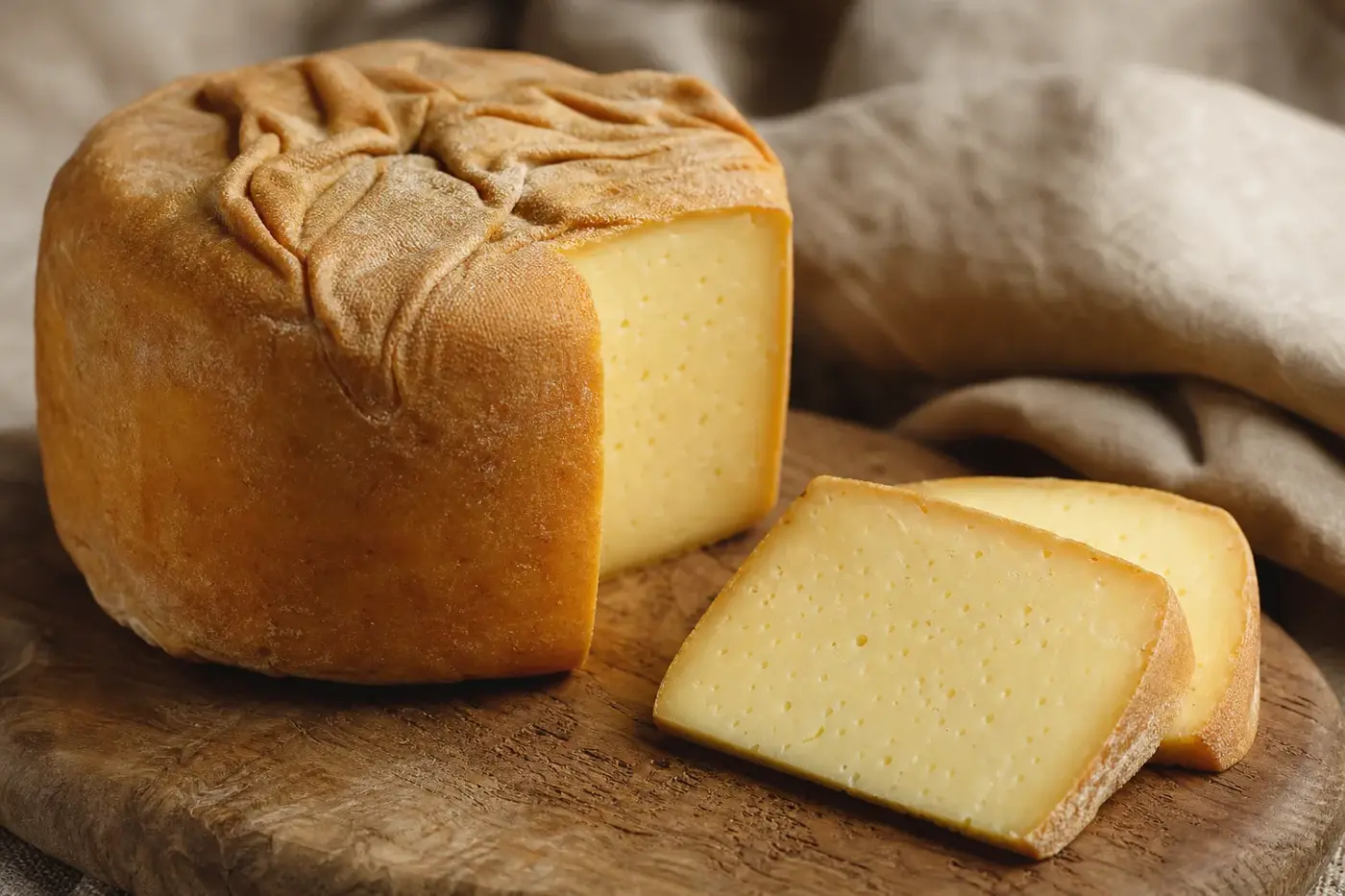
Follow the folds on an Afuega'l Pitu and you can almost picture the cloth gathered around its curd.
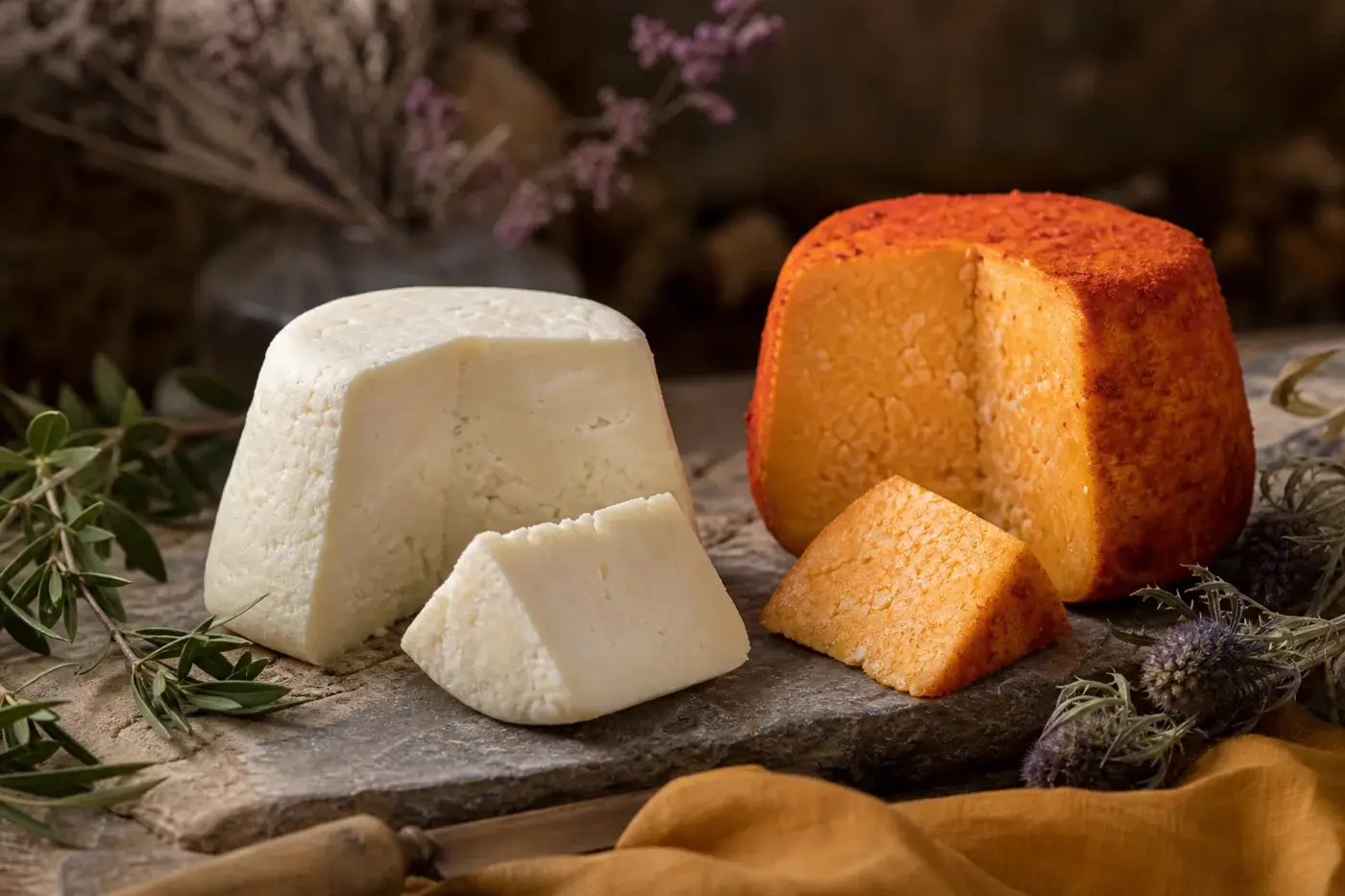
Follow the folds on an Afuega'l Pitu and you can almost picture the cloth gathered around its curd. Beside it, a small cone with sloping sides gives away a different tool: a mould. Cut into this Asturian cow's milk cheese and you find white paste or orange red with paprika. Both shapes share slow lactic coagulation and the adhesive, tangy character described by the regulatory council. [4, 5, 6]
| Your first look | What to know |
|---|---|
| Familiar and registered name | Afuega'l Pitu. [1, 3] |
| What you're buying | Cow's milk cheese, fresh or matured. [2, 6] |
| EU registration | European Commission; Commission Regulation (EC) No 723/2008, Article 1 and Annex. For current status and register identifier, consult the current register. [1] |
| Northern Ireland protection | Consult the current register for protection status. |
| Great Britain protection | Registered PDO under the UK scheme, dated 31 December 2020; register information as of November 2026. [3] |
| Its legally defined home | Central-western Asturias, Spain, around the Nalón and Narcea rivers and the Sierra del Aramo. [2] |
| Milk treatment under the current specification | Consult the current specification for permitted treatments. The council describes pasteurised and raw milk production without establishing which treatments it permits. [5] |
| Four forms to recognise | Atroncáu Blancu, Atroncáu Roxu, Trapu Blancu and Trapu Roxu. [4] |
| Rind and size | Natural rind; individual cheeses of 200 to 600 g. [4] |
| Current legal minimum maturation | Consult the current specification for the legal minimum. |
| Allergen to know | Milk; check the complete product label for other ingredients and declarations. [2, 11] |
Read the folds, follow the shape
Afuega'l Pitu carries the clues to its making on its surface. The cone follows its draining mould; the rounded trapu keeps the folds of its cloth. You'll find both shapes in white and paprika-coloured versions. Colour tells you something, but shape and handling complete the picture. [2, 4]
Age gives you another contrast to explore. The regulatory council describes a cheese that grows firmer and more compact as it matures, keeping its notably adhesive mouthfeel. Put a spreadable young cheese beside a firmer example and the comparison can be just as revealing as white against red. [2, 6]
Step into the Asturian farmhouse
Picture the green, central-western reaches of Asturias in northern Spain. This is Afuega'l Pitu country: inland valleys and municipalities stretching towards the coast, not a single village or mountain pasture. Under the published specification, milk production, cheesemaking and maturation must all take place within this defined area. [2]
The regulatory council traces the story to the casería, the traditional farm household. Surplus milk became cheese for the family's table, then for sale at weekly markets. Its account describes professional cheesemaking businesses developing from the 1980s, as producers adapted to hygiene requirements and household production gave way to organised commercial manufacture. [7]
Those two shapes belong naturally in this farmhouse story. A mould and a tied cloth offer different ways to drain and shape curd. Both remain part of the same named cheese tradition, with their handiwork there for you to see. [2, 4]
Meet the name that makes an impression
“Choke the throat” is the regulatory council's translation of the Asturian expression Afuega'l Pitu. Not, perhaps, a name chosen by a marketing committee. It points you towards the cheese's unusual, adhesive paste, which the specification also calls astringent: the sensory term for a drying sensation. [2, 6]
The translation is memorable; the etymology is less certain. The specification records several local explanations, including the constricted neck of the draining bag and the difficulty of swallowing the paste. It does not settle on one origin for the name. [2]
Let the name draw your attention to texture. Start with a small piece and notice how the paste adheres. Then consider that drying sensation alongside the acidity.
Give slow curd its time
Whole cow's milk starts the process, but Afuega'l Pitu is not a cheese to hurry. The council describes a predominantly acidic curd forming slowly over 15 to 20 hours. This is lactic coagulation: acidification does the central work of setting milk into curd, the soft solids that become cheese. [2, 5]
The cheesemaker lifts the curd by hand with a ladle known locally as a garcilla. Gentle handling and individual salting are important features of the council's account. There is no mechanical pressing. The curd's own weight supplies the pressure while whey, the liquid released from it, drains away. [5]
The published production account describes an initial spell of drainage in moulds, followed by more draining once the cheeses come out. For the kneaded varieties, the drained paste is worked before its final shaping. Paprika goes into the paste for the roxu cheeses. [5]
You can see why “soft cheese” tells only part of the story. Slow setting, drainage under the curd's own weight and subsequent kneading create different ways to handle and shape it. For the wider terminology, explore milk treatment explained and cheese styles and methods.
Find your way around the four varieties
Two shape names and two colour names give you the key to the council's four recognised varieties. Blancu means a white version. Roxu points to an orange-red paste containing paprika. [4, 5]
| Name to look for | Shape you'll see | What happens to the paste |
|---|---|---|
| Atroncáu Blancu | Truncated cone | Unkneaded, white paste. [4] |
| Atroncáu Roxu | Truncated cone | Kneaded, orange-red paste with paprika. [4, 5] |
| Trapu Blancu | Rounded, cloth-shaped | Kneaded, white paste. [4] |
| Trapu Roxu | Rounded, cloth-shaped | Kneaded, orange-red paste with paprika. [4, 5] |
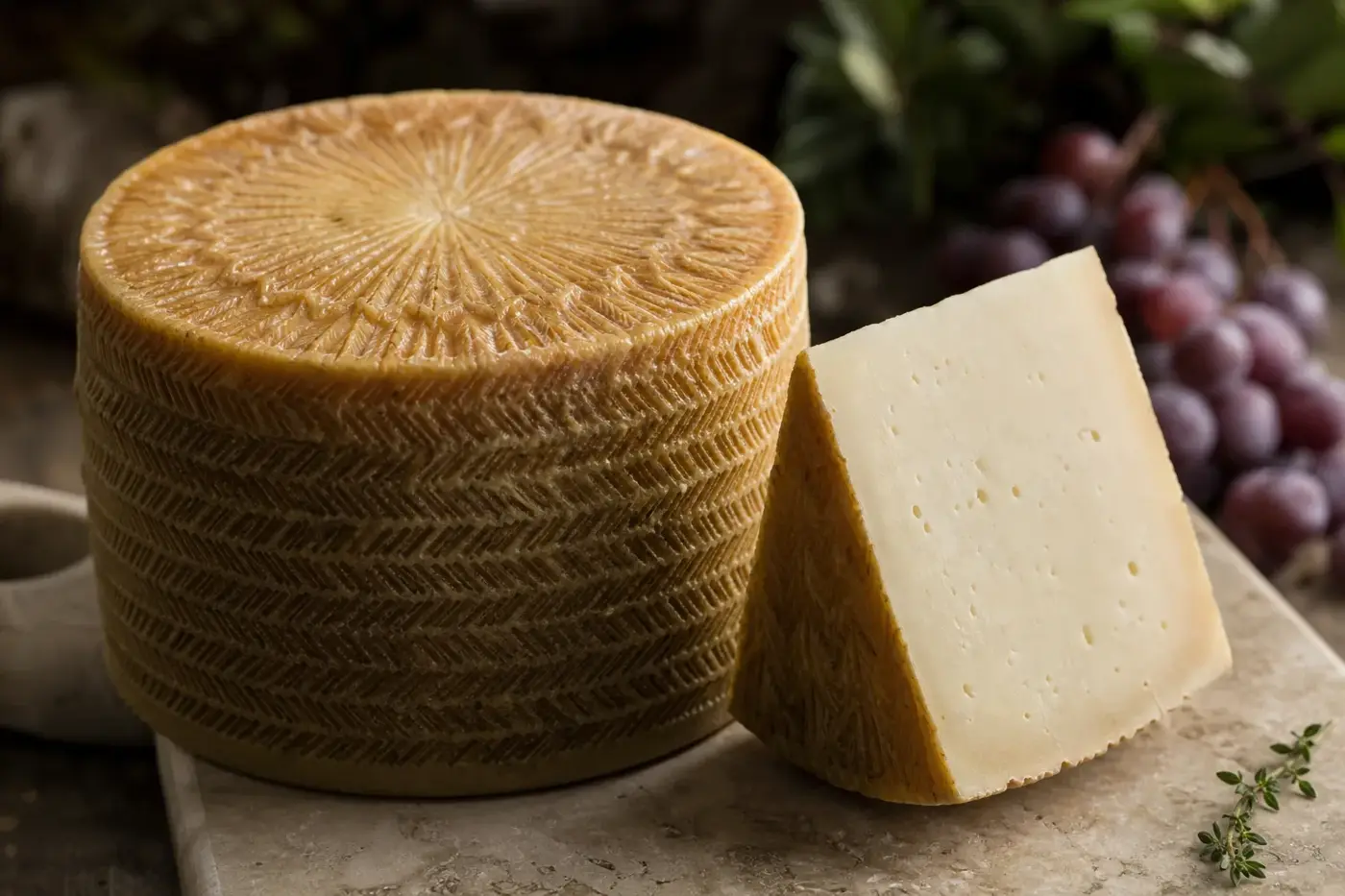
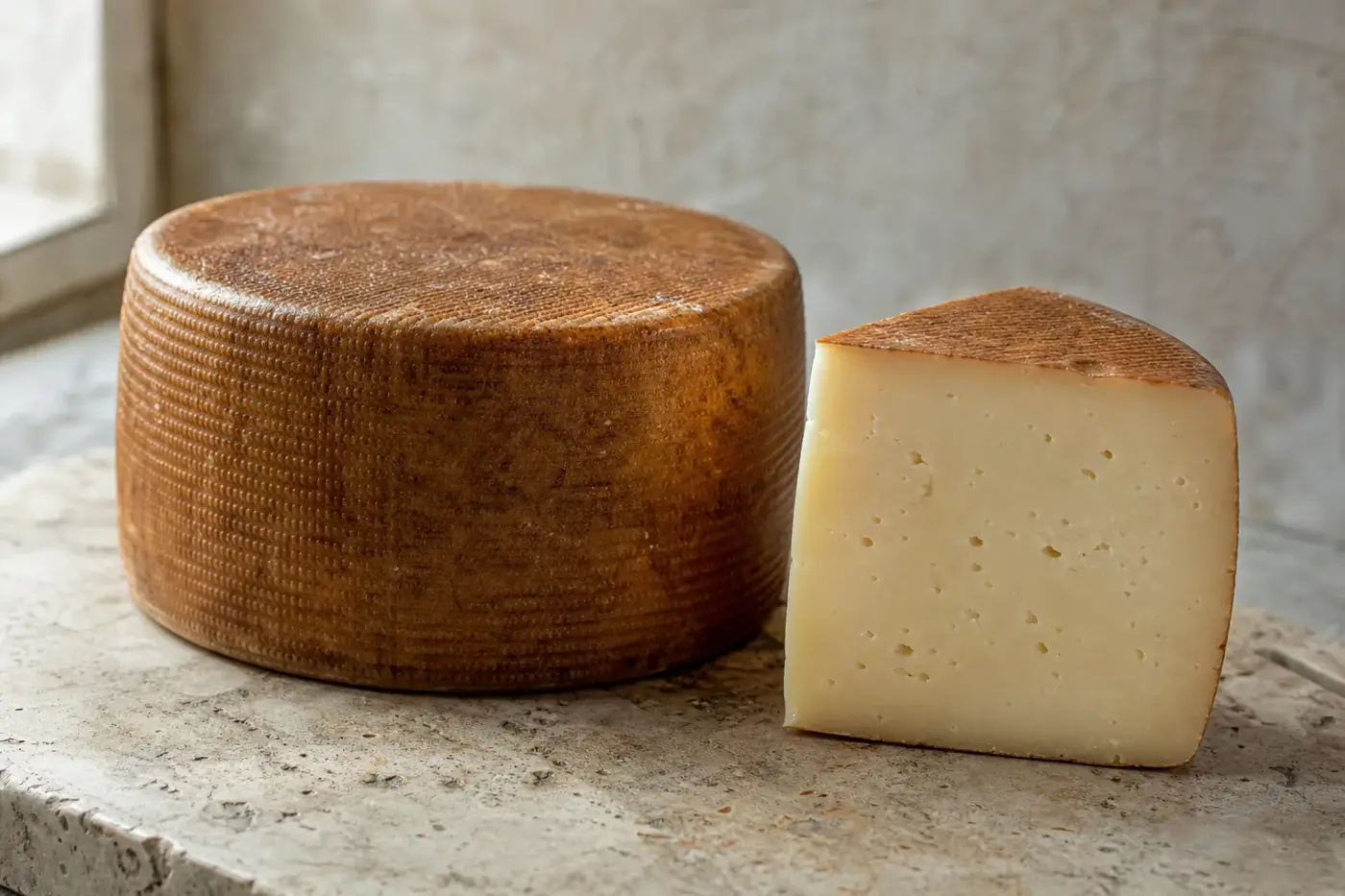
Atroncáu has the more geometrical outline: picture a cone with its tip removed, leaving sloping sides. Trapu is rounder, gathered at the top and marked with cloth folds. Look closely and the finished cheese shows you how it took shape. [2, 4]
With a roxu, the paprika is more than a surface flourish. It is worked through the paste, not dusted over the outside. You'll meet it in each mouthful. [5]
Taste the difference time makes
The natural rind changes in consistency as Afuega'l Pitu matures, and according to whether paprika has been added. Beneath it, the white paste tends towards yellow with age. The paprika versions are orange red. [4, 6]
The council's tasting description begins with fresh lactic and acidic notes, including a recollection of butter. As maturation progresses, yeast notes become more apparent. Longer-matured examples may bring mushroom-like flavours and a lightly bitter element. Think of this as a range to explore, not a promise about every producer's batch. [6]
Texture has its own journey. A fresh cheese may spread; a more mature one grows firmer and may crumble rather than give you a clean slice. The specification describes slight acidity, restrained saltiness and a notably dry, pasty sensation. Red cheeses have a stronger, more piquant character. [2]
For a revealing tasting, look beyond blancu versus roxu. Ask the cheesemonger about maturity as well as colour, then choose the contrast that appeals to you. Age deserves a place in the conversation, not just paprika.
Look for the name behind the shape
The European Commission's 2008 registration regulation entered Afuega'l Pitu as a protected designation of origin, or PDO. You may also see the Spanish abbreviation DOP, Denominación de Origen Protegida. Great Britain's official register lists the name as a registered PDO, with register information here dated November 2026. [1, 3]
The published specification ties the name to a defined origin, production method and product characteristics. It describes certification controls and a numbered secondary label bearing the designation's logo. Look for the full name and certification identification on the cheese or its packaging. [2]
Buying a cut portion? Ask to see the original label rather than relying on shape or orange colour alone. Keep the producer's name, milk treatment and storage information with your portion, so those details come home with you.
For help separating origin protection from other label information, turn to protected names explained and reading a cheese label.
Choose the texture you fancy
Start with what you'd like to eat: something young and spreadable, something firmer to break into pieces, or a paprika version beside the white. Ask the seller about the maturity of the actual cheese in front of you. The council's documented progression from softer to firmer is a useful guide. [2, 6]
Before buying, read the milk treatment, date marking and storage instructions. The Food Standards Agency's consumer guidance for England, Northern Ireland and Wales advises keeping a domestic fridge between 0 and 5 °C (32 to 41 °F). It also advises refrigerating dairy products and following the packaging instructions. [9]
Keep the original packaging and follow its instructions for storage after opening. For a cut portion, ask the seller for that guidance: a cheese's name cannot tell you its shelf life. You'll find the wider principles in storing cheese at home.
Give each texture its place at the table
Set out only what you intend to eat. Let that portion lose some refrigerator chill while you prepare the bread and plates, keeping the interval brief. FSA guidance for England, Northern Ireland and Wales says chilled food should spend the shortest possible time out during preparation, with a maximum of four hours. [9]
If you are keeping food outside in hotter than usual weather, the FSA advises discarding perishables left unrefrigerated for more than two hours. Follow the product's storage instructions. [10]
Good bread is a simple starting point, but try a small taste of cheese alone first. Then spread a young example on the bread, or break a firmer one into pieces. A clean slice is not an entrance requirement for the cheeseboard.
If you are an adult of legal drinking age and choose alcohol, you could try a small serving of dry Asturian cider. Explore its apple acidity alongside the cheese's lactic tang, or choose sparkling water or an alcohol free apple drink instead. [6]
People who are pregnant, driving, taking medicines that interact with alcohol, or recovering from alcohol dependence should not drink. Consult current NHS advice or the equivalent advice for your country.
Keep the label close for milk and handling advice
Your individual cheese's label is the place to find milk treatment and storage information. The council describes both pasteurised and raw milk production, without establishing which treatments the current specification permits. Consult that specification for the permitted treatments. [5]
For UK advice on cheese and unpasteurised dairy, consult the NHS guidance, reviewed 11 December 2023. Follow the current advice for your own circumstances. [11]
Careful handling still matters when milk has been pasteurised. The United States Food and Drug Administration explains that pasteurisation kills harmful germs, but contamination can happen afterwards. Its guidance makes careful handling relevant to pasteurised cheese too. [13]
General information only, not medical advice: follow the official guidance where you live.
Questions people ask
What are the four varieties of Afuega'l Pitu?
Atroncáu Blancu and Atroncáu Roxu are shaped like truncated cones, while Trapu Blancu and Trapu Roxu are rounded in cloth. Blancu cheeses are white; roxu cheeses contain paprika and have an orange red paste.
What does Afuega'l Pitu taste like?
The regulatory council describes fresh lactic and acidic notes, including a recollection of butter. More mature cheeses can develop yeast notes, mushroom flavours and a lightly bitter element. Red cheeses have a stronger, more piquant character.
Is Afuega'l Pitu made with raw milk?
The regulatory council describes production with both raw and pasteurised milk. Which treatments the current specification permits is not verified, so check the individual cheese's label.
Where must Afuega'l Pitu be made?
Its defined production area is in central western Asturias, Spain, around the Nalón and Narcea rivers and the Sierra del Aramo. Milk production, cheesemaking and maturation must all take place within that area.
How should I store Afuega'l Pitu?
The Food Standards Agency advises refrigerating dairy products, keeping a domestic fridge between 0 and 5 °C and following the packaging instructions. For a cut portion, ask the seller for storage guidance.
Sources
- European Commission. Commission Regulation (EC) No 723/2008 of 25 July 2008, Articles 1 and 2 and Annex, published 26 July 2008. Official text.
- Principado de Asturias. Pliego de condiciones de la Denominación de Origen Protegida “Afuega'l Pitu”, undated published specification, sections B to F. Published specification.
- Department for Environment, Food & Rural Affairs. Afuega'l Pitu, UK protected food names register, published 2021, current record retrieved November 2026. Register entry.
- Consejo Regulador de la DOP Afuega'l Pitu. Tipos, undated, retrieved November 2026. Varieties and dimensions.
- Consejo Regulador de la DOP Afuega'l Pitu. Elaboración, undated, retrieved November 2026. Production account.
- Consejo Regulador de la DOP Afuega'l Pitu. Afuega'l Pitu, homepage product and sensory account, undated, retrieved November 2026. Council description.
- Consejo Regulador de la DOP Afuega'l Pitu. La denominación, undated, retrieved November 2026. Council historical account.
- Consejo Regulador de la DOP Afuega'l Pitu. Memoria descriptiva de las modificaciones propuestas para la solicitud de modificación normal del pliego de condiciones de la DOP “Afuega'l Pitu”, file identified as May 2026. Modification application. Used for editorial verification and flags below.
- Food Standards Agency. How to chill, freeze and defrost food safely, 2017, current text retrieved November 2026; applies to England, Northern Ireland and Wales. Official guidance.
- Food Standards Agency. Food safety in a heatwave, advice for consumers, 2024, retrieved November 2026; applies to England, Northern Ireland and Wales. Official guidance.
- NHS. Dairy and alternatives in your diet, reviewed 11 December 2023, retrieved November 2026. Official guidance.
- European Commission. eAmbrosia geographical indications register, accessed November 2026. Register interface. The individual record could not be read through the retrieved interface.
- US Food and Drug Administration. Queso Fresco-type Cheeses Consumer Guidance, current page retrieved November 2026. Used only for its general explanation of pasteurisation and subsequent contamination. Official guidance.
This desk-researched article brings together official registration documents, the published specification, the regulatory council's descriptions and attributed national food safety guidance.
Last checked: November 2026
Last checked November 2026.
The editors suggest you read next