Balkan Cheeses
On Croatia's island of Pag, the bura wind carries sea salt inland over aromatic plants.
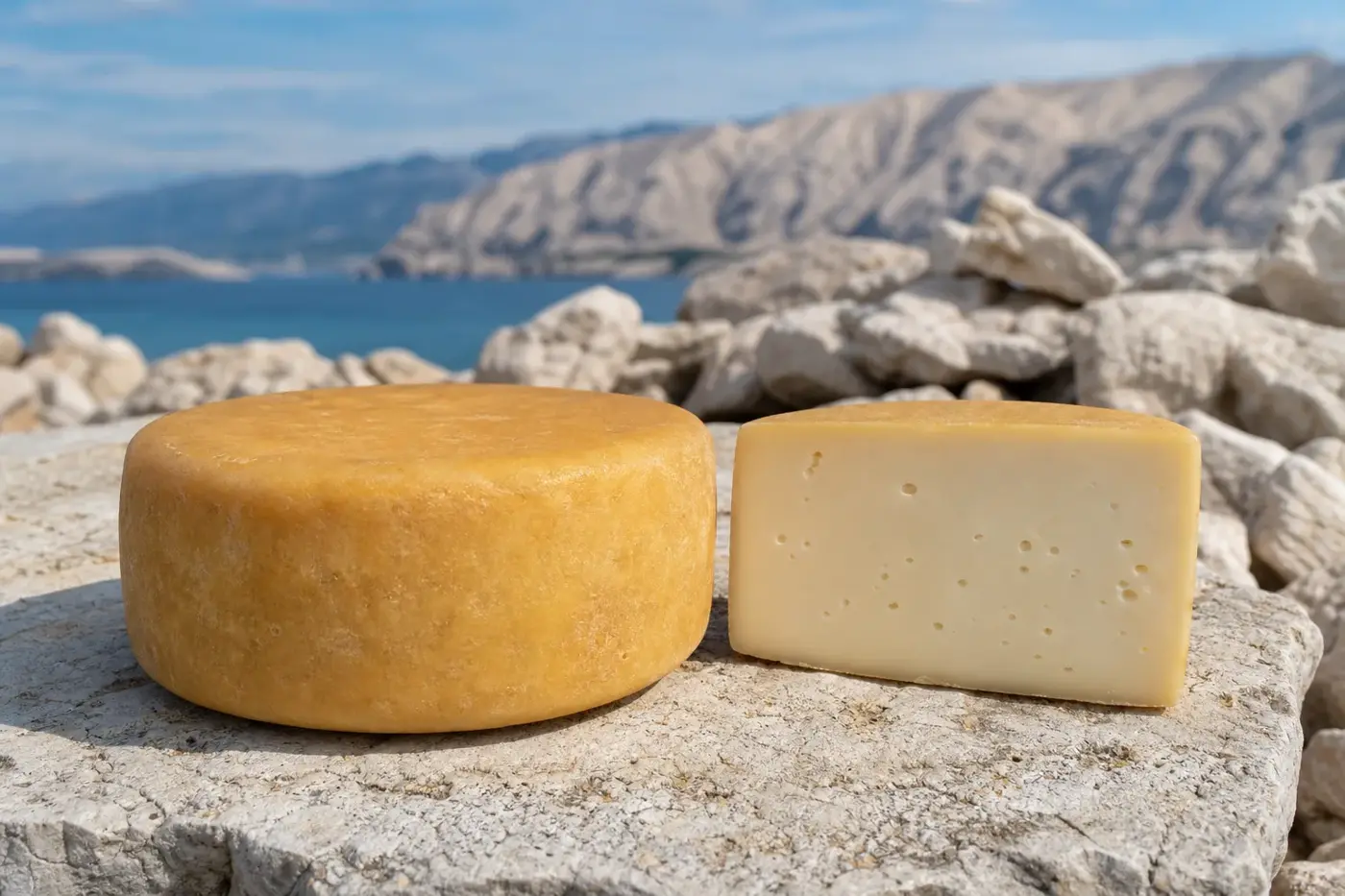
On Croatia's island of Pag, the bura wind carries sea salt inland over aromatic plants. Sheep graze here, far from the winter village dairies and summer mountain pastures of Slovenia's upper Soča valley. Follow their milk across the Balkans and you find brined feta and sirene, hard Paški sir and Tolminc. Shared techniques connect them, but the places and people give you plenty of reasons to keep tasting.[1][2][6][8]
Find your own route through the Balkans
There is plenty of ground to cover, so leave room on your cheese plate. This guide takes a broad view: Albania, Bosnia and Herzegovina, Bulgaria, Croatia, Greece, Kosovo, Montenegro, North Macedonia, Romania, Serbia and Slovenia, with European Türkiye at the eastern edge.
Follow the cheesemaking and familiar patterns emerge across borders. White cheese rests in brine, stretched curd is worked while warm, and hard cheese matures beneath a rind. Keep each name attached to its place, though. Shared techniques still produce distinct cheeses, rooted in different producers, languages and local food cultures.[2]
Follow the herds through the seasons
Sheep, goats and cattle all have a part in Balkan cheesemaking. Buffalo milk belongs here too, explicitly recognised in the Bulgarian white brined cheese specification. Greece's mountainous terrain helps explain the importance of sheep and goats. The Livanjski sir specification, meanwhile, records how seasonal sheep milk supplies encouraged greater use of cow's milk.[1][4][7]
Those mountain pastures are working ground, not just a handsome backdrop for your cheese. The Tolminc heritage record describes cooperatives making cheese in villages during winter and on mountain pastures during summer. On Pag, wind, salt spray and sparse vegetation surround sheep dairying instead. These grazing systems connect cheeses with particular places, rather than one shared mountain flavour.[6][8]
Start in the brine: feta, sirene and telemea
Begin with the salt water. Brine helps shape this family: drained curd, the solids separated from milk, is salted and matured in the liquid. Salt and the acidity developed during fermentation help preserve it, while ripening develops its characteristic aroma and texture. Your fridge and the pack instructions still govern storage at home.[1][4][11]
Greek feta is salty and slightly acidic, according to the European Commission, and matures for a minimum of two months. The Commission's account connects production with sheep and goat husbandry and the flora the animals graze. For current production rules and geographical limits, turn to the official specification. You can also explore feta.[1]
For a different texture, try Българско бяло саламурено сирене (Bulgarsko byalo salamureno sirene). Its EU single document describes a moderately firm, pliant cheese with a pronounced lactic acid flavour and a clean, porcelain-like cut. Cow's, sheep's, goat's, buffalo's or mixed milk are permitted. Starter cultures and maturation in brine are central to its character.[4]
Those descriptions and requirements belong to the specified product, not every cheese called sirene. Romanian telemea gives you another name to explore alongside these cheeses. Do not assume its production and characteristics match those of its neighbours.
Kashkaval: let the regional names lead you
Kashar and kashkaval are regional names recorded in the scholarly review used for this guide.[2] Treat them as starting points for exploration, rather than shortcuts to a particular production method, milk variant or set of alternative spellings.
Paški sir: a taste of wind, salt and Pag
With Paški sir, you leave the mountain valley for an island landscape. The EU CAP Network connects this Croatian cheese with sheep grazing aromatic plants exposed to sea salt carried inland by the bura wind. Its account brings grazing, cheesemaking and maturation together to explain the cheese's connection with Pag.[6]
A published scholarly description gives you a precise picture of this hard sheep's milk cheese. Its smooth, hard rind ranges from yellow to light brown; inside, the paste has few tiny round openings or none, and its character is piquant. Put it beside rindless white brined cheese on a tasting plate. That firm paste and developed rind make the contrast clear.[3]
Find fresh favourites in the western Balkans
Livanjski sir, from Bosnia and Herzegovina, has a compact, lightly elastic paste and a slightly sweet flavour recalling walnut kernels, according to its producer association's specification. Give it more maturation and the pungency increases. The specification describes this hard cheese made with cow's milk, sheep's milk or mixtures, using either raw or heat-treated production routes.[7]
Montenegro gives you two contrasting styles to explore. Scholarly descriptions place Pljevaljski sir among white brined cheeses, with a milky sour character, while firmer Njeguški sir has a golden yellow rind. The cross-border culinary project Mountain Bounty also records Kolašin's layered cheese and the importance of cheese and kajmak in mountain cooking.[3][9]
In Albania, ask for cheese by name rather than reaching for a general Balkan category: Kashar appears in the regional dairy literature. Kosovo has its own names, including Sharri and Rugova. An original study of Rugova cheese from the Peja region examined traditional and industrial production during ripening. It documented differences in composition and recorded the traditional use of cow's, sheep's and goat's milk.[2][10]
Tolminc: follow a year in the upper Soča valley
In Slovenia's upper Soča valley, Tolminc carries a history of skills passed between village dairies, mountain dairies and formal teaching. The regional heritage inventory traces those connections. Winter cheesemaking in villages and summer work in the alps give the story its seasonal rhythm.[8]
When you read a label, remember that a named regional cheese and an individual mountain-made product tell you different things. Ask where it was made and what the producer says about its milk and season. The heritage record encompasses valley dairying and small Alpine dairies. Tolminc, in other words, has more than one production setting.[8]
Make a little room for kajmak
Picture the surface layer collected from milk in shallow vessels, then drained and matured. That is the traditional Montenegrin practice described in Mountain Bounty, where local names include skorup.[9] It gives you a way into the tradition, rather than an official definition of kajmak.
In that culinary record, cheese and kajmak frequently share a dish. You find them in cornmeal dishes, potato preparations and cicvara, a cooked mixture involving cheese, skorup and flour. Their close partnership earns kajmak its place in conversations about Balkan cheese, although its production follows a different route.[9]
Protected names: get to know the full name
The full name matters more than you might think. A protected designation of origin, abbreviated PDO, ties production requirements to a particular geographical name. The Bulgarian white brined cheese name entered the EU register through Regulation (EU) 2023/1571. That full designation is more specific than the everyday category sirene.[4][5]
When you choose cheese, match the complete name, declared origin and production details. A flag or familiar-looking word tells you less. EU protection applies within its jurisdiction; protected cheese names explains the distinctions. For the separate question of how a cheese is made, turn to cheese styles.[4][5]
Bring it to the table, cool or bubbling
The Bulgarian specification names Shopska salad, banitsa pastry and mish-mash, a vegetable and egg dish, as uses for white brined cheese. Montenegro's culinary collection puts cheese into substantial flour and potato dishes. You can begin with either approach: fresh vegetables beside the cheese, or a warm, filling dish that brings it into the cooking.[4][9]
For an informal meal, put brined cheese beside tomatoes, cucumber and bread. Cut a firmer cheese into small pieces so you can still appreciate its texture. Before making a pastry filling, check how wet your cheese is.
With grilled vegetables or meat, serve cheese alongside. If you want to grill the cheese itself, choose a product whose maker specifically recommends it. That is a job for the right cheese, not wishful thinking.
Keep drinks simple with sparkling water or an unsweetened tea. Choose your accompaniment with the whole dish in mind.
Read the label, then enjoy the texture
Start with the label. Check the milk species, treatment, place of production, storage instructions and date marking. If pasteurisation matters to your circumstances, look for an explicit declaration or ask the seller.
Raw, thermised and pasteurised describe different milk treatments; milk treatment explained gives you the background. Keep the label if your cheese has been cut or repacked.
In England, Northern Ireland and Wales, the Food Standards Agency advises keeping your fridge at 5 °C or below and following packaging storage instructions. Follow the supplier's directions for brined cheese, and keep aged cheese covered as instructed. Take out only what you plan to serve, rather than warming the whole supply. For the fuller method, see storing cheese at home.[11]
For pregnancy in the UK, the NHS lists pasteurised feta among soft cheeses that can be eaten. It also lists pasteurised semi-hard cheeses and pasteurised or unpasteurised hard cheeses. Mould-ripened soft cheese and soft blue cheese receive different guidance: cook them thoroughly until steaming hot. Check the current NHS page against your actual product, especially its milk treatment and cheese type.[12]
At the counter, ask one final question: what should this particular cheese feel like when cut? The answer helps you distinguish the pliant Bulgarian brined cheese described in its specification from compact Livanjski sir or hard Paški sir. Choose for the texture and dish you want. Keep the full name and producer attached to the cheese, too.[3][4][7]
General information only, not medical advice: follow the official guidance where you live.
Questions people ask
How long is Greek feta matured?
Greek feta has a minimum maturation of two months. The European Commission describes it as salty and slightly acidic.
What milk is used for Bulgarian white brined cheese?
The EU specification permits cow's, sheep's, goat's, buffalo's or mixed milk. It describes a moderately firm, pliant cheese with a pronounced lactic acid flavour.
What does Livanjski sir taste like?
Livanjski sir has a slightly sweet flavour recalling walnut kernels, according to its producer association's specification. It becomes more pungent as it matures.
How is kajmak traditionally made in Montenegro?
The traditional practice described in Mountain Bounty involves collecting the surface layer from milk in shallow vessels. The layer is then drained and matured.
Can you eat feta during pregnancy?
For pregnancy in the UK, the NHS lists pasteurised feta among soft cheeses that can be eaten. Check the current NHS page against the actual product, especially its milk treatment and cheese type.
Sources
-
European Commission, Directorate-General for Agriculture and Rural Development. Feta PDO, undated web account, retrieved November 2026. Production, maturation and geographical context.
-
Traditional Balkan fermented milk products, 2018, scholarly review archived by PubMed Central. Archived article. Regional product table and terminology. Retrieval limitations are recorded in the evidence log.
-
Acta Periodica Technologica, volume 48, pages 39 to 52, 2017, DOI 10.2298/APT1748039B. Review paper, including Table 1, “Characteristics of some indigenous cheeses of some countries of the Balkans”.
-
European Commission. Single document for Българско бяло саламурено сирене / Bulgarsko byalo salamureno sirene, EU application number PDO-BG-02656, published 13 April 2023, Official Journal C 129, page 67. Sections 3.2, 3.4, 4 and 5.3. )
-
European Commission. Commission Implementing Regulation (EU) 2023/1571 of 24 July 2023, entering Българско бяло саламурено сирене / Bulgarsko byalo salamureno sirene in the EU register as a PDO.
-
EU CAP Network. Bura, salt and cheese, undated project account, retrieved November 2026. The account links Paški sir to sheep grazing and salt-bearing bura winds.
-
Association for the Protection of the Origin of Livanjski Sir. Product specification: Livanjski sir, Livno, 2019, English-language document hosted by the Food Safety Agency of Bosnia and Herzegovina. Sections 2, 3 and 6.
-
Intangible Search. Making Tolminc cheese, heritage inventory record, undated web version retrieved November 2026. Sections on history, learning and transmission.
-
Montenegro and Albania cross-border cooperation project. Mountain Bounty: Traditional dishes of the mountain, English-language edition, publication year not established from the retrieved extract. Sections on cornmeal dishes, cicvara and skorup.
-
Journal of Central European Agriculture. Technology and composition of traditional and industrial Rugova cheese, volume 23, issue 4, 2022. Original study comparing traditional and industrial cheeses during ripening.
-
Food Standards Agency. How to chill, freeze and defrost food safely, web guidance, retrieved November 2026. Applies to England, Northern Ireland and Wales.
-
NHS. Foods to avoid in pregnancy, current web version retrieved November 2026, section “Cheese, milk and other dairy”.
This article brings together official product documents, a regional heritage inventory, published research and attributed culinary accounts.
Last checked: November 2026
Last checked November 2026.
The editors suggest you read next
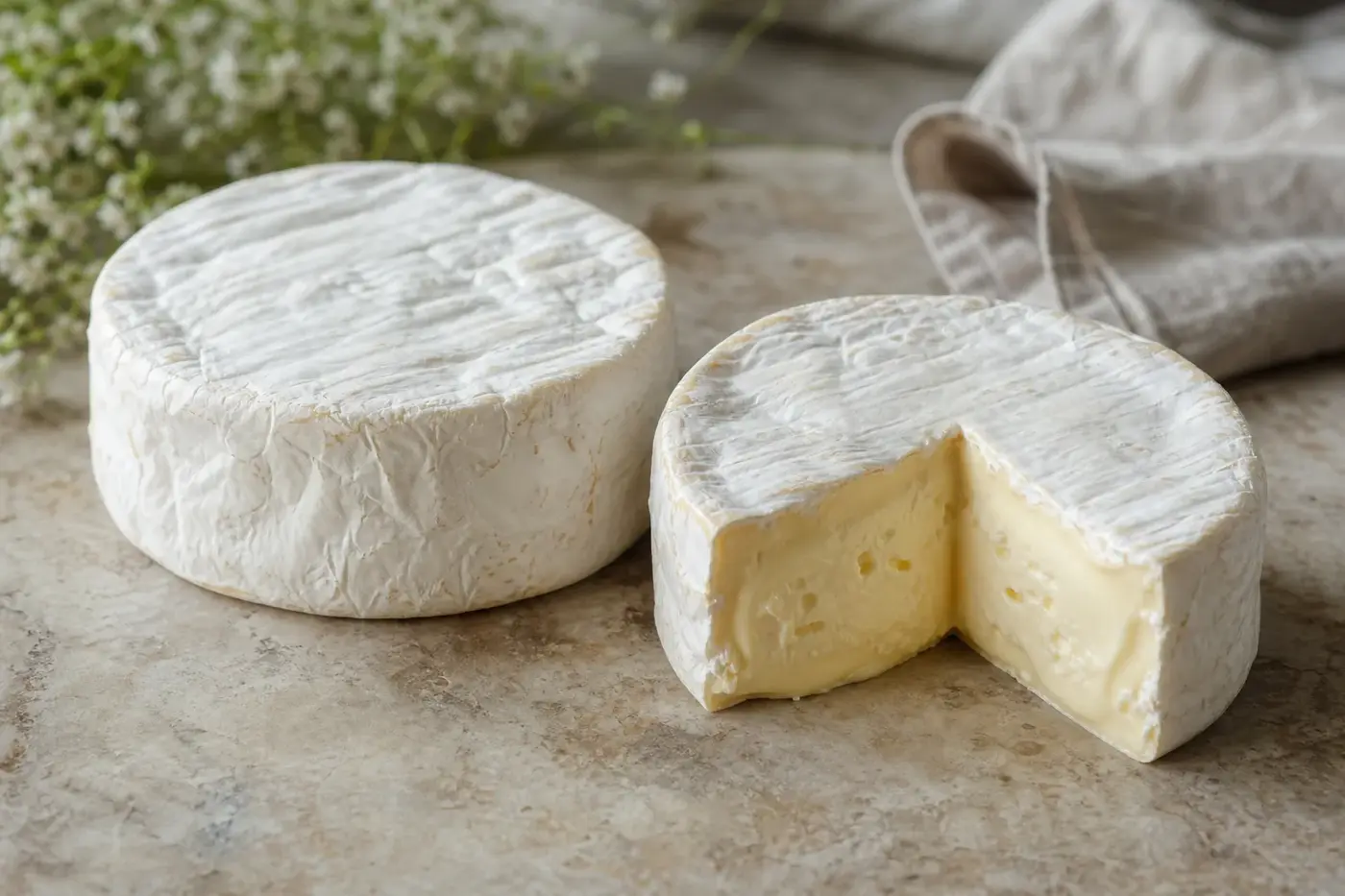
French Cheese: The Complete Guide
Picture Normandy’s pastures, then follow the milk towards the Loire’s goat dairies, the Jura’s shared cheesemaking traditions and the sheep country of the Pyrenees.