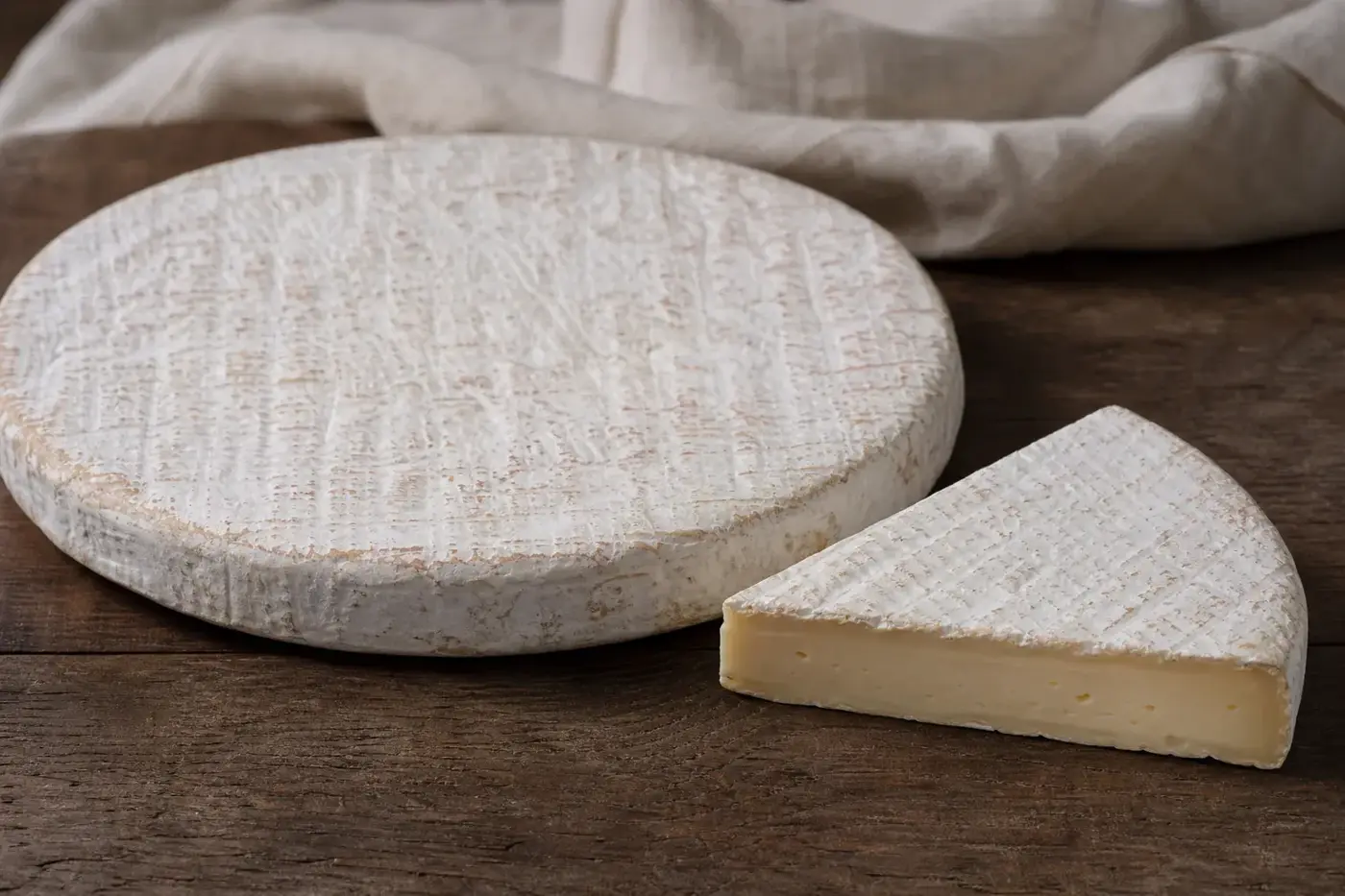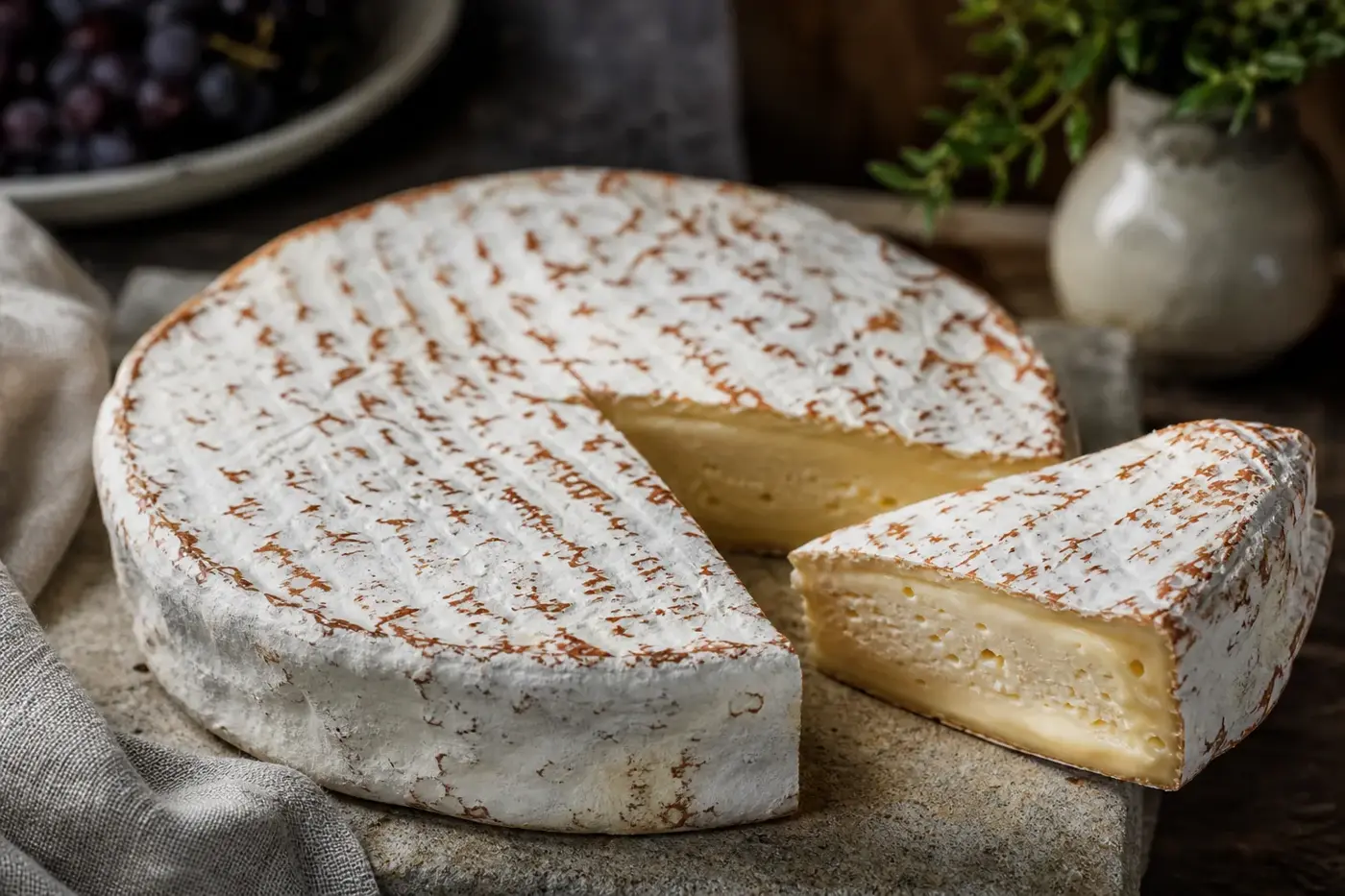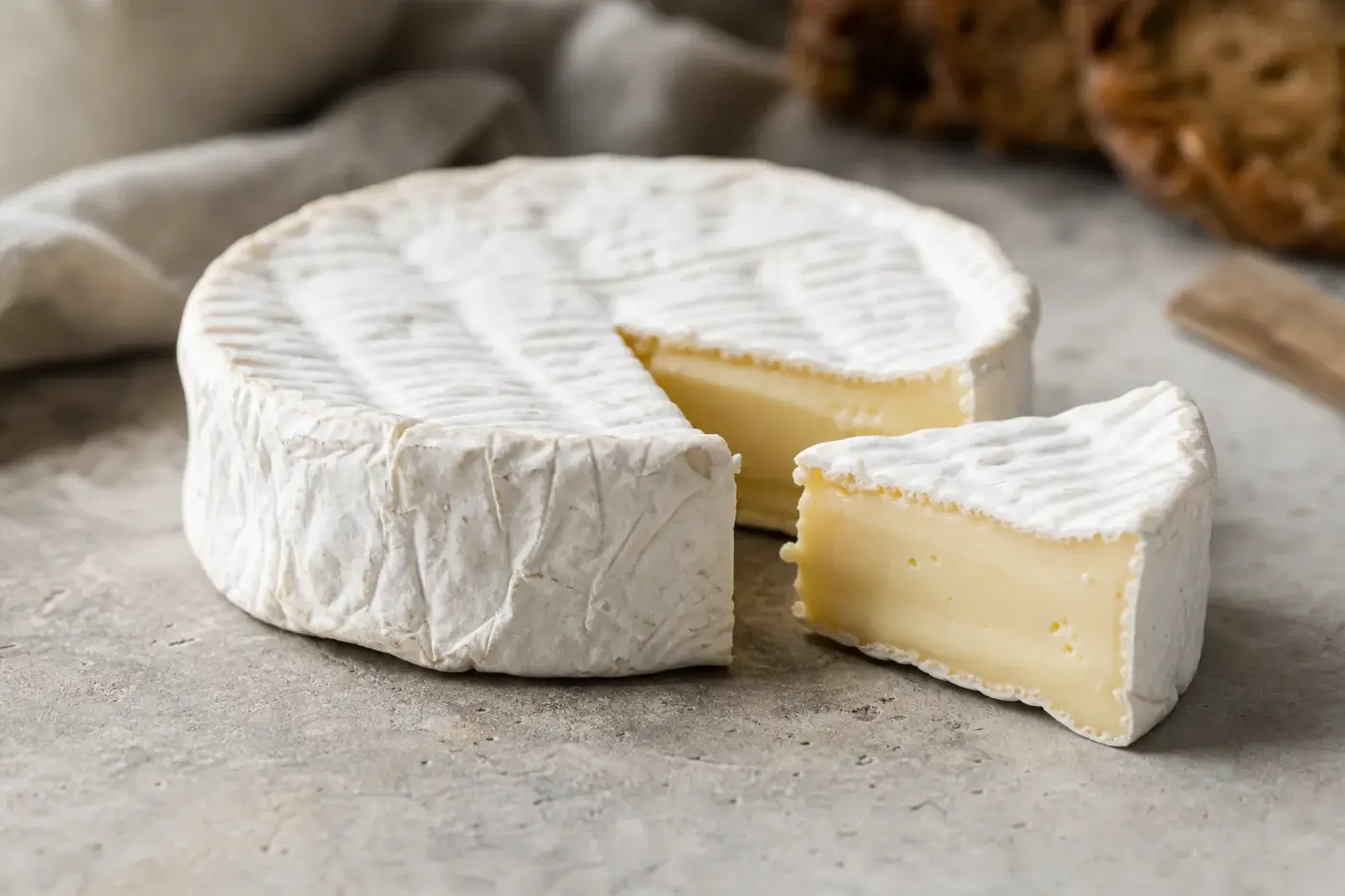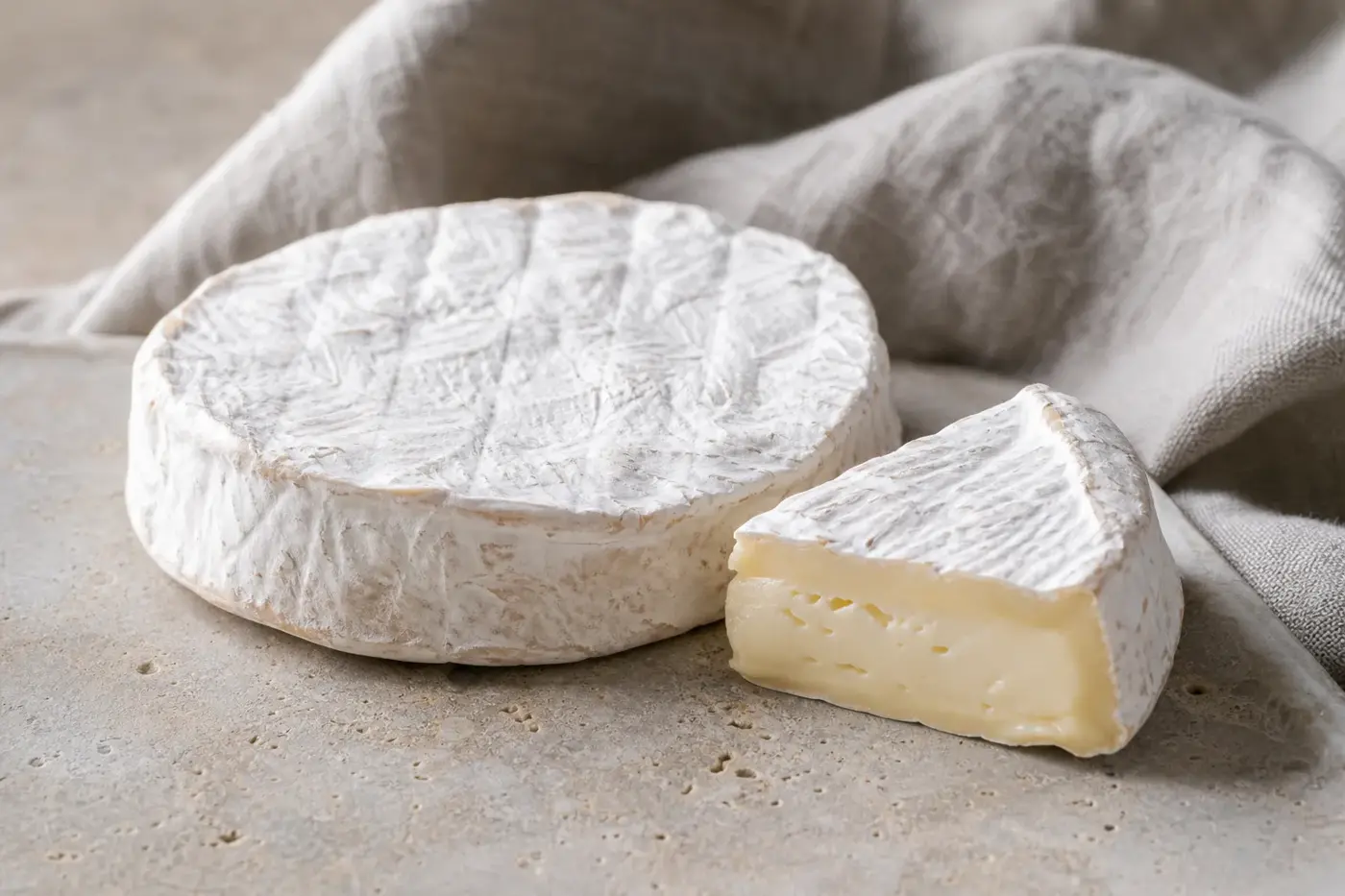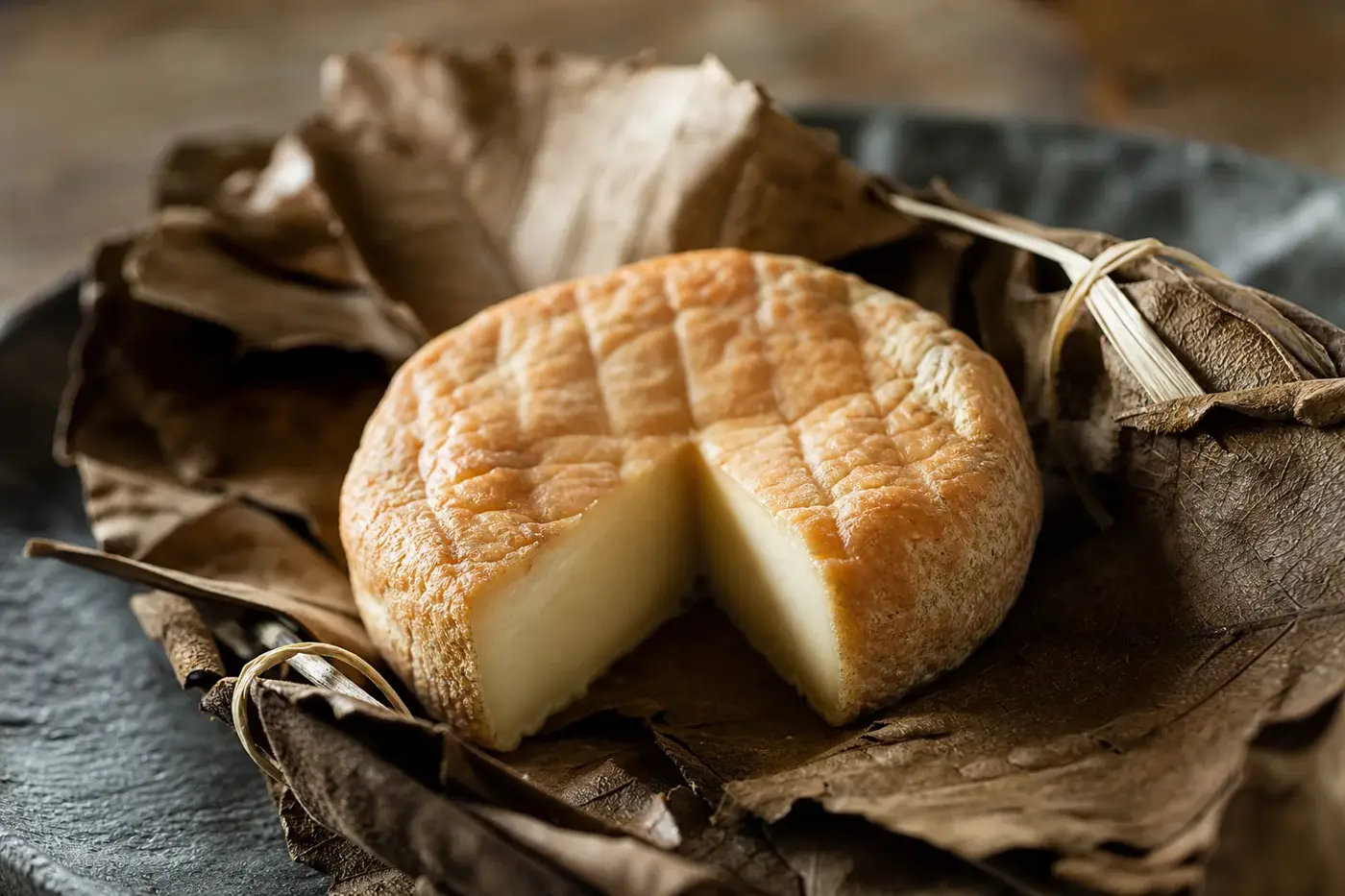
Untie the raffia and ease back the brown chestnut leaves. Inside sits a small, soft cheese from Provence, still carrying the character of its wrapping. Raw goat milk, local goat farming, a rapidly set curd and time beneath those leaves all shape Banon. It takes its name from the village of Banon and holds protected designation of origin (PDO) status in Great Britain.[1][2][4]
| A few useful details before you unwrap | Banon |
|---|---|
| Name to look for | Banon.[1][3] |
| Registration authority and identifier | European Commission; eAmbrosia register ID: Not verified. Registration instrument: Commission Regulation (EC) No 641/2007.[3] |
| EU protection | Registered PDO under a regulation published on 12 June 2007. Current register status and procedural stage: Not verified.[3] |
| Great Britain protection | Registered PDO; UK scheme registration dated 31 December 2020. Review date: November 2026.[4] |
| Where it must be made | Specified communes and parts of communes in Alpes-de-Haute-Provence, Hautes-Alpes, Drôme and Vaucluse, France.[1] |
| The milk and the set | Exclusively raw, whole goat milk; rennet coagulation.[1] |
| Size of your parcel | 90 to 110 g without leaves; wrapped diameter 75 to 85 mm and height 20 to 30 mm.[1] |
| Time to mature | Minimum 15 days after rennet addition, including at least 10 days under leaves. Typical sale age: Not verified.[1] |
| Outside and inside | Thin cream-yellow to golden-brown rind; homogeneous, supple, soft paste.[1] |
| Pregnancy guidance | UK: NHS guidance on foods to avoid in pregnancy, review date November 2026.[5] |
Your first look beneath the leaves
With the wrapping open, you can see what makes this little cheese so distinctive. INAO describes a golden-brown surface and an interior soft all the way to the centre. The leaves are part of the making, not merely the presentation: Banon keeps maturing inside them before it is ready for sale.[1][2]
Think of it as a whole little cheese, rather than an anonymous portion of chèvre. Ask your cheesemonger about the batch, its maturity and when it will suit the serving you have in mind. That conversation tells you more than the darkness of the leaves. The strongest-smelling parcel need not win your affection.
Follow the woodland aromas to the centre
Goaty, animal notes lead the official specification’s account of Banon’s flavour and aroma. Woodland and ammoniacal aromas often follow, with a slight bitterness at the finish. The mature paste is homogeneous, supple and yielding. These are the specification’s descriptions, rather than a fromage.co.uk tasting.[1]
INAO pays particular attention to that woodland character. It attributes some of Banon’s distinctive aromas to tannins moving from the chestnut leaves into the cheese. The leaves help create the conditions for flavour to develop. They do not, however, turn the parcel into a promise of roasted chestnuts.[2]
The ripening happens in two stages. First, the uncovered cheese develops surface flora; then it continues maturing beneath its leaves. The cited accounts describe this process, but do not map how the flavour and aroma change with age.[1]
Tell the seller which textures and levels of intensity you enjoy, then ask how this particular cheese compares. When you taste it, try the rind separately from the centre and notice what lingers after swallowing. Woodland aromas and slight bitterness are useful things to look for. You need not turn every mouthful into an examination.
Out among the goats of Haute-Provence
Dry hills, plateaux and Mediterranean scrub make up Banon’s heartland in Haute-Provence. INAO describes a pastoral landscape where goats use both grazing and browsing land. The village gives the cheese its name, but the production area reaches across parts of four departments.[1][2]
Milk production, cheesemaking and maturation must all take place within the legally defined area. Some communes sit only partly inside its boundaries. For you, that means the origin is considerably more precise than a department name or a broad claim of Provençal roots.[1]
The permitted breeds are Commune Provençale, Rove and Alpine, plus crosses between them. Their basic ration must come predominantly from the defined area and comprise grazing, browsing and specified dry forage. The goats must graze regularly within the area for at least 210 days each year. Silage and wrapped fermented forage are prohibited.[1]
Here, the link between cheese and countryside has practical force. The rules govern where the milk comes from and what the animals eat, not simply the address on the finished parcel. A producer may also share individual choices and observations from the farm. Keep those details separate from the requirements every producer in the appellation shares.
A quick curd, a soft landing
Banon begins with caillé doux: a rapidly formed curd set with rennet. Rennet is an enzyme preparation that turns milk into a gel, allowing liquid whey to drain away. The specification contrasts this Provençal tradition with the much slower lactic coagulation used for many other goat cheeses.[1]
So “soft goat cheese” gives you only part of the picture. Two cheeses can look much alike at the counter yet have taken different routes through the dairy. For the wider distinctions between milk treatments, see raw, thermised and pasteurised cheese.
Banon’s milk must remain raw and whole. The specification allows rennet, lactic cultures, ripening cultures and salt, while restricting other additions and treatments. Cutting the curd is compulsory. Moulding requires human intervention, even where certain mechanical aids are used.[1]
Follow the sequence and the finished cheese starts to make sense: rapid coagulation, cutting, whey removal, moulding and drainage. Much of Banon’s identity is established before a leaf comes near it. Its soft interior comes from this defined method followed by maturation. A handsome wrapper alone cannot do the job.[1]
What happens before the raffia is tied
Before the leaves go on, Banon must develop a well-established, even covering of surface flora. This first, uncovered maturation lasts 5 to 10 days after rennet addition. Salting can use dry salt or brine. Once wrapped, the cheese gets at least another 10 days to mature.[1]
The leaves have their own precise requirements. Natural, brown chestnut leaves are collected in autumn, stored dry and rehydrated before use. They must cover the cheese completely and be secured with natural raffia. Treatment with wine spirit or grape marc is also permitted before wrapping, so ask the producer about its practice if that matters to you.[1]
The total minimum maturation starts when the rennet is added, not when someone ties the parcel. Keep that starting point in mind when you see an age of “15 days”.[1]
Picture the change from an uncovered little cheese, already developing its surface, to a fully enclosed parcel. Inside, maturation continues. The leaves are not packaging added after all the cheesemaking and ripening is finished. That final covered stage belongs to the making.
From household cheeses to Banon’s market
Long before chestnut leaves became Banon’s most recognisable feature, they had a practical job. The specification describes wrapping as both a preservation practice and a manufacturing technique. Their robust structure and tannic qualities made them valuable. Enclosing the cheese limits its exposure to air and helps its aromas develop.[1]
The French dairy appellations industry body connects the wrapping with keeping household cheeses for longer before sale at Banon’s market. In its account, that market explains how the village’s name came to belong to the cheese. The parcel and the place grew into the same story.[9]
The documented production story begins at home. Families turned milk into cheese, wrapped it and took surplus production to local markets. INAO also recounts a Roman-emperor tale, explicitly as a legend. That story of appetite belongs apart from the practical history.[1][2]
The specification’s historical account identifies an 1886 cookery-book reference connecting folded goat cheeses with Banon. Earlier medieval references appear in promotional accounts. Those need separate examination before you use them as evidence for the precisely defined cheese made today.[1][9]
Behind the leaves lies an ordinary household challenge: making seasonal milk useful for longer. Wrapping offered an answer. Its role in preservation and its contribution to the cheese’s character now sit side by side in the modern specification.
What the protected name brings to your table
Banon’s appellation connects a defined place with rules for milk, breeds, feeding, manufacture, maturation and presentation. Its EU registration instrument is Commission Regulation (EC) No 641/2007. Great Britain also lists Banon as a registered PDO under its separate scheme.[1][3][4]
The two records have different dates. The GB register gives 31 December 2020 as its scheme registration date, while the EU regulation was published on 12 June 2007. Article 2 of that regulation provides for entry into force on the twentieth day following publication.[3][4]
Buying in the EU? Look as closely at the label as you do at the leaves. The specification requires the appellation name and EU PDO symbol, and provides for individual identification. The brown wrapper catches your eye; the complete label gives you considerably more to go on.[1]
For the distinctions between PDO, PGI and TSG, turn to the guide to protected names. For milk treatment, producer information and dates, see how to read a cheese label.
Choose your parcel and keep it well
Start with the label, the condition of the package and the date you plan to eat the cheese. Ask the seller about its maturity and the maker’s storage instructions. Once you open it, keep the label, especially its date, storage directions and identification details.
For chilled, ready-to-eat food at home, the UK NHS advises a functioning fridge set to 5 °C or below. Follow the label and use opened food within two days unless the packaging says otherwise.[6]
Keep Banon protected in its packaging and separate from raw foods. Follow the use-by date and the producer’s instructions. Intact leaves do not give you extra storage time: the NHS guidance on refrigeration and dates concerns the food inside the parcel.[6]
For help with wrapping cut cheese or organising your fridge, see how to store cheese at home. Keep the particular cheese’s storage instructions alongside that practical advice.
Untie, unfold and enjoy your first taste
Take out only the amount you intend to serve, letting it lose its refrigerator chill shortly before eating. UK NHS guidance says ready-to-eat food should be eaten within four hours of leaving the fridge. In hotter-than-usual weather, FSA consumer advice says to discard perishables left out for more than two hours.[6][8]
Untie the raffia or cut it carefully. Unfold the leaves over a plate to support the soft cheese, then remove the leaves and ties before eating. Serve the paste and follow the producer’s directions for the rind of that particular cheese.
For your first taste, start with plain bread and keep accompaniments separate. INAO suggests fig jam and white wines from the surrounding wine country, including Pierrevert, Ventoux and Luberon.[2] Fresh seasonal figs or pear are additional editorial suggestions. Try a little beside the cheese, rather than covering it.
If you are an adult of legal drinking age and choose alcohol, a small serving of Provençal white wine follows that regional suggestion. Still or sparkling water offers an alcohol-free alternative that leaves the cheese easy to assess. For the broader principles, explore the cheese and wine pairing guide.
Before you eat: the raw milk guidance
Banon must be made with raw milk. For pregnancy in the UK, the NHS says foods made from unpasteurised milk, including soft ripened goat cheese, must be thoroughly cooked. Its cheese guidance specifies cooking until steaming hot.[1][5]
The NHS also identifies newborn babies, older people and people whose conditions or treatments weaken immunity as groups at increased risk of serious listeriosis. Consult its current guidance and your own country’s food safety authority. Ask your healthcare professional about your circumstances.[6]
General information only, not medical advice: follow the official guidance where you live.
Questions people ask
What is Banon cheese made from?
Banon is made exclusively from raw, whole goat milk. It takes its name from the village of Banon in Provence and has PDO status in Great Britain.
Why is Banon wrapped in chestnut leaves?
The leaves limit the cheese’s exposure to air and contribute to its aromatic development. Banon continues to mature beneath them.
How long is Banon matured?
Banon must mature for at least 15 days from the addition of rennet. This includes at least 10 days under chestnut leaves.
Can you eat Banon during pregnancy?
The NHS advises that foods made from unpasteurised milk, including soft ripened goat cheese, must be thoroughly cooked during pregnancy. Its cheese guidance specifies cooking until steaming hot. Check the current [NHS guidance on foods to avoid in pregnancy](https://www.nhs.uk/pregnancy/keeping-well/foods-to-avoid/).
How do you serve Banon?
Untie or cut the raffia, unfold the leaves over a plate and remove the leaves and ties before eating. INAO suggests fig jam and white wines from the surrounding wine country, including Pierrevert, Ventoux and Luberon.
Sources
[1] INAO and French Ministry of Agriculture, Cahier des charges de l’appellation d’origine « Banon », approved by the order of 27 December 2017, published in the ministry’s Bulletin officiel on 4 January 2018. Sections 2 to 8 cover description, area, traceability, production, geographical connection and labelling. Official specification.
[2] INAO, Banon, undated product account, retrieved November 2026. Description, sensory account, leaf tannins, regional pairings and legend. Official product account.
[3] European Commission, Commission Regulation (EC) No 641/2007 of 11 June 2007 registering a name in the Register of protected designations of origin and protected geographical indications Banon (PDO), Official Journal L 150, 12 June 2007, page 3. Registration regulation.
[4] Department for Environment, Food & Rural Affairs, Banon, UK protected food and drink names register, published 4 January 2021, retrieved November 2026. GB register entry.
[5] NHS, Foods to avoid in pregnancy, current page retrieved November 2026, section “Cheese, milk and other dairy”. UK pregnancy guidance.
[6] NHS, Listeriosis, reviewed 10 November 2023, current page retrieved November 2026. Sections “Risks of listeriosis” and “How to avoid listeriosis”. UK listeriosis guidance.
[8] Food Standards Agency, Food safety in a heatwave: advice for consumers, current official guidance retrieved November 2026. Hot-weather handling advice.
[9] Conseil national des appellations d’origine laitières, Banon, Produits laitiers AOP, undated industry account retrieved November 2026. Its historical statements are attributed as the industry body’s account. Industry product account.
This desk-researched article compares the official production specification, registration instrument, GB register entry and published UK health guidance, with attributed supporting accounts from INAO and the dairy appellations industry body.
Last checked: November 2026
Last checked November 2026.
The editors suggest you read next