Beillevaire
Look beneath Machecoulais’s lightly pink, wrinkled rind and you find an ivory centre, with a softer layer tucked just under the surface.
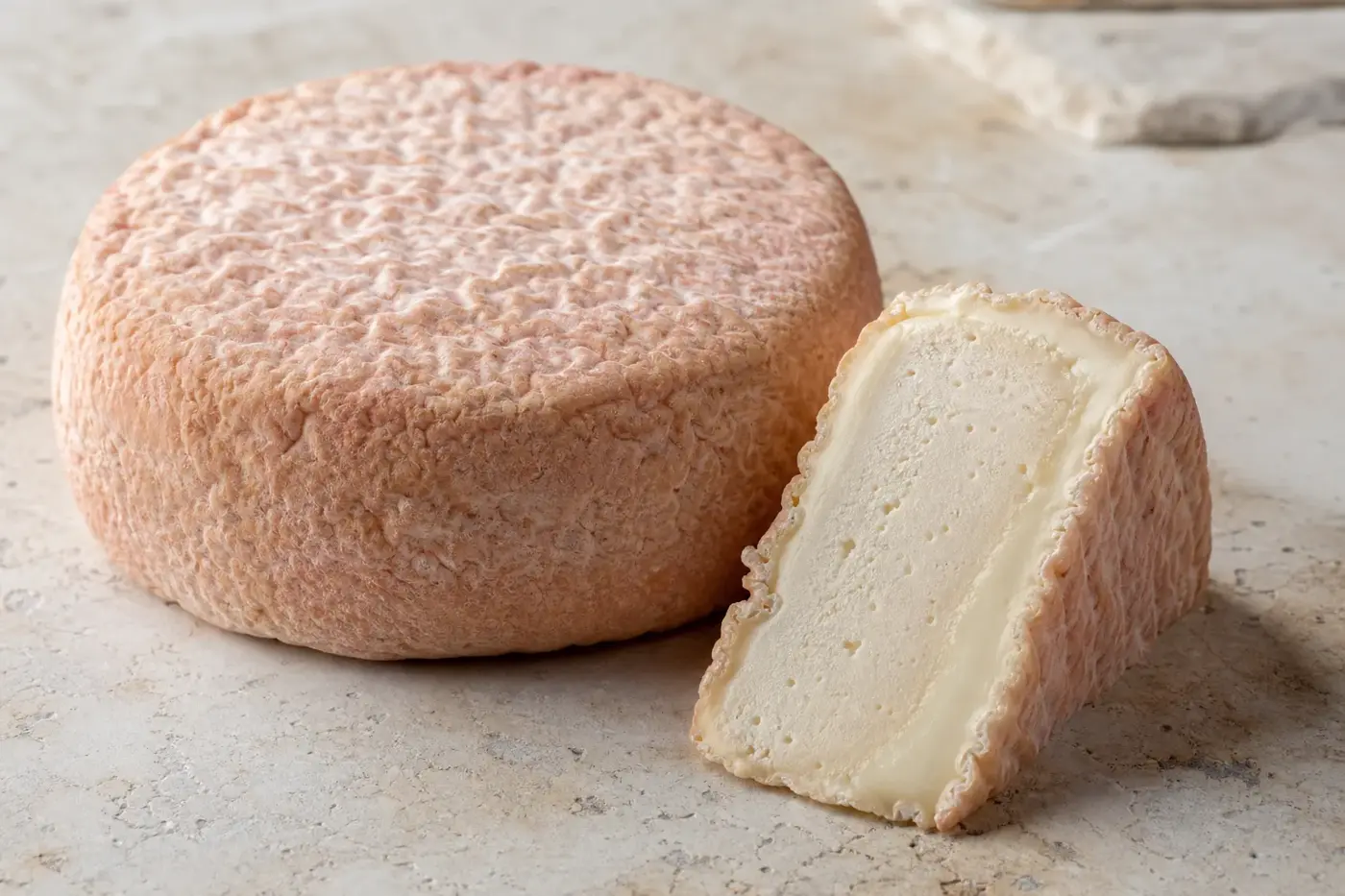
Look beneath Machecoulais’s lightly pink, wrinkled rind and you find an ivory centre, with a softer layer tucked just under the surface. This raw cow’s milk cheese comes from Machecoul. Its maker, Beillevaire, describes milky notes: a quiet introduction to a business with plenty going on.[3]
That little cheese opens the door to a bigger story. Rooted in Machecoul in Loire-Atlantique, Beillevaire makes cheese, matures it and selects other producers’ work for its counters. Here, affinage, the craft of cheese maturation, belongs alongside making and selling.[14]
| Field | The essentials |
|---|---|
| Home | Machecoul, Loire-Atlantique, France.[3] |
| Beginnings | 1980, according to Beillevaire’s history.[2] |
| Founder | Pascal Beillevaire.[1] |
| What it does | Cheesemaking, dairy production, maturation, selection, retail and wholesale.[2] |
| Where the milk comes from | Partner farms around its production sites.[4] |
| Website operator | ETABLISSEMENTS BEILLEVAIRE.[5] |
| Visiting | Access not established; check official visit information before travelling.[6] |
One name, four ways to fill your cheese board
Spot Beillevaire on a counter ticket and you have a useful question to ask: what part did it play? The business makes cheeses, matures them and chooses them for sale. Its name may identify the selector or maturer, rather than the original maker.[2]
Beillevaire describes four trades: fabricant, maker; affineur, maturer; dénicheur, finder of products; and marchand, merchant. Ask which hat it wore for the cheese that catches your eye. Four hats sounds excessive, but here each has a job.[2]
Back to the family farm at La Vacheresse
The story starts at La Vacheresse, the family farm in Machecoul, in the Marais Breton-Vendéen. Beillevaire dates its beginnings to 1980, when Pascal Beillevaire built on his parents’ market trade in milk, cream and eggs. Talking directly to customers was part of the business from the outset.[1][2]
Next came cream, butter and fromage blanc, a fresh white cheese, made for local customers. Visits to other cheesemakers widened the selection. According to the company’s history, Salers was the first cheese brought in: other people’s cheeses were finding a place beside its own dairy produce.[1][2]
The making side grew too. In 1993, Beillevaire’s account records the enlargement of the original production unit into a dedicated workshop.[1][2]
Follow the milk to the neighbouring farms
Machecoul is not merely an address on the packaging. Milk still becomes dairy produce here, with cheese, cream, butter, yoghurt, fromage blanc, cooked desserts and cheese preparations among the workshop’s activities. Beillevaire describes direct collection from neighbouring farms, putting relationships with milk producers at the heart of its workshops.[3][4]
For the cream operation, the rhythm is morning and evening collection. According to Beillevaire, milk is separated on arrival, then the cream is matured. Its milk range includes raw, whole and skimmed milk, but those words answer different questions: raw describes treatment; whole and skimmed describe fat content.[4]
Across the wider production operation, including the Vivarais workshop, you will find cow’s and goat’s milk. Sheep’s milk cheeses reach the maturation business through relationships with shepherds in Haut-Béarn. Follow the source cheese by cheese: this is a network of relationships, not one herd supplying everything.[7]
Inside the workshops, with room for butter
Machecoulais, Mojette, Pont d’Yeu and Cabri d’ici are Beillevaire’s own Machecoul creations. Its manufacturing directory also names workshops at Val de Sienne, Fontenille, Vivarais and La Savoyarde, alongside other locations across France. To trace your cheese, look for its production address, not the address of the shop that sold it.[3][13]
Then there is the butter. Raw butter made in wooden churns remains a Beillevaire speciality, with unsalted and lightly salted versions, plus butter with a crunchier salted texture. Flavoured butter preparations include seaweed and Espelette pepper: cream and butter are central here, not supporting acts waiting politely behind the cheese.[4]
The dairy range stretches to rice pudding, small pots of cream dessert and panna cotta. Beillevaire describes hand preparation in its cooked-products workshop, while machinery incorporates the air into aerated desserts. Hands and equipment each have their part to play.[8]
Down to the cellars, where patience takes over
A cheese can travel far from its original dairy before it finishes maturing. The affineur takes responsibility for that ripening, and Beillevaire’s cellar listings reveal distinct specialisms. Machecoul is particularly associated with uncooked pressed cheeses; Vieu-d’Izenave in the Ain matures Comté; the Drôme operation follows the Dieulefit approach to maturing Picodon.[9]
At Lannes-en-Barétous in Haut-Béarn, the division of work becomes particularly clear. According to Beillevaire, local shepherds supply fresh sheep’s milk tommes to the group’s cellar during their production season. The cellar takes over their subsequent care.[7]
Milk producer, cheesemaker and maturer can each make a separate contribution to the cheese you eat. Ask where it was made and where it was matured: those answers tell different parts of the story. The guide to how cheese is made covers the earlier stages; the Comté guide follows one cheese more closely.
Three cheeses worth getting to know
Start with Machecoulais if you want to explore the house-made range. Its Machecoul origin, raw cow’s milk and the maker’s description of its rind, interior, flavour and texture give you more to go on than the Beillevaire name alone.
Cabri d’ici brings goat’s milk into the picture. Beillevaire identifies it as a raw milk goat’s cheese and places it among its own Machecoul creations. Texture and flavour details are not available here.[3][10]
Comté tells the maturation story. At Vieu-d’Izenave, the group describes cheeses with buttery flavours and, after longer maturation, sometimes a crunchy texture. Those tasting descriptions belong to Beillevaire’s selection and that cellar’s work, so keep the place of maturation alongside the original dairy when tracing your cheese.[7]
Find your counter, from Machecoul to Talensac
Do you prefer a shop, a covered-market counter or an outdoor market? All three appear in Beillevaire’s location directory. It lists outlets in Machecoul and Nantes, including the Talensac market, within a much wider network.[11]
Find the counter that suits you, then contact it about the cheese you want. The directory tells you where it is; the counter can tell you what is currently available. A location listing is not a promise that your chosen cheese will be waiting.[11]
Beillevaire also supplies independent cheesemongers, department stores, hotels and restaurants, in France and through export. If you meet one of its cheeses in a restaurant, it may have arrived through the wholesale business rather than a Beillevaire shop.[2]
Read the milk declaration, not just the name
Start with the individual product’s milk declaration, not the shop name. Beillevaire describes Machecoulais and Cabri d’ici as raw milk cheeses. For another cheese, ask to see its label or product information, including the milk species and treatment.[3][10]
On French product information, lait cru means raw milk; lait pasteurisé means pasteurised milk. Keep the cheese’s name, maker, milk treatment and storage instructions together, especially when you buy a cut portion. Retain any information supplied with the wrapping.
If you want help making sense of the wording, turn to the guides to milk treatments and reading a cheese label. They explain the distinctions you will encounter.
From a family farm to a wider cheese world
The family farm explains where Beillevaire began. Its workshops and cellars explain its present scale, with production, buying, maturation, logistics and sales within the same business. The desserts also show why hand preparation and mechanisation make more sense operation by operation than as competing labels for the whole company.[13][8][9]
At the counter, you can learn more than “Is it artisan?” will ever tell you. Ask which dairy made the cheese, whose milk went into it, what was done by hand and who matured it. A farm-made cheese selected from another producer has a different production history from one made in a group workshop.[1][13]
The useful story belongs to the piece in front of you. Ask for that, rather than settling for a label.[1][13]
Bring home a cheese that fits your plans
Tell the cheesemonger when you plan to eat your cheese and whether it is for a board or for cooking. Ask which pieces will be ready, what size suits your plans and how to keep that particular cheese after cutting. Confirm availability with your chosen outlet, especially for one of the house-made cheeses.[11]
For storage and serving, consult the current Food Standards Agency guidance for England, Northern Ireland and Wales.[12]
For wrapping, cut surfaces and organising the fridge, see storing cheese at home. The most revealing purchase is a cheese whose maker, milk and maturation you can identify, whether Beillevaire supplied every stage or just one.
General information only, not medical advice: follow the official guidance where you live.
Questions people ask
Who founded Beillevaire and when?
Pascal Beillevaire founded the business, which dates its beginnings to 1980. He built on his parents’ market trade in milk, cream and eggs at the family farm in Machecoul.
Does Beillevaire make all the cheese it sells?
No. Beillevaire makes cheeses, but it also selects and matures cheeses made by other producers. Its name on a counter ticket may identify the selector or maturer rather than the original maker.
Which Beillevaire cheeses are made with raw milk?
Beillevaire describes Machecoulais as a raw cow’s milk cheese and Cabri d’ici as a raw goat’s milk cheese. For other cheeses, ask to see the label or product information for the milk species and treatment.
What does Machecoulais taste and look like?
Beillevaire describes Machecoulais as having milky notes in its flavour. It has a lightly pink, wrinkled rind, an ivory interior and a softer layer beneath the rind.
Where can I find Beillevaire cheese?
Beillevaire’s directory lists shops, covered market counters and outdoor markets, including outlets in Machecoul and Nantes. Contact the relevant counter to confirm its current selection.
Sources
Company sources below establish what Beillevaire publishes about its operations and products. Sensory descriptions are attributed to the company.
- Fromagerie Beillevaire, Notre histoire, undated, retrieved November 2026. Family farm origins, market selling and selection of other producers’ cheeses.
- Fromagerie Beillevaire, Nos savoir-faire, nos métiers, undated, retrieved November 2026. Four business activities, beginnings in 1980, workshop expansion in 1993 and professional distribution.
- Groupe Beillevaire, Fromagerie de Machecoul, undated, retrieved November 2026. Production activities, named house cheeses and Machecoulais description.
- Fromagerie Beillevaire, Le lait, le beurre & la crème, undated, retrieved November 2026. Milk collection, cream separation, milk range and butter products.
- Fromagerie Beillevaire, Mentions légales, undated, retrieved November 2026. Website operator and Machecoul address.
- Fromagerie Beillevaire, Visiter la fromagerie, undated, retrieved November 2026. Published visitor arrangements at the Machecoul production site.
- Groupe Beillevaire, Nos ateliers, undated, retrieved November 2026. Vivarais milk species, Haut-Béarn sourcing and Vieu-d’Izenave maturation descriptions.
- Fromagerie Beillevaire, Nos desserts, undated, retrieved November 2026. Dessert production and use of hand preparation and aeration equipment.
- Fromagerie Beillevaire, Nos caves d’affinage, undated, retrieved November 2026. Cellar locations and their stated specialities.
- Fromagerie Beillevaire, Les fromages de chèvre, undated, retrieved November 2026. Cabri d’ici identified among house-made raw milk goat’s cheeses.
- Fromagerie Beillevaire, Nos points de ventes, undated, retrieved November 2026. Shops, covered markets and outdoor-market listings.
- Food Standards Agency, How to chill, freeze and defrost food safely, published 18 December 2017, version retrieved November 2026. Applies to England, Northern Ireland and Wales.
- Fromagerie Beillevaire, Nos ateliers de fabrication, undated, retrieved November 2026. Named manufacturing locations across France.
- Fromagerie Beillevaire, La fromagerie Beillevaire, undated, retrieved November 2026. Overview of manufacturing, maturation, selection, selling and Machecoul origins.
- RappelConso, COMTE, BEILLEVAIRE, notice 2024-04-0196, version 1, published 22 April 2024. Historical batch-specific recall consulted for the editorial safety check.
This desk-researched article compares Beillevaire’s published histories, workshop descriptions, product information and distribution listings, with domestic storage advice checked against the Food Standards Agency.
Last checked: November 2026
Last checked November 2026.
The editors suggest you read next
Farmhouse, Artisan and Industrial Cheesemakers Explained
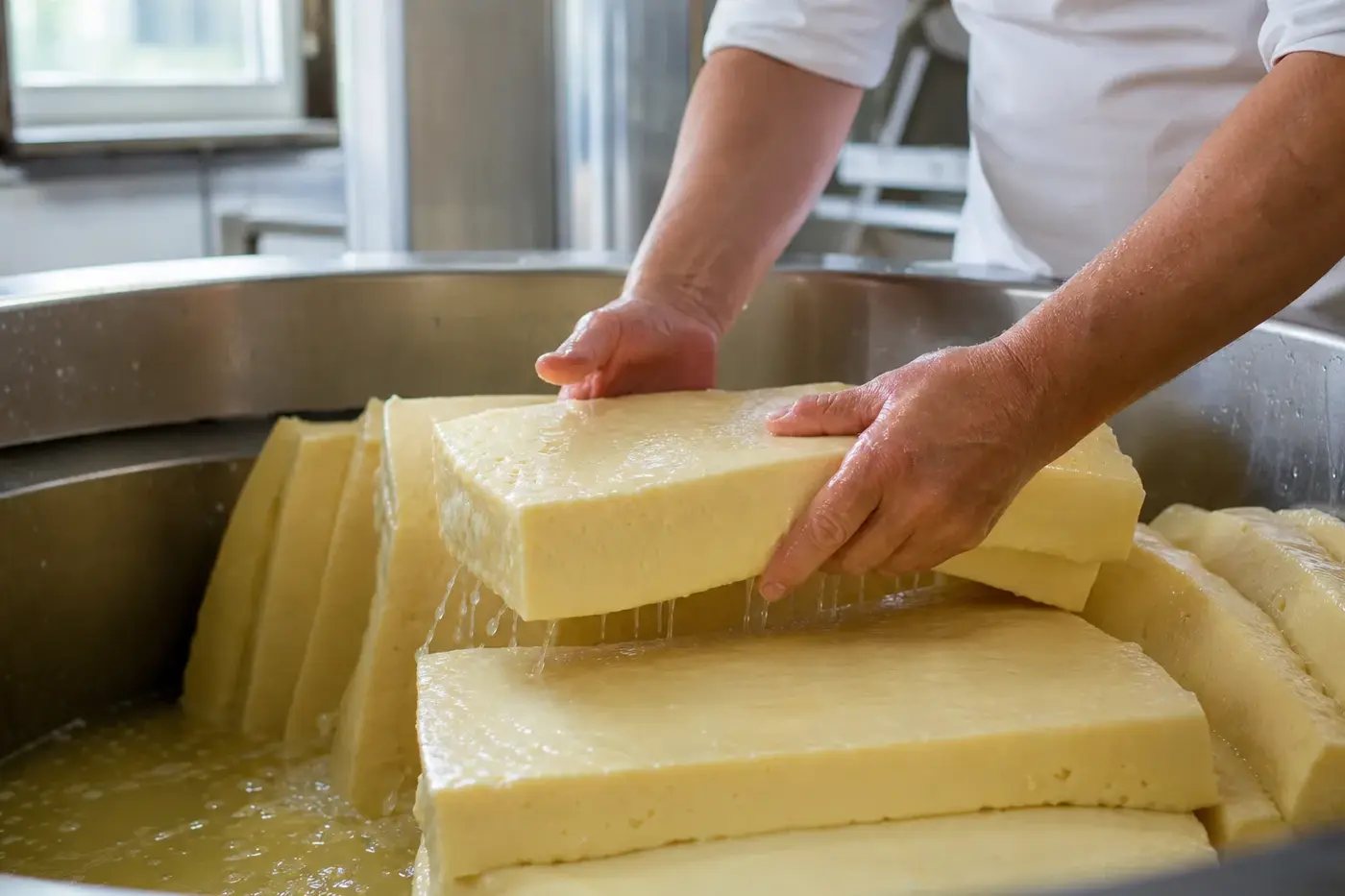
Slabs of curd are turned and stacked by hand.