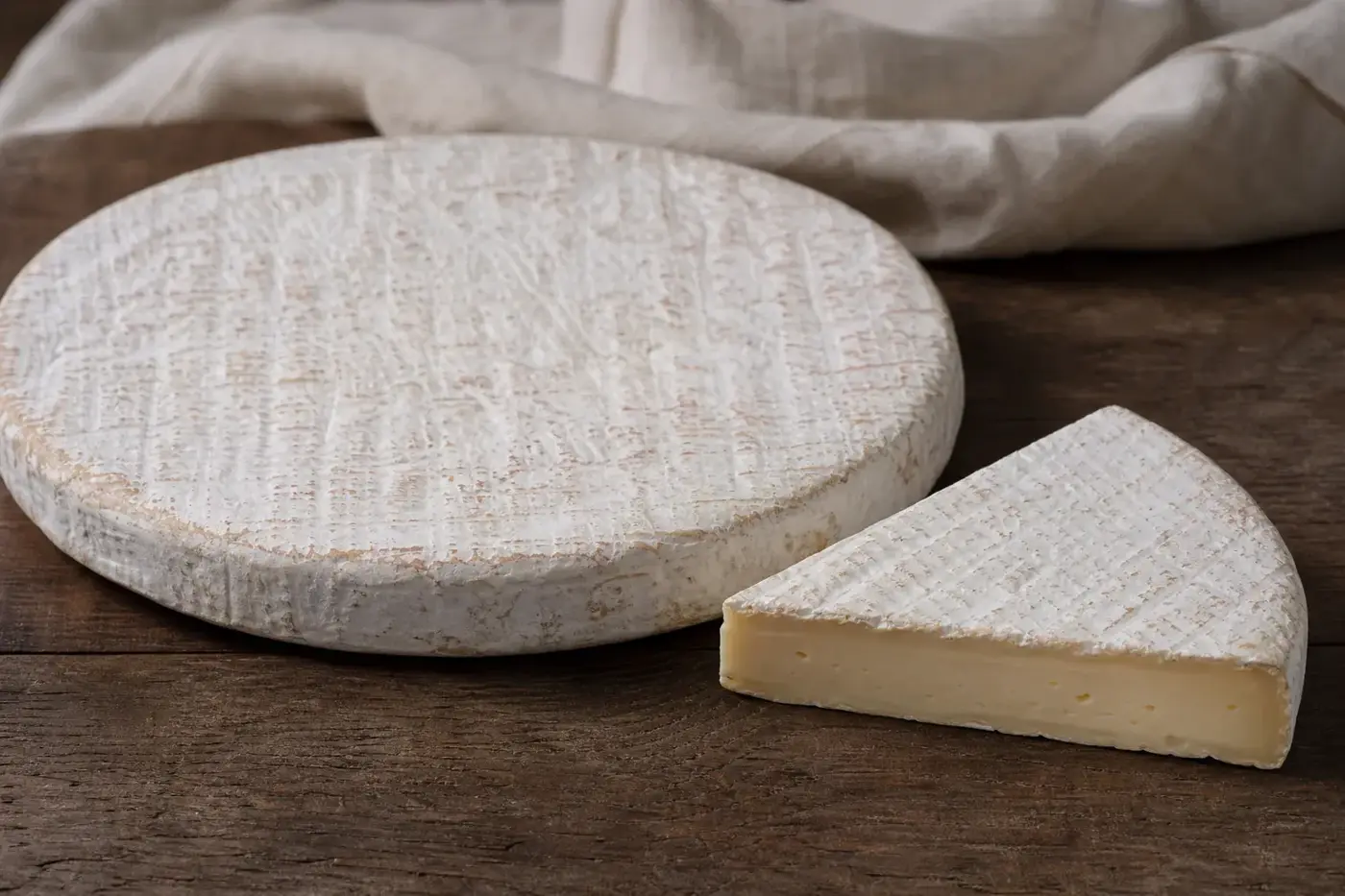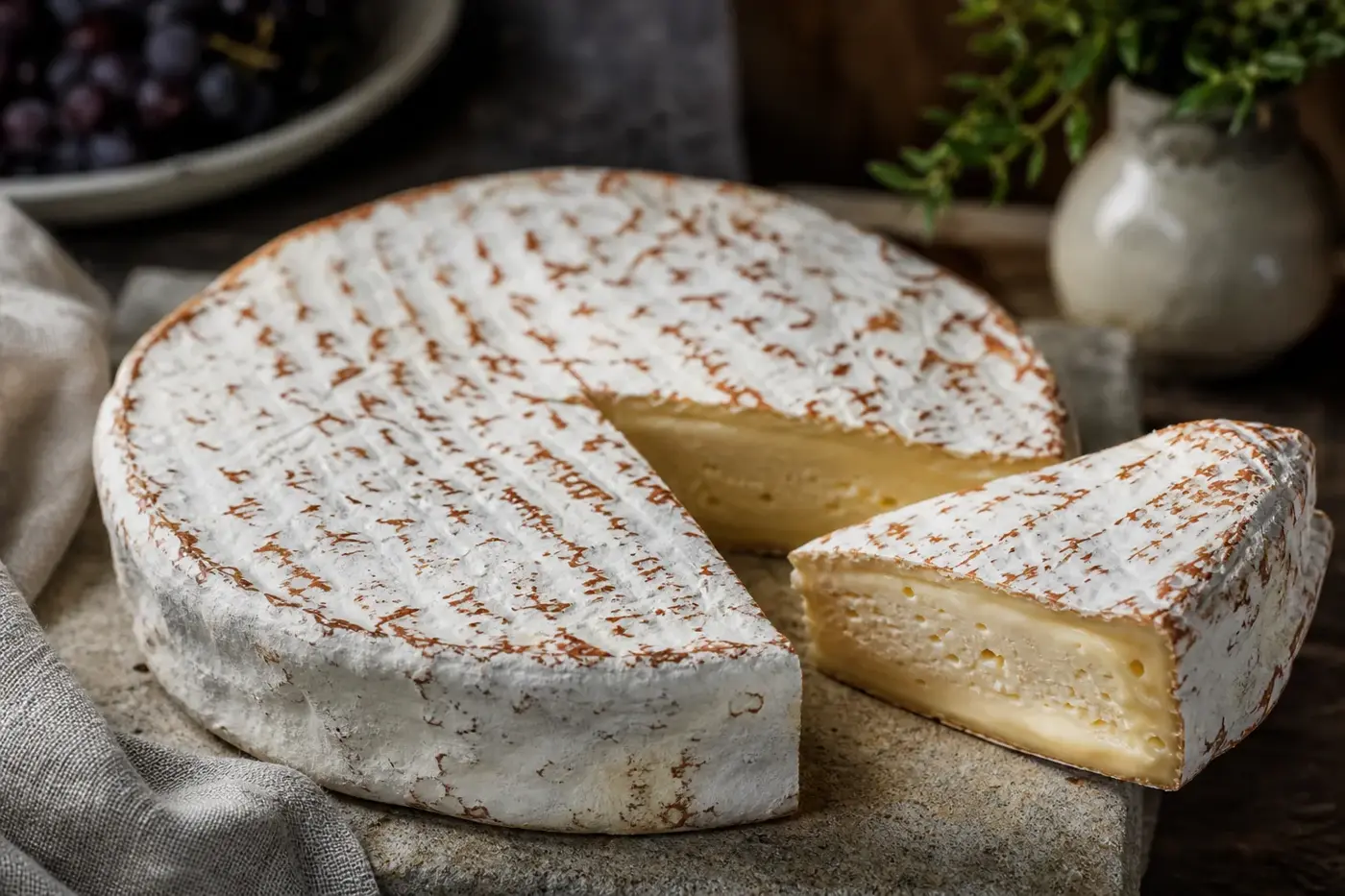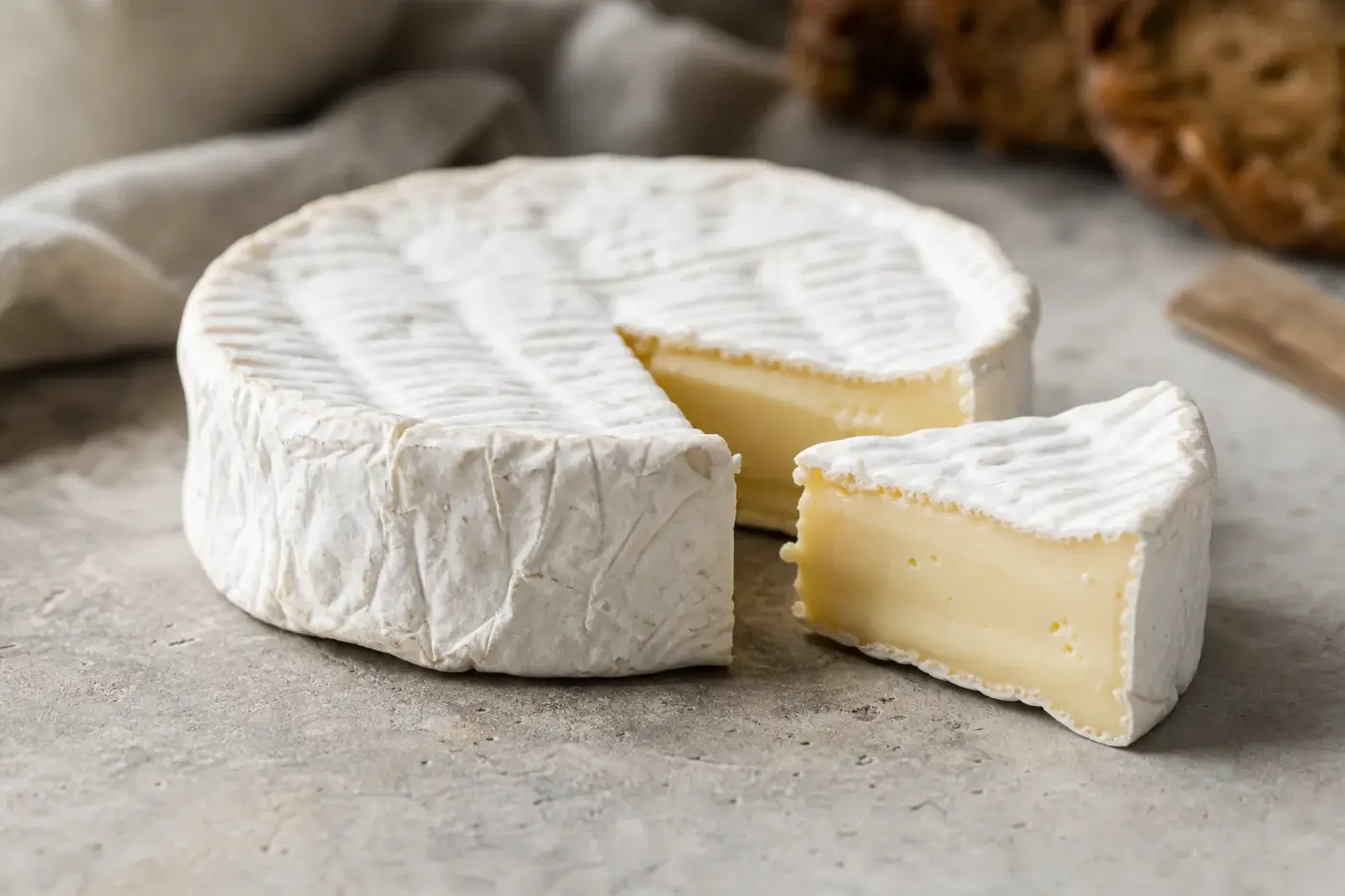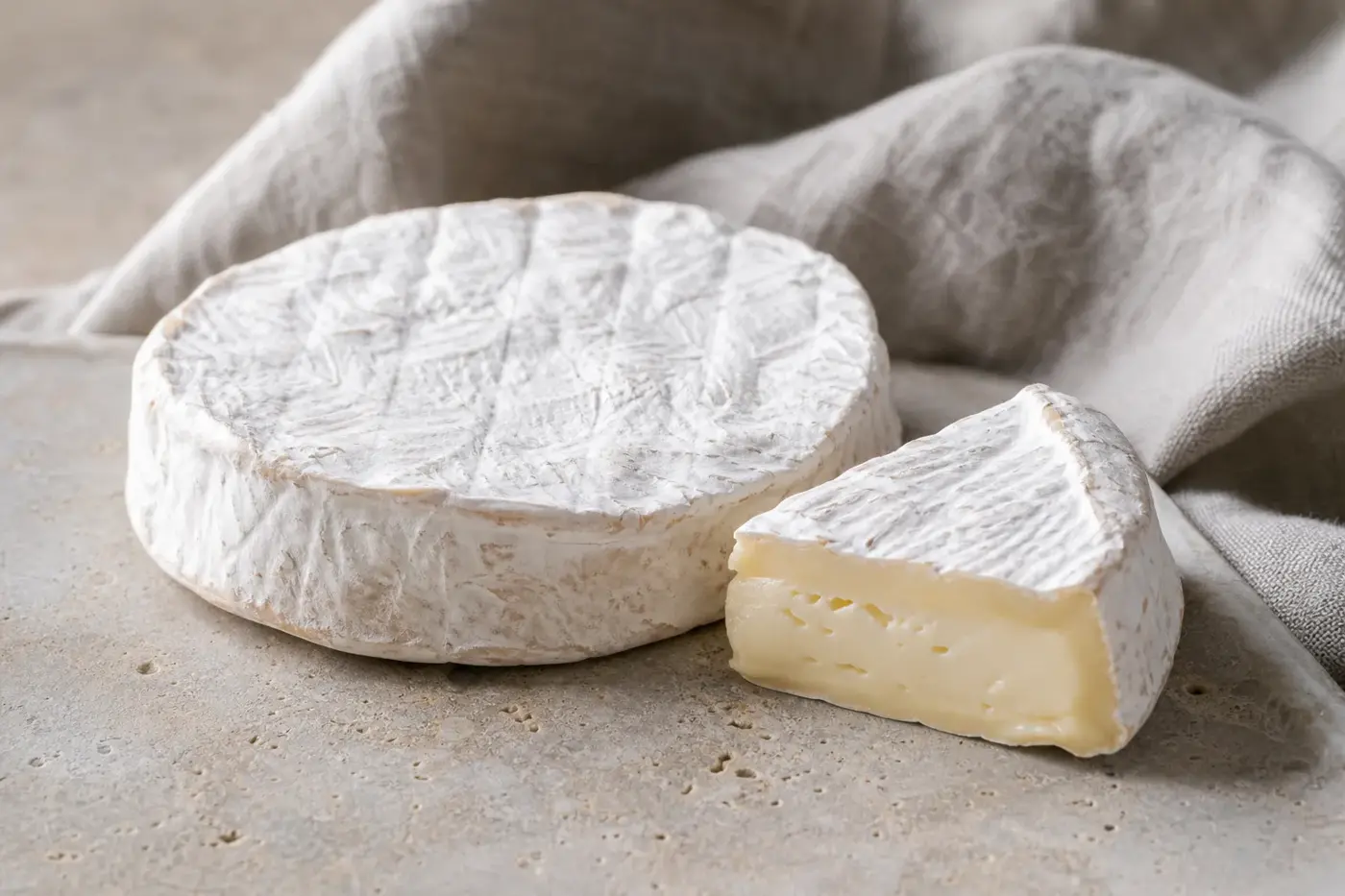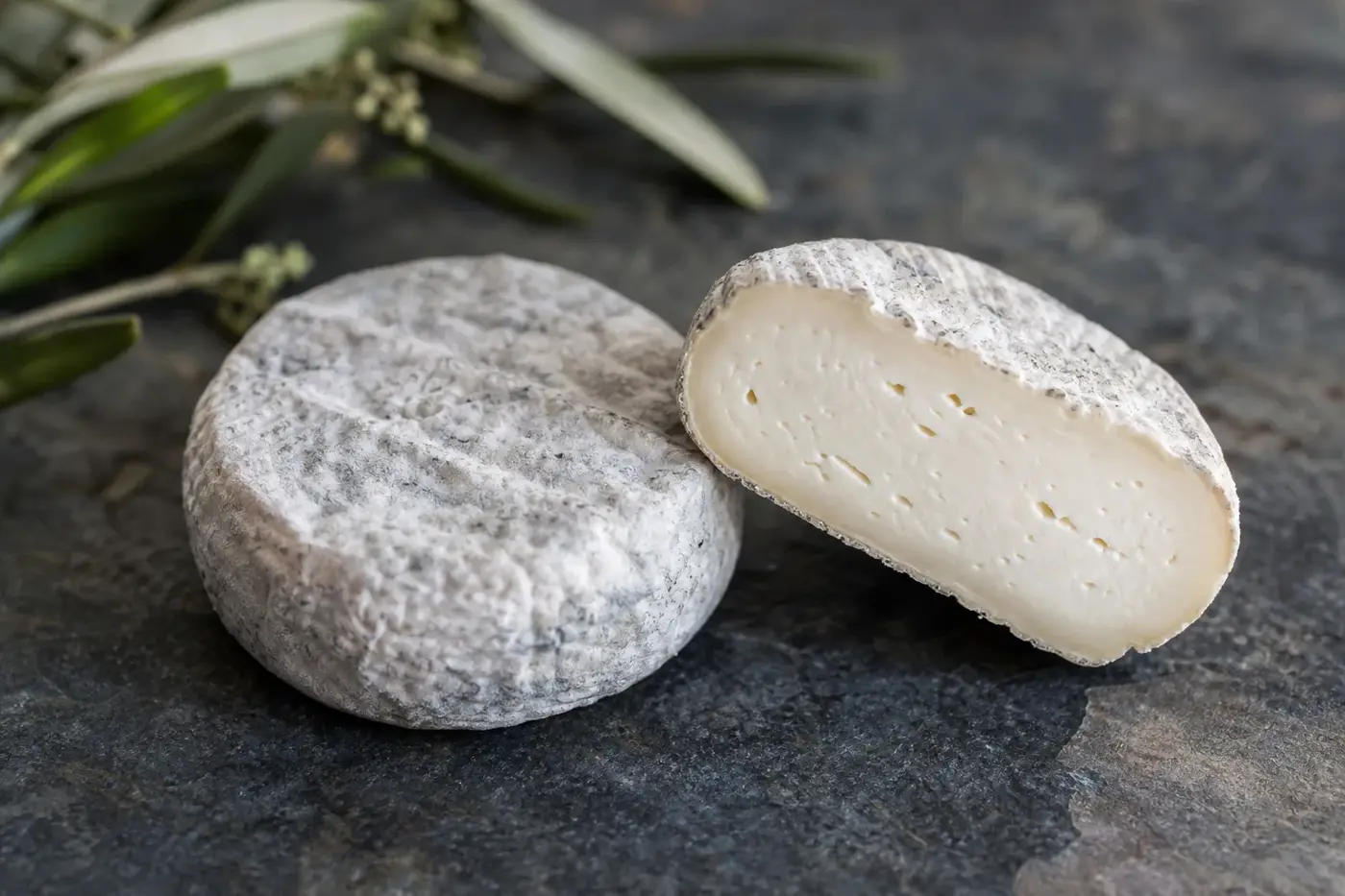
Your knife slips through a young Picodon’s supple paste. Around it, the rind might be white, blue, grey or brown. Leave this small, round French cheese longer to ripen and that yielding centre can become firm and brittle. Washing takes it somewhere else again.[1][2][4]
Made with raw whole goat’s milk, Picodon comes from Drôme and Ardèche, on either side of the Rhône. Drying, washing and time give it distinctly different lives. When you choose yours, maturity matters as much as the name: a young Picodon and a washed, Dieulefit-matured example offer very different company.[1][2][4]
| Your Picodon essentials | The details |
|---|---|
| The name to look for | Picodon.[1][3] |
| Registration authorities and identifiers | EU: European Commission; single document reference PDO-FR-02130. Current eAmbrosia record ID: unconfirmed. Great Britain: Defra, registered name Picodon.[3][4] |
| Protection | EU: current status unconfirmed. Northern Ireland: unconfirmed. Great Britain: registered PDO from 31 December 2020; entry dated November 2026.[3] Switzerland: unconfirmed. United States: unconfirmed. |
| Where it comes from | All of Drôme and Ardèche, plus specified communes in Gard and Vaucluse, France.[1] |
| Milk and how it sets | Raw whole goat’s milk; lactic coagulation with a small addition of rennet.[4] |
| Minimum maturing time | Unwashed: 12 days after renneting. “Affiné lavé” and “affiné méthode Dieulefit”: 30 days after renneting.[1][4] |
| Standard unwashed size | Diameter 5 to 7 cm; height 1.8 to 2.5 cm; minimum weight 60 g.[4] |
| Washed sizes | Diameter 4.5 to 6 cm; height 1.3 to 2.5 cm; minimum weight 45 g.[4] |
| Required composition | At least 45% fat in dry matter and at least 40 g dry matter per 100 g cheese.[4] |
Follow the goats into Picodon country
Picture the hills around the middle Rhône valley, with Ardèche to the west and Drôme to the east. You are in Picodon country. INAO, France’s national institute for origin and quality, roots the cheese’s identity in this goat-rearing landscape, rather than a single village.[2]
The legally defined area covers every commune in those two departments. In Gard, it includes Barjac, Méjannes-le-Clap, Rivières, Rochegude, Saint-Jean-de-Maruéjols-et-Avéjan, Saint-Privat-de-Champclos and Tharaux. In Vaucluse, it includes Grillon, Richerenches, Valréas and Visan. Milk production, cheesemaking and ripening must all take place within this area.[1]
That gives the name real geographical substance. Packing or selling a cheese beside the Rhône is not the same as producing its milk, making it and maturing it there. Nor is this one uniform landscape: the producers’ syndicate describes valleys, steep slopes and uplands across the production area.[6]
Meet the little cheese with a pungent past
Picodon’s name gives you an early clue. INAO traces it to the local word picaoudou, joining picau, meaning pungent, to a diminutive ending. “Little pungent cheese” captures the sense, though the youngest permitted Picodon need not be fiercely strong.[2]
Behind that name sits the practical business of keeping milk for leaner months. The specification links Picodon to household production, preserving surplus spring and summer milk for winter. Cheeses were kept in earthenware vessels and periodically washed, a forerunner of today’s longer washed maturation.[1]
The documented modern milestones begin with French AOC recognition on 25 July 1983, according to the specification’s historical account. European registration followed in 1996. Defra gives the original EU registration date as 21 June 1996.[1][3]
Age, then, is part of the story, not an optional flourish. Eating Picodon relatively young and keeping it for a stronger, more developed character both belong to the same regional tradition.[1]
Read the Picodon AOP label with confidence
AOP stands for appellation d’origine protégée, the French equivalent of PDO, protected designation of origin. For your Picodon, it connects a defined place of origin with detailed rules for the milk, manufacture and maturation.[1][2]
Those rules have changed over time. The European Commission approved a substantial specification amendment through Implementing Regulation (EU) 2017/908. It records the transition to the raw-milk requirement, including a transitional period for two operators that ended on 31 December 2016.[5]
At the counter, a small round goat’s cheese might look the part without being Picodon AOP. Shape alone cannot establish compliance with the specification. Look for the registered name, the EU AOP symbol and the maker’s or maturer’s identification.[7]
Protection has geographical boundaries too. Great Britain maintains its own registered Picodon PDO entry.[3] To untangle protected origin from mere resemblance, visit protected names explained.
Watch the curd take its time
Picodon gives you a lesson in patience. The producers’ syndicate describes adding a little rennet, a milk-coagulating enzyme preparation, alongside starter cultures or whey from an earlier make. The curd is the coagulated milk that becomes cheese; whey is the liquid released as it forms and drains.[8]
Coagulation takes 16 to 36 hours. Makers then transfer the curd manually into perforated moulds, without preliminary draining. Gentle handling preserves its structure while whey escapes through the holes. Once out of their moulds, the cheeses go onto racks.[8]
Both faces receive dry salt before drying begins. Drying helps develop the cheese; it is not merely time spent waiting for ripening. The syndicate specifies at least 24 hours of drying, followed by ripening as surface organisms develop.[8]
That compact little shape owes nothing to mechanical pressure. Picodon is unpressed, with moulding, drainage and drying doing the work.[4] You can follow the underlying stages in how cheese is made.
Choose the age your appetite wants
Bite into a young Picodon and you will find a fine, supple paste. INAO describes hazelnut notes, light mushroom notes and occasional pungency. Give it extended maturation and the texture can become brittle.[2]
The rind has its own changing palette. The specification recognises thin surface growth in white, ivory, blue, grey or brown, either fairly uniform or speckled. Beneath it, the paste may be white or yellow.[4]
The producers’ published guide offers a useful progression. Around the minimum age, Picodon is supple and fresh-tasting. Between roughly 12 days and a month, it stays supple, with a delicate goat’s-milk character. Beyond a month, unwashed examples become drier and more pronounced.[9]
Oldest does not automatically mean best for your taste. There is no medal for choosing the most formidable cheese on the counter. Ask for a younger one for a yielding bite, or a drier one for a concentrated tasting portion. The syndicate recognises contrasting colours and intensities across maturations, so consider the cheese in front of you, not just its age.[7]
Discover what washing does in Dieulefit
“Affiné méthode Dieulefit” means a particular maturation, not simply a Picodon bought in Dieulefit. It brings together drying, humid confinement and washing. At least 30 days must pass between renneting and sale.[1]
The specification requires an initial humid confinement of at least 15 days, allowing blue surface development. For the Dieulefit method, a further maturation phase in a humidity-saturated space lasts more than eight days and includes at least two washes. Natural drying is specified, although artificial drying is allowed when climatic conditions prevent it.[1]
The producers’ syndicate describes washing Dieulefit examples with clear water.[8] INAO characterises these washed cheeses as stronger than the younger forms.[2] Their recognised appearance includes a white, ivory, grey or pale cream surface, a marbled cut face and a fine, supple paste.[4]
Here is the pleasing complication: longer maturation does not always mean harder cheese. Washing leads Picodon towards a different texture as well as a more pronounced character. If that appeals, ask specifically for the Dieulefit method.
Ask your way to the right Picodon
Start with how you want to eat it. For a first encounter, ask for a younger, unwashed Picodon. If curiosity gets the better of you, buy it alongside a Dieulefit-matured example and keep the accompaniments simple. A comparison is a perfectly respectable reason to buy two cheeses.
Read the label before judging the rind. The syndicate describes a shared design with the Picodon name, the red and yellow AOP symbol and the raw goat’s-milk wording, plus space personalised by the producer.[7] Note the maker’s name if you would like to find that cheese again.
Three questions will tell you more than “Is it strong?” Ask approximately how old it is, whether it has been washed and what texture this particular cheese has. Those answers distinguish a supple young Picodon from a drier unwashed one or a washed example.
Blue or grey colouring can belong to Picodon’s recognised maturation.[4] If your cheese changes unexpectedly after purchase, ask the seller and follow official mould guidance. Keep the packaging and batch information until you finish it, so you can consult any product notice accurately.
Give your Picodon a good home
Follow the storage temperature, date and after-opening instructions supplied with your cheese. For England, Wales and Northern Ireland, the Food Standards Agency recommends a fridge between 0 and 5 °C and refrigeration for dairy products.[10]
Keep the label with the cheese, rather than leaving it in an unidentified container. If you are buying loose, ask the cheesemonger for storage instructions and product identification. For more on wrapping and fridge organisation, see storing cheese at home.
When it is time to serve, follow the supplied instructions and bring out only what you intend to eat. The Picodon syndicate recommends slightly warmed country bread alongside it.[9]
Let the first bite have your attention
Cut a small wedge from rind to centre and taste it alone before reaching for bread. Notice the resistance of the paste, what the rind contributes and which flavour lingers after you swallow. If you are comparing two maturities, start with the younger cheese and save the more pronounced example for later.
Country bread is the syndicate’s straightforward recommendation.[9] Begin with a plain loaf, then add one accompaniment at a time. You give the cheese room to show its character, and yourself a better chance of discovering which combinations you enjoy.
For an everyday plate, try small pieces beside salad leaves, cooked lentils or roasted vegetables. Taste the Picodon before deciding how much seasoning and dressing the rest needs. These simple serving ideas leave you room to adjust to the cheese’s maturity and intensity.
Find good company in bread, fruit and drinks
Let the Picodon in front of you lead the pairing. These suggestions draw on INAO’s description of hazelnut, mushroom and sometimes pungent notes, alongside the syndicate’s account of increasing intensity with maturation.[2][9] Treat them as invitations to taste, rather than a fixed partner for every Picodon.
| Your Picodon | Bread or fruit to try | Something to drink | What you might enjoy |
|---|---|---|---|
| Younger and supple | Plain country bread; a slice of pear | Dry white wine, or unsweetened apple juice diluted with water | Gentle accompaniments that let the cheese speak |
| Drier, more pronounced | Toasted bread; fresh figs | A lightly fruity red wine, or lightly brewed black tea | Fruit and firmer bread to meet the greater intensity |
| Dieulefit-matured | Country bread; a little dried fruit | A fuller dry white wine, or still water alongside the fruit | A broader drink or quiet company for the washed character |
Wine suggestions are for adults of legal drinking age, in small servings. The alcohol-free choices are equally useful places to begin. For a more systematic approach, explore cheese and wine pairing.
General information only, not medical advice: follow the official guidance where you live.
Questions people ask
Where is Picodon made?
Picodon comes from a defined area covering all of Drôme and Ardèche, plus specified communes in Gard and Vaucluse. Milk production, cheesemaking and ripening must all take place within that area.
What milk is used to make Picodon?
Picodon is made from raw whole goat’s milk. The milk coagulates with a small addition of rennet, and the curd is transferred by hand into perforated moulds.
What does Picodon taste like?
Young Picodon has a supple paste, with hazelnut and light mushroom notes and occasional pungency. Beyond a month, unwashed examples become drier and more pronounced.
What is Dieulefit Picodon?
Picodon matured by the Dieulefit method undergoes drying, humid confinement and washing, with at least 30 days between renneting and sale. It is stronger than younger forms, with a marbled cut face and a fine, supple paste.
How should Picodon be stored?
Follow the storage temperature, date and after opening instructions supplied with the cheese. For England, Wales and Northern Ireland, the Food Standards Agency recommends refrigerating dairy products and keeping the fridge between 0 and 5 °C; check its current guidance.
Sources
[1] Institut national de l’origine et de la qualité and French Ministry of Agriculture. Cahier des charges de l’appellation d’origine protégée « Picodon », approved by the order of 17 February 2016, published in the ministry’s Bulletin officiel on 3 March 2016. Sections 2, 3, 5 and 6. Official ministry PDF.
[2] Institut national de l’origine et de la qualité. Picodon, current product profile, undated, accessed November 2026. Product, sensory description, territory and recognition sections.
[3] Department for Environment, Food & Rural Affairs. Picodon, Great Britain protected food name register entry, published 4 January 2021, accessed November 2026. Status, registered name and registration dates.
[4] European Commission. Publication of an amendment application pursuant to Article 50(2)(a) of Regulation (EU) No 1151/2012, Picodon, 2017/C 25/05, Official Journal C 25, 25 January 2017. Single document PDO-FR-02130, especially section 3.2. The application was subsequently approved by source [5].
[5] European Commission. Commission Implementing Regulation (EU) 2017/908 of 11 May 2017 approving non-minor amendments to the specification for a name entered in the register of protected designations of origin and protected geographical indications (Picodon (PDO)). Official Journal L 139, 30 May 2017, pages 23 and 24. Recitals and Articles 1 to 3.
[6] Syndicat du Picodon AOP. Histoire et territoire, undated, accessed November 2026. Used for the producers’ description of their territory, not for unsupported early historical anecdotes. The syndicate represents the appellation’s producers and promotes the cheese.
[7] Syndicat du Picodon AOP. Les spécificités du Picodon, undated, accessed November 2026. Maturation and label descriptions. Its European protection chronology was not adopted; see evidence log.
[8] Syndicat du Picodon AOP. La fabrication, undated, accessed November 2026. Coagulation, moulding, drainage, salting, drying and maturation descriptions. Its health statements were excluded.
[9] Syndicat du Picodon AOP. Destination Picodon, producer map and tasting guide, 2021 publication path. Maturity descriptions, country bread and serving suggestion.
[10] Food Standards Agency. How to chill, freeze and defrost food safely, published 18 December 2017, accessed November 2026. Applies to England, Northern Ireland and Wales. Chilling recommendations and packaging instructions.
[11] RappelConso. Picodon AOP, sas cavet picodons, notice 2026-06-0044, version 1, published 5 June 2026. Specific products and batches, with a stated recall procedure end date of 20 June 2026. Used for the editorial recall check.
This piece was researched from the official specification, published European legal documents, the Great Britain register, INAO’s profile, the producers’ published guidance and official food-storage advice.
Last checked: November 2026
Last checked November 2026.
The editors suggest you read next