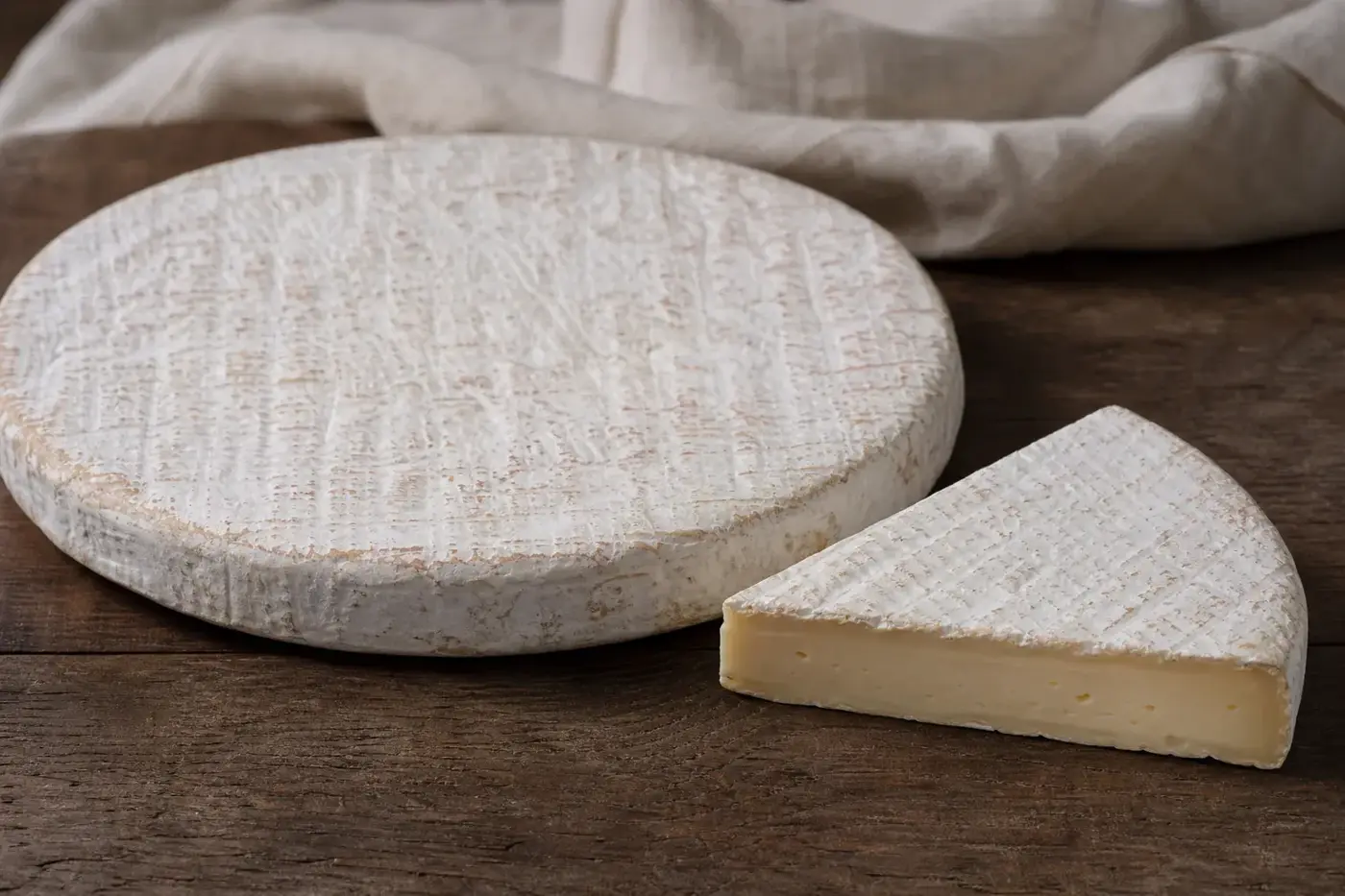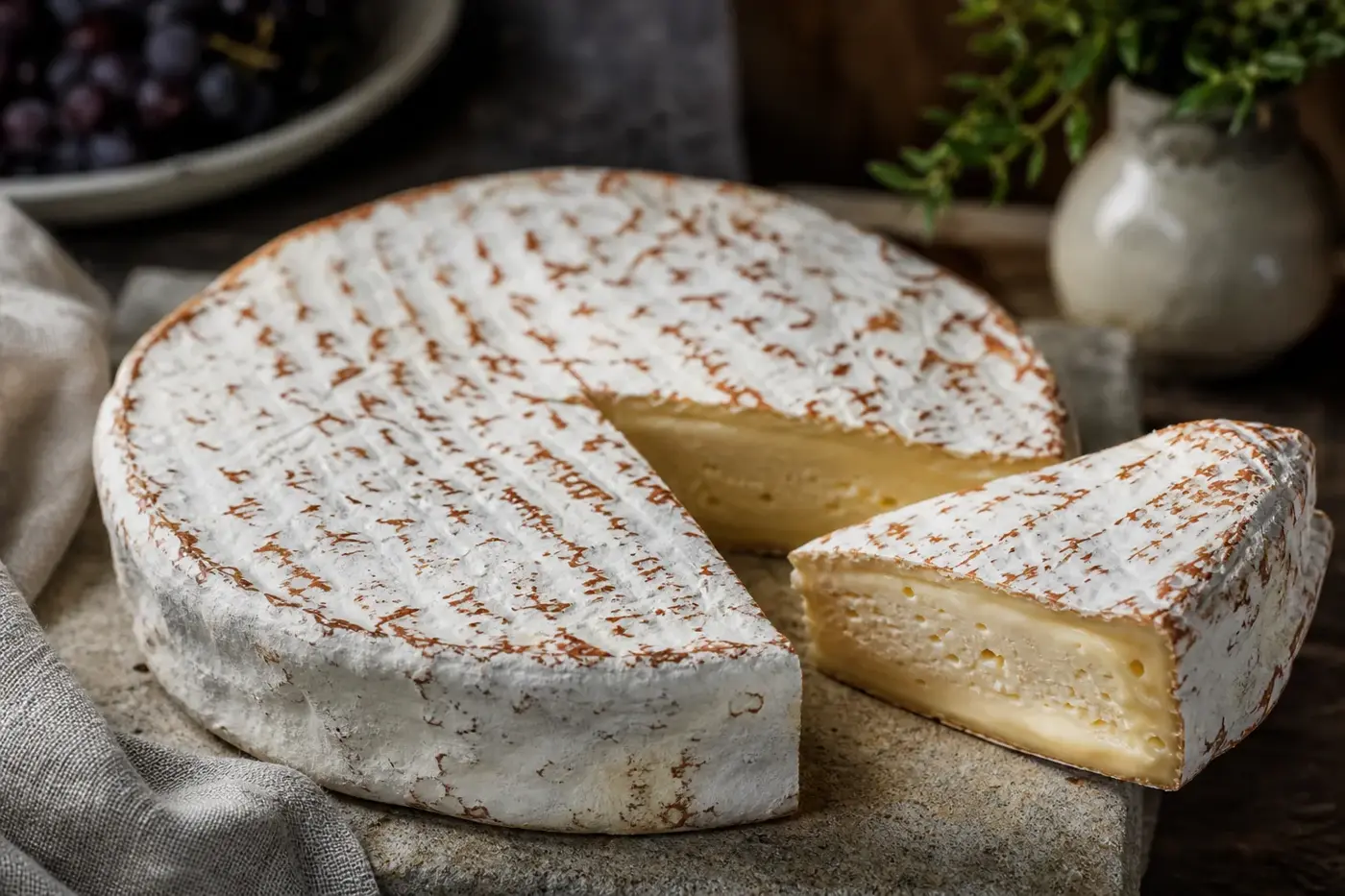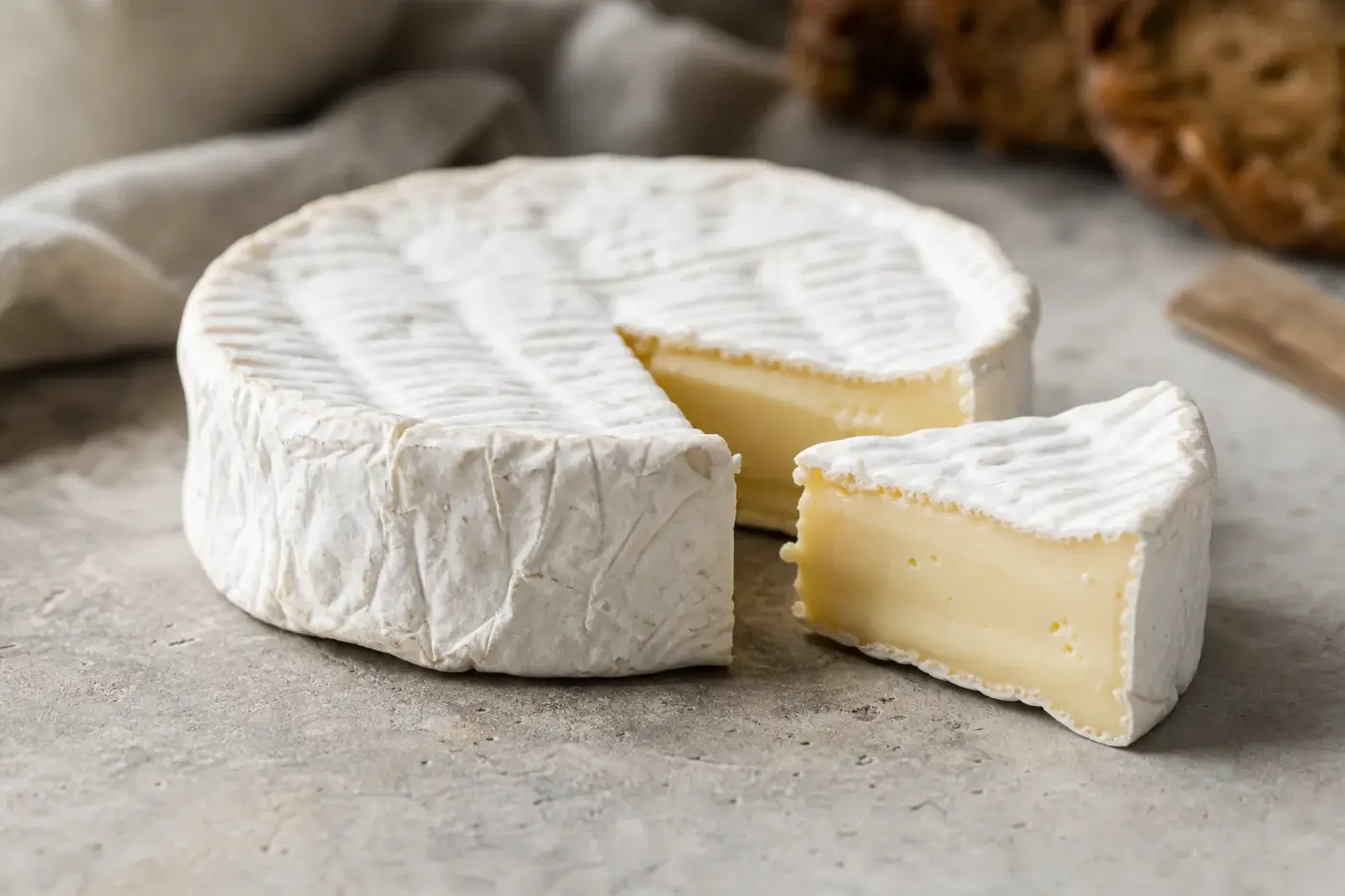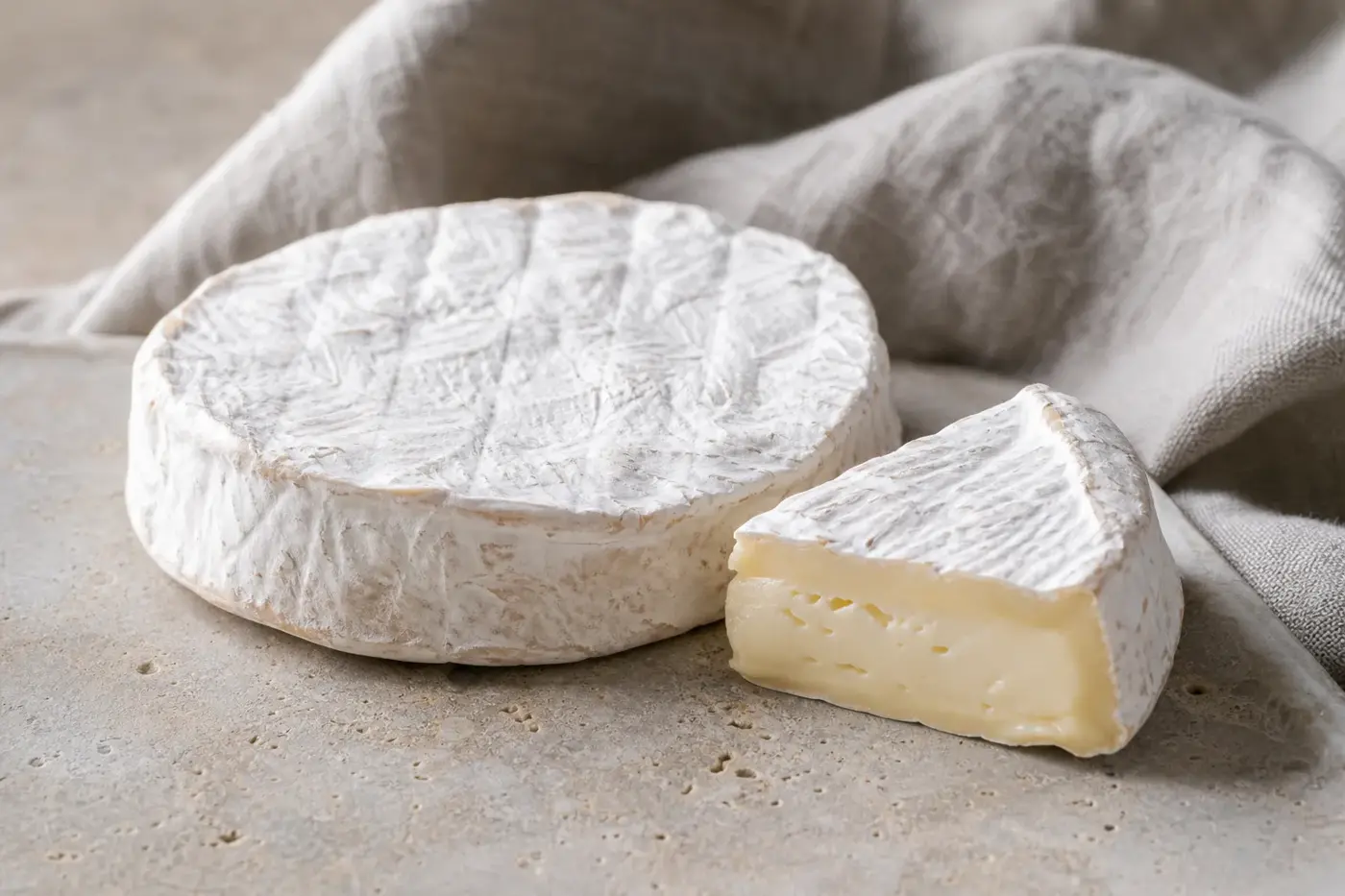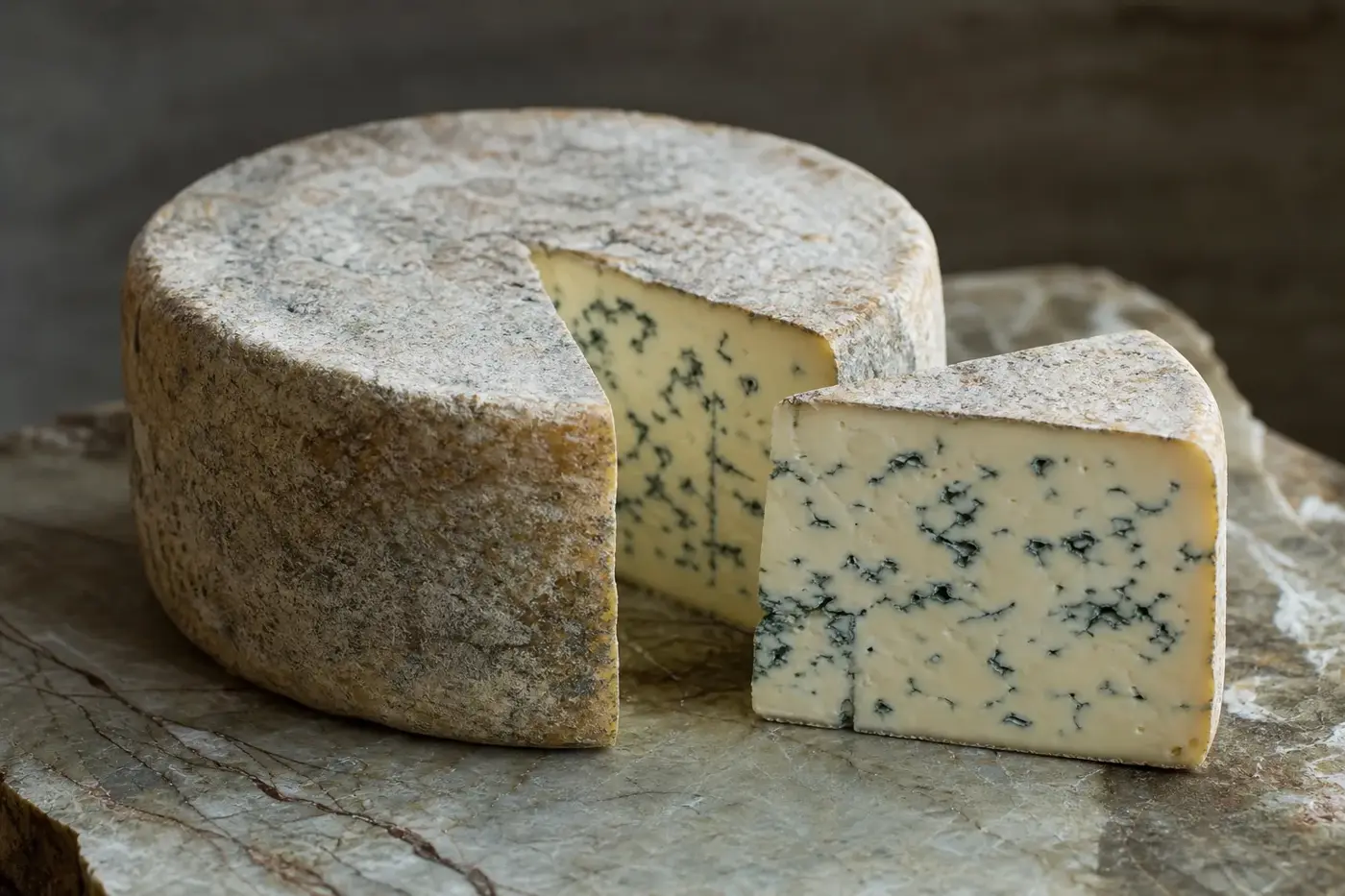
Cool, humid air slips through cracks in limestone scree. Follow it into the caves and you enter the ripening world of Bleu des Causses, where natural passages called fleurines help its blue-green mould develop. This ivory-pasted blue comes from whole cow’s milk in the Causses of southern France, with a protected identity of its own: AOP in French, PDO in English.[1,2]
Come into the limestone country
Picture limestone plateaux cut by valleys and gorges: you are in the Causses. INAO places Bleu des Causses in the southern Massif central, within Occitanie. Its legally defined area takes in almost all of Aveyron and specified parts of four neighbouring departments.[2]
That landscape matters at every stage. Milk production, cheesemaking and maturation each have geographical requirements, with distinct areas set out in the current specification. The name belongs to this place, not simply to a way of making blue cheese.[2]
Two settings shape what reaches your plate: the farms supplying the milk and the limestone cavities where the cheese ripens. INAO describes those caves as spaces within limestone scree, ventilated by natural cracks called fleurines. They bring the coolness and humidity that the blue mould needs.[1]
How cow’s milk earned a name of its own
Put Bleu des Causses beside its close regional relative, Roquefort, and milk is the decisive difference. France’s agriculture ministry dates their separation to Roquefort’s recognition in 1925, when cow’s milk was excluded from that appellation. The Bleu des Causses producers’ organisation describes an earlier regional tradition of cow’s milk, sheep’s milk or mixtures, before cow’s milk became the foundation of a separate cheese.[5,6]
There is no single birthday to circle. A European Commission account records a decree defining Bleu de l’Aveyron in 1937, recognition of Bleu des Causses by the Millau court in 1953, and confirmation by decree on 21 May 1979. European registration followed in 1996.[7,3]
Keep that history in mind at the cheese counter. You are choosing a cheese in its own right, shaped by cow’s milk and local cave ripening. Bleu des Causses is not another label for Roquefort.[5,7]
Cut a slice and taste the season
Your knife reveals pale paste threaded with blue-green marbling. The agriculture ministry describes a squat cylinder with a natural, bloomy rind. Inside, the specification calls for a fine, uniformly ivory-white paste and evenly distributed veins; traces of the piercing needles are allowed.[5,4]
Expect more than a blast of blue. The producers’ organisation describes a smooth, yielding texture, a direct, savoury flavour and the characteristic aroma of blue cheese. Its published assessment criteria allow slight bitterness but reject excessive pungency or saltiness, so look for balance between the supple paste and its blue-mould character.[4,8]
Season offers another clue. The agriculture ministry describes summer cheese as moist and yellow-ivory, while winter cheese is whiter and stronger tasting. If two pieces look different, ask your cheesemonger how those seasonal tendencies apply to the cheese in front of you.[5]
Ask about maturity, too. The producers explain that developing mould changes the paste and contributes assertive flavours as the cheese ripens. Find out whether your piece is relatively young or further matured, then describe the texture and intensity you enjoy. You need not turn this into an examination for either of you.[9]
Whole milk, careful hands and space for blue
Whole milk is essential here. The specification allows raw or heat-treated cow’s milk, but neither homogenisation nor standardisation for fat and protein. The PDO label alone cannot tell you the milk treatment, so check your particular product. See raw milk and heat treatments for the distinction.[2,8,9]
The maker adds Penicillium roqueforti and rennet, the coagulant that turns liquid milk into curd. Cutting and stirring encourages each curd grain to develop a thin covering called a coiffe. According to the producers, this helps stop the grains merging completely in the mould, leaving spaces where the blue can grow.[9]
Next comes draining without pressing, with regular turning. Salt goes onto the surface rather than being introduced through immersion in brine, and piercing opens air channels through the interior. You get an unpressed blue with room for mould, rather than a close, solid body made by compressing the curd.[2,7]
Inside the caves, the air does its work
Penicillium roqueforti needs oxygen as well as space. The producers explain that gaps between curd grains and the channels made by piercing let air reach the centre. The culture supplies the organism; those openings give it the conditions to spread through the paste.[9]
In the caves, the landscape supplies the ventilation. Fleurines connect the limestone terrain to the ripening spaces, bringing cool, humid air. The producers’ organisation describes opening or closing these passages to influence conditions. Natural geology meets the affineur’s judgement here: affinage means the managed ripening of cheese.[10]
The timetable has two parts, worth keeping distinct. Unwrapped cheeses must spend at least 12 days exposed to air in the natural caves, before each is individually wrapped and moved to refrigerated maturation. The name Bleu des Causses can be used only from day 70 after renneting. That is the minimum overall age, not a requirement to spend all 70 days uncovered in a cave.[2,8]
Give Bleu des Causses and Roquefort a tasting
Begin with the milk: cow’s milk for Bleu des Causses, sheep’s milk for Roquefort. Both belong to the region’s blue cheese tradition, but that difference helps explain their separate identities. For Bleu des Causses, the producers describe a smooth, yielding texture and a savoury blue aroma.[5,8]
Try a small piece of each with the same plain bread. Notice the paste first, then the balance of salt, bitterness and blue aroma. Ask about maturity and milk treatment before you taste, and discover Roquefort’s texture and flavour in the particular piece you have. This is a comparison, not a contest; you are allowed to finish both.
A few good questions for the cheese counter
Look for the full name, Bleu des Causses, and the EU PDO symbol on the label. AOP is the French wording, appellation d’origine protégée. Great Britain’s official register also lists the name as a registered PDO, recording 31 December 2020 for the UK scheme and 21 June 1996 for the original EU registration.[2,3]
Buying a cut piece? Ask to see the original product information and confirm its milk treatment. Borrow the producers’ sensory language when choosing: yielding texture, blue aroma and degree of bitterness give you useful things to discuss. For the wider information on a pack, turn to reading cheese labels.[4,8]
At home, keep the label and follow its refrigeration and after opening instructions. If your cut portion has no label, ask the seller for equivalent guidance. The Food Standards Agency advises a home fridge temperature of 5 °C or below in England, Wales and Northern Ireland.[12]
Take out only what you intend to serve, then return the rest promptly. For broader handling advice, see storing cheese at home.
Start with bread, then follow your appetite
Bread is a good first companion. INAO specifically suggests Bleu des Causses on bread at the end of a meal. Begin with a modest piece and taste the cheese alone before adding anything, so you can identify its blue aroma and any bitterness. At an alcohol-free table, water keeps that first comparison simple.[1,8]
Then, if you like, try ripe pear or a little fruit preserve. These suggested sweet contrasts play against the savoury blue character described in the published flavour assessments. Keep them alongside the cheese rather than covering your first taste. You can then discover how much sweetness you enjoy against its savoury flavour and blue aroma.[4,8]
Taking it into the kitchen? INAO recommends gratins and sauces. Give the blue flavour space rather than combining several strongly flavoured cheeses at once. Tell your cheesemonger whether you want a table cheese or a piece to flavour a dish; texture, intensity and maturity still make useful questions.[1]
This page summarises published guidance from the official sources it cites. It is not medical advice. Guidance differs between countries and changes over time, so check the current source for where you live, and ask your doctor, midwife, pharmacist or dietitian about your own circumstances.
Keep the right food safety guidance to hand
In the UK, the NHS advises pregnant people to avoid soft blue cheeses unless cooked until steaming hot, including those made with pasteurised milk. Its examples include Roquefort and other soft blues.[11] Consult the NHS pregnancy guidance and a midwife or doctor about your circumstances.
The NHS listeriosis page also offers advice for people with weakened immunity and explains when to seek urgent help. Follow the official guidance for your country and circumstances. For wider context, see listeria and cheese safety.[13]
Questions people ask
Is Bleu des Causses made with raw milk?
It can be made with raw or heat treated whole cow’s milk. The PDO label does not establish which treatment was used, so check the particular product.
How long is Bleu des Causses aged?
It must be aged for at least 70 days from renneting. It spends at least 12 days uncovered in natural caves before being wrapped individually and moved to refrigerated maturation.
How is Bleu des Causses different from Roquefort?
Bleu des Causses is made with cow’s milk, while Roquefort is made with sheep’s milk. They belong to the same regional blue cheese tradition but have separate identities.
Does Bleu des Causses taste different in summer and winter?
The French agriculture ministry describes summer cheese as moist and yellow ivory. It describes winter cheese as whiter and stronger tasting.
How can I serve Bleu des Causses?
INAO suggests serving it on bread at the end of a meal. It also recommends using it in gratins and sauces.
Sources
- Institut national de l’origine et de la qualité: Bleu des Causses, live product record, undated, accessed November 2026. Official description, territorial overview, fleurines and serving suggestions.
- French Ministry of Agriculture: Cahier des charges de l’appellation d’origine protégée « Bleu des Causses », homologated by the arrêté of 8 March 2017, Bulletin officiel no. 2017-12.
- Department for Environment, Food & Rural Affairs: Bleu des Causses, UK protected food and drink names register, live entry accessed November 2026. Records registered PDO status and the UK and original EU registration dates.
- European Commission: Publication of an amendment application, Bleu des Causses, Official Journal C 135, 17 April 2018, including the single document, reference PDO-FR-0108-AM02. This document publishes the application and its proposed provisions, rather than itself approving the amendment.
- French Ministry of Agriculture: Le Bleu des Causses AOP, le bleu fondant de l’Aveyron, institutional product account, live version accessed November 2026.
- Syndicat du Bleu des Causses: Histoire, undated producers’ account, accessed November 2026.
- European Commission: Commission Regulation (EC) No 115/2009, adopted 6 February 2009, published 7 February 2009, particularly Annex II, sections 4.5 and 4.6. Used for historical evidence and shared production principles, not superseded composition figures.
- Syndicat du Bleu des Causses: L’AOP et ses garanties, undated producers’ account of the specification and sensory assessment, accessed November 2026.
- Syndicat du Bleu des Causses: Fabrication et filière, undated producers’ explanation, accessed November 2026.
- Syndicat du Bleu des Causses: Terroir et zone de production, undated producers’ account of cave ventilation and its management, accessed November 2026.
- NHS: Foods to avoid in pregnancy, live guidance accessed November 2026, dairy section.
- Food Standards Agency: How to chill, freeze and defrost food safely, published 18 December 2017, live publication page accessed November 2026. General chilling guidance for England, Northern Ireland and Wales.
- NHS: Listeriosis, live guidance accessed November 2026, including advice concerning weakened immunity and urgent help.
This piece was researched through official specifications, institutional accounts and published NHS guidance, with producers’ explanations and editorial serving suggestions distinguished from legal requirements.
Last checked: November 2026
Last checked November 2026.
The editors suggest you read next