Blue Cheese and Penicillin Allergy
At the cheese counter, a wedge catches your eye, its blue veins running through the pale cheese.
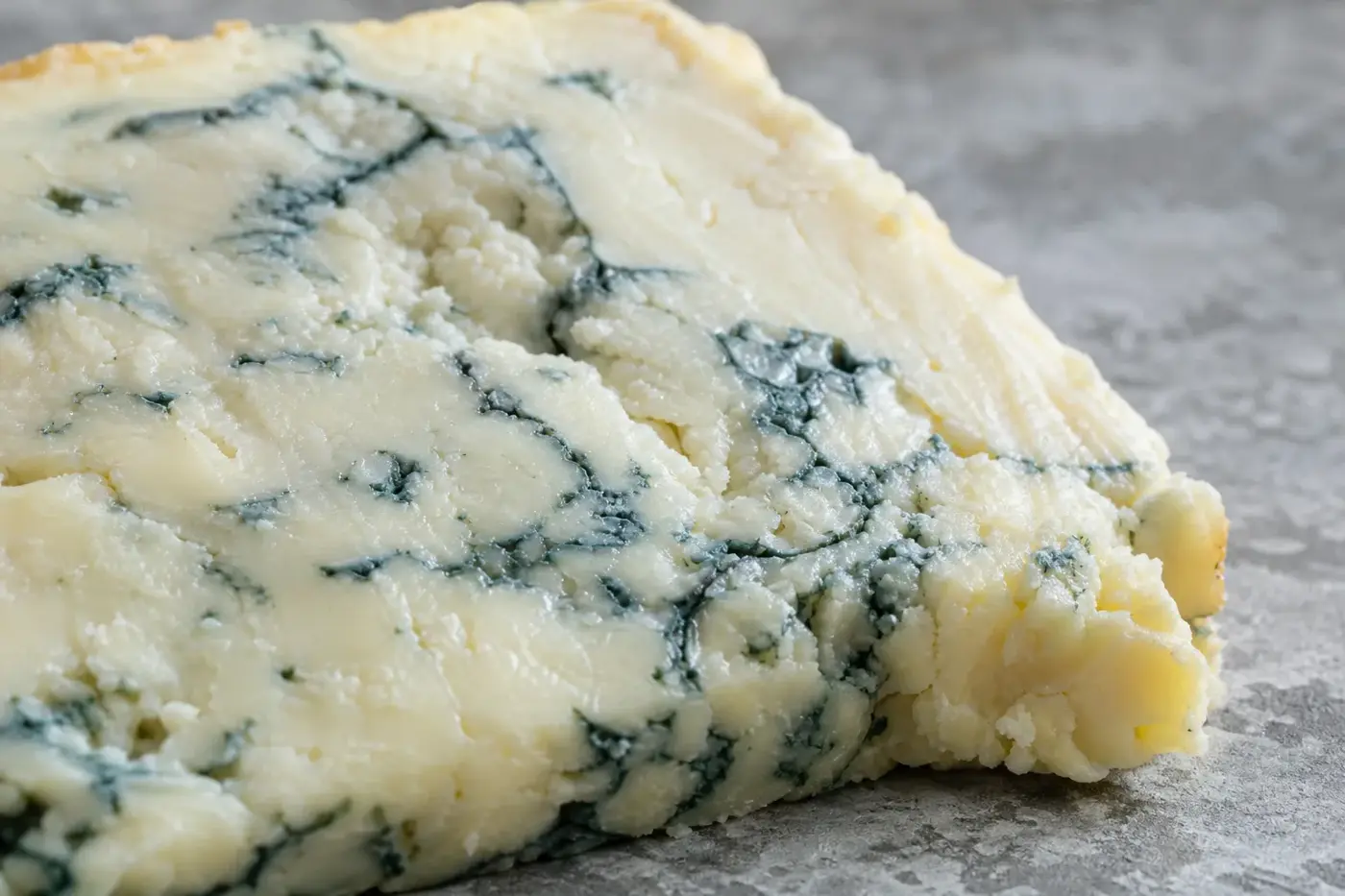
At the cheese counter, a wedge catches your eye, its blue veins running through the pale cheese. Then you remember the penicillin allergy on your medical record. Should you leave it behind? Those veins come from selected moulds that ripen the cheese, not added penicillin: the antibiotic belongs to a different story. [1,2,3,4]
Penicillin allergy alone does not generally mean you must avoid blue cheese. If you have reacted to the cheese before, though, you need individual assessment. An allergy to a medicine and an allergy to something in your food are different questions. [1,2,3,4]
The essentials, before you read on
- For suspected anaphylaxis, UK NHS guidance as of November 2026 says to use prescribed adrenaline immediately if available and call 999. [10]
- The CDC describes supervised drug allergy assessment. Eating cheese is not a test for penicillin allergy. [3]
- UK NHS pregnancy advice distinguishes hard cheese from soft blue cheese, which must be thoroughly cooked. [12]
Blue cheese and penicillin: a shared name, different roles
The names sound related because they are. Penicillium is a genus, a group of related fungi, while penicillin is an antibiotic that certain fungi can manufacture. The shared name carries a historical and biological connection, but these fungi do not all make the same substances. Research identifies differences in penicillin production between species. [1]
For you at the cheese counter, that distinction matters. A mould culture selected to ripen cheese is different from the medicine on your allergy card. Your clinician needs to understand your reaction history: penicillin, a particular cheese, or both. For a suspected food allergy, the NHS advises seeing a GP. [2,3]
This page summarises published guidance from the official sources it cites. It is not medical advice. Guidance differs between countries and changes over time, so check the current source for where you live, and ask your doctor, midwife, pharmacist or dietitian about your own circumstances.
Meet the moulds behind those blue veins
Those veins are deliberate cheesemaking, not the result of something forgotten at the back of the fridge. Blue cheese is ripened with selected Penicillium moulds, including Penicillium roqueforti. The US Department of Agriculture describes introducing these cultures into blue-veined cheeses so mould develops inside. For unexpected growth during storage, see mould on cheese. [4]
Follow the history of penicillin and you meet other moulds. Older accounts commonly name Penicillium notatum or Penicillium chrysogenum. In 2011, a taxonomic study used genetic relationships and metabolite profiles to distinguish P. chrysogenum from Penicillium rubens. It identified the original discovery strain as P. rubens. [5]
That helps explain why you may have encountered different species names in otherwise reliable accounts. Neither those historical names nor membership of Penicillium makes P. roqueforti an antibiotic preparation. A family name is not an ingredients list. [5]
Inside the studies: what did researchers find?
In 2002, researchers examined food-associated fungi for antibiotic activity and penicillin biosynthesis genes. The P. roqueforti strain they tested lacked the penicillin biosynthetic genes investigated and did not produce penicillin. That gives a biological reason to distinguish cheese mould from penicillin-producing species. It was, however, one listed strain, not every culture or every finished cheese. [1]
An earlier study took the question straight to the cheese. In 1954, researchers examined 14 commercial brands of mould-ripened cheese, including blue cheeses. Their dairy-culture assay looked for cheese preparations that inhibited the cultures' acid production. They added known amounts of penicillin to test the method. [6]
The assay's sensitivity was 2.0 units of penicillin per gram of cheese. None of the samples reached that detectable level. Keep the date and measurement limit alongside the finding: it describes those samples at that sensitivity, not an absolute zero for every cheese sold today. [6]
A laboratory detection limit is not a clinically established threshold for an allergic reaction, either. Taken together, the evidence gives you no basis for assuming antibiotic exposure simply because the genus name is shared. It still leaves limits on certainty across all products. [5,6]
Penicillin, mould or milk? Start with the right question
A penicillin allergy concerns a medicine. The US Centers for Disease Control and Prevention distinguishes immediate allergic reactions from delayed reactions, and both from inaccurate allergy labels. You might acquire a label after a viral rash, for example, or diarrhoea caused by intolerance rather than allergy. A clinician can work through your history and establish what needs assessment. [3]
Milk allergy is a separate matter: an immune reaction to milk proteins, not an antibiotic. The NHS lists cows' milk among common food allergens, so this matters whether your cheese is blue-veined or plain. Its colour cannot tell you what caused a reaction. [2,7]
Allergy to fungal material is another question, separate from penicillin allergy. If you react to blue cheese, mould is only one possible trigger to investigate. The cheese contains milk, and your meal may contain other ingredients. The published case below shows why the circumstances matter more than the word Penicillium. [8]
Lactose intolerance is different again. The NHS describes difficulty digesting lactose, the sugar in dairy foods, with symptoms including bloating, abdominal discomfort and diarrhoea. It distinguishes this from food allergy, which can be life-threatening. The guide to cheese allergy and lactose intolerance explains the distinction; the lactose in cheese guide tackles the separate question of lactose content. [7]
Reacted before? Your experience deserves attention
A 2008 case report describes a person with a history of penicillin reactions becoming unwell after a meal containing blue cheese and fruit. Symptoms included an itchy rash, breathing difficulties and difficulty swallowing. No cheese remained for analysis. [8]
Penicillin or related compounds were suggested as a possible cause. But the report established illness after a meal without identifying the responsible substance. That distinction matters when you are trying to understand your own reaction. [8]
If you have reacted to blue cheese, start with the NHS advice for suspected food allergy: see a GP. Its guidance says a specialist may use skin-prick tests, blood tests or a supervised diagnostic approach. They may also ask you to keep a food and symptoms diary. [2]
Record the cheese and other foods you ate, when symptoms began, what happened and any treatment you received. These details give your clinician a clearer account to investigate. They are more useful than a conclusion drawn from a mould's name. [2]
The NHS also advises against cutting foods out of your diet without speaking to a GP. Individual advice can establish whether avoidance is needed, what requires investigation and how to recognise another reaction. The reassuring distinction between cheese mould and penicillin does not replace assessment of a previous food reaction. [2,9]
Recognise the symptoms and know when to act
Act on symptoms, not assumptions about what your cheese contains. In UK guidance as of November 2026, the NHS lists itchy or raised skin, swelling, digestive symptoms and breathing symptoms among possible allergic reactions. Those symptoms alone cannot identify milk, another food ingredient or a medicine as the trigger. Their urgency depends on what is happening to you or the person affected. [9,10]
Emergency warning signs include sudden swelling of the mouth, tongue or throat, struggling to breathe or swallow, sudden confusion or severe dizziness, and collapse. The NHS also identifies blue, grey or pale lips or skin as concerning. On brown or black skin, colour changes may be easier to see on palms or soles. A rash may occur, but the NHS emergency criteria can apply without one. [10]
For suspected anaphylaxis, follow these NHS emergency steps in the UK: [2,10]
- Use your prescribed adrenaline auto-injector immediately if you have one, following its instructions.
- Call 999 for an ambulance and say that you suspect anaphylaxis, even if you start feeling better.
- Lie down and raise your legs. If breathing is difficult, raise your shoulders or sit up slowly; during pregnancy, lie on your left side. Do not stand or walk, even if you feel better.
- If you do not feel better after 5 minutes, use a second adrenaline auto-injector if you have one.
Outside the UK, use the local emergency number and follow your prescribed emergency plan. Anaphylaxis requires immediate hospital treatment, the NHS says. [10]
Understanding your penicillin allergy starts in the clinic
You can tolerate blue cheese without that establishing whether you can tolerate penicillin. Eating it is not a diagnostic test for an allergy to the antibiotic. In US clinical guidance, the CDC describes assessment through your reaction history, risk assessment and, where appropriate, skin testing or an observed oral drug challenge. That challenge uses a controlled dose of medicine under medical supervision, with treatment available if needed. [3]
Some histories need a different route. The CDC says people with certain severe delayed drug reactions need specialist referral and are unsuitable for a direct challenge. If your record says penicillin allergy, discuss it with the clinician responsible for your care. [3,11]
Explain which drug caused concern, how quickly symptoms developed and whether you needed hospital treatment. Your original reaction determines the appropriate next step. Eating cheese cannot answer that question for you. [3,11]
Pregnant? Give listeria advice its own attention
UK NHS pregnancy advice concerns listeria, a bacterium, rather than penicillin allergy. Its current guidance includes pasteurised and unpasteurised hard cheeses among foods you can eat. Soft blue-veined cheeses, whether pasteurised or unpasteurised, must be thoroughly cooked. The NHS lists cheese cooked until steaming hot, including soft or blue cheese, among foods that can be eaten. [12]
Keep those cheese categories attached to the advice. Blue veining alone does not tell you which pregnancy category applies. If you are balancing pregnancy guidance with a previous food reaction, discuss both histories with your midwife or doctor. Read the NHS source linked below for its current wording, and see listeria and cheese safety for the separate infection question. [12]
A little more reading for your cheese table
- Cheese Allergy vs Lactose Intolerance: understand why reacting to milk protein differs from difficulty digesting milk sugar.
- Cheese Food Safety: The Complete Guide: put official advice on cheese handling and higher-risk groups into its wider context.
Questions people ask
Can I eat blue cheese if I am allergic to penicillin?
Penicillin allergy alone does not generally mean blue cheese must be avoided. A previous reaction to the cheese is a separate question that needs individual assessment. See the CDC guidance on penicillin allergy assessment.
What should I do if I have reacted to blue cheese?
The NHS advises seeing a GP for a suspected food allergy and advises against cutting foods out without speaking to a GP. A specialist may use tests or a supervised diagnostic approach and may ask for a food and symptoms diary. See the NHS guidance on food allergy.
What are the emergency signs of an allergic reaction?
The NHS lists sudden swelling of the mouth, tongue or throat, difficulty breathing or swallowing, sudden confusion, severe dizziness and collapse among the warning signs. For suspected anaphylaxis, it says to use prescribed adrenaline immediately if available and call 999. See the NHS guidance on anaphylaxis for the full emergency steps.
Can eating blue cheese test whether I am allergic to penicillin?
No. The CDC describes assessment using the reaction history and risk assessment and, where appropriate, skin testing or a supervised oral drug challenge. See the CDC guidance on penicillin allergy assessment.
Can I eat blue cheese during pregnancy?
The NHS says hard cheeses can be eaten, whether pasteurised or unpasteurised. It says soft blue cheeses must be thoroughly cooked and lists cheese cooked until steaming hot among foods that can be eaten. See the NHS pregnancy food guidance for its current wording.
Sources
- American Society for Microbiology, Production of Penicillin by Fungi Growing on Food Products: Identification of a Complete Penicillin Gene Cluster in Penicillium griseofulvum and a Truncated Cluster in Penicillium verrucosum, Applied and Environmental Microbiology, volume 68, 2002. Full text.
- NHS, Food allergy, reviewed 20 August 2026. Official guidance.
- US Centers for Disease Control and Prevention, Clinical Features of Penicillin Allergy, 25 August 2025. Clinical guidance.
- US Department of Agriculture, Food Safety and Inspection Service, Are molds used to make cheese?, updated 3 January 2025. Official explanation.
- IMA Fungus, Fleming’s penicillin producing strain is not Penicillium chrysogenum but P. rubens, volume 2, 2011. Research article.
- American Dairy Science Association, Assay of Various Mold-Ripened Cheeses for Antibiotic Activity, Journal of Dairy Science, volume 37, issue 10, pages 1184 to 1189, October 1954. Publisher abstract.
- NHS, Lactose intolerance, reviewed 8 July 2026. Official guidance.
- New Zealand Medical Association, Allergic reaction to blue cheese: serendipity or actual causation?, New Zealand Medical Journal, volume 121, number 1283, pages 102 to 104, 3 October 2008. Journal issue.
- NHS, Allergies, reviewed 5 March 2026. Official guidance.
- NHS, Anaphylaxis, reviewed 21 June 2023, current retrieved page. Emergency guidance.
- US Centers for Disease Control and Prevention, Managing Persons Who Have a History of Penicillin Allergy, Sexually Transmitted Infections Treatment Guidelines, 2021, current retrieved page. Clinical guidance.
- NHS, Foods to avoid in pregnancy, current online edition, retrieved November 2026. Official pregnancy guidance.
This desk-researched article brings together official clinical guidance, laboratory research and a published case report, keeping measured findings separate from proposed explanations.
Last checked: November 2026
Last checked November 2026.
The editors suggest you read next
Cheese and Health: What the Evidence Says
Put cheese and butter side by side on your plate.