Brefu Bach
Step inside a converted former Catholic church in Bethesda, Gwynedd, and you find a new calling: cheesemaking.
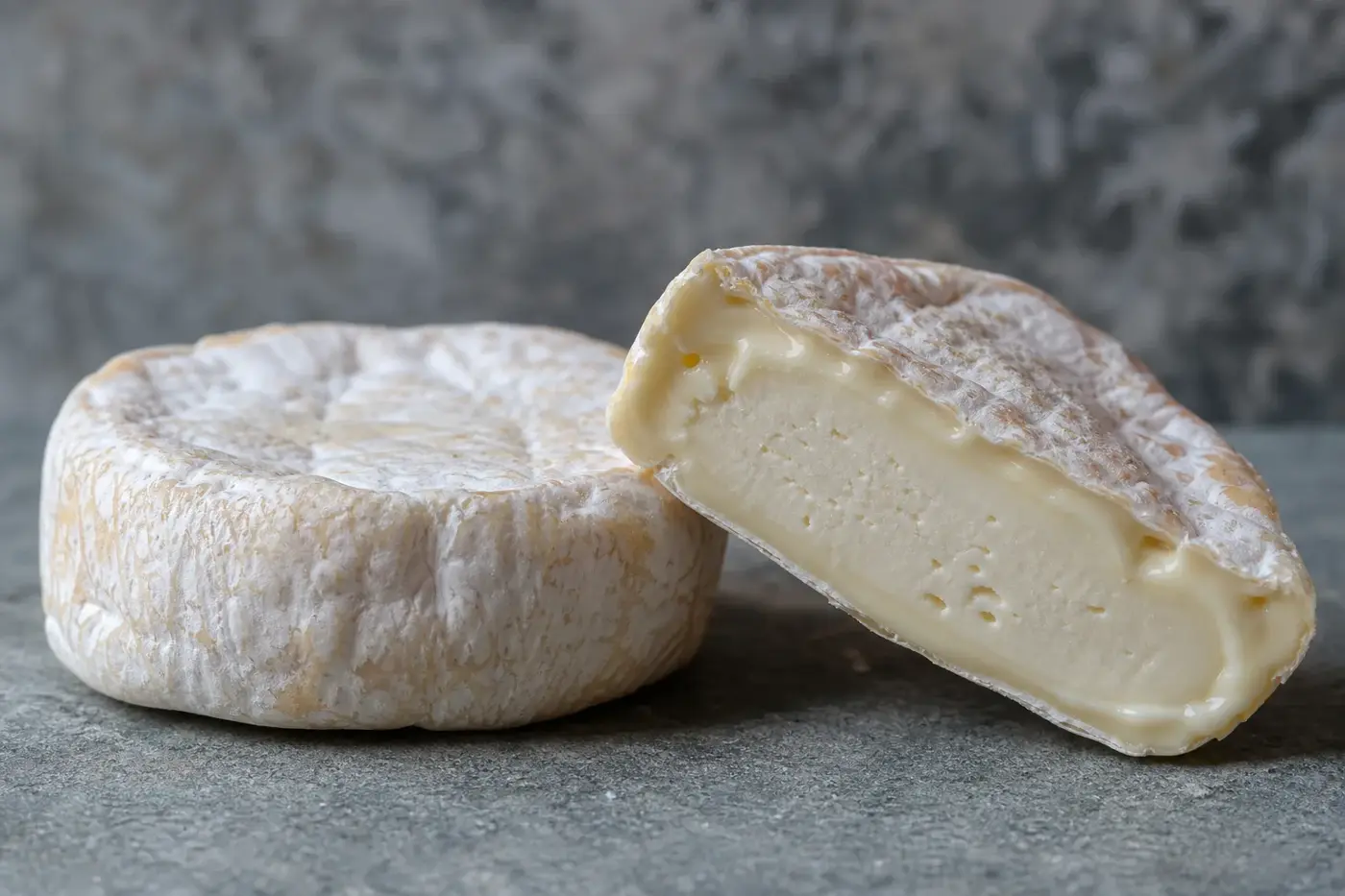
Step inside a converted former Catholic church in Bethesda, Gwynedd, and you find a new calling: cheesemaking. Here, Cosyn Cymru makes Brefu Bach, or “Little Bleat”, a small, soft, mould-ripened sheep’s milk cheese. Beneath its pale, wrinkled rind lies a paste customers describe as light and moussy, sometimes silky just below the surface. Seasonal milk and slow, gentle cheesemaking give this little Welsh round its character. [1][2][3][11]
| Your first introduction | What to know |
|---|---|
| Familiar name | Brefu Bach. [1] |
| Maker and home | Cosyn Cymru, Llaethdy Gwyn, Bethesda, Gwynedd, Wales. [2] |
| Milk and treatment | Raw sheep’s milk, per the January 2026 supplier specification. [4] |
| Where the milk comes from | Local farms, according to the maker; bought-in milk in the supplier specification. [2][4] |
| Style | Soft, lactic, mould-ripened. [1] |
| Shape and size | Small rounds; maker’s stated weight 120 g. [1][3] |
| Coagulant | Thistle-derived vegetarian coagulant. [1][4] |
| Time to ripen | Three to seven weeks, according to the maker. [1] |
| Declared allergen | Milk. [4] |
Take a moment with those wrinkles
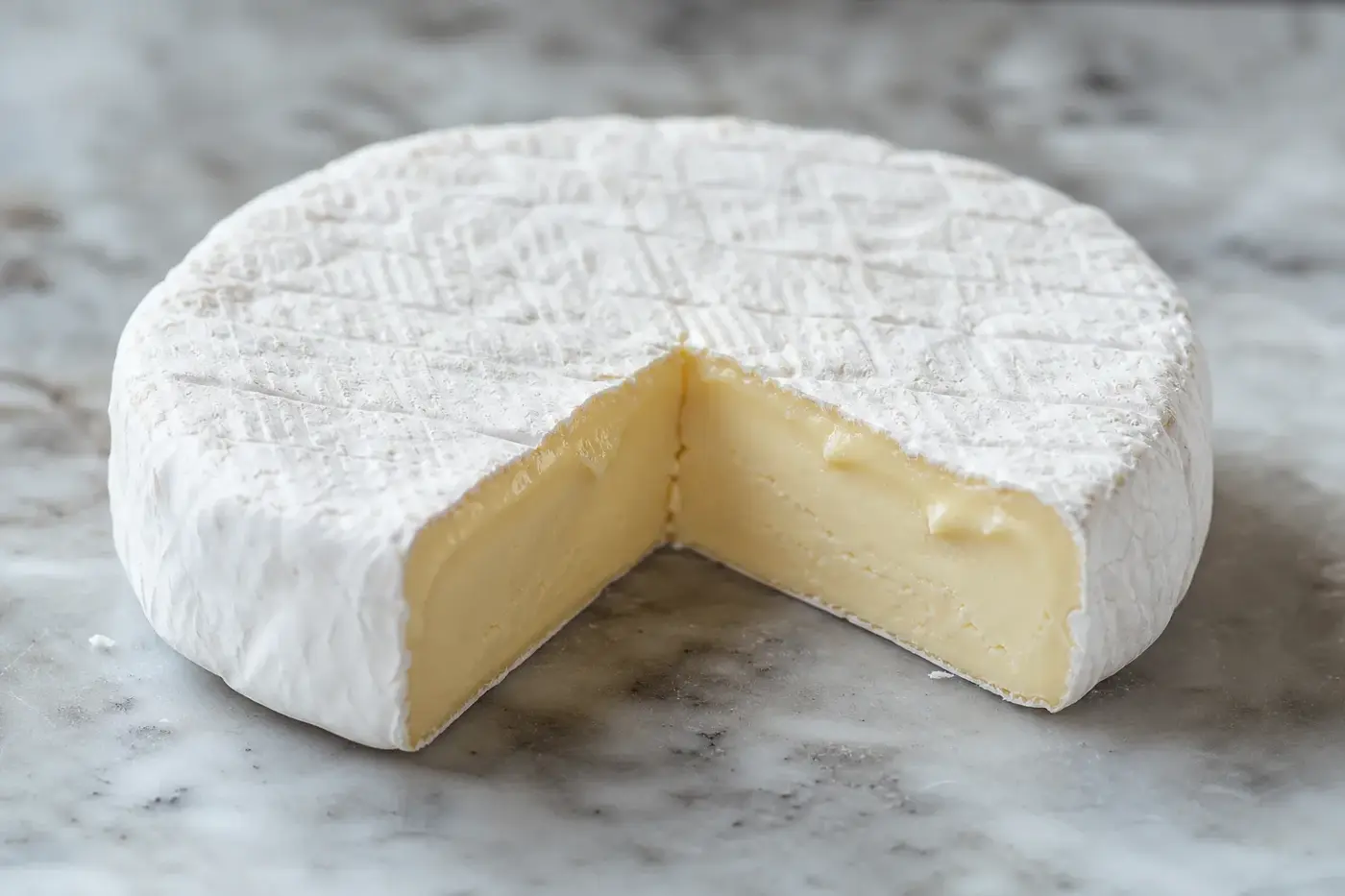
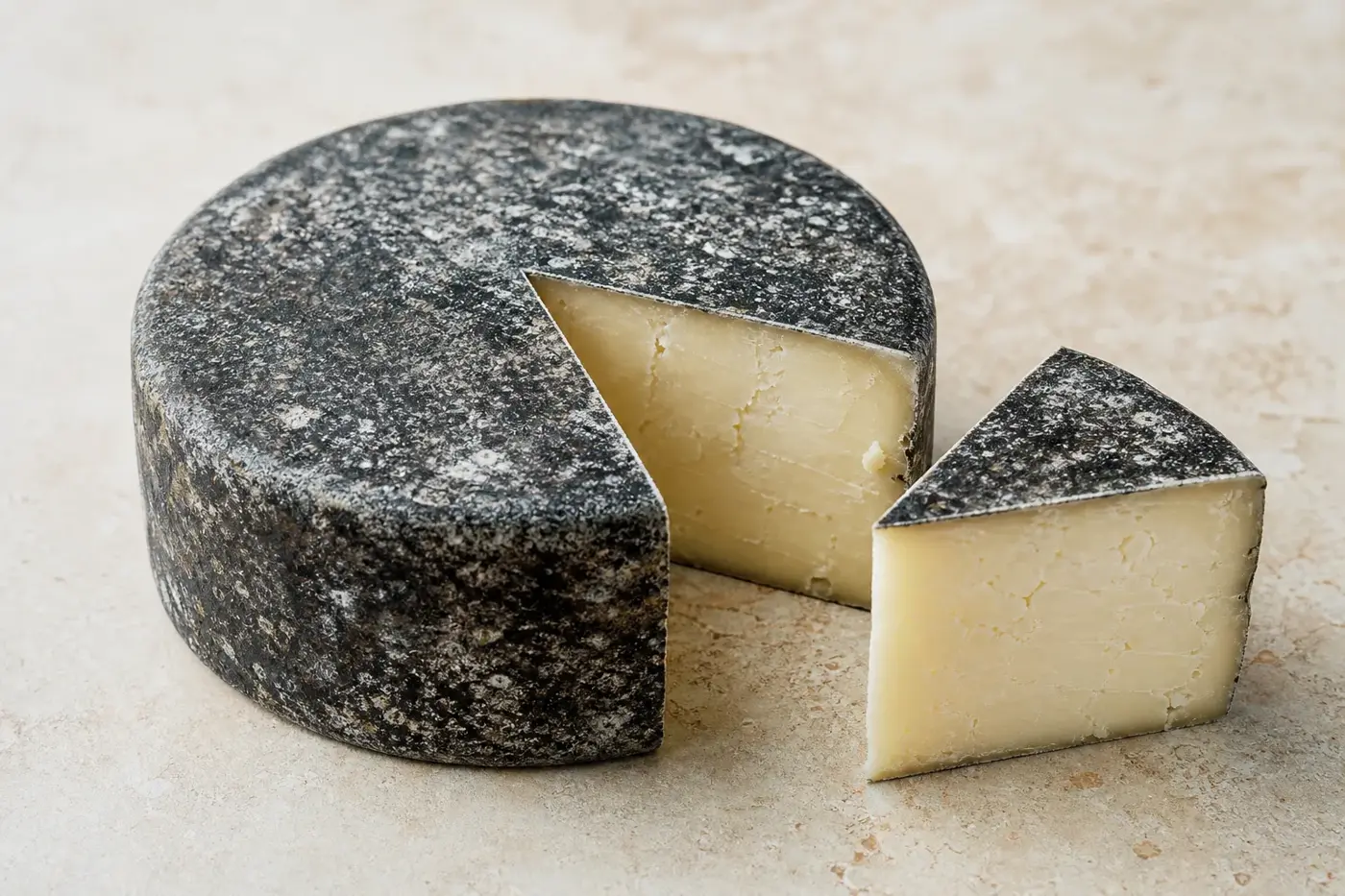
Before you reach for a knife, have a look at that rind. Cosyn Cymru’s product photograph shows squat rounds with softly rounded edges and an uneven, finely folded surface. White and ivory give way to warmer cream-coloured patches between the wrinkles. Beside them, a cut cheese reveals pale ivory paste, visibly smoother than its exterior: a portrait of one particular batch. [3]
Small as it is, Brefu Bach gives you plenty to explore. Cut across a round and one piece can take in rind, centre and the layer immediately beneath the surface, which the maker describes as silky. It is a modestly sized cheese with a fairly full texture itinerary. [1][3]
Even the name has more than one story tucked inside it. Cosyn Cymru translates Brefu Bach as “Little Bleat”, but there is a French echo too. In a published interview, its cheesemaker explains the nod to petit brebis, acknowledging a French cheesemaker whose lactic cheese helped inspire it. [1][8]
From an Auvergne dairy to a Bethesda church
Llaethdy Gwyn, Cosyn Cymru’s creamery, occupies that converted former Catholic church in Bethesda. The town sits in Dyffryn Ogwen, within the wider Eryri area of north-west Wales. Here, cheese is made by hand in small batches, with each batch of milk treated individually. [2][11]
The enterprise began cheesemaking in 2015, according to the Welsh Government’s account published in August 2023. That account follows the development of the Bethesda creamery and its use of unpasteurised milk for small-batch production. You are tasting a relatively recent Welsh dairy story, rather than an inherited regional recipe with beginnings lost to time. [11]
The French connection began with experience at a small farm dairy in the Auvergne, followed by a return to the Ogwen community. The setting and milk supply are Welsh. In Cosyn Cymru’s account, adaptation is central: responding to milk, pasture and weather, rather than expecting every make to turn out exactly alike. [2]
Follow the milk from spring to late summer
Raw ewe’s milk is where the story starts. Neal’s Yard Dairy’s January 2026 specification confirms the treatment and lists milk, salt, thistle-stamen coagulant and cheese cultures as ingredients. These are the details for Brefu Bach itself, alongside Cosyn Cymru’s broader specialism in unpasteurised sheep’s milk cheeses. [4]
Cosyn Cymru says individual batches use milk from local farms. Neal’s Yard Dairy’s 2026 account brings you a little closer: bought-in milk from a small flock of Lleyn ewes. The local-farm connection comes from the maker; the breed detail comes from the cheese’s affineur and retailer. [2][5]
Production runs from April through September, according to Neal’s Yard Dairy. Its seasonal-cheese article describes Brefu Bach returning to the counter in spring after a winter absence. Those production dates are not quite a shopping calendar, though. The cheese still needs time to mature and travel from dairy to counter. [5][7]
The season changes what you taste, too. Neal’s Yard Dairy describes later-summer Brefu Bach as denser and richer, with more herbal and savoury flavours than earlier batches. Its wider account of seasonal cheesemaking connects those changes with lactation, grazing and decisions in the dairy and maturing room. [6][7]
There is a useful distinction to make between the dates. An August 2023 account recorded the maker reporting year-round milk supplies from several local farms. That concerned the dairy’s supply as a whole; the 2026 notes give the seasonal production window for Brefu Bach itself. [5][11]
A little thistle and time to find its character
Brefu Bach takes its time to set. Cosyn Cymru describes gradual curd development, helped by a very small amount of thistle-derived coagulant. That slow-setting approach is behind the word “lactic”; curds are the coagulated portion of milk that becomes cheese. You can follow the wider process in how cheese is made. [1]
The coagulant comes from a plant. The January 2026 supplier specification identifies thistle stamens and records Brefu Bach as suitable for vegetarians. If you would like to understand the differences between coagulants, turn to rennet explained. [4]
| A look inside the dairy | What the published accounts tell you |
|---|---|
| Setting the milk | Gradual curd development with a little thistle-derived coagulant. [1] |
| Life on the rind | Geotrichum, identified by Neal’s Yard Dairy. [5] |
| Ripening at the maker | Three to seven weeks, according to Cosyn Cymru. [1] |
| Further maturation | Drying, turning and conditions adjusted to each batch, according to Neal’s Yard Dairy. [5] |
Geotrichum is the surface-ripening organism named by the affineur. If that feels rather abstract, look back at the finely wrinkled rind in the maker’s photograph. There you have a visible counterpart to the technical name. [3][5]
When you ask about age, keep two figures separate. Cosyn Cymru gives a ripening range of three to seven weeks; Neal’s Yard Dairy’s retail page gives an average age of three to four weeks. Ask the seller how your particular cheese has matured, especially if you are choosing between a lighter centre and a more developed texture. [1][6]
Find the fresh cream beneath the rind
Lightness runs through the maker’s published customer descriptions. They describe an aerated texture, delicate, bright flavours and a finish recalling fresh cream. Neal’s Yard Dairy adds yoghurt-like notes and gentle acidity. Think cultured-milk freshness, rather than a cheese intent on conducting the entire dinner conversation. [1][5]
Texture gives you another way into the cheese. An airy centre contrasts with smoother paste immediately beneath the rind, described by Neal’s Yard Dairy as a silky breakdown. Its seasonal account also records a denser cheese later in the production year. There are differences to discover within one round, as well as between batches. [6]
Age and season are separate questions, and both deserve a moment at the counter. In the maker’s interview with The Welsh Cheese Company, younger cheeses are described as creamier and more mature examples as drier. Neal’s Yard Dairy separately links later-season milk with greater richness and more herbal, savoury flavour. One tells you about maturity; the other, the cheese’s place in the production season. [8][6]
Try a little centre first, then a piece with rind, then both together. Is the paste airy or dense, and how clearly does the acidity come through? Does the finish recall fresh dairy flavours, or the more savoury character described in later batches? Give yourself time to notice what this particular cheese offers. [5][6]
The year Brefu Bach brought home gold
Brefu Bach received gold and the Best New Cheese award at the British Cheese Awards in 2016, according to Cosyn Cymru’s awards page. The maker identifies these as the cheese’s first awards. [9]
That is a lovely milestone in its development, but your next question belongs at the counter. Ask about the current batch, its age and its texture. Those details are your most immediate guide to what is ready to enjoy.
Leave a little room for Brefu Bach
Start with plain bread and keep the accompaniments restrained. You want space for the texture and fresh-dairy flavours to come through. For something gently sweet, the maker suggests honey or fruit purée with younger Brefu Bach; more mature, drier examples are suggested for salads. Put accompaniments alongside rather than over the cheese, and try the paste alone first. [8]
Neal’s Yard Dairy suggests grilled stone fruit. You could also choose plain sparkling water, offered here as a serving suggestion rather than the result of a recorded site tasting. [5]
Serve the cheese cool. Follow the current Food Standards Agency guidance for England, Northern Ireland and Wales on keeping chilled food out of the fridge. [10]
On a mixed board, try Brefu Bach before especially assertive cheeses, giving its documented fresh-dairy notes room to register. If you would like to explore those differences, the guide to cheese styles explains how milk, rind and texture help distinguish cheeses.
Look after the next slice
Follow the storage instructions and date information supplied with your cheese. The Food Standards Agency advises households in England, Northern Ireland and Wales to refrigerate dairy products and keep the fridge between 0 and 5 °C. Use a fridge thermometer to check the temperature. [10]
Keep the cut paste covered. Neal’s Yard Dairy recommends wrapping cheese in its waxed cheese paper and putting it inside a box in the fridge. Its advice links this arrangement to retaining moisture while allowing the cheese to breathe. Rewrap Brefu Bach after cutting, rather than leaving the exposed paste uncovered. [12]
For the handling principles behind those simple steps, see how to store cheese at home.
General information only, not medical advice: follow the official guidance where you live.
Questions people ask
What milk is Brefu Bach made from?
Brefu Bach is made from raw sheep’s milk. Neal’s Yard Dairy says the milk comes from a small flock of Lleyn ewes.
Is Brefu Bach suitable for vegetarians?
Yes. The supplier specification records it as suitable for vegetarians and identifies its coagulant as thistle stamens.
What does Brefu Bach taste like?
The maker describes delicate, bright flavours and a finish recalling fresh cream. Neal’s Yard Dairy also notes yoghurt flavours and gentle acidity.
When is Brefu Bach made?
According to Neal’s Yard Dairy, production runs from April through September. The cheese must mature and travel from the dairy before reaching the counter, so production dates do not directly determine shop availability.
How should Brefu Bach be stored?
Follow the storage instructions and date information supplied with the cheese. The Food Standards Agency advises households in England, Northern Ireland and Wales to refrigerate dairy products and keep the fridge between 0 and 5 °C. Neal’s Yard Dairy recommends wrapping cheese in waxed cheese paper and placing it inside a box in the fridge.
Sources
[1] Cosyn Cymru, Products, undated current webpage, accessed November 2026.
Read at cosyn.cymru
[2] Cosyn Cymru, About us, undated current webpage, accessed November 2026.
Read at cosyn.cymru
[3] Cosyn Cymru, Brefu Bach product photograph linked from Products, undated photograph, accessed November 2026. Visual evidence only; reproduction permission has not been established.
Read at cosyn.cymru
[4] Neal’s Yard Dairy, Brefu Bach: Product Specification, updated January 2026. Commercial supplier’s product record.
Read at cdn.shopify.com
[5] Neal’s Yard Dairy, Brefu Bach, cheese crib sheet, copyright 2026. Commercial affineur and retailer’s account of sourcing, maturation, flavour and pairing.
Read at cdn.shopify.com
[6] Neal’s Yard Dairy, Brefu Bach, undated current product webpage, accessed November 2026. Commercial retailer’s tasting description.
Read at nealsyarddairy.co.uk
[7] Neal’s Yard Dairy, What we mean when we say “seasonal cheese”, 9 May 2024. Commercial affineur’s explanation of its work with seasonal cheeses.
Read at nealsyarddairy.co.uk
[8] The Welsh Cheese Company, Cosyn Cymru, undated producer profile and published cheesemaker interview, accessed November 2026. Commercial retailer; the interview establishes the maker’s stated explanations and preferences.
Read at welshcheesecompany.co.uk
[9] Cosyn Cymru, Awards, undated current webpage, accessed November 2026. Maker’s report of its awards.
Read at cosyn.cymru
[10] Food Standards Agency, How to chill, freeze and defrost food safely, published 18 December 2017, current webpage accessed November 2026. Applies to England, Northern Ireland and Wales.
Read at gov.uk
[11] Welsh Government, Minister visits Bethesda award-winning ewe’s milk dairy, 21 August 2023. Historical account, including attributed statements by the maker.
Read at gov.wales
[12] Neal’s Yard Dairy, FAQs, undated current webpage, “Cheese Storage & Serving”, accessed November 2026. Commercial cheesemonger’s wrapping advice.
Read at nealsyarddairy.co.uk
This piece was researched from the maker’s published accounts and photograph, supplier specifications, an attributed interview, a dated government account and official household chilling guidance.
Last checked: November 2026
Last checked November 2026.
The editors suggest you read next
Caerphilly
Your knife meets a rind-ripened Caerphilly, and one wedge offers two pleasures: a fresh, crumbly centre and a softer, creamy layer just beneath the rind.