Brocciu
Look into the hot whey and you can see delicate protein flocks gathering, ready for the draining baskets.
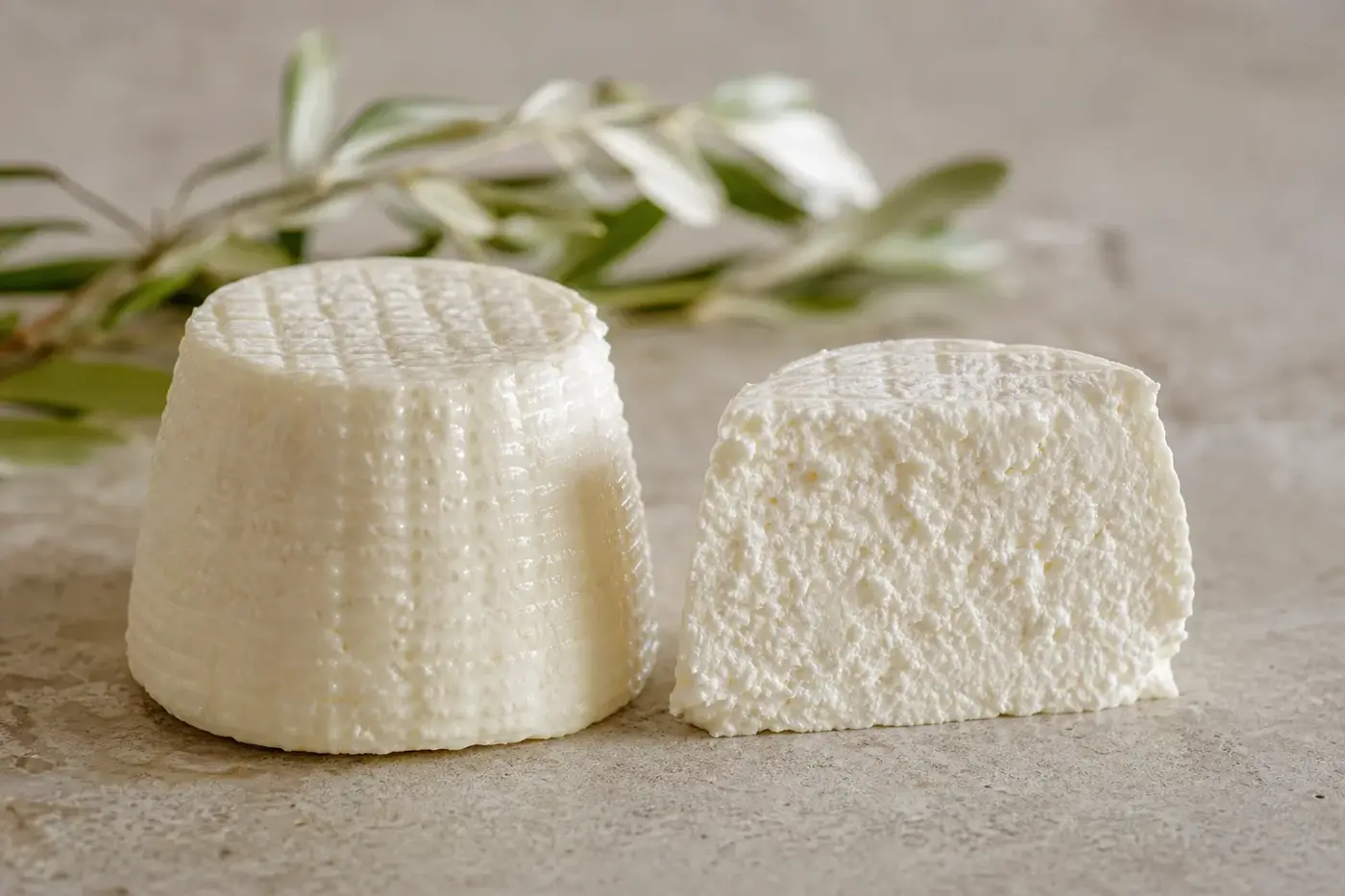
Look into the hot whey and you can see delicate protein flocks gathering, ready for the draining baskets. In Corsica, a second cheese is rising from the making of the first. Enriched with fresh whole milk, sheep’s or goat’s whey becomes Brocciu: tender, protected by an EU designation of origin, and equally at home on the table or in the island’s cooking. [1][2][6]
| A few useful details | Brocciu |
|---|---|
| Registered names | Brocciu Corse / Brocciu. [2] |
| Registration authority and identifier | European Commission, EU register; PDO-FR-0136. [2] |
| Great Britain status | Not established here. |
| Northern Ireland status | Not established here. |
| Switzerland status | Not established here. |
| United States status | Not established here. |
| EU status | EU registration and priority date: No direct official register confirmation given here. |
| Where it is made | Haute-Corse and Corse-du-Sud, covering Corsica. [4] |
| Milk animals | Sheep, goats or both, using Corsican breeds. [4] |
| Which form to look for | Fresh, labelled frais, and matured, labelled passu. [4] |
| Shape and size | Truncated cone, from 250 g to 3 kg. [4] |
| French specification | Specification homologated by Décret n° 2013-849 of 23 September 2013. [3][9] |
Where one cheese ends, Brocciu begins
Follow Brocciu back to its beginnings and you arrive at whey. Also called lactoserum, this is the liquid separated from curd during cheesemaking. INAO describes how Brocciu recovers it, adding raw sheep’s or goat’s milk before heating. That fresh milk is central to its character. [1]
There is something deeply satisfying about this sequence. Take the liquid left from one cheese, enrich it, then use heat to recover another. For a cheese lover, that is a particularly pleasing refusal to call proceedings finished.
The appellation ties this method to Corsica. Brocciu’s EU registration identifies a particular cheese and production area, not every Corsican whey cheese you might encounter. [2][4] To untangle a protected geographical name from a cheese style, turn to protected names explained.
Gather round the warming whey
The starting material matters: fresh whey from sheep’s or goat’s rennet-set cheesemaking. The fresh whole milk added to it must be introduced raw, and cannot exceed 25% of the whey’s volume. Frozen or powdered milk and whey are prohibited. [3]
As the whey reaches approximately 40 to 50 °C, salt and milk go in. Slow heating over a direct flame, with gentle stirring, takes it to 80 to 90 °C. The resulting protein flocks are carefully transferred by hand into moulds, in several additions, then left to drain. [3]
The French dairy appellations industry describes that material gathering at the surface before being lifted into draining baskets. Picture something delicate being collected from hot liquid, rather than a block of curd pressed into shape. You can see why the maker needs a gentle hand. [6]
Curious about the cheese that supplied the whey? How cheese is made takes you through those earlier stages, when milk separates into curd and liquid.
Your first spoonful of fresh Brocciu
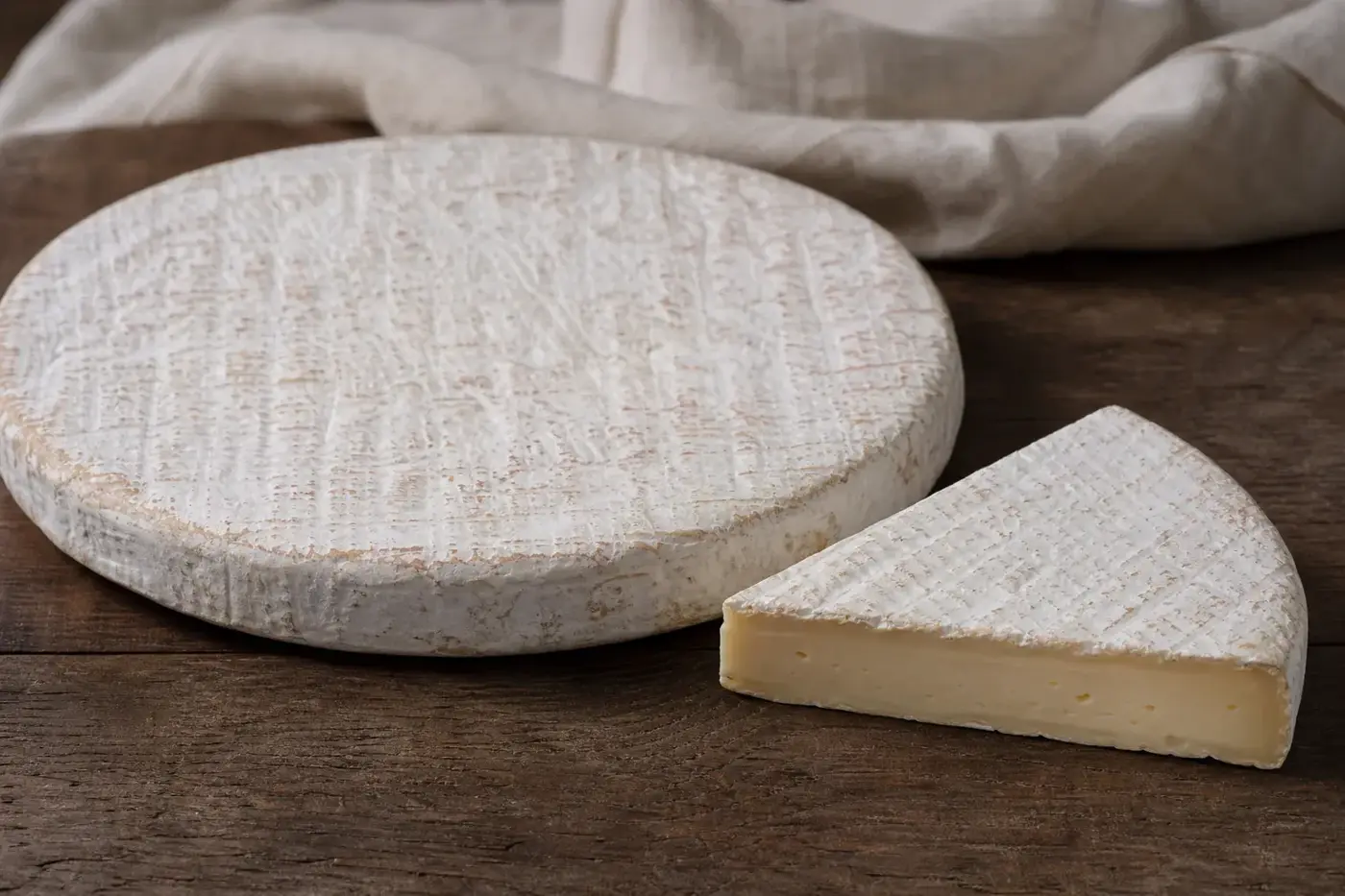
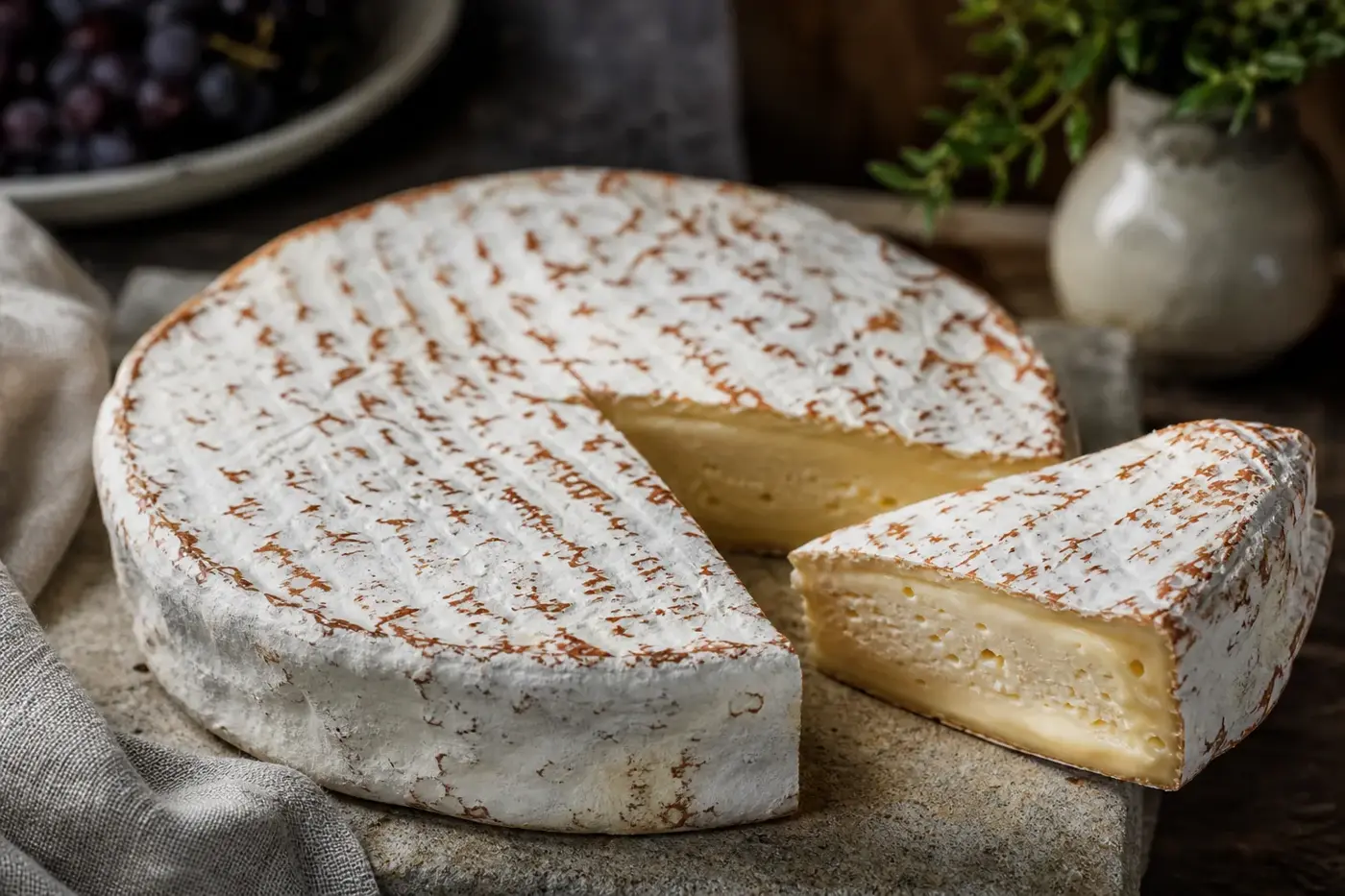
Fresh Brocciu gives you the softer, more yielding texture. Its published EU description places the colour between pure white and cream, with a mild, lightly salty flavour. Begin there when you taste it. [4]
INAO describes tenderness and a smooth consistency in the mouth. The dairy appellations industry adds milky notes, with possible impressions of hay, dried fruit and roasting. These are possibilities in its account, not a tasting examination you or your cheese must pass. [1][6]
For your first serving, keep things simple. Taste a little on its own before adding anything, and notice how milk flavour, salt and texture fit together. Give that texture as much attention as the flavour.
Then try something savoury or sweet alongside it. A restrained first plate lets you get to know Brocciu before asking it to become part of a more elaborate dish.
Meet passu, Brocciu with time behind it
Brocciu passu takes a defined route through maturation. It receives dry salt, either once or in several applications, with the first salting within 24 hours of moulding. It must then mature inside the production area for at least 21 days. [3]
Choose fresh Brocciu or passu according to what you want to serve or cook. If your recipe asks for fresh Brocciu, look for that form on the label. The name Brocciu alone does not settle the matter.
This difference begins with the maker, not in your refrigerator. The minimum 21 days is a legal threshold for passu. It is not an instruction to keep fresh Brocciu at home until it becomes the matured version.
Follow Corsica’s flocks through the year
Corsican breeds and predominantly rough grazing belong to Brocciu’s production framework. The appellation’s geographical account connects the island’s sheep and goats with mountainous terrain, maquis vegetation and the seasonal use of grazing resources. This cheese belongs to a landscape, not just a recipe. [4]
Milk supply determines whey supply, which in turn shapes the cheese’s availability. France’s agriculture ministry names November to June as the ideal period for enjoying Brocciu. If you want the fresh form outside that window, ask the seller what has actually been made and delivered. [4][5]
The specification also defines an annual production campaign running from 1 October to 30 September. That is the appellation’s reporting framework. It does not promise uninterrupted fresh supplies throughout those twelve months. [3]
At the counter, three questions will serve you well. When was this cheese made, is it fresh or passu, and when is the next delivery expected? The answers help you plan around what is available, rather than an assumed timetable for every shop.
Think of ricotta as an introduction, not a twin
If you know ricotta, you already have a useful route into Brocciu. The Brocciu specification places ricotta among Mediterranean products made by recovering material from whey through heating. Within that family, Brocciu has its own defined ingredients, local breeds, geographical area and manufacturing requirements. [3][4]
When you need a cooking substitute, compare the cheeses in front of you rather than relying on the family resemblance. Ask about moisture, salt and texture. Does your recipe need a spoonable filling, or something that holds its shape?
Taste the replacement before seasoning the rest of the mixture. Its saltiness needs a say in that decision. A shared starting point does not make two cheeses interchangeable in every dish.
Take the same approach with another Corsican whey cheese, which may follow a different specification under a different name. Check the ingredients and method, and ask the maker or seller how it was produced. For Brocciu itself, look for the registered name and EU PDO identification: a Corsican address alone does not establish those requirements. [3][4]
Pull up a chair for mint omelettes and fiadone
Brocciu moves comfortably between savoury and sweet. INAO records it in omelettes, tarts and fritters; the agriculture ministry also names polenta, cannelloni and stuffed vegetables. You begin to see how thoroughly it belongs in Corsican meals. [1][5]
For a sweet introduction, look to fiadone. The ministry describes this Brocciu preparation with eggs and sugar, scented with lemon zest. Set it beside filled pasta and you can appreciate how differently the same named cheese works across a meal. [5]
Mint omelettes appear in the appellation’s published geographical account, too. [4] As you explore these dishes, compare several documented recipes and notice which form of Brocciu each requests. Then follow the quantities and method of the one you choose.
Household versions can take different approaches. Enjoy that variety without expecting a single recipe to settle every detail of the dish.
Give fresh Brocciu a little room on the plate
Start with bread if you want an uncomplicated introduction. The dairy appellations industry suggests a seeded baguette or fougasse before you move on to cooked dishes. [6] Plain bread is another option when you would rather the accompaniment stayed quietly in the background.
For a savoury plate, try a little finely chopped mint, or another herb you enjoy. Add it sparingly, taste, then adjust. The mint takes its cue from the documented Corsican omelette pairing, brought to the table here as a simple accompaniment. [4]
In a sweeter mood? Put a small spoonful of honey or some fruit alongside. Start with less honey than you think you need, and leave some cheese plain so you can compare.
Fresh fruit and fruit compote take you in different directions. Choose one rather than crowding the plate with both. These are serving suggestions, not fixed Corsican recipes.
With an unfamiliar cheese, one accompaniment at a time lets you discover what each addition changes. Before planning the rest of the meal, decide whether Brocciu will lead a small course or become an ingredient in something cooked. That decision makes everything else simpler.
Bring it home chilled and read the label
Look for the production date on fresh Brocciu, as well as its use-by date and storage instructions. The appellation’s labelling provisions require that production date on the fresh form and distinguish frais from passu. [4] For help separating these details from everything else on the pack, see how to read a cheese label.
In France, agriculture ministry guidance, November 2026, advises taking chilled purchases directly home in an insulated bag. Fresh cheeses belong in the refrigerator’s coldest zone, at 0 to 4 °C (32 to 39 °F). That zone’s position varies between appliances, so use a refrigerator thermometer to find it. [7]
Follow the producer’s instructions for your particular pack, including directions after opening. Plan your purchase around the day you expect to use it. There is no single standard remaining life that fits every pack of fresh Brocciu.
Keep raw and cooked foods separately wrapped, as the ministry advises. Avoid leaving refrigerated food out for prolonged periods, too. [7] You can find the rest of the routine in the home cheese storage guide.
This page summarises published guidance from the official sources it cites. It is not medical advice. Guidance differs between countries and changes over time, so check the current source for where you live, and ask your doctor, midwife, pharmacist or dietitian about your own circumstances.
Ask the maker about rennet and lactose
Cooking for a vegetarian? Start with the rennet question. Brocciu’s whey comes from cheesemaking with traditional or commercial rennet, and the specification excludes other coagulating enzymes, including fungal or microbial ones. [3]
Ask the maker to confirm suitability. Heating the whey later to recover another cheese does not answer the question of which rennet was used at the start.
If you avoid lactose, seek information about the named product. France’s Assurance Maladie describes fresh cheeses and ricotta as containing moderate amounts of lactose, while emphasising that dietary adjustment depends on individual tolerance. The guidance here is dated November 2026. [8]
That gives you context, not a measured lactose figure for Brocciu. Ask the producer for information specific to the product, and discuss your requirements with a doctor or dietitian. [8] For why one cheese’s results cannot automatically speak for another, see lactose in cheese.
Questions people ask
What is Brocciu cheese?
Brocciu is a Corsican whey cheese with an EU protected designation of origin. It is made from sheep’s or goat’s whey enriched with fresh whole milk.
What is the difference between Brocciu frais and Brocciu passu?
Brocciu frais is the fresh form, while passu is matured. Passu is dry salted and must mature in the production area for at least 21 days.
Is Brocciu similar to ricotta?
Both belong to a wider family of products made by heating whey to recover material from it. Brocciu has its own requirements for ingredients, local breeds, production area and manufacture.
Is Brocciu suitable for vegetarians?
Brocciu’s whey comes from cheesemaking with traditional or commercial rennet. Ask the maker to confirm whether the particular cheese is suitable.
Does Brocciu contain lactose?
France’s Assurance Maladie describes fresh cheeses and ricotta as containing moderate amounts of lactose, but the page does not give a measured figure for Brocciu. Check Assurance Maladie’s guidance and ask the producer for information about the particular cheese.
Sources
- INAO. Brocciu, current product record, retrieved November 2026. Includes the product description, sensory account and notice of a proposed specification amendment published on 5 July 2026. Official product record.
- European Union Intellectual Property Office, GIview. Brocciu Corse / Brocciu, record EUGI00000012919, file PDO-FR-0136, retrieved November 2026. Register-derived indexed fields identify EU PDO status and the priority date. GIview record.
- French Ministry of Agriculture. Cahier des charges de l’appellation d’origine « Brocciu corse » ou « Brocciu », homologated by Décret n° 2013-849, Bulletin officiel n° 39-2013, 2013. Official specification.
- European Commission. Publication of an amendment application, including the single document for Brocciu corse / Brocciu, Official Journal C 316, 16 September 2014. Sections 3 to 5 cover the product, labelling, geographical area and geographical link. Official Journal publication.
- French Ministry of Agriculture. Le Brocciu, le fromage AOP corse, 11 December 2025. Used for culinary applications and seasonal guidance only. Ministry article.
- Produits laitiers AOP. Brocciu, undated industry promotional account, retrieved November 2026. Used for its attributed production description, tasting vocabulary and bread suggestions. Industry account.
- French Ministry of Agriculture. Des conseils pour bien ranger votre frigo, current online guidance, retrieved November 2026. French refrigeration guidance.
- Assurance Maladie. Intolérance au lactose : quel régime alimentaire ?, updated 31 July 2024, checked November 2026. French lactose guidance.
- Légifrance. Décret n° 2013-849 du 23 septembre 2013 relatif à l’appellation d’origine protégée « Brocciu corse » ou « Brocciu », published 25 September 2013, consolidated record retrieved November 2026. Official decree.
This desk-researched article brings together official appellation documents, French public guidance and explicitly attributed industry descriptions; publication checks still outstanding are recorded below.
Last checked: November 2026
Last checked November 2026.
The editors suggest you read next