Burrata di Andria
Your knife parts the shell, and cream spills around hand-shredded strands of stretched curd.
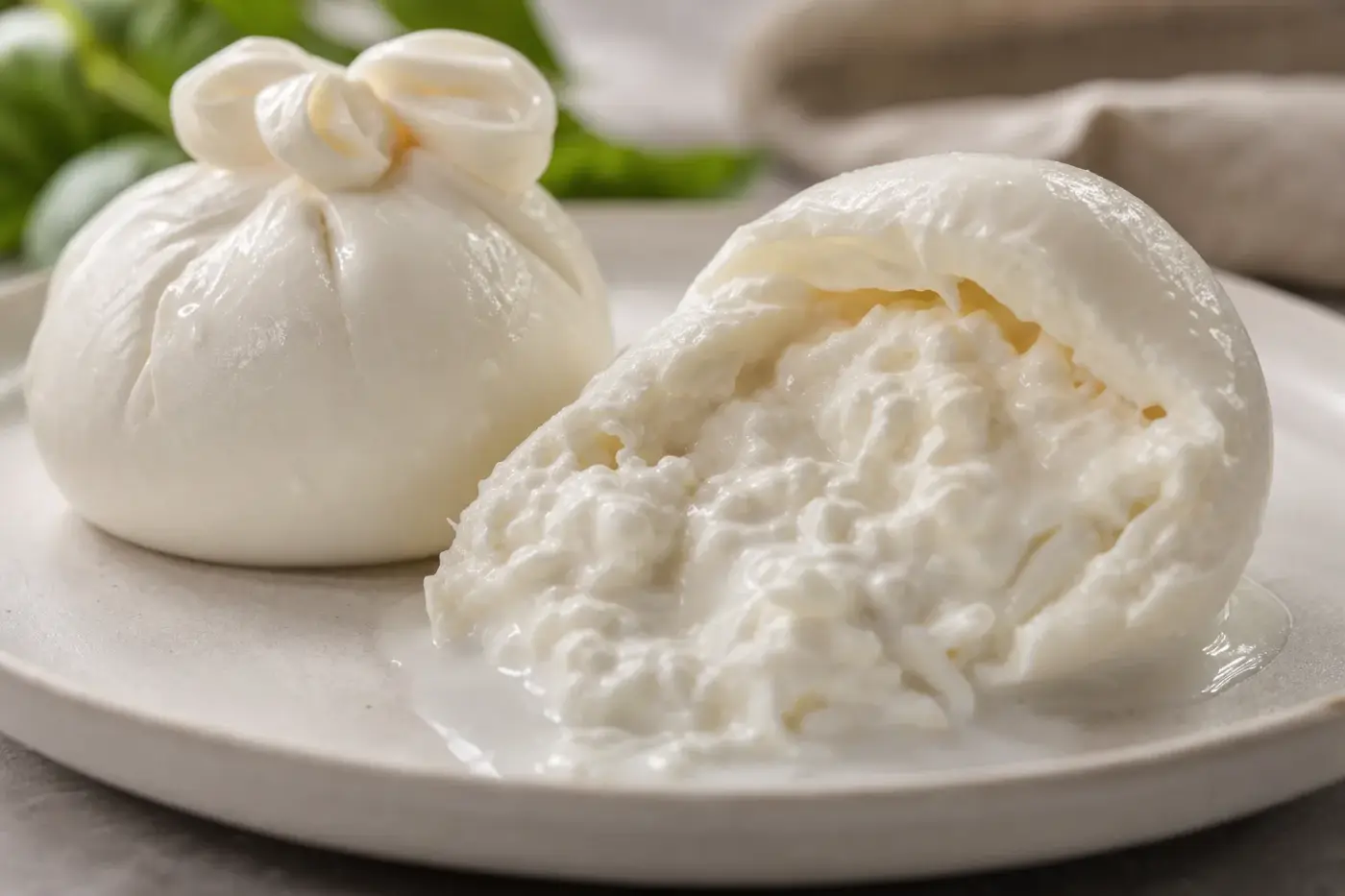
Your knife parts the shell, and cream spills around hand-shredded strands of stretched curd. Burrata di Andria gives you two pleasures in one cut: a yielding centre and the pouch that holds it. In Andria, in Puglia, cheesemakers tuck this filling, stracciatella, into fresh cow’s milk cheese, though its EU protected geographical indication covers production across all Puglia. [1][2][6]
Your introduction to Burrata di Andria
| What to know | The details |
|---|---|
| Registered name | Burrata di Andria. [1] |
| EU authority and identifier | European Commission; PGI-IT-01393. [1][2] |
| EU registration | Regulation (EU) 2016/2103; published 2 December 2016, effective 22 December 2016. [1] |
| EU procedural event | Amendment request published for regional consultation on 24 August 2026. [9] |
| Great Britain | Registered PGI from 31 December 2020 at 23:00; register information as at November 2026. [4] |
| Northern Ireland | Registration status unspecified. |
| Where it is made | Throughout Puglia, Italy; production and packaging stay within the region. [2][5] |
| Milk and cream | Cow’s milk, raw or pasteurised; pasteurised or UHT cream permitted. [2] |
| What sets the curd | Calf rennet or microbial coagulant. [3] |
| Shape and size | Rounded pouch, 100 to 1,000 g. [5] |
| Time to mature | Fresh cheese; no minimum maturation period specified. [3] |
| UK pregnancy guidance | NHS guidance includes pasteurised burrata; check your product’s label. November 2026. [7] |
Snow outside, a bright idea in the dairy
Heavy snow has stranded a cheesemaker, leaving milk that cannot be moved. The solution: enclose cream and scraps of stretched curd in a pouch made from that same curd. This is Burrata di Andria’s origin story, recorded as oral tradition in the 2016 EU application. [5][6]
The application places the story in the early decades of the twentieth century. It links the idea to manteche, stretched-curd casings used to hold butter, and cites a 1931 Touring Club guide as an early published reference to the cheese. Together, these accounts trace an established regional reputation and a snowbound invention kept alive in memory. [5][6]
At its heart is thrift, with a lovely reward. Loose curd and cream become something you can carry, open and share. Quite a persuasive argument for saving the scraps. [5]
A name from Andria, a home across Puglia
The complete name Burrata di Andria carries EU protection. Its legal instrument was adopted on 21 November 2016, published on 2 December and entered into force on 22 December 2016. Great Britain records the name separately in its own register, with protection from 31 December 2020 at 23:00. These are distinct dates for distinct events in the two schemes. [1][4]
Despite the name, you need not trace every pouch to Andria itself. The EU specification allows processing and manufacture throughout Puglia, with each cheese packaged at the premises where it is made. What the name promises is a regional method tied to a defined place, rather than production confined to one town. [2][5]
Burrata alone is the broader cheese name. A label saying simply burrata does not establish compliance with the Burrata di Andria specification, whatever the Italian flag, rustic wrapper or seller’s description suggests. Look for the full designation, and see protected cheese names for the distinction between schemes. [1][5]
In the cheesemaker’s hands
Those distinctive strands start with curd shredded by hand. The specification permits raw or pasteurised cow’s milk; the cream may be pasteurised fresh cream, packaged UHT cream or a mixture. Cream obtained from milk or fresh whey, the liquid separated from curd during cheesemaking, is also allowed. Check the milk and cream treatments separately on your product. [2][3]
To acidify the milk, makers can use citric or lactic acid, selected cultures, or a milk or whey starter. Calf rennet or microbial coagulant sets it into curd. Cheesemakers cut this into pieces about the size of hazelnuts, rest and drain it, then stretch it with boiling water. Here, you are watching pasta filata take shape. [3]
Some of that stretched curd is pulled into ribbons, shredded by hand and mixed with cream. The specification calls for irregular shreds, not a mechanically chopped mass. When you open the finished cheese, those strands should remain distinguishable within the cream. The centre is about texture, not simply flowing liquid. [3]
The remaining curd forms the pouch. Once it is filled, the opening is gathered and sealed with hot water and/or tied, then the cheese is cooled in water. Salt may be added during stretching, through the cream or in brine after cooling. This work carries on throughout the year. [3]
Look beyond the gathered top
That gathered top is characteristic, but a conspicuous tie is optional. An approved amendment published in March 2024 permits even a very small apical closure, allowing makers to close the cheese without plastic raffia. You should still recognise the essential shape: a rounded sack with a closed top. [2]
Regione Puglia lists food-grade bags, green wrapping, trays, jars and cups, with or without covering liquid. These are ways to handle a perishable fresh cheese, not signs of different styles. Choose a size you intend to eat promptly. Keep the storage information until you have finished the cheese. [6]
A quiet flavour, a generous texture
A milk-white exterior opens onto a shredded, spongy filling immersed in cream. That is the official description, and your cut pouch should release cream around strands of varying lengths. The specification identifies aromas of fresh or cooked milk, butter and cream. This is quite a different character from the pungency of a ripened rind. [2][5]
The EU application describes the taste as simple and buttery. Give that delicacy room, and notice the changing textures: intact shell, wet shreds, flowing cream. Try shell and filling together before reaching for oil, pepper or anything sharply acidic. The condiments can wait their turn. [5]
If you are thinking of mozzarella, the difference lies in the construction. Mozzarella is stretched curd throughout; Burrata di Andria uses it both as a container and as shreds suspended in cream. Stracciatella is that filling, so a tub gives you the centre without the enclosing pouch. [5][6]
What to look for on the label
Start with the complete words Burrata di Andria. EU labelling provisions require the designation to be clear and distinguishable, immediately followed by Indicazione Geografica Protetta and/or I.G.P. The product’s own logo is specified too. IGP is the Italian abbreviation corresponding to PGI, protected geographical indication. [2][5]
Next, read the milk treatment, ingredients, storage instructions and date. If you need vegetarian suitability, ask which coagulant the maker uses: both calf rennet and microbial coagulant are allowed. Buying at a counter? Ask to see the original packaging, because the pouch cannot tell you everything. [3][8]
Plan the meal, then keep it cool
Buy your Burrata di Andria with a particular meal in mind. Regione Puglia describes its shelf life as limited, and the specification requires packaging at the dairy. Follow the pack’s storage temperature and instructions for use after opening. Appearance alone cannot tell you whether the cheese is still fresh. [5][6]
At home, the Food Standards Agency advises a fridge temperature between 0 and 5 °C (32 to 41 °F), measured with a thermometer. The cited guidance applies to England, Wales and Northern Ireland. Keep your cheese refrigerated until you are ready to prepare it, and follow any stricter instruction on the label. [8]
Serve it cool, taking it out when the rest of your plate is ready. The FSA advises keeping the time chilled food spends outside refrigeration during preparation to a minimum. Follow the opening instructions, and do not eat the cheese after its use-by date, even if it looks unchanged. [8][10]
Opening the pack can shorten the time you have to use it. Follow the maker’s instructions rather than assigning every burrata the same number of days. For the wider handling principles, turn to storing cheese at home. [10]
Set a plate that catches every spoonful
Seasonal tomatoes, bread and a little olive oil make a simple plate. Choose a shallow dish to catch the filling, then cut the pouch at the table. Give everyone some shell as well as stracciatella, and use the bread to gather the cream and tomato juices. That last sweep of the dish deserves your attention.
No seasonal tomatoes? Try roasted peppers or simply toasted bread. Keep dressings light and put sharper condiments alongside, so everyone can choose how much to add. Taste the cheese alone first: shell, strands and cream deserve as much attention as their accompaniments.
For your drink, still or sparkling water leaves those documented milk and cream aromas unobscured. There is plenty to enjoy on the plate already. [5]
This page summarises published guidance from the official sources it cites. It is not medical advice. Guidance differs between countries and changes over time, so check the current source for where you live, and ask your doctor, midwife, pharmacist or dietitian about your own circumstances.
Pregnant? Let the milk treatment guide you
The NHS lists pasteurised soft cheeses, explicitly including burrata, among foods you can eat during pregnancy. It also advises that soft cheeses can be eaten if cooked until steaming hot throughout. Consult its current guidance for cheeses made with unpasteurised milk. The UK guidance summarised here is from November 2026. [7]
Burrata di Andria permits both raw and pasteurised milk, so read your actual product’s label or ask the maker to confirm its milk treatment. Heat-treated cream alone does not tell you how the milk for the shell and shreds was treated. You need the information for both parts of the cheese. [2]
Read the current NHS pregnancy guidance before choosing, especially if the milk treatment is unclear. Ask your midwife about your own circumstances. If you are outside the UK, follow your own national guidance.
Questions people ask
What is the difference between burrata and mozzarella?
Mozzarella is stretched curd throughout. Burrata di Andria has a stretched curd pouch filled with cream and shreds of stretched curd, known as stracciatella.
Does Burrata di Andria have to be made in Andria?
No. Its protected production area covers the whole of Puglia, and each cheese must be packaged at the premises where it is made.
Is Burrata di Andria vegetarian?
The specification permits either calf rennet or a microbial coagulant. Ask the maker which coagulant was used.
Can you eat burrata during pregnancy?
The NHS lists pasteurised burrata among foods that can be eaten during pregnancy. Burrata di Andria can be made with raw or pasteurised milk, so check the label and consult the current NHS guidance on foods to avoid in pregnancy.
How should Burrata di Andria be stored?
The Food Standards Agency advises keeping the fridge between 0 and 5 °C. Follow the pack instructions, including those for use after opening, and do not eat the cheese after its use by date.
Sources
-
European Commission. Commission Implementing Regulation (EU) 2016/2103 registering Burrata di Andria (PGI), adopted 21 November 2016, published 2 December 2016. Articles 1 and 2 establish registration and entry into force.
-
European Commission. Burrata di Andria: publication of an approved standard amendment and single document, C/2024/1948, 5 March 2024; file PGI-IT-01393-AM02. Includes the closure amendment and updated product description.
-
Italian Ministry of Agriculture, Food Sovereignty and Forestry, MASAF. Disciplinare di produzione della Indicazione Geografica Protetta “Burrata di Andria”, September 2023 file referenced by the 2024 EU publication. Articles 2 to 5 cover composition, area and production.
-
Department for Environment, Food & Rural Affairs. Burrata di Andria, UK protected food names register, published 4 January 2021, retrieved November 2026. Records registered PGI status and the UK scheme registration date and time.
-
European Commission. Publication of an application: Burrata di Andria, 2016/C 263/05, 20 July 2016, EU file IT-PGI-0005-01393. Sections 3 to 5 provide the original product description, labelling provisions and attributed historical account.
-
Regione Puglia. Burrata di Andria IGP, published 25 May 2022. Regional account of the filling, cream, packaging, perishability and oral origin tradition. Its registration-date metadata is addressed in the evidence log.
-
NHS. Foods to avoid in pregnancy, live guidance retrieved November 2026, section “Cheese, milk and other dairy”.
-
Food Standards Agency. How to chill, freeze and defrost food safely, 18 December 2017, live GOV.UK guidance retrieved November 2026. Applies to England, Wales and Northern Ireland.
-
Regione Puglia. Richiesta di modifica del disciplinare della I.G.P. “Burrata di Andria”, 24 August 2026. Notice of an amendment request and regional consultation.
-
GOV.UK. Understanding food labelling: Best before and use-by dates, live guidance retrieved November 2026. Explains safety dates, storage and instructions after opening.
This desk-researched article brings together official registration documents, the published production specification, regional records and UK public food guidance; serving and drink suggestions are identified as editorial preferences.
Last checked: November 2026
Last checked November 2026.
The editors suggest you read next
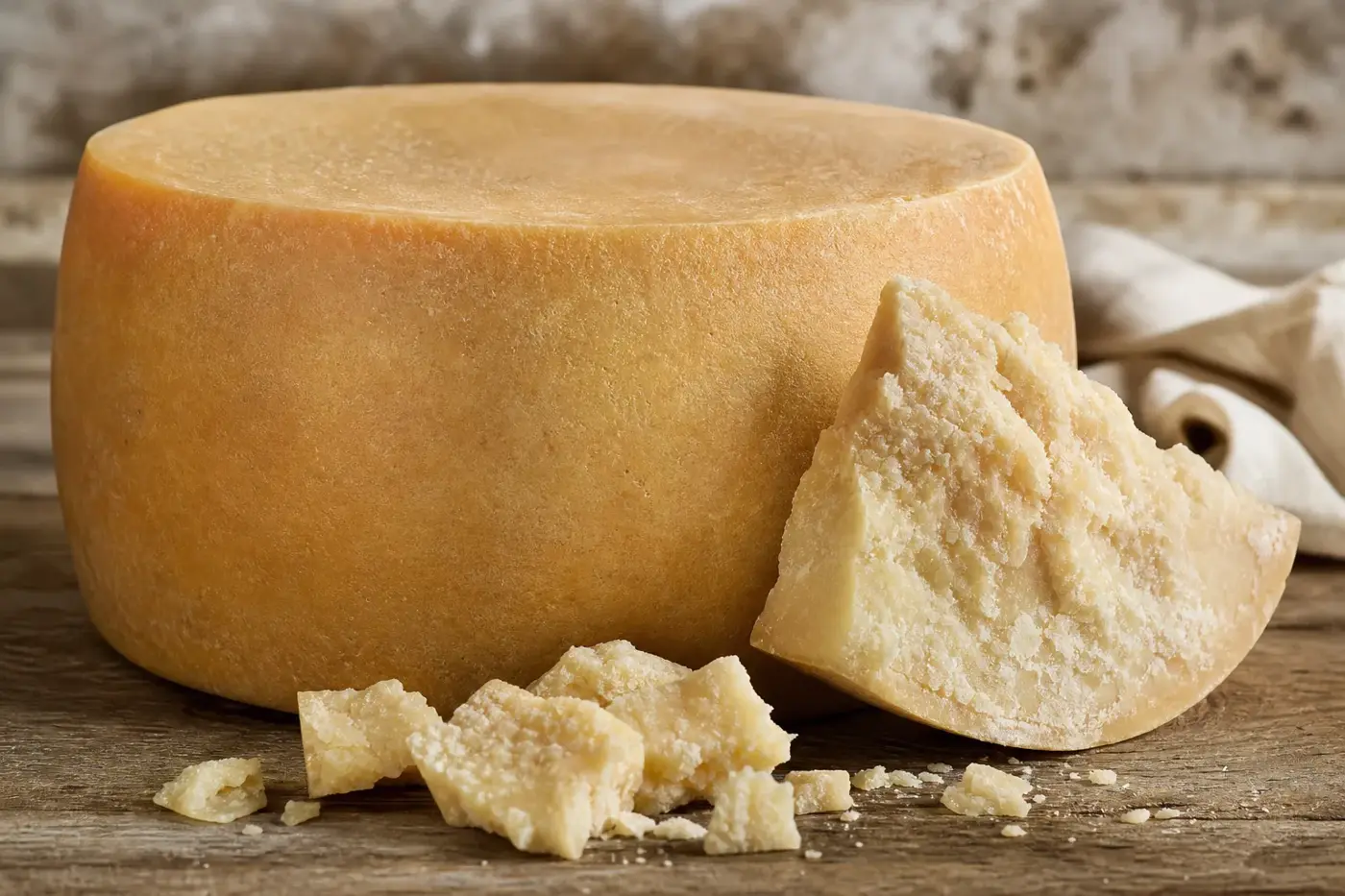
Parmigiano Reggiano
Break into a wheel of Parmigiano Reggiano and flakes fall away, revealing a finely granular cheese, pale straw to straw in colour.