Buying Cheese from a Cheesemonger: What to Ask
A sticky rind catches your eye.
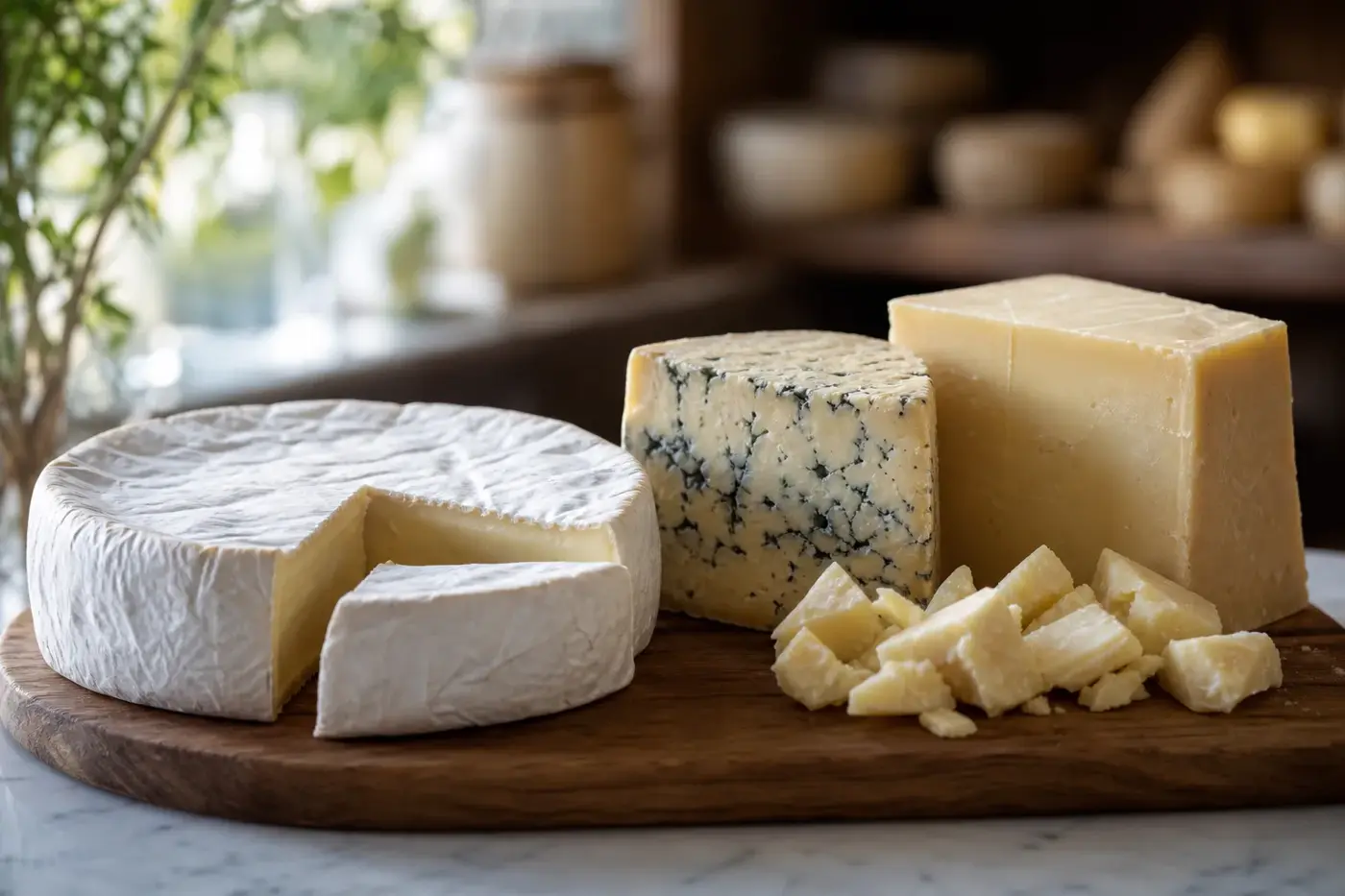
A sticky rind catches your eye. Beside it, a cheese crumbles where you expected a neat slice. You lean towards the counter: “Something like the Cheddar I know, but softer. It’s for Saturday.” That is a perfectly good place to begin.
Tell the cheesemonger what you enjoy and when you plan to eat it. Ask for help choosing the cheese, the amount and a piece that will be ready for the occasion. You need an appetite and a few preferences, not a cheese vocabulary with its own passport.
Bring your supper plans to the counter
Supper for two? A board after dinner? Something to grate over vegetables? Those details give the cheesemonger more to work with than a list of recognised cheese styles.
Mention dietary requirements before asking for recommendations. Aim to leave knowing three things: whether you will enjoy the cheese, whether it suits your plans and how to look after it. You bring your preferences and circumstances; the monger narrows the choice and explains the differences.
Describe the bite you would like next
Start with a cheese you already buy, including its maker or label if you remember it. Then separate flavour from texture: “Something sharp, but with a texture that slices rather than crumbles.” Words such as “mild”, “salty”, “tangy”, “smoky” and “not too strong” are useful exactly as they are.
Your dislikes help just as much. Is it the blue veins, sticky rind, crumbly texture or lingering finish that puts you off? Tell the monger which detail bothers you, rather than dismissing the whole cheese with “not for me”.
If someone describes a cheese as “strong”, ask what they mean. Smell, saltiness and intensity of flavour are different qualities, and each deserves its own conversation. For more words to borrow, see how to tell cheese styles apart.
Meet the maker through the cheese
“Which animal’s milk is this made from?” is a useful opening question. Follow it with “Who makes it?”, “Where is it made?” and “Is it matured by the maker or by somebody else?” The cheese in front of you now has a story to follow.
If the answer gives you a region or brand, ask for the dairy’s name too. Have those details written on the wrapping so you can find the cheese again. A delicious discovery is worth remembering properly.
Curious about the rind or what happens during maturing? Ask exactly that, and request everyday language rather than a collection of technical terms. “How is this different from the cheese beside it?” gives the monger something concrete to explain.
If a protected name matters to your choice, ask which scheme applies. Then ask what its published specification requires.
Put your requirements before the tasting
Ask “Is the milk raw, thermised or pasteurised?” and “Can you check the producer’s information?” Milk treatment and vegetarian suitability need separate answers. For vegetarian suitability, ask what rennet is used and whether this particular cheese is confirmed suitable for vegetarians; rennet is a coagulant used to set milk during cheesemaking. [2]
The Vegetarian Society identifies animal rennet as unsuitable for vegetarians, with microbial and thistle rennets as vegetarian alternatives. Request confirmation for the whole product, including added ingredients. For halal or kosher requirements, ask to see certification for that product, because the rennet answer alone is not enough. [2]
If you have an allergy, name the allergen explicitly before accepting a sample. Ask about ingredients, shared cutting equipment and handling. In England, Wales and Northern Ireland, the Food Standards Agency says allergen information must be supplied for loose food containing any of the 14 regulated allergens, either in writing or verbally with visible signposting. [3]
Ask to see the written information and have anything uncertain checked against the supplier’s records. Explain lactose intolerance separately from allergy, and follow your clinician’s advice about your own requirements. The distinction is explained in cheese allergy vs lactose intolerance.
For pregnancy in the UK, NHS guidance as of November 2026 permits hard cheeses made from pasteurised or unpasteurised milk. It advises cooking mould-ripened soft cheeses with a white coating and soft blue cheeses until steaming hot, whether made from pasteurised or unpasteurised milk. Check your proposed cheese and preparation against the current NHS guidance. [4]
Find out what is tasting lovely today
“Which cheeses are tasting especially good at the moment?” opens a more useful conversation than “What is your best cheese?” Bring the answer back to your own appetite: “Which of those fits what appeals to me?” After explaining any dietary requirements, ask whether a small sample is available, and compare two candidates if the shop can offer them.
Give the monger useful feedback rather than a polite verdict. “The texture is lovely, but the finish is too sharp” points towards your next taste. There is no medal for taking home a cheese you disliked out of politeness.
Ask whether the sample comes from the same cheese you would take home. If samples are unavailable, request a comparison with a cheese you already know.
Choose the piece that suits your Saturday
Give the actual eating date rather than asking only for something “ripe”. Explain whether you prefer a firm centre or a softer texture, then ask “Which piece would you choose for that day?” If you are shopping ahead, ask whether collecting later would give you a better choice.
Seasonality deserves equally precise questions. Try “Is this cheese made seasonally?”, “When was this batch made?” and “What difference does the maker describe between batches?” Ask the monger to separate production season from stage of maturity, so you learn about the cheese in front of you rather than simply getting a recommendation for autumn or spring.
Tell the monger what is on the table
For a cheeseboard, begin with contrasts your guests will enjoy. “Could you suggest one firm cheese and one softer cheese, with different intensities?” is a useful request once you have stated any exclusions. Choose the number deliberately, and ask which selection tells the clearest story without repeating itself. Not every cheese style needs an invitation.
For cooking, bring the recipe or describe the job: melting into a sauce, browning on top, grating or keeping its shape. Ask whether a substitution would change the moisture, salt or texture, and whether the amount should change. Give the required quantity and establish whether the rind should be removed before your portion is weighed.
For a drink pairing, name the drink you already have and describe it if necessary. Ask for an alcohol-free option too, such as tea or a particular juice. If choosing wine for adults of legal drinking age, take the bottle details; the cheese and wine pairing guide offers a separate starting point.
Buy enough for the meal you have planned
“Six people after a substantial dinner” is a different brief from “six people sharing cheese as supper”. Mention bread, vegetables and other dishes, and say whether everyone eats cheese. Ask for a recommended total weight in grams, then divide it between your choices.
Give your spending limit privately or at the start, without apology. Agree the overall selection before anything is cut, and request a smaller piece if that suits your plans. Fewer cheeses can still give you variety in texture and flavour.
Get the cut, wrapping and journey home right
Before the knife comes out, ask “Could you cut a piece suitable for how it will be served?” Explain whether you want slices, wedges or cheese for grating. Ask which outer covering should be removed, and have each cheese identified separately so you can match it to its handling instructions.
Describe your journey home, including warm weather and any stops. Ask how to keep chilled purchases cold along the way, and whether you need an insulated bag and ice packs. Request storage instructions and any use-by date in writing, particularly for cheese cut from a larger piece.
The FSA’s consumer guidance for England, Wales and Northern Ireland, as of November 2026, recommends a fridge between 0 and 5 °C (32 to 41 °F), refrigerating dairy products and following packaging instructions. Ask whether to keep the supplied wrapping or replace it after opening. Find out how to rewrap each piece, too. [5]
Keep dates and storage instructions with the cheese instead of guessing a universal shelf life. [5] Before leaving, ask “Which cheese should be eaten first, and what date applies to each piece?” For the next step, see how to store cheese at home.
Take these words to the cheese counter
You do not need a script, but a starting point can make the conversation easier. Adapt this illustrative exchange to your own plans.
You: “Something firm and tangy, but no blue cheese, please. It’s for four people after dinner on Saturday. One guest is vegetarian.”
Monger: “Would you like one cheese or a selection?”
You: “Perhaps two contrasting cheeses. Which are tasting well now, and is a sample available? Could you check that both are suitable for vegetarians?”
You, before leaving: “Could you write their names and storage instructions on the wrapping? How should they be cut?”
If an unfamiliar word crops up, ask “What does that mean for the flavour or texture?” You can ask for an explanation, taste and change your mind. Leave with one cheese you understand.
General information only, not medical advice: follow the official guidance where you live.
Questions people ask
What cheese can I eat during pregnancy?
NHS guidance checked in November 2026 permits hard cheeses made from pasteurised or unpasteurised milk. It advises cooking soft blue cheeses and soft cheeses with a white mould coating until steaming hot, whether made from pasteurised or unpasteurised milk. Check the current guidance on foods to avoid in pregnancy at www.nhs.uk.
How can I tell whether a cheese is vegetarian?
Ask what rennet is used and whether the particular cheese is confirmed suitable for vegetarians. The Vegetarian Society identifies animal rennet as unsuitable, and microbial and thistle rennets as vegetarian alternatives. Request confirmation for the whole product, including added ingredients.
Can I taste cheese before buying it?
After explaining any dietary requirements, ask whether a small sample is available. If the shop cannot offer samples, request a comparison with a cheese you already know.
How do I choose cheese that will be ready for a particular day?
Tell the cheesemonger the actual date you plan to eat it and whether you prefer a firm centre or a softer texture. Ask which piece they would choose for that day and, if shopping ahead, whether collecting later would give you a better choice.
How much cheese should I buy for a group?
Tell the cheesemonger how many guests you have and whether cheese is supper or follows a substantial dinner. Mention other dishes and whether everyone eats cheese, then ask for a recommended total weight in grams.
Sources
-
Department for Environment, Food & Rural Affairs. Protected geographical food and drink names: UK GI schemes, current online guidance retrieved November 2026, especially “Use a UK GI scheme registered product name” and the Northern Ireland guidance. Official guidance.
-
Vegetarian Society. Which cheeses are suitable for vegetarians, and which aren’t?, published 19 May 2026, especially “Which ingredients in cheese aren’t vegetarian?” and “Coagulants to look out for”. Used for coagulants and vegetarian suitability, not its statements about protected names. Published guidance.
-
Food Standards Agency. Allergen guidance for food businesses, updated 17 July 2026, applying to England, Northern Ireland and Wales, sections 2.5 and 4.2. Official guidance.
-
NHS. Foods to avoid in pregnancy, current online edition retrieved November 2026, “Cheese, milk and other dairy”. Official pregnancy guidance.
-
Food Standards Agency. How to chill, freeze and defrost food safely, published 18 December 2017, current online edition retrieved November 2026, applying to England, Northern Ireland and Wales, “Chilling food”. Official storage guidance.
This piece combines desk research from official guidance and the Vegetarian Society with editorially developed counter questions and a clearly labelled illustrative conversation.
Last checked: November 2026
Last checked November 2026.
The editors suggest you read next