How to Tell When Cheese Is at Its Best
A sticky orange rind, a formidable smell, then a surprisingly gentle mouthful.
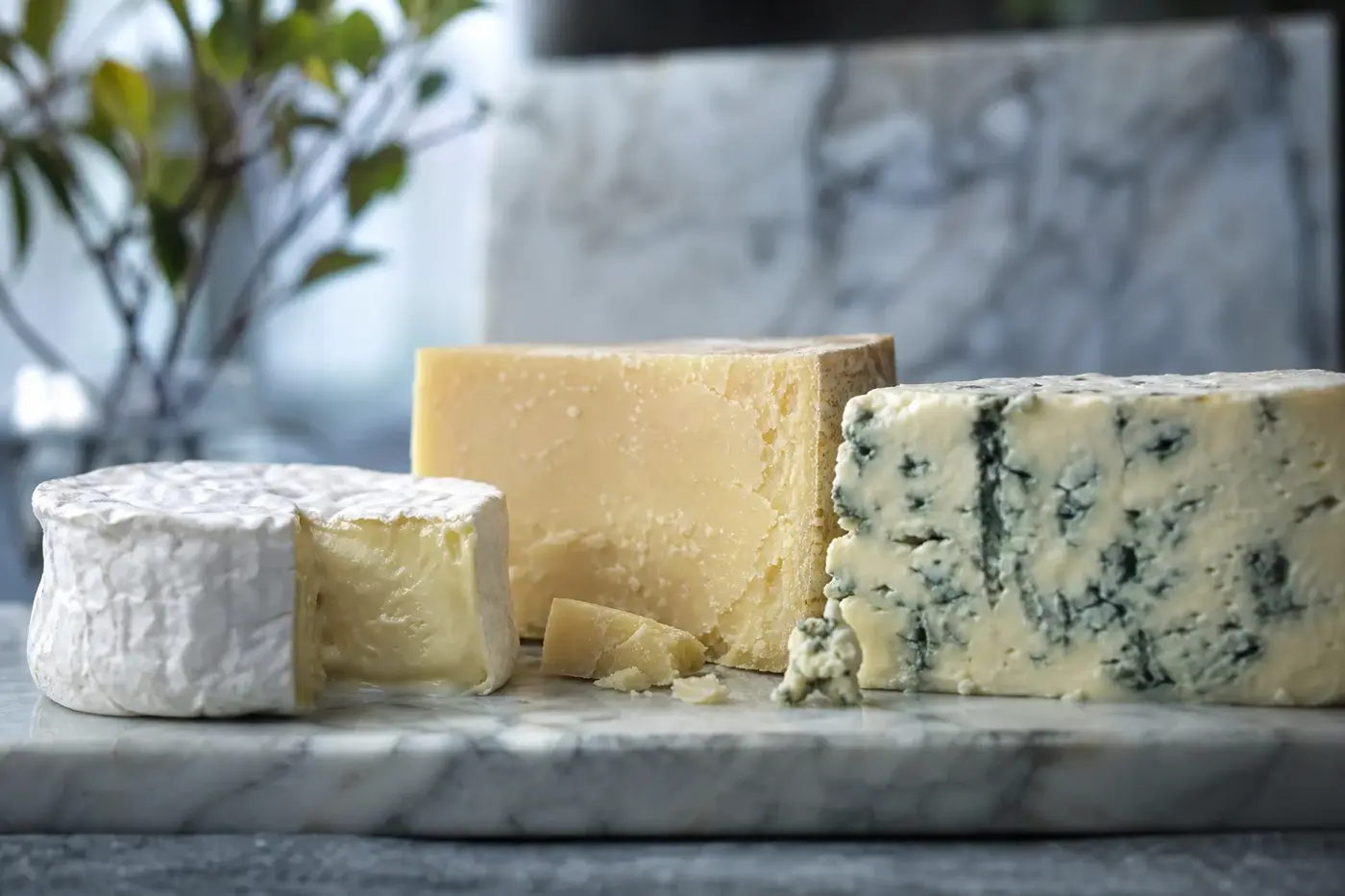
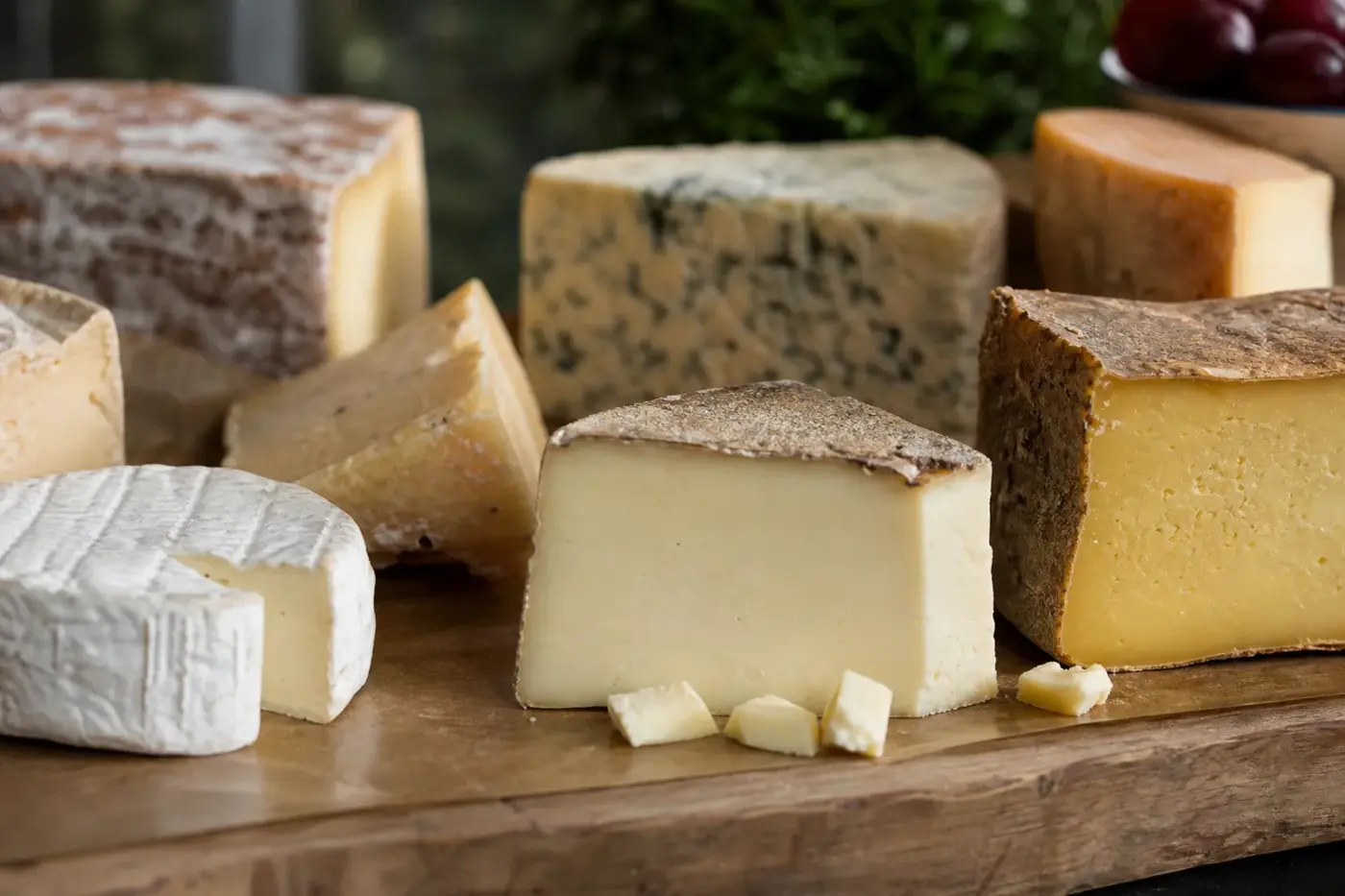
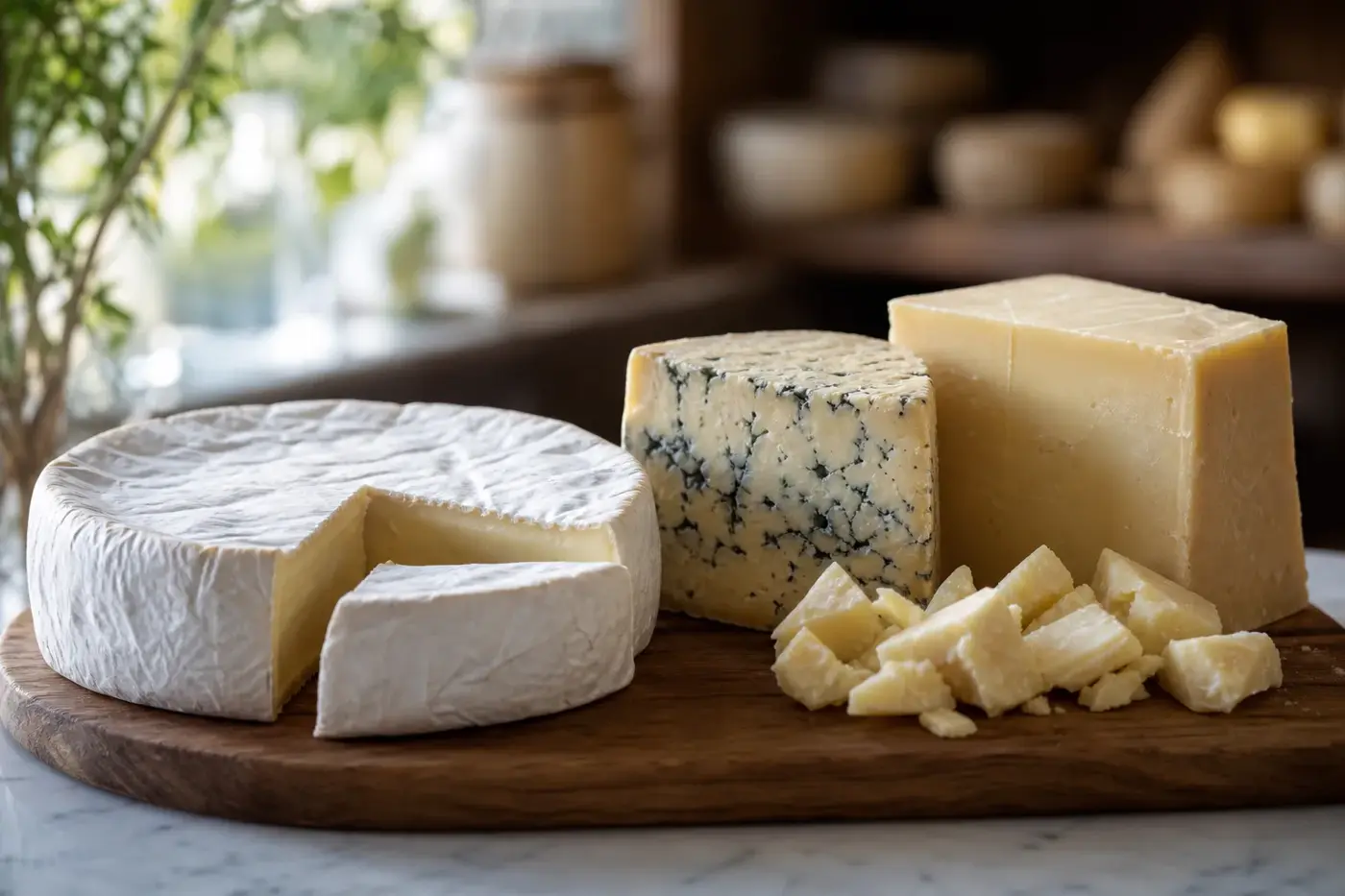
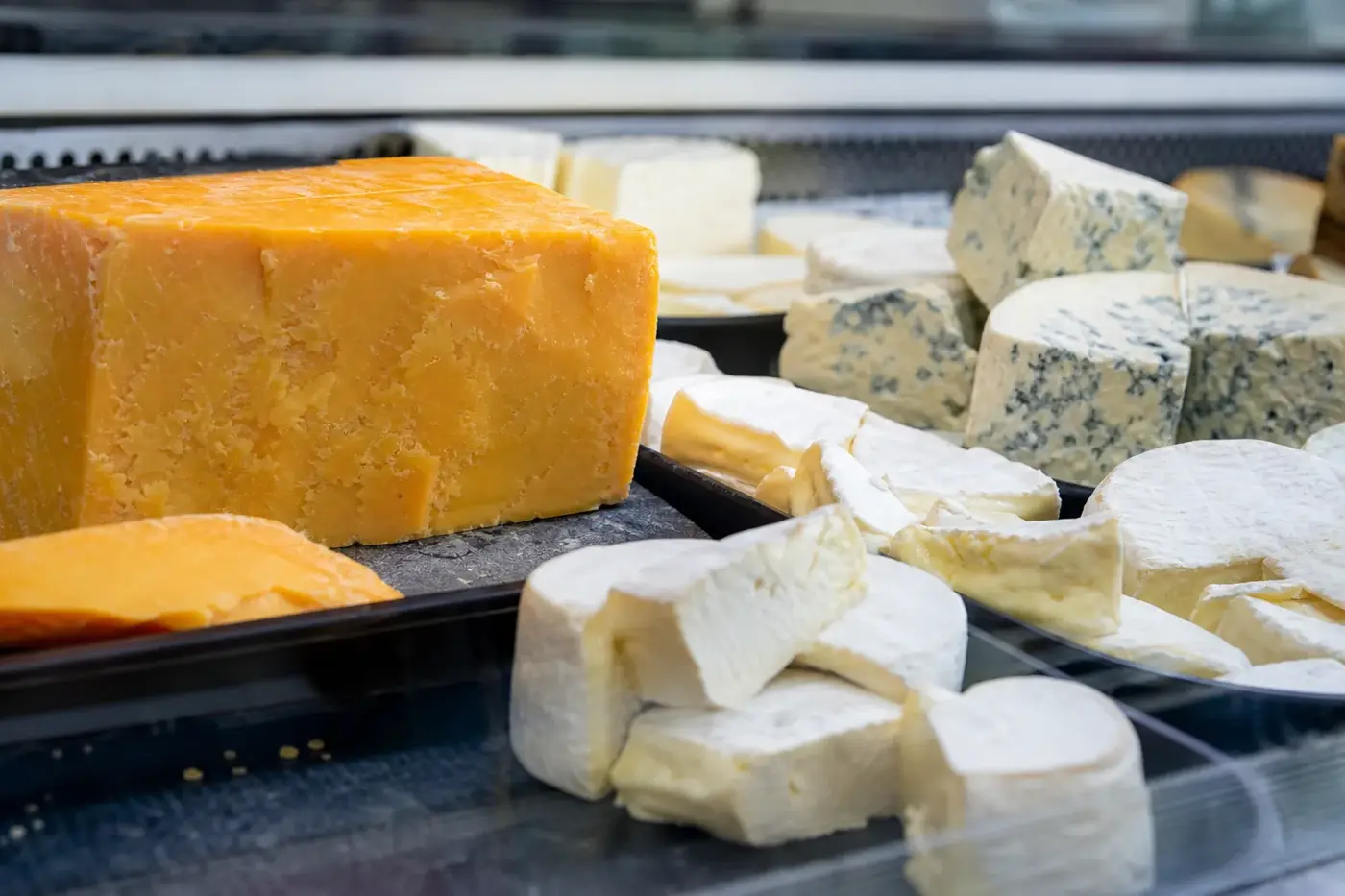
A sticky orange rind, a formidable smell, then a surprisingly gentle mouthful. Elsewhere on your cheeseboard, crystals crunch and a white rind gives way to a pleasingly firm centre. All can belong to cheese in good condition. Start with the style and texture you enjoy, then check dates and storage history separately.[1,2,3,4]
Find your best bite, not just the softest
Freshness, ripeness and safety tell you different things. Freshness describes the condition of a young, unaged cheese; ripeness is the development of its intended texture and flavour. Safety depends on handling, refrigeration and harmful microbes, which your senses cannot reliably detect.[4,7]
Perhaps you like a white-rinded cheese with a little resistance in the middle, rather than one spreading across your plate. Tell the cheesemonger. With an unfamiliar cheese, establish its style and intended texture first. Softness, moisture and a powerful aroma may be exactly the point.[2,7]
Fresh cheeses: let milk and tang lead you
With fresh cheeses, you are not waiting for prolonged ripening. The American Cheese Society describes their typical flavours as mild and lactic, meaning reminiscent of milk, often with a tangy finish. BelGioioso describes its fresh mozzarella as soft, with a delicate milky flavour, and its ricotta as mild and clean-tasting.[1,5]
Start with the maker's description, rather than one fixed picture of “fresh”. A soft ball, separate curds and a smooth spread each have their own intended appearance and texture. Compare yours with its product information. Rinds and blue veins belong to other styles unless deliberately included in that product.[1,5]
A little separated liquid need not spoil the picture. BelGioioso says you can stir the water that separates from its ricotta back in, or drain it off. Before deciding that a wet surface means deterioration, check the product instructions and storage history.[6]
White rinds: get to know what lies beneath
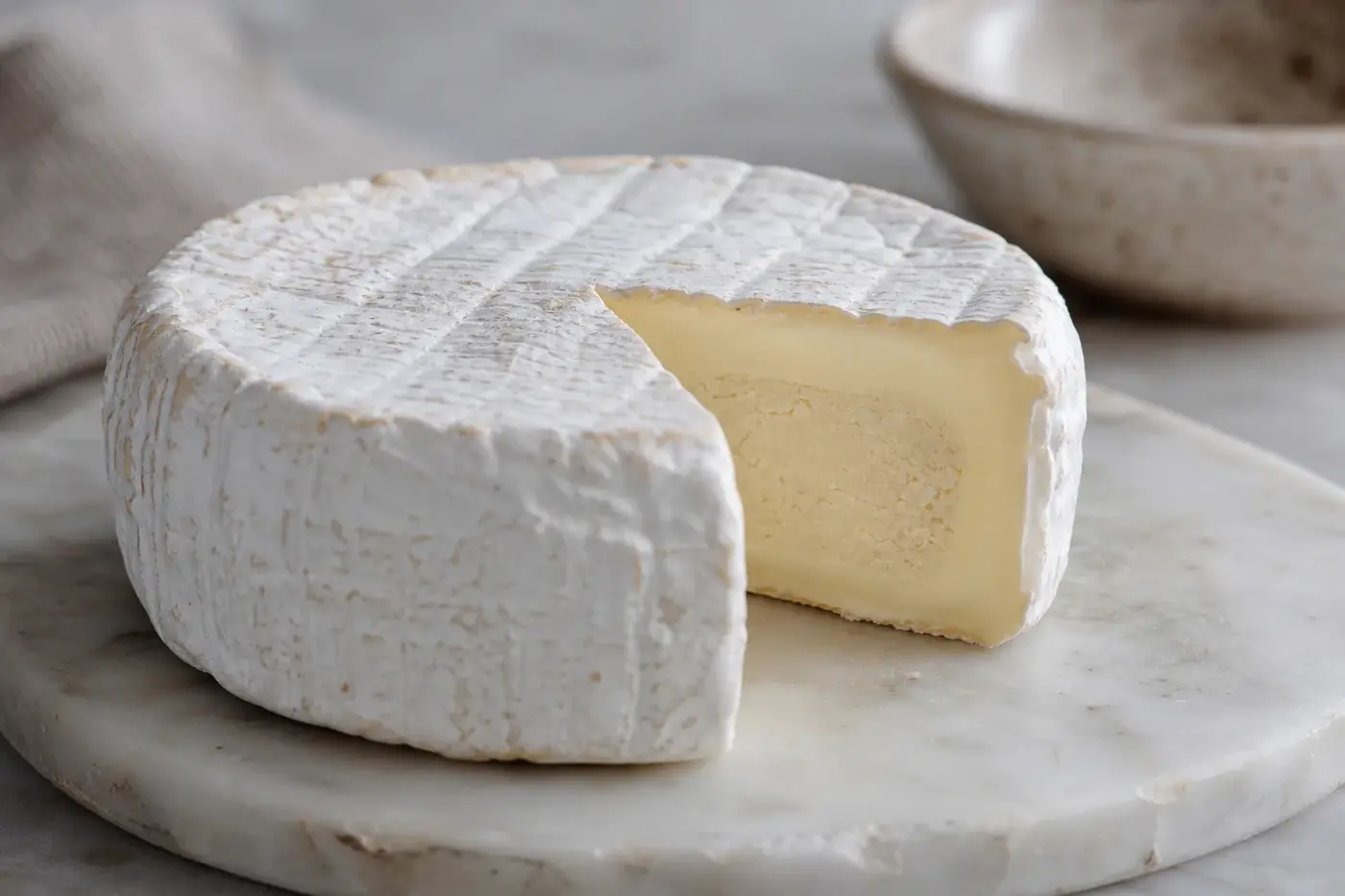
Cut into a white-rinded cheese and look beneath the bloom. That growth surrounds the paste, the cheesemaker's word for the body of the cheese. The American Cheese Society describes a thin white rind enclosing an interior that softens as it matures.[1]
Where ripening travels from the surface towards the centre, your wedge may have a supple band beneath the rind and a firmer middle. As ripening advances, that softened band extends inwards. Castello describes the centre of white-mould cheese becoming softer, sometimes runnier, with a flavour that grows stronger with age.[2,7]
You need not wait for the softest possible cheese. Ask whether this particular make should retain a firmer centre or become supple throughout, then choose the stage you enjoy. Castello's published descriptions include mushroom aromas in this family. That gives you a useful reference when choosing, though individual cheeses differ.[2]
Washed rinds: give the flavour a hearing
A washed-rind cheese can make quite an entrance, without waiting to be introduced. Yet the American Cheese Society notes that its flavour may be considerably milder than its smell. Washing during ripening, often with brine, develops those characteristic orange or reddish rinds. They can be sticky, with interiors that are often semi-soft.[1]
Here, a powerful smell and tacky rind can be expected features. On a plain fresh cheese, the same observations would raise questions. Before buying an unfamiliar washed rind, ask what the maker intends. Your monger can describe its normal surface and how the paste changes as it ripens.[1,7]
Blue cheeses: choose your crumble
Those internal blue patterns have a little help getting started. Castello explains that piercing lets oxygen into the cheese, supporting mould growth along the channels. Its descriptions range from soft, moist cheeses to more crumbly ones, with flavours from mild to sharp.[8]
Ask how the piece in front of you matches its maker's description. A moist blue and a drier, crumbly blue can both be just as intended. Veining and softness alone cannot tell you how much you will enjoy it. Ask about texture and strength together.[8]
Intended internal veins are one thing; a new, unexplained growth on a stored cut face is another. If you cannot establish whether that change is expected, leave the cheese uneaten while you check with the supplier.[4,8]
Firm and hard cheeses: savour the crunch
A little crunch can be one of ageing's pleasures, alongside a firmer bite and more concentrated flavour. The Cheese Science Toolkit distinguishes calcium lactate, which can appear as a pale surface deposit, from tyrosine crystals. These commonly form distinct crunchy specks in some aged cheeses. They are features of ageing, not a reliable assessment of safety.[3]
A cheese made for long ageing may be dry, more inclined to break into pieces than bend into flexible slices. That is different from a cut face turning leathery in your fridge. Look at the intended texture, the contrast between exposed edge and interior, and how the whole piece has been wrapped.[3,7]
Older is a choice, not an automatic improvement. If you prefer a supple texture, choose it. Crystal counting is no way to spend your lunch: neither age nor crystal count can replace the texture you actually want to eat.
An unexpected change? Pause before tasting
Unexpected mould, unexplained slime or an offensive smell unlike the cheese's intended character are reasons to stop eating and investigate. Do not taste a suspect cheese to settle the question. The FSA says a sniff test cannot detect harmful food-poisoning bacteria in foods carrying a use-by date.[4]
With white-rinded and blue cheeses, distinguish intended growth from unwanted change. A familiar rind belongs to the product's description; a newly changed surface needs checking.[1] Do not taste or eat cheese with unexpected mould or unexplained slime while you check current official advice.
Trimming hard cheese calls for a separate, style-specific decision. Consult mould on cheese guidance, rather than applying advice for a solid block to grated, crumbled or soft cheese. If a recall covers your product and batch, follow the recall notice, however appealing the cheese looks.[9]
Read the small words beside the date
Look at the words beside the date, not just the numbers. In the UK, a use-by date concerns safety; a best-before date concerns quality. Storage instructions matter too. Incorrect storage can make food unsafe before its use-by date, and the printed date cannot account for what happened after purchase.[10]
Do not eat cheese after its use-by date, even if it smells appealing. With a best-before date, sight and smell can help you assess deterioration, provided storage instructions have been followed. Read the pack carefully, because cheeses do not all carry the same kind of date.[4,10]
Check the instructions for after opening, too. Record the opening day and follow the stated limit, even if the printed date is later. See how to read a cheese label for the other information worth keeping.[10,11]
Make room for good fridge habits
Start with a fridge that is cold enough. In England, Wales and Northern Ireland, the FSA recommends a home fridge between 0 and 5 °C; Food Standards Scotland advises 5 °C or below. Use a fridge thermometer and follow any tighter product instructions. Keep ready-to-eat cheese separate from raw foods.[11,12]
Keep fresh cheese in its original tub or resealable pack, using clean utensils each time. For cut soft, blue and hard cheeses, retain the supplier's wrapping where instructed, protect the cut face and keep the identifying label. Ask whether the supplied paper needs an outer container. The wrapping should suit your particular cheese.[6,11]
Cheeses packed in liquid need their own instructions, not a general rule. BelGioioso tells customers to leave remaining burrata in its cup water and refrigerate immediately. For its water-packed fresh mozzarella, it says to drain the liquid before replacing the lid and refrigerating. Follow your pack's directions rather than treating both alike.[6]
For more on wrapping and fridge organisation, see how to store cheese at home. Buy quantities you can finish within the stated opened life, especially with fresh and soft cheeses.[6,11]
Bring a portion to the table
BelGioioso recommends serving at room temperature for flavour. That preference still needs to stay within refrigeration controls. In England, Wales and Northern Ireland, FSA guidance says chilled food should be out for the shortest possible time, with a maximum of four hours. Follow any shorter limit on the label.[6,12]
Put out only the portion you expect to eat, leaving the rest refrigerated. Note when it came out, and bring another small portion to the table if needed. Follow the product's time limit rather than waiting for a whole cheese to reach the texture you fancy. Food Standards Scotland also advises eating ready-to-eat foods within four hours of removal from the fridge.[11,12]
This page summarises published guidance from the official sources it cites. It is not medical advice. Guidance differs between countries and changes over time, so check the current source for where you live, and ask your doctor, midwife, pharmacist or dietitian about your own circumstances.
Listeria: put extra care before ripeness
If you are pregnant, UK guidance from the NHS lists pasteurised or unpasteurised hard cheeses among its permitted choices. Mould-ripened soft cheeses with a white coating and soft blue-veined cheeses, whether pasteurised or unpasteurised, must be thoroughly cooked. The NHS specifies steaming hot. It also lists several pasteurised fresh cheeses among permitted options.[13]
United States guidance differs. For pregnant people, adults aged 65 or older and people with weakened immunity, the CDC advises avoiding unheated queso fresco-type cheeses, whether made with pasteurised or raw milk, and any cheese made with raw milk. Its alternatives include pasteurised hard cheeses and specified pasteurised fresh cheeses. The CDC also explains that contamination can occur after pasteurisation.[14]
Check the linked official guidance for your country and circumstances, and ask your healthcare professional about individual choices. Food Standards Scotland emphasises refrigeration, use-by dates and opened-pack instructions to reduce listeria risk. These precautions come before your ripeness preferences. The listeria and cheese safety guide brings the subject together.[11,13,14]
At the counter, start a conversation
Tell the monger when you plan to eat your cheese and what texture you love. Perhaps you want a firmer centre, a supple paste, a moist blue or a drier crumble. Ask about the particular piece being cut, not just the name on its label. Describing the texture and strength of the last piece you enjoyed gives the monger something specific to work with.
- Will this piece have the texture I prefer on the day I plan to eat it?
- What should its rind and cut face look and feel like?
- What wrapping, refrigeration and opened-life instructions should I follow?
- Can you provide the milk treatment, date information and batch details?
Keep those instructions with your cheese. They give you a known starting point for judging that appealing wedge, and make it easier to find the same lovely texture next time.
Questions people ask
Is a firm centre in a white rind cheese a bad sign?
A firmer middle can be part of the pleasure. In cheeses that ripen from the surface towards the centre, a soft band beneath the rind extends inwards as ripening advances.
Can I tell whether cheese is safe by smelling it?
The FSA says a sniff test cannot detect harmful food poisoning bacteria in foods carrying a use by date. An unexpected smell that differs from the cheese's intended character is a reason to stop eating and investigate.
What is the difference between use by and best before dates on cheese?
In the UK, a use by date concerns safety, while a best before date concerns quality. Do not eat cheese after its use by date, even if it smells appealing, and follow the pack's storage and opening instructions.
What temperature should I store cheese at?
The FSA recommends a home fridge between 0 and 5 °C in England, Wales and Northern Ireland. Food Standards Scotland advises 5 °C or below. Use a fridge thermometer and follow any tighter product instructions.
Which cheeses does the NHS advise people to eat during pregnancy?
The NHS lists hard cheeses made with pasteurised or unpasteurised milk among its permitted choices, as well as several pasteurised fresh cheeses. It advises that soft cheeses with a white mould rind and soft blue cheeses must be thoroughly cooked until steaming hot. See the NHS pregnancy guidance and ask your healthcare professional about your circumstances.
Sources
- American Cheese Society. Cheese Definitions & Categories. Undated live educational reference, retrieved November 2026. Used for style descriptions, not its summaries of legislation.
- Castello. White Mould Cheese. Undated live producer account, retrieved November 2026. Sensory descriptions are the producer's own.
- Cheese Science Toolkit. Cheese Crystals. Undated educational explanation, retrieved November 2026.
- Food Standards Agency. Home food fact checker. Live guidance, retrieved November 2026, section “Does the sniff test work for milk and dairy food?”.
- BelGioioso Cheese. Our Family of Cheeses. Live product descriptions, retrieved November 2026. The company has a commercial interest in the products described.
- BelGioioso Cheese. Cheese Claims And Handling Tips. Undated live instructions, retrieved November 2026. Used only for its product-specific handling instructions and serving preference.
- American Cheese Society. Best Practices Guide for Cheesemakers. 2025 edition, sections on surface ripening and cheese ageing characteristics.
- Castello. Blue Mould Cheese. Undated live producer account, retrieved November 2026. Used for piercing, moisture and attributed sensory descriptions.
- Food Standards Agency. Alerts. US Food and Drug Administration. Recalls, Market Withdrawals, & Safety Alerts. Live notice indexes, retrieved November 2026. Individual notices determine the affected products, batches and required action.
- GOV.UK. Understanding food labelling: Best before and use-by dates. Live official guidance, retrieved November 2026.
- Food Standards Scotland. What is listeria?. Live consumer guidance, retrieved November 2026.
- Food Standards Agency. How to chill, freeze and defrost food safely. Published 18 December 2017, live text retrieved November 2026. Applies to England, Northern Ireland and Wales.
- NHS. Foods to avoid in pregnancy. Live guidance, retrieved November 2026, “Cheese, milk and other dairy”.
- US Centers for Disease Control and Prevention. Preventing Listeria Infection. Page dated 31 January 2025, retrieved November 2026.
- Food Standards Agency. Natural Toxins Factsheet. Archived factsheet, indexed extract retrieved November 2026. Full-document and current-guidance verification remain an editorial hold, recorded below.
Researched through official UK and US consumer guidance, cheese-industry educational references and attributed producer descriptions, with no site tasting or storage trial.
Last checked: November 2026
Last checked November 2026.
The editors suggest you read next