Supermarket Cheese: What to Look For
Pick up that unassuming block of West Country Farmhouse Cheddar and look past the plastic.
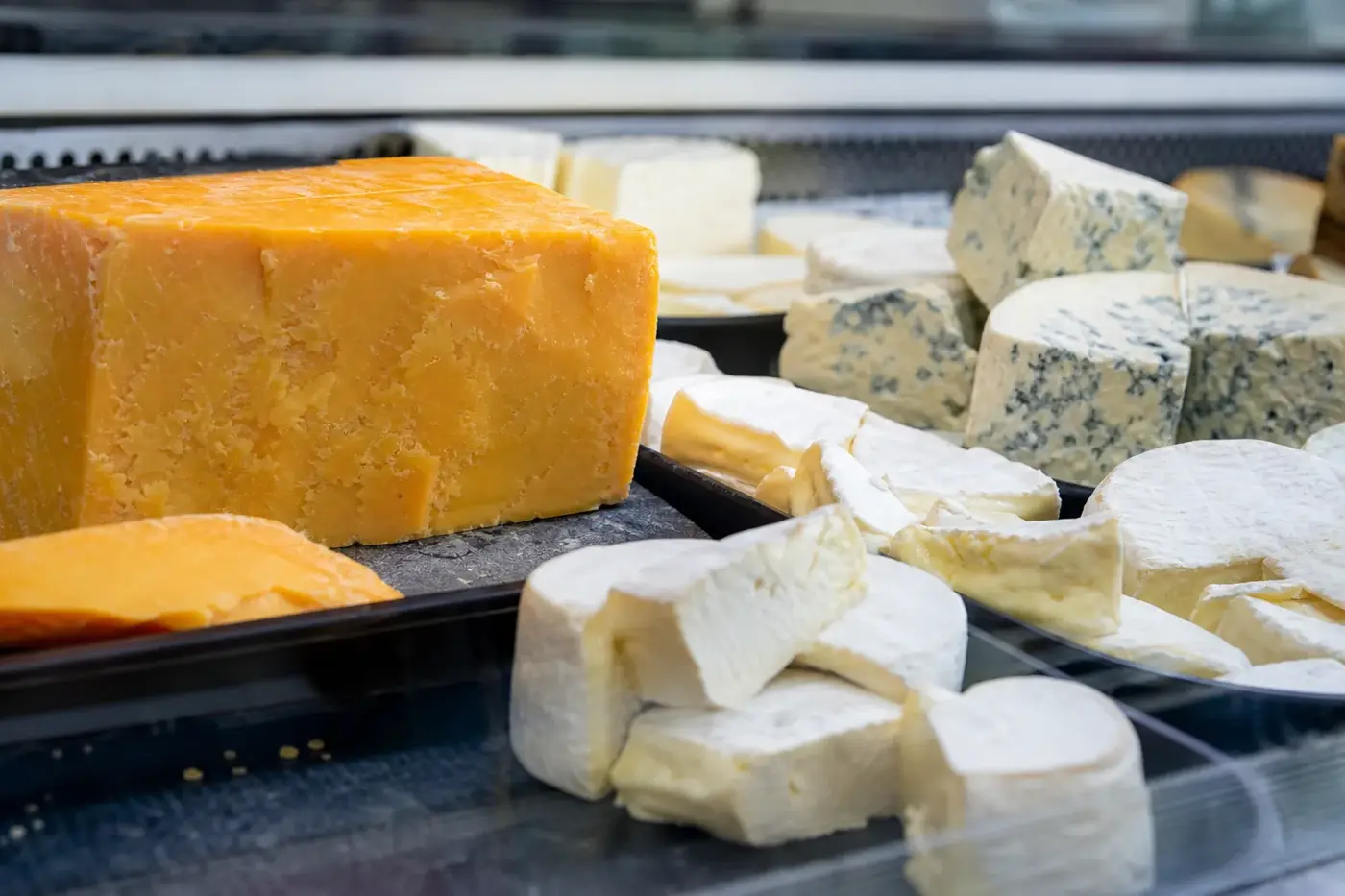
Pick up that unassuming block of West Country Farmhouse Cheddar and look past the plastic. It has had at least nine months to become itself. Its official specification allows prepacked portions alongside cylindrical cheeses, so the wrapper tells you little about the work behind it. [3] Start with the seal, the cut face and the storage instructions, then choose a piece that suits what you will eat and when.
Find your cheese, not just a handsome packet
The supermarket shelf takes you from sandwich slices and grated staples to farmhouse cheese matured for months. Format tells you how the cheese is presented; the maker, method and handling tell you more about the cheese itself. West Country Farmhouse Cheddar's specification includes supermarket blocks and prepacked portions alongside the traditional cylindrical form. [3]
Before you compare packets, ask yourself two questions. What job should this cheese do, and how much will you use after opening? Sandwiches, tonight's sauce and the centrepiece of a board each ask for something different.
Let those answers guide the format. A portion you will finish, kept cold and properly wrapped at home, matters more than an impressive adjective on the packet. “Enormous” is not, in itself, a meal plan.
Choose a portion with a purpose
A counter cut is not automatically fresher than a sealed portion. Ask when it was cut, how it has been kept and what storage instructions come with it. Time spent maturing a ripened cheese and time spent exposing its cut surface are quite different things. [2,3]
| Format | A good choice when | Before it goes in your basket |
|---|---|---|
| Prepacked portion | You want a labelled piece already cut to size | Check the seal, date and opening instructions. |
| Larger piece | You have several uses planned | Can you finish it within the opening instructions? |
| Counter cut | You want a particular size or some advice | Ask about identity, allergens, cutting date and storage. |
Choose for the job ahead rather than ranking formats by freshness. At a staffed counter, ask for information about the actual cheese being cut, especially if you have dietary requirements. Keep the label, or a photograph of it, when you get home. [4]
Look closely at the wrapping
Start with the seams and corners. Look for intact wrapping, an undamaged lid and a secure seal. Leave leaking or damaged packs behind and alert staff. [2,5]
Cheese labelled “keep refrigerated” belongs in refrigerated storage. If the cabinet seems faulty, or someone has abandoned a packet on an ordinary shelf, ask staff rather than taking it home. [2,5]
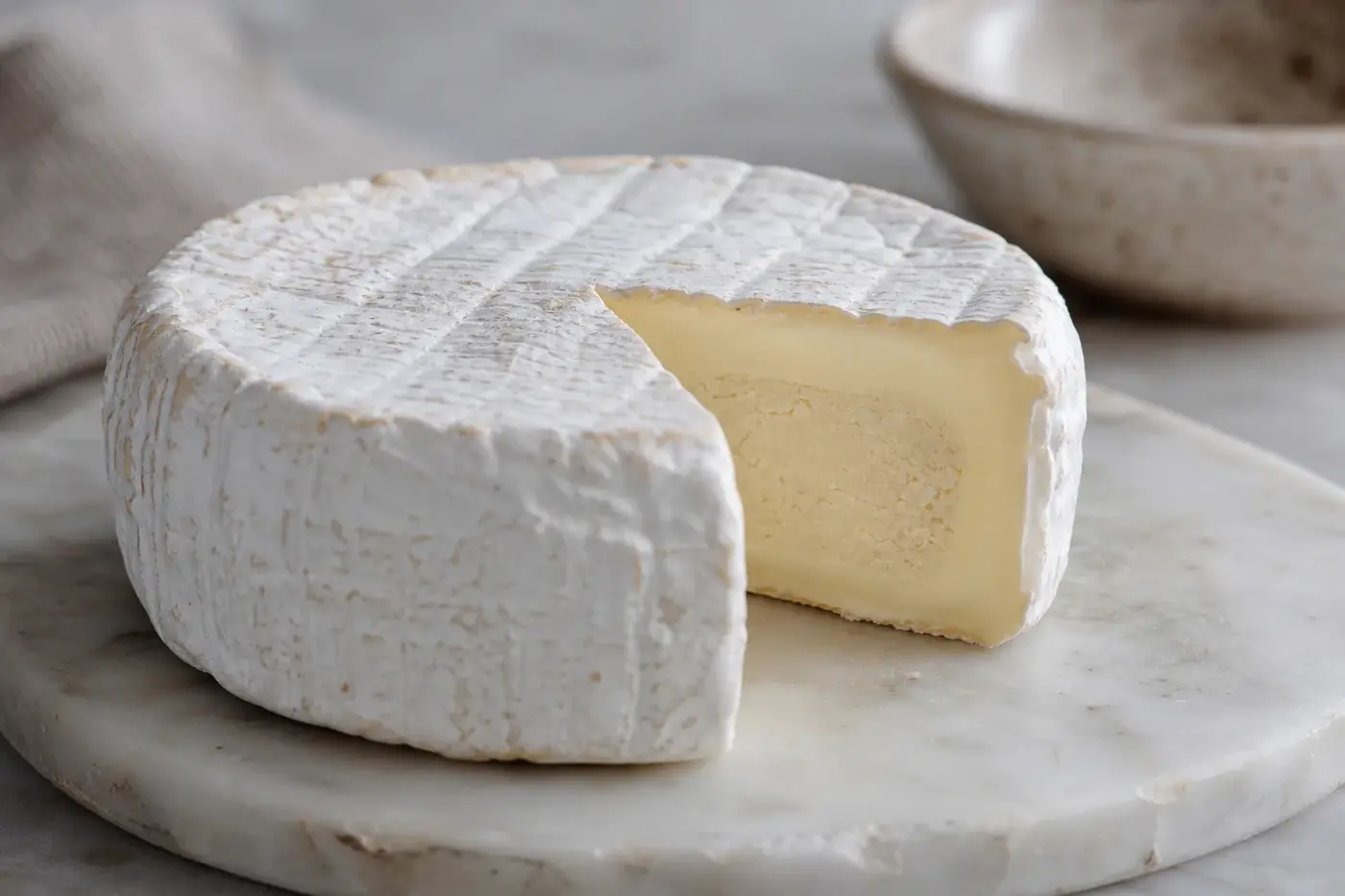
Read the cheese's description before judging its appearance. An unfamiliar rind or surface growth is a reason to ask questions, not to assume every mould means spoilage. For food with a best before date, the FSA advises using smell and visible changes to assess deterioration; for food with a use by date, normal looks and smell cannot establish safety. [5,6]
A dry, darkened cut edge is a reason to ask for a better presented piece. It does not tell you the age of the whole cheese. Keep an unattractive surface separate in your mind from a condition covered by a safety warning.
Get to know the maker, milk and age
A named producer and place of manufacture give you something useful to compare. They also help you find a cheese you love again. Check the milk species and whether it is pasteurised, too. For the fuller distinction between origin information and a business address, see how to read a cheese label. [7]
An age in months tells you something more concrete than “mature”. Ask what that word means for this particular cheese, rather than treating it as a flavour scale shared by every brand. Give “farmhouse” the same attention: does it describe the production location, milk supply, method, or membership of a defined protected name?
West Country Farmhouse Cheddar Cheese, for example, is registered as a Protected Designation of Origin in Great Britain as of November 2026. Its specification requires at least nine months' maturation. That requirement belongs to this particular name, so read the specification alongside your own preferences when choosing. [3,8]
Picture that first mouthful
For cooking, begin with the style and form your recipe asks for before trying substitutions. Grated hard cheese and a soft spread are different ingredients. If mozzarella is on the list, check whether you need a fresh ball or a firmer block.
Want a sauce with a pronounced cheese flavour? The NHS suggests stronger flavoured choices such as mature cheddar or blue cheese. Check the recipe before adding its full amount of salt, and read the ingredient list if you choose a flavoured cheese. [7]
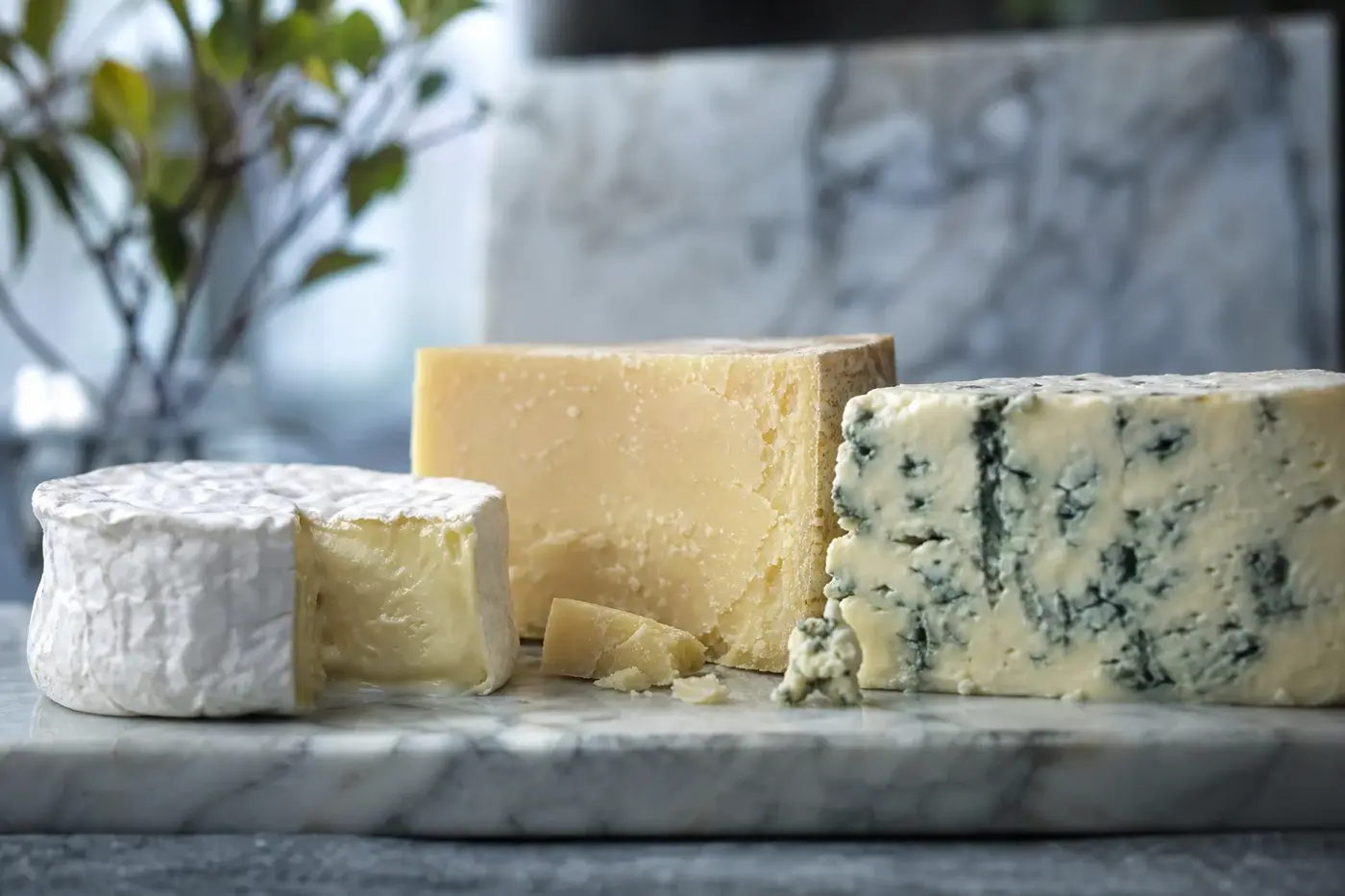
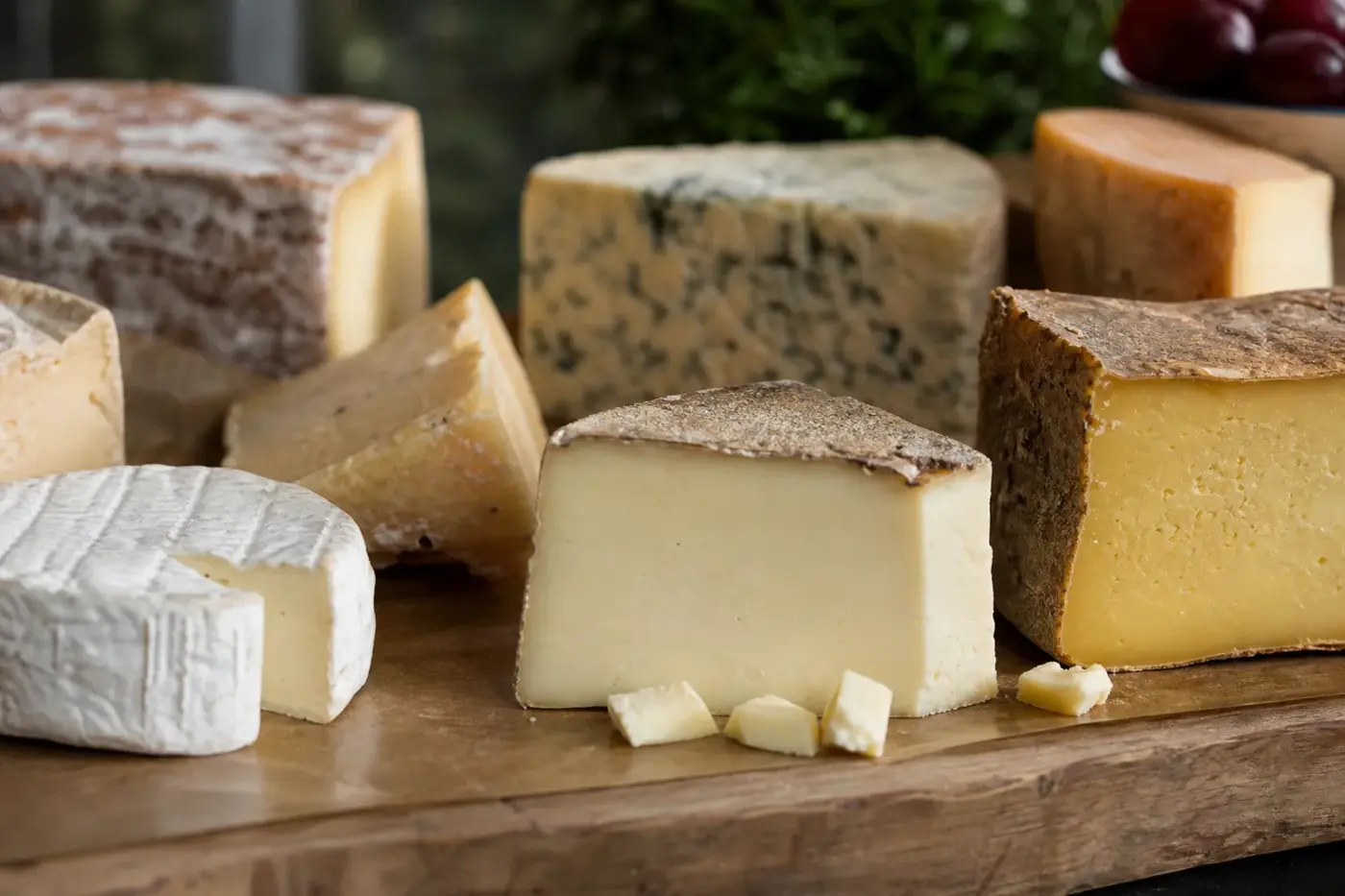
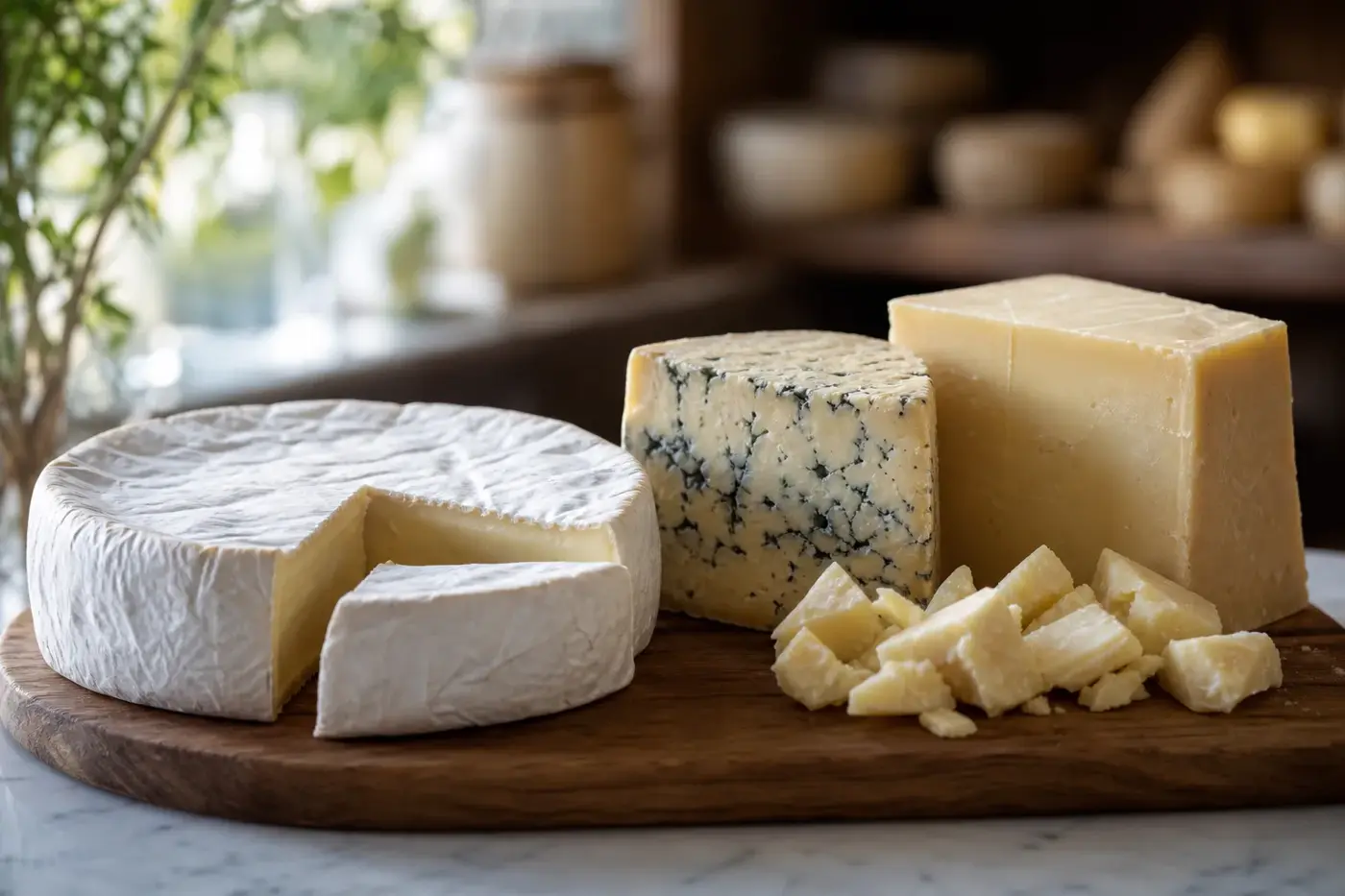
For a cheeseboard, think contrast: one firm cheese, one soft style and, if suitable for your guests, one blue. The board need not become a census of the cheese aisle. For everyday eating, picture slicing for sandwiches, crumbling over a salad or spreading on toast. Choose a texture that suits the task, then a portion you will finish.
Put your dietary questions first
If you avoid animal rennet, look for an explicit vegetarian statement or ask the maker. Rennet sets milk into curd, the solids that become cheese. In Great Britain, certain cheeses are exempt from an ingredients list, and food enzymes used as processing aids can be omitted, subject to allergen rules. Silence about rennet does not settle its source. [3,9]
For milk allergy, ask your doctor or dietitian about suitable foods, including lactose free dairy products and cheese made from other animals' milk. Read the allergen information every time. That includes flavoured cheeses and purchases from the counter. [4,9]
Great Britain's food information rules require milk to be identified, although the name “cheese” can itself provide that information. Where an ingredients list is given, allergens must be emphasised. Other ingredients can bring further allergens, so ask staff for the actual product information rather than judging by appearance. [4,9]
You can explore the different coagulants in rennet explained. For the separate questions behind those dietary needs, see cheese allergy vs lactose intolerance.
Make room for both deadlines
Use by concerns safety; best before concerns quality. That is the FSA's distinction, and it matters when you decide how much cheese to buy. Read which date your cheese carries and plan around it. A later date only helps if you follow the specified storage conditions, too. [1]
Eat cheese carrying a use by date by that date, provided it has been kept as instructed. Afterwards, discard any uncooked, unfrozen remainder, even if it smells normal. Food cooked or frozen on or before its use by date can be used later under the FSA's separate cooling, storage and defrosting guidance. [1,6]
Opening the packet can start another clock. If it says to consume within a stated period after opening, record when you opened it. Follow whichever limit comes first: that instruction or the use by date. Keep this information if you transfer the cheese to another container. [1,2]
Bring your cheese home cold
Buy chilled food last and head home promptly. For a longer journey or warm weather, take an insulated cool bag with frozen packs. Keep cheese separate from raw meat and its juices, then refrigerate it as soon as you arrive. These steps help maintain the cold storage advised by the FSA and Food Standards Scotland. [2,10]
For England, Wales and Northern Ireland, the FSA advises a home fridge temperature of 5 °C or below. Food Standards Scotland advises between 0 °C and 5 °C. Use a fridge thermometer rather than trusting the control dial, and leave room for air to circulate. Follow any stricter storage instructions on the product. [2,10]
Wrap it carefully, label and all
Keep opened cheese covered in suitable resealable packaging or a clean food container. Wrap a cut piece in clean food grade wrapping before putting it away, and keep its label with it. If your cheese comes in liquid, follow its storage instructions rather than draining it. [2]
Take out only what you plan to serve. Use clean hands and utensils, then return the remainder to the fridge promptly. For more detailed advice on different rinds and formats, see how to store cheese at home. [6,10]
Know when it is time to say goodbye
Discard cheese that is visibly spoiled or has developed an unexpected unpleasant smell or texture. For foods with best before dates, the FSA identifies mould and texture changes as useful clues to deterioration. If you cannot tell whether growth belongs to the intended rind, leave the cheese uneaten and ask the retailer. [5]
Thinking of trimming a hard cheese? First read the specific guidance in mould on cheese: when to cut and when to bin, because different styles need different treatment. For any recalled product, follow the official notice and match the product, batch and date details. [12]
A printed date cannot make up for incorrect storage. If you have reason to doubt that the cheese has been kept as instructed, do not eat it while its storage history remains uncertain. Contact the retailer for advice. [1]
This page summarises published guidance from the official sources it cites. It is not medical advice. Guidance differs between countries and changes over time, so check the current source for where you live, and ask your doctor, midwife, pharmacist or dietitian about your own circumstances.
Plan a welcoming board for higher risk diners
Before you settle on a board or recipe, look at the relevant guidance. As of November 2026, the NHS's UK pregnancy guidance lists hard cheeses made with pasteurised or unpasteurised milk, pasteurised semi-hard cheeses and specified pasteurised soft cheeses among suitable choices. It also covers soft cheeses made with unpasteurised milk, mould ripened soft cheeses and soft blue cheeses, including when thorough cooking is needed. Read the full NHS list before choosing. [11]
The NHS's general UK dairy guidance also identifies infants and young children, people over 65, and people with a long-term condition or weakened immunity as groups who should avoid certain mould-ripened soft, ripened goats' milk and soft blue-veined cheeses. Consult that advice for the person you are serving. Ask their healthcare professional about individual needs. [7]
Make these checks before settling the menu. Then everyone can have something appropriate to eat.
Questions people ask
Is cheese from a supermarket counter fresher than a sealed portion?
A counter cut is not automatically fresher. Ask when it was cut, how it has been kept and what storage instructions come with it.
How can I tell whether supermarket cheese is vegetarian?
Look for an explicit vegetarian statement or ask the maker if you avoid animal rennet. If rennet is not mentioned, its source remains unresolved.
Can I eat cheese after its use by date if it smells fine?
The FSA advises discarding any uncooked, unfrozen remainder after its use by date, even if it smells normal. It has separate guidance on cooling, storing and defrosting food cooked or frozen on or before that date.
What temperature should I keep cheese at in the fridge?
The FSA advises a home fridge temperature of 5 °C or below in England, Wales and Northern Ireland. Food Standards Scotland advises between 0 °C and 5 °C. Follow any stricter instructions on the product.
Which cheeses can I eat during pregnancy?
The NHS lists hard cheeses made with pasteurised or unpasteurised milk among suitable choices. Its guidance also covers soft cheeses and when thorough cooking is needed. Read the full NHS pregnancy list before choosing.
Sources
-
Food Standards Agency. Understanding food labelling: Best before and use-by dates. Current online edition, retrieved November 2026. Official guidance.
-
Food Standards Agency. How to chill, freeze and defrost food safely. Published 2017, current online edition retrieved November 2026. Applies to England, Northern Ireland and Wales. Official guidance.
-
Department for Environment, Food & Rural Affairs. Protected food name: West Country Farmhouse Cheddar. Undated specification linked from the official register, retrieved November 2026, especially sections 4.2, 4.4 and 4.5. Product specification.
-
Food Standards Agency. Food allergen labelling and information requirements technical guidance. Online edition incorporating the March 2025 revisions, retrieved November 2026. Applies to England, Wales and Northern Ireland. Technical guidance.
-
Food Standards Agency. Home food fact checker. Current online edition, retrieved November 2026, section “Does the sniff test work for milk and dairy food?” Official guidance.
-
Food Standards Agency. Student guide to food safety and hygiene. 2026 online edition, retrieved November 2026. Official guidance.
-
NHS. Dairy and alternatives in your diet. Current online edition, retrieved November 2026. NHS guidance.
-
Department for Environment, Food & Rural Affairs. West Country Farmhouse Cheddar Cheese. UK protected food name register, entry published 2021, status checked November 2026. Official register entry.
-
Great Britain. Assimilated Regulation (EU) No 1169/2011 on the provision of food information to consumers. 2011, amended online text retrieved November 2026: Article 19, omission of ingredients lists; Article 20, omission of constituents; Article 21, allergen information.
-
Food Standards Scotland. Chilling. Current online edition, retrieved November 2026. Scottish consumer guidance.
-
NHS. Foods to avoid in pregnancy. Current online edition, retrieved November 2026, section “Cheese, milk and other dairy”. NHS pregnancy guidance.
-
Food Standards Agency. Alerts. Live food and allergy alert index, retrieved November 2026. Official alerts.
This piece was researched through official consumer guidance, binding food information legislation and the protected name register and specification, with shopping recommendations synthesised from those records.
Last checked: November 2026
Last checked November 2026.
The editors suggest you read next