Break off a piece of good Cheshire and watch the crumbs fall. Then taste: crumble and succulence can arrive in the same mouthful. Neal’s Yard Dairy describes its Appleby’s selection that way, with juicy acidity, while Bourne’s gives its mature Cheshire a tangy, savoury character. White, red or blue, this British cow’s milk cheese rewards you for looking beyond the colour. [1][2][3][8]
Follow the farms, then the road to London
Cows, stored cheeses, cheese tubs and presses fill the records of Cheshire’s dairying past. A 2024 archival study examined more than 1,600 probate inventories, lists of possessions made after someone died, to explore cheesemaking in the county between 1550 and 1750. These are glimpses of working farms, with the equipment and produce still accounted for. [5]
The seventeenth-century drawings reproduced in the study help you picture the work. There is a cheese tub, a draining frame and a substantial cheese press: the tools of a developed trade. The researchers also trace links with north Shropshire and growing markets beyond the county, especially London. Follow this story and you find farms, market towns and trading routes, rather than one neat birthplace. [5]
You may have heard Cheshire called Britain’s oldest cheese, but that claim goes beyond what this evidence establishes. The documented story has plenty to offer: a regional dairy economy building the skills, equipment and connections to feed distant customers. That wider district still matters today, with Appleby’s making Cheshire in Shropshire and Bourne’s documenting production at Malpas in Cheshire. [4][5][7]
Find the crumble with a juicy side
Crumble is part of Cheshire’s pleasure; dryness need not come with it. Neal’s Yard Dairy looks for characteristic crumble and juicy acidity in the cheese it selects and matures, selling it at around three months. Bourne’s describes its mature cheese as tangy at first, followed by a deeper savoury finish. You can have refreshment and savoury satisfaction in the same piece. [1][8]
The ingredients offer a glimpse of the decisions behind each cheese. Appleby’s describes fresh raw milk from its own herd, traditional cultures, rennet, salt and annatto for its coloured cheese. Bourne’s mature white Cheshire contains pasteurised cow’s milk, cheese cultures, vegetable rennet and salt. Rennet sets milk into curd; whey is the liquid separated during cheesemaking. [4][5][8]
Acidity supplies the tang, while handling the curd affects how much whey stays behind. Salt and pressing help shape the texture, and flavour and texture keep developing as the cheese matures. Each maker’s method leaves its mark. At the counter, use Neal’s Yard Dairy’s juicy acidity and Bourne’s tangy opening and savoury depth to help you find the piece you fancy. [1][8]
White, red or blue: find your favourite
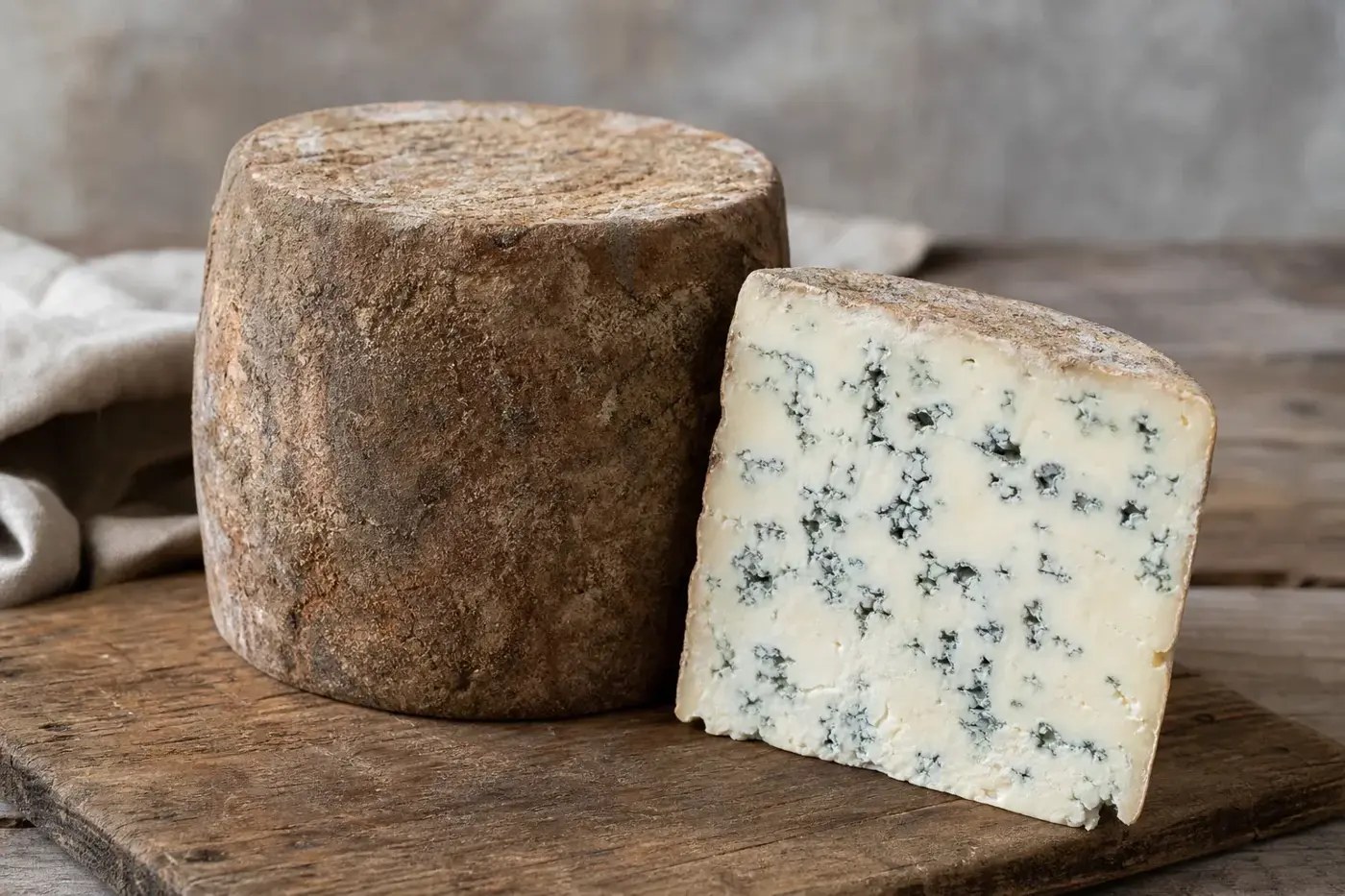
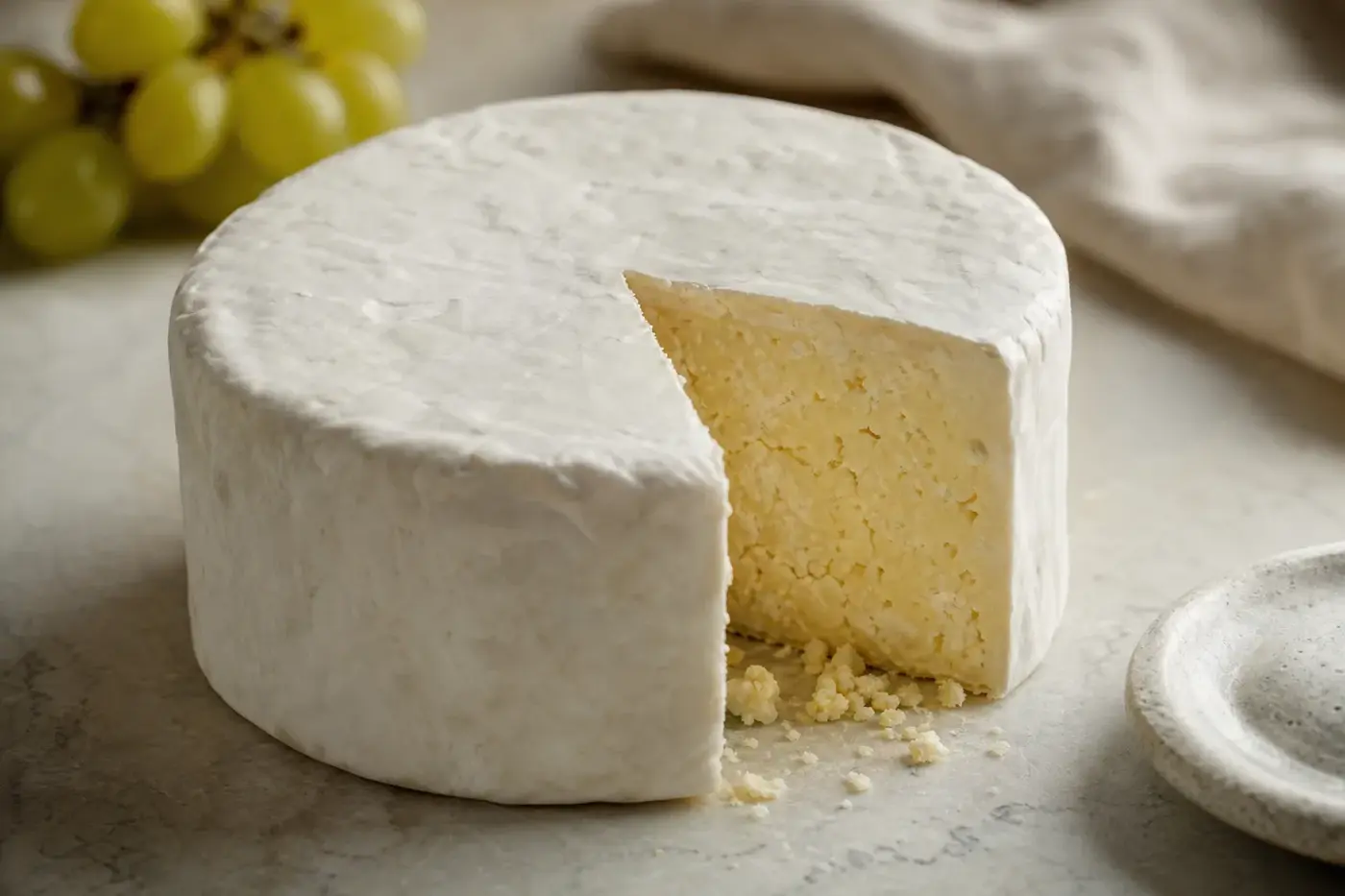
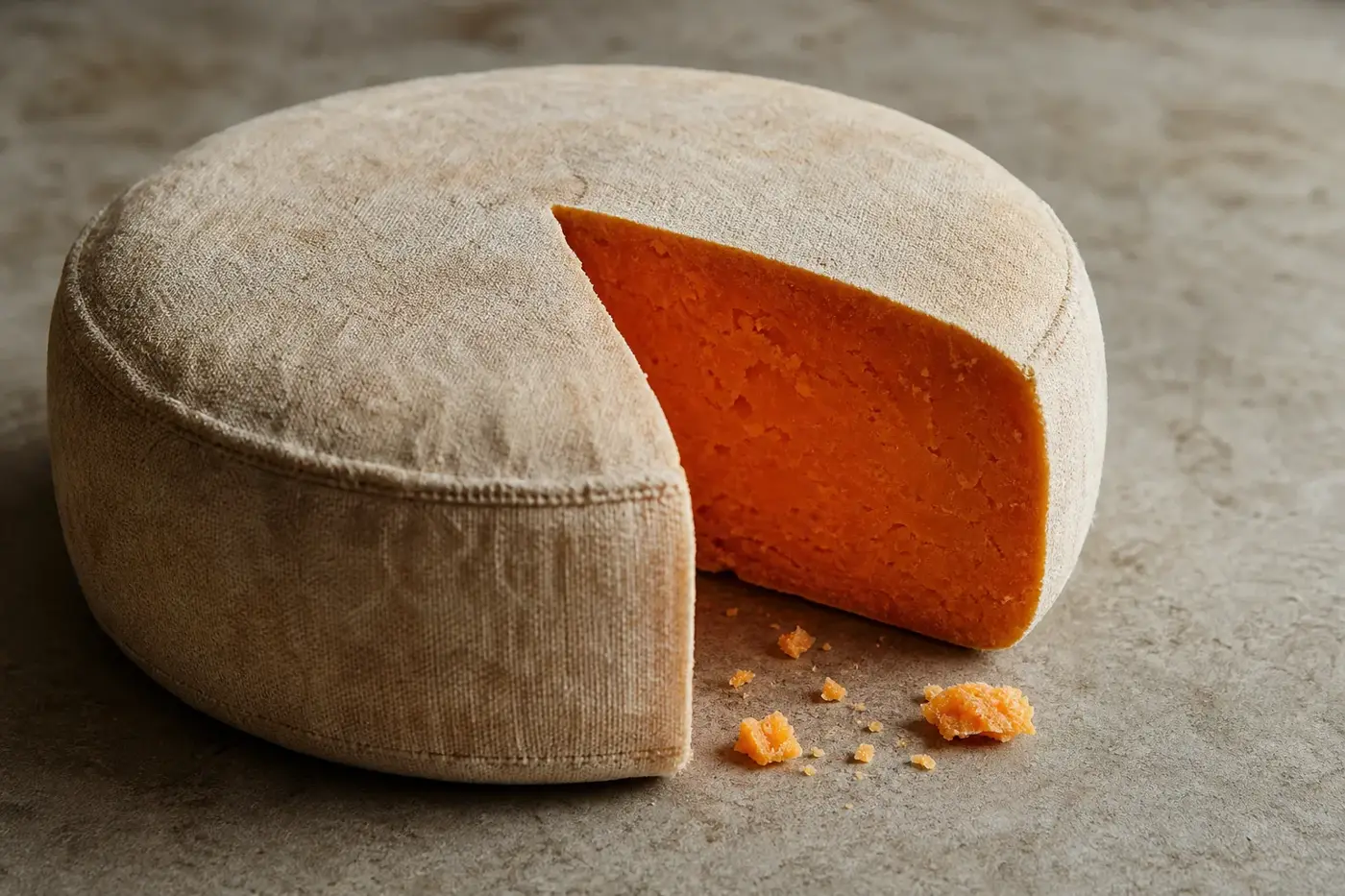
White and red tell you about appearance; blue tells you something about ripening, too. Look at the producers’ accounts and those simple names open up into ingredients and different ways of tending the cheese as it matures. [2][3][9]
| Variety | What you’ll see | A producer’s example |
|---|---|---|
| White | Pale, milky paste. | Appleby’s lists raw milk, culture, rennet and salt, without annatto. [9] |
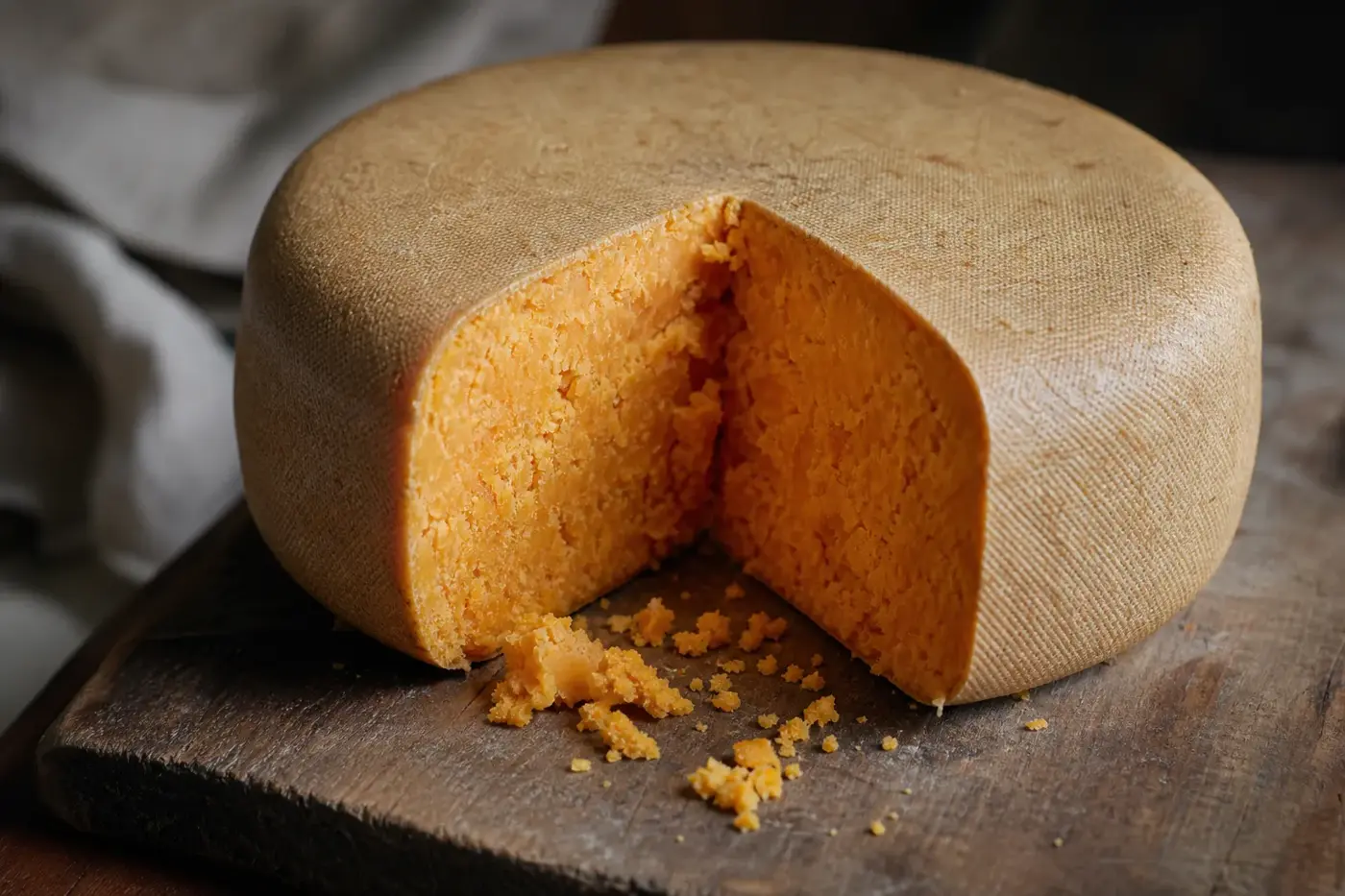
| Red | Warm-coloured paste, rather than literal red. | Appleby’s uses annatto seed extract in its coloured Cheshire. [4] |
| Blue | Internal blue veining; the base may also be coloured. | Bourne’s adds annatto and pierces the cheese during maturation so air can reach the interior. [3] |
For red Cheshire, look for annatto in the ingredients: Appleby’s specifies annatto seed extract in its coloured cheese. [4] Colour cannot tell you the maturity or milk treatment. Bourne’s red uses pasteurised milk, while Appleby’s coloured version uses raw milk. In Bourne’s blue Cheshire, the maker describes familiar tang meeting a mellow blue finish. [2][3][10]
Give age and milk their own say
Three months and over 12 months take you to quite different points in Cheshire’s range. Neal’s Yard Dairy gives an average age of three months for its Appleby’s selection, with juicy acidity and crumble. Appleby’s describes its cheese aged for over 12 months as hearty and robust. These ages belong to particular cheeses, not a universal Cheshire timetable. [1][6]
Raw milk does not automatically mean a stronger cheese, either. Bourne’s describes its unpasteurised clothbound Cheshire as less strong than its mature version, which uses pasteurised milk. For a useful comparison, taste actual cheeses at comparable maturity. Ask the maker or monger what gives that batch its character. [8][11]
The differences between raw milk, thermised and pasteurised cheese will help you untangle the terminology. Then take that knowledge to the counter: are you after freshness, tang, crumble or a more developed flavour?
Look closely at the cloth and rind
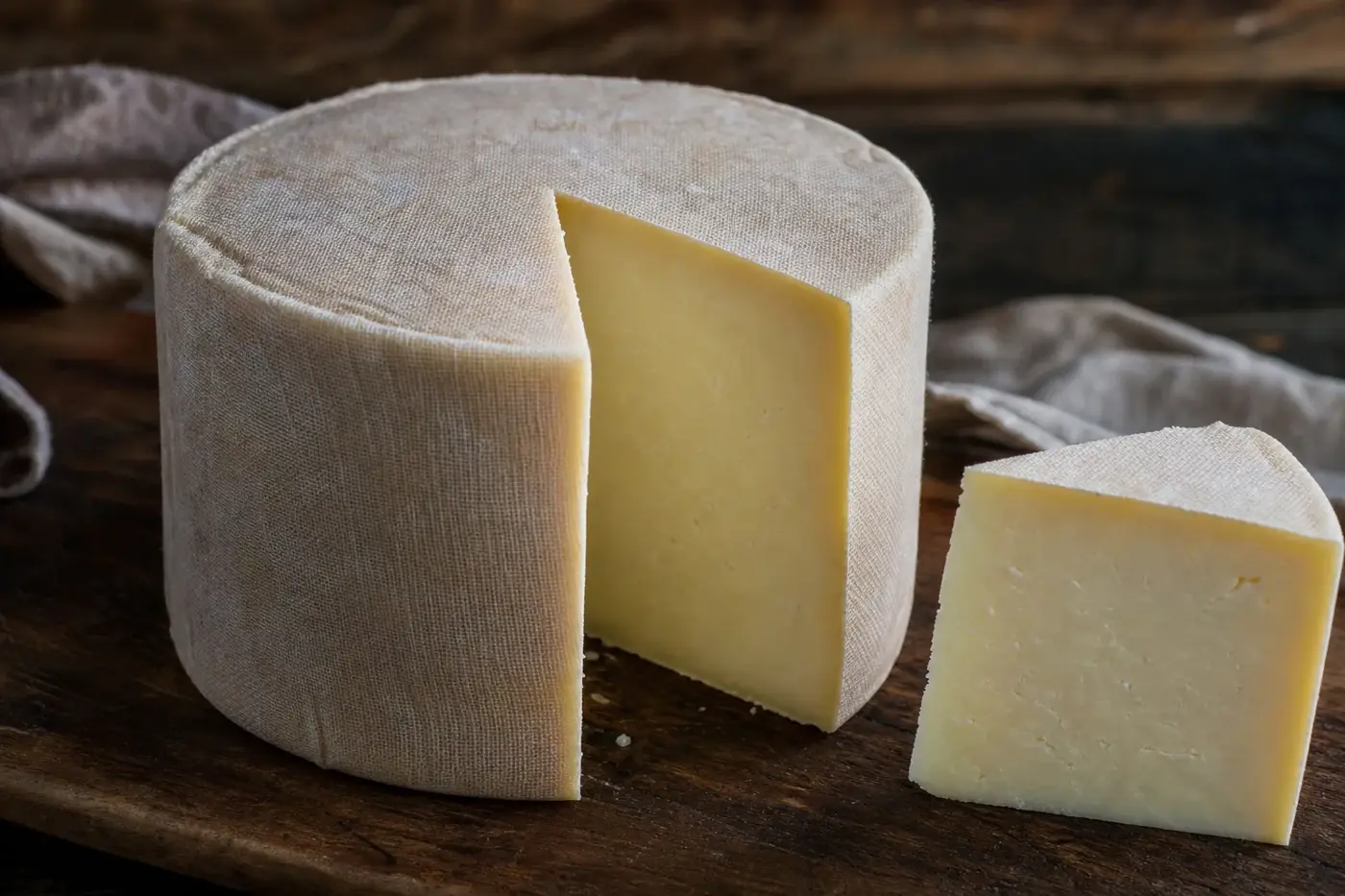
A cut wedge of Appleby’s white Cheshire can reveal a milky interior that darkens slightly towards the rind. Follow the cut face outwards and you can see the pale paste meet that more developed edge. Appleby’s describes clothbound cheeses and also offers a small coloured version wrapped in calico. It continues an older way of presenting Cheshire. [4][9][12]
Not every covering has the same job. Neal’s Yard Dairy contrasts cloth binding with wax coatings used for easier production-line cutting. When choosing a wrapped portion, ask whether the surface is natural rind, coating or simply a cut face. Remove cloth and non-food coatings before eating. [1]
Have a good conversation at the counter
Start with your plans: sandwich, cheeseboard, salad or cooking. Tell the cheesemonger, then ask for the maker’s name and the cheese’s age before committing to a colour. If you are offered a taste, try it alone first. Chutney can cope with not being invited to everything.
- Freshness: ask when the wheel was opened or the portion cut, and how to store your piece.
- Maturity: ask whether this batch was selected for milky freshness or a more developed savoury flavour.
- Texture: ask for a moist crumble, using the affineur’s published description as your reference. [1]
- Ingredients: check milk treatment, rennet and added colouring. Appleby’s coloured and white Cheshire have different published vegetarian suitability statements. [2][9]
An affineur is someone who matures cheese. If the wrapper has more to say than the counter ticket, the cheese label guide will help you make sense of it.
Give your Cheshire good company
Choose bread sturdy enough to catch the crumbs. A plain farmhouse loaf or oatcakes make a useful start, with your Cheshire broken into generous pieces. Apple or pear brings fresh contrast; a little pickle brings a sharper one. Keep strong accompaniments to the side so you can choose how much contrast each bite needs.
For something sweeter, Appleby’s publishes a cheesemonger’s recommendation of figs, fruit cake or dates. Their sweetness contrasts with the cheese’s tang and savoury notes. Taste a little cheese first, then add your accompaniment. The Cheshire deserves a speaking part. [12]
For an alcohol-free glass alongside, try black tea, sparkling apple juice or plain sparkling water. Tea suits a bread-and-cheese plate, apple juice adds sweet fruit contrast, and water leaves the cheese centre stage. Comparing two Cheshires? Start with the least sweet option.
In the kitchen, consider mature Cheshire for rarebit, cheese sauce or a gratin topping. Bourne’s specifically recommends its mature cheese for all three. Ask your monger which Cheshire suits your dish, especially if you want an even melt rather than scattered crumbs. That recommendation belongs to the particular cheese, not every Cheshire on the counter. [8]
Keep it cool, then serve with care
Keep Cheshire refrigerated between uses and follow the instructions supplied with it. The UK Food Standards Agency’s guidance for England, Northern Ireland and Wales recommends a fridge between 0 and 5 °C, checked with a thermometer. It also calls for attention to packaging instructions and date labels. Scottish NHS guidance likewise recommends 0 to 5 °C. [13][14]
Take out only what you intend to serve. Appleby’s recommends bringing its cut Cheshire to room temperature one hour before serving for flavour. Fit that within the FSA’s advice to leave chilled food out for the shortest possible time, with a maximum of four hours during preparation. In a warm room, serve smaller portions and replenish from the fridge. [2][13]
Ask the seller how to rewrap your particular cut and when to use it, and keep its original label. For more help, see how to store cheese at home. If unexpected mould appears, follow when to cut and when to bin.
This page summarises published guidance from the official sources it cites. It is not medical advice. Guidance differs between countries and changes over time, so check the current source for where you live, and ask your doctor, midwife, pharmacist or dietitian about your own circumstances.
Find the pregnancy guidance for your Cheshire
The NHS pregnancy guidance, as of November 2026, lists pasteurised and unpasteurised hard cheeses among foods that can be eaten. It lists pasteurised semi-hard cheeses separately. For soft blue-veined cheeses, it advises thorough cooking, and says cheese cooked until steaming hot can be eaten. Check your actual product’s milk treatment and cheese category against that guidance, particularly with blue Cheshire. [15]
For advice about your circumstances, use the linked NHS source and speak to your midwife or doctor. You can find the wider context in the cheese food safety guide.
Taste Cheshire alongside Lancashire, Wensleydale and Cheddar
Put pale, crumbly cheeses together and looks will only take you so far. Lancashire makes a useful comparison: Neal’s Yard Dairy describes traditional Lancashire as combining curds from several milkings, and its own selection as having a light, yoghurt-like tang. That method gives you something specific to ask about at the counter, beyond the cheeses’ similar appearance. [16]
Wensleydale and Cheshire are distinct cheeses, even when both arrive pale and crumbly. Choose named cheeses at known ages, then compare their moisture, how the paste breaks and the character of the finish. Wensleydale Creamery identifies Hawes in the Yorkshire Dales as its home and says it uses milk from local family farms. [17]
With Cheddar, start with what you want your cheese to do. On a cold plate, compare how each piece breaks, the intensity of its acidity and its finish. For cooking, ask about that particular cheese’s melting behaviour. A Cheshire recommended for rarebit can suit the dish while keeping its own identity and flavour. [8]
For a small tasting, choose unflavoured examples and put their labels beside the plate. Taste each alone, then return to them with the same bread. Note moisture, size of crumble, sharpness, salt and length of flavour separately. Next time you visit the counter, you and your monger will have far more to go on than “something stronger”, that faithful but overworked cheese request.
Questions people ask
What does Cheshire cheese taste like?
Cheshire can be crumbly yet succulent, with a refreshing tang. Bourne’s describes its mature Cheshire as tangy at first, with a deeper savoury finish.
What is the difference between white, red and blue Cheshire?
White Cheshire is pale, while red Cheshire has a warm colour from annatto in the examples described on the page. Blue Cheshire has internal blue veining; Bourne’s describes its version as tangy with a mellow blue finish.
Is Cheshire Britain’s oldest cheese?
The familiar claim goes beyond what the evidence on the page establishes. Records do show a regional dairy economy with cheesemaking equipment and trading connections between 1550 and 1750.
How should Cheshire cheese be stored and served?
The UK Food Standards Agency recommends a fridge temperature between 0 and 5 °C and attention to packaging instructions and date labels. Appleby’s recommends bringing its cut Cheshire to room temperature one hour before serving, while the agency advises leaving chilled food out for the shortest possible time, with a maximum of four hours during preparation.
Can you eat Cheshire cheese during pregnancy?
The NHS lists pasteurised and unpasteurised hard cheeses among foods that can be eaten, and separately lists pasteurised semi hard cheeses. It advises thoroughly cooking soft cheeses with blue veins and says cheese cooked until steaming hot can be eaten. Check the actual product’s category and milk treatment against the NHS pregnancy guidance, and speak to your midwife or doctor about your circumstances.
Sources
- Neal’s Yard Dairy, “Appleby’s Cheshire”, current product and selection account, undated, checked November 2026. Primary evidence for the affineur’s own selection, maturation and sensory descriptions. Source.
- Appleby’s Dairy, “Appleby’s Coloured Cheshire”, current product information, undated, checked November 2026. Ingredients, vegetarian suitability, flavour description and serving recommendation. Source.
- Bourne’s Cheshire Cheese, “Bourne’s Blue Cheshire”, current product information, undated, checked November 2026. Ingredients, annatto, piercing and the maker’s sensory description. Source.
- Appleby’s Dairy, “About us”, current company account, undated, checked November 2026. Farm location, own-herd raw milk, cloth binding, cultures, rennet, salt and annatto seed extract. Source.
- Northern History, “Cheesemaking in Cheshire 1550-1750”, volume 61, issue 2, pages 180 to 201, 2024. Original archival research using probate inventories, with reproduced seventeenth-century documentary illustrations. Source.
- Appleby’s Dairy, “Appleby’s Vintage Cheshire”, current product information, undated, checked November 2026. Maturation exceeding 12 months and the maker’s flavour description. Source.
- Bourne’s Cheshire Cheese, official homepage, current company account, checked November 2026. Malpas location, own herd and on-farm cheesemaking. Source.
- Bourne’s Cheshire Cheese, “Mrs Bourne’s Mature Cheshire”, current product information, undated, checked November 2026. Ingredients, texture, flavour and suggested cooking uses. Source.
- Appleby’s Dairy, “Appleby’s White Cheshire”, current product information, undated, checked November 2026. Ingredients, appearance, vegetarian suitability and storage recommendation. Source.
- Bourne’s Cheshire Cheese, “Red Cheshire Cheese”, current product information, undated, checked November 2026. Pasteurised milk, vegetarian rennet and the maker’s description of colour. Source.
- Bourne’s Cheshire Cheese, “Unpasteurised Clothbound Cheshire Cheese”, current product information, undated, checked November 2026. Raw milk, vegetable rennet, cloth binding and comparison with the maker’s mature cheese. Source.
- Appleby’s Dairy, “Our shop”, current product catalogue, undated, checked November 2026. Small calico-wrapped format and an attributed cheesemonger’s accompaniment suggestions. Source.
- Food Standards Agency, “How to chill, freeze and defrost food safely”, published 18 December 2017, current page checked November 2026. Applies to England, Northern Ireland and Wales. Source.
- NHS inform, “Preparing and cooking food safely”, current Scottish guidance, checked November 2026. Domestic refrigeration and keeping food out for the shortest possible time. Source.
- NHS, “Foods to avoid in pregnancy”, current guidance checked November 2026. Cheese categories, milk treatment and cooking advice. Source.
- Neal’s Yard Dairy, “Kirkham’s Lancashire”, current product and selection account, undated, checked November 2026. Primary evidence for the affineur’s sensory description and account of combining curds. Source.
- Wensleydale Creamery, official homepage, current company account, checked November 2026. Hawes location and stated local family-farm milk supply. Source.
This piece was researched from current producer and affineur disclosures, original archival scholarship and official UK food safety guidance.
Last checked: November 2026
Last checked November 2026.
The editors suggest you read next
West Country Farmhouse Cheddar Cheese
Large pieces of curd turn and stack under the cheesemaker’s hands.