Cantal
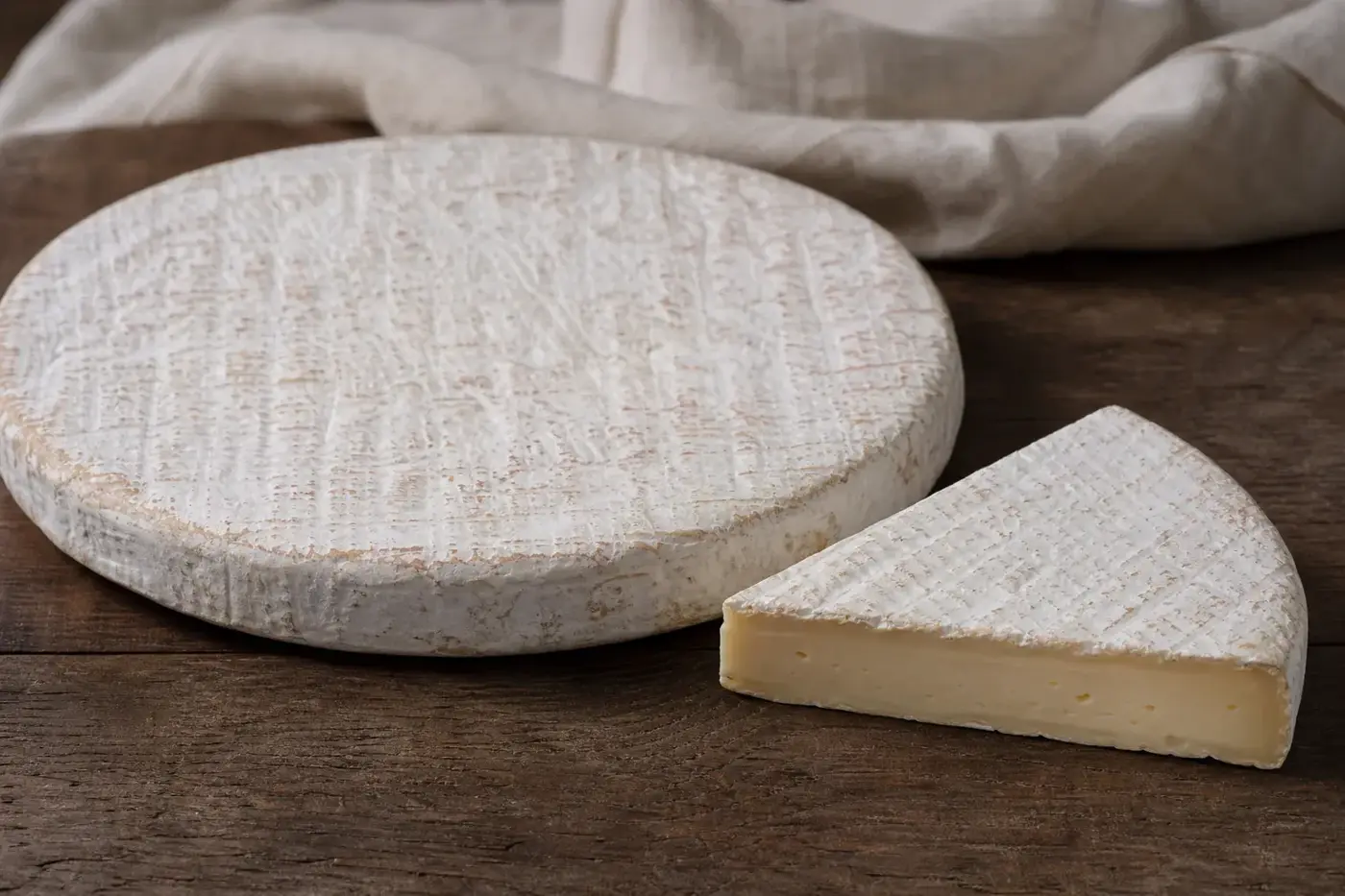
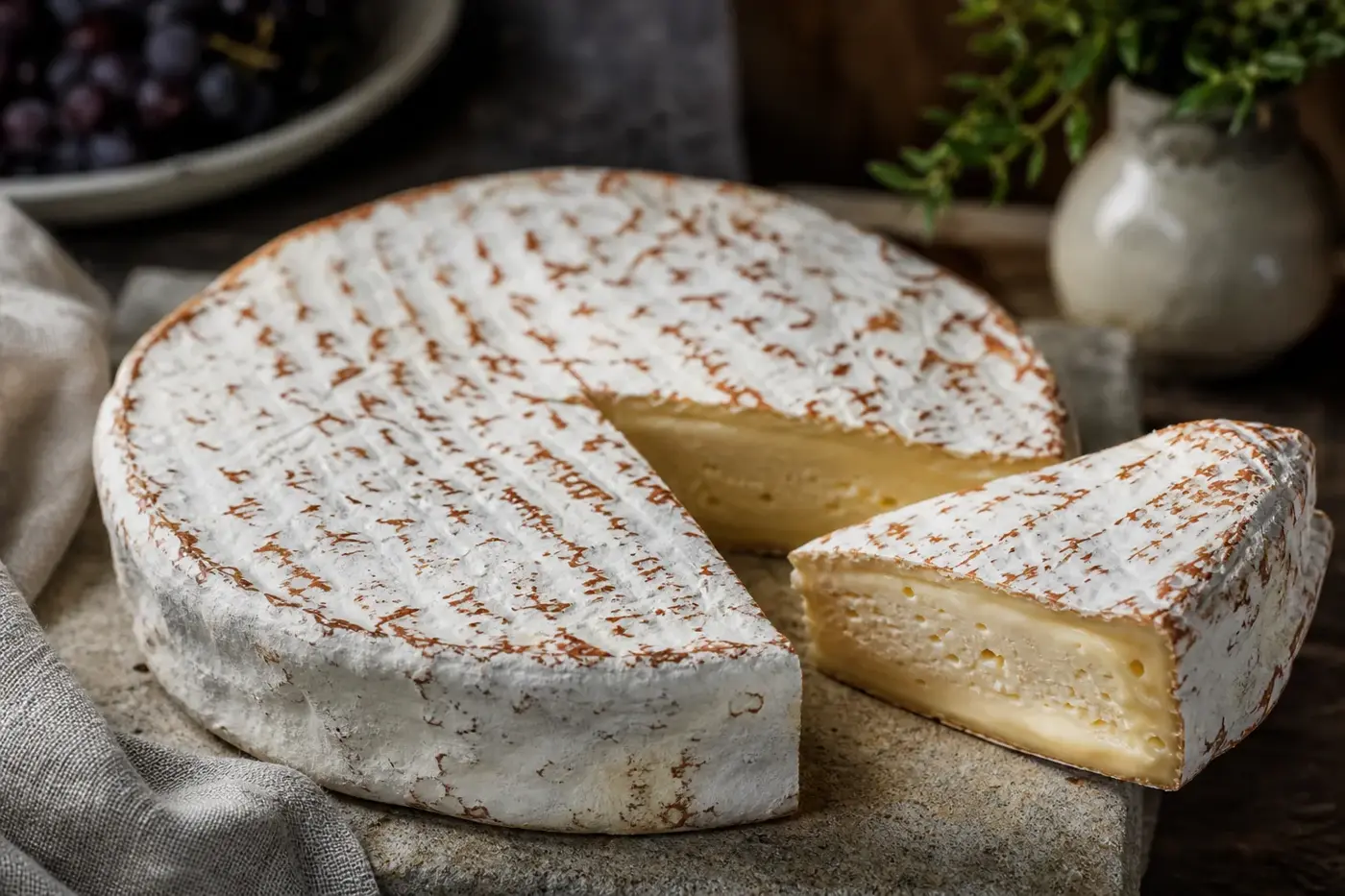
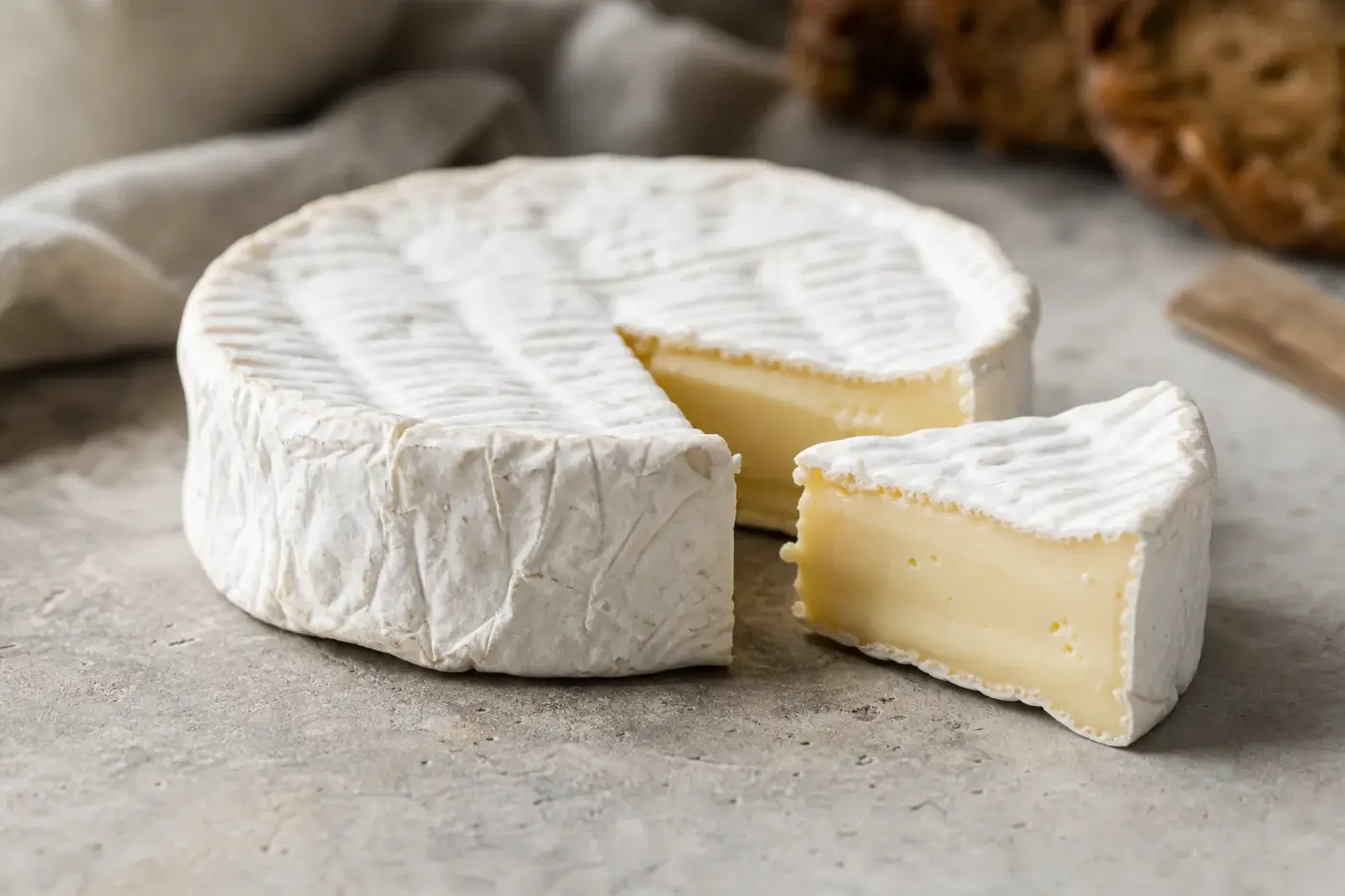
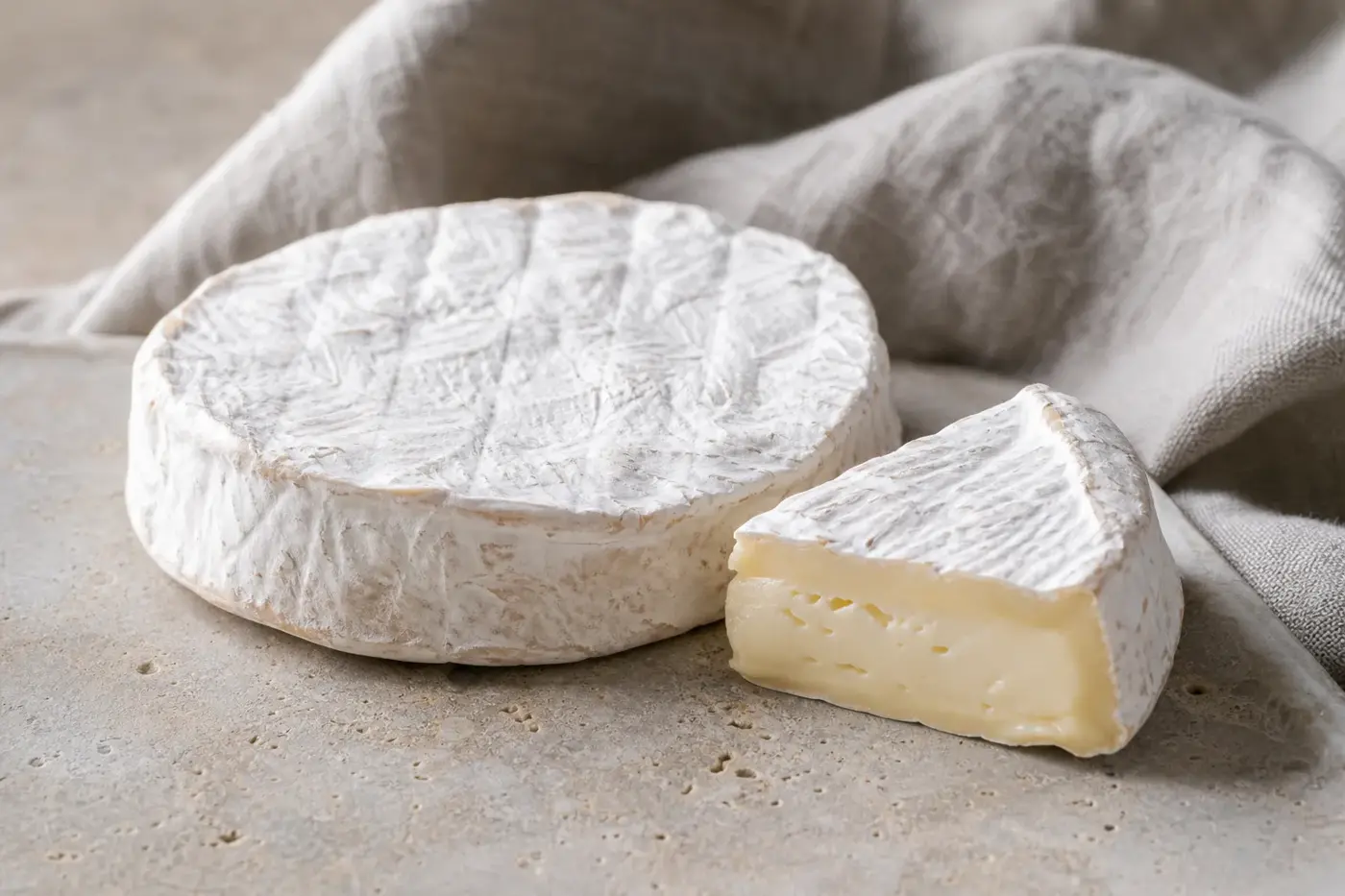
Cut into one of Cantal’s substantial, dry-rinded cylinders and you find a firm paste with a rather eventful past.
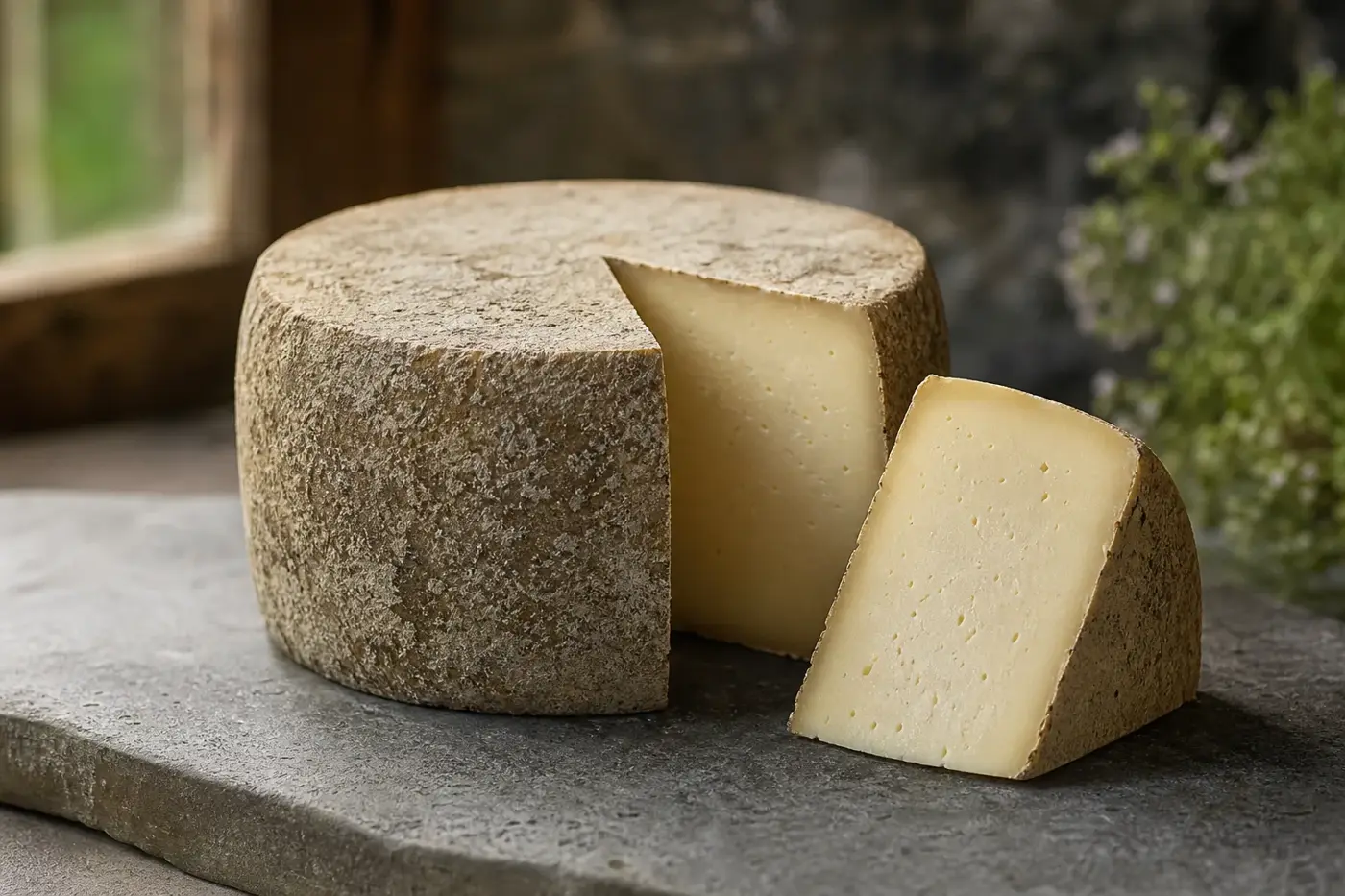
Cut into one of Cantal’s substantial, dry-rinded cylinders and you find a firm paste with a rather eventful past. The curd has been pressed, rested, milled, salted and pressed again. This French cow’s milk cheese from the Auvergne uplands is built twice, with no apparent interest in shortcuts. As it matures, lightly acidulated milk gives way to fruitier, more persistent savouriness. [1][2][4]
| What you might want to know | The detail |
|---|---|
| Familiar name | Cantal. [1] |
| Registered name in Great Britain | Cantal / Fourme de Cantal. [3] |
| Registration authority and identifier | Great Britain: Defra; separate numerical register ID not displayed. EU register ID: unconfirmed. [3] |
| Protection | Great Britain: registered PDO, registration dated 31 December 2020 at 23:00; information dated November 2026. [3] |
| French recognition | Appellation of origin recognised in 1956. [2] |
| Milk | Cow’s milk; you will find raw and pasteurised versions. [5] |
| Cheese type | Uncooked, twice-pressed cheese, with salt throughout the curd. [1] |
| Pregnancy guidance | Unconfirmed; check the current official advice for the country concerned. |
A cheese worth taking apart
Between Cantal’s two pressings, the cheesemaker takes it apart. The first pressing creates an intermediate mass called tome, which rests before being broken down and rebuilt into the finished cheese. The interprofession, the organisation representing producers and related businesses, describes a manufacturing cycle lasting at least 33 hours. [4]
That pause, followed by the rebuilding, sits at the heart of Cantal’s identity. If you enjoy exploring different cheese styles, this method tells you as much as the milk or the finished wheel’s appearance.
Into Cantal’s rainy, volcanic homeland
Picture cool, wet uplands, volcanic slopes and grassy valleys. According to INAO, France’s national origin and quality institute, Cantal’s home centres on Cantal and extends into neighbouring areas. The current legal boundaries for milk production, cheesemaking and maturation remain unconfirmed. [2]
The upland plateaux here are known as planèzes. The interprofession describes cattle grazing across this landscape, emphasising plentiful rainfall and pasture rather than a single breed of cow. Think of this as the cheese’s farming setting, not a promise that every wedge will taste a particular way. [6]
When you choose Cantal, the connection between place, feeding and method matters. Its name belongs to a defined dairy-producing territory. It is not shorthand for any large, firm French cheese. [1]
Press, rest, crumble, then press again
The first pressing makes the tome. The second gives Cantal its lasting cylindrical shape. Between them come resting, milling and salting, the sequence that distinguishes its manufacture. [4]
Before either pressing, rennet does its work. This preparation coagulates the milk into curd, which is cut and drained to separate it from whey, the liquid fraction. Only then does the cheese begin its two-stage pressing journey. [4]
| Stage | What happens along the way |
|---|---|
| Coagulation and cutting | Rennet goes into warmed milk; the curd is cut into small grains and stirred. [4] |
| First pressing | Drained curd enters the presse-tome, forming the intermediate mass. [4] |
| Resting | The pressed tome matures while the lactic cultures develop. [4] |
| Milling and salting | The tome is broken up, then repeated stirrings distribute salt throughout. [4] |
| Moulding and second pressing | The salted material goes into a cloth-lined cylindrical mould for another pressing. [4] |
| Maturation | Out of its mould, the cheese enters the maturation cellar for turning and rubbing. [7] |
Milling does more than make the curd fit neatly into a mould. The interprofession identifies this breaking down between pressings as an important contributor to Cantal’s finished texture. [4]
Raw milk or pasteurised? Start with the label
You can buy Cantal made with raw or pasteurised milk, as the regional AOP association records. Look at the particular cheese or its accompanying information to find out which you have. [5]
Keep two questions separate: how was the milk treated, and how long did the cheese mature? Raw, thermised and pasteurised cheese explains the treatments. Age takes a little more unpicking, because current industry presentation differs from the older decree.
Jeune, entre-deux, vieux and affiné: finding your flavour
Read Cantal’s age names alongside its actual maturation period. The published 2007 French decree describes maturation categories. The current permitted periods and labelling rules remain unconfirmed.
| Name on the ticket | Current permitted maturation period |
|---|---|
You will also encounter Cantal affiné, four months or more in current industry communication. The interprofession presents this as an evolution of the offer previously described as entre-deux and vieux. It says producers have committed to changing the specification. [8]
Meanwhile, its separate maturation page still describes jeune and eight-month vieux. With these different published messages circulating, ask for the actual maturation period rather than relying on the counter ticket alone. [7][8]
The flavour journey is clearer. INAO describes younger Cantal as lactic, sometimes slightly acidulated, becoming fruitier and more intense with maturation. The regional AOP association describes jeune through milk and butter, with hazelnut, spice and a stronger, slightly piquant finish in longer-matured Cantal. These are the organisations’ accounts of typical character. [2][5]
Choose jeune if you want the milky end of the spectrum. For greater intensity and a flavour that stays with you, ask for a longer-matured piece.
Read the rind, then look inside
Young Cantal has a relatively thin, pale rind over a firm yet supple paste. With maturation, the rind moves from grey-white towards gold and brown, while the interior may become more friable. The interprofession describes these changes alongside the affineur’s turning, rubbing and monitoring. This carefully managed maturation is called affinage. [7]
The regional association calls the paste maillée, describing its network-like structure. It also describes a rind that thickens and becomes more uneven with age. Look at a mature cut face and you can expect it to look, and break, differently from a young one. [5]
Give Cantal and Salers their own introductions
Salers is not simply Cantal with more birthdays. INAO describes it as a farmhouse cheese made from raw milk during the grazing season. Its milk is received and processed in a traditional wooden vessel called a gerle. The current Salers specification and registration status remain unconfirmed for this comparison. [9]
Cantal, by contrast, includes raw-milk and pasteurised versions, with both farmhouse and dairy production. Salers has its own particular production conditions. Season matters here: INAO explicitly ties Salers production to the grazing-period window. [4][5][9]
Find the Cantal that suits your meal
Greater age does not automatically make a cheese the better choice. For sandwiches or a milky contrast on a cheese board, ask about jeune. If you want something firmer and more forceful, ask which longer-matured Cantal the cheesemonger has and how it compares with the younger piece. These choices follow the maturation tendencies described by INAO and the regional association. [2][5]
Read the name, milk treatment and stated age together. If the ticket says affiné, ask how many months that means. Keep the packaging or counter label so you retain the product information. For more help with the terminology, turn to reading a cheese label.
Give your Cantal a good home
Follow the storage instructions supplied with your piece. The Food Standards Agency advises readers in England, Wales and Northern Ireland to keep their home fridge at 5 °C or below. Its guidance, dated November 2026, also advises following storage instructions and keeping food covered. [10]
Buy an amount that fits your plans. The original wheel’s age is not a household storage period: a freshly cut portion needs the seller’s instructions, including any date or after-opening advice. Storing cheese at home covers wrapping, organisation and everyday fridge practice.
This page summarises published guidance from the official sources it cites. It is not medical advice. Guidance differs between countries and changes over time, so check the current source for where you live, and ask your doctor, midwife, pharmacist or dietitian about your own circumstances.
A safety pause before serving
Before serving chilled food, check the current safety advice for where you live. If you are in England, Wales or Northern Ireland, consult the Food Standards Agency guidance on keeping chilled food safe in hot weather. [12]
Make room for a board or a hot tartine
Put two ages of Cantal on a board and you have a comparison worth lingering over. Try a younger piece beside a longer-matured one, noticing firmness, acidity and finish. The interprofession suggests serving different ages together, with dried figs, raisins and black cherry preserve among the accompaniments, particularly for vieux. [11]
Bread and Cantal make a straightforward pairing. For everyday meals, the interprofession suggests cubes in salads, grated cheese on pasta or pizza, and melted Cantal on a hot tartine. Its four-month campaign adds gratins, sauces and burgers. These ideas come from the cheese’s promotional organisation, which has a commercial interest in encouraging its use. [8][11]
For your first cooked dish, try a tartine and keep the cheese centre stage. On a board, give the contrast between ages a chance to speak before you add several accompaniments. There is no obligation to invite the entire cupboard.
Questions people ask
How is Cantal made?
The curd is pressed into an intermediate mass called tome and left to rest. It is then milled, salted, packed into a cylindrical mould and pressed again.
Is Cantal made with raw or pasteurised milk?
Both versions are made from cow’s milk. Check the individual cheese or its accompanying information to find out which you are buying.
What does Cantal taste like as it matures?
Younger Cantal is lactic and sometimes slightly acidulated, with notes of milk and butter. Longer maturation brings fruitier, more intense flavours, with hazelnut, spice and a slightly piquant finish described by the regional association.
What is the difference between Cantal and Salers?
Salers is not another name for mature Cantal. INAO describes Salers as a farmhouse cheese made from raw milk during the grazing season, while Cantal includes raw and pasteurised versions and both farmhouse and dairy production.
How should I store Cantal?
Follow the storage instructions supplied with your piece. The Food Standards Agency advises readers in England, Wales and Northern Ireland to keep their fridge at 5 °C or below, follow storage instructions and keep food covered. See the Food Standards Agency’s storage guidance.
Sources
[1] République française, Décret du 8 mars 2007 relatif à l’appellation d’origine contrôlée « Cantal » ou « Fourme de Cantal », initial publication, JORF, 9 March 2007, particularly Articles 1 to 3. This is the retrieved historical text, not a verified current consolidated specification.
Read at legifrance.gouv.fr
[2] INAO, Cantal ou Fourme de Cantal, undated product profile, printable edition retrieved November 2026.
Read at inao.gouv.fr
[3] Department for Environment, Food & Rural Affairs, Cantal / Fourme de Cantal, GB protected food name register entry, published 4 January 2021, retrieved November 2026.
Read at gov.uk
[4] Comité Interprofessionnel des Fromages, La fabrication du Cantal, undated industry explanation, retrieved November 2026.
Read at jaimelecantal.fr
[5] Association des fromages AOP d’Auvergne, AOP Cantal, undated industry profile, retrieved November 2026.
Read at fromages-aop-auvergne.com
[6] Comité Interprofessionnel des Fromages, Territoire de l’AOP Cantal, undated industry account, retrieved November 2026.
Read at jaimelecantal.fr
[7] Comité Interprofessionnel des Fromages, L’affinage du Cantal AOP, undated industry explanation, retrieved November 2026.
Read at jaimelecantal.fr
[8] Comité Interprofessionnel des Fromages, Le Cantal AOP fait évoluer son affinage et son goût, undated industry announcement, retrieved November 2026.
Read at jaimelecantal.fr
[9] INAO, Salers, product profile and displayed regulatory information, retrieved November 2026.
Read at inao.gouv.fr
[10] Food Standards Agency, How to chill, freeze and defrost food safely, published 18 December 2017, retrieved November 2026.
Read at gov.uk
[11] Comité Interprofessionnel des Fromages, Conseils de dégustation du Cantal, undated industry advice, retrieved November 2026.
Read at jaimelecantal.fr
[12] Food Standards Agency, Food safety in a heatwave: advice for consumers, retrieved November 2026.
Read at gov.uk
This desk-researched article compares official origin information, the published French decree, GB registration data, industry descriptions and FSA consumer guidance.
Last checked: November 2026
Last checked November 2026.
The editors suggest you read next