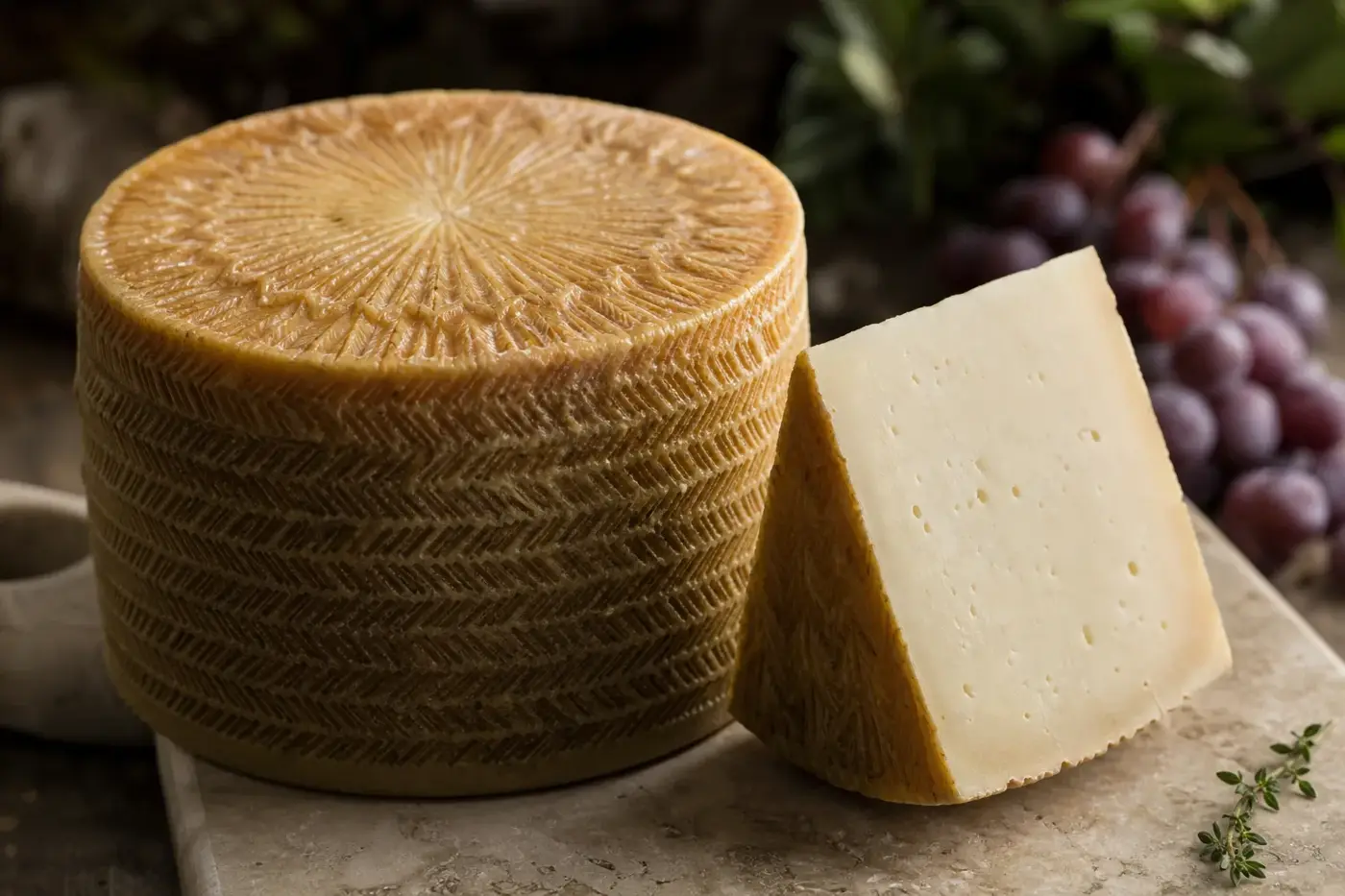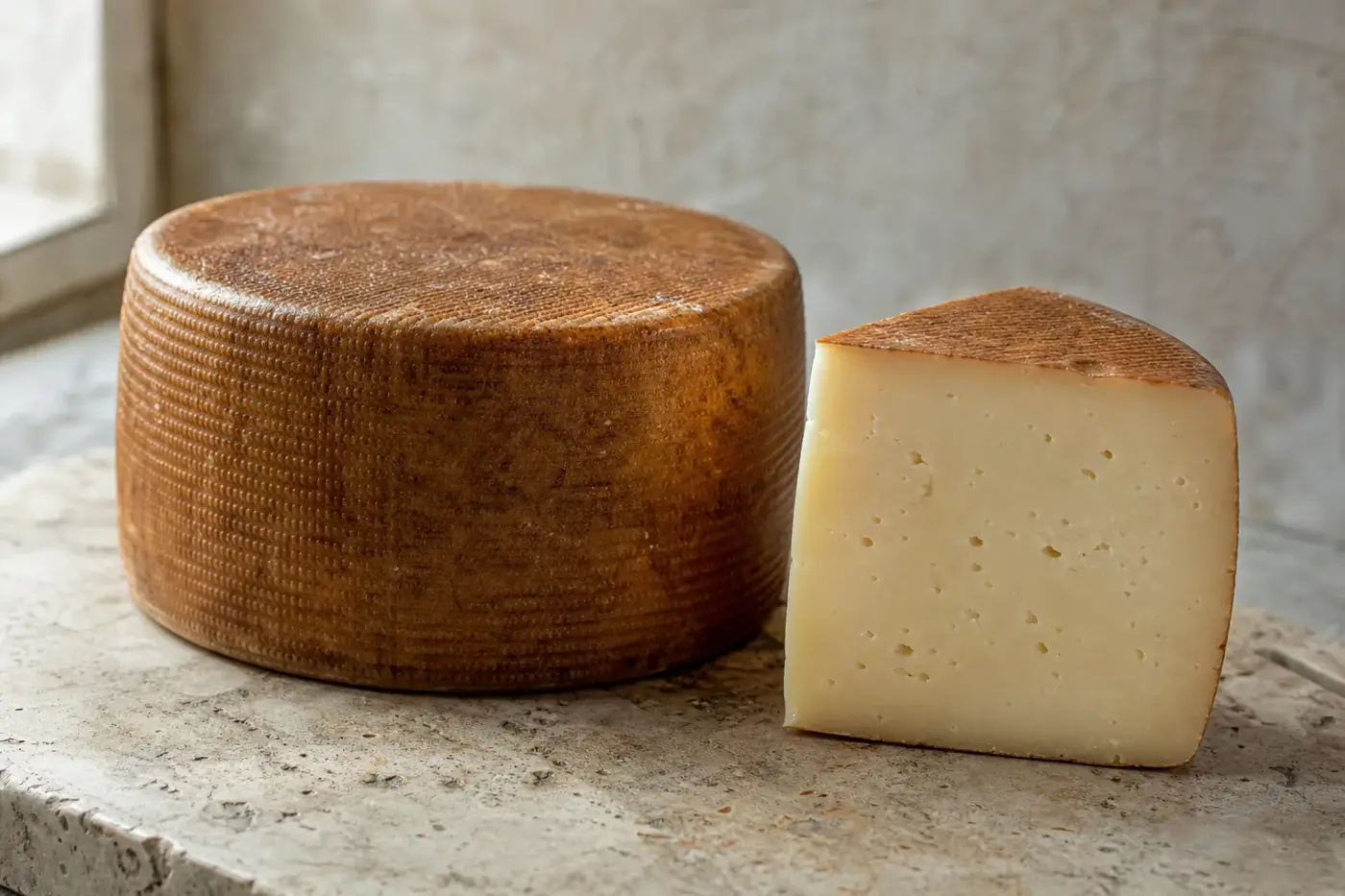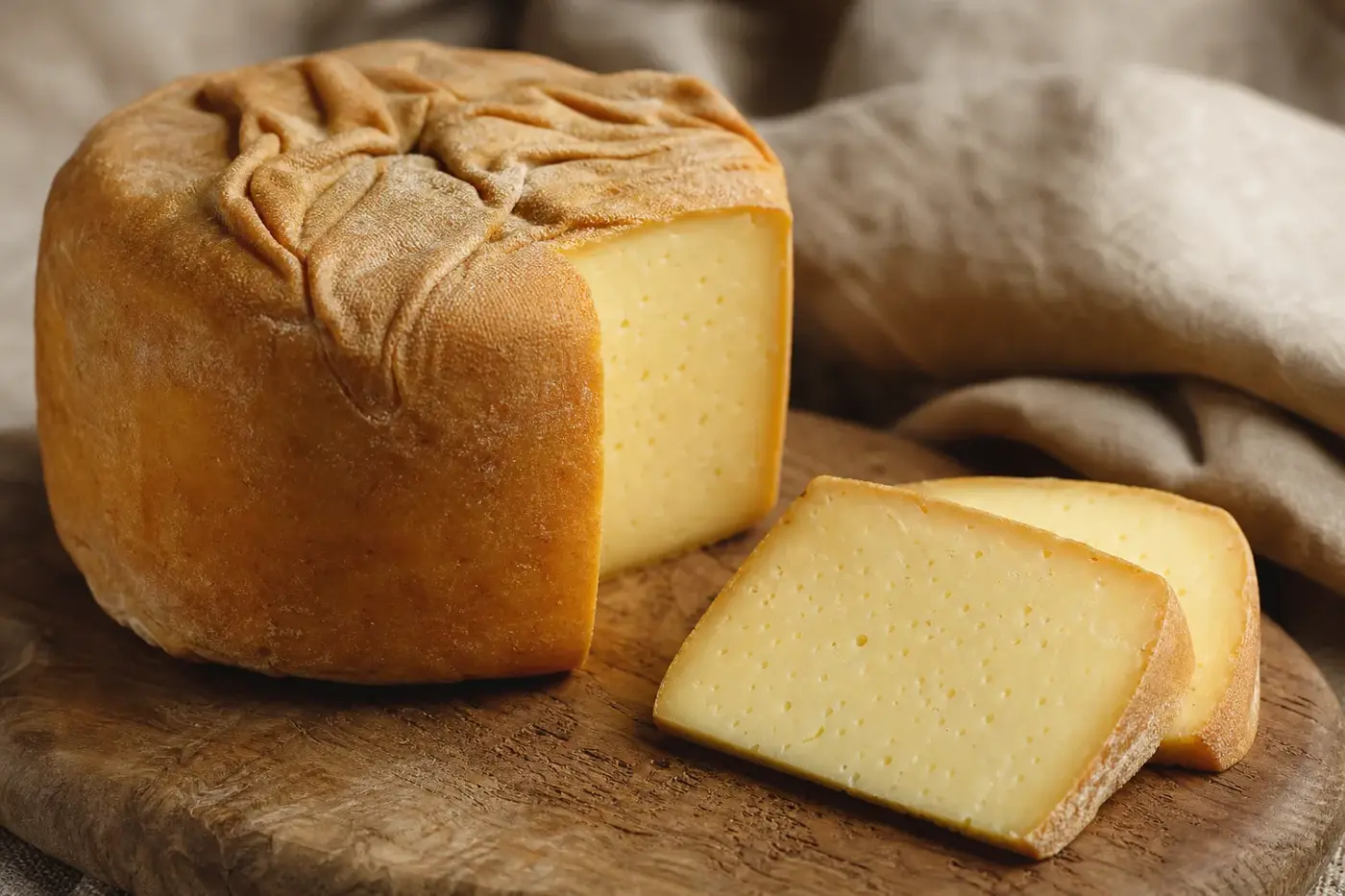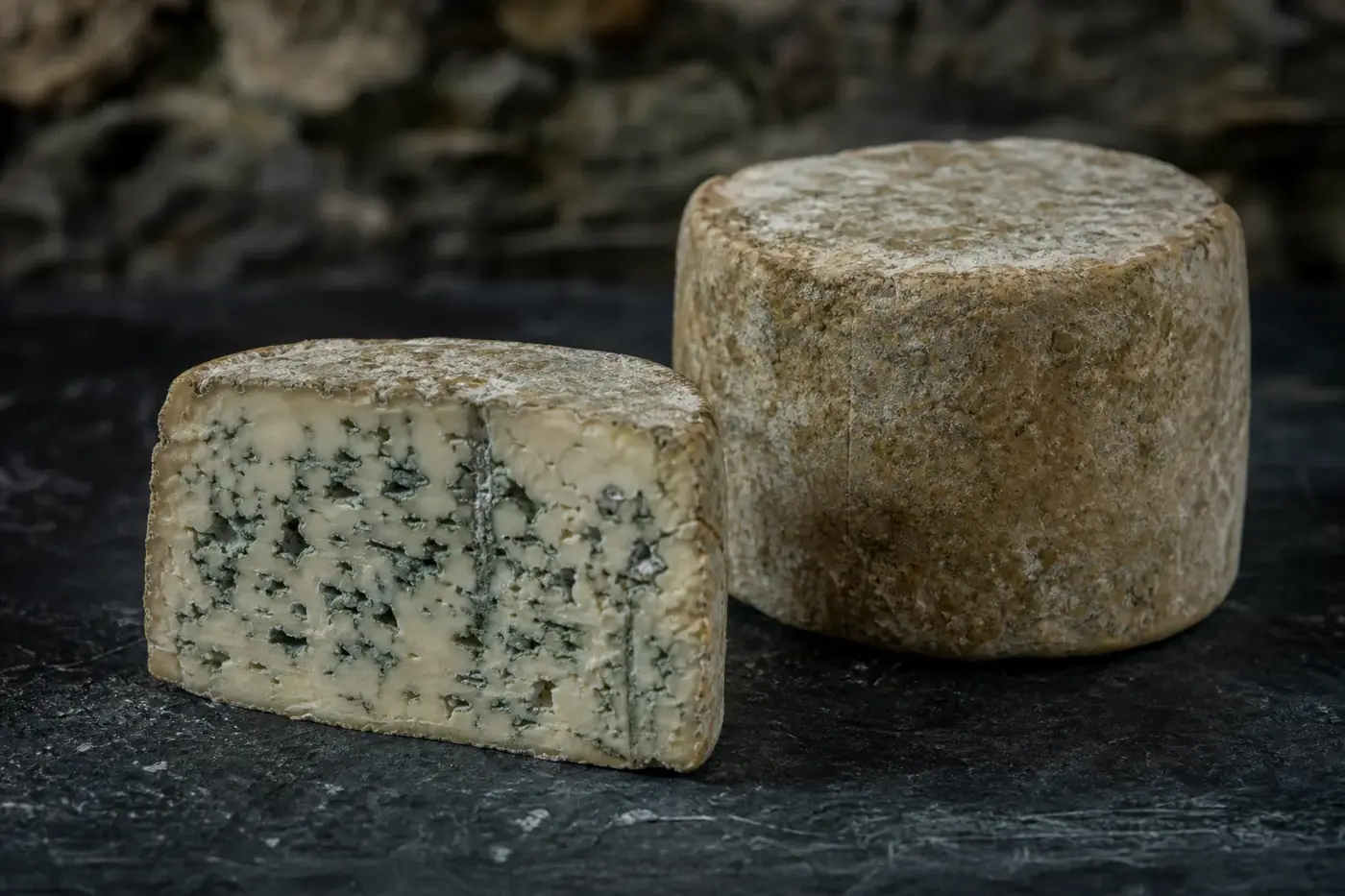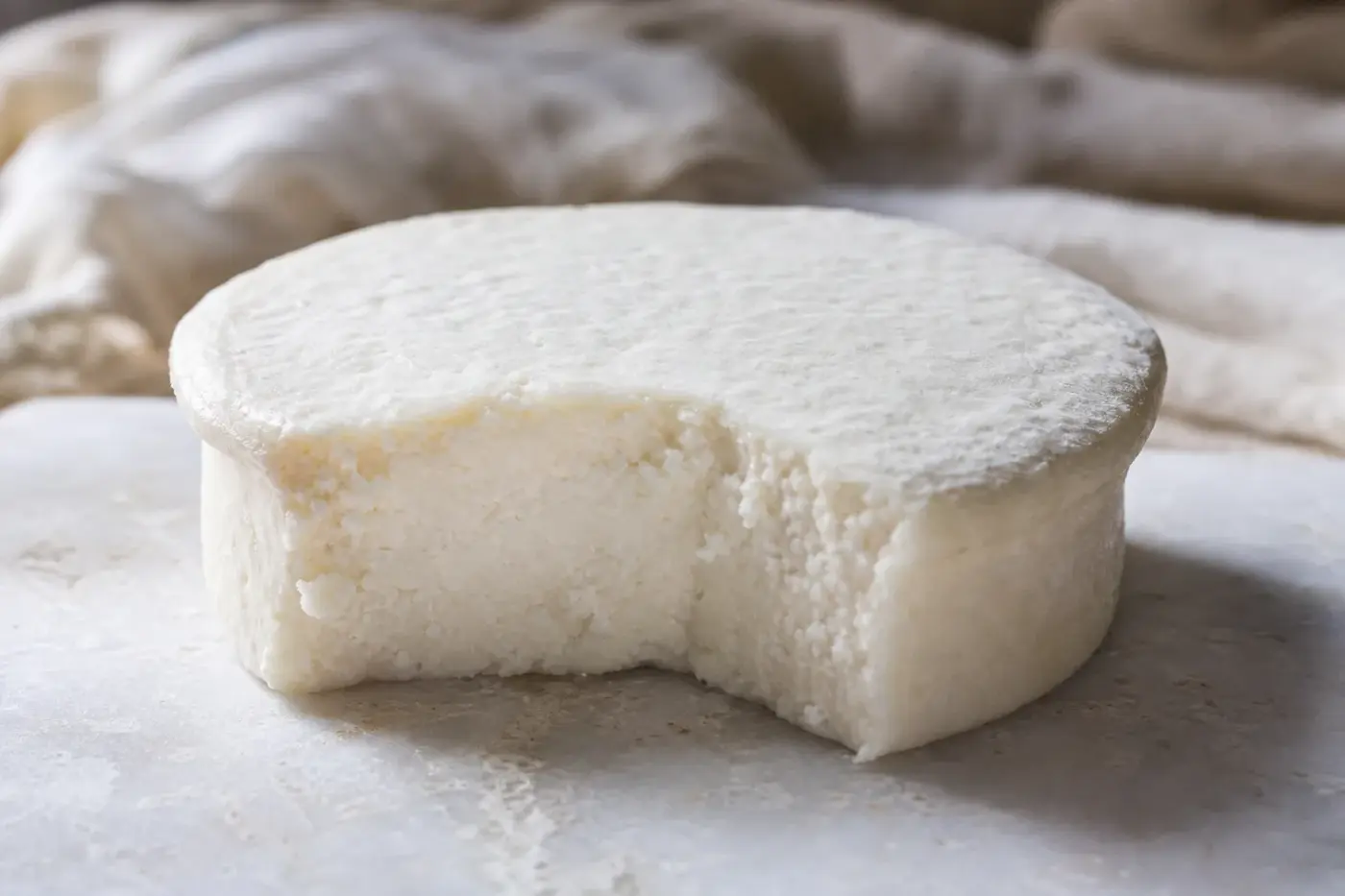
A broad, flat cap of white curd catches your eye. Beneath it sits a cylindrical body: Cebreiro, the unmistakable cow’s milk cheese from the mountains of eastern Galicia. Fresh, its paste is white and grainy; matured, it grows firmer and more assertive. Either way, it keeps its hat on. [1][2][3]
| What to know | The detail |
|---|---|
| The name to look for | Cebreiro. [2] |
| EU record | European Commission, PDO-ES-0443; registered name identified in the amended single document published in 2021. [2] |
| EU registration instrument | Commission Regulation (EC) No 1014/2008. [4] |
| Great Britain | Registered PDO; UK scheme registration dated 31 December 2020. Record status: November 2026. [5] |
| Northern Ireland | Status unconfirmed. |
| Switzerland | Status unconfirmed. |
| United States | Status unconfirmed. |
| Where it must come from | Thirteen municipalities in Lugo, Galicia, Spain. [2] |
| Milk | Whole, pasteurised cow’s milk. [6] |
| Your two choices | Fresh or curado; curado requires at least 45 days’ maturation. [6] |
| Minimum weight | 300 g. [2] |
Follow the pilgrims into Cebreiro country
O Cebreiro stands at the Galician entrance of the Camino Francés, the pilgrimage route towards Santiago de Compostela. This mountain setting gives the cheese its name. Its legally defined production area, though, reaches beyond the village and the municipality of Pedrafita do Cebreiro. [7]
Lugo’s provincial authority identifies the Cebreiro area as the central territory of both milk production and cheesemaking. That distinction matters when you read a label. Your cheese need not come from O Cebreiro itself, provided it comes from one of the designated municipalities and meets the specification. [2][7]
Milk production, manufacture and maturation must all stay within that defined area. The connection to place runs through the making of the cheese. It is more than a regional address on the packaging. [2]
There are thirteen permitted municipalities, all in Lugo province. They are Baleira, Baralla, Becerreá, Castroverde, Cervantes, Folgoso do Courel, A Fonsagrada, Láncara, Navia de Suarna, As Nogais, Pedrafita do Cebreiro, Samos and Triacastela. [2]
What the protected name promises you
Cebreiro’s protected name covers much more than that recognisable outline. Its specification brings together the geographical area, permitted milk, manufacturing method and finished cheese. The Spanish Denominación de Origen Protegida, shortened to DOP, corresponds to Protected Designation of Origin, or PDO, in English. [2][8]
The cheese entered the European register through Commission Regulation (EC) No 1014/2008. Great Britain has its own registered PDO entry, with UK scheme registration dated 31 December 2020. Each record applies within its respective jurisdiction. [4][5]
Where does an origin name end and a generic cheese style begin? If you have ever paused over that question at a cheese counter, protected names explained takes you through the distinction.
The story behind that unmistakable cap
Look for two parts: a cylindrical base and a shallow cap projecting beyond its sides. That overhang is your clue. Where some cheeses rise to a point, Cebreiro spreads out at the top. [2]
Even this jaunty outline comes with precise measurements. The amended EU single document allows a base no higher than 12 cm. Its cap must be 1 to 2 cm greater in diameter than the base and no more than 3 cm high. [2]
Cheeses weighing more than 2 kg get separate allowances. Their base can reach 15 cm high, with a cap up to 4 cm wider and up to 5 cm high. [2]
Behind those measurements is a practical bit of cheesemaking history. The designation council traces the traditional shape to pressing accumulated curd, historically with a stone. In its account, an everyday job gave Cebreiro the distinctive form still required today. [1]
From milk to curd, with plenty of handwork
PDO Cebreiro begins with whole, pasteurised cow’s milk. The permitted cattle are Rubia Gallega, Frisona and Pardo Alpina, or crosses between them. Pasteurisation belongs to the specification: it is not a producer’s choice between raw and pasteurised milk. [6][8]
First, the milk must set into curd, the solid material that becomes cheese. The specification provides for animal rennet and lactic cultures, or other expressly permitted coagulating enzymes. This setting stage is called coagulation. [8]
Next, the cheesemaker cuts the curd into blocks and drains it, first in the vat, then in suspended cloth bags. Further draining may happen in a steel drainer. The drained curd is kneaded into a uniform, clay-like mass, with sodium chloride worked in during kneading. [8]
Cloth-lined moulds and pressing follow. When you taste the grainy interior, there is all that draining and kneading behind it, long before the final shape emerges. For the wider picture, follow how cheese is made. [8]
Taste fresh Cebreiro, grain by gentle grain
Fresh Cebreiro has no distinct rind. Galicia’s food quality agency, AGACAL, describes a white, soft, granular paste, clay-like to the touch and readily yielding in your mouth. Its flavour is distinctly dairy, with a slight acidity. [3]
Soft need not mean smooth. Here, a yielding texture and little grains belong together, so give yourself a moment to notice both. Try a little on its own before reaching for bread or fruit.
Let that gentle acidity guide what you put beside it. Begin with restrained flavours rather than treating it like a strongly ripened cheese. Then bring in sweetness or sharper contrasts gradually, following the character AGACAL describes. [3]
After 45 days, a more assertive cheese
If your Cebreiro says curado, meaning matured, it must have matured for at least 45 days under the EU specification. That minimum belongs to the matured category. Fresh Cebreiro does not have to wait those 45 days. [6]
As maturation progresses, colour and flavour deepen. AGACAL describes a lightly differentiated rind, yellow to deep yellow, around an ivory to yellow paste. The cheese ranges from yielding to firm and can become hard as it matures further. [3]
The flavour moves on, too. Alongside the dairy character, you may find metallic and piquant notes developing. You are meeting a more assertive side of Cebreiro. [3]
Ask how long the cheese in front of you has matured, rather than stopping at curado. The word gives you a category and a minimum period, not the full character of that particular cheese. A seller’s information can help you choose something softer or firmer.
The women who kept Cebreiro on the table
By 1989, Cebreiro had almost vanished from wider circulation, according to the designation council’s published history. A small group of women still made it at home for their own consumption. The story of its survival leads you back to those household makers. [1]
Alongside the cheese’s connection with the pilgrimage route, theirs is a history at kitchen scale. Local practical knowledge kept the tradition alive. A famous village name could not have done that on its own. [1]
The same council records recognition as a Galician quality product in 1991, before the later PDO framework. That history gives you something to savour when you buy Cebreiro today. For the cheese itself, let the specification and certification label guide you. [1]
Get to know its Galician neighbours
Want to see what sets Cebreiro apart? Put it alongside Queso Tetilla and Arzúa-Ulloa. All three use cow’s milk, but their specifications describe different shapes and pastes. Cebreiro’s broad cap and grainy interior give you particularly useful clues. [8][9][10]
| Cheese | The shape to look for | The paste you can expect |
|---|---|---|
| Cebreiro | Cylindrical base with a broader cap. [8] | Fresh examples are soft and grainy. [8] |
| Queso Tetilla / Queixo Tetilla | Conical, with a concave-convex profile. [9] | Soft, uniform and creamy. [9] |
| Arzúa-Ulloa, standard category | Lenticular or cylindrical, with rounded edges. [10] | Fine-textured, relatively yielding and moderately elastic. [10] |
Tetilla rises towards a summit; Cebreiro spreads into its cap. Standard Arzúa-Ulloa forms a rounded wheel, distinct from both. Cut into Cebreiro and the grain gives you another identifying feature beyond the outline. [8][9][10]
There is another reason to keep an eye on the names. Arzúa-Ulloa has a separate matured category, with a six-month minimum for Arzúa-Ulloa curado. Read curado alongside the particular cheese name: the required maturation period depends on which cheese you are buying. [10]
Bring bread, pears and a little restraint
Start fresh Cebreiro with plain crusty bread and a ripe pear. The bread leaves room for the texture; the pear offers a gentle sweet contrast. The designation council provides a starting point for that pairing with its published salad of Cebreiro, pears, endive and walnuts. [11]
For a matured example, try rye bread and a small piece of quince paste. These are serving suggestions, not prescribed local combinations. Keep the quince separate so you can decide how much sweetness each mouthful needs. It need not take charge of the whole plate.
Comparing fresh and matured cheeses? Begin with water, keeping your attention on their differences. For another alcohol free option, try lightly brewed, unsweetened tea.
Choose your cheese, then give it good care
Look for the designation wording and numbered certification counter-label alongside the producer’s own label. AGACAL’s technical sheet describes this combination for certified Cebreiro. It also distinguishes fresh from matured cheese, so establish which you are buying before you plan how to serve it. [6]
Ask about the producer, maturation and intended condition at purchase. If you are buying a portion, request the information that would otherwise stay on the whole cheese’s packaging. Keep those details with your cheese at home for identification and storage.
In the UK, the Food Standards Agency advises keeping your fridge at 5 °C (41 °F) or below. Follow the producer’s storage and after opening instructions. If you live elsewhere, consult the relevant national guidance. [12]
You can find broader handling advice in storing cheese at home. For Cebreiro, begin with a clear label, known maturity and clear storage instructions. Then give your attention to the cheese you chose.
General information only, not medical advice: follow the official guidance where you live.
Questions people ask
Where is Cebreiro made?
Cebreiro’s legally defined production area covers thirteen municipalities in Lugo, Galicia, Spain. It does not have to be made in the village of O Cebreiro itself.
What milk is used to make Cebreiro?
PDO Cebreiro must be made from whole, pasteurised cow’s milk. The permitted cattle are Rubia Gallega, Frisona and Pardo Alpina, or crosses between them.
What is the difference between fresh and matured Cebreiro?
Fresh Cebreiro is white, soft and granular, with a slight acidity. Matured Cebreiro can become firmer, with metallic and piquant notes as well as a dairy flavour.
How can I identify certified Cebreiro?
Look for the designation wording and a numbered certification label alongside the producer’s own label. Check whether the cheese is fresh or matured.
How should I store Cebreiro?
In the UK, the Food Standards Agency advises keeping the fridge at 5 °C or below. Follow the producer’s storage and after opening instructions, and consult the relevant national guidance if you live elsewhere.
Sources
[1] Consello Regulador DOP Cebreiro. Queixo do Cebreiro: El producto, características e historia. Undated web page, accessed November 2026.
[2] European Commission. Publication of the amended single document following the approval of a minor amendment: Cebreiro. 2021/C 309/11, published 2 August 2021; PDO-ES-0443-AM01.
[3] Axencia Galega da Calidade Alimentaria, Xunta de Galicia. DOP Cebreiro. Experiencias de Calidade, undated web page, accessed November 2026.
[4] European Commission. Commission Regulation (EC) No 1014/2008 of 16 October 2008 entering certain names in the Register of protected designations of origin and protected geographical indications. Official Journal publication, 17 October 2008.
[5] Department for Environment, Food & Rural Affairs. Cebreiro. Great Britain protected food and drink names register, published 4 January 2021, accessed November 2026.
[6] Axencia Galega da Calidade Alimentaria. Ficha técnica: Denominación de Orixe Protexida Cebreiro. 2025 edition.
[7] Deputación de Lugo. Productos con Denominación de Origen. Undated official provincial information, accessed November 2026.
[8] Xunta de Galicia. Pliego de condiciones DOP Cebreiro. September 2020 version, linked by AGACAL as its specification. Sections B, C and E.
[9] Xunta de Galicia. Pliego de condiciones de la denominación de origen protegida “Queso Tetilla” / “Queixo Tetilla”. February 2020 version, section B.
[10] Xunta de Galicia. Pliego de condiciones DOP Arzúa-Ulloa. January 2009 version, section B.
[11] Consello Regulador DOP Cebreiro. Recetas: Ensalada de endibias. Undated recipe collection, accessed November 2026. The council promotes the designation; its recipe supplies an attributed pairing example.
[12] Food Standards Agency. How to chill, freeze and defrost food safely. Published 18 December 2017; official publication page accessed November 2026.
Researched from official specifications, European legal publications, government records and attributed designation council material, with serving suggestions identified as editorial judgement.
Last checked: November 2026
Last checked November 2026.
The editors suggest you read next