Queso Tetilla
Your knife slips through a yellow rind into a soft, uniform centre.
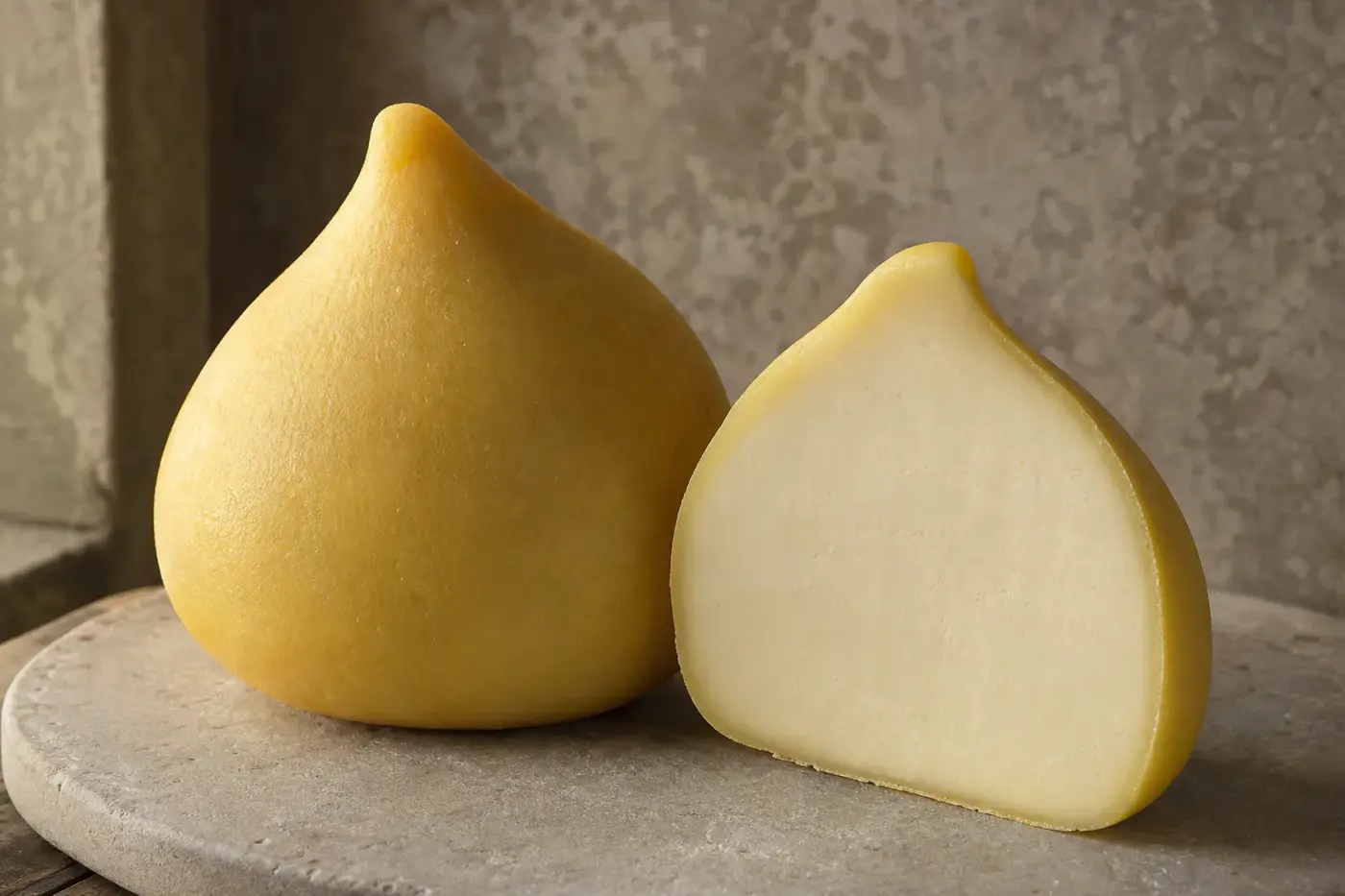
Your knife slips through a yellow rind into a soft, uniform centre. The first taste is gently milky, lightly acidic and a little salty. Then there is the shape: curved sides, a broad base and a small point. This Galician cows’ milk cheese carries the explanation for its name in plain sight.[1,5]
Get acquainted before your first slice
- The name you’ll know: Queso Tetilla.[1]
- Registered name: Queso Tetilla / Queixo Tetilla.[1]
- EU authority: European Commission; PDO single-document identifier PDO-ES-0088-AM02, published 11 March 2021.[1]
- Great Britain: Registered PDO; UK scheme registration 31 December 2020; status recorded November 2026.[3]
- Northern Ireland: Status unconfirmed.
- Switzerland: Status unconfirmed.
- United States: Status unconfirmed.
- Its home: All of Galicia, Spain.[2]
- Milk: Cows’ milk from Rubia Gallega, Friesian or Brown Alpine cattle, or their crosses.[2]
- What sets the milk: Animal rennet or other expressly authorised coagulating enzymes.[2]
- Minimum maturation: Eight days, counted from the day after manufacture.[2]
- Size and rind: 0.5 to 1.5 kg; thin, natural yellow rind, sometimes with a clear anti-mould coating.[1]
A familiar silhouette, with letters from 1753
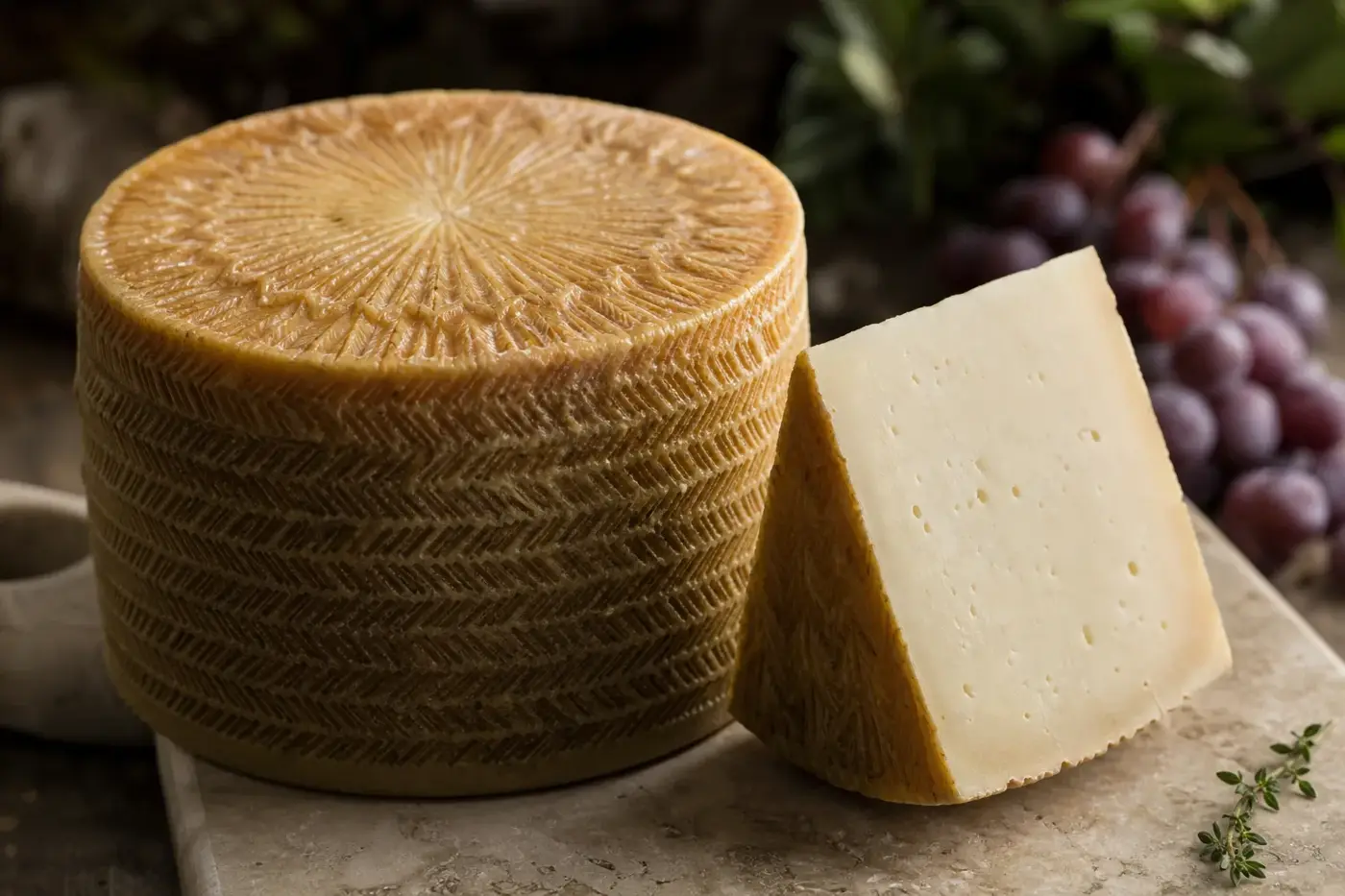
Once you have seen Tetilla, its name makes sense. It refers to that breast-like outline, with a broad base, curved sides and a small point. The specification calls the form conical and concave-convex. You might simply call it the cheese you can spot across the counter.[1,2]
Both height and base diameter normally measure 90 to 150 mm. There is a specific allowance for the base of cheeses weighing more than 1 kg. Even this distinctive silhouette has measurements to meet.[1,2]
The regulatory council’s history takes you back to correspondence from 1753. Those letters mention shipments of Tetilla alongside other foods, placing the cheese in the historical record without giving it an invention date. From there, the council’s account follows cheese into Galicia’s nineteenth-century markets and food writing.[6]
Follow the milk home to Galicia
Milk production, preliminary milk operations, cheesemaking and maturation all belong in Galicia under the EU single document. That territory covers the whole autonomous community in north-western Spain. When you read the label, look for DOP, the Spanish abbreviation for protected designation of origin.[1]
Galicia’s public food-quality agency, Agacal, links this dairying tradition to an Atlantic climate, abundant rain and productive grassland. The specification requires cattle feeding to rely principally on local pasture and forage, with grazing when conditions permit. Curious about how a particular herd spends its days? The producer’s records offer more detail than the Galician origin label alone.[2,4]
From warm milk to that unmistakable point
The cheesemaker begins with rennet or another authorised coagulating enzyme, alongside starter cultures. Those named include Lactococcus lactis subsp. lactis and Lactococcus lactis subsp. cremoris. According to the specification, coagulation takes 30 to 60 minutes at 30 to 34 °C.[2,8]
Next comes the cutting: the curd becomes roughly chickpea-sized pieces, and some whey, the liquid released by the curd, drains away. An optional water wash lowers acidity. The council’s production account connects washing and stirring with the firmness and final texture the cheesemaker wants.[8]
Characteristic moulds give Tetilla its outline, followed by pressing until the required characteristics are reached. Salting happens in the vat, in brine, or both, with brine immersion limited to 24 hours. Maturation then lasts at least eight days, counted from the day after manufacture. You can follow the broader journey in how cheese is made.[2,8]
Look beneath the yellow rind
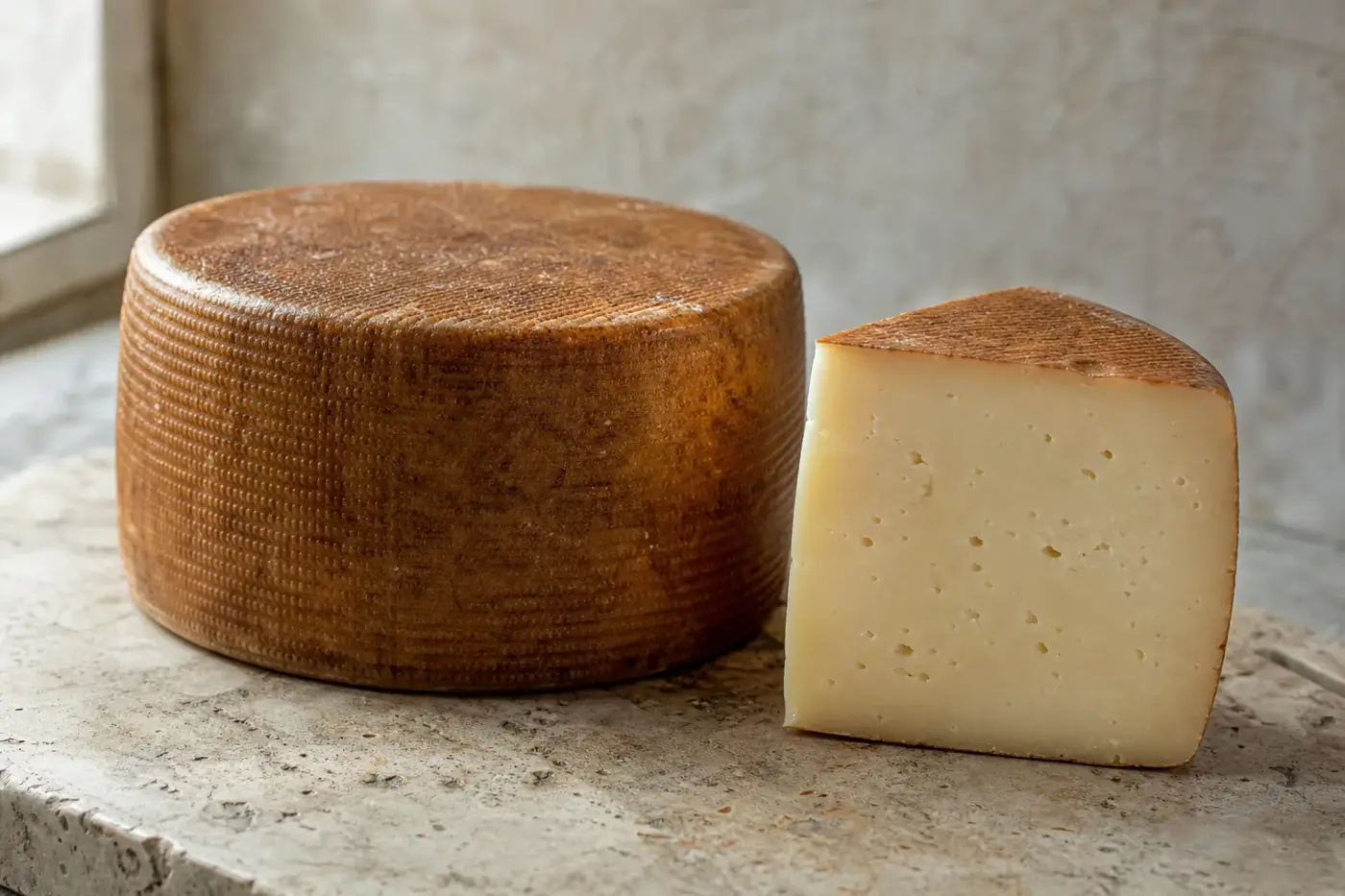
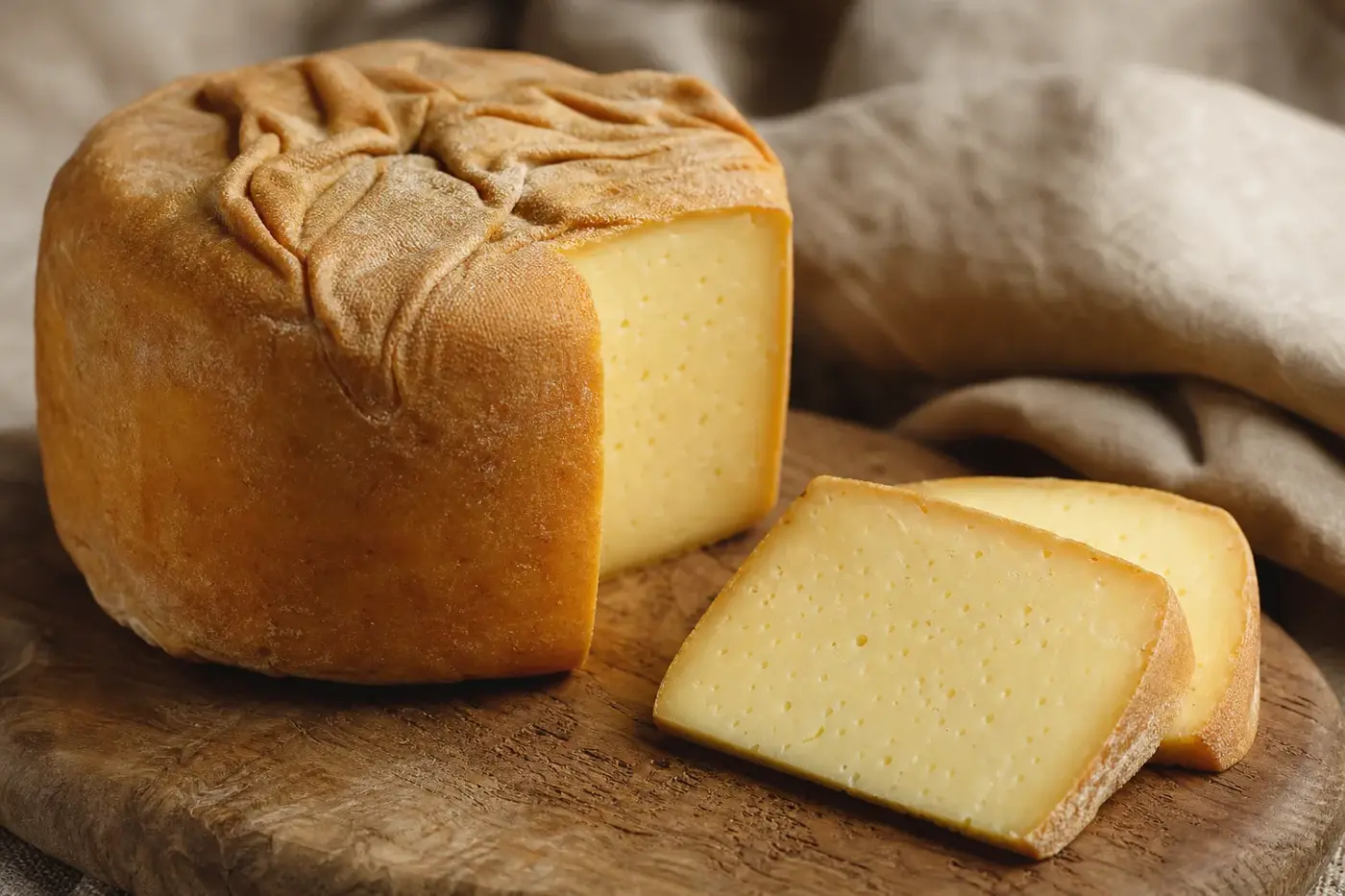
The council describes an elastic, straw-yellow rind less than 3 mm thick. Beneath it, you will find an ivory to yellowish paste, soft and uniform. A completely closed centre and one scattered with a few small holes both fit the description.[5]
The specification permits a transparent, colourless anti-mould coating. Before serving, the council recommends cutting away the rind closely, saving as much of the paste as possible. If you are buying a cut piece, ask about surface treatments to find out exactly what has been applied.[1,7]
Make room for milk, butter and gentle tang
Milky and buttery are the council’s words for Tetilla’s flavour and aroma. There is gentle salt, too, and a milk smell carrying slight acidity. Look for balance: salt and acidity should sit beside the milk character, not take over. The softness is part of the pleasure, too.[5]
That optional curd wash manages acidity during manufacture; salting happens separately. Eight days is the minimum maturation, not a universal recommendation for when to eat it. The flavour effects of longer maturation remain uncertain, so ask when each cheese was made and taste where offered. Choose the balance you enjoy, rather than assuming the oldest cheese wins.[2,8]
Let the Galician cheese counter guide you
Tetilla gives you two useful starting points: its breast-like outline and its milk-led character.[1,5] Comparisons with Arzúa-Ulloa and San Simón da Costa against their current specifications remain open.
At the counter, use shape to distinguish the choices, then let taste settle the question of flavour. Ask to try the actual cheeses on offer, and read the producer’s product information alongside your own preferences. The outline may draw you over, but you are taking the cheese home to eat, not to admire its geometry.
Bring home the cheese and its identity
Start with the label, whether you are buying a whole cheese or a freshly cut portion. The EU single document requires the registered name, PDO wording and European PDO symbol on commercial labels, plus a numbered guarantee label. A whole cheese keeps those details together. At a staffed counter, ask to see the original cheese and label before yours is cut.[1]
Any size of portion may be cut in front of you at the time of sale. Ready-displayed halves have tighter rules: the original cheese must weigh more than 0.7 kg, and each half must retain identification. Buy what you expect to use. A handsome whole cheese can be a remarkably persuasive shopping companion.[2]
Look for a yellow, mould-free rind and a moist-looking, uniform cut surface. Ask about drying, damage or anything that differs from the specification. Ask about that product’s milk treatment and coagulant, too: permitted options do not tell you which a producer chose. How to read a cheese label helps you untangle the distinction.[1,5]
Give your Tetilla a good home
Keep the product label, so its storage instructions and date stay with the cheese. For households in England, Wales and Northern Ireland, the Food Standards Agency advises a fridge temperature between 0 and 5 °C and refrigeration of dairy products. Keep Tetilla covered, protect its cut face and wrap it separately from other cheeses. Follow the label and your national agency’s guidance.[7,9]
US federal guidance specifies a refrigerator at 4 °C (40 °F) or below. Perishable foods should go into refrigeration within two hours, or one hour when temperatures exceed 32 °C (90 °F). Follow the advice for where you live, take out only what you need and return the unserved portion promptly.[10,11]
For cooked dishes containing Tetilla, the FSA advises households in England, Wales and Northern Ireland to cool and refrigerate within one to two hours. Eat leftovers within 48 hours or freeze them, following any more restrictive product instructions. For everyday organisation, see storing cheese at home.[9]
Cut little triangles and try one plain
The council gives a tasting temperature of 16 to 18 °C.[7] Any warming method needs to respect the applicable official limit for time out of refrigeration.
To cut it, follow the council’s simple sequence: halve the cheese, cut wedges, remove the rind closely, then divide the wedges into smaller triangles. Arrange them without piling them up. Give yourself a plain piece first, before deciding how much sweetness, acidity or seasoning you want alongside.[7]
Set out bread, fruit and a Galician glass
Bread, grapes, quince paste, apple preserve, walnuts and honey all appear among the council’s suggested accompaniments. Start with plain bread and grapes, if you like, then add a little quince paste for a sweeter contrast. Keep everything separate so you can still taste that gentle milk character in each mouthful.[5,7]
For an adult of legal drinking age who wants wine, a small serving of Galician Albariño is a suggested pairing. Apple juice or water offers an alcohol free alternative. These serving ideas follow the cheese’s mild flavour; cheese and wine pairing explores the wider principles.[5]
People who are pregnant, driving, taking medicines that interact with alcohol, or recovering from alcohol dependence should not drink. Consult the NHS or the equivalent authority where you live for advice.
Give Tetilla the melting role at supper
Tetilla melts well, according to the council, whose suggestions include gratins and fillings for peppers, mushrooms, vegetables and cannelloni. Reach for it when you want a soft cheese layer rather than a strong seasoning. A dish you already cook confidently is a good place to start.[7]
Try a little over cooked vegetables on toast, or fold it into a mushroom filling, keeping stronger ingredients restrained at first. Check the seasoning once the filling is fully cooked. If the cheese has a declared surface treatment, follow the producer’s instructions, and remove the rind as the council recommends.[5,7]
General information only, not medical advice: follow the official guidance where you live.
Questions people ask
Where is Queso Tetilla made?
Queso Tetilla is made throughout Galicia in north western Spain. Milk production, preliminary milk operations, cheesemaking and maturation all take place there.
What does Queso Tetilla taste like?
The regulatory council describes its flavour and aroma as milky and buttery, with gentle salt and slight acidity. Its paste is soft and uniform.
Can you eat the rind of Queso Tetilla?
The council recommends cutting the rind away closely before serving, preserving as much of the cheese as possible. A transparent, colourless coating to prevent mould is permitted, so ask about surface treatments when buying a cut piece.
Is Queso Tetilla vegetarian?
The specification permits animal rennet or other expressly authorised coagulating enzymes. Check the coagulant used in the particular product, as the permitted options do not tell you which one a producer has chosen.
How should I store Queso Tetilla?
For households in England, Wales and Northern Ireland, the Food Standards Agency advises refrigerating dairy products at a fridge temperature between 0 and 5 °C. See the Food Standards Agency guidance and follow the product label.
Sources
- European Commission, Publication of the amended single document following the approval of a minor amendment, 2021/C 82/13, 11 March 2021. Single document for “Queso Tetilla” / “Queixo Tetilla”, PDO-ES-0088-AM02.
- Ministerio de Agricultura, Pesca y Alimentación, Pliego de condiciones de la denominación de origen protegida (DOP) «Queso Tetilla» / «Queixo Tetilla», February 2020 version.
- Department for Environment, Food & Rural Affairs, Queso Tetilla / Queixo Tetilla, protected food and drink names register, published 4 January 2021; live entry checked November 2026.
- Axencia Galega da Calidade Alimentaria, DOP Queso Tetilla, undated official product account, accessed November 2026.
- Consejo Regulador de la DOP Queixo Tetilla, Un queso único, undated product description, accessed November 2026. The council manages and promotes the designation.
- Consejo Regulador de la DOP Queixo Tetilla, Un vistazo al pasado, undated historical account, accessed November 2026.
- Consejo Regulador de la DOP Queixo Tetilla, Saboreando el campo gallego, undated serving and culinary guidance, accessed November 2026.
- Consejo Regulador de la DOP Queixo Tetilla, Elaborando la Tradición, undated production account, accessed November 2026.
- Food Standards Agency, How to chill, freeze and defrost food safely, published 18 December 2017; live guidance checked November 2026. Applies to England, Northern Ireland and Wales.
- FoodSafety.gov, 4 Steps to Food Safety, live US federal consumer guidance, accessed November 2026.
- USDA Food Safety and Inspection Service, Does all cheese need to be refrigerated?, live consumer guidance, accessed November 2026.
- Axencia Galega da Calidade Alimentaria, Comprar experiencias, undated official product listings; retrieved search extract, November 2026.
This piece combines desk research from official product documents, national consumer guidance and attributed regulatory council accounts, with editorial serving suggestions.
Last checked: November 2026
Last checked November 2026.
The editors suggest you read next