Central American Cheese
Hot water, yielding curds, then a ball or plait of layered cheese.
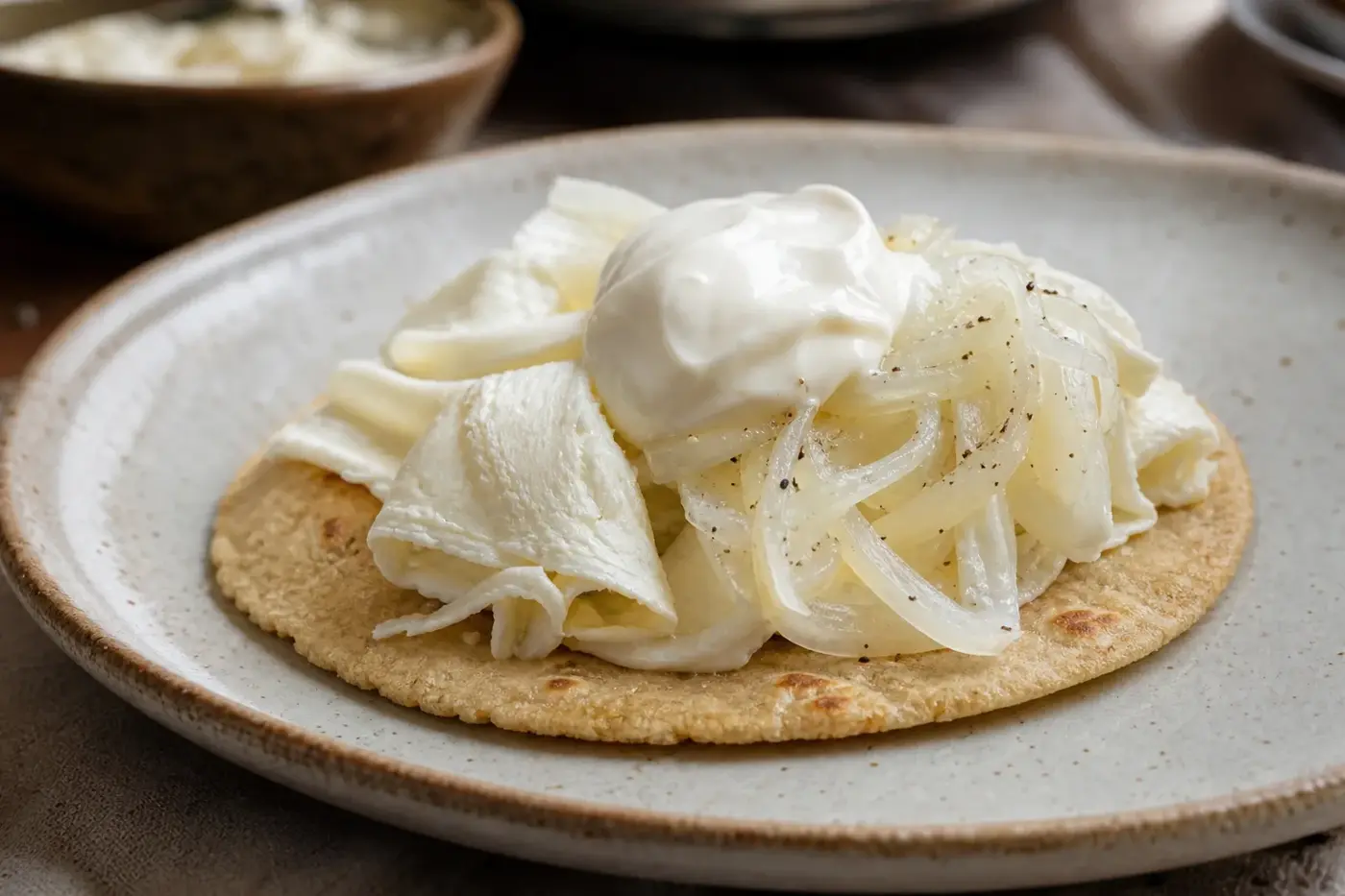
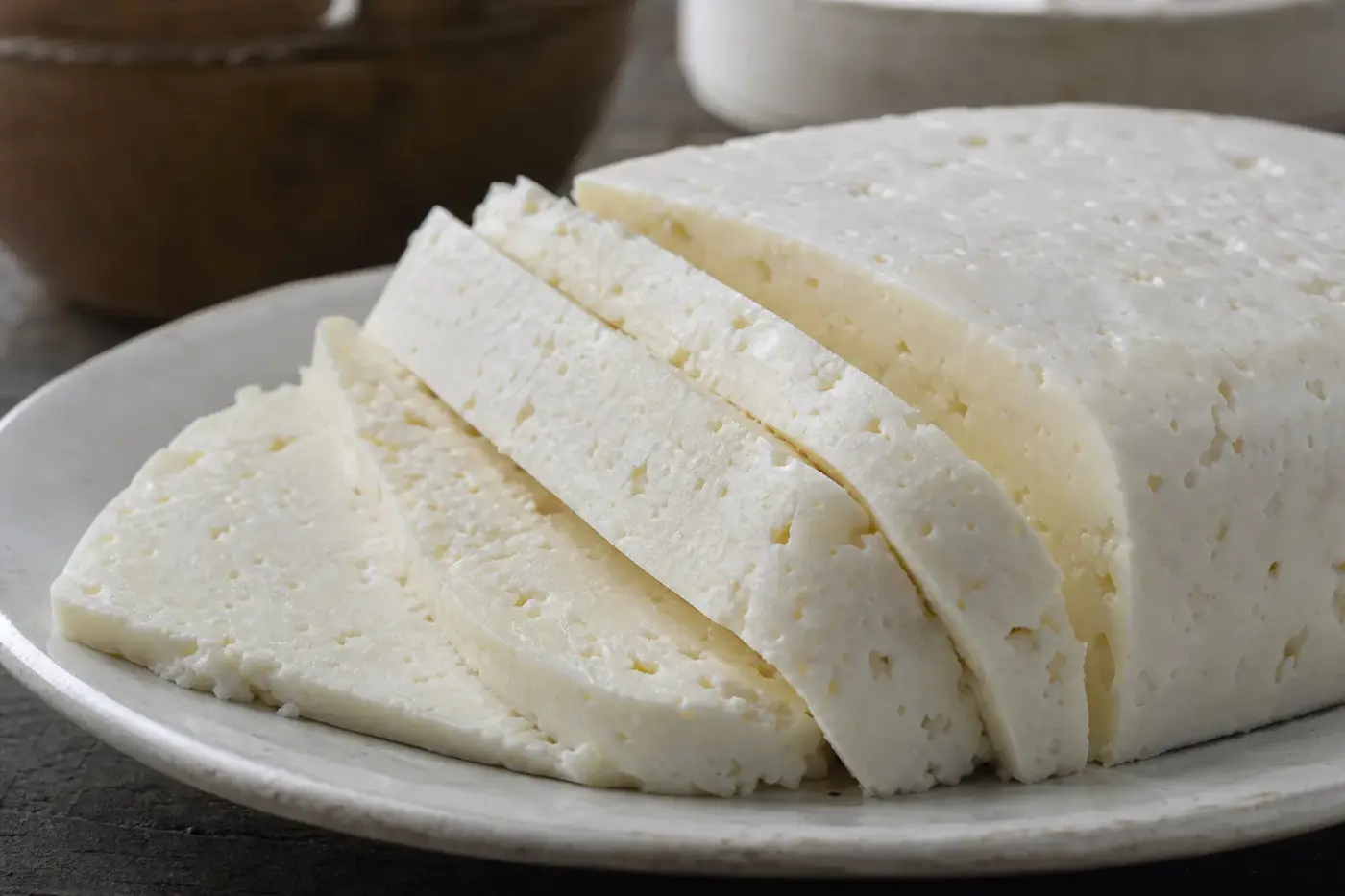
Hot water, yielding curds, then a ball or plait of layered cheese. In Nicaragua, it meets a maize tortilla, vinegar-dressed onion and fresh cream in a quesillo.[1] Your first mouthful introduces a region where cheese earns its place by what it does: crumble, slice, stretch or hold its shape.
Across Belize, Guatemala, El Salvador, Honduras, Nicaragua, Costa Rica and Panama, you’ll find fresh white curds with tortillas, salty finishing cheeses and stretchy fillings. The pleasure is in knowing which does what. Similar appearances can conceal very different talents.[1][5][8][10][12][14]
Pull up a chair for fresh cheese
Around Costa Rica’s Turrialba volcano, fresh cow’s milk cheese begins with cattle farming. In Nicaragua’s quesillo, the connection between local dairying and everyday meals reaches your plate as cheese, a maize tortilla, cream and onion. Here, cheese belongs beside the staples, rather than necessarily arriving as a separate course.[1][2][3]
These cheeses are ready for relatively immediate use because production stops before extended maturation. Draining, salting, pressing and sometimes stretching give each its character. A Salvadoran production study separates pressed cheeses from quesillo, while Nicaragua’s education ministry describes curds stretched in hot water.[1][9]
Start with structure, then, not colour. White cheeses needn’t behave alike, however much they resemble one another. For the bigger picture, explore the guide to cheese styles and methods.
Belize: Dutch cheese finds a place at the table
A cheese’s birthplace tells only part of its story. Dutch cheese has an established place in Belizean households, and a Belizean lodge lists it among familiar foods requested by Belizeans living abroad.[6] A cheese can have one place of manufacture and quite another place in people’s affections.
You can see that affection in a local food writer’s cheese dip. Dutch cheese meets evaporated milk, hot sauce and sometimes salsa, becoming something to share rather than simply a slice from a round.[5] The round has clearly been making itself useful.
Then there’s queso relleno. A Belizean cookery publisher describes it using queso de bola, the ball-shaped Dutch cheese also used in the neighbouring Yucatecan tradition. Hollowed out, it holds seasoned pork and arrives with sauces.[7]
When you buy, check the stated manufacturing origin. That distinguishes imported Dutch cheese from cheese made in Belize. Its home in local cooking and its place of manufacture are different parts of the story.
Guatemala: finish with a little Zacapa
Think of queso seco de Zacapa as the finishing touch. In a published garnacha recipe, a little of this dry, salty cheese goes over the surface, bringing cheese into each mouthful.[7] You’re looking at a topping, not a soft filling tucked inside the tortilla.
Zacapa is more than a name on the cheese. Guatemala’s tourism authority identifies cheese and dairy production as part of the department’s food heritage. It specifically records cheesemaking in San Jorge, within the department that gives the cheese its name.[8]
If a seller offers queso de Zacapa, ask whether they mean the dry cheese or another cheese from the area. “From Zacapa” gives you an origin; “dry Zacapa cheese” tells you more about its character. Before substituting it in cooking, find out whether your piece will grate or crumble.
El Salvador: find the right cheese for your pupusa
Salvadoran cheese names take you well beyond “fresh” and “hard”. A University of El Salvador production study describes draining, dry salting and pressing for queso duro blando.[9] Those details give you useful clues when choosing for the table or the pan.
Keep the names distinct. Pressing and layering describe different aspects of how a cheese is built. Whether it makes a good pupusa filling is a separate question.
For pupusas, a regional cookery collection published by the Central Bank of Honduras specifies grated quesillo inside maize dough. You flatten the filled disc, then cook it on a pan.[10] That gives you a clear starting point for a stretchy filling, rather than treating queso duro blando, queso de capas and quesillo as interchangeable. Ask which cheese the cook uses, and for which dish.
Honduras: tuck quesillo and beans into tortillas
Quesillo and refried beans sit between tortillas in a Honduran cookery publication’s Copán-style preparation. Maize encloses the filling, giving you a straightforward introduction to the cheese’s role in cooking.[12] Start with that combination to understand what the cheese contributes.
The name matters beyond the recipe, too. Honduran agricultural market reporting lists quesillo separately from queso crema or fresco, including supplies identified with Olancho. This is a recognised product category, not a general name for fresh cheese.[11]
For tortilla fillings, ask how your particular quesillo softens and stretches. The Nicaraguan and Costa Rican examples below document stretched-curd methods, but Honduran makers needn’t all use an identical process.[1][4] A small cooking trial tells you more than a glance at its colour.
Nicaragua: a quesillo, or the whole quesillo?
Ask for quesillo and you might mean the cheese or the complete tortilla dish. Nicaragua’s Ministry of Education describes the traditional preparation in its Tiangue del Maíz collection. Curds are worked in hot water, stretched and shaped into layered balls or plaits.[1]
For the dish, that cheese goes onto a maize tortilla with vinegar-dressed onion and fresh cream. You get the stretch of cheese against sharp onion, with cream added as a separate dairy dressing.[1] Each has its own part to play.
It’s a useful distinction before you order or follow a recipe. Buying quesillo cheese supplies one ingredient; ordering a quesillo may bring the whole preparation. The collection links the food with Nagarote, La Paz Centro and Chontales, giving the tradition several locations rather than a single hometown.[1]
Costa Rica: visit Turrialba, then unravel palmito
Queso Turrialba offers one of the region’s clearest connections between cheese and a defined place. Costa Rica’s trade ministry records its denomination of origin registration in 2012. The area covers Santa Cruz and part of Santa Teresita, in Turrialba.[2]
The University of Costa Rica connects the traditional cheese with milk from cattle grazing around the volcano. Its researchers worked with local cheesemakers to document the traditional process and investigate sensory diversity. That shared regional identity still leaves room for meaningful differences between individual cheeses.[3] If origin matters to you, look for the denomination’s identification and the named producer.
With queso palmito, the wound shape reveals something of the making. A Costa Rican field study records producers describing curd softened in hot water, worked into strips and rolled. You may also find it called queso arrollado.[4]
Those layers invite you to pull, not just slice. Set strands of palmito beside a sliced fresh cheese and compare them. For once, taking your cheese apart counts as paying attention.
Panama: give frying cheese its turn in the pan
Planning to fry your cheese? Look for queso blanco para freír, the name used in a Panamanian retailer’s listing.[14] It tells you the intended cooking job much more clearly than “white cheese” alone.
Panamanian producers use queso blanco del país for an important local cheese category. Published interviews distinguish several fresh forms, including pressed, basket-shaped and ground cheeses.[13] Find out which you have before deciding how to serve it.
A suitable frying cheese can give a breakfast plate its solid element or accompany tortillas. Keep the manufacturer’s preparation directions with the product. A soft white cheese intended for eating fresh may behave differently in the pan.
Look beyond the name to the cheese beneath
Fresh and pressed aren’t opposites: a cheese can be both. The terms describe different stages or results. Pressing consolidates curds, stretching introduces another operation, and drying and maturation change cheese after its initial formation.[1][4][9]
| Approach | What it tells you | An example to meet |
|---|---|---|
| Fresh | Ready to eat without extended maturation | Fresh Turrialba studied by the University of Costa Rica.[3] |
| Pressed | Curds brought together after draining | Salvadoran duro blando and capita production tables.[9] |
| Dry or matured | Look for grating or crumbling qualities; ask separately about age | Queso seco de Zacapa in a garnacha recipe.[7] |
| Stretched | Curds worked into strips, layers or plaits | Nicaraguan quesillo and Costa Rican palmito.[1][4] |
“Dry” doesn’t give you an ageing period. Nor does “pressed” tell you how a cheese will melt. For the sequence behind those terms, see how cheese is made.
Let dinner tell you which cheese to choose
Before choosing a replacement, decide what you need the cheese to do. A tortilla filling needs the right softening and stretch; a finishing cheese needs to grate or crumble. For frying, choose a product expressly intended to hold together in the pan.[7][10][14]
Beans are a good place to begin. The documented Honduran tortilla preparation already pairs them with quesillo.[12] Try that combination before adding several competing accompaniments to the plate.
For a simple fresh-cheese serving, put out tortillas, cooked beans and a separate plate of ripe fruit. Keeping everything apart lets you choose the balance. With a salty finishing cheese, start small and taste the assembled food before adding more.
A substitution changes the result, so compare the actual products for moisture, salt and melting behaviour. Fresh white cheeses aren’t interchangeable just because they look alike. The guide to reading a cheese label helps you identify the product and its declared ingredients.
This page summarises published guidance from the official sources it cites. It is not medical advice. Guidance differs between countries and changes over time, so check the current source for where you live, and ask your doctor, midwife, pharmacist or dietitian about your own circumstances.
Keep it chilled, serve it safely
For home storage, UK NHS advice is to keep chilled, ready-to-eat food at 5 °C or below, separate from raw food, and follow the packaging instructions. It also advises using opened food within two days unless the packaging says otherwise. Eat, cook or freeze food by its use-by date.[15]
At the table, bring out smaller portions rather than leaving your whole supply unrefrigerated. The same NHS guidance says to eat ready-to-eat food within four hours of taking it out of refrigeration.[15]
For pregnancy, the UK NHS says you can eat hard cheeses made with pasteurised or unpasteurised milk, and includes pasteurised mozzarella among cheeses that can be eaten. It advises cooking soft cheeses made from unpasteurised milk, mould-ripened soft cheeses and soft blue cheeses until steaming hot before eating them.[16]
Children, older people, pregnant women and people who are unwell are particularly vulnerable to food poisoning, according to the NHS. It advises against unpasteurised milk or cream and some products made from them.[17] Follow current official guidance where you live, using the product’s milk treatment and cheese type. See cheese food safety for the broader guidance.
Questions people ask
What is a Nicaraguan quesillo?
Quesillo can mean the cheese or the complete tortilla dish. The dish combines the cheese with a maize tortilla, onion dressed in vinegar and fresh cream.
What cheese is used in pupusas?
A regional cookery collection published by the Central Bank of Honduras specifies grated quesillo inside maize dough. The filled disc is flattened and cooked on a pan.
Which Panamanian cheese is intended for frying?
Look for queso blanco para freír, a name that states its intended cooking function. A soft white cheese intended for eating fresh may behave differently in the pan.
Can I eat these cheeses during pregnancy?
The UK NHS says hard cheeses made with pasteurised or unpasteurised milk can be eaten and includes pasteurised mozzarella among cheeses that can be eaten. It advises cooking soft cheeses made from unpasteurised milk, mould ripened soft cheeses and soft blue cheeses until steaming hot before eating them. Check the current NHS pregnancy guidance.
How should chilled cheese be stored?
The UK NHS advises keeping chilled food at 5 °C or below, separate from raw food, and following packaging instructions. It also advises using opened food within two days unless the packaging says otherwise. See the current NHS food safety guidance.
Sources
- Nicaragua, Ministerio de Educación. Tiangue del Maíz, collection hosted in the ministry’s digital library, edition date not verified, pp. 80 to 81, “Quesillo #1” and “Quesillo #2”. Source PDF.
- Costa Rica, Ministerio de Comercio Exterior. Avanza con éxito el reconocimiento de la denominación de origen Queso Turrialba en la Unión Europea, 4 December 2025. Used for the ministry’s account of Costa Rican registration and production area, not as evidence of completed EU protection. Ministry statement.
- Universidad de Costa Rica. El queso Turrialba cumple una década de contar con denominación de origen, 11 October 2022. Institutional account of the university’s research. University article.
- Universidad Nacional and CadenAgro. Informe final: sello de calidad queso palmito, November 2015. Field interviews documenting production practices and terminology. Research report.
- San Pedro Scoop. My Guide to the Food of Belize: A Delicious Introduction, 2025. Local writer’s account, used specifically for the described cheese dip. Food account.
- Belize River Lodge. How do you spell Belize, publication date not verified. Commercial hospitality source, used for its account of familiar household foods. Local account.
- Belize News Post. Queso Relleno, 4 August 2026, and Garnachas Guatemaltecas, 2026. Commercial cookery publisher, used for its recipes and ingredient descriptions. Queso relleno and garnachas.
- Instituto Guatemalteco de Turismo. Plan de desarrollo turístico del departamento de Zacapa 2023 a 2027, 2022 planning document. Tourism plan.
- Universidad de El Salvador. Modelo de empresa para el procesamiento de productos derivados de la leche, para la Asociación de Municipios Cayaguanca en el departamento de Chalatenango, 2019. Tables 189 and 190 and product records. University study.
- Banco Central de Honduras. Recetario bicentenario de la independencia 2021, 2021, “Pupusa salvadoreña”, p. 6. Digitised collection.
- Honduras, Sistema de Información de Mercados de Productos Agrícolas. Reporte semanal de productos pecuarios, Tegucigalpa, 2025. Used solely for product names and recorded origins. Agricultural market report.
- Buen Provecho, Honduras. Tortillas con quesillo al estilo copaneco, publication date not verified. Published cookery source. Preparation.
- Metro Libre. Tipos de quesos panameños, 15 August 2021. Attributed interviews with Panamanian cheese producers. Producer interviews.
- Riba Smith, Panama. Queso blanco para freír, undated product listing. Commercial retail source, used only for the product terminology. Product description.
- NHS, United Kingdom. Listeriosis, reviewed 10 November 2023, current retrieved page. Official guidance.
- NHS, United Kingdom. Foods to avoid in pregnancy, current retrieved page, revision date not verified. Official pregnancy guidance.
- NHS, United Kingdom. Dairy and alternatives in your diet, current retrieved page, revision date not verified. Official dairy guidance.
Researched through official publications, university records, local accounts and attributed cookery sources, with UK safety guidance checked against NHS pages.
Last checked: November 2026
Last checked November 2026.
The cheeses of Central America
The editors suggest you read next
French Cheese: The Complete Guide
Picture Normandy’s pastures, then follow the milk towards the Loire’s goat dairies, the Jura’s shared cheesemaking traditions and the sheep country of the Pyrenees.