Queso Turrialba
Picture baskets and wooden boxes of cheese travelling by train, each carrying the name of the place it came from.
Picture baskets and wooden boxes of cheese travelling by train, each carrying the name of the place it came from. That journey survives in oral history recorded by the University of Costa Rica.[1] Behind the name lies Santa Cruz, on the slopes of Costa Rica’s Turrialba volcano, where dairy farming and cheesemaking have grown together for generations.[1]
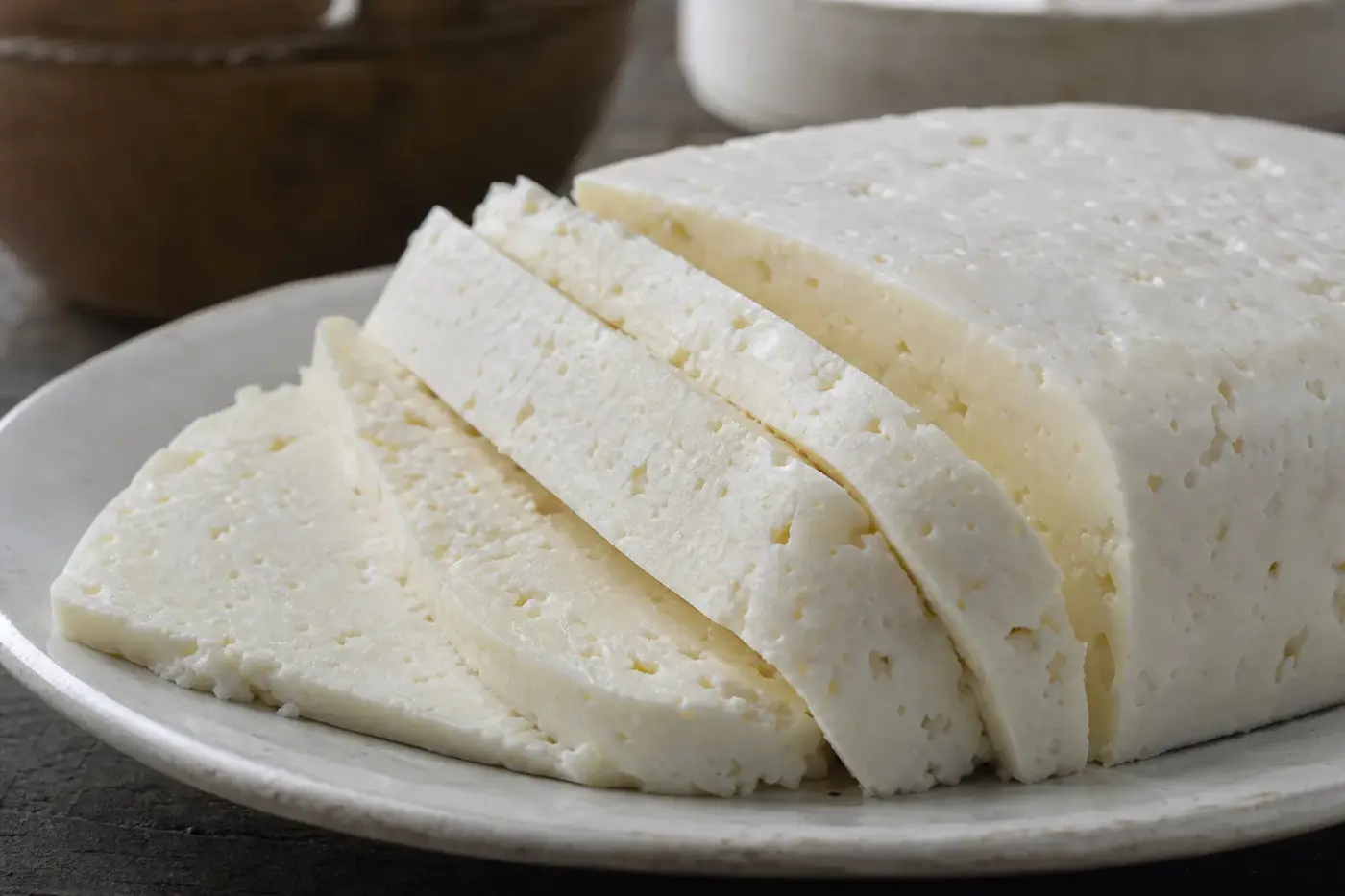
You can meet that landscape in a slice of Queso Turrialba. This fresh Costa Rican cow’s milk cheese is pale and mild, with enough body to hold its shape under your knife. There is a matured version, too, described by the denomination’s council.[2][6]
| What to know | The detail |
|---|---|
| Familiar name | Queso Turrialba |
| Name in the official registration appeal | QUESO TURRIALBA (DISEÑO).[3] |
| Registration authority | Costa Rica’s Registro de la Propiedad Industrial, Registro Nacional.[3] |
| Costa Rican protection record | Listed by the Registro Nacional as a registered denomination of origin in April 2018. Current register status: unconfirmed.[4] |
| Documented legal milestone | Registration appeal decision dated 13 August 2012, Voto 692-2012, expediente 2011-0898-TRA-PI.[3] |
| Where it comes from | Santa Cruz and adjoining parts of north-western Santa Teresita, Turrialba, Cartago, Costa Rica, according to the denomination’s council.[5] |
| Milk | Cow’s milk; raw and pasteurised versions described by the council.[2] |
| How fresh cheese looks | Whitish cream to creamy yellow, with no differentiated rind in the archived specification.[6] |
| Matured version | Natural maturation for 15 to 30 days, according to the council.[2] |
| Allergen | Milk.[2] |
Your first slice: milky, mild and gently salty
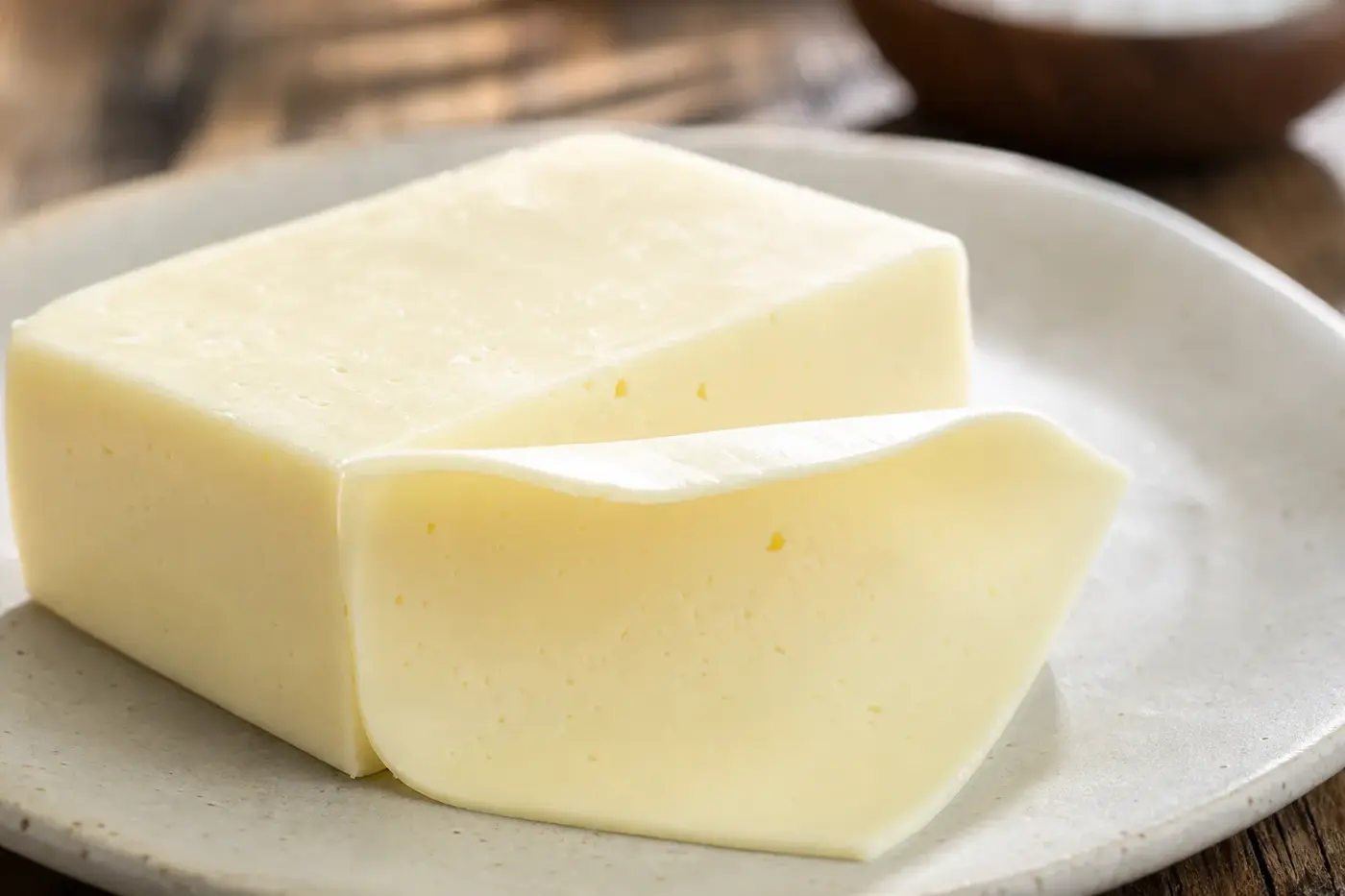
Cut a slice and the essentials are there: a few irregular openings, a mild milky flavour and a light touch of salt. The archived specification describes a slightly compact paste that cuts neatly rather than crumbling. Fresh cheese has no distinct rind, and its colour moves from cream towards yellow, partly depending on the dairy breed supplying the milk.[6]
The denomination’s council describes a gentle aroma recalling the milk itself. Its account covers both fresh cheese and maduro, the matured version. That small word deserves your attention when you choose a piece.[2]
Think moist and sliceable, rather than dry enough to grate or loose enough to scatter as curds. It is a useful texture at the table, though producers’ cheeses differ. Ask three questions: is it fresh or matured, how firm is it, and is it intended for slicing or cooking?[2][6]
Up the volcano’s slopes, into the family dairy
The milk has a short journey: it comes from the same area where the cheese is made. The denomination’s council places that territory in northern Turrialba, beginning at about 900 metres above sea level. It takes in Santa Cruz and part of north-western Santa Teresita.[5]
Behind the fields are families. In the council’s historical account, dairy holdings became smaller and more specialised over time, while family relationships carried cheesemaking knowledge between generations. The household, the farm and the local dairy are all part of this cheese’s story.[7]
The University of Costa Rica also connects Queso Turrialba with cows grazing the volcano’s slopes and inherited production practices.[1] To understand the landscape in your slice, start with local milk, pasture-based farming and the cheesemakers’ knowledge. Those offer a better explanation than attributing its flavour directly to volcanic minerals.
When Santa Cruz cheese took the train
By 1870, cheesemaking was established in Santa Cruz. That date appears in a University of Costa Rica account published in 2023, drawing on earlier agricultural research. It links the growth of local dairying with Spanish migration and the adaptation of cheesemaking knowledge to Costa Rican conditions.[1]
Then come those baskets and wooden boxes on the railway. The same account records the oral history of cheese travelling in containers marked with its place of origin. Buyers met the place through its cheese, and a locality became a recognisable cheese name.[1]
The council’s history takes you closer to the work: wooden moulds, cloth-lined forms and stones used for pressing. You can trace the effort of forming curd, draining whey and making cheese sturdy enough for its journey to market.[8] These are details of recorded history, not instructions for making cheese at home today.
A protected name, with dates worth untangling
The legal story has three distinct milestones. Costa Rica’s official appeal decision records an application submitted on 26 February 2008 for QUESO TURRIALBA (DISEÑO), followed by the registry’s decision admitting registration on 22 September 2011. The subsequent appeal decision came on 13 August 2012: three procedural events, not three interchangeable registration dates.[3]
In April 2018, the Registro Nacional listed QUESO TURRIALBA among Costa Rica’s registered denominations of origin. Its publication named the Asociación de Productores Agropecuarios de Santa Cruz de Turrialba as the holder.[4]
When you buy, distinguish between cheese supported by the denomination’s origin and production arrangements and cheese simply carrying familiar Turrialba wording. An undated document describes registered farms and dairies, production records, inspections and numbered labels. The present application of those arrangements remains uncertain.[9]
Read the full designation, not just the largest word on the pack. Costa Rica’s education ministry, for instance, publishes a purchasing description headed Queso tipo Turrialba (tierno). That describes a product category in its purchasing guidance, rather than establishing participation in the denomination.[10] For the broader distinctions, explore protected cheese names.
Follow the milk, then decide: fresh or maduro?
Queso Turrialba can start with raw or pasteurised cow’s milk. The council also describes a farm-made category, using whole milk from the maker’s own cows, predominantly family labour and manual production.[2]
The historical record follows the essential sequence: coagulate the milk, put the curd into moulds, press out whey and salt the cheese. Rennet is the preparation that coagulates the milk. Curd is the solid portion it produces; whey is the liquid separated from it.[8] You can follow those stages more closely in how cheese is made.
At the counter, ask explicitly for fresh cheese or maduro. The council describes maduro as naturally matured in local dairies for 15 to 30 days.[2] Firmness alone cannot reliably tell you which version you are being offered.
Shape varies, too. The archived specification describes squares and rectangles, with cylinders also possible, especially for matured cheese.[6] Shape tells you what you are looking at; producer identification and denomination documentation tell you more about where and how it was made.
Put the tortillas on, bring out the bread
A warm tortilla is a good place to begin. Costa Rica’s education ministry lists gallos, portions served with maize tortillas, among the uses of tender Turrialba-type cheese. The list also includes cheese eaten alone or with bread, plus soups, mixed dishes, pies, lasagne and breads.[10]
For your first taste, tuck slices into a warm tortilla or set them alongside bread. Simple accompaniments leave room for the cheese’s character. Both approaches follow the ministry’s documented uses, and neither requires you to audition an entire cheeseboard.[10]
For a larger meal, build on bread and cheese with accompaniments you already enjoy. Let your piece guide you: cut deliberate slices from a firmer cheese, or portion a softer one into a filling. If your dish depends on melting, ask the seller how that particular cheese behaves when cooked.[6]
Turrialba, queso fresco or queso blanco: look beyond the name
These names do different jobs. Queso Turrialba points to a cheese associated with a specific Costa Rican territory and a documented denomination. Queso fresco means “fresh cheese”, while queso blanco means “white cheese”: broader descriptions that reveal less about an individual cheese’s origin or method.
If you need a substitute, a similar-sounding name is only a starting point. Does the cheese slice cleanly, how salty is it, and how much liquid does it release? Ask what happens when you heat it, too, because those details will shape your finished dish.[6][10]
For tortillas or sandwiches, ask for a mild, pasteurised cow’s milk cheese that is moist but sliceable. Tell the cheesemonger what you plan to make and ask how the available cheese compares. Choose it for the job, while letting it keep its own name.
At the counter, get to know the maker
Start with three things: the maker, the place and the milk. Ask who made the cheese, where it was made, whether the milk was pasteurised and what supports any denomination claim. The published denomination arrangements envisage records connecting milk production, cheese manufacture and the labelled finished cheese.[9]
Next, look at the pack and read its instructions. Costa Rica’s education ministry’s purchasing guidance calls for clean, sealed packaging, an intact label and an agreeable dairy smell. It rejects opened packaging, missing expiry information, excessive whey, unpleasant odour and marked deterioration in texture.[10]
Buying loose cheese? Ask to see the original product information rather than relying on a handwritten name. The producer, the place of manufacture and the seller are separate details, so establish each one. Reading a cheese label helps you tell them apart.
Keep it cool, and keep the label
Fresh cheese needs refrigeration. The Costa Rican education ministry specifies storage at 2 to 5 °C for its tender Turrialba-type purchasing category.[10] Follow the storage and opening instructions on your actual pack, and buy an amount you can finish within them.
Protect your cheese from drying and unnecessary handling. Use clean utensils to portion it, return the remainder to refrigeration and keep the original label. That keeps the cheese’s identifying information with it once the pack is open.
Judge changes against the cheese you originally bought. The archived description distinguishes fresh, rindless cheese from intentionally matured cheese, a separate production choice.[6] For its purchasing category, the ministry identifies unpleasant odour and pronounced changes in texture as reasons for rejection.[10]
This page summarises published guidance from the official sources it cites. It is not medical advice. Guidance differs between countries and changes over time, so check the current source for where you live, and ask your doctor, midwife, pharmacist or dietitian about your own circumstances.
Milk treatment and pregnancy: follow UK guidance
A traditional appearance cannot tell you whether the milk was pasteurised. Read the label or ask, because the council describes both raw and pasteurised versions of Queso Turrialba.[2] Raw, thermised and pasteurised cheese explains the distinctions.
For pregnancy, the UK NHS guidance referenced in November 2026 advises against soft cheeses made with unpasteurised milk unless cooked until steaming hot. It allows hard cheeses made with unpasteurised milk, such as Cheddar.[11]
The NHS also says cheese cooked until steaming hot can be eaten during pregnancy. Follow its current category-specific guidance. If you are unsure where a particular fresh cheese fits, discuss it with your midwife or another appropriate healthcare professional.[11]
Questions people ask
What does Queso Turrialba taste like?
Fresh Queso Turrialba has a mild, lightly salty, milky flavour. It is moist and firm enough to slice cleanly.
Where is Queso Turrialba made?
The denomination’s territory is in northern Turrialba, Costa Rica, beginning at about 900 metres above sea level. It covers Santa Cruz and part of north western Santa Teresita.
What is the difference between fresh Queso Turrialba and maduro?
Fresh Queso Turrialba has no distinct rind. Maduro is naturally matured in local dairies for 15 to 30 days.
Is Queso Turrialba made with pasteurised milk?
The denomination’s council describes versions made with both raw and pasteurised cow’s milk. Check the label or ask the seller which milk was used.
Can I eat Queso Turrialba during pregnancy?
The NHS advises against soft cheeses made with unpasteurised milk during pregnancy unless they are cooked until steaming hot. See the current NHS pregnancy guidance for its advice on different categories of cheese.
Sources
- University of Costa Rica, Queso Turrialba: Tradición y sabor a un territorio y su gente, 21 April 2023.
- Asociación Consejo Regulador Denominación de Origen Queso Turrialba, Características del Queso Turrialba, undated website text.
- Costa Rica, Tribunal Registral Administrativo, Resolución definitiva, Voto 692-2012, expediente 2011-0898-TRA-PI, 13 August 2012.
- Registro Nacional de Costa Rica, Materia Registral, year 14, number 1, April 2018, discussion of geographical indications and denominations of origin.
- Asociación Consejo Regulador Denominación de Origen Queso Turrialba, Localización de la DO Queso Turrialba, undated website text.
- Pliego de Condiciones de la Denominación de Origen del Queso Turrialba, archived annex in Contribución al establecimiento del sistema de denominaciones de origen de productos agroalimentarios en Costa Rica, doctoral thesis, archived version. Its identity with the currently operative specification has not been established.
- Asociación Consejo Regulador Denominación de Origen Queso Turrialba, Historia de la zona de la DO, undated website text citing earlier historical studies.
- Asociación Consejo Regulador Denominación de Origen Queso Turrialba, Historia de la receta del Queso Turrialba, undated website text recording historical accounts.
- Denominación de Origen Queso Turrialba: Normativa de uso y administración y de su consejo regulador, undated document hosted by FAO, especially articles 24 to 28.
- Ministerio de Educación Pública de Costa Rica, Fichero de alimentos permitidos, entry “Queso tipo Turrialba (tierno)”, page 106, retrieved edition.
- NHS, Foods to avoid in pregnancy, live guidance retrieved November 2026, section “Cheese, milk and other dairy”.
Researched through Costa Rican official records, denomination documents, public cultural and educational material, and UK NHS guidance, with historical evidence distinguished from current legal verification.
Last checked: November 2026
Last checked November 2026.
The editors suggest you read next
American Cheese: The Processed Slice Explained
Watch a slice of American cheese soften over your burger.