Cheese for Babies and Children
A little mild Cheddar falls from the grater onto your baby's plate.
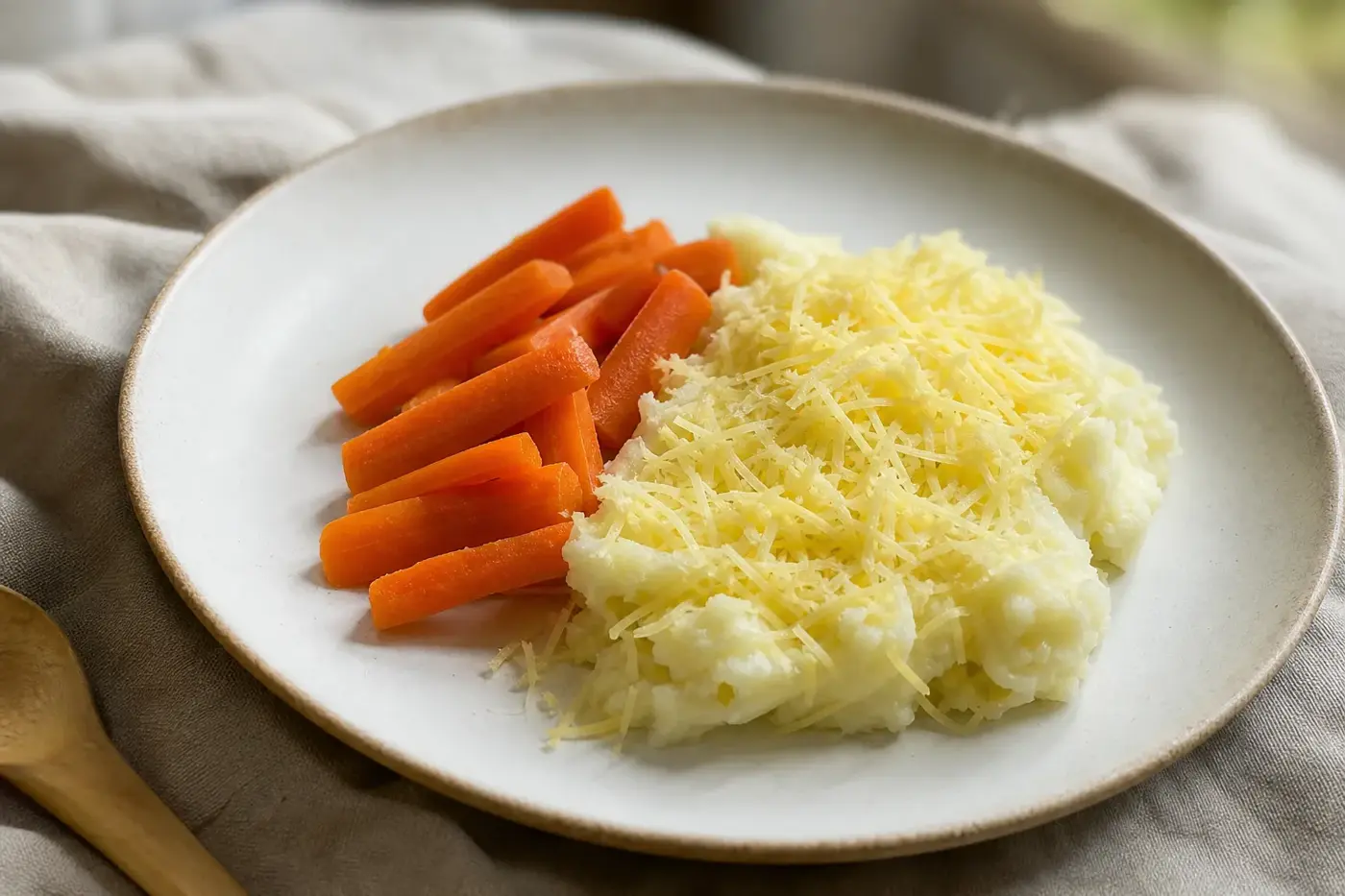
A little mild Cheddar falls from the grater onto your baby's plate. It is a small debut, with a surprisingly attentive audience. Cheese lovers do like to mark an occasion.
UK NHS guidance allows pasteurised full-fat cheese from around six months, with mild hard cheese, cottage cheese and cream cheese among the practical first choices. Before you serve it, consider four things: milk treatment, cheese type, salt content and the shape on the plate. [6]
From that first grating to the family table
Around six months is the starting point in the NHS guidance below, for UK families as of November 2026. Let your child set the pace, keeping food safety and allergy precautions in mind along the way.
| Age | What you can offer | What to bear in mind |
|---|---|---|
| Around six months | Small amounts of pasteurised full-fat cheese alongside other first foods. | Introduce milk as an allergen; prepare cheese for your baby's eating skills. [3,5,11] |
| Seven to twelve months | Varied meals, with cheese as one part. | Breast milk or first infant formula remains the main drink throughout the first year. [3] |
| One to two years | Full-fat cheese in varied family meals. | Begin with small portions, supervise eating and watch salt across the day. [1,5,8] |
| From two years | Gradually consider reduced-fat dairy if eating and growth are going well. | Keep meals varied and food shapes suited to your child's abilities. [1,5] |
Your baby's readiness matters as much as the calendar. The NHS says they should be able to stay sitting with a steady head, coordinate eyes, hands and mouth, and swallow food rather than push it out. These signs usually arrive together around six months. If your baby was premature, ask your health visitor or GP when to begin. [3]
Start simply with mild Cheddar and soft favourites
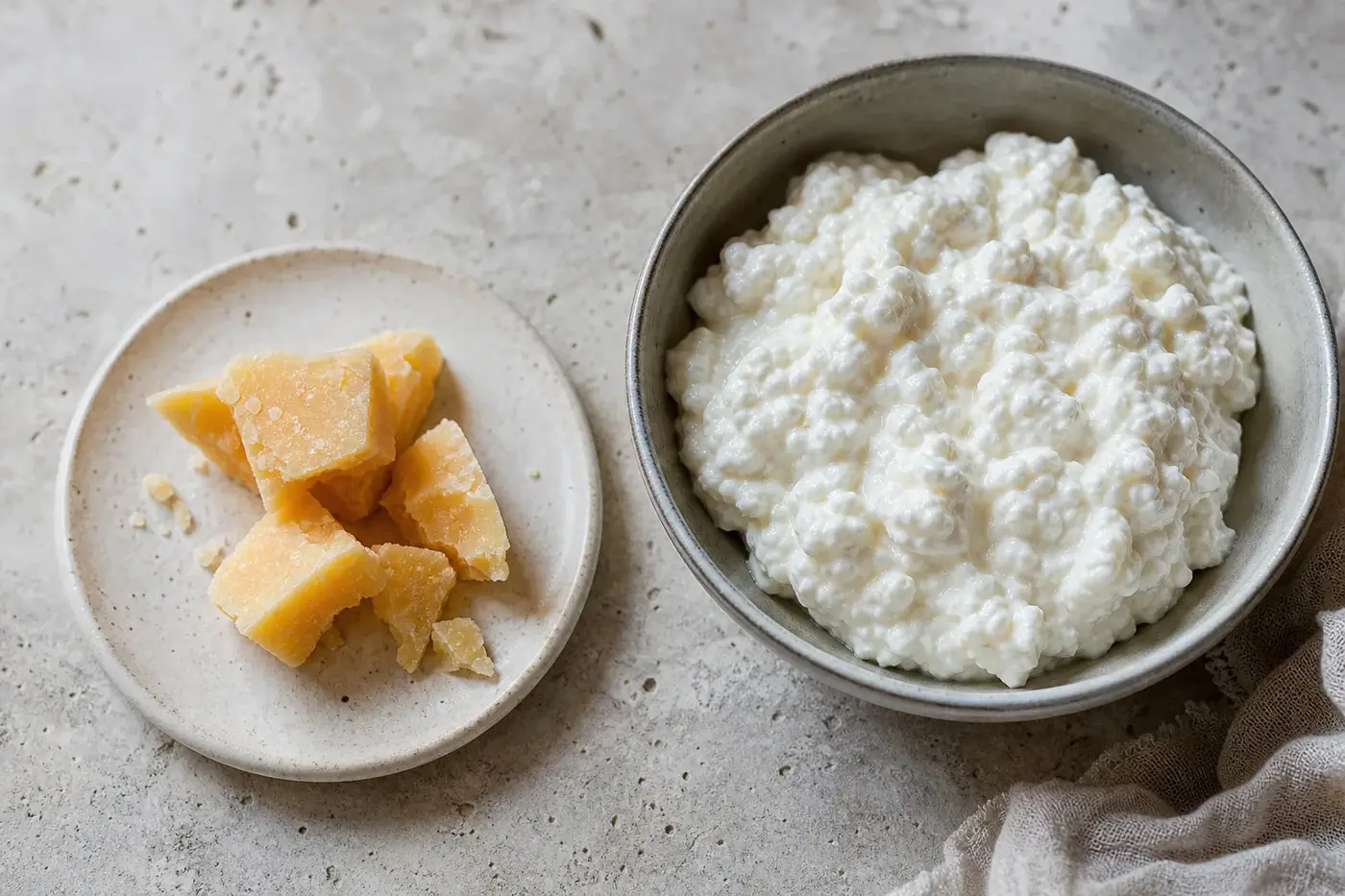
Mild Cheddar has a place on that first plate. NHS guidance specifically includes pasteurised mild hard cheese, alongside pasteurised cottage cheese and cream cheese. Choose full-fat versions for children under two, and compare salt on the nutrition panel. Read the actual pack: cheeses of the same style do not necessarily use the same milk treatment. [2,6]
Pasteurisation is a heat treatment used to kill bacteria. If the terms on the packet leave you unsure, raw, thermised and pasteurised cheese explains the milk treatments. The guide to reading a cheese label helps you separate milk information, ingredients and the nutrition panel. [6]
Take a closer look at soft cheeses
A pasteurised label does not make every cheese suitable. The NHS recommends pasteurised cheese for babies and young children, but advises against these soft cheeses because of Listeria risk, unless they are used in a cooked recipe: [2]
- Mould-ripened soft cheeses, including Brie and Camembert styles.
- Mould-ripened soft goats' cheeses, such as ripened chèvre.
- Soft blue cheeses.
That advice includes pasteurised mould-ripened soft cheese. Pasteurised cream cheese and cottage cheese, by contrast, are among the NHS's suitable examples. You need to consider both the cheese category and the milk treatment: these restrictions address the risk of Listeria bacteria. [2]
Cooking is the NHS exception, but simply melting the cheese is not enough. Cook the dish thoroughly until steaming hot all the way through, then let it cool and check its temperature before feeding your child. Melted or merely warmed cheese may not be hot throughout. Reheat food only once and discard half-eaten portions, as NHS advice recommends. [2,7]
Grate it, or cut short, narrow strips
Grated cheese or short, narrow strips are the NHS's specific suggestions. A firm chunk or round piece is not a substitute. Even when you have chosen a cheese suitable for your child's age, its size, shape and texture still need your attention. [5]
Keep your child alert, safely seated upright and supervised throughout eating. Encourage chewing and swallowing without rushing, as the NHS recommends. The same routine matters at toddler snack time and at meals. Giving your child cheese while they wander about removes that seated, supervised setting. [5]
Give the rest of the plate the same care. NHS guidance recommends steaming or simmering firm vegetables to soften them, and cutting bread into narrow strips. For very young children, firm fruit may need grating, mashing or cooking. Prepare everything for your child's abilities, not just the cheese. [5]
Count salt across the whole day
Cheese shares the day's salt allowance with bread, sauces and everything else your child eats. Babies' kidneys are not fully developed and cannot process much salt, according to the NHS, so keep amounts small and compare labels. These UK maximum daily intakes, as of November 2026, cover all food. [8]
| Age | Maximum daily salt, UK NHS |
|---|---|
| Under one year | Less than 1 g |
| One to three years | No more than 2 g |
| Four to six years | No more than 3 g |
| Seven to ten years | No more than 5 g |
| Eleven years and over | No more than 6 g |
These are upper limits, not targets. The NHS advises against adding salt to a baby's food or cooking water, and against using stock cubes and gravy. If you are cooking a family dish, set aside your baby's portion before adding salty seasonings. A modest cheese topping can accompany vegetables and starch without several other salty ingredients. [2,8]
Full-fat first, without rushing the change
Until age two, the NHS recommends full-fat cheese, yoghurt and fromage frais: young children need their fat and energy for growth. From two, you can introduce lower-fat dairy gradually if your child is eating well and growing well. Those conditions matter more than the birthday alone. You do not need to change every dairy food at once. [1]
Milk in a cup follows different guidance. NHS advice allows pasteurised whole cows' milk as a main drink from one year; consult current NHS guidance before introducing semi-skimmed milk as a main drink. Skimmed and 1% milk should not be main drinks before five. Cheese can therefore arrive earlier than cows' milk as a main drink. [6]
Make room for cheese, and everything else
Cheese works nicely as an ingredient or one part of a meal. NHS guidance includes it as a source of calcium, protein and vitamin A, alongside recommendations for fruit, vegetables, starchy foods and other protein sources. Leave room for iron-containing foods such as meat, beans or lentils, rather than relying on cheese at every meal. [1,4]
Start with a small serving and offer more if your child is still hungry. Follow hunger and fullness cues rather than making babies finish a portion, as the NHS advises. Babies under twelve months do not need snacks: offer extra milk feeds if they are hungry between meals. From one year, small strips of cheese appear among NHS snack suggestions. [7,9,10]
Once your baby is used to varied solid foods, NHS meal ideas include cauliflower cheese with cooked pasta, cottage cheese dip and cheese on toast fingers. Choose suitable pasteurised cheese, prepare vegetables and bread for your child's abilities, and cool cooked food before serving. Introduce any new allergens separately before putting them together in a meal. [2,5,7,10,11]
Take care with that first taste of milk protein
Cheese made from animal milk introduces milk protein, so that first taste needs care. From around six months, the NHS recommends introducing foods that can trigger allergy one at a time and in small amounts. This makes a reaction easier to spot. Once your baby tolerates a food, keep it in their usual diet. [9,11,12]
Speak to your GP or health visitor before introducing allergenic foods if your baby has eczema or an existing food allergy. The NHS gives the same advice if there is a family history of food allergy, eczema, asthma or hay fever. If your child has a diagnosed milk allergy, follow their existing care plan rather than trying cheese at home. [11,12]
NHS-listed reactions include an itchy rash, worsening eczema, vomiting, tummy pain, diarrhoea, coughing or wheezing. Symptoms often appear within minutes or up to two hours, although some milk allergy reactions can take up to three days. Contact your GP or health visitor about a suspected reaction. Seek advice before offering that food again. [11,12]
Know the signs that mean calling 999
Call 999 in the UK for sudden swelling of the lips, mouth, throat or tongue, breathing difficulty, blue, grey or pale skin, collapse, or a child becoming limp, floppy or unusually unresponsive. NHS advice identifies these as possible signs of anaphylaxis, a life-threatening allergic reaction. [13]
The NHS says to use an adrenaline auto-injector if available and call 999, saying you suspect anaphylaxis. Lie your child down and raise their legs if possible; if breathing is difficult, raise their shoulders or help them sit up slowly. Do not let them stand or walk. If symptoms have not improved after five minutes, use a second injector if one is available. [13]
This page summarises published guidance from the official sources it cites. It is not medical advice. Guidance differs between countries and changes over time, so check the current source for where you live, and ask your doctor, midwife, pharmacist or dietitian about your own circumstances.
Understand milk allergy and lactose intolerance
Milk allergy concerns milk proteins; lactose intolerance means difficulty digesting lactose, the milk sugar. NHS guidance lists bloating, wind, tummy pain and diarrhoea among intolerance symptoms, while food allergy can be life-threatening. If symptoms recur, ask a GP to assess them rather than trying to tell the conditions apart from a single meal. [12,14]
Low-lactose or lactose-free dairy cheese is not a substitute for someone with milk allergy. Reducing milk sugar does not remove milk protein. Cambridge University Hospitals also lists cows', goats' and sheep's milk cheeses as unsuitable for its milk-allergic patients, and buffalo milk cheese is not a safe substitute either. Follow your allergy team's advice on alternatives and any supervised reintroduction. [12]
For more on the distinction, see cheese allergy versus lactose intolerance. If your question is about how much lactose cheese contains, turn to lactose in cheese.
Get support when feeding needs extra care
If feeding is difficult, growth is a concern, symptoms recur after dairy, or you need to remove milk foods, speak to a health visitor or GP. They can arrange dietetic advice where needed. The NHS cautions against cutting out a major food group without support, because children may miss nutrients. [11,12,14]
Questions people ask
When can babies start eating cheese?
The NHS says babies can have pasteurised full fat cheese from around six months. It also says babies should be able to sit with a steady head, coordinate their eyes, hands and mouth, and swallow food. See NHS guidance [3,6].
Which cheeses can babies eat?
The NHS includes pasteurised mild hard cheese, cottage cheese and cream cheese among its suitable examples. It advises against mould ripened soft cheeses and soft blue cheeses unless they are used in a thoroughly cooked recipe. See NHS guidance [2,6].
How should I prepare cheese for a baby?
The NHS advises serving cheese grated or in short, narrow strips. It also recommends keeping children seated upright and supervised while they eat. See NHS guidance [5].
How much salt can a baby have?
The NHS says babies under one should have less than 1 g of salt a day across all their food. It advises against adding salt to a baby's food or cooking water, and against using stock cubes and gravy. See NHS guidance [2,8].
What if my baby has a reaction to cheese?
The NHS advises contacting a GP or health visitor about a suspected reaction and seeking advice before offering the food again. It says to call 999 for signs including breathing difficulty or sudden swelling of the lips, mouth, throat or tongue. See NHS guidance [11,12,13].
Sources
- NHS, What to feed young children. Live guidance, version retrieved November 2026. Sections on cheese, varied diets and fats.
- NHS, Foods to avoid giving babies and young children. Live guidance, version retrieved November 2026. Sections on salt and cheeses.
- NHS, Your baby's first solid foods. Live guidance, version retrieved November 2026. Readiness, premature babies, milk feeds and progression through the first year.
- NHS Best Start in Life, 6 months. Live guidance, version retrieved November 2026. Food groups, iron-containing foods and dairy.
- NHS Best Start in Life, Preparing food safely. Live guidance, version retrieved November 2026. Cheese preparation, accompanying foods, seating and supervision.
- NHS, Dairy and alternatives in your diet. Reviewed 11 December 2023; live version retrieved November 2026. Cheese, pasteurisation and children's milk drinks.
- NHS Best Start in Life, Storing and reheating food. Live guidance, version retrieved November 2026. Heating, cooling, portions and leftovers.
- NHS, Salt in your diet. Reviewed 17 April 2023; live version retrieved November 2026. Maximum recommended salt intake table and label comparisons.
- NHS, Help your baby enjoy new foods. Live guidance, version retrieved November 2026. Small allergen introductions, appetite cues and snacks.
- NHS, Baby and toddler meal ideas. Reviewed 21 December 2022; live version retrieved November 2026. Meals after first foods and snacks from twelve months.
- NHS, Food allergies in babies and young children. Reviewed 22 October 2024; live version retrieved November 2026. Introduction, risk factors, symptoms and professional advice.
- Cambridge University Hospitals NHS Foundation Trust, Milk allergy. Live patient information, version retrieved November 2026. Milk proteins, symptoms, unsuitable animal milks and dietary support.
- NHS, Anaphylaxis. Reviewed 21 June 2023; live version retrieved November 2026. Emergency symptoms and action.
- NHS, Lactose intolerance. Live guidance, version retrieved November 2026. Digestive symptoms, distinction from allergy and seeking assessment.
- Food Standards Agency, Alerts. Live alert listing, retrieved November 2026. Editorial recall screening source.
This piece was researched by comparing published NHS feeding, food safety and allergy guidance, with NHS specialist patient information used to clarify milk allergy.
Last checked: November 2026
Last checked November 2026.
The editors suggest you read next
Cheese and Health: What the Evidence Says
Put cheese and butter side by side on your plate.