Chevrotin
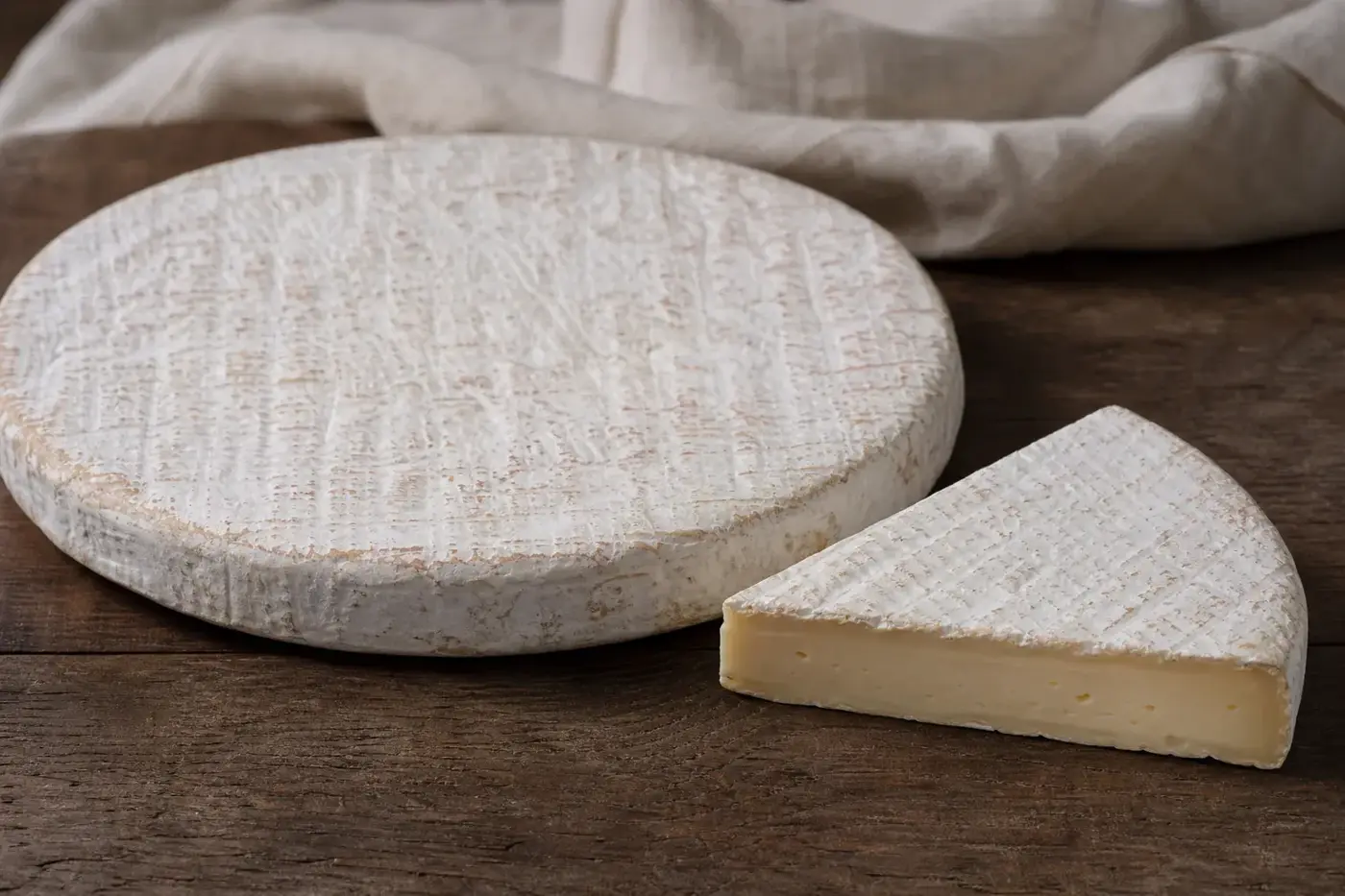
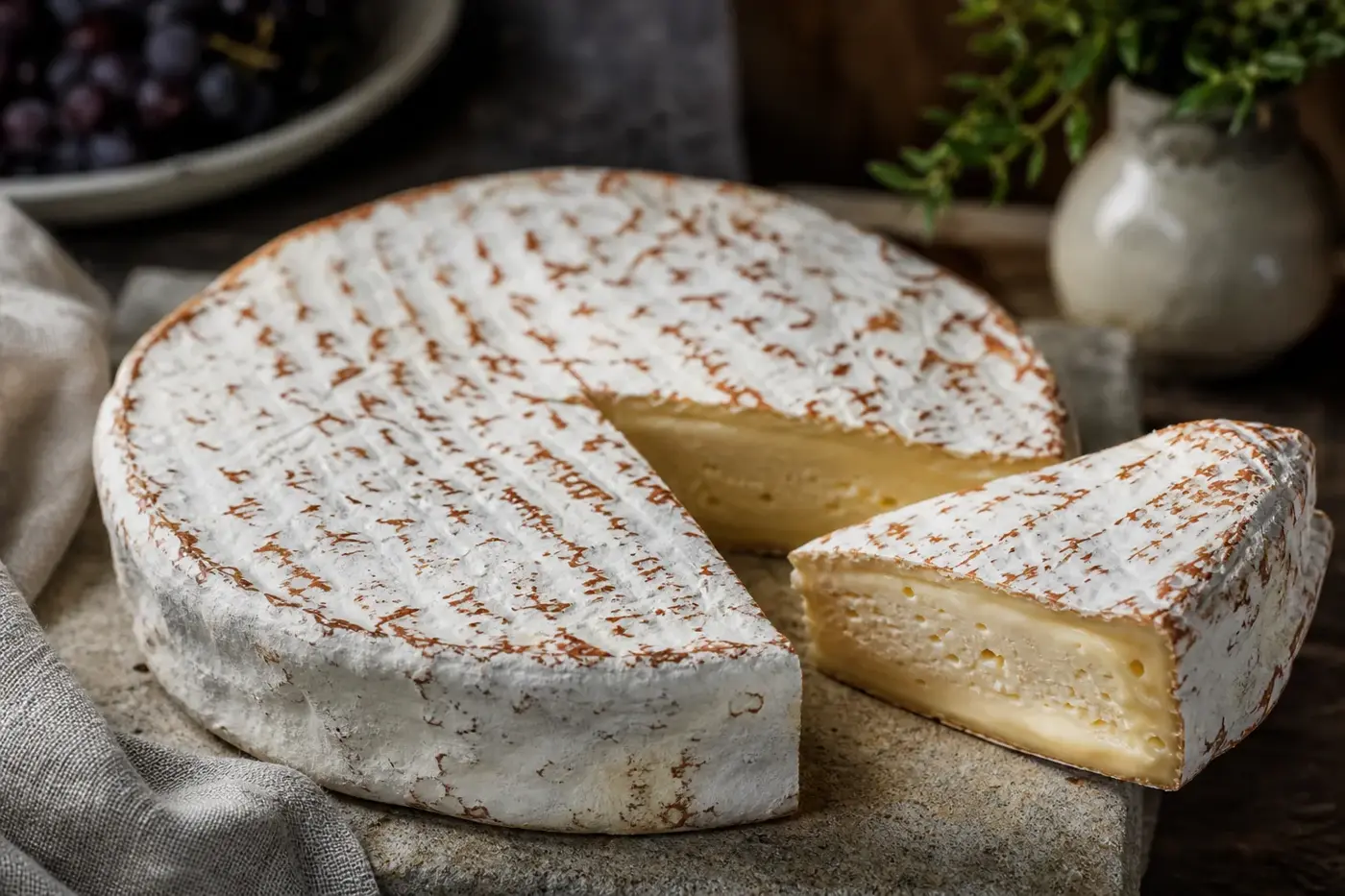
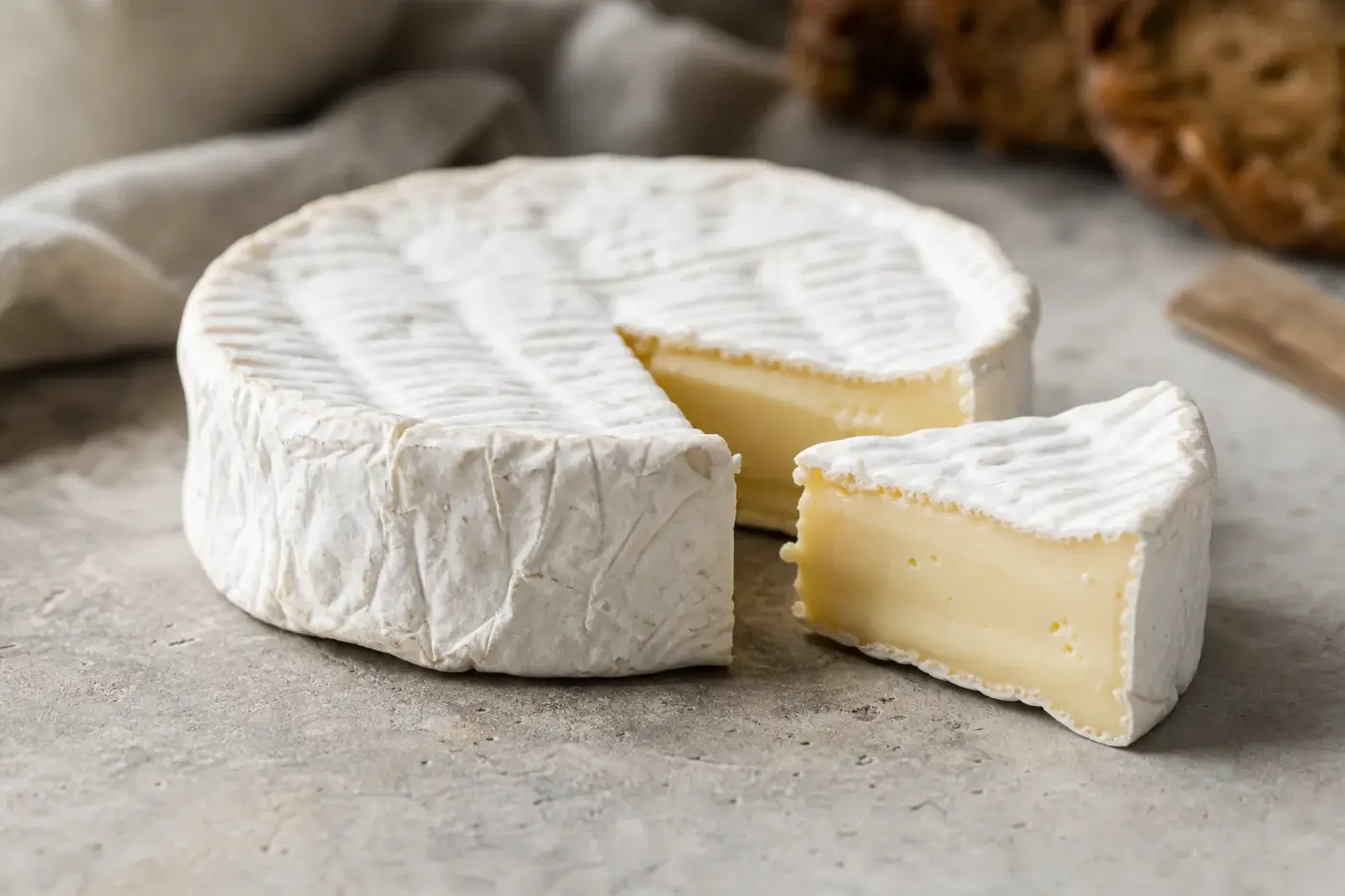
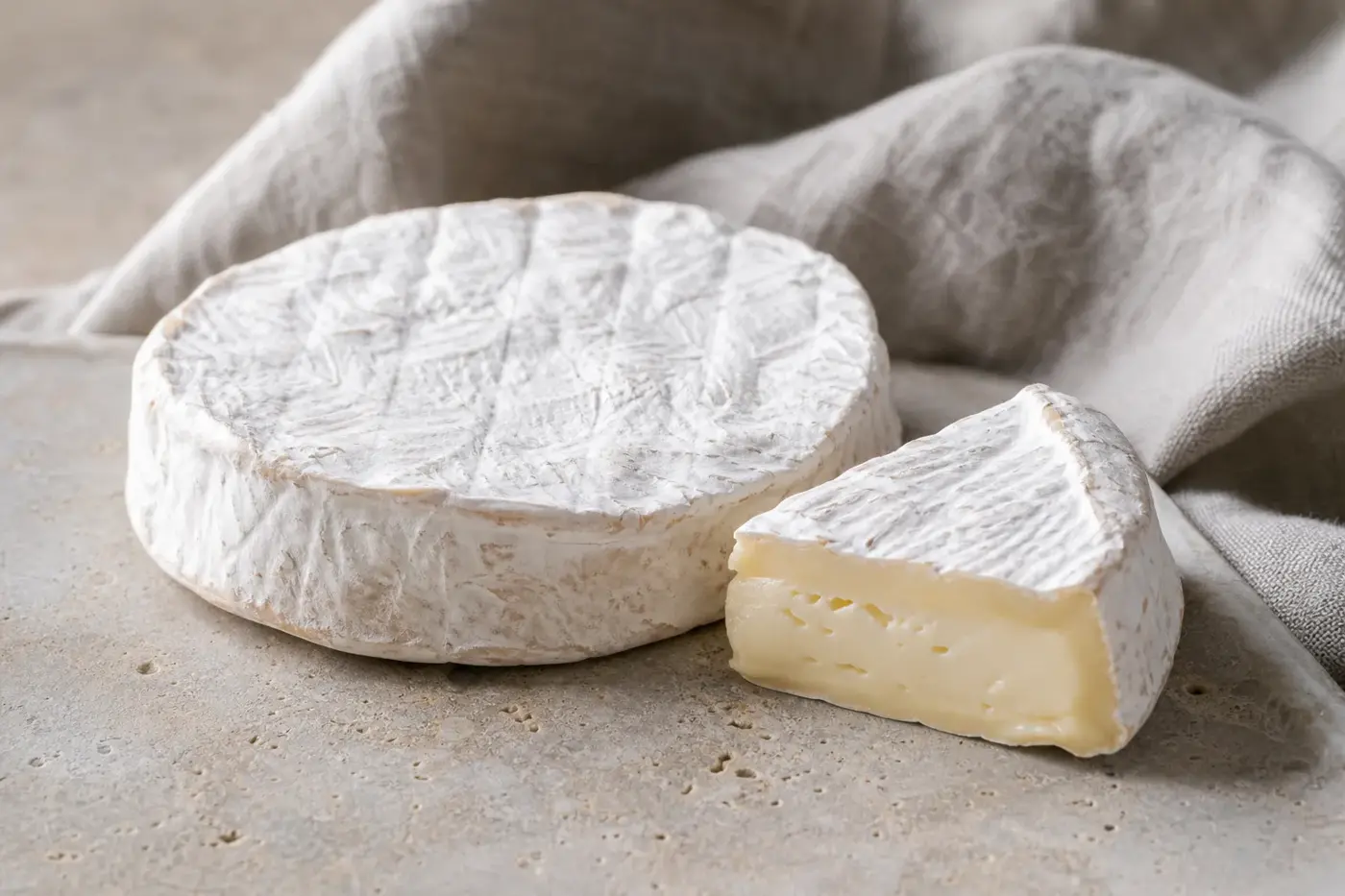
Cut through the fine white bloom and thin, pinkish rind, and Chevrotin gives way to a supple centre that bends rather than crumbles.
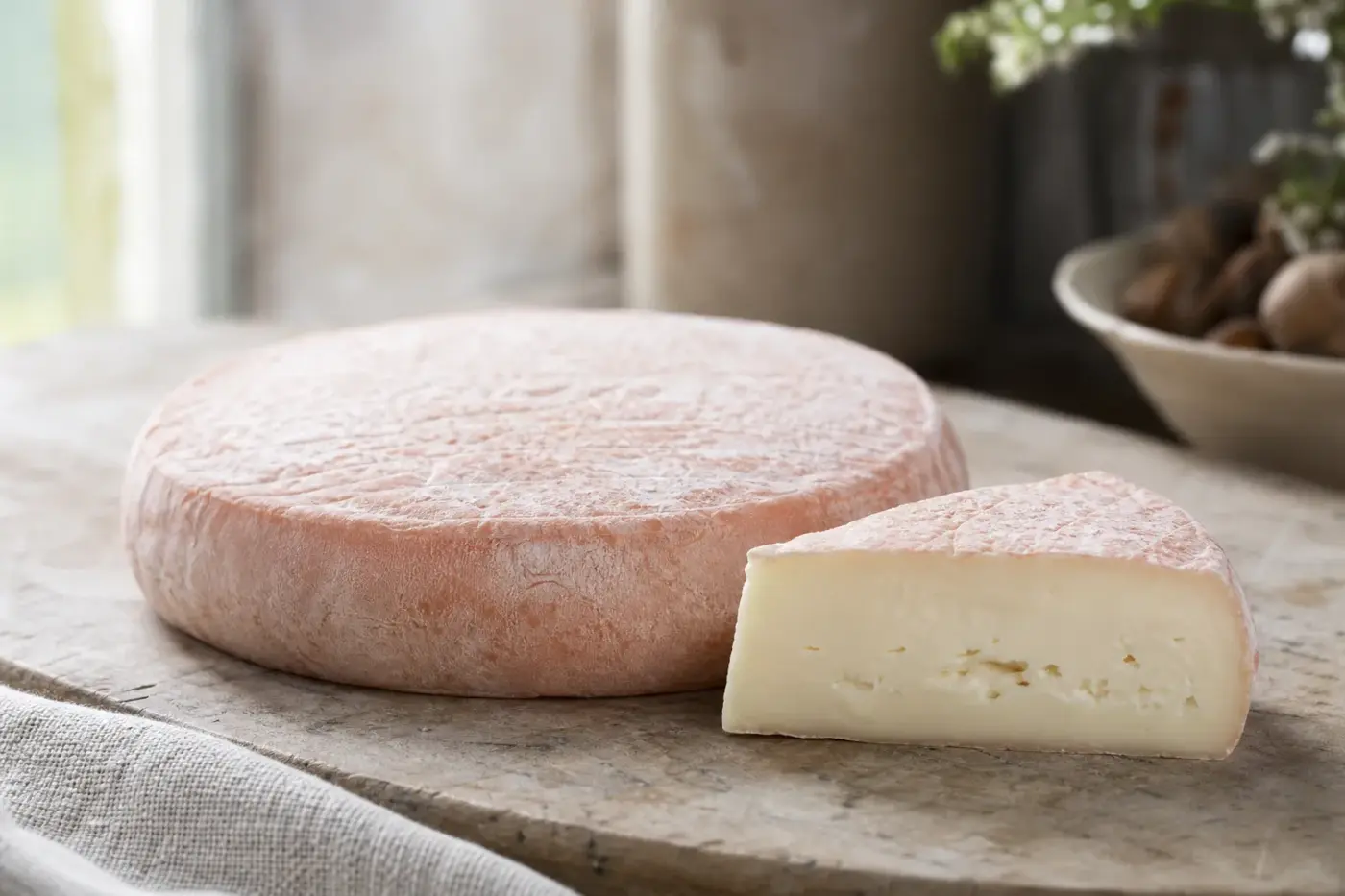
Cut through the fine white bloom and thin, pinkish rind, and Chevrotin gives way to a supple centre that bends rather than crumbles. This small Alpine goat cheese begins with a Savoyard farmhouse maker, working by hand with raw milk from a single farm's herd. Mountain grazing and a delicate goat flavour bring its home to your plate. [1,4,7]
Follow the cheese into the mountains
To find Chevrotin's home, look to defined parts of the Chablais, Mont-Blanc and Aravis massifs in Haute-Savoie, and the Bauges massif in Savoie. Milk production, cheesemaking and maturation must all happen within this area. The mountain connection runs right through, from herd to maturing room. [1]
This was once cheese that helped pay the rent. The designation's published account points to eighteenth-century texts and leases naming Chevrotin among cheeses supplied as rent. It also describes goats kept alongside cattle to feed mountain households, giving you a foothold in its history rather than an exact invention date. [2]
The producers' syndicate describes a farming year turning between grazing and winter hay. While mountain meadows are mown, goats use higher pastures and browse steep ground that is difficult to cultivate. Their place in this landscape is practical, not merely picturesque. [1,5]
One farm, one herd, a protected name
Every Chevrotin starts with one farm's herd. The maker uses their own milk, never a pool of supplies from several farms, and works manually with raw, whole milk. Maturation can stay on the farm or pass to an affineur, the specialist who tends cheese as it ripens. [4,9]
Those grazing goats are part of the rules, too. INAO requires at least 150 days of grazing, while the syndicate describes pasture grass and hay as the foundation of their diet. It also explains the local roles of Alpine and Savoie goats. [1,6]
French AOC recognition arrived in 2002, followed by EU PDO registration in 2005. If you see AOP, that is the French abbreviation for PDO. For help finding your way through the initials, turn to protected names explained. [3,7]
From raw milk to a little round
Rennet starts the transformation. Its enzymes coagulate the milk into curd, which the maker cuts into small grains to release whey, the liquid separating from the solids. Cloth-lined moulds gather the curd into Chevrotin's shallow, round shape. [4]
Next come turning, weights to finish drainage, and salt, applied dry or in brine as the syndicate describes. Chevrotin is an uncooked pressed cheese: pressing shapes and drains it. Unlike a cooked-curd Alpine cheese, its cut curd is not cooked. [4]
The young cheeses first dry on spruce boards. The maker then washes each one with clear water before further maturation. France's agriculture ministry describes three to six weeks of maturation. [4,9]
Look beneath that white coat
Look closely and you can make out two layers: a fine white covering over a thin, pinkish rind. The EU product description identifies that bloom as principally Geotrichum, a ripening organism. Washing and later surface growth both shape the finished rind, so a washed cheese can wear white too. [2,7]
Spruce has two separate jobs in Chevrotin's life. Boards support early drying, while a thin spruce false bottom sits inside each cheese's individual wrapping. The approved amendment's published explanation allows other supports after drying: spruce is required for particular uses, not throughout maturation. [1,2]
A supple centre, a gentle goat flavour
Inside, the ivory to cream-coloured paste bends rather than crumbles. INAO describes it as supple and unctuous, faintly salty and recognisably goaty. You may also find a firmer centre and small openings, both part of the official description. [1]
Published dairy-sector tasting notes place cellar and goat aromas at the rind, with yoghurt and whey in the paste. Think gentle lactic tang rather than aggressive sharpness. The balance shifts from one cheese to another, giving you good reason to pay attention to both rind and centre. [8]
Choose by season, age and appetite
In the syndicate's farming year, winter hay gives way to summer grazing. France's agriculture ministry links Chevrotin's aromatic character to mountain pasture plants. That tells you something about the herd's changing diet, not that you should find a particular flower in every mouthful. [5,9]
Age offers another useful clue. An industry tasting guide describes a delicate, supple cheese at three weeks, a more yielding centre around four weeks, and stronger, more animal notes with longer maturation. Ask about age as well as maker, depending on whether you fancy restraint or a more pronounced rind. [10]
Chevrotin and Reblochon: get to know both
The decisive difference is the milk: goat for Chevrotin, cow for Reblochon. Both belong to the Savoyard Alpine tradition. Chevrotin's pressed, uncooked paste and washed rind help explain the family resemblance. [4,16]
Choose Chevrotin for its own qualities: exclusively farmhouse production, a small format and that goat-milk character. It is not Reblochon wearing a different name badge. On your cheese board, taste each separately first, then compare their rinds and centres. [1,16]
Find your favourite, then keep it well
Look for the registered name Chevrotin and the EU PDO symbol on French packaging. The producers' syndicate shows an individual wrapper, a spruce base and a translucent casein identification disc applied during production. Farms have different packaging artwork, so colour alone tells you little. [7]
Ask your cheesemonger who made it, how far it has matured and whether the centre is still relatively firm. The oldest cheese is not automatically the one you will enjoy most; this is lunch, not an antiques competition. Use the published tasting stages to start that conversation. [10]
Keep Chevrotin in its original wrapping, as the syndicate recommends. UK NHS guidance says your fridge should be at 5 °C or below, and ready-to-eat foods used within two days of opening unless the packaging says otherwise. Follow storage instructions and the use-by date; how to store cheese at home covers the wider routine. [12,13,14]
Bring it to the table, rind and all
The syndicate suggests taking Chevrotin out of the fridge before eating, with about 30 minutes as its shortest suggested interval. Set out only what you intend to serve. UK NHS guidance says to eat ready-to-eat foods within four hours of removing them from the fridge, including preparation and table time. [12,13]
Cut wedges so everyone gets both centre and rind. The tourism project's Chevrotin guidance leaves eating or removing the rind to your taste. Remove the wrapping and wooden base before serving, and follow any specific instructions supplied with your cheese. [15,16]
Bread, a little contrast and a glass alongside
Start simply, with bread and a plain piece of cheese. Published industry suggestions include warm rustic bread, sourdough, radishes and spring onions. Keep the accompaniments modest so you can notice the supple paste and gentle goat flavour, then explore the contrasts you enjoy. [8,10]
The producers' tasting material suggests Savoie wine; the French goat-cheese industry lists white or red Savoie wine. A dry white makes a useful starting point, in a small amount with still water alongside. For an alcohol-free choice, water keeps your attention on the cheese, while unsweetened apple juice offers a fruit contrast. [13,16]
Alcoholic suggestions are for adults of legal drinking age. During pregnancy, the NHS advises that the safest approach is not to drink alcohol. If you are driving, taking medicines that interact with alcohol or recovering from alcohol dependence, do not drink; the broader cheese and wine pairing guide explores matching principles and alternatives. [11]
This page summarises published guidance from the official sources it cites. It is not medical advice. Guidance differs between countries and changes over time, so check the current source for where you live, and ask your doctor, midwife, pharmacist or dietitian about your own circumstances.
At higher risk? Start with UK guidance
Chevrotin is made from unpasteurised milk and has a soft, ripened paste. During pregnancy, consult current NHS advice on soft cheeses and cooking before you serve it. [1,11]
The NHS identifies newborn babies, people with weakened immunity and older people as being at greater risk of serious listeriosis, with risk increasing with age. Keep chilled foods cold, respect use-by dates and follow storage instructions. If you are in one of these groups, check official guidance and discuss individual food choices with your healthcare team. [12]
The UK guidance reference here is November 2026. Consult the NHS sources below for current advice, and read listeria and cheese safety for the underlying risk.
Questions people ask
What is Chevrotin made from?
Chevrotin is made by hand from raw, whole goat milk. Each farmhouse maker uses milk from their own herd.
Where is Chevrotin made?
Chevrotin is made in defined parts of Savoie and Haute Savoie in France. Milk production, cheesemaking and maturation must all take place within this area.
What does Chevrotin taste like?
Chevrotin has a supple centre and a delicate goat flavour. A tasting guide describes it as delicate at three weeks, with stronger, more animal notes after longer maturation.
Can you eat the rind of Chevrotin?
The page says eating or removing the rind is a matter of personal taste. Remove the wrapping and wooden base before serving.
Can you eat Chevrotin during pregnancy?
The page says to consult current NHS pregnancy guidance on soft cheeses and cooking before serving Chevrotin. Check the NHS guidance and discuss your own circumstances with your doctor or midwife.
Sources
-
INAO, “Chevrotin”. Official product record and linked regulatory materials, undated webpage, accessed November 2026. Product description, geographical area, grazing requirement and listed 2015 amendment. Official product record.
-
European Commission, “Publication of an amendment application pursuant to Article 50(2)(a) of Regulation (EU) No 1151/2012”, Chevrotin. Official Journal C 468, 31 December 2014, including the single document and explanation of proposed amendments subsequently identified by INAO as approved in 2015. Official Journal document.
-
Defra, “Chevrotin”. Official GB protected food name register entry, published 4 January 2021, accessed November 2026. GB register entry.
-
Syndicat interprofessionnel du Chevrotin, “La fabrication”. Undated industry account, accessed November 2026. The syndicate represents the designation's producers and affineurs. Production account.
-
Syndicat interprofessionnel du Chevrotin, “Histoire et territoire du Chevrotin”. Undated industry account, accessed November 2026. Farming and territory.
-
Syndicat interprofessionnel du Chevrotin, “Les chèvres”. Undated industry account, accessed November 2026. Goats and feeding.
-
Syndicat interprofessionnel du Chevrotin, “Les spécificités du Chevrotin”. Undated industry account, accessed November 2026. Appearance, identification and recognition dates.
-
Pas sage Pas de fromage, “Chevrotin AOP”. Undated dairy-sector promotional tasting account, accessed November 2026. Its sensory descriptions and bread suggestion are attributed rather than presented as a site tasting. Published tasting notes.
-
French Ministry of Agriculture, “Le Chevrotin AOP, un fromage issu des pâturages savoyards”. 18 August 2021. Used for its production and maturation account, not its conflation of recognition dates. Ministry account.
-
Le chèvre, “Chevrotin AOP”, tasting guide. Undated goat-cheese industry account, accessed November 2026. Maturation descriptions and seasonal accompaniments.
-
NHS, “Foods to avoid in pregnancy”. Current online guidance accessed November 2026. Pregnancy guidance.
-
NHS, “Listeriosis”. Reviewed 10 November 2023, accessed November 2026. Higher-risk groups and food handling guidance.
-
Syndicat interprofessionnel du Chevrotin, “Conseils de dégustation”. Collection of advice dated 17 October 2019, accessed November 2026. Serving, wrapping and wine suggestions.
-
Food Standards Agency, “How to chill, freeze and defrost food safely”. Published 18 December 2017, current online text accessed November 2026; stated scope England, Northern Ireland and Wales. Official chilling guidance.
-
Turismo del Gusto, “Chevrotin”. Undated product information from the publicly funded cross-border tourism project, accessed November 2026. Used only for its rind preference guidance. Chevrotin information.
-
Le chèvre, “Chevrotin AOP”, product profile. Undated goat-cheese industry account, accessed November 2026. Used for the Reblochon comparison, wedge cutting and Savoie wine suggestions. Product profile.
-
Food Standards Agency, “Alerts”. Live official alert index accessed November 2026 for the editorial recall check. Official alerts.
This piece was researched from official product and register records, published designation materials, attributed industry descriptions and UK public health guidance.
Last checked: November 2026
Last checked November 2026.
The editors suggest you read next