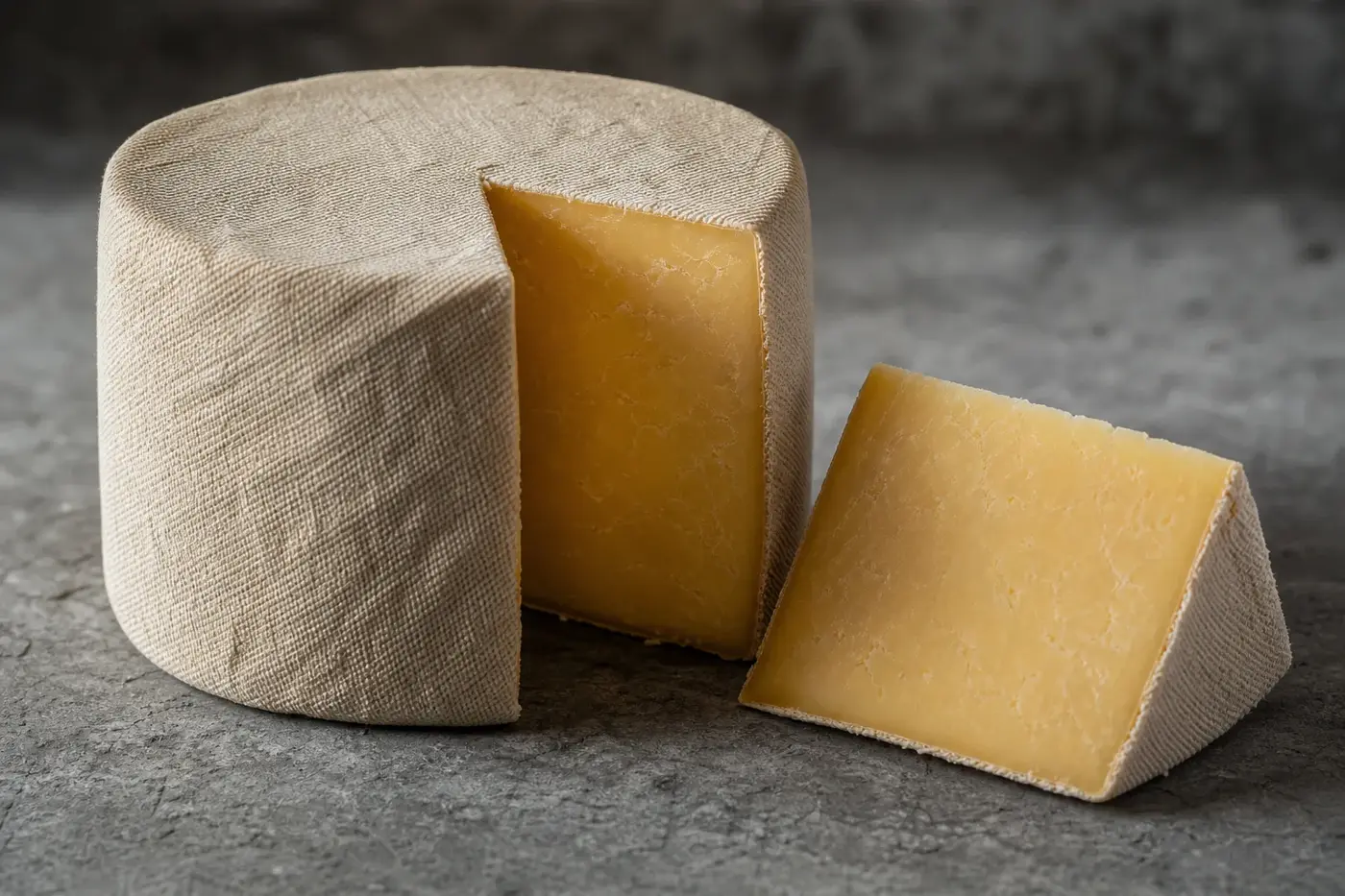
Clava Brie
Picture the circular prehistoric burial cairns at Balnuaran of Clava, then turn your attention to a round cheese made a few miles away.
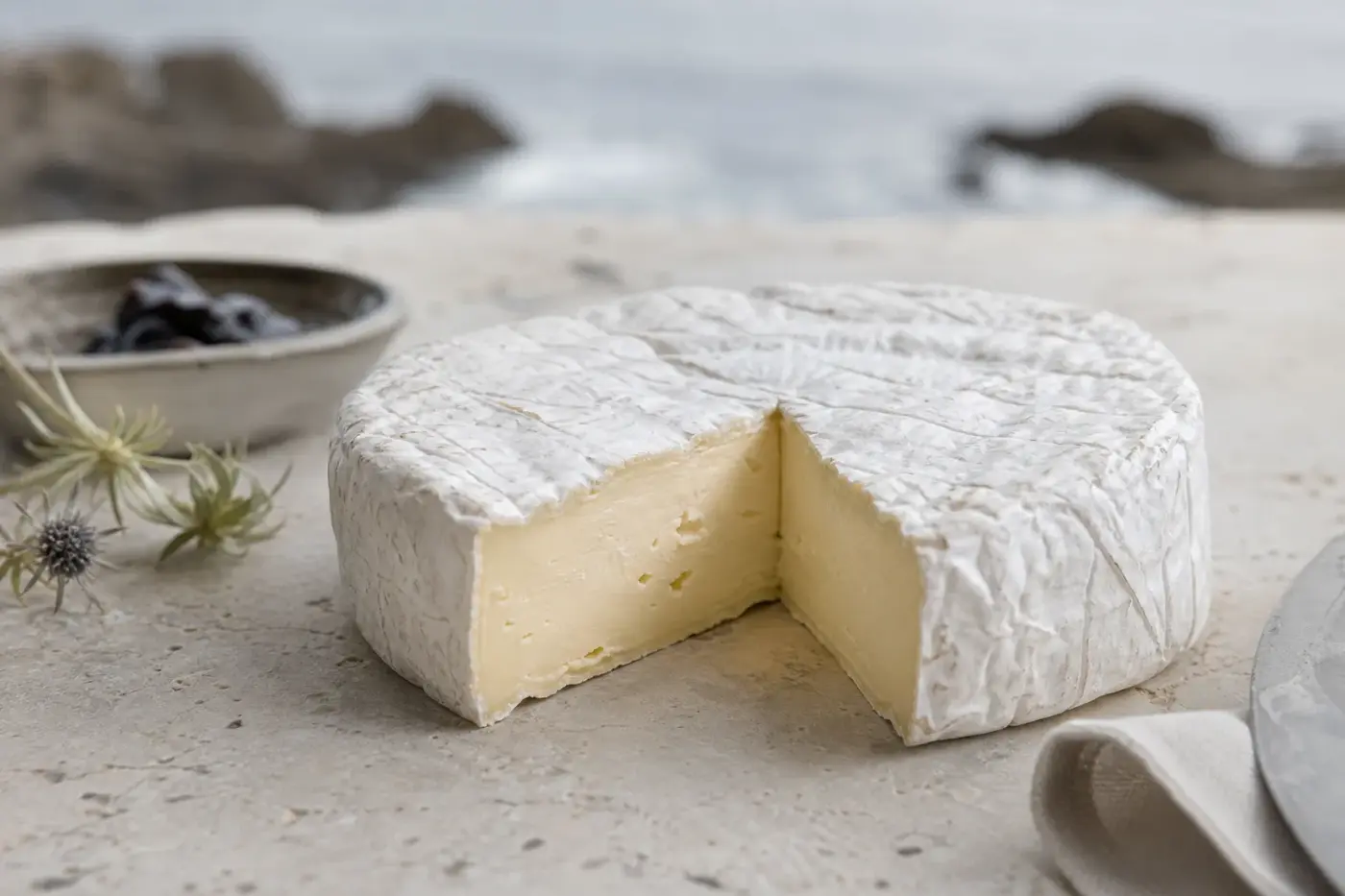
Picture the circular prehistoric burial cairns at Balnuaran of Clava, then turn your attention to a round cheese made a few miles away. The echo is deliberate: those stones gave Clava Brie its name and shape. At Connage Highland Dairy in Ardersier beside the Moray Firth, this Scottish Brie-style cow’s milk cheese develops a soft white mould rind and a centre that grows increasingly silky as it ripens.[1][2]
| What you might like to know | The details |
|---|---|
| Name | Clava Brie.[1] |
| Registered name and register ID | Not specified here |
| Maker | Connage Highland Dairy.[1] |
| Place | Ardersier, Inverness-shire, Scotland.[2] |
| Milk | Pasteurised cow’s milk.[1][2] |
| Where the milk comes from | The dairy’s own farm herd.[2] |
| Organic certification | Not specified here |
| Vegetarian status | Declared vegetarian by Connage.[1] |
| Rind | Soft white mould rind.[1][9] |
| Typical maturation period | Not specified here |
| Named cultures and coagulant | Not specified here |
A little Highland history in every round
Clava’s name takes you into the landscape around the farm. Connage names the prehistoric cairns at Balnuaran of Clava as its inspiration, with the cheese’s round form echoing their circular structure. A local landmark supplies both the name and the shape.[1]
At Ardersier, in Inverness-shire, the dairy and milk-producing farm belong to the same family operation. Connage describes clover-filled grazing around the dairy and along the shores of the Moray Firth. The cows, their care and the milk supply are directly connected to the cheesemaking. This coastal setting has a job beyond looking good on a wrapper.[2]
Cheesemaking began in January 2006, according to the dairy’s account. Dunlop, Gouda and Crowdie sit alongside Clava in the wider Connage range, each taking the farm’s milk in a different direction. With Clava, you get the soft-cheese route: a white rind and a paste that softens as it ripens.[3][4]
Meet the herd behind your cheese
The milk comes from Connage’s own herd, mainly Holstein Friesians, with Jersey crosses and Norwegian Reds. The dairy describes its cows grazing the surrounding pastures. Those are the milk-supply details recorded here in November 2026.[2]
For Clava, Connage specifies pasteurised milk and declares the cheese vegetarian.[1] These tell you different things: pasteurisation describes the milk treatment, while the vegetarian declaration concerns suitability for that diet. Read your particular pack’s label alongside the maker’s description. That gives you the information for the cheese you are actually taking home.
Connage also attributes part of its milk’s character to the coastal environment and grazing.[3] It is another thread connecting the finished cheese to the way the farm is managed and the land around it. If you would like to untangle the different milk treatments, see raw milk, thermised and pasteurised cheese.
Follow the curd, one careful ladle at a time
Clava begins with delicate curd, transferred into moulds by hand. Connage then matures the cheese in a temperature-controlled store and wraps each one individually.[1] Picture that ladling: curd is the solid part of the milk that becomes cheese. Whey is the liquid separated from it during cheesemaking.[9]
In the general cheesemaking sequence, starter cultures help develop acidity, while rennet helps the milk set into curd. Draining separates the whey from that curd; ripening develops the finished cheese’s character. Food Standards Scotland’s commissioned review describes these stages across cheese types, noting that production processes vary.[9] You can follow the broader journey in how cheese is made.
At the counter, ask how yielding this particular Clava is, and when the cheesemonger recommends eating it within the labelled dates. The condition of the round tells you more than an age number alone. Say whether you fancy a firmer portion or something softer for spreading. That gives the seller a useful starting point for finding your preferred texture.
Look beneath that soft white rind
That pale surface growth belongs there. Clava is a white mould-ripened cheese, and its soft mould coat is also called a “bloomy rind”. The interior is the paste. Take a moment to look at each separately before tasting them together.[1][9]
Connage describes Clava as smooth, becoming silky and soft as it ripens.[1] Let the piece in front of you guide how you serve it. Bread gives a yielding wedge somewhere to spread; a little clear space on your plate lets you try the paste alone first. You do not need an elaborate arrangement to appreciate either.
Take your time with Clava’s earthy side
Earthy and fairly strong are the qualities Connage picks out in its tasting description.[1] If you expect every white-rind cheese to be mild, Clava gives you a reason to reconsider. Texture matters just as much in the dairy’s description. Ask about flavour and softness together when the shop selects your piece.
Start with a little paste, then try a bite with rind included. Notice the aroma first, how readily the paste yields, and whether the finish feels gentle or persistent. You are getting to know your cheese, not sitting a tasting exam.
If you make a note, choose words that mean something to you. There is no need to borrow somebody else’s tasting vocabulary. What matters is what your own piece suggests, and whether you enjoy it.
Bring Clava to the table with care
Keep your serving plan simple and its time out of refrigeration short. For this page’s November 2026 guidance, Food Standards Scotland recommends a fridge temperature between 0 °C and 5 °C (32 °F to 41 °F). It also advises returning food promptly to refrigeration and eating ready-to-eat food within four hours of taking it out.[5][6]
- Start with your pack. Follow the storage instructions and use-by date. Take out only what you expect to eat, leaving the rest chilled rather than bringing your whole supply to the table.[6][7]
- Like it less chilled? Keep the wait brief. Keep the cheese away from direct heat and serve promptly. The Scottish agency’s four-hour maximum includes the time before the cheese reaches your table.[5][6]
- Give each wedge some rind and centre. Cut wedges through the centre of a round. If you bought a wedge, cut smaller portions across it rather than scooping out only the soft middle. Use a clean knife and plate.[6]
Make room for bread, fruit and a sip alongside
Plain bread or a lightly toasted oatcake is a good place to begin, with slices of pear or apple alongside. Look for something crisp and relatively quiet that leaves room for the cheese. Keep preserves in a separate dish, so everyone can choose their own sweetness. Chutney need not chair the entire meeting.
For an alcohol-free drink, try sparkling water, unsweetened black tea or a modest glass of apple juice diluted with sparkling water. Taste the cheese first, then take a sip and decide whether you enjoy the contrast. Water is especially useful when you want to concentrate on Clava’s own aroma and finish without adding another flavour.
One drink and one accompaniment are plenty to start with. A small selection makes it easier to notice what each brings to your cheese. Give Clava a little attention before you decide whether the plate needs anything more.
Find Clava a good spot in your fridge
Refrigerate Clava according to its pack instructions. Food Standards Scotland advises using a thermometer to check your fridge, leaving room for air to circulate and returning food as quickly as possible.[5] Keep the cheese covered in wrapping or a container intended for food contact.
Before reaching for cling film, read its packaging. The agency notes that some films are unsuitable for fatty foods such as cheese.[8] Choose suitable wrapping rather than assuming any film will do.
Once you open the cheese, follow the pack’s instructions. Food Standards Scotland’s listeria guidance says to use opened foods within two days unless the packaging says otherwise.[6] If you are buying a cut portion, ask the cheesemonger to include the storage and date information. You will then have it to hand at home.
Keep the original label with any remaining cheese and mark when you opened it. At your next meal, the dates and instructions will be there, with no guesswork required. For more on wrapping and refrigeration, see how to store cheese at home.
This page summarises published guidance from the official sources it cites. It is not medical advice. Guidance differs between countries and changes over time, so check the current source for where you live, and ask your doctor, midwife, pharmacist or dietitian about your own circumstances.
Let texture guide serving, and the label guide safety
Texture helps you decide how to serve Clava; the label and storage history help you decide whether to serve it. Food Standards Scotland says you must not eat food after its use-by date, even if it looks and smells normal.[7] If your pack is subject to a recall, follow the official recall instructions.[10]
For help with unexpected mould, see mould on cheese. Keep the packaging and batch details if you need to report a problem.
Questions people ask
Where is Clava Brie made?
Connage Highland Dairy makes it in Ardersier, Inverness-shire, Scotland. The dairy is beside the Moray Firth.
What does Clava Brie taste like?
Connage describes its flavour as earthy and fairly strong. Its smooth paste becomes silky and soft as it ripens.
Is Clava Brie vegetarian and made with pasteurised milk?
Connage declares Clava Brie vegetarian and says it is made with pasteurised cow’s milk. Check the label on your particular pack alongside the maker’s description.
Can you eat the rind of Clava Brie?
The soft white mould rind belongs on the cheese. The page suggests trying the paste on its own, then tasting a bite that includes the rind.
How should I store Clava Brie?
Food Standards Scotland advises keeping the fridge between 0 °C and 5 °C and using opened foods within two days unless the packaging says otherwise. Follow the pack’s storage instructions and use by date, and see the agency’s household and listeria guidance.
Sources
[1] Connage Highland Dairy. Connage Clava Brie. Undated product information, retrieved November 2026. Maker’s account of the cheese, milk treatment, production, formats and sensory character. Product page.
[2] Connage Highland Dairy. About Us. Undated current website edition, retrieved November 2026. Farm, location, milk supply, herd composition and grazing. About the dairy.
[3] Connage Highland Dairy. Wholesale. Undated current website edition, retrieved November 2026. Own-farm milk, cheese range and the dairy’s explanation of its coastal setting. Wholesale information.
[4] Connage Highland Dairy. About Us. Undated earlier website edition, retrieved November 2026. States that cheesemaking began in January 2006. Earlier website account.
[5] Food Standards Scotland. Chilling. Current online guidance, retrieved November 2026. Household refrigeration, thermometer checks and food display. Chilling guidance.
[6] Food Standards Scotland. What is listeria? Current online guidance, retrieved November 2026. Ready-to-eat food handling, refrigeration, opened-food guidance and time outside refrigeration. Listeria guidance.
[7] Food Standards Scotland. Use-by and best-before dates. Current online guidance, retrieved November 2026. Date labels, storage conditions and the limits of appearance and smell. Date-label guidance.
[8] Food Standards Scotland. Safe food storage. Current online guidance, retrieved November 2026. Label instructions, containers and suitability of cling film for fatty foods. Food-storage guidance.
[9] Food Standards Scotland. Improved Food Safety Guidance for Scottish Artisan Cheesemakers: A Literature Review. Final report, version 4.7, 20 November 2018. General cheesemaking sequence and illustrative cheese-type process descriptions. Commissioned literature review.
[10] Food Standards Agency. Alerts. Live official alert index, retrieved November 2026. Official alerts.
This piece combines desk research into Connage’s published product and farming accounts with Scottish official guidance for household handling.
Last checked: November 2026
Last checked November 2026.
The editors suggest you read next
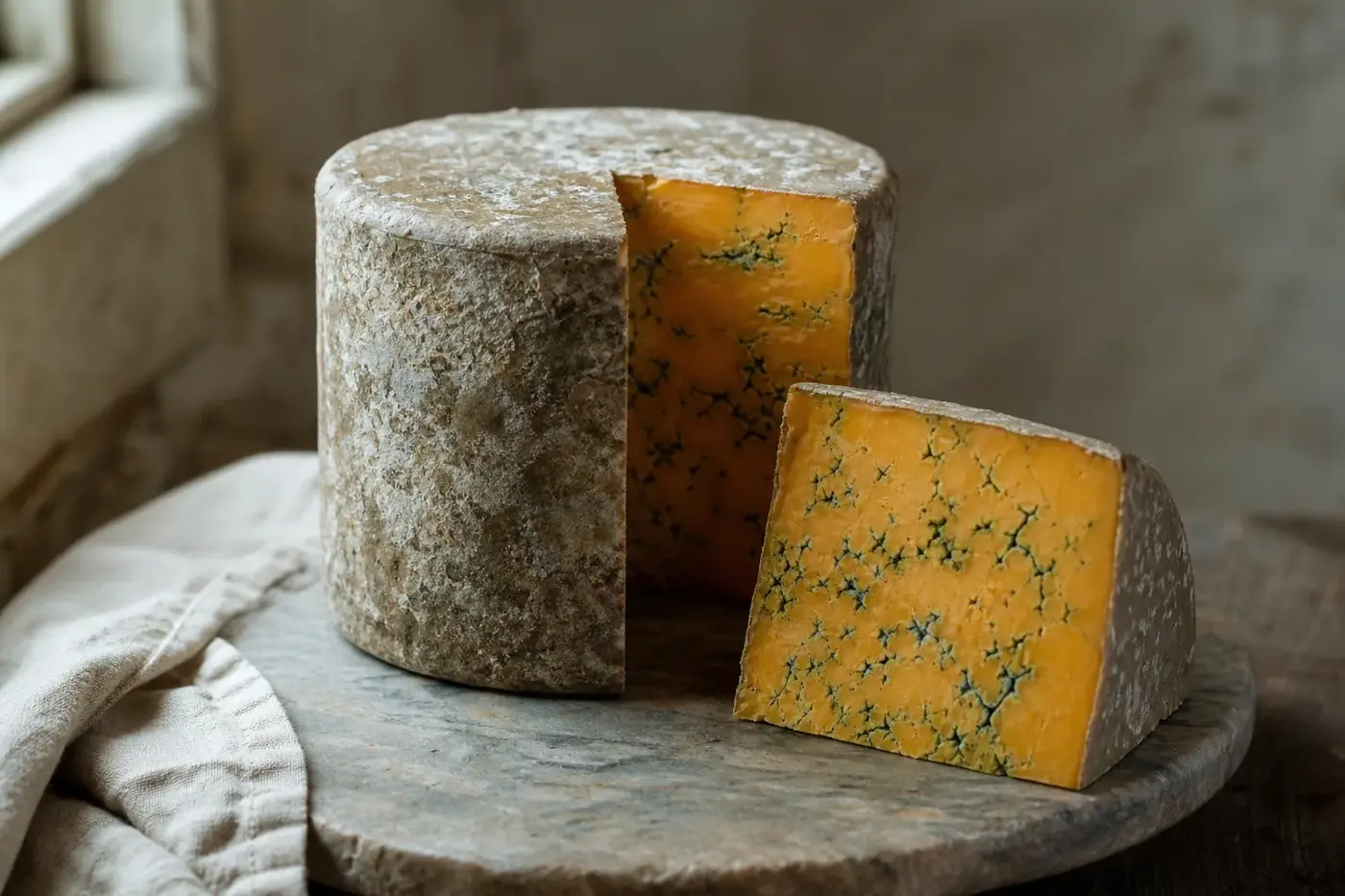
Shropshire Blue
Cut into Shropshire Blue and you get quite a colour scheme: orange crossed by blue-green veins.