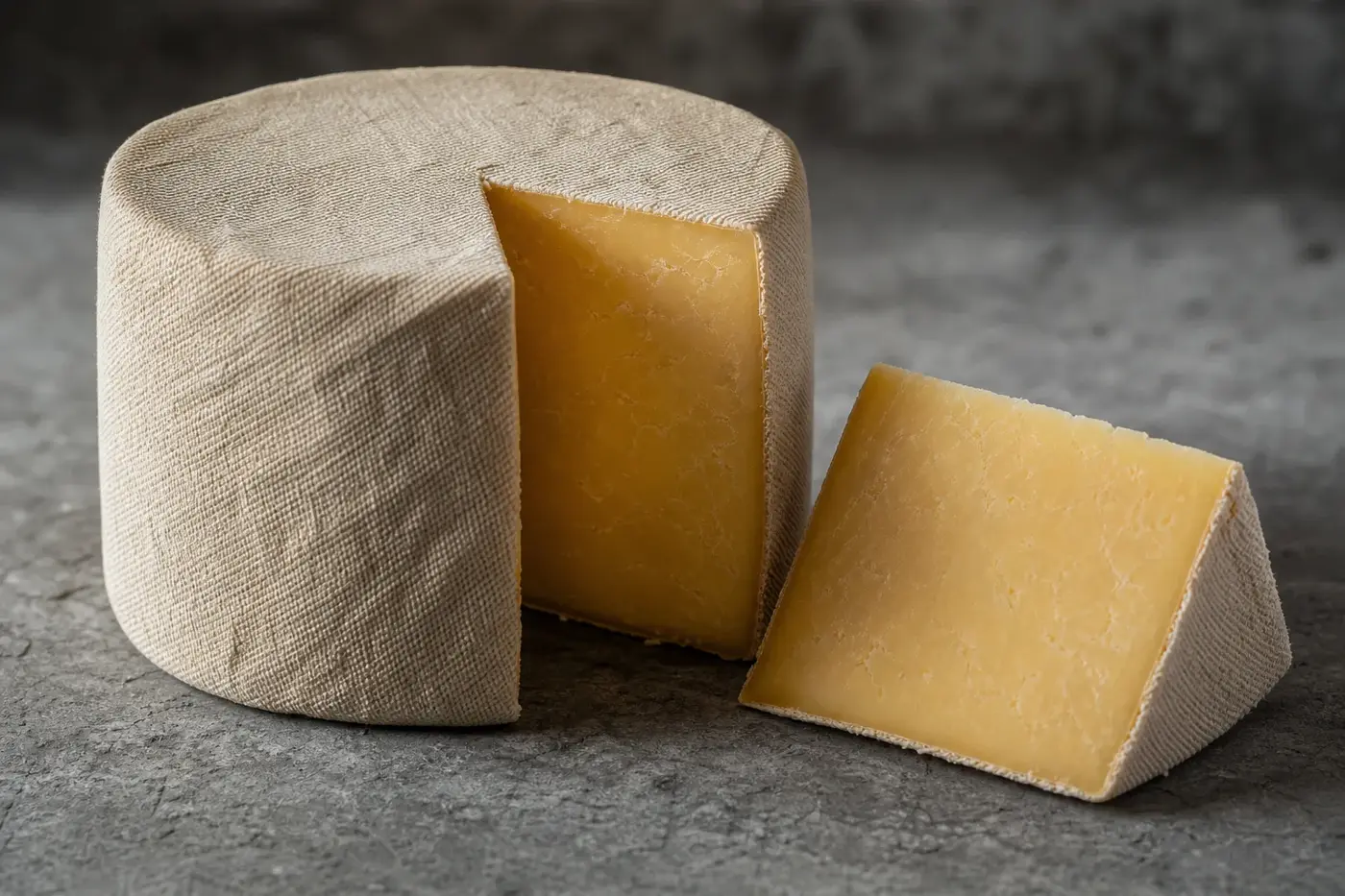
Connage Gouda
Picture clover-rich pasture beside the Moray Firth, with a Highland dairy near Inverness turning its own cows’ milk into a Dutch favourite.
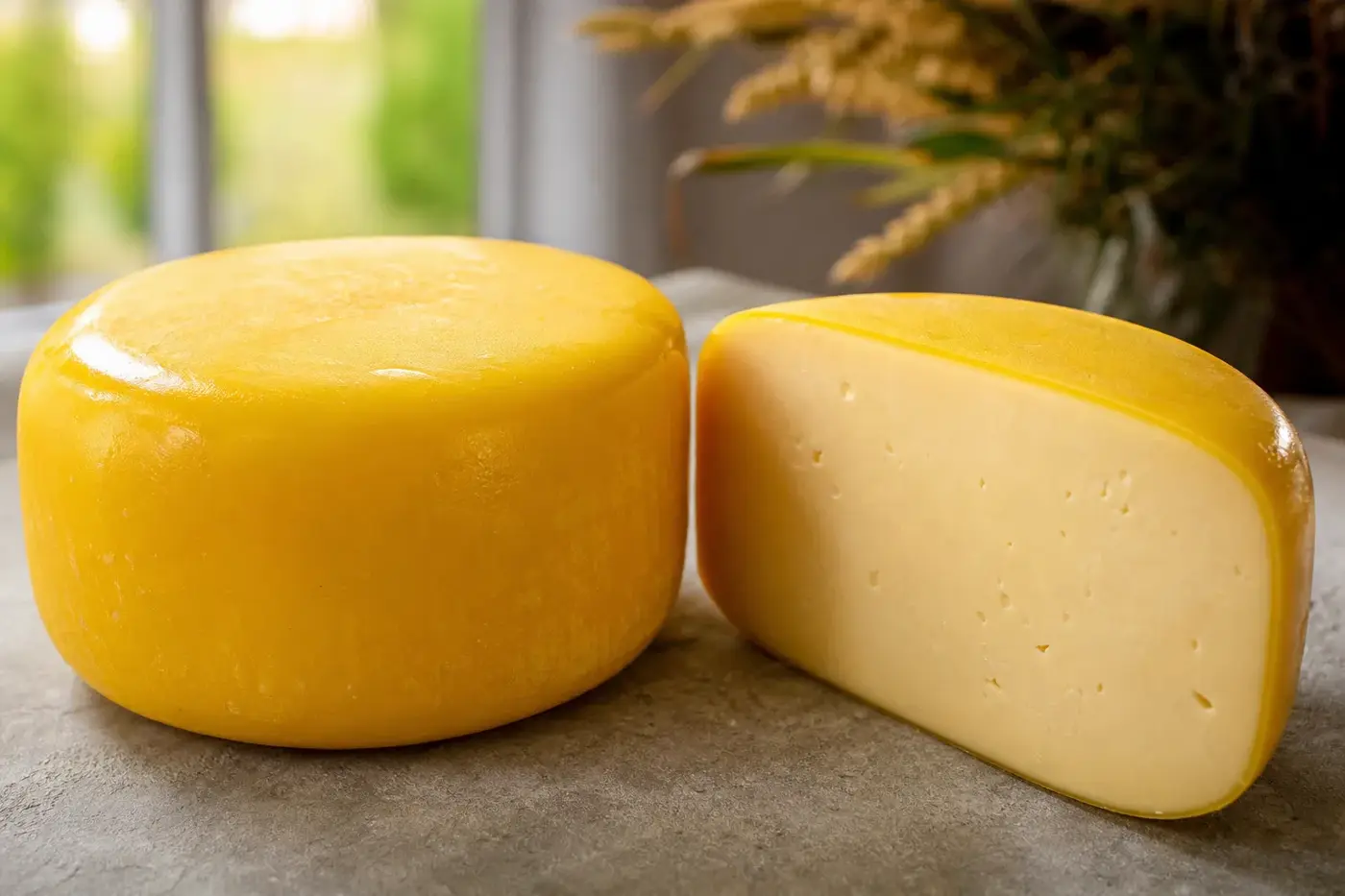
Picture clover-rich pasture beside the Moray Firth, with a Highland dairy near Inverness turning its own cows’ milk into a Dutch favourite. This is Connage Gouda’s starting point. Waxed and semi-hard, it begins sweet and mild, says its maker, then grows firmer and stronger with age. A familiar cheese, with a distinctly Scottish address. [1][2][3]
Your first look at Connage Gouda
| What you might want to know | The detail |
|---|---|
| Name | Connage Gouda. [1] |
| Maker | Connage Highland Dairy. [1] |
| Home | Ardersier, near Inverness, Scotland. [2] |
| Milk | Pasteurised cow’s milk from the dairy’s own herd. [1][2][3] |
| Style | Semi-hard, waxed, Gouda-style. [3] |
| Coagulant | Unconfirmed; the maker describes the cheese as suitable for vegetarians. [1] |
| Time spent maturing | Unconfirmed. [1][3] |
| How the wax is applied | Unconfirmed. [1][3] |
| Organic certification body | Unconfirmed. [1][2] |
| Aroma | Unconfirmed. [1][3] |
A Dutch favourite settles in the Highlands
Follow this cheese home and you reach Ardersier, in Inverness-shire, close to the Moray Firth. Connage describes clover-rich grazing around the dairy and along the shore. Its Scottish roots run deeper than the packing address: the milk comes from cows on the very farm where the cheesemaking business is based. [2]
Family members share the work between farm and dairy in this family-owned, family-run business. One part of the family makes cheese; another tends the farm and herd. Connage’s website dates the cheesemaking business to 2006. [2][4][5]
Gouda has good company here. The current range also includes Dunlop, Clava Brie and Crowdie, so this is a broader Scottish dairy range, not a business devoted to an imported style. You get a familiar cheese family with a particular Highland starting point. [2][4][5]
That combination is much of Connage Gouda’s appeal. The Dutch reference gives you your bearings; the farm gives this version its home. If you fancy following the family connections, turn to our Gouda guide. [1][2]
The herd at the heart of your slice
Around 150 cows supply the dairy, according to Connage. They are mainly Holstein Friesians, alongside Jersey crosses and Norwegian Reds. The maker says they spend much of their time grazing the surrounding pastures, with the farm growing much of its own feed. That is Connage’s farming picture in November 2026. [2]
Connage presents its milk and cheeses as organic. The maker also credits the clover pastures and coastal surroundings with contributing to the milk’s character. That is its account of the farm’s influence; the most straightforward distinction is that the milk comes from its own herd. [2][5]
For you, there is another clear detail on the product description: Connage Gouda uses pasteurised milk. That heat treatment takes place before cheesemaking, rather than during setting, draining or maturing. You can explore the differences in raw, thermised and pasteurised milk. [1][6]
From milk to Gouda, with water playing its part
Water does important work in the wider Gouda method. Washing the curd removes some lactose, the milk sugar available for fermentation, and helps the cheesemaker manage acidity. Moisture and acidity both matter in turning milk into a cheese that holds together. [6][7]
The University of Guelph’s teaching account begins with milk being cultured and set with rennet. Rennet is the coagulant that forms the curd, the solid portion, while whey is the liquid that separates from it. You now have two parts, each with a different role in what follows. [6][7]
For Gouda, the university describes cutting the curd, removing some whey and adding warm water. The washed curd is pressed, then the cheese is salted in brine before ripening. These are the wider style’s production stages, rather than a detailed recipe for Connage itself. [6][7]
| Step along the way | What happens in the Gouda style | What Connage tells you |
|---|---|---|
| Milk treatment | Heat treatment comes before cheesemaking in the university’s example. [6] | Pasteurised. [1] |
| Setting and cutting | Cultured milk is coagulated, then the curd is cut. [6] | Detailed method unconfirmed. |
| Finishing | Pressing and brining come before packaging and maturation. [6] | A waxed finish. [1][3] |
Connage describes a waxed cheese that grows stronger and firmer as it matures. That leaves you with a useful question for the seller: how old is this particular piece? The answer can guide you towards something mild for slicing, or a firmer cheese with more pronounced flavour. [3]
The packaging deserves a glance, too. The maker lists waxed whole cheese and vacuum-packed portions, so your cut piece may look quite different from the whole cheese on display. Read the product description alongside the label to establish which version you have. [3]
Let age lead your tasting
Sweet and mild are the maker’s clearest words for Connage Gouda. Its fuller wholesale description adds creamy texture, with maturity bringing a firmer body and stronger flavour. If you like a gentle cheese, look younger; for more intensity, explore a more mature piece. [1][3]
Wax is the defining exterior feature Connage records. Inside, texture is worth your attention, particularly if you can compare a younger cheese with its firmer, more mature counterpart. Notice how easily a slice bends, then how it breaks as you chew. [1][3]
Next, give flavour its turn. Does sweetness come first, or do you notice a more developed savoury impression? Those are questions to take into your tasting, not promises about what every piece will deliver. [1][3]
Try a plain piece before reaching for chutney or a drink. Chutney can be rather keen on having the last word. If you have two ages to compare, start with the younger and give texture as much attention as intensity.
Check the flavour description on the label, too. Connage separately lists versions with cumin seeds and with garlic and nettle. Plain Gouda offers the clearest introduction to the underlying cheese, while those added ingredients give the other versions their own place on a board. [8]
Make a little space for the cheese
With young Connage Gouda, let the cheese lead. The maker’s description of sweetness and mild flavour suggests uncomplicated company, so take these combinations as serving ideas based on that description. Set accompaniments beside it, rather than over it, and adjust each mouthful to suit you. [1]
Begin with plain oatcakes or bread, then try fresh apple or pear. A little tart fruit chutney is another option. Add it sparingly at first, and only add more while you can still taste the cheese clearly.
For a firmer, more mature piece, try thinner slices. If you have younger cheese as well, compare them before adding the accompaniments. That gives their textures and flavours a little time to themselves.
Try still water for tasting, sparkling water with the plate, or an unsweetened apple drink for a fruit accompaniment. Keep your first taste simple. After that, follow whichever combinations you enjoy.
Bring out only the portion you intend to eat. Follow the current Food Standards Agency guidance for England, Wales and Northern Ireland. [9]
Keep it cool and take care of your cut piece
Keep Connage Gouda in the fridge and follow its wrapping instructions. In the November 2026 guidance, the Food Standards Agency recommends a home fridge temperature of 5 °C or below for England, Wales and Northern Ireland. Food Standards Scotland advises reading the label for storage requirements, including instructions for after opening. [9][10]
Once you cut the cheese, keep its label, particularly if you move it into another container. Cover or rewrap the remainder and return it promptly to the fridge. Follow the instructions for that piece and its packaging, including any shorter storage period after opening. [10]
Keeping the label means you have the instructions ready next time you serve the cheese. They stay with the piece rather than leaving with the original wrapping. It is a small, useful habit. [10]
Remove the wax before eating. Cut a serving, then trim the coating from that piece, keeping the cut cheese separate from the discarded wax. For more handling advice, see how to store cheese at home. [1]
Give Connage and Dutch Gouda a fair tasting
Before comparing countries, compare ages. Put a mild young Connage beside a very old Dutch Gouda and maturity joins place as a reason for their differences. You have given your taste buds two questions at once. [3]
Choose another Gouda of similar age instead. Let Connage’s progression from younger cheese to firmer, stronger cheese guide you, then consider sweetness, texture and strength separately. Each piece deserves a fair hearing, even if you have already developed a favourite. [3]
Connage takes its place as a Scottish interpretation of a Dutch style, made by a particular dairy using its own farm milk. Gouda gives you the stylistic reference; Ardersier gives you the place of production. Hold both in mind and you can enjoy this cheese on its own terms. [1][2][6]
Find your next stop in the cheese family
- Gouda: get to know the wider family and how it is made.
- How Cheese Is Made: From Milk to Cheese: follow the main stages, starting with milk.
- How to Store Cheese at Home: find wrapping and refrigeration advice beyond this cheese.
General information only, not medical advice: follow the official guidance where you live.
Questions people ask
Where is Connage Gouda made?
It is made at Connage Highland Dairy in Ardersier, near Inverness, Scotland. The dairy is close to the Moray Firth.
Is Connage Gouda pasteurised and suitable for vegetarians?
Connage Gouda is made from pasteurised cow’s milk from the dairy’s own herd. The maker describes it as suitable for vegetarians, although the coagulant has not been verified.
What does Connage Gouda taste like?
The maker describes it as sweet and mild, with a creamy texture. As it matures, it becomes firmer and stronger in flavour.
Can you eat the wax on Connage Gouda?
Remove the wax before eating. Cut a serving from the cheese, then trim the coating away from that piece.
How should Connage Gouda be stored?
Keep it in the fridge and follow the instructions on its wrapping. The Food Standards Agency recommends a home fridge temperature of 5 °C or below in England, Wales and Northern Ireland, while Food Standards Scotland advises checking the label for storage requirements.
Sources
- Connage Highland Dairy, Connage Gouda, undated product page, retrieved November 2026. Product description confirms pasteurised milk, waxed finish, sweet and mild character, and suitability for vegetarians. Source.
- Connage Highland Dairy, About Us, undated current web edition, retrieved November 2026. Maker’s account of family operation, own-farm milk, herd composition, grazing and feed production. Source.
- Connage Highland Dairy, Connage Gouda, undated wholesale page, retrieved November 2026. Fuller description of maturity, cow’s milk, waxed format and vacuum-packed portions. The address subsequently redirected to source 1 during research. Retrieved address.
- Connage Highland Dairy, Connage Highland Dairy, homepage, current web edition, retrieved November 2026. States that the business was established in 2006 and uses its own cows’ milk. Source.
- Connage Highland Dairy, Scottish Cheese Wholesale, current web edition, retrieved November 2026. Describes own-farm production, the range, local cheesemaking team and the maker’s view of the coastal grazing’s influence. Source.
- University of Guelph, Cheese Making Technology e-Book, 2021. The Gouda passage and its link require verification before publication.
- University of Guelph, Cheese Making Technology e-Book, 2021. The curd washing passage and its link require verification before publication.
- Connage Highland Dairy, Hard Cheese, undated product category page, retrieved November 2026. Lists plain Connage Gouda and separate cumin and garlic-and-nettle versions. Source.
- Food Standards Agency, How to chill, freeze and defrost food safely, published 18 December 2017, current text retrieved November 2026. Applies to England, Northern Ireland and Wales. Source.
- Food Standards Scotland, Safe food storage, undated current guidance, retrieved November 2026. Label instructions, storage requirements and instructions after opening. Source.
This piece combines desk research from the maker’s published accounts with university production references and official food-storage guidance; pairing suggestions are editorial judgements.
Last checked: November 2026
Last checked November 2026.
The editors suggest you read next
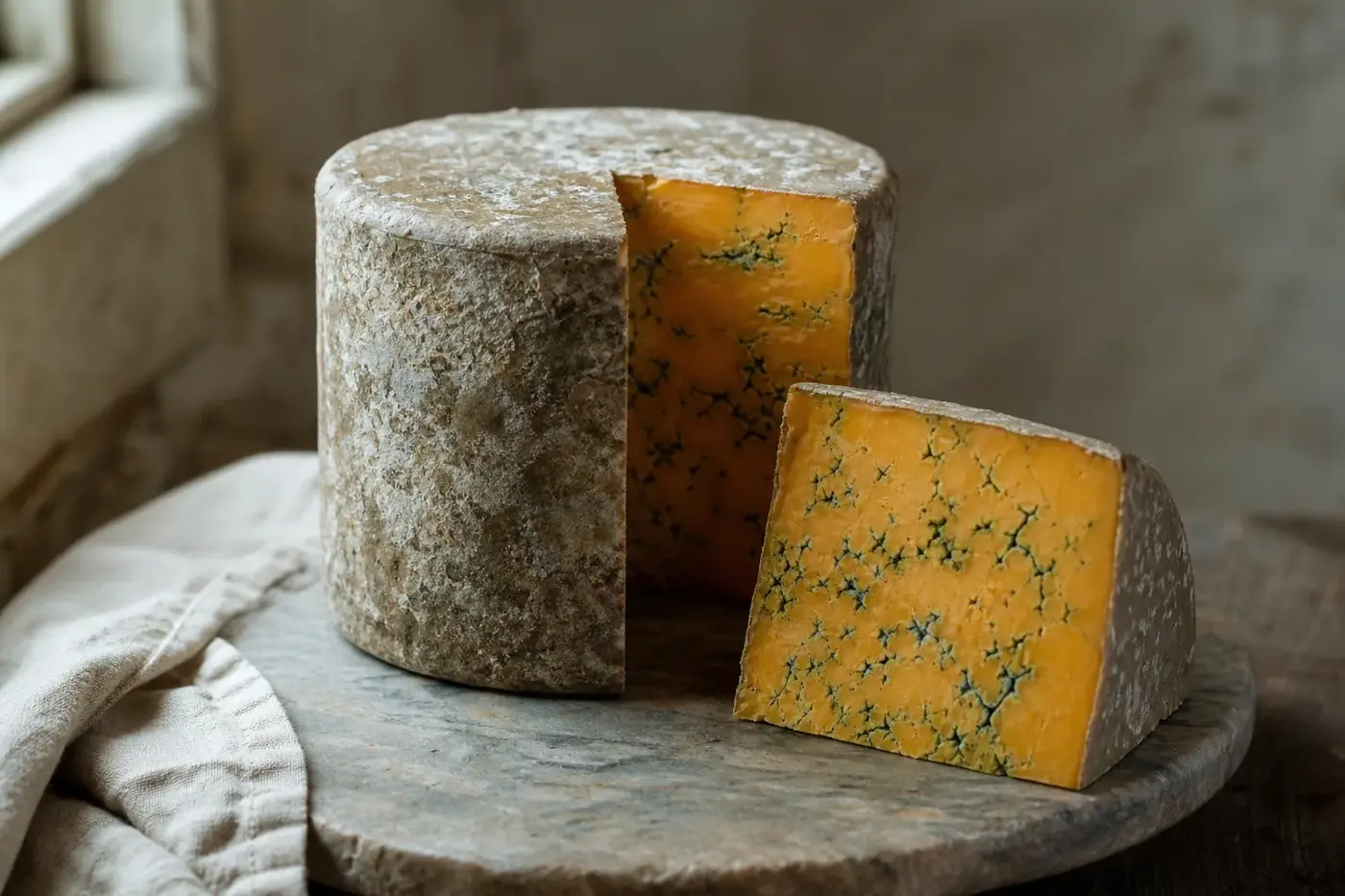
Shropshire Blue
Cut into Shropshire Blue and you get quite a colour scheme: orange crossed by blue-green veins.