Cooleeney
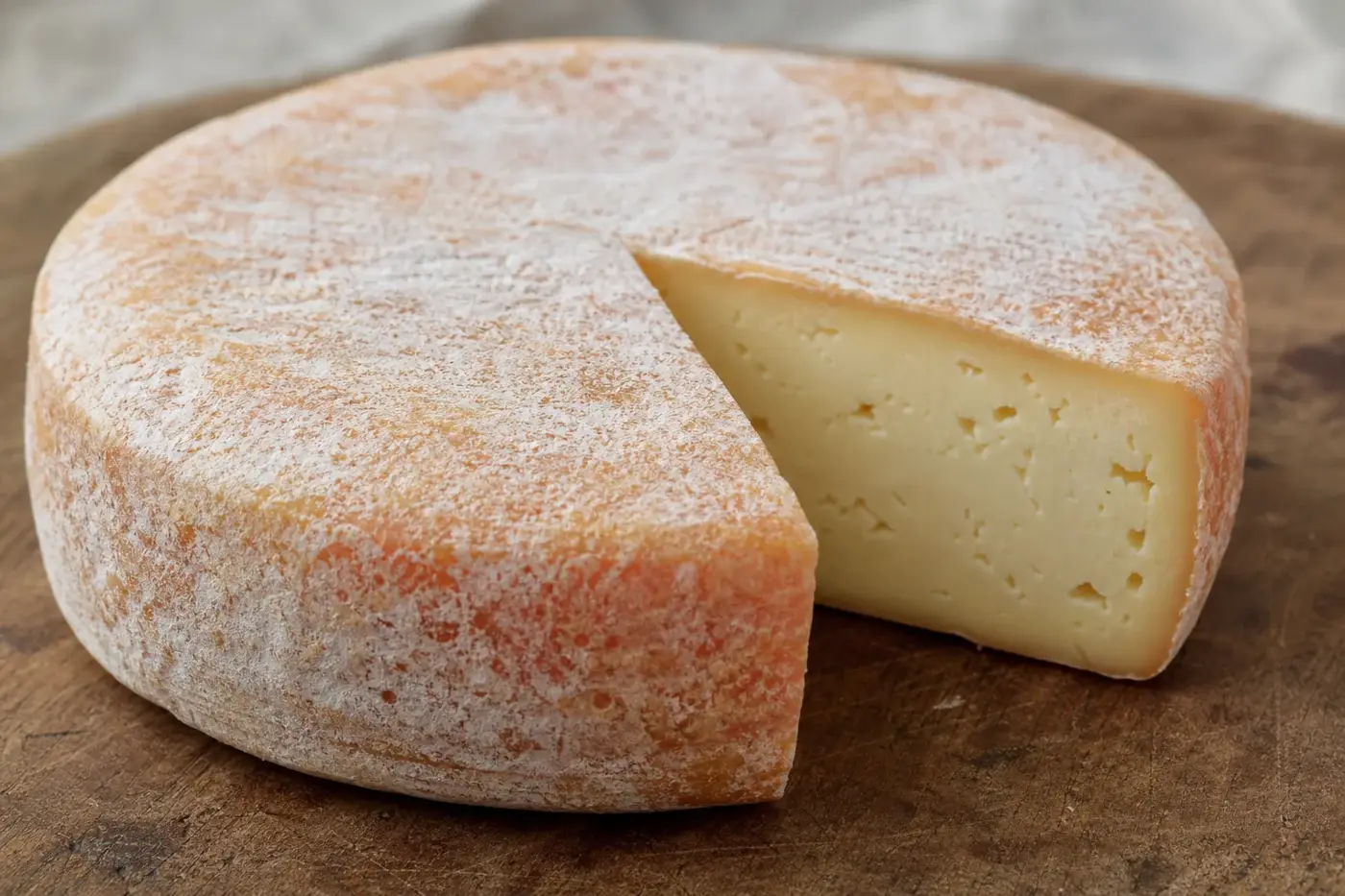
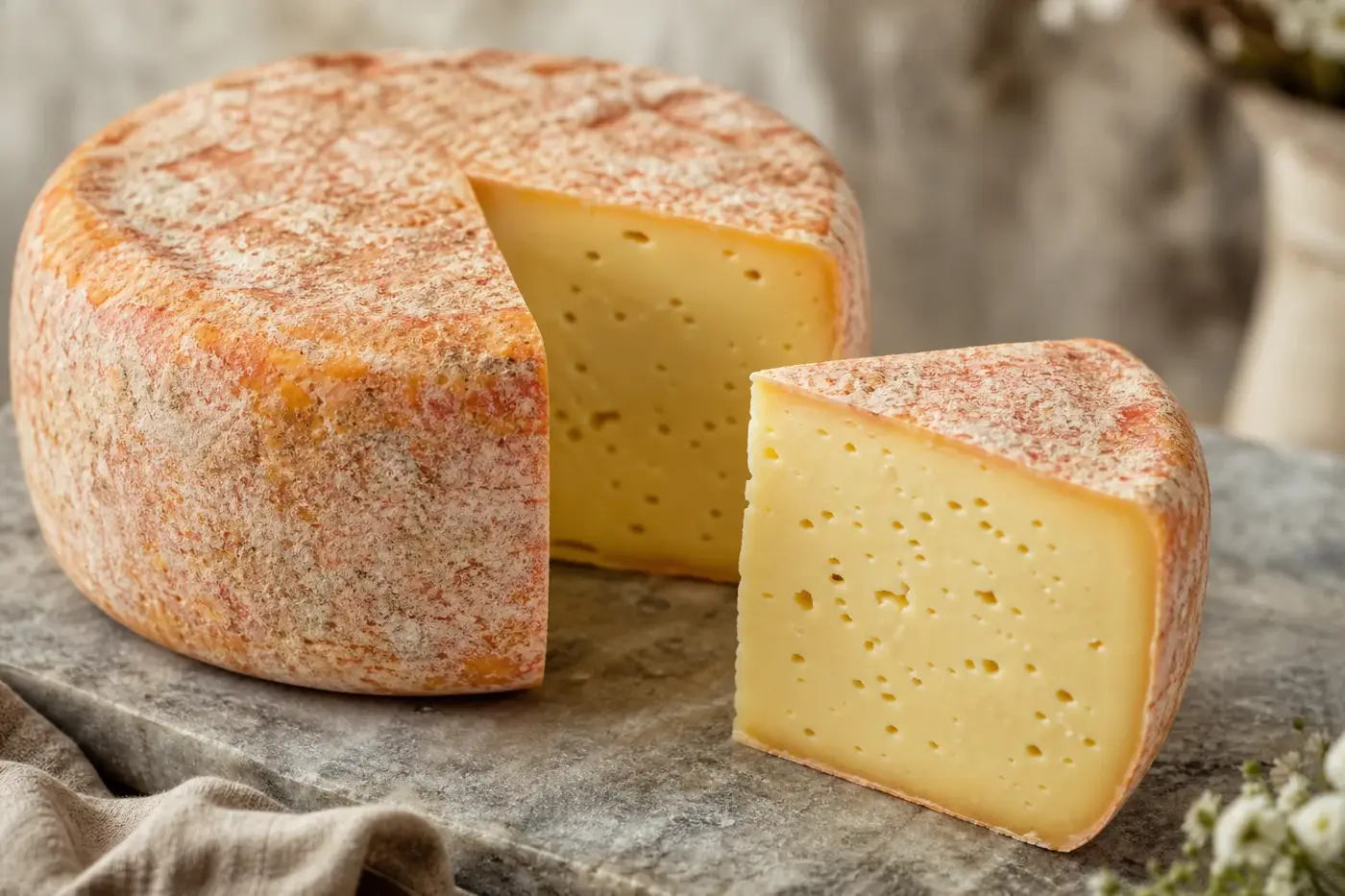
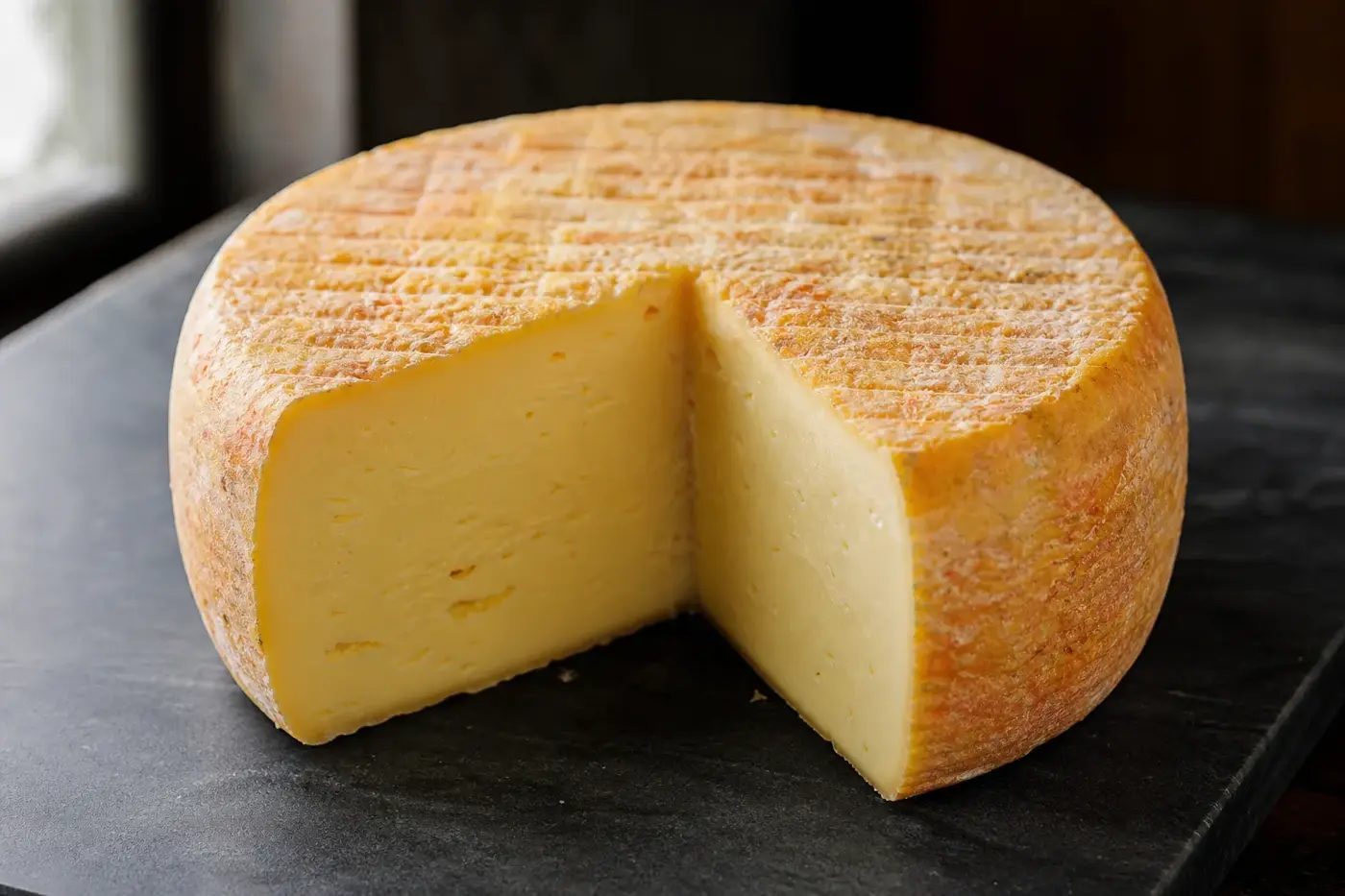
Your knife slips through a mushroom-scented white rind, into pale yellow paste, then reaches a slightly chalky heart.
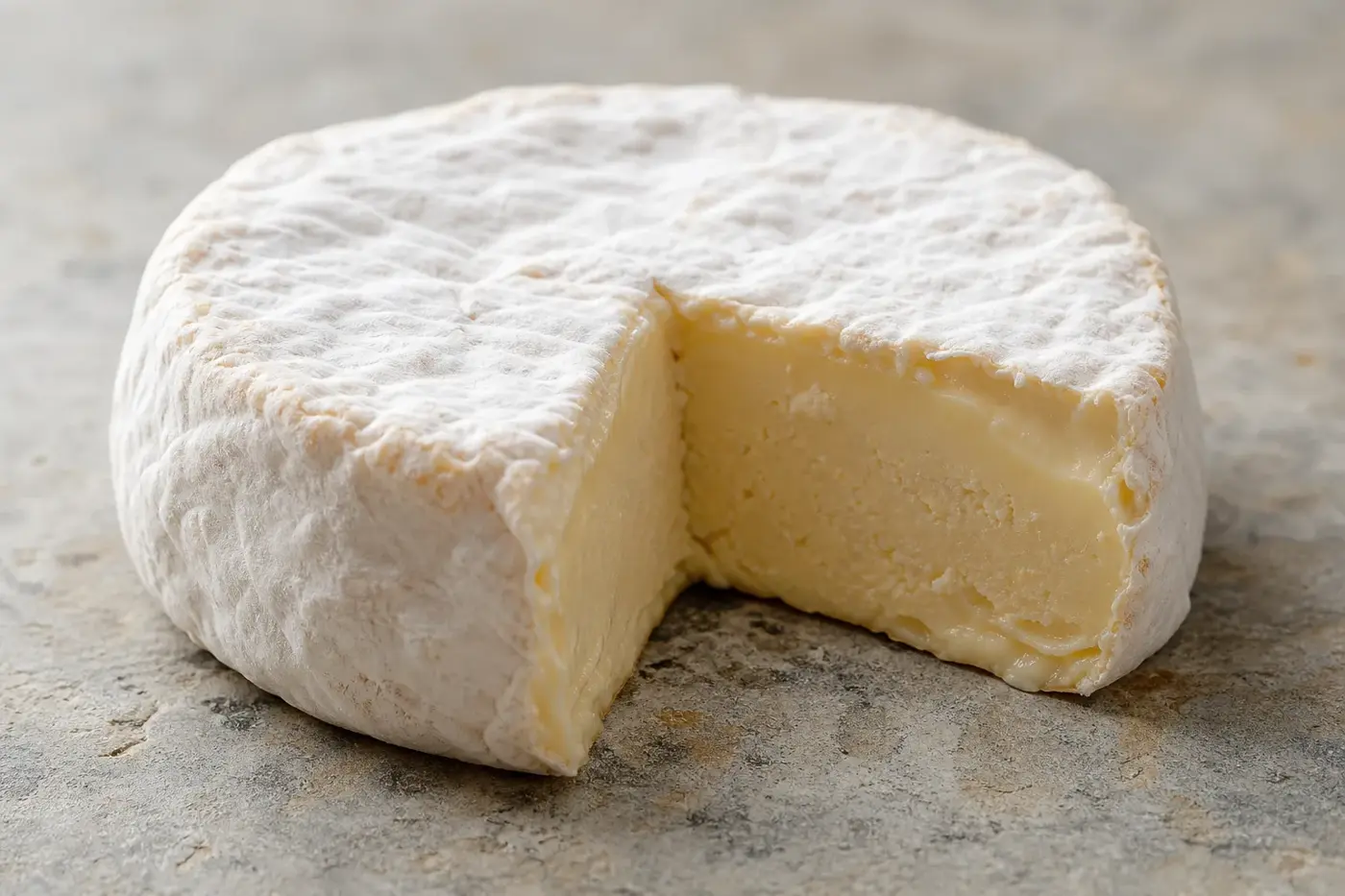
Your knife slips through a mushroom-scented white rind, into pale yellow paste, then reaches a slightly chalky heart. Cooleeney likes to keep a little contrast up its sleeve. Those details come from Bord Bia’s 2010 guide to this soft, Camembert-style cow’s milk cheese, made at Cooleeney Farm near Thurles in County Tipperary. Behind it stands the farm’s dairy herd. [1,4]
| Get to know Cooleeney | The details |
|---|---|
| Names you might see | Cooleeney; also described as Cooleeney Farmhouse Cheese. [2,4] |
| Who makes it, and where | Cooleeney Farm, Moyne, Thurles, County Tipperary, Ireland. [3] |
| What sort of cheese? | Soft, white mould-ripened, Camembert-style cheese. [2,4] |
| The milk | Cow’s milk; the maker describes a pedigree Friesian herd on the farm. [1,2] |
| Milk treatment | The maker’s export description includes pasteurised and raw varieties. Baking Cooleeney is specifically pasteurised. [2,3] |
| Sizes you might find | 200 g and 1.7 kg in the maker’s export description. [2] |
Find the contrast at Cooleeney’s heart
With Cooleeney, the outside and middle offer different pleasures. It belongs to the white-rinded soft cheese family, developing a mould coat while the interior ripens beneath it. The maker calls it Camembert-style; Bord Bia adds the mushroom-scented exterior, pale yellow paste and slightly chalky centre with its lactic tang. [2,4]
Look for that contrast as you cut and taste. A younger cheese can have a yielding outer layer around a firmer middle, rather than one texture throughout. As ripening continues, the softer portion becomes more prominent. Cheesemaking teaching and experimental research describe this surface-inwards pattern in Camembert-type cheeses. [5,6]
Curious about the wider family? Read how to tell cheese styles apart. As you get to know Cooleeney, keep three things separate: this cheese, the farm that makes it and the other cheeses carrying the farm’s name.
Four generations behind your slice
Cooleeney Cheese began in 1986, but the family’s connection with dairying reaches further back. The farm’s website traces four generations working the land at Moyne, near Thurles, in County Tipperary. Cheesemaking grew from that continuing relationship with milk and place. [1,3]
The choice of style was deliberate. Bord Bia’s 2010 account records that the family opted for a soft, Camembert-style cheese when hard cheeses, particularly cooperative Cheddars, were prominent in the market. Cooleeney found its place in modern Irish cheesemaking through a dairy farm choosing a distinctive outlet for its milk. [4]
Today, the farm’s name appears on several cheeses, so give the product name a proper look. Its website lists Cooleeney Farmhouse Cheese separately from Dunbarra, Gortnamona, Tipperary Brie and Baking Cooleeney. Details attached to one entry do not necessarily apply to everything bearing the Cooleeney Farm name. [3]
Meet the Friesians, then mind the label
The milk story starts with a pedigree Friesian dairy herd, according to the maker, with replacement animals bred on the farm. Its account also mentions pasture and selected feed. Those details give you a feel for the farm’s approach, although breed alone cannot explain every characteristic of the finished cheese. [1]
When you buy, milk treatment is the detail to pin down. The maker’s export entry lists both pasteurised and raw varieties of Cooleeney. Its separate Baking Cooleeney page specifies pasteurised milk from the farm’s own herd. Ask which applies to your cheese, and keep the label. [2,3]
Buying a cut portion? Your cheesemonger should be able to identify the product supplied. The individual pack or supplier’s information tells you more than the name alone, which does not establish one milk treatment indefinitely.
If the terminology leaves you wondering, turn to raw, thermised and pasteurised cheese. It explains what those terms mean and the distinctions behind them.
Follow the milk into the ripening room
The farm’s published sequence begins with milk entering the vats. Cultures go in, followed by rennet, which forms the curds. These are placed in moulds to drain and turned regularly to even out moisture. The following day, the cheeses are brined and moved into controlled ripening rooms. [1]
Each addition has a particular job. Cultures are selected microorganisms: starter bacteria produce lactic acid, while surface-ripening organisms help develop rind, texture and flavour. Rennet coagulates the milk into a gel, from which curd and liquid whey separate. Acid development, coagulation and surface ripening are distinct parts of the process. [5,7]
Turning and drainage do more than produce a neat exterior. They also manage the moisture left inside the cheese. The farm’s account follows that work through forming and salting, then into the care the cheeses receive as they mature. [1]
For a closer look at coagulation, drainage and salting, read how cheese is made. The farm’s account gives you a clear outline of production, rather than a recipe detailed enough to reproduce Cooleeney yourself.
That white rind earns its keep
The white coat is no mere finishing touch. University of Guelph teaching material explains how surface yeasts and moulds consume compounds including lactic acid, change acidity and contribute enzymes that break down proteins and fats. Under their influence, the cheese softens and its flavour develops. [5]
The ripening room has its part to play, too. In a 2012 experimental study, researchers made Camembert-type cheeses using pasteurised milk and specified ripening microorganisms, then compared different temperatures and relative humidities. Both affected rind development and the thickness of the softened layer underneath. You can see why a cheesemaker pays such close attention to the room. [6]
Cooleeney’s maker describes controlled maturation, followed by wrapping once the mould coat has developed. The maturation period for Cooleeney Farmhouse Cheese remains unspecified here. For the separately listed Baking Cooleeney, the maker gives eight to ten weeks as full maturity; that timing belongs to that product description. [1,3]
When you choose, give texture as much attention as age. Ask for a firmer centre if you enjoy contrast, or a more yielding cheese if softer paste is your pleasure. The oldest cheese is not automatically your best match. What matters is how you want it to eat.
Take your time from rind to centre
Butter, cream, mushrooms and earthy wet grass all appear in Bord Bia’s description of Cooleeney. Picture the white, mushroom-scented rind around a pale yellow interior, with slight chalkiness at the centre bringing a brighter lactic impression. Those are the tasting notes in Bord Bia’s published account. [4]
Give the surface and centre their own moment. Taste a little paste first, then a piece with rind, and notice how much mushroom character comes from the outside. If your cheese has a firmer heart, compare it with the softer paste just beneath the rind. Texture is part of the pleasure, not simply a ripeness report.
For Baking Cooleeney, the maker describes a white mould rind, hints of butter and a soft texture when baked. Those details suit its intended use. On your cheeseboard, the experience of Cooleeney depends on the particular cheese and how far it has ripened. [3]
Keep your first tasting simple: bread, water and a little attention. Notice aroma, flavour and texture separately before stronger accompaniments arrive. The chutney can wait its turn.
Serve it softly, with an eye on the clock
Start with the pack’s storage instructions and date. The Food Safety Authority of Ireland advises keeping your domestic fridge between 0 °C and 5 °C, and promptly refrigerating foods that need chilling after purchase. Cooleeney’s maker recommends keeping its specially designed wrapping paper. [1,8]
The maker suggests an hour out of refrigeration before serving. Fit that within the FSAI’s food-handling guidance: more than two hours at room temperature is too long. Preparation and display time count together, including time spent on the cheeseboard. [1,9]
Here is a straightforward way to serve it:
- Choose your texture. Tell the cheesemonger when you plan to serve it and whether you fancy a firmer centre or softer paste.
- Keep the rest chilled. Following the Irish guidance above, take out only the amount you expect to serve. [8,9]
- Allow warming time, within limits. Fit the maker’s suggested hour into the FSAI’s two-hour limit, including display time. [1,9]
- Taste before adding extras. Compare the centre, softer outer paste and a mouthful with rind.
- Keep the date in view. The FSAI advises against using food after its use-by date. Plan your preferred ripeness within that limit. [9]
For wrapping and fridge organisation, read how to store cheese at home. Keep the original label alongside any cut portion. That keeps the storage instructions and date with the cheese, ready when you need them.
Let bread and drinks give Cooleeney some space
Start with plain bread or restrained crackers, then try slices of apple or pear. Keep accompaniments separate so you can explore the texture and the mushroom notes described by Bord Bia. Fancy a sweeter contrast? Add a little chutney afterwards, rather than letting it take charge of the first mouthful. [4]
If you want a drink without alcohol, try sparkling water, an alcohol free sparkling apple drink or lightly brewed black tea. Let your own preference settle the match.
Taste the cheese alone, then with an accompaniment. Does the combination leave its flavour clear, or does the accompaniment dominate? A liking for the brighter lactic centre may take you towards a different choice from a love of the rind’s mushroom character.
For a broader approach, cheese and wine pairing explains how to organise a tasting. With Cooleeney, begin simply. Keep those differences between rind, outer paste and centre easy to notice: they are where much of the pleasure lies.
General information only, not medical advice: follow the official guidance where you live.
Questions people ask
What is Cooleeney cheese?
Cooleeney is a soft, white mould ripened cow’s milk cheese made at Cooleeney Farm near Thurles in County Tipperary, Ireland. It is described by the maker as Camembert style.
What does Cooleeney taste like?
Bord Bia describes notes of butter, cream, mushrooms and earthy wet grass. The mushroom scented rind surrounds a pale yellow paste with a slightly chalky centre and a lactic tang.
Is Cooleeney made with pasteurised milk?
The maker’s export description lists both pasteurised and raw varieties of Cooleeney. Baking Cooleeney is specifically described as pasteurised, so check the label or ask about the particular cheese you are buying.
How should Cooleeney be stored?
The Food Safety Authority of Ireland advises keeping a domestic fridge between 0 °C and 5 °C and promptly refrigerating foods that need chilling after purchase. See its food handling guidance, and follow the pack’s storage instructions and date.
What can I serve with Cooleeney?
The page suggests plain bread or restrained crackers, followed by slices of apple or pear. For a sweeter contrast, try a small amount of chutney.
Sources
[1] Cooleeney Farm. Cooleeney Farm, including “Cheese Care”. Undated maker account, retrieved November 2026.
Read at cooleeney.com
[2] Cooleeney Farm. Cooleeney Cheese, export product description. Undated; indexed maker text retrieved November 2026.
Read at cooleeney.com
[3] Cooleeney Farm. Baking Cooleeney. Undated product description and site navigation, retrieved November 2026.
Read at cooleeney.com
[4] Bord Bia. Your Guide to Irish Farmhouse Cheeses. First edition, 2010, Cooleeney Farmhouse Cheese entry. Historical industry reference, not evidence of present production details.
Read at bordbia.ie
[5] University of Guelph. CMC1: Introduction to Cheesemaking, “Unit 3b. Secondary Cultures in Cheese making”. Undated online teaching material, retrieved November 2026.
Read at books.lib.uoguelph.ca
[6] American Dairy Science Association. Temperature and relative humidity influence the microbial and physicochemical characteristics of Camembert-type cheese ripening. Journal of Dairy Science, volume 95, issue 8, 2012, pages 4666 to 4682. Abstract retrieved through PubMed.
Read at pubmed.ncbi.nlm.nih.gov
[7] Foods. Effects of Monascus on Proteolysis, Lipolysis, and Volatile Compounds of Camembert-Type Cheese during Ripening. Volume 11, issue 11, article 1662, 2022. Manufacturing method used only to support the distinction between starter cultures and rennet.
Read at pmc.ncbi.nlm.nih.gov
[8] Food Safety Authority of Ireland. Storing food safely. Undated consumer guidance; indexed official text retrieved November 2026.
Read at fsai.ie
[9] Food Safety Authority of Ireland. Safe Food to Go. 2022 edition, especially the section following “How do I stop bacteria growing?”.
Read at fsai.ie
This article was researched from the maker’s published accounts, a dated Irish cheese reference, cheesemaking teaching and research, and Irish official food-handling guidance.
Last checked: November 2026
Last checked November 2026.
The editors suggest you read next