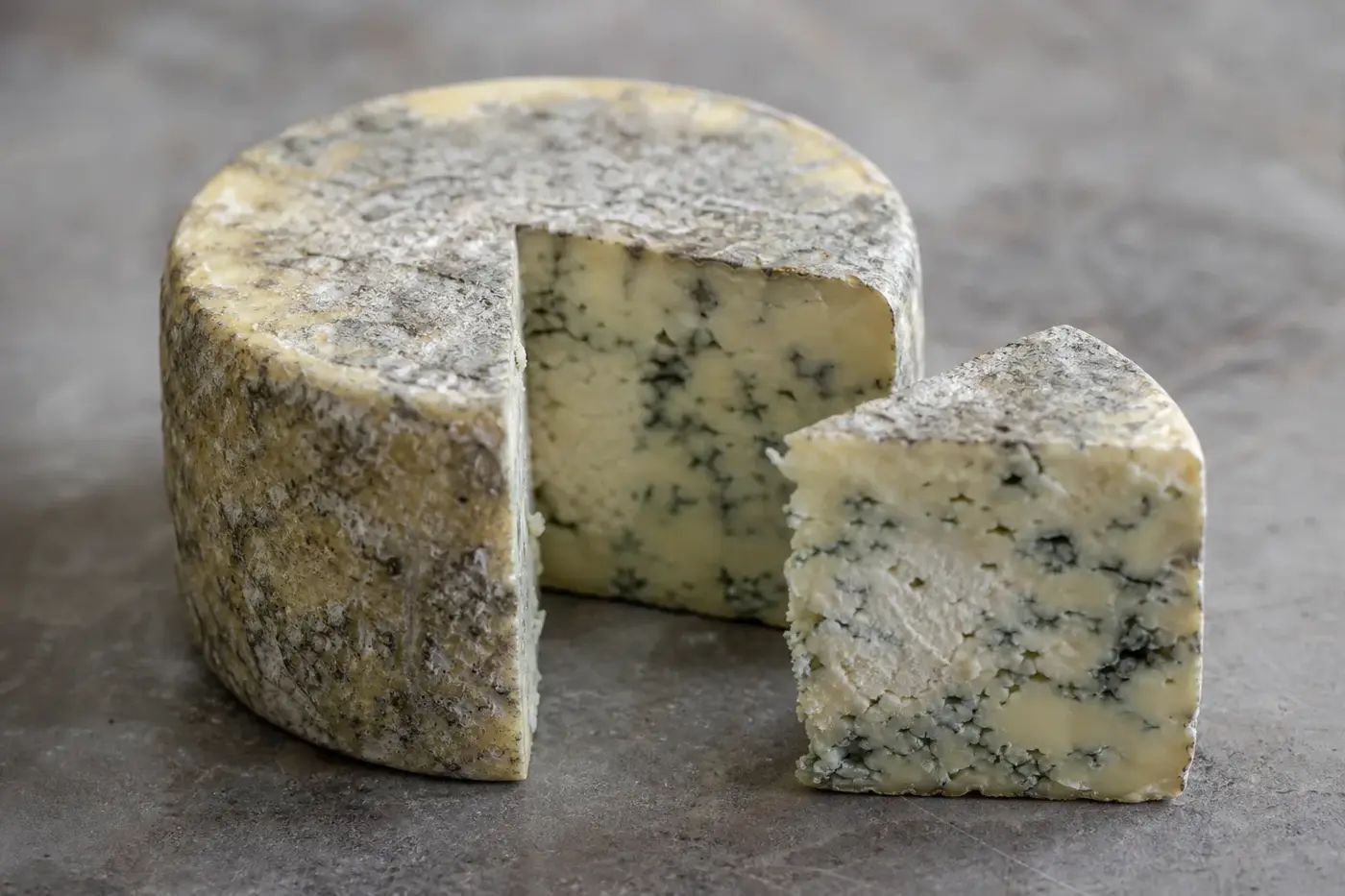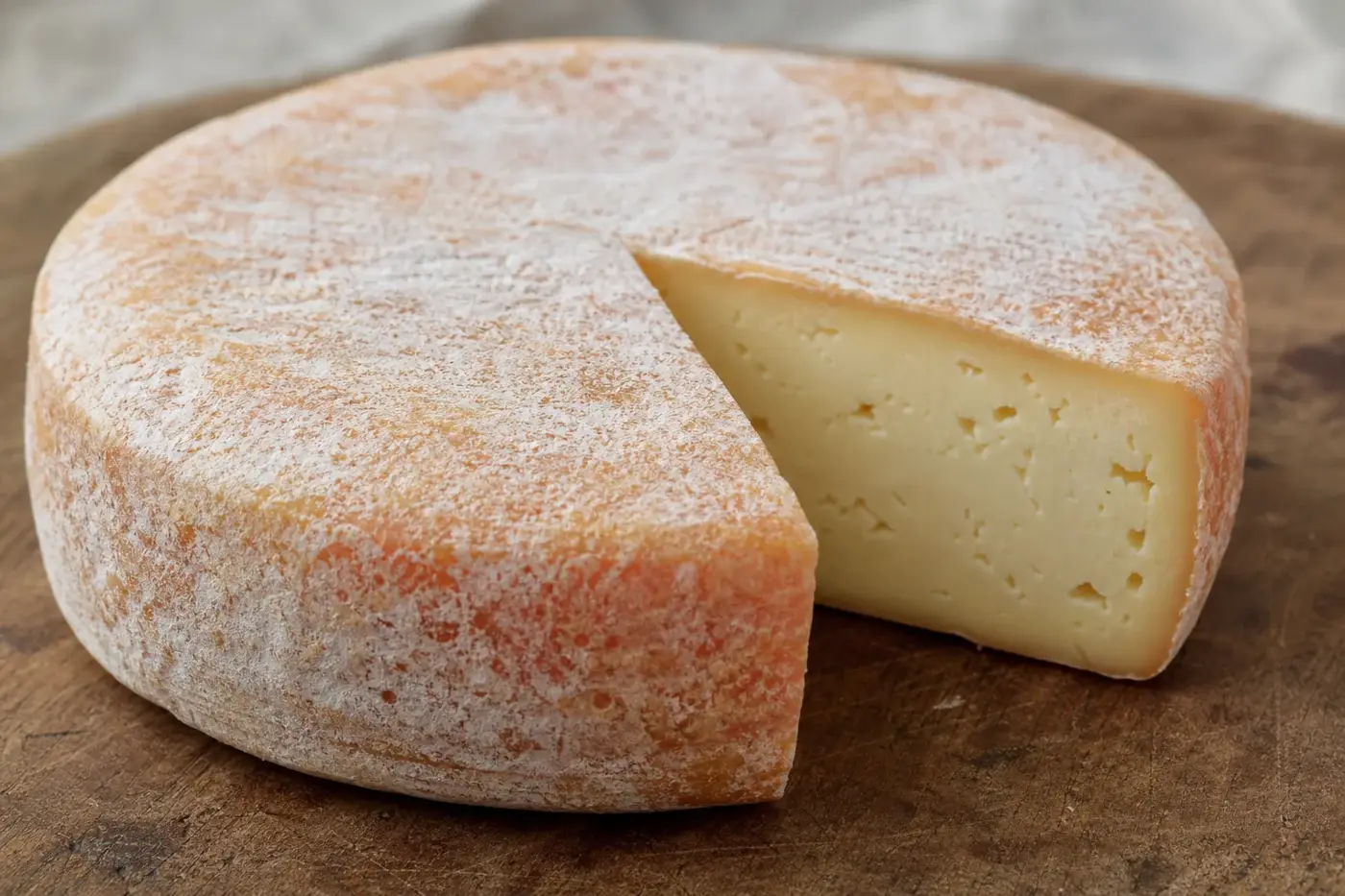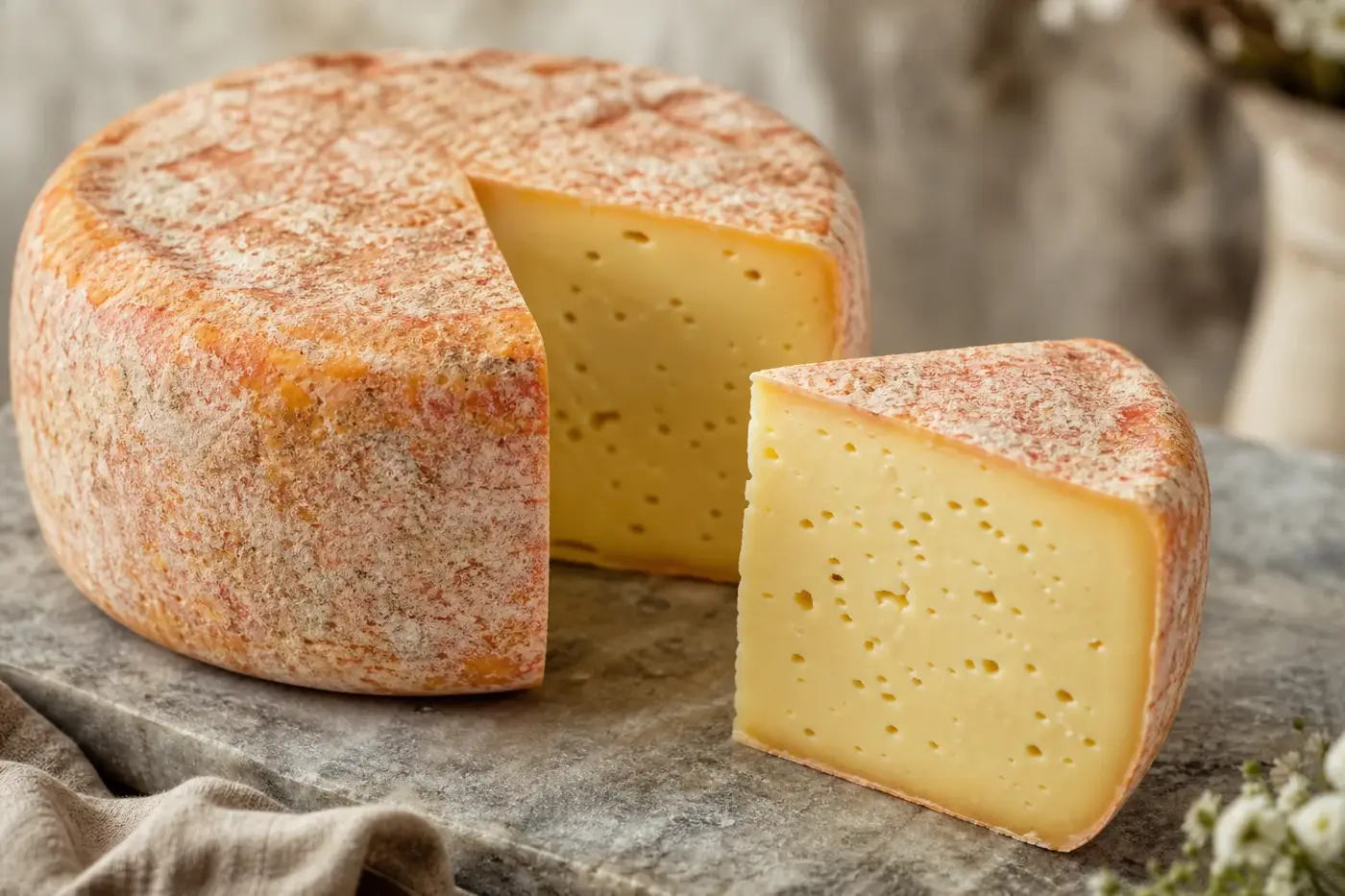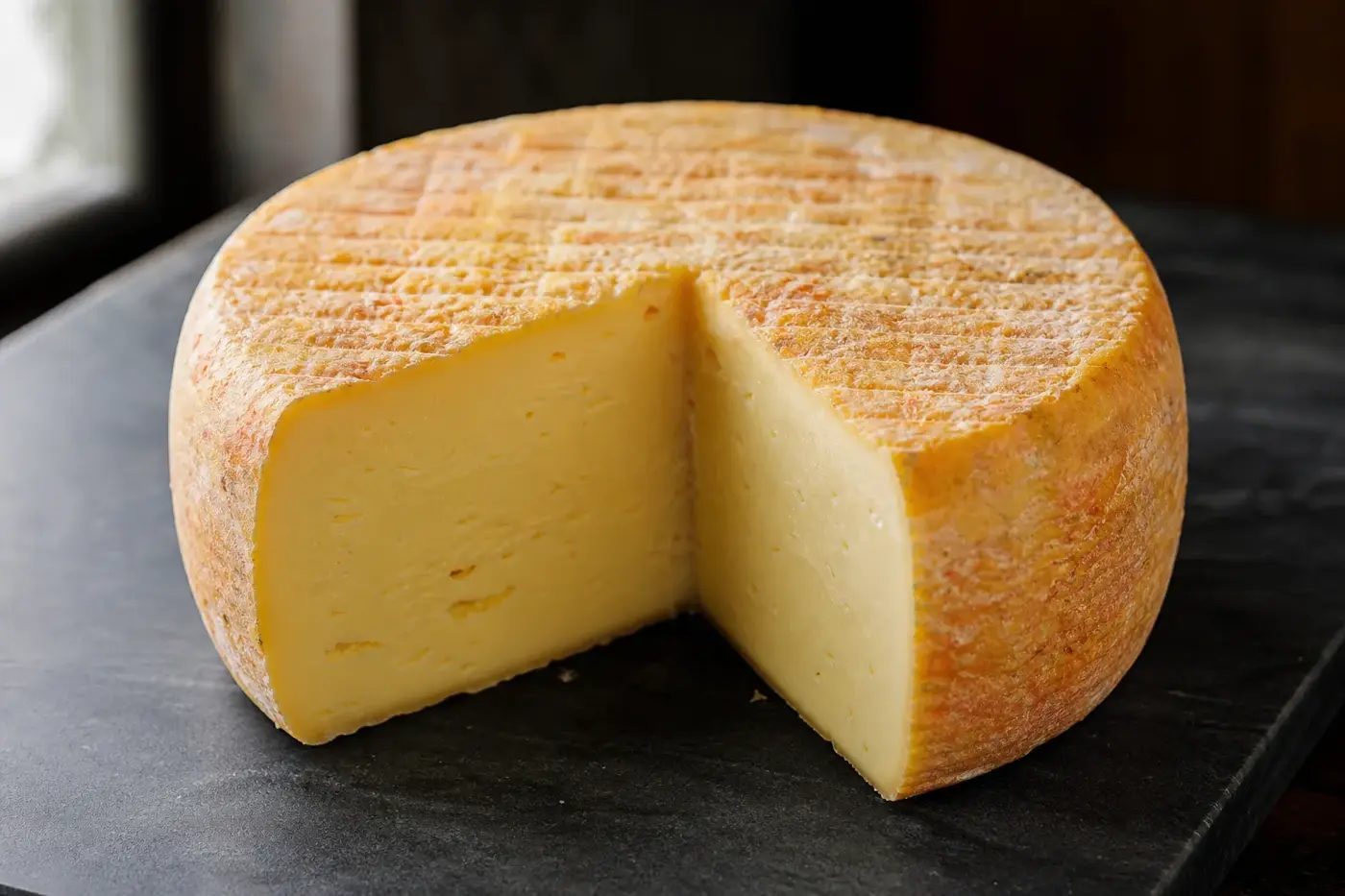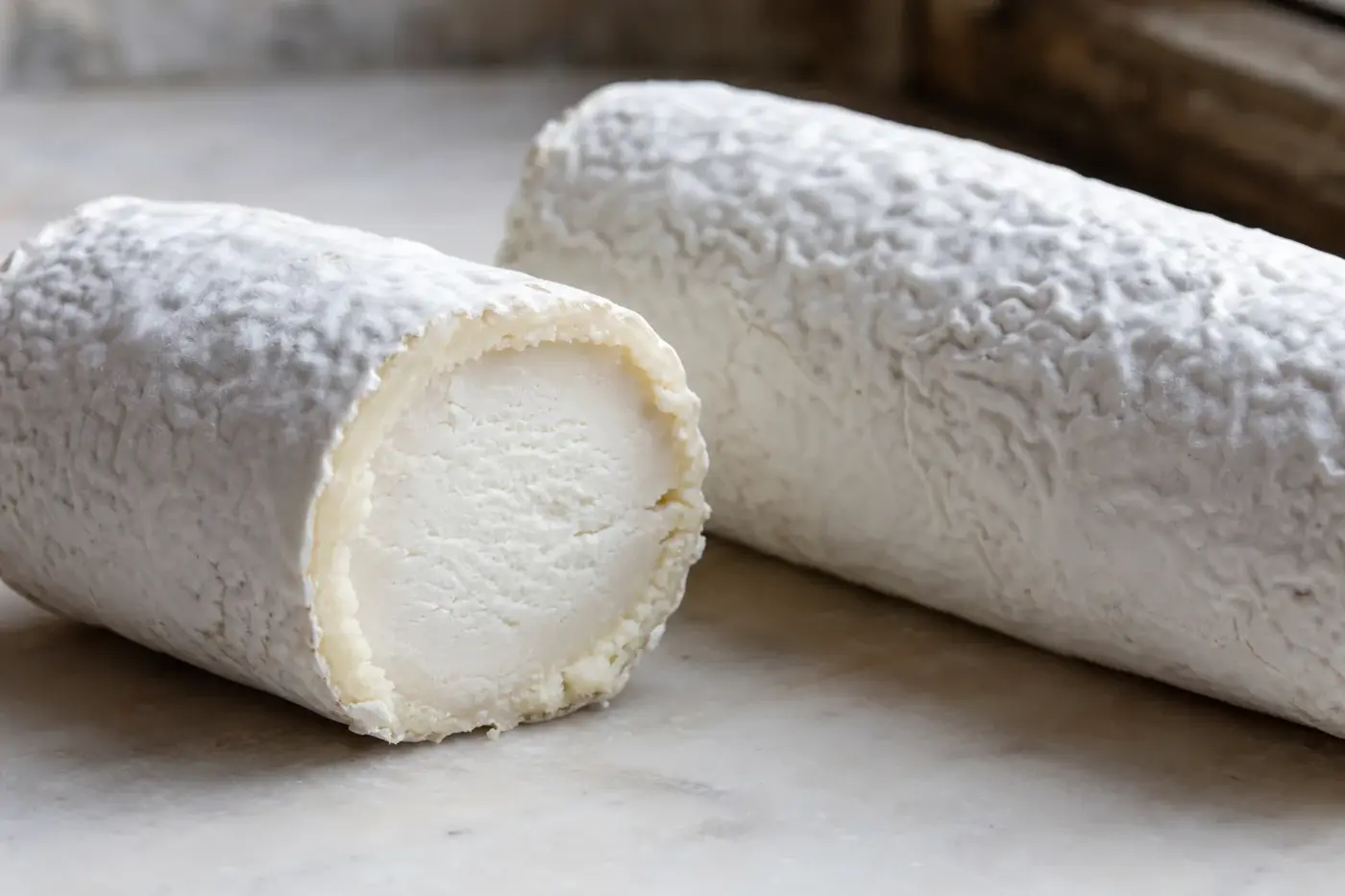
Cut into Gortnamona and watch the knife reveal two textures. Beneath the white mould rind, a softening outer layer gives way to a silver-white goat’s milk centre with a little chalkiness left in it. That contrast is just how its maker at Cooleeney Farm, near Thurles in County Tipperary, describes it: plenty to explore before you have taken a bite.[1,2]
| Get to know Gortnamona | The details |
|---|---|
| Name | Gortnamona |
| Maker | Cooleeney Farm.[1] |
| Home | Moyne, near Thurles, County Tipperary, Ireland.[2] |
| Style | Soft, white mould-ripened cheese.[8] |
| Milk | Pasteurised goat’s milk from a nearby herd.[1] |
| Rennet | Vegetarian, according to the maker.[1] |
| Sizes to look for | 80 g, 150 g, 190 g, 1 kg and 1.7 kg.[1] |
| Full maturity | 8 to 10 weeks, according to the maker.[1] |
| Protection status | EU: Unconfirmed; Great Britain: Unconfirmed; Northern Ireland: Unconfirmed; Switzerland: Unconfirmed; United States: Unconfirmed |
A softer path for a Tipperary farm
Hard cheeses dominated the market when Cooleeney chose another direction: a soft, Camembert-style cheese. First came a cheesemaking course in 1984. In 1986, cheesemaking began on the established dairy farm outside Thurles.[2]
Bord Bia’s 2010 account places Cooleeney among the Irish dairy farms that added cheesemaking to milk production.[2] It began in a small room, according to a producer profile published through Irish Food & Drink. A purpose-built plant followed in March 1989.[3]
The farm’s dairying story stretches further back, but its cheesemaking chapter opens in the 1980s.[3] Gortnamona belongs to a range shaped by that experience with soft and semi-soft cheeses. Both cow’s and goat’s milk have a place in it.
Those milks take separate routes to the dairy. Cooleeney’s own herd supplies the cow’s milk. Local Tipperary farmers supply the goat’s milk, according to the producer profile.[3]
Follow the milk to Gortnamona
For Gortnamona itself, Cooleeney names pasteurised goat’s milk from a nearby herd.[1] The words “farm cheese” cannot tell you all that on their own. The animal, the milk treatment and the source beyond the farm each have a part in the story.
When you buy, look for the cheese’s name and producer together, then read the milk declaration on the pack. The guide to raw, thermised and pasteurised milk takes you through the treatments. Keep that question separate from texture: a firmer centre or softer paste is about maturity.
Choose your size, then peek inside
You can find Gortnamona in formats from 80 g minis to 1.7 kg cheeses, including a 1 kg version. The maker’s export description calls the kilogram cheese a log and also lists 190 g and 1.7 kg sizes.[1,9]
A small cheese gives you something to bring to the table whole. A cheesemonger’s cut portion might suit your meal better. Before choosing a wedge, ask to see the cut face, then follow the paste from the softening layer beneath the rind towards the centre.
That white surface places Gortnamona in the bloomy-rind family. Bord Bia describes the rind of briefly aged, externally ripened cheeses as generally edible.[2] For Gortnamona’s own rind, edibility remains unconfirmed.
Beneath the white coat, change is under way
Gortnamona is surface-ripened. For this style, the general making sequence runs through milk preparation, acidification, coagulation, draining, shaping, salting and controlled ripening. That gives you the family outline; Gortnamona’s precise sequence remains unspecified.[4]
Acidification develops acidity. Coagulation sets milk into curd, the solid material that separates from liquid whey.[4] They do different jobs, even though you meet them in the same cheesemaking story.
Starter cultures are microorganisms that guide fermentation. Rennet does another job: it is a coagulant, an enzyme preparation that helps milk set. Cooleeney identifies Gortnamona’s rennet as vegetarian; the rennet guide explains the sources, while how cheese is made follows the wider process.[1,4]
The white bloom comes from growing surface flora. Dairy training material associates Penicillium camemberti and Penicillium candidum with this cheese family. Controlled temperature and humidity during maturation encourage the intended surface growth.[4]
Changes at the surface also reach what lies beneath. A Camembert study followed protein breakdown using nitrogen measurements, electrophoresis and peptide analysis. Later in ripening, that breakdown advanced from the surface towards the centre.[5]
The technical name is proteolysis: proteins breaking into smaller components. Researchers followed casein, the main milk protein, as it broke down into peptides and amino acids. This changes structure as well as aroma, and different stages can appear as several textures across one cut face.[5]
For Gortnamona, the maker gives full maturity as 8 to 10 weeks. The Irish farmhouse cheese directory records the same range.[1,8] Ask your seller how this particular cheese is eating now, especially if you are choosing between a whole cheese and a cut portion.
Taste your way from chalky centre to creamy edge
Bord Bia describes Gortnamona as mild, with a delicate white-mushroom aroma associated with its rind. Its silver-white paste is soft but retains chalkiness, becoming creamier towards the outside.[2] Think of that as a starting point, not a tasting exam. Nobody needs homework with their cheese.
Try a small piece from the centre first. Then take another that includes the rind, noticing the resistance as you bite and the change in aroma. You might favour the softer outer layer, or find that the contrast is the whole pleasure.
Keep your notes plain and specific. Is it firm or yielding, smooth or chalky, faintly aromatic or more pronounced? Compare your impressions with the maker’s description, without expecting every piece to perform exactly alike.
Research on Camembert-type cheeses helps explain that variation. One experimental study changed the lactic starter, ripening mould and method of mould application, then assessed sensory quality. Different combinations gave different sensory outcomes: culture choice and handling help shape differences within the same white-rind family.[6]
Buy for the meal, not just the cheese board
Picture where Gortnamona will sit: at the centre of a small plate, among other cheeses on a mixed board, or shared after dinner. Then choose your format. A whole small cheese lets everyone cut through rind and centre; a counter-cut wedge gives you exposed paste to discuss with the seller.
Rather than simply asking for the oldest cheese, ask about the one in front of you. When was it cut, how has it been kept, and is the centre still firm? Tell the seller which texture you enjoy, then follow the pack’s storage and date instructions at home.
Give Gortnamona room to speak
Start with cheese, plain bread and one accompaniment. Try oatcakes or plain crusty bread with slices of pear. Keep chutney in a separate dish so you can taste the cheese alone before adding something sweeter or sharper. Even a good chutney need not chair the meeting.
Still or sparkling water, alongside fresh apple or pear, makes a restrained suggested pairing. Simple accompaniments leave you free to notice the cheese. Is it the centre, the outer layer or the two together that makes you reach for another piece?
For serving and storage, follow the current official guidance for Ireland and the instructions on the pack.[7] Give each serving some rind and some centre. Cut a round into wedges and slice a log across its width.
On a shared board, leave enough space for a clean cut and keep accompaniments to one side. If you are exploring several cheeses, taste Gortnamona on its own before moving to stronger accompaniments. Give yourself a moment to notice it.
Keep it cool, and remember your favourite bit
In Ireland, the Food Safety Authority of Ireland advises a fridge temperature between 0 °C and 5 °C (32 °F to 41 °F). Refrigerate chilled purchases promptly and follow the product’s storage instructions. Use a fridge thermometer rather than relying on the dial setting alone.[7]
Keep the pack’s date and handling instructions with the cheese after opening or cutting. If you buy a counter-cut portion, ask for its identification and instructions to come with it. Serve modest amounts and replenish the board from the fridge as needed.
Next time, tell your cheesemonger what pleased you: the chalkier middle, the softer outer band, or the balance of rind and paste. That gives them something practical to work with when helping you choose. For wrapping and refrigerator organisation, turn to the home storage guide.
General information only, not medical advice: follow the official guidance where you live.
Questions people ask
What milk is Gortnamona made from?
Gortnamona is made with pasteurised goat’s milk from a nearby herd. Cooleeney buys goat’s milk from local Tipperary farmers.
Is Gortnamona suitable for vegetarians?
Cooleeney says Gortnamona is made with vegetarian rennet. Rennet helps milk set into curd.
What does Gortnamona taste and smell like?
Bord Bia describes it as mild, with a delicate white mushroom aroma associated with its rind. The centre retains some chalkiness, while the paste becomes creamier towards the outside.
Can you eat Gortnamona’s rind?
Whether Gortnamona’s own rind can be eaten has not been verified. Bord Bia describes the rind of short aged, externally ripened cheeses as generally edible.
How should Gortnamona be stored?
The Food Safety Authority of Ireland advises a fridge temperature between 0 °C and 5 °C. Refrigerate chilled purchases promptly and follow the pack’s storage and date instructions.
Sources
- Cooleeney Farm, Gortnamona, undated product page, indexed text retrieved November 2026. Milk source and treatment, rind, paste, maturity, rennet, formats and wine suggestions. Producer product page.
- Bord Bia, Your Guide to Irish Farmhouse Cheeses, first edition, 2010. Cooleeney entry, printed pages 39 to 41; glossary entry for rind. Official guide.
- Irish Food & Drink, Cooleeney Cheese, undated supplier profile containing the producer’s account. Production history and milk sourcing are attributed company statements. Supplier profile.
- CAVA Erasmus+ project, Dairy Chain, Output 5 learning kit, undated retrieved edition, project reference 2014-1-IT01-KA202-002680. General cheesemaking and mould-surface cheese sections. Learning kit hosted by the European Commission.
- Nippon Shokuhin Kagaku Kogaku Kaishi, Proteolysis in Camembert Cheese during Ripening, volume 43, issue 6, 1996. Experimental abstract describing analytical methods and the progression of protein breakdown. Journal article.
- Journal of Dairy Science, Sensory quality of Camembert-type cheese: Relationship between starter cultures and ripening molds, 2016. Experimental abstract comparing starter cultures, ripening moulds and inoculation methods. PubMed record.
- Food Safety Authority of Ireland, Storing food safely, undated consumer guidance, indexed text retrieved November 2026. Refrigerator temperatures, label instructions and the two-hour temperature limit. Official Irish guidance.
- Irish Farmhouse Cheesemakers Association, Irish Cheeses 2020, 2020 directory, entry 168. Gortnamona’s classification and recorded maturation range. Directory.
- Cooleeney Farm, Gortnamona, undated export product page, indexed text retrieved November 2026. Log format and listed sizes. Producer export description.
Researched through producer descriptions, Irish cheese reference material, published experimental research and official Irish storage guidance, separating Gortnamona-specific information from explanations of its wider style.
Last checked: November 2026
Last checked November 2026.
The editors suggest you read next