Cougar Gold
Lift the lid and there it is: pale, firm cheddar, ready to break into craggy pieces as it ages.
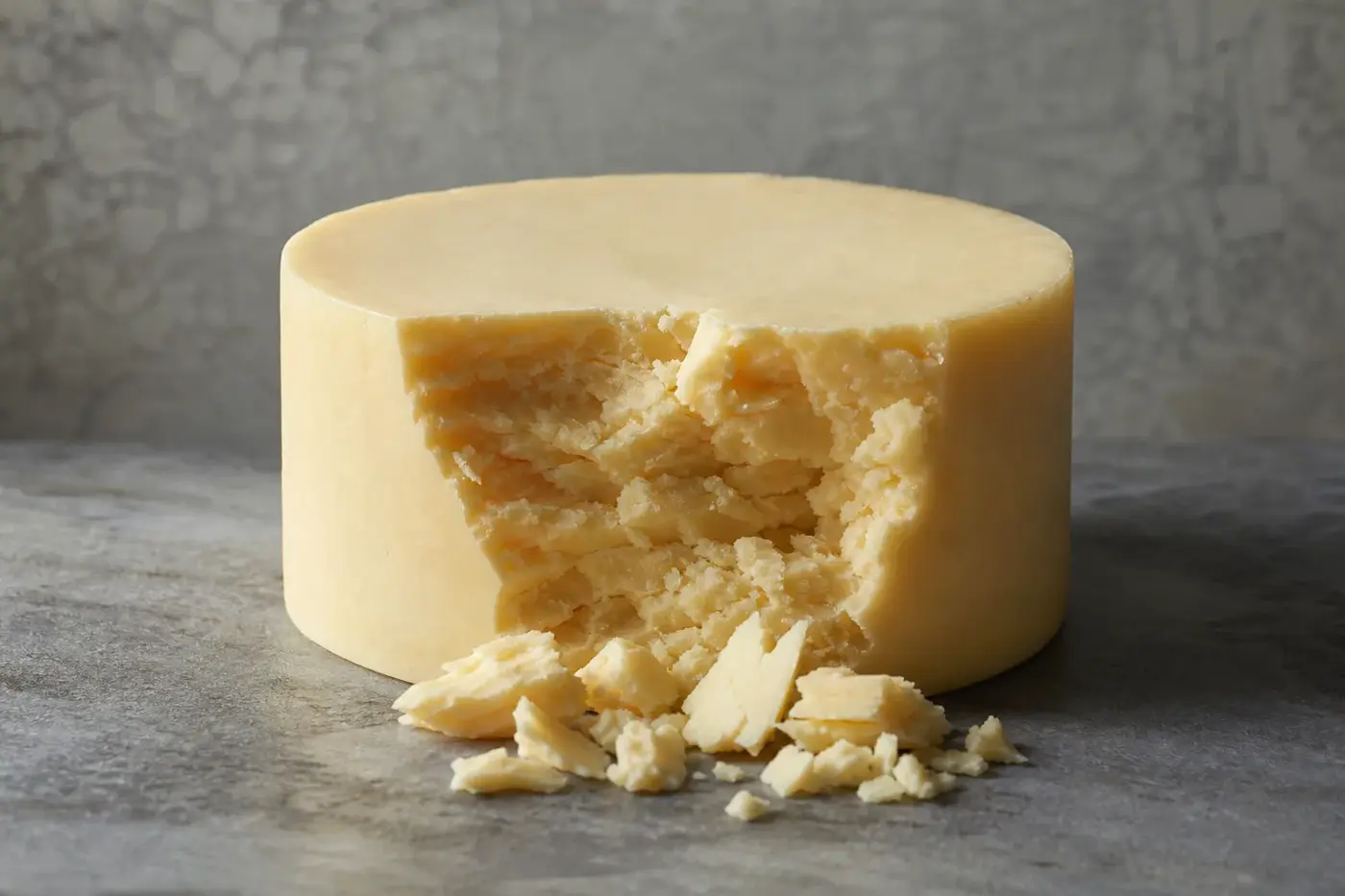
Lift the lid and there it is: pale, firm cheddar, ready to break into craggy pieces as it ages. Cougar Gold has spent at least a year maturing inside that can, an unusually patient approach to tinned food. Your cheese comes from Washington State University’s creamery in Pullman, Washington, where the journey begins with pasteurised cow’s milk. [1, 2, 3]
Get acquainted with the cheese in the can
| What you might like to know | The details |
|---|---|
| Name | Cougar Gold [1] |
| Maker and home | WSU Creamery, Pullman, Washington, United States [1, 10] |
| Style | Natural white cheddar [1, 2] |
| Milk | Pasteurised cow’s milk [1, 2] |
| Minimum age when released | One year [3] |
| Rind | Rindless [3] |
| What goes into it | Milk, cultures, salt and enzymes [1] |
| US cheddar standard | 21 CFR 133.113 [9] |
| Information date | November 2026 |
Meet the tang, then enjoy the crumble
Sharp and nutty are the qualities WSU highlights. Older creamery literature also compares Cougar Gold’s flavour with Swiss cheese or Gouda. You get the familiar tang of cheddar with another layer to explore, all in a firm cheese rather than anything you could spread. [5, 12]
Give it longer and the texture changes with the taste. The creamery says further maturation makes Cougar Gold sharper, drier and more crumbly. After additional years in the refrigerator, its paste, or body, is better suited to broken pieces and shavings than immaculate sandwich slices. [2]
How cracking wax led to a tin
The story begins with a packaging problem. In the late 1930s, the creamery became interested in canning because cracks in cheese wax could expose the contents to contamination. During the 1940s, the US government and American Can Company supported research into keeping cheese in tins. [4]
A sturdy container was only part of the answer. Carbon dioxide produced during ripening could distort or burst it. A university account published in 2004 explains that an additional bacterial culture helped reduce gas production, so what happened inside the tin mattered as much as the packaging itself. [13]
That culture became known as WSU 19. A university report published in 2010 separated its original packaging role from its contribution to flavour. By then, the creamery said its main starter could produce cheese suitable for ripening in cans without WSU 19, but the additional culture still contributed to Cougar Gold’s distinctive character at that time. [6]
Then the story reaches a surviving sales receipt. WSU’s 2023 anniversary account identifies 24 September 1948 as the earliest discovered example. It records a sale, not the first experimental batch: the wartime research belongs to the earlier development story, while that first batch remains a separate milestone. [7]
The researcher tucked into the name
You might reasonably expect “Gold” to describe the colour. Instead, Cougar Gold brings together the university’s cougar mascot and a shortened form of the surname of the dairy professor who conducted the original development work. An archived WSU creamery leaflet records both connections, so the name commemorates a researcher, not a colour or an added ingredient. [5]
Follow your cheese from milk to can
Before the unusual packaging comes a familiar cheddar-making routine. WSU’s illustrated production account begins with milk being tested, pasteurised and given a bacterial starter culture to develop acidity. Rennet, a milk-clotting enzyme, then forms curd, the solid material that separates from liquid whey. [3]
Next comes cutting, heating and cheddaring. Picture slabs of curd being cut and stacked to help drain whey, then milled into smaller pieces before salting and pressing. WSU’s photographs show the pressed cheese being cut to fit its cans and sealed for a year of maturation. [3]
Inside the sealed container, maturation continues. The cheese stays rindless because its outside never develops an exposed, ripened surface. As the creamery emphasises, this is natural cheese, with the can serving as its ageing package; you can follow the wider journey in how cheese is made. [2, 3]
The ingredient list is short: pasteurised milk, cultures, salt and enzymes. Unlike the creamery’s Natural Cheddar and Smoky Cheddar, whose lists include annatto colouring, Cougar Gold has no added colour. That pale appearance is part of its identity as a white cheddar. [1]
A year in the can before it reaches you
Cougar Gold ages for at least one year before the creamery releases it. That is the producer’s practice, not a requirement of the US cheddar standard. It is a useful distinction when you are comparing ageing claims. [1, 2, 9]
Under 21 CFR 133.113, cheddar made with unpasteurised dairy ingredients must cure for at least 60 days at no less than about 1.7 °C (35 °F). Cougar Gold is made with pasteurised milk. Its year in the can follows the creamery’s own maturation schedule. [1, 2, 9]
Make room for the can in your fridge
Keep the unopened can in the refrigerator, as the creamery instructs. Under the US guidance used here, the FDA recommends 4 °C (40 °F) or below. If you are wondering about the date on the lid, WSU says it is the manufacturing date. [2, 8]
Use a clean can opener, then remove the cheese from the can. WSU advises dividing it into three or four wedges, wrapping each individually or vacuum-sealing, and keeping them in an airtight container in the refrigerator. This lets you unwrap one wedge while leaving the others wrapped and handling them less often. [2, 8]
The creamery discourages freezing because it makes the cheese more crumbly. Treat it as refrigerated cheese from the outset, and keep the remainder covered and chilled after opening, using clean hands, surfaces and utensils as the FDA advises. For more wrapping options, visit how to store cheese at home. [2, 8]
Give the first mouthful your full attention
For easier cutting, WSU suggests letting your serving portion approach room temperature and using a wire cutter. Take out only what you intend to serve. The FDA’s US advice allows foods requiring refrigeration no more than two hours at room temperature, or one hour above an air temperature of 32.2 °C (90 °F). [2, 8]
Taste the cheese alone first, particularly if you are comparing cans of different ages. Then try plain bread or an unsalted cracker, followed by crisp apple or pear. The neutral base gives the cheese room, while fresh fruit contrasts with its sharpness without obscuring the differences you came to taste. [5, 12]
For a drink, try sparkling apple juice or a still apple drink. You are looking for fruitiness to set against the cheddar’s tang. Find more pairing principles in cheese and wine pairing.
Let the crumble earn its place in the kitchen
The creamery’s recipe collection takes Cougar Gold well beyond the cheeseboard. You will find cauliflower soup, potato soup, apple and onion soup, macaroni cheese, grilled cheese sandwiches and scalloped potatoes. These producer-published recipes give you a sense of its range, from main dishes to toppings. [11]
An older piece may crumble just when you want a slice. Let it: your sandwich may have ambitions of neatness, but a baked potato, toast topping or soup garnish has no such demands. For macaroni cheese or smooth soup, follow a complete recipe that balances the cheese with liquid and other ingredients. [2, 11]
Grating distributes the cheese through a dish, but crumbles work too wherever a recipe calls for grated cheddar. If you have a particularly interesting older piece, consider saving it for the finish. Its flavour can then stay distinct in each mouthful rather than becoming part of the background.
Find its relatives in American cheddar
For a useful comparison, put Cougar Gold beside natural cheddars made elsewhere in the United States, rather than processed cheese slices. The federal cheddar standard allows a variety of ingredients and production choices. American origin alone does not explain what you taste here: look to WSU’s culture history, enclosed maturation and age at release. [6, 9, 13]
The US rule sets maximum moisture at 39% of the whole cheese and minimum milkfat at 50% of its solids, also called fat in dry matter. These are compositional limits for cheddar sold under that standard. The year in Cougar Gold’s can tells you something else: how long the creamery matures it. [3, 9]
Even within WSU’s range, you are looking at distinct cheeses, not maturity grades of one product. Natural Cheddar lists annatto; Smoky Cheddar lists annatto and smoke flavour; Cougar Gold lists neither. Explore more of the family in the cheddar guide. [1]
Meet the students behind your can
Behind the packaging are students doing real production work. WSU describes the creamery as a working teaching environment, following milk from the university’s Knott Dairy Center, near Pullman, to students who pasteurise it under staff supervision. This is an education in making cheese, not simply studying a branded product in a classroom. [10]
The creamery moved into the Food Quality Building in May 1992. Its history records another important change in the late 1970s, when cheesemaking became a year-round activity rather than being organised around the university’s need for drinking milk. The packaging experiment had become a sustained part of university food production. [4]
WSU says product sales support student employment and contribute to food science education. Your can connects a campus dairy, a supervised production workforce and a long-running research tradition. That is plenty of history to lift the lid on, while the cheddar inside keeps developing. [4, 10]
General information only, not medical advice: follow the official guidance where you live.
Questions people ask
What is Cougar Gold cheese?
Cougar Gold is a natural white cheddar made from pasteurised cow’s milk by Washington State University’s creamery in Pullman, Washington. It matures in a can for at least one year before release.
Why is Cougar Gold sold in a can?
The creamery began investigating canning in the late 1930s because cracks in cheese wax could leave the contents exposed to contamination. During the 1940s, the US government and American Can Company supported research into keeping cheese in tins.
What does Cougar Gold taste like?
WSU describes it as sharp and nutty, while older creamery literature compares its flavour with Swiss cheese or Gouda. Longer maturation makes it sharper, drier and more crumbly.
How should I store Cougar Gold after opening it?
WSU advises transferring the cheese out of the can and dividing it into three or four wedges. Wrap each wedge individually or vacuum seal it, then store the wedges in an airtight container in the refrigerator.
Can you freeze Cougar Gold?
The creamery discourages freezing because it makes the cheese more crumbly. It instructs customers to keep the unopened can refrigerated.
Sources
-
Washington State University Creamery. WSU Creamery: nutrition information and cheese ingredients. Undated PDF, hosted in a directory dated 2014. Ingredient table and milk declaration. Published document.
-
Washington State University Creamery. FAQ’s. Undated web edition retrieved November 2026. Sections on natural cheese, storage, ageing, freezing, manufacture dates and slicing. Producer guidance.
-
Washington State University, Washington State Magazine. Gallery: The Cheesemaking Process at WSU Creamery. Undated illustrated account. Production sequence.
-
Washington State University Creamery. History. Undated web edition retrieved November 2026. Institutional history.
-
Washington State University Creamery. Cougar Cheeses. Undated historical leaflet preserved in Montana State University’s Bud Lilly collection, in a file containing WSU correspondence dated 23 September 1983. Archival file.
-
Washington State University, Washington State Magazine Discovery archive. WSU 19: The secret to Cougar Gold. 30 August 2010. University report.
-
Washington State University, College of Agricultural, Human, and Natural Resource Sciences. A diamond anniversary for Cougar Gold. 2023. Anniversary account.
-
US Food and Drug Administration. Are You Storing Food Safely? Web edition retrieved November 2026. “Storage Basics” and “Refrigeration Tips”. US consumer guidance.
-
US Food and Drug Administration. 21 CFR 133.113: Cheddar cheese. eCFR text displayed as current to 5 November 2026, particularly paragraph (a)(1). Federal standard.
-
Washington State University Creamery. Visit the Creamery. Undated web edition retrieved November 2026. Milk supply and supervised student production. Creamery account.
-
Washington State University Creamery. Cougar Cheese Recipe Index. Undated web edition retrieved November 2026. Producer-published culinary uses. Recipe collection.
-
Washington State University, Garfield County Extension. Newsletter, July to August 2020, page 15. Creamery account describing nutty, sharp cheese. Published document.
-
Washington State University, Washington State Magazine. How Cougar Gold Made the World a Better Place. 1 November 2004. Section “Not Your Average Cheddar”. University account.
This piece was researched from university production accounts, historical creamery literature, published US consumer guidance and the federal cheddar standard; serving suggestions are editorial judgements rather than a recorded tasting.
Last checked: November 2026
Last checked November 2026.
The editors suggest you read next
American Cheese: The Processed Slice Explained
Watch a slice of American cheese soften over your burger.