Cypress Grove
Cut into a wedge of Humboldt Fog and there it is: a dark seam of ash beneath a white rind.
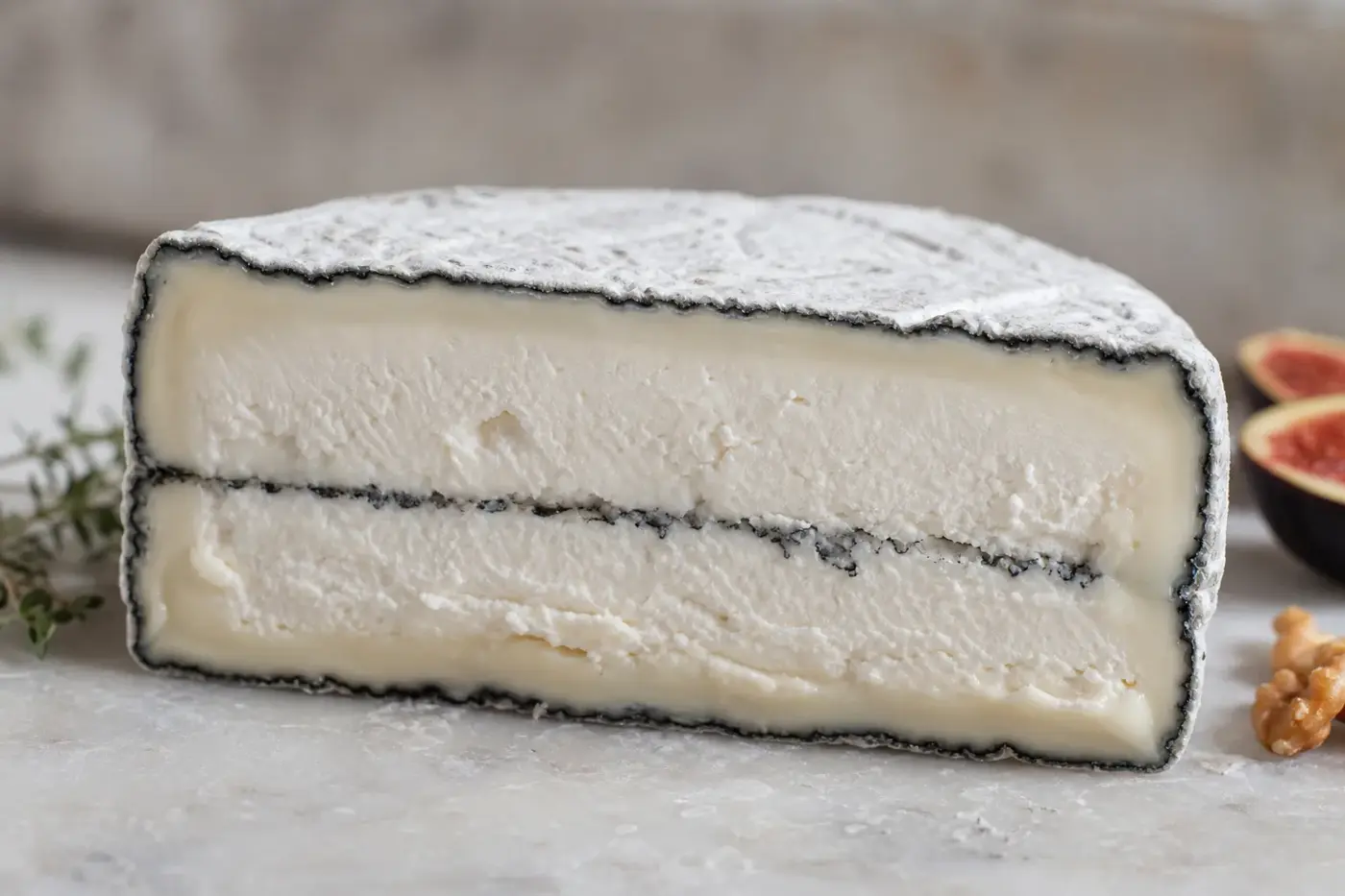
Cut into a wedge of Humboldt Fog and there it is: a dark seam of ash beneath a white rind. You could hardly mistake it for anything else. Behind that signature is Mary Keehn, who began keeping goats for her children's milk and founded Cypress Grove in 1983.[1][4]
That household beginning grew into an Emmi-owned producer of fresh, soft-ripened and aged cheeses. Its home is still Arcata, in California's Humboldt County. The story, though, now reaches well beyond the founder's herd.[1][2][3][4]
Your introduction to Cypress Grove
| What you might want to know | The details |
|---|---|
| Producer | Cypress Grove Chèvre, Inc.[2] |
| Home | Arcata, Humboldt County, California, United States.[2][4] |
| Beginnings | Founded in 1983 by Mary Keehn.[1] |
| Ownership | Listed within the Emmi group as of November 2026. Emmi records acquisition in August 2010; the exact completion date, direct owner and ultimate parent legal entity remain uncertain.[2][3] |
| Where the milk comes from | Partner dairies. Cypress Grove says its company-owned herd was sold following a transition effective May 2026.[1] |
| Business status | Company-register status remains uncertain. |
| Production status | Current production status remains uncertain from the catalogue.[4] |
| Planning a visit | Access arrangements remain uncertain. |
| Site status | Site status remains uncertain. |
| Official website | Cypress Grove.[1] |
Two goats, French cheese books and a Greyhound bus
Before the larger business came kitchen experiments and an enterprising delivery arrangement. Keehn's early orders travelled from Eureka to San Francisco by Greyhound bus. In a published 2011 interview, she recalled taking samples to a trade show, learning from photographs in French cheese books and using yoghurt as a starter culture.[5]
Cypress Grove dates its foundation to 1983. Its history begins with Keehn keeping goats to provide milk for her children, then turning to cheesemaking as the herd and milk supply grew. You can see the appeal: surplus milk becomes something to share and sell.[1][5]
According to the company's history, Keehn visited French cheesemakers after opening the business. She and Cypress Grove tell the story of Humboldt Fog arriving in a dream on the flight home. Treat that as the founder's origin account, rather than a dated record of the cheese's development.[1][5]
Follow the fog to Arcata
Humboldt Fog takes its name from the fog along the Humboldt coastline. The creamery stands in Arcata, where the coastal imagery meets a less romantic necessity: enough suitable milk. Cypress Grove's history records building its own goat dairy in 2010, partly as a resource for the developing American goat dairy industry.[1][2]
That dairy is no longer the company's milk source. Cypress Grove says it moved away from its company-owned dairy effective May 2026 and sold its goats to other dairies. It describes continuing relationships with dairy partners, including visits to their farms.[1]
So this is not simply Keehn's original herd growing ever larger. Today, you are looking at a creamery working with milk suppliers. It is a different arrangement from those household beginnings.[1]
Humboldt Fog: the ash line has a job to do
The grey centre line and dark layer beneath Humboldt Fog's rind are edible vegetable ash. According to Cypress Grove, the exterior ash reduces surface acidity and encourages the mould that creates the white rind. It is not there merely to look good in your cheese photograph, although it certainly helps.[6]
That surface mould forms a bloomy rind. It is distinct from blue veining, a useful distinction when you are studying the dark seam. The declared ingredients are cultured pasteurised goats' milk, salt, enzymes and vegetable ash.[6][7]
Cypress Grove says its rennet is microbial rather than animal-derived. Rennet is the enzyme preparation that sets the milk. A small ingredient, with a substantial task.[6][7]
The maker describes buttermilk and fresh-cream notes, floral and herbaceous qualities, and a citrus finish. As the cheese matures, a soft cream line develops and the flavour strengthens. Look at your cut wedge: the soft outer paste and firmer centre give a cheesemonger a useful way to show you how far ripening has progressed.[7]
Start fresh, then explore the aged cheeses
If you would rather begin without a mould-ripened wheel, take a look at Purple Haze. It belongs to Cypress Grove's fresh goat cheese range, which the company describes through tanginess and flavourings including lavender, fennel pollen and herbs. The soft-ripened cheeses follow another route, developing their character through maturation.[4][6][8]
Truffle Tremor joins Humboldt Fog in that soft-ripened range. Midnight Moon and Lamb Chopper take you elsewhere in both style and origin: Cypress Grove says these aged cheeses are made in the Netherlands through its cheesemaking partnership there. Midnight Moon uses goats' milk; Lamb Chopper uses sheep's milk.[6]
Keep two questions in mind as you explore: what kind of cheese is this, and where was this particular product made? Separating style from origin helps you compare both. A Californian address cannot answer the second question for every cheese in the range.
Why waiting will not turn fresh cheese into Humboldt Fog
Fresh cheese, a surface-ripened wheel and a firm aged cheese are different intended outcomes. They are not interchangeable ages of the same product. Cypress Grove's range gives you a particularly clear way to see that distinction.[4]
Humboldt Fog's published information identifies three main elements of its manufacture: cultured milk and microbial rennet; a wheel formed with vegetable ash; and ripening that develops a bloomy rind and softening paste. Cultures are the microorganisms used in cheesemaking. Rennet helps the milk coagulate, or set.[6][7]
The key difference between the fresh and soft-ripened ranges comes after forming. Fresh cheeses are presented for their fresh texture and added seasonings, while Humboldt Fog is deliberately ripened to develop its surface rind and changing interior. Your fresh cheese has its own identity, not a future appointment as Humboldt Fog.[4][7][8]
For the wider journey, see how cheese is made. It takes you from setting milk and separating curds from whey to developing texture. That background helps explain why these cheeses take such different forms.[4]
Emmi arrives, with room to grow
Before Emmi's acquisition, milk and cheesemaking capacity put limits on the business. At Emmi's 2018 Investor Day, Cypress Grove's managing director described limited production capacity and scarce suitable milk, followed by investment in a goat dairy and a new creamery. Behind the larger business were those practical changes.[9]
Emmi's acquisition chronology records Cypress Grove joining the group in August 2010. As of November 2026, its international locations page lists Cypress Grove Chèvre, Inc. within its North American business.[2][3]
For Keehn, staying in Humboldt County mattered. She discussed that priority when talking about the sale in her 2011 interview. Together, these accounts trace a founder-led cheesemaker's move into a larger dairy group, gaining resources and capacity without leaving its Californian county of origin.[2][5][9]
A distinctive wedge needs people who can explain it
Humboldt Fog makes ripening something you can see. The ash line catches your eye; the softening paste gives you something concrete to discuss with a cheesemonger. Purple Haze offers a fresh-cheese starting point, while the aged cheeses take the range beyond soft goat cheese.[4][6][7]
Distinctive design and approachable explanation help you understand Cypress Grove. Its approach is one subject; the extent of its influence across the wider American artisan cheese industry is another. Emmi's investor presentation emphasised cheesemonger education, linking growth to people who could explain the cheeses across a counter.[9]
That presentation also described Cypress Grove as the most widely distributed artisan cheese in the United States. This is Emmi's commercial claim, and it gives you a sense of the business's ambitions. Artisan identity and broad distribution were presented as compatible, not opposing aims.[9]
Artisan character and independent ownership are separate questions, too. With Cypress Grove, consider cheese design, handling and maturation alongside its documented corporate ownership. Emmi's investment changed resources and capacity; assessing the cheeses still means looking closely at how each is made, matured and brought to the counter.[3][9]
Choose your wedge and care for it well
For Humboldt Fog, choose the ripeness you want, not simply the oldest wedge. Ask your cheesemonger how far it has matured and what texture to expect. UK availability can vary, so confirm current stock with a specialist before planning around a particular cheese, including the style available and where that product was made.
Cypress Grove recommends waxed paper for ripened cheeses and tight wrapping for fresh cheeses. Follow the storage and opening instructions on your actual pack. For households in England, Wales and Northern Ireland, the Food Standards Agency advises keeping the fridge between 0 and 5 °C, refrigerating dairy products and following date instructions.[6][10]
Serve only the portion you intend to eat and keep the rest chilled, as the producer recommends. For preparation, the FSA advises keeping chilled food outside the fridge for the shortest possible time, with a maximum of four hours. This guidance applies to England, Wales and Northern Ireland.[6][10]
A little plain bread lets you distinguish the rind, centre and seasoning. For more on handling, see cheese storage guidance. If you buy a cut wedge, how to read a cheese label explains which information to retain.
This page summarises published guidance from the official sources it cites. It is not medical advice. Guidance differs between countries and changes over time, so check the current source for where you live, and ask your doctor, midwife, pharmacist or dietitian about your own circumstances.
Pregnancy guidance: look at the rind, not just the milk
A white rind matters in pregnancy guidance, even when the milk is pasteurised. In its UK advice as of November 2026, the NHS advises against eating soft cheeses with a white rind, such as chèvre, unless cooked until steaming hot. This applies whether the milk is pasteurised or unpasteurised.[11]
The NHS separately lists pasteurised soft goats' cheese without a white rind among cheeses that can be eaten. You therefore need to consider the cheese style, not just the milk treatment.[11]
Humboldt Fog is a pasteurised, mould-ripened goat cheese, so consult the guidance for both. The NHS explains that soft-ripened dairy foods may contain Listeria. Check its current advice for your circumstances; cheese food safety covers broader handling principles.[7][11]
Every cheese discussed here contains milk. Read the current label for full ingredients and allergen information, especially on flavoured products, and ask a healthcare professional about an allergy or individual dietary restriction. Neither the milk species nor a statement about vegetarian rennet is enough to decide suitability.[6][7]
Questions people ask
What is the dark line in Humboldt Fog?
The grey centre line is edible vegetable ash. There is also ash beneath the rind, where it reduces surface acidity and encourages the mould that creates the white rind.
What milk and rennet are used in Humboldt Fog?
Humboldt Fog is made with cultured pasteurised goats' milk. Cypress Grove says its rennet is microbial rather than animal derived.
Are all Cypress Grove cheeses made in California?
No. Cypress Grove says Midnight Moon and Lamb Chopper are made in the Netherlands through its cheesemaking partnership there.
Who owns Cypress Grove?
Cypress Grove is listed within the Emmi group. Emmi records its acquisition in August 2010.
Can you eat Humboldt Fog during pregnancy?
The NHS advises against eating soft cheeses with a white rind unless cooked until steaming hot, whether the milk is pasteurised or unpasteurised. Humboldt Fog is a pasteurised goat cheese with a white rind, so check the current NHS pregnancy guidance for your circumstances.
Sources
-
Cypress Grove, Our Story, current web edition, retrieved 2026. Company history and statement of the dairy transition effective May 2026.
Read at cypressgrovecheese.com -
Emmi Group, Locations worldwide, current web edition, retrieved 2026. Lists Cypress Grove Chèvre, Inc. among the group's North American businesses.
Read at group.emmi.com -
Emmi Group, Sustainable profitable growth, undated corporate acquisition chronology, retrieved 2026. August 2010 acquisition entry.
Read at group.emmi.com -
Cypress Grove, Our Cheeses, current web edition, retrieved 2026. Fresh, soft-ripened and aged product categories.
Read at cypressgrovecheese.com -
Culture: the word on cheese, Mary Keehn, interview published 23 October 2011, Fall 2011 edition. Used as primary evidence of Keehn's recollections.
Read at culturecheesemag.com -
Cypress Grove, Frequently Asked Questions, current web edition, retrieved 2026. Ash, product categories, Dutch production and wrapping advice.
Read at cypressgrovecheese.com -
Cypress Grove, Humboldt Fog®, current product information, retrieved 2026. Ingredients, microbial rennet, maturation and producer tasting notes.
Read at cypressgrovecheese.com -
Cypress Grove, Fresh Cheeses, current web edition, retrieved 2026. Producer descriptions of the fresh range and its flavourings.
Read at cypressgrovecheese.com -
Emmi Group, Emmi Investor Day, presentation by the managing director of Cypress Grove and Meyenberg, 7 November 2018. Corporate account of investment, distribution and cheesemonger education.
Read at downloads.emmi.com -
Food Standards Agency, How to chill, freeze and defrost food safely, published 18 December 2017, current GOV.UK edition retrieved 2026. Applies to England, Northern Ireland and Wales.
Read at gov.uk -
NHS, Foods to avoid in pregnancy, current web edition, retrieved 2026. Dairy section distinguishes milk treatment, rind and cooking.
Read at nhs.uk
Researched through producer information, Emmi corporate records, a published founder interview and official UK food guidance; sensory descriptions are the producer's, with no site tasting undertaken.
Last checked: November 2026
Last checked November 2026.
The editors suggest you read next
Farmhouse, Artisan and Industrial Cheesemakers Explained
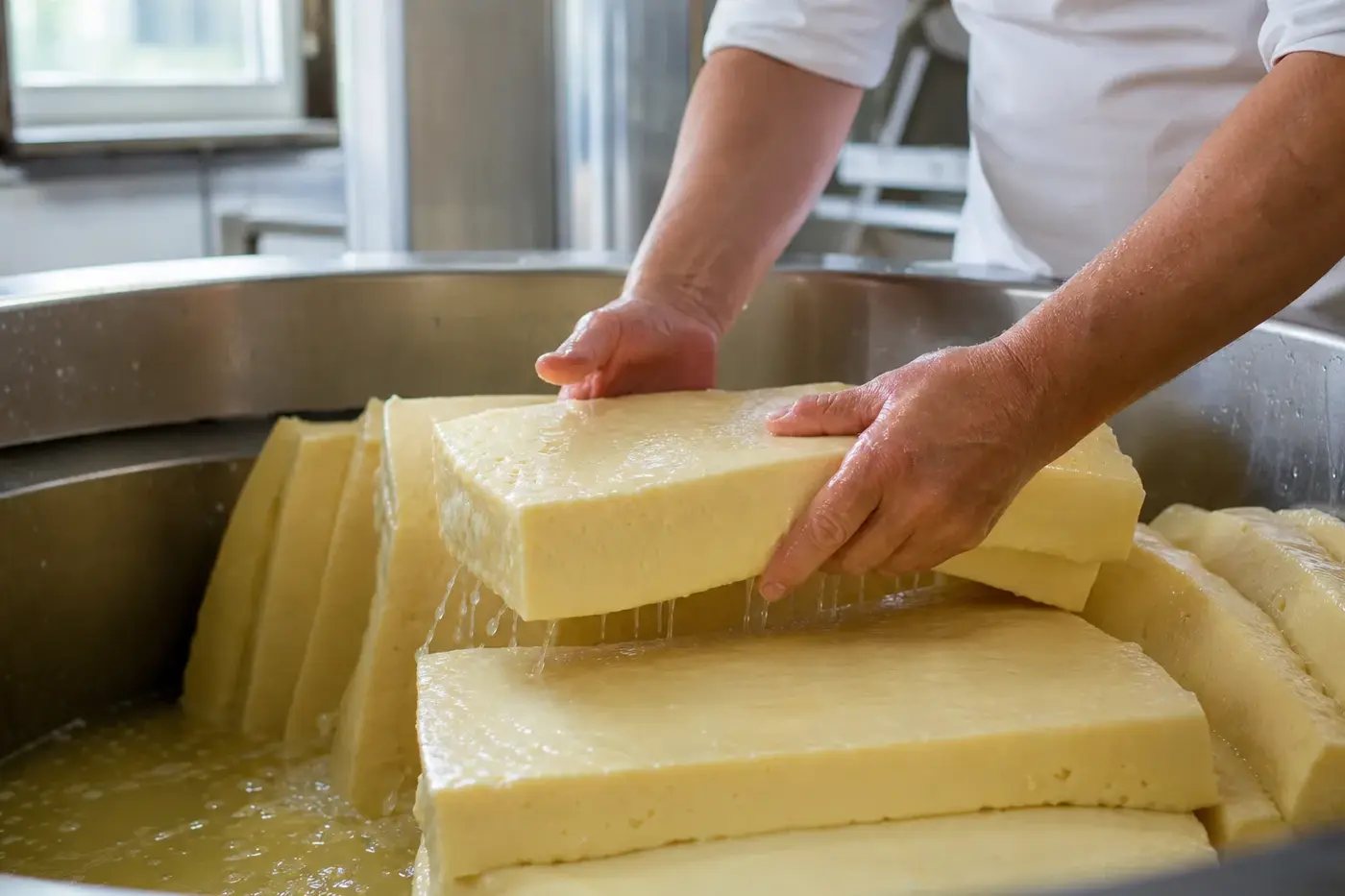
Slabs of curd are turned and stacked by hand.