Humboldt Fog
Cut into Humboldt Fog and a dark ribbon of edible vegetable ash appears across the pale centre.
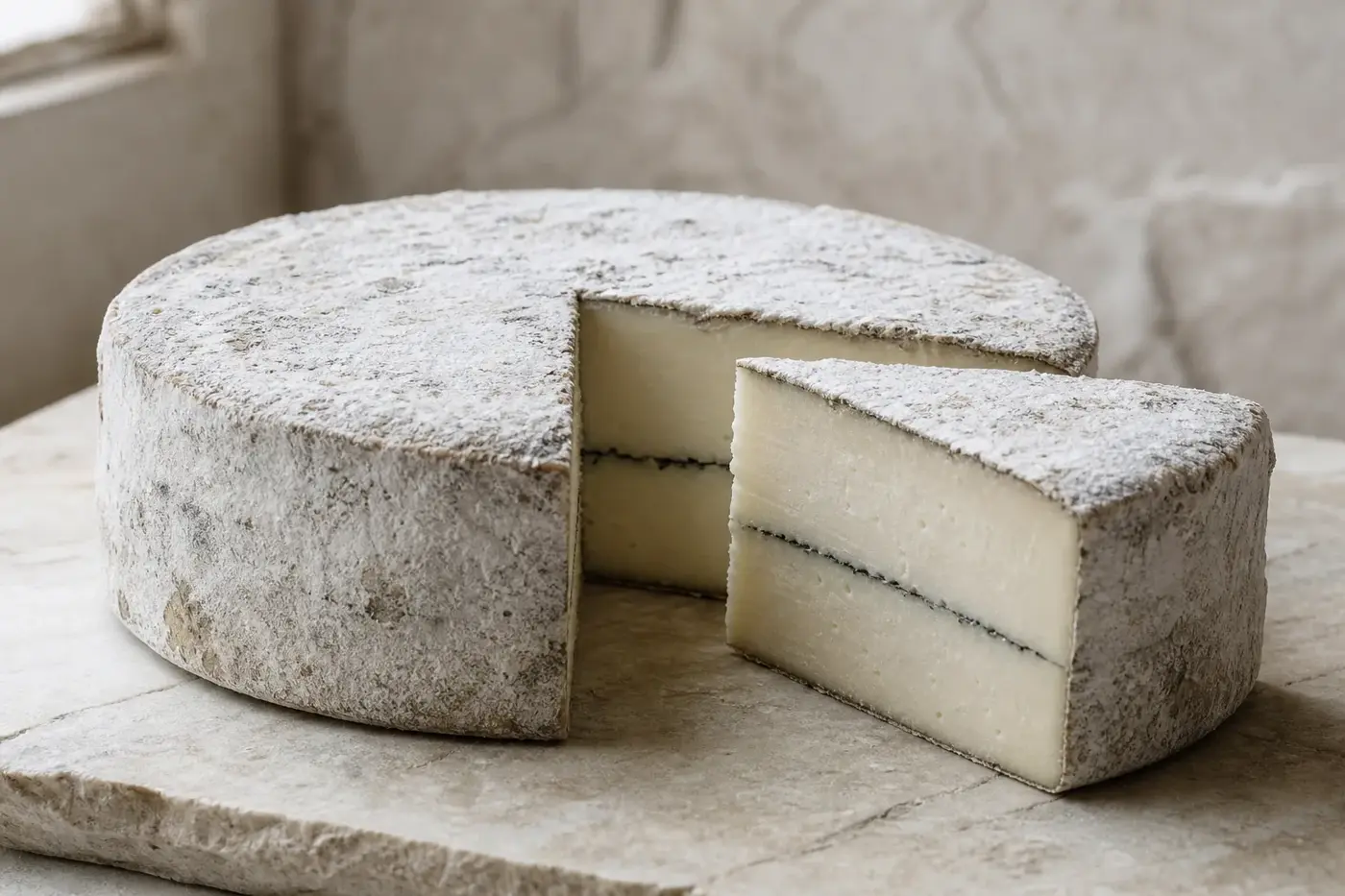
Cut into Humboldt Fog and a dark ribbon of edible vegetable ash appears across the pale centre. Beneath the white rind, a soft band widens as the cheese ripens. This mould-ripened goat cheese comes from Cypress Grove in Humboldt County, California, and its maker traces that striking stripe to northern California’s coastal fog. Quite a view to find inside your cheese. [1, 2, 3]
| A quick look | What you’ll find |
|---|---|
| Name | Humboldt Fog, Cypress Grove’s named cheese. [1] |
| Maker and home | Cypress Grove, Humboldt County, California, United States. [1] |
| Where the story begins | 1992, according to Cypress Grove. [4] |
| Introduction | Not established here |
| Milk | Pasteurised goat milk. [1] |
| What sets the curd | Microbial, non-animal rennet, according to the producer. [1] |
| What goes into it | Cultured pasteurised goat milk, salt, enzymes and vegetable ash. [1] |
| Rind and ash | Edible mould rind; edible vegetable ash through the centre and beneath the rind. [2] |
| Usual maturation before release | Not established here |
| Registered geographical name and register ID | Not established here |
Meet Mary Keehn and the goats who started it
Before Humboldt Fog came two goats: Esmeralda and Hazel. In Cypress Grove’s account, Mary Keehn acquired them in the 1970s to provide milk for her children. As the herd grew, so did the milk supply, and Keehn began turning the surplus into cheese. Cypress Grove opened in 1983. [3]
The company traces Humboldt Fog’s conception to Keehn’s later travels in France. She learned from makers of several cheeses there, including soft-ripened styles. On the flight home, it says, she dreamed of a cheese crossed by an ash line resembling the fog along Humboldt County’s coast. Cypress Grove’s business resources date its inception to 1992. [3, 4]
Once you know that story, the name and stripe fall into place. Here is a Californian cheese shaped by techniques its maker encountered abroad, with a feature of its own coastline running through it. You can see that connection to place each time a wheel is cut. [3]
Follow the ash, inside and out
The horizontal grey line catches your eye first, but there is more ash to the story. Cypress Grove confirms that vegetable ash also coats the outside beneath the mould rind. You are looking at the same declared ingredient in two places. [1, 2]
The producer describes the ash as odourless, tasteless and edible. On the surface, it also has a practical job. It raises the pH of the acidic goat cheese, making the environment less acidic and helping the rind mould grow. [2]
That white, mould-grown exterior is the bloomy rind characteristic of this style. Cypress Grove identifies both rind and ash as edible. If you are choosing by appearance, keep this distinction in mind: the grey stripe is ash, not blue veining. [2]
Curious about what other rinds can tell you? See how to tell cheese styles apart.
From goat milk to that distinctive wedge
The ingredient list is short: cultured pasteurised goat milk, salt, enzymes and vegetable ash. Cypress Grove separately identifies its rennet as microbial and non-animal. Rennet is the coagulant that helps liquid milk become curd, the solid material from which cheese is formed. [1]
Culturing the milk and growing the rind are separate jobs. The milk is cultured, while mould develops on the exterior. Cypress Grove explains that surface ash encourages this mould growth; the rind then plays a central part in the cheese’s changing texture as it matures. [1, 2, 5]
What reaches your plate is therefore quite different from an unaged, rindless goat cheese. Humboldt Fog depends on cultured goat milk, ash and subsequent soft ripening working together. The stripe gets the attention, but it cannot claim all the credit. [1, 2, 5]
For a closer look at the coagulant, see rennet explained.
Read the wedge from rind to centre
Start at the rind and look inwards. Cypress Grove’s general guide to soft-ripened cheese describes a young cheese with a very white rind, firm, moist paste and a narrow creamline. “Paste” is simply the body of the cheese; the creamline is the softer band immediately beneath the rind. [5]
As the cheese matures, that creamline broadens and becomes more fluid. Meanwhile, the central paste becomes drier and flakier, then eventually denser. In a mature wedge, you might find a yielding outer layer around a firmer, chalkier centre. The producer describes these contrasts as normal development. [5]
Cypress Grove attributes the expanding creamline to proteolysis, the breakdown of proteins. It links lipolysis, the breakdown of fats, to deepening aroma and flavour. Its guide also describes some browning of the rind during maturation. [5]
Your ideal wedge depends on which balance you enjoy. You might favour a substantial firm centre, a more flowing creamline, or a little of each. Ask the cheesemonger about the particular wheel being cut rather than relying on age alone.
Take your time with buttermilk, cream and citrus
Cypress Grove’s tasting notes describe buttermilk and fresh cream, floral and herbaceous qualities, and a citrus finish. If you usually stop at “tangy”, those notes give you a few more things to look for. [1]
The producer says flavour intensity increases with maturation, while its ripening guide records a deepening aroma. A younger-looking wedge gives you the firmer texture to explore. With a more developed creamline, the contrast between the centre and outer band becomes a bigger part of the experience. [1, 5]
Find your wedge at the cheese counter
Look at the cut face if you can. Tell the cheesemonger whether you prefer a substantial firm centre or a broader soft layer, then ask which available cheese fits. The producer’s ripening guide makes texture a more useful starting point than age alone. [5]
Check the pack’s storage instructions and date. If you are buying a freshly cut portion, ask for handling guidance and a piece sized for your intended meal. Do not assume a whole wheel’s storage information applies to your wedge.
Some rind browning and a widening creamline can accompany normal maturation. Spoilage is different: the US Food and Drug Administration says food that develops an off odour, flavour or texture through spoilage should not be eaten. The producer’s ripening descriptions do not override those warning signs. [5, 6]
Settle it into the fridge
Cypress Grove recommends keeping Humboldt Fog cold and rewrapping it in waxed or parchment paper so the soft-ripened cheese can breathe. Its general FAQ advises keeping cheese cold without freezing it. Remove only the portion you intend to serve. [1, 2]
US FDA guidance specifies a home refrigerator temperature of 4 °C (40 °F) or below. Use a fridge thermometer to check the temperature rather than relying on the appliance’s dial alone. [6]
An uncut wheel and a cut wedge need different handling. Cypress Grove publishes different optimal shelf-life figures for its uncut wheel sizes. Those figures apply to the producer’s uncut products, not a fresh countdown beginning when you buy or unwrap a wedge. Follow the instructions supplied with your portion. [1]
Keep the wrapping and label together so you retain the cheese’s identity, date and handling information. At the counter, ask the cheesemonger to write down the storage advice as they wrap your piece.
For the wider principles, see how to store cheese at home.
Bring just enough to the table
Warm only what you intend to eat. Cypress Grove recommends taking Humboldt Fog out of refrigeration before serving; its product page suggests at least an hour. Keep that warming time within the applicable food-safety limit. [1, 2]
Under US FDA guidance, preparation, warming and time on the table all count together. Discard perishable food left unrefrigerated for more than two hours. If the surrounding temperature exceeds approximately 32 °C (90 °F), that limit falls to one hour. Shorten the warming period in hot conditions. [7]
For a long gathering, serve small portions and keep the reserve refrigerated. FDA buffet guidance recommends replacing nearly empty dishes with fresh ones. Do not add new food to a dish already on the table. [7]
Leave a little space on the plate
Begin with plain bread or an unseasoned cracker, then taste the cheese on its own. Give yourself a moment to notice the firmer centre and softer outer band before bringing other flavours into the picture.
Next, try a little ripe pear, apple or fresh grape. These suggestions keep the plate restrained and give you room to explore different stages of ripeness. Put the fruit alongside the wedge so everyone can choose their own balance.
For a drink without alcohol, try still or sparkling water. Either leaves room for the cheese’s tang.
This page summarises published guidance from the official sources it cites. It is not medical advice. Guidance differs between countries and changes over time, so check the current source for where you live, and ask your doctor, midwife, pharmacist or dietitian about your own circumstances.
Pregnancy and higher-risk groups: find the guidance for you
United Kingdom, NHS guidance, November 2026: during pregnancy, the NHS advises avoiding mould-ripened soft cheeses with a white coating, including soft goat cheeses, unless cooked until steaming hot. That advice covers both pasteurised and unpasteurised cheeses in the category. [8]
The NHS also recommends that infants and young children, people over 65, and people with a long-term medical condition or weakened immune system avoid certain cheeses. These include mould-ripened soft cheeses and ripened goat cheeses. Its dairy guidance explains that these cheeses can be used in cooked recipes. [9]
United States, FDA guidance, November 2026: the FDA’s Listeria advice lists pasteurised cheeses other than queso fresco-type cheeses as lower-risk choices for at-risk people. It identifies pregnant people, newborns, older adults and people with weakened immunity among those at higher risk. This differs from the NHS’s specific white-rind pregnancy advice. [6]
Follow the current official guidance where you live, and discuss your individual circumstances with your healthcare professional. Cypress Grove’s confirmation that the rind and ash are edible concerns those components. The country-specific guidance above governs the relevant food-safety choices. [2, 6, 8, 9]
Questions people ask
What is the grey line in Humboldt Fog?
It is edible vegetable ash, not blue veining. Cypress Grove describes the ash as odourless and tasteless.
Can you eat the rind of Humboldt Fog?
Cypress Grove says both the mould rind and the vegetable ash beneath it are edible.
Is Humboldt Fog made with pasteurised milk and vegetarian rennet?
It is made with pasteurised goat milk. Cypress Grove says its rennet is microbial and non animal.
How should I store and serve Humboldt Fog?
Cypress Grove recommends keeping it cold and rewrapping it in waxed or parchment paper. It suggests taking it out of refrigeration at least an hour before serving. The US FDA advises discarding perishable food left unrefrigerated for more than two hours, or one hour when the temperature exceeds approximately 32 °C.
Can I eat Humboldt Fog during pregnancy?
The NHS advises avoiding mould ripened soft cheeses with a white coating during pregnancy unless cooked until steaming hot, whether made with pasteurised or unpasteurised milk. US FDA guidance differs, listing pasteurised cheeses other than queso fresco type cheeses as lower risk choices for at risk people. Check the current NHS or FDA guidance for where you live and discuss your circumstances with a healthcare professional.
Sources
- Cypress Grove. Humboldt Fog. Current product page, undated, retrieved November 2026. Ingredients, origin, rennet, tasting notes, storage, serving and uncut shelf-life information. Product page.
- Cypress Grove. Frequently Asked Questions. Current web edition, undated, retrieved November 2026. Sections on ash, rind, microbial rennet and wrapping. Producer FAQ.
- Cypress Grove. Our Story. Current web edition, including a May 2026 operational update, retrieved November 2026. Founder, early goats, opening in 1983 and the producer’s creation account. Company history.
- Cypress Grove. B2B. Current web edition, undated, retrieved November 2026. “Awards & Recognitions” section dates Humboldt Fog’s inception to 1992. Business resources.
- Cypress Grove. Secret Life of Cheese. Current web edition, undated, retrieved November 2026. Young, ripe and mature soft-ripened cheese descriptions. Ripening guide.
- US Food and Drug Administration. What You Need to Know About Preventing Listeria Infections. Current web edition, retrieved November 2026. Refrigeration, spoilage and higher-risk groups’ food choices. FDA guidance.
- US Food and Drug Administration. Serving Up Safe Buffets. Current web edition, retrieved November 2026. Small portions, replacement dishes and unrefrigerated time limits. FDA serving guidance.
- NHS. Foods to avoid in pregnancy. Current web edition, retrieved November 2026. Cheese and dairy section. NHS pregnancy guidance.
- NHS. Dairy and alternatives in your diet. Current web edition, retrieved November 2026. Higher-risk groups, cheese and young children. NHS dairy guidance.
- US Food and Drug Administration. Recalls, Market Withdrawals, & Safety Alerts. Live index, retrieved November 2026; used for the editorial recall check. FDA recall index.
- Food Standards Agency. Alerts. Live index, retrieved November 2026; used for the editorial recall check. FSA alert index.
Researched from Cypress Grove’s published product and historical accounts, with handling and higher-risk-group guidance checked separately against UK and US official sources.
Last checked: November 2026
Last checked November 2026.
The editors suggest you read next
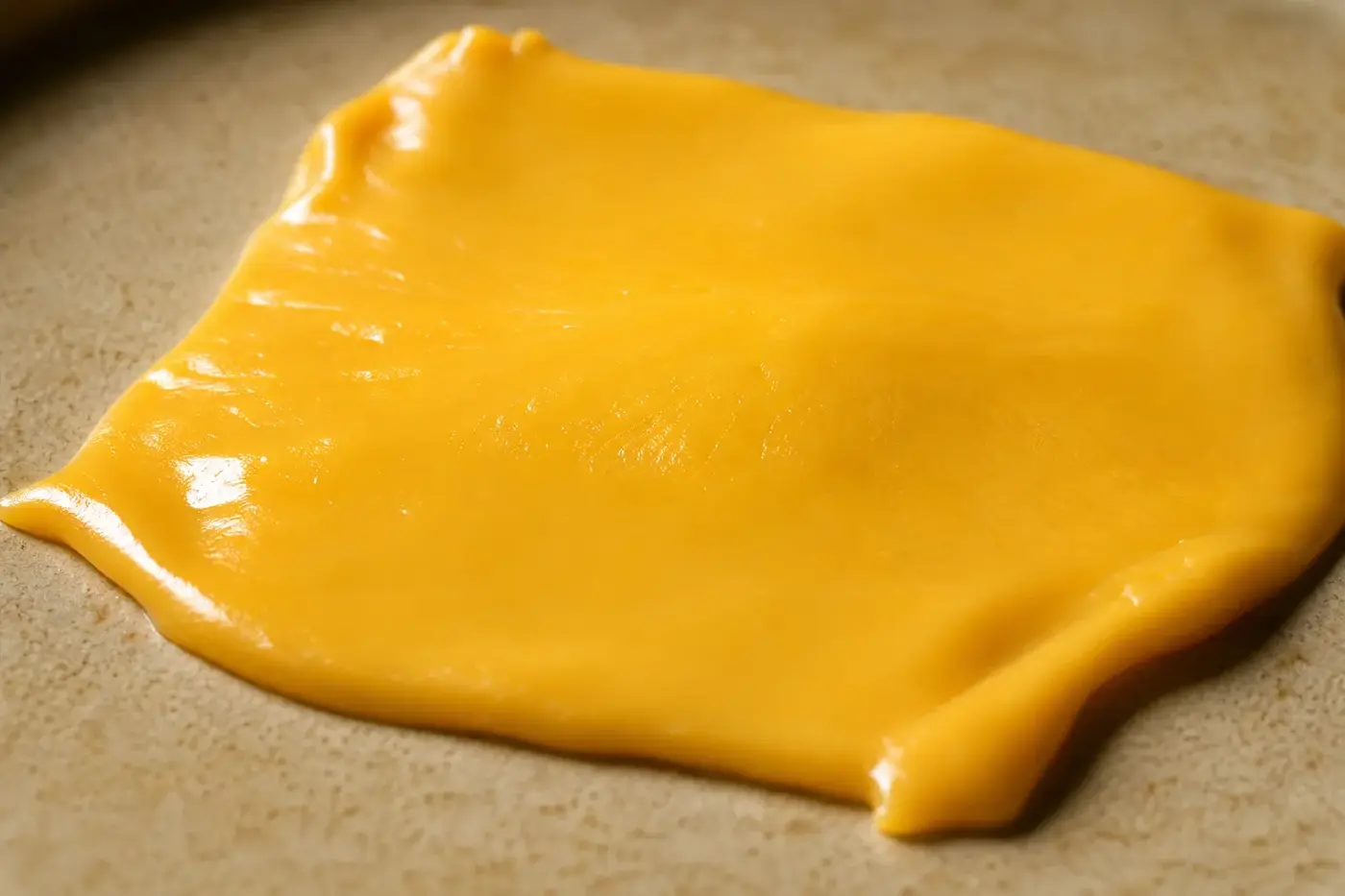
American Cheese: The Processed Slice Explained
Watch a slice of American cheese soften over your burger.