Darú
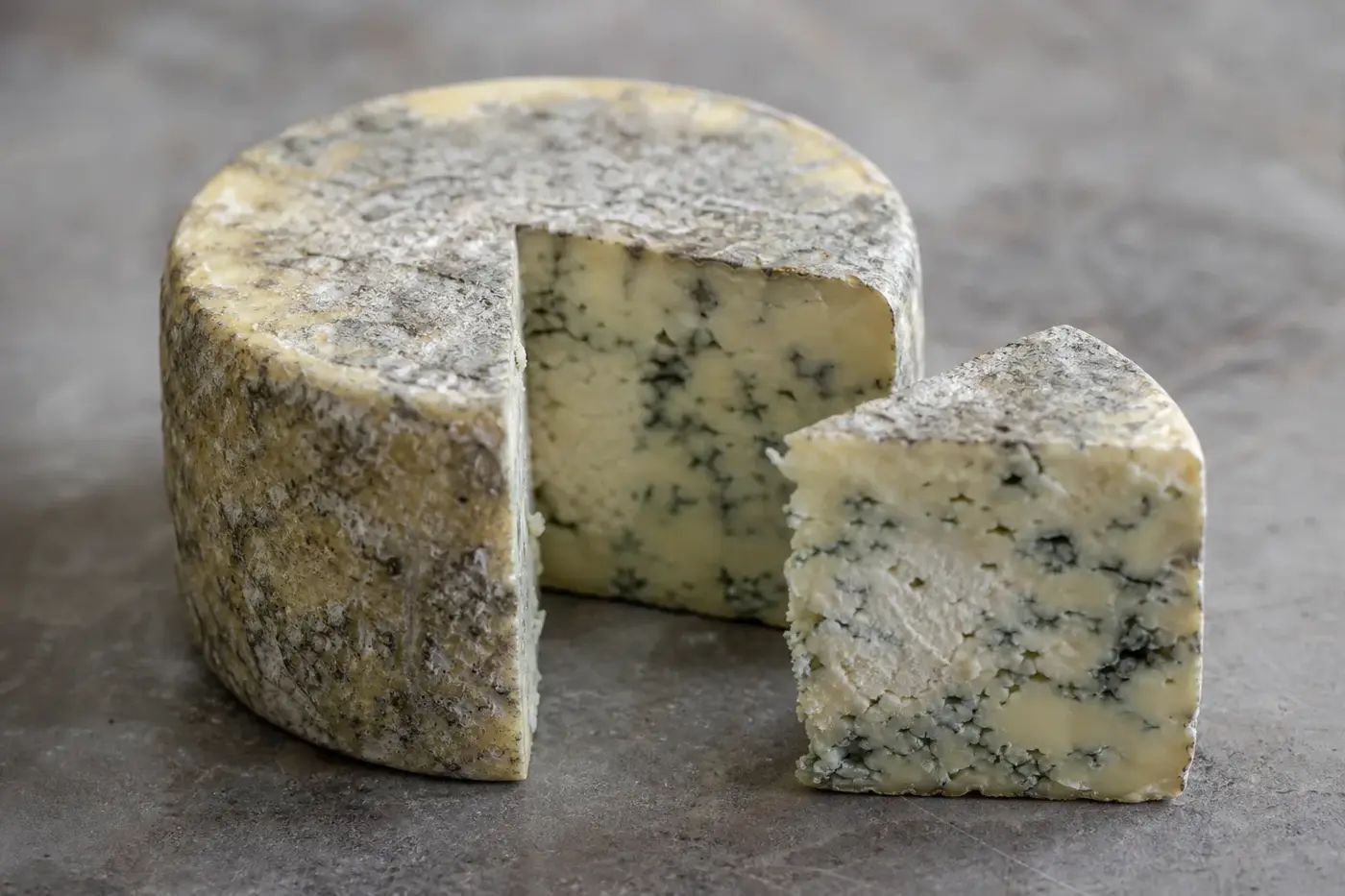
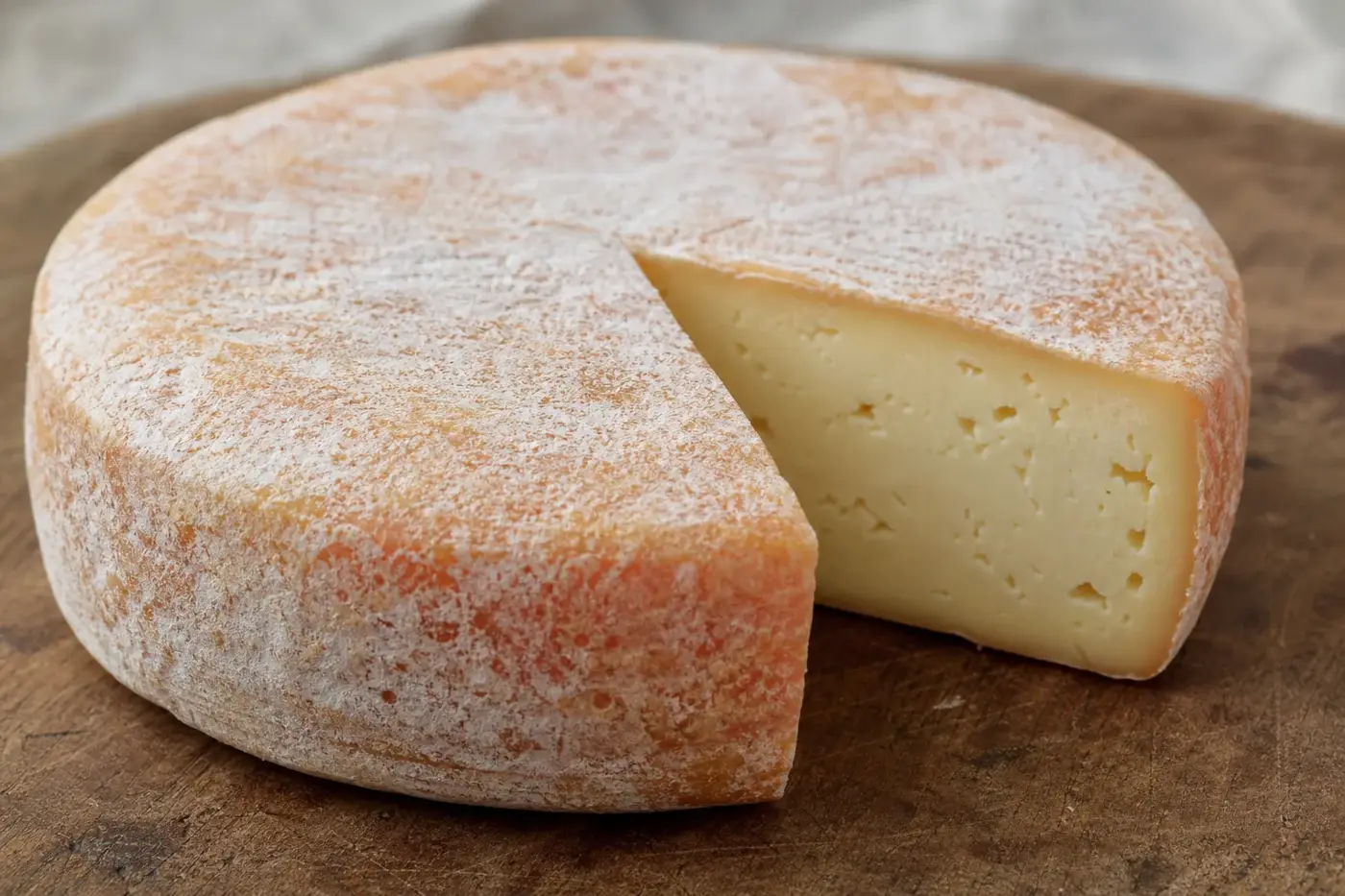
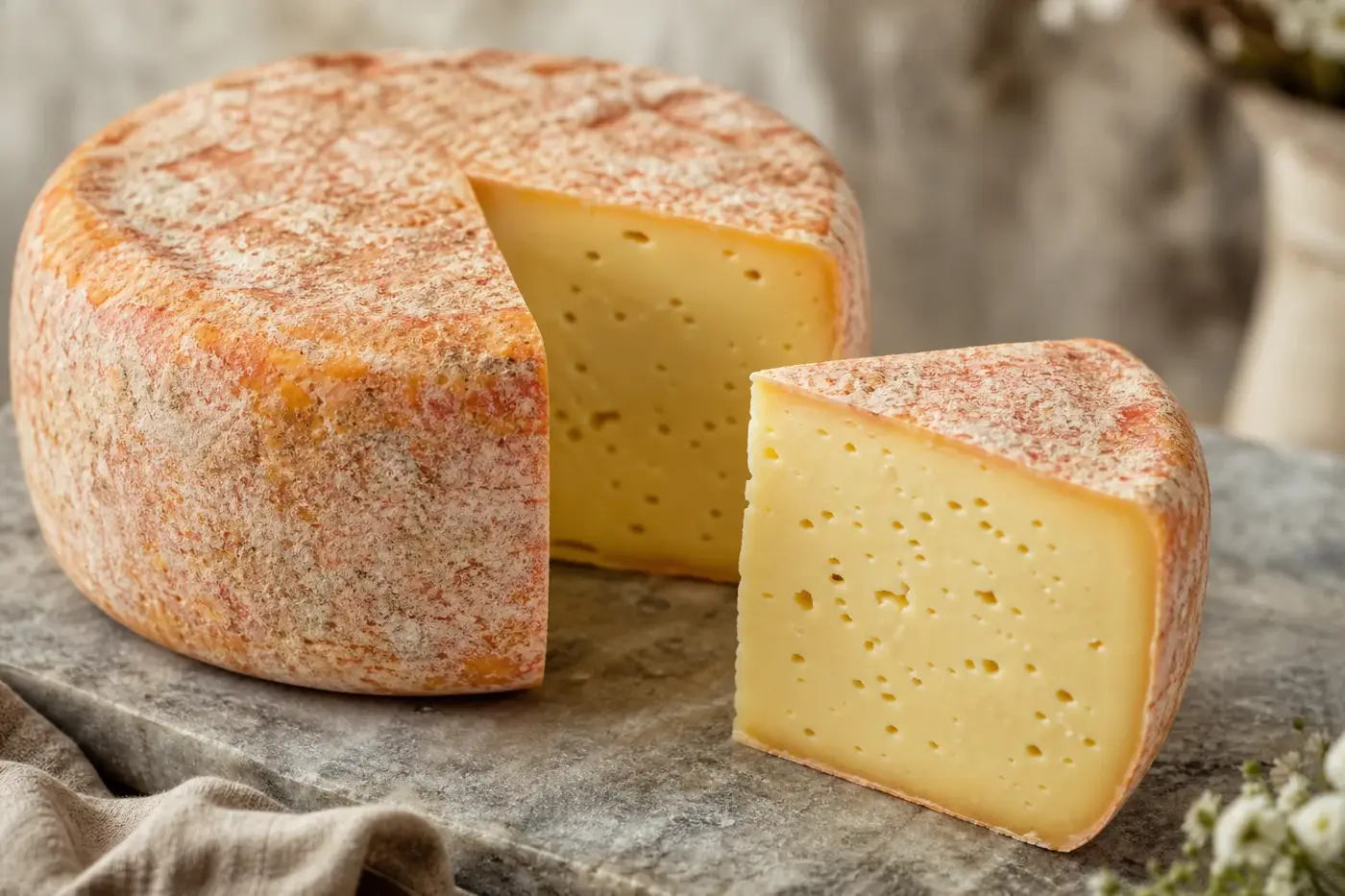
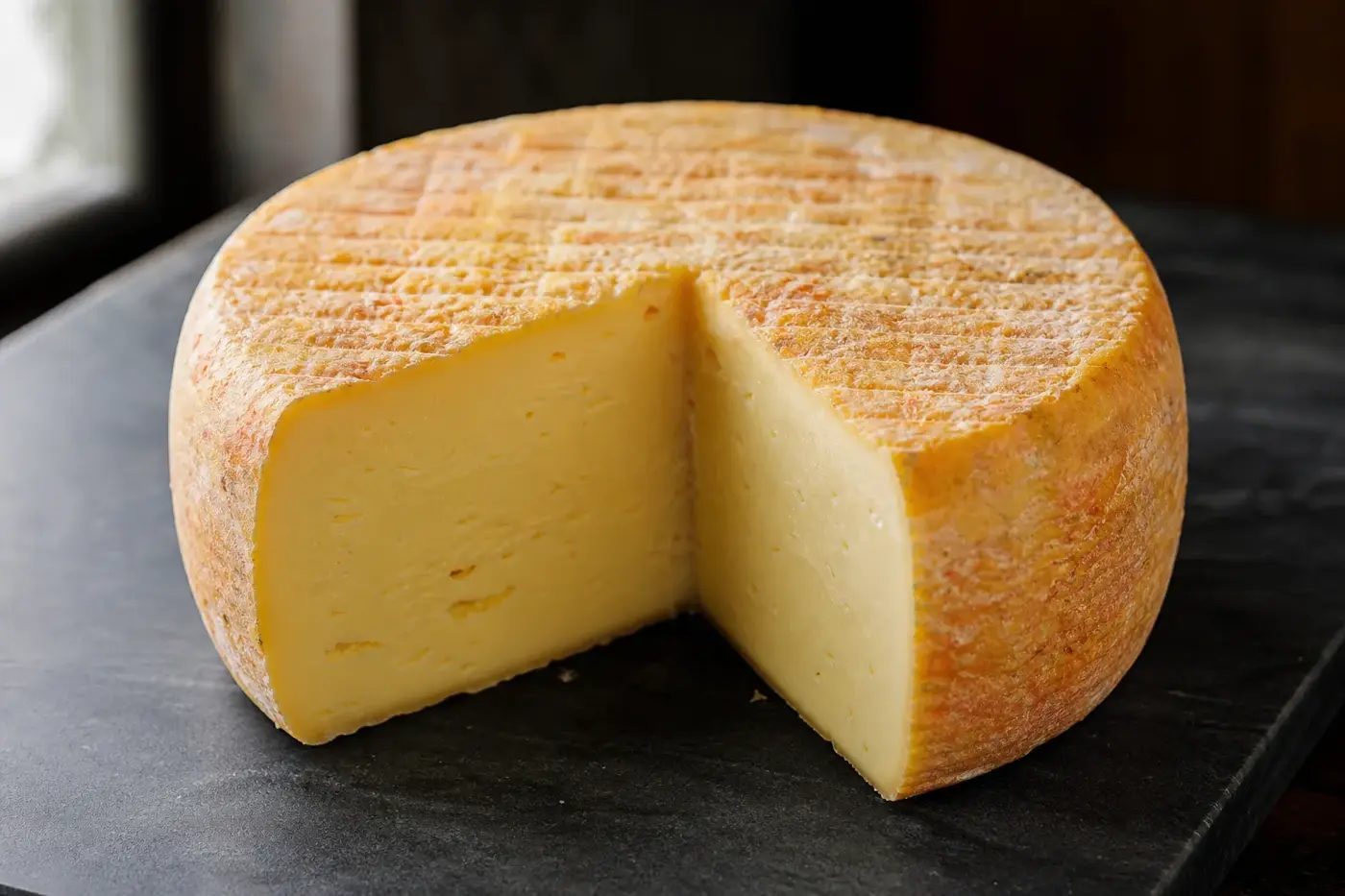
Cut through Darú’s grey, dusty rind and there it is: yellow paste, small openings and a chalky centre that softens as the cheese ripens.
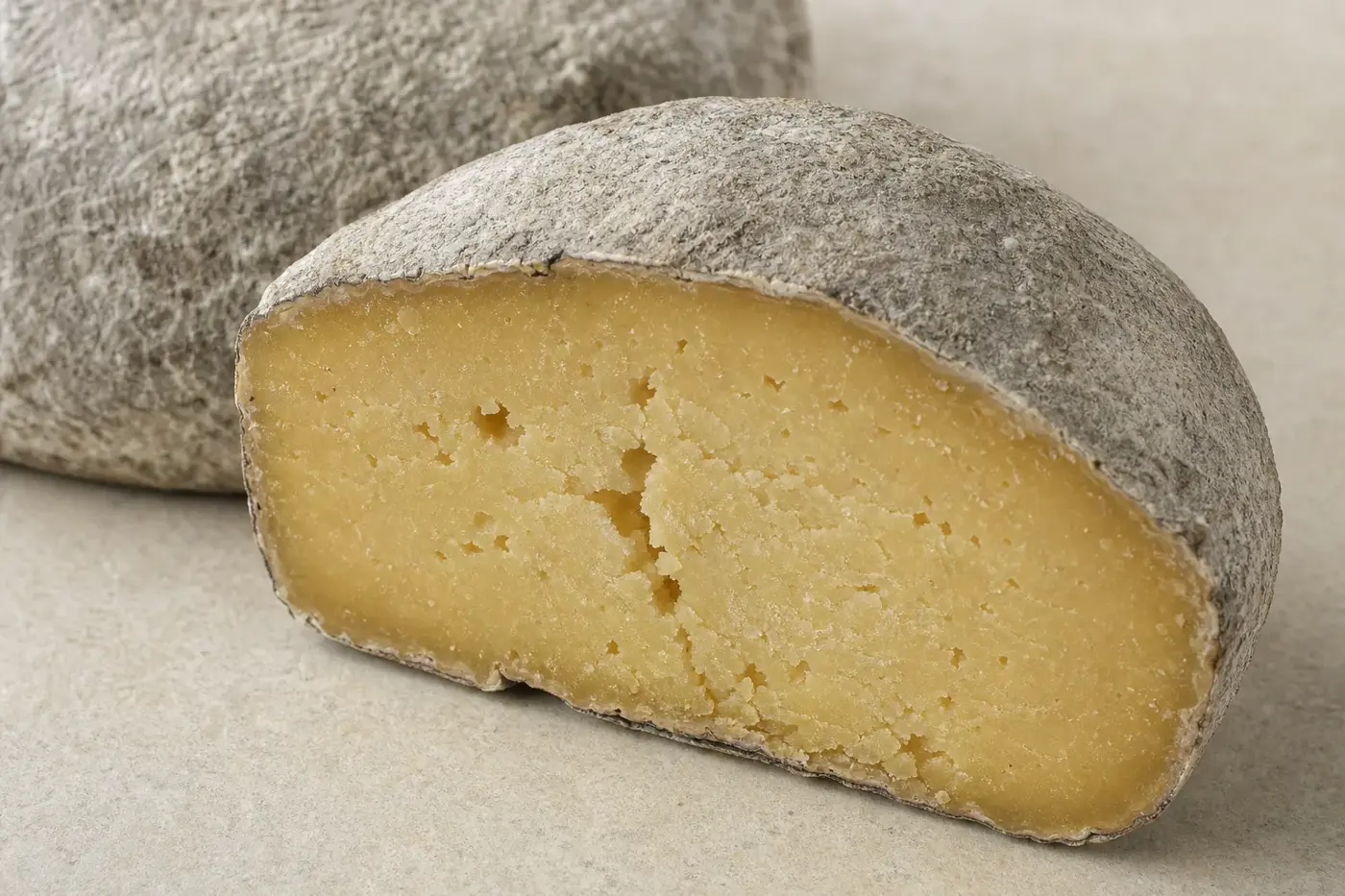
Cut through Darú’s grey, dusty rind and there it is: yellow paste, small openings and a chalky centre that softens as the cheese ripens. You are looking at an Irish semi-hard cheese from Cooleeney Farm in County Tipperary, made with the farm’s own cow’s milk and matured under a natural rind. Its maker describes a mild, buttery character, with earthy notes from the surface. [1]
| At a glance | Your quick guide |
|---|---|
| Name | Darú [1] |
| Made by | Cooleeney Farm, Moyne, Thurles, County Tipperary, Ireland [1] |
| Milk | Pasteurised cow’s milk from the farm’s own herd [1] |
| Style | Semi-hard, natural rind [1] |
| What sets the milk | Vegetarian rennet, declared by the maker [1] |
| Maturation | Fully mature at six months, according to the maker [1] |
| Protection status | Not verified for the EU, Great Britain and Northern Ireland |
Start with a herd in Tipperary
Darú’s story begins with a herd and a dairy sharing a home. Cooleeney started making cheese in 1986 at Moyne, outside Thurles, in County Tipperary. This is a working farm, where milk production and cheesemaking remain closely connected. [1, 2]
Bord Bia’s 2010 guide describes a family farm already worked across four generations. It also records 1986 as the start of cheesemaking, an enterprise that began with soft cheese before growing into a wider range. Darú brings a firmer texture and a naturally developed surface to that family of cheeses. [3]
Before you reach for the chutney, give the cut face a moment. Follow the paste from the outside towards the centre, then taste a small piece on its own. It is easier to follow the cheese’s development before it disappears into a sandwich. Even a good chutney can be rather keen on the sound of its own voice.
Two milk details to take to the counter
Cooleeney confirms that Darú uses pasteurised milk from its own cows and vegetarian rennet. Rennet helps the milk set into curd, the solid material that becomes cheese. Whey is the liquid separated from that curd. [1, 4]
Those two label details answer different questions. Pasteurisation tells you how the milk was treated; vegetarian rennet tells you which coagulant was used. When you compare labels, keep both details attached to the named cheese rather than treating one as shorthand for the other.
If you want to untangle the broader differences between milk treatments, explore raw, thermised and pasteurised cheese. It is a useful distinction to have in your pocket when you reach the cheese counter. [1]
Six months of quiet transformation
Darú reaches full maturity at six months, according to Cooleeney. To follow its journey towards that point, begin with the dairy’s published account of its wider production method. A cheese on a shelf may look idle, but appearances are misleading.
At Cooleeney, cultures go into vats of milk, followed by rennet. The resulting curd is placed in moulds and drains in a temperature-controlled room. The cheeses are turned, brined the following day and moved into controlled ripening rooms. [2]
Teagasc, Ireland’s agriculture and food development authority, explains what these stages achieve. Starter cultures turn milk sugar into lactic acid, beginning fermentation. Coagulation produces a gel, while cutting and draining separate whey from curd. Shaping brings that curd into a cheese, and ripening develops its texture and flavour. [4]
The six-month maturity point belongs specifically to Darú. [1] If you are buying a cut piece, ask how old it is. You will have a better starting point for tasting than if you assume every wedge has reached the same stage.
Ripening is active work. A review in the International Journal of Dairy Technology describes enzymes breaking down proteins and fats, followed by further reactions that create volatile flavour compounds. Protein breakdown, called proteolysis, is one process that changes the texture as cheese matures. [5]
Together, acidification, drainage and ripening turn liquid milk into something with structure and character. You can follow the full sequence, including the choices that distinguish one style from another, in how cheese is made. [4, 5]
Take a closer look at that centre
Darú gives you plenty to examine before your first bite. Its grey, dusty rind surrounds yellow paste dotted with small openings, with a distinctly chalky centre. Bord Bia records these features and describes fully ripened examples as broken down throughout. Cooleeney’s current description retains the same characteristics. [1, 3]
The natural rind is the cheese’s developed outer surface. Research on ripening describes microorganisms growing on or within particular cheese varieties, with their enzymes helping maturation along. When you consider a ripened cheese’s character, its outside and inside belong in the same picture. [5]
Try two small pieces, one from the middle and one from nearer the outside. Do they feel equally firm, or does one yield more readily? Make that first comparison without accompaniments, then add bread. Choosing a different place to cut can tell you more than adding several competing flavours to the plate.
Taste the butter, then meet the earth
Mildness and butter sit at the heart of Darú’s published tasting profile. Earth and cellar notes come with the rind, according to Cooleeney’s descriptions, also recorded in Bord Bia’s guide. Rather than asking only how strong it is, notice the gentler interior and then what the surface brings. [1, 3]
Give aroma and flavour a moment each. Smell the freshly cut paste, take a small bite and notice the texture before reaching for a drink. After swallowing, consider what stays with you: a dairy note, an earthy impression or simply the feel of the paste.
You need not reproduce the maker’s tasting description word for word. Record what you find in the piece in front of you. This is lunch, not an examination.
Give each slice a share of the rind
Cut slices from the outer edge towards the centre, so each person gets a share of the different textures. Leave part of the wedge intact to show the paste. Use a clean knife and keep strongly flavoured accompaniments in separate dishes.
For storage advice in Ireland, turn to the Food Safety Authority of Ireland’s guidance and follow the product label. [6] Keep those instructions in mind when bringing your cheese to the table.
If you are buying for a small table, ask for a portion wide enough to show the journey from rind to centre. Keep it intact until serving rather than cutting the whole piece into tiny cubes before your guests arrive. Slices let you examine its structure and choose a bite containing the part you want.
On a cheese board, give Darú its own place among contrasting textures. Think something soft, something firmer and perhaps a blue cheese, rather than several similar wedges. Taste Darú before the most assertive cheese, with fewer distractions. Then decide which accompaniment deserves the next mouthful.
Bread first, then see what you fancy
Start simply, with bread or a plain cracker. Next, try fresh pear or apple, keeping the fruit separate so you can alternate a plain taste with a paired one. If you fancy chutney, begin with a small dab at the side of the plate rather than a blanket over the cheese.
For an alcohol-free pairing, still water keeps your attention on Darú. Lightly brewed tea without added flavourings is another option. Leave room for those published butter and earth notes, compare each pairing with a plain bite and keep the combination you prefer.
Keep it cool and understand the rind
For home storage, the Food Safety Authority of Ireland advises keeping the fridge between 0 °C and 5 °C (32 °F to 41 °F) and following the product’s storage instructions. Cooleeney recommends refrigerating its cheese and keeping it well wrapped in its specially designed paper. [2, 6]
Keep the label with your cheese after cutting, so the date, batch details and handling instructions stay close to hand. Follow any stated limit after opening. The FSAI advises against using food past its use-by date, and that instruction takes precedence even as flavour and texture continue to change. [7]
Before eating the rind, read the pack’s directions and ask the maker or cheesemonger whether your particular piece has a surface intended to be eaten. Remove all packaging first. If the rind has changed appearance and you are unsure what you are looking at, leave the cheese uneaten while you seek advice from the seller.
For broader guidance, visit how to store cheese at home and mould on cheese. When buying a cut portion, ask the seller to show you its normal rind and explain the storage instructions before wrapping it. You will take home a clearer reference for the piece in your fridge.
Let Darú lead you to your next cheese
- How to Tell Cheese Styles Apart: Milk, Rind, Texture and Method: find a framework for comparing Darú with other styles.
- How Cheese Is Made: From Milk to Cheese: follow the wider journey from coagulation to ripening.
General information only, not medical advice: follow the official guidance where you live.
Questions people ask
Is Darú made with pasteurised milk?
Yes, Darú is made with pasteurised cow’s milk. The milk comes from Cooleeney Farm’s own herd.
Is Darú suitable for vegetarians?
The maker says Darú is made with vegetarian rennet. Rennet helps milk set into curd.
What does Darú taste like?
Cooleeney describes Darú as mild and buttery. Earthy and cellar notes are associated with its rind.
Can you eat Darú’s rind?
Check the pack’s directions and ask the maker or cheesemonger whether the surface of your particular piece is intended to be eaten. Remove all packaging first.
How should Darú be stored?
The Food Safety Authority of Ireland advises keeping the fridge between 0 °C and 5 °C and following the product’s storage instructions. Consult its guidance for home storage.
Sources
[1] Cooleeney Farm. Darú. Undated product information, online version retrieved November 2026. Maker’s declarations and tasting descriptions.
[2] Cooleeney Farm. Cooleeney Farm. Undated online account, retrieved November 2026. Establishment date, general dairy production method and cheese-care advice.
[3] Bord Bia. Your Guide to Irish Farmhouse Cheeses. First edition, 2010, printed pages 39 to 41. Historical farm account and published Daru description.
[4] Teagasc, Food Industry Development Department. Production of Farmhouse Cheese. Published 29 May 2021. General manufacturing explanation.
[5] International Journal of Dairy Technology. Biochemistry of cheese ripening. Volume 57, issues 2 to 3, pages 127 to 144, 2004. Peer-reviewed review; accessible abstract consulted.
[6] Food Safety Authority of Ireland. Storing food safely. Undated consumer guidance, retrieved November 2026. Irish domestic refrigeration advice.
[7] Food Safety Authority of Ireland. Safe Food to Go. Undated accessible online edition, retrieved November 2026, section preceding “Burning Hot Tips”. Food-service guidance on room-temperature display, manufacturer’s instructions and use-by dates.
This desk-researched article combines the maker’s product information with historical Irish cheese documentation, general dairy science and attributed Irish food-handling guidance.
Last checked: November 2026
Last checked November 2026.
The editors suggest you read next