Dovedale Cheese
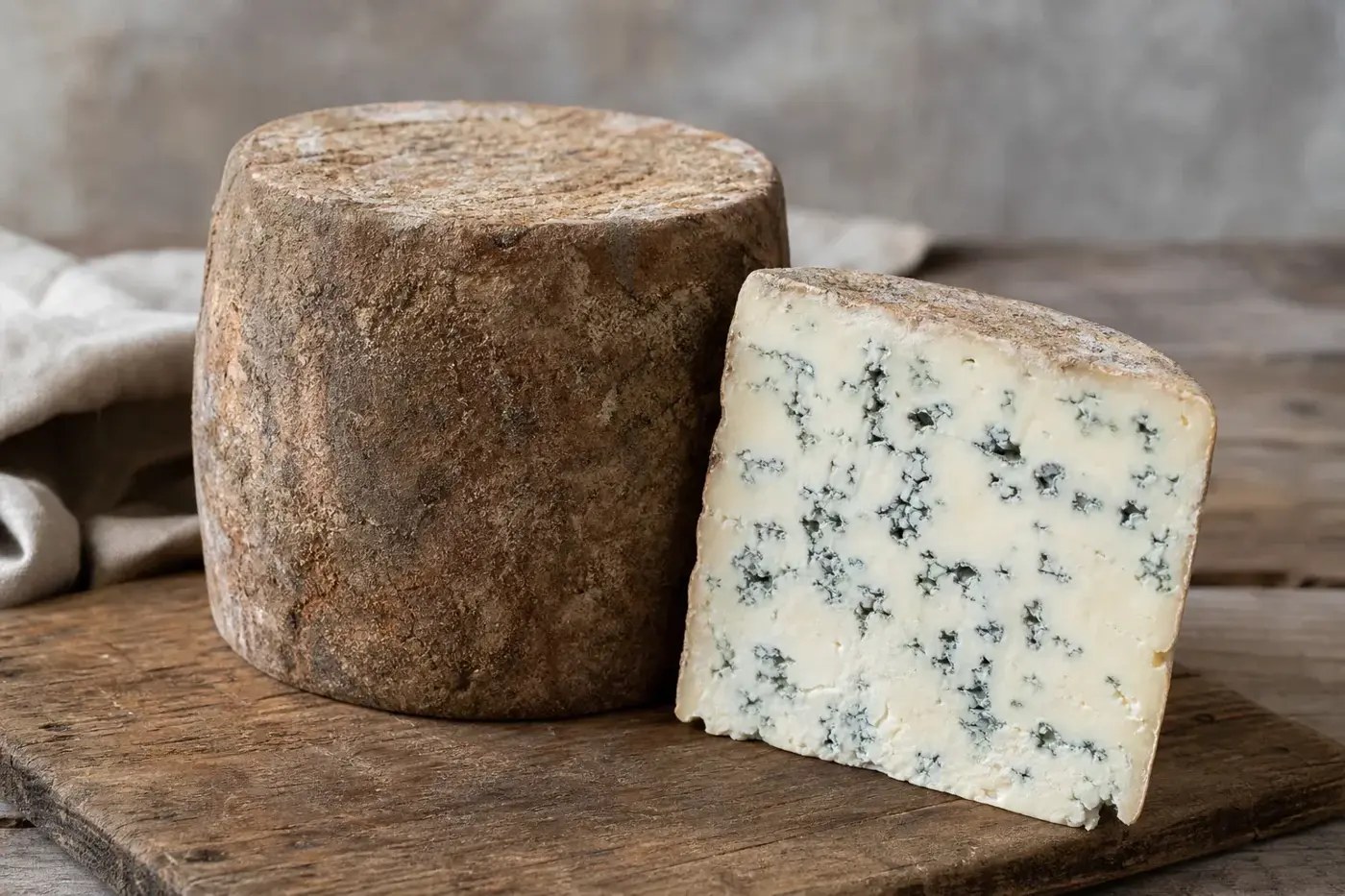
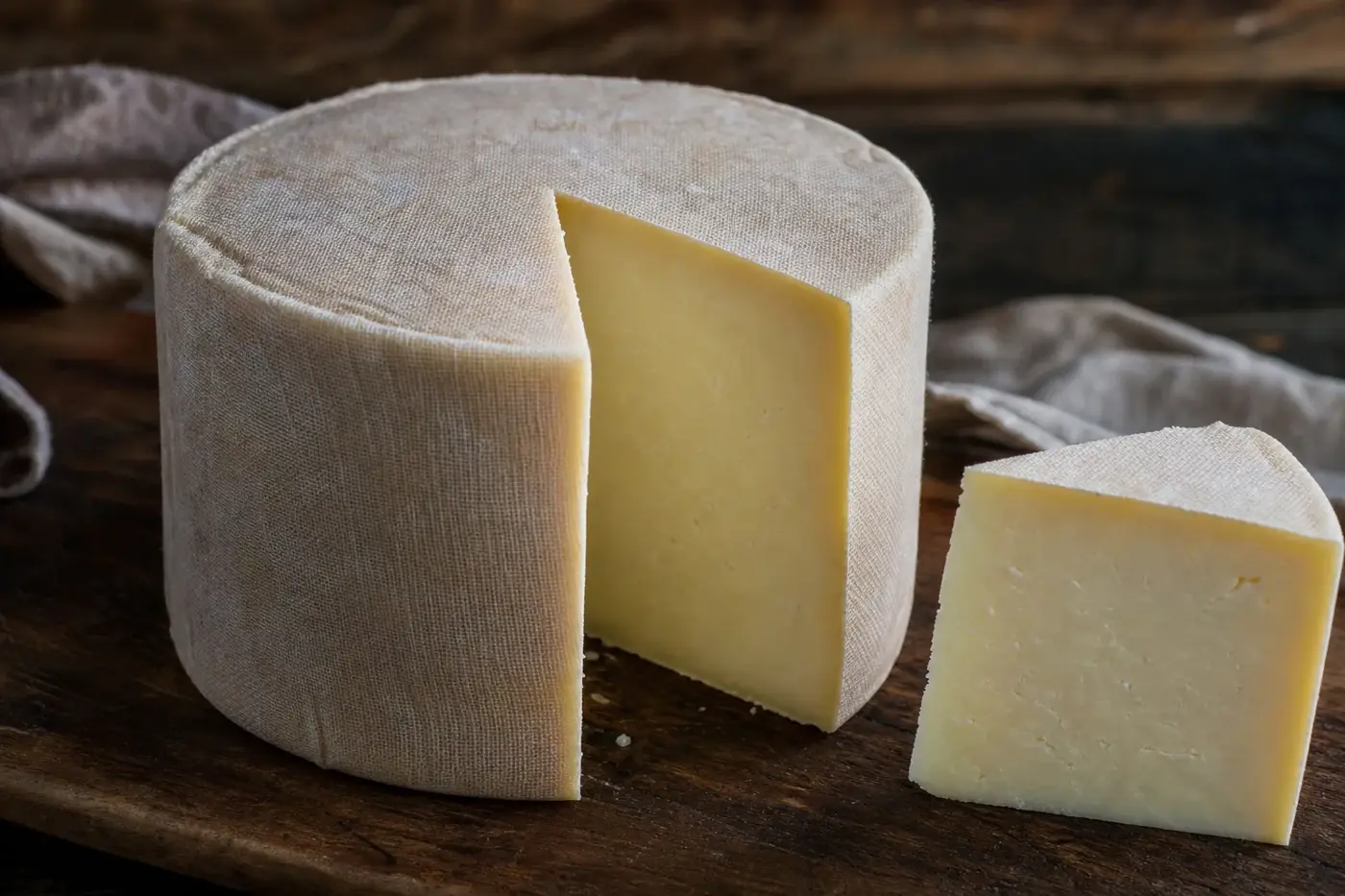
Cut into Dovedale and blue veins appear through a creamy-white body.
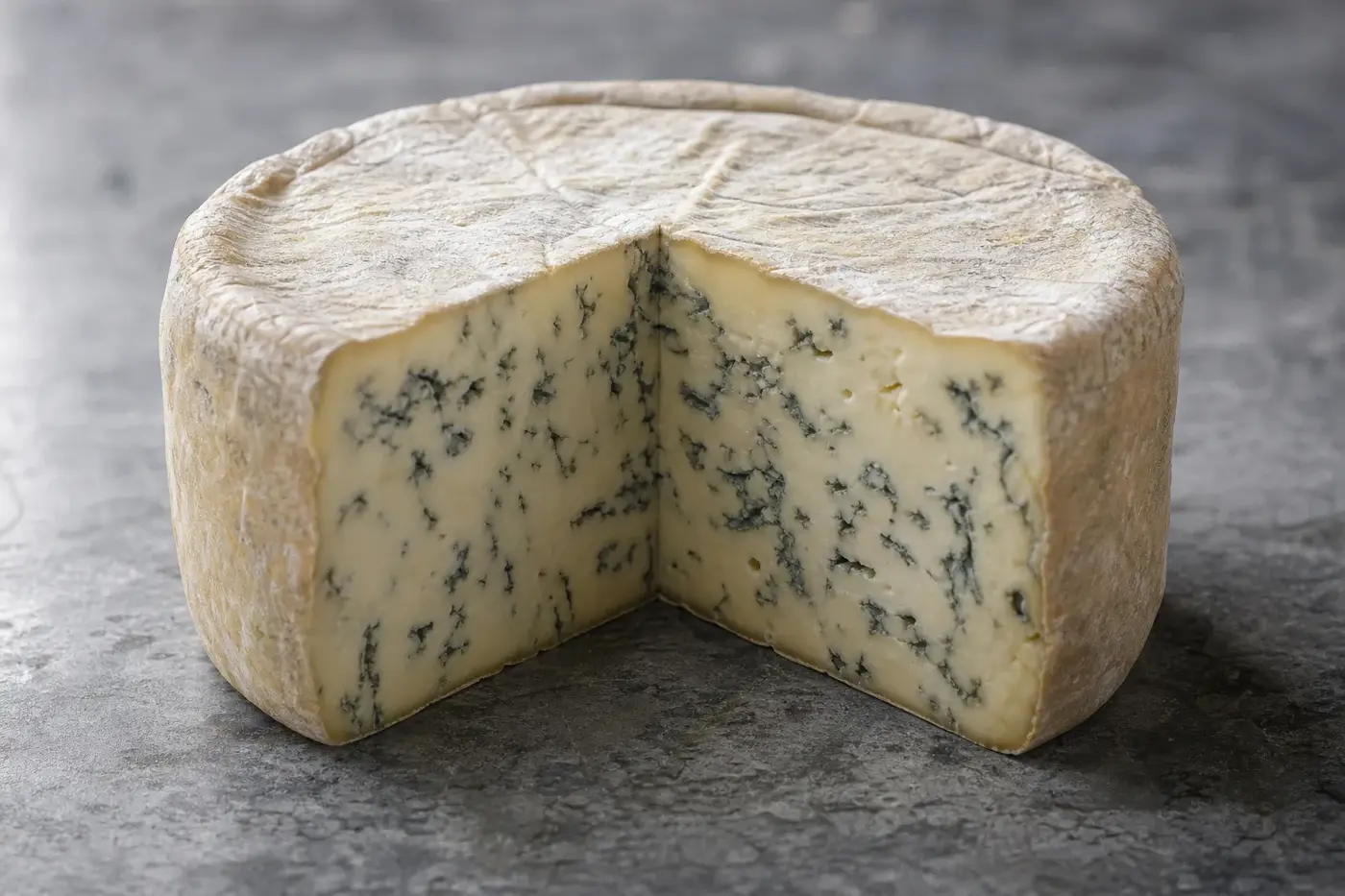
Cut into Dovedale and blue veins appear through a creamy-white body. You have a soft, creamy cows’ milk cheese on your board, with a brine bath behind it and an English Midlands tradition at its heart. Its protected identity centres on Dovedale in the Peak District, and its usual maturation takes just 3 to 4 weeks. [1,2]
Get to know Dovedale at a glance
| What you might ask | What to know |
|---|---|
| Registered name | Dovedale Cheese (Great Britain). [1] |
| Responsible authority | Department for Environment, Food & Rural Affairs (Defra). [1] |
| Register identifier | Not supplied here. |
| Great Britain status | Registered PDO as at November 2026; UK scheme entry 31 December 2020 at 23:00. [1] |
| EU and Northern Ireland status | Not established here. |
| Legally defined area | Within approximately 80 km (50 miles) of Dovedale. [3] |
| Milk and treatment | Whole cows’ milk; pasteurised. [2,3] |
| What sets the curd | Rennet; source not specified. [2] |
| Cultures | Starter and blue mould cultures. [2] |
| Usual age when despatched | 3 to 4 weeks; satisfactory cheese may be despatched outside this period. [2] |
| Shape and weight | Cylinder, 2.0 to 2.75 kg. [2] |
| Composition at despatch | Whole-cheese fat: 25 to 35%; whole-cheese moisture: 40 to 60%. [2] |
Give the pale paste its moment
The official specification describes a creamy-white interior, even blueing and a smooth, open texture. [2] When you choose a wedge, look beyond those eye-catching veins. The pale body deserves your attention too, and the way the blue travels through it is part of Dovedale’s character.
Taste a little pale paste first, then a piece with a blue vein, then both together. Does it yield or crumble? Notice the salt and how long the blue flavour lingers. You are getting to know a cheese, not marking its homework.
Beneath that surface, microorganisms are breaking down milk proteins and fats, changing both aroma and texture as the cheese ripens. Research on blue cheeses links their characteristic aromas partly to methyl ketones. These compounds are produced through fat breakdown. [7]
Culture strain, moisture and maturation conditions help explain why two blue cheeses, or two ages of the same cheese, can taste different. [7] If you prefer a gentler blue, ask your cheesemonger about the actual batch. Listen for its aroma, softness and present balance of milk character, salt and blue development.
Follow the valley’s story to the creamery
Hartington’s blue cheesemaking story reaches back to around 1870. The Dovedale specification places blue cheese manufacture there at that time, linking local skills with milk from the Peak District and surrounding counties. Dovedale itself provides the protected area’s geographical reference. That earlier history establishes a regional tradition, not an invention date for this cheese. [3]
The next chapters bring a closure and a fresh start. Hartington Creamery’s published history records the former village factory’s closure in 2009, followed by the first cheese at its new Pikehall Farm creamery on 17 October 2012. The creamery says Dovedale Blue was recreated there in 2018. [4]
As at November 2026, the creamery’s official website lists Dovedale Blue among the cheeses it makes at Pikehall Farm in Derbyshire. [5] At the counter, keep three things distinct: the valley behind the name, the producer’s trading name and the address where your cheese is made. Each tells you something different about the wedge you are taking home.
What Dovedale’s protected name tells you
Dovedale Cheese has Protected Designation of Origin status, or PDO, in Great Britain. Defra’s register records its UK scheme entry on 31 December 2020 at 23:00, and its original EU registration date as 21 June 1996. [1] The original EU registration measure also lists Dovedale cheese among the United Kingdom’s PDOs. [6]
For the legally defined Great Britain production area and milk sourcing requirements, consult the current Great Britain product specification before publication. These details matter because the protected name comes with both a defined area and a product specification.
The name does not belong exclusively to one dairy. Defra explains that any producer using a UK GI registered name must follow its published specification and undergo the required verification to make and sell it. Great Britain and Northern Ireland operate under different GI schemes. [8]
Wondering how PDO differs from PGI or TSG? Start with protected names explained. When you buy, look first at the registered name and maker. Then read the milk treatment, ingredients and storage instructions on that particular pack.
From whole milk to the brine bath
Dovedale begins with pasteurised whole milk, starter and blue mould cultures, and rennet. Rennet helps form the curd, the solid portion of the milk; whey is the liquid that drains away. The curd is cut, drained and placed in hoops, the moulds that give the cheese its cylindrical shape. [3]
Next comes the brine bath, followed by piercing and maturation. Washing, further drainage, grading and wrapping complete the sequence. [2] Brining salts the cheese through contact with a salt solution, rather than by mixing salt directly into the curd. Keep that distinction in mind when you compare Dovedale with other blues. [3,4]
At grading, the maker judges readiness and quality. The specification gives a usual despatch age of 3 to 4 weeks, but allows satisfactory cheese to leave outside that interval. [2] Ask about the make date and present condition. Extra days alone do not tell you whether a cheese will be better to eat.
A little air brings the blue to life
Those piercings have a purpose: they let oxygen into the cheese, encouraging blue mould to grow along its internal openings. Research on blue cheeses identifies Penicillium roqueforti as the characteristic ripening mould. It also describes the mould’s ability to grow with relatively little oxygen. [7]
An open body and access to air help explain the pattern you see in a cut wedge. The cultures also supply enzymes that break down proteins and fats during maturation. Blueing, aroma and texture are closely connected, so ripening changes the cheese’s body as well as creating those visible veins. [7]
If you would like to follow the wider journey from milk to finished cheese, see how cheese is made. It puts these small but important details into the larger cheesemaking sequence.
Taste Dovedale alongside Stilton
Start with the salt. Hartington’s account of making Stilton describes draining the curd overnight, cutting and milling it, then mixing in salt before filling the hoops. Dovedale’s published process uses brining instead. [3,4] The two share blue cheesemaking expertise, but not identical methods.
For a side-by-side tasting, ask for Dovedale and your cheesemonger’s choice of another British blue. Compare milk treatment, salting method, age and texture before choosing your favourite. If a recipe specifies Stilton, explain the result you want before picking a substitute. British blues are not all interchangeable.
Hartington also lists Shropshire Blue among its cheeses. [5] Read the maker’s description of each, then explore their differences in appearance, texture and maturity. Let the cheese in front of you lead the comparison, rather than expecting every blue to behave alike.
Make a little room for Dovedale
Begin simply: Dovedale, plain bread or an oatcake, and a slice of pear or apple. Taste each separately before bringing them together. You might prefer the fruit’s sweetness, or find that plain bread gives you more room to enjoy the cheese.
Start with still water, then try unsweetened black tea or an apple drink. Keep to one accompaniment at a time. It is easier to discover what you like when each mouthful gives you a clear comparison, rather than a committee meeting of flavours.
On a larger cheeseboard, give Dovedale its own knife and leave guests room to taste it alone. Put fruit and any relish separately alongside, so everyone controls each mouthful. A good accompaniment lets you return to the cheese and still recognise what first caught your attention.
Bring home a wedge you know
Ask the seller who made the cheese, where it was made and how they describe its current maturity. If you are buying a cut piece, request the original label information, including the date and storage instructions. The guide to reading a cheese label helps you distinguish the product name from the maker’s details.
At home, follow the pack’s storage and date instructions, including any directions for after opening. The Food Standards Agency’s guidance for England, Wales and Northern Ireland recommends keeping dairy products refrigerated. It also recommends a fridge temperature between 0 and 5 °C (32 to 41 °F), checked with a fridge thermometer. [9]
Before serving, consult the current Food Standards Agency advice alongside the pack’s storage instructions. [9] For practical help with wrapping and refrigerator organisation, see how to store cheese at home.
General information only, not medical advice: follow the official guidance where you live.
Questions people ask
What is Dovedale cheese?
Dovedale is a soft, creamy blue cheese made from pasteurised whole cows’ milk. It has a creamy white interior, even blue veining and a smooth, open texture. It is usually despatched at three to four weeks old.
What does Dovedale’s protected status mean?
Dovedale Cheese is a Protected Designation of Origin in Great Britain. Any producer using the registered name must follow its published specification and be verified to make and sell it. The current Great Britain production area and milk sourcing requirements still need verification against the product specification.
How is Dovedale different from Stilton?
Dovedale is salted by brining. Hartington’s account of making Stilton describes salt being mixed into the curd before the hoops are filled.
Is Dovedale vegetarian?
The Dovedale specification lists rennet, but does not specify its source. Check the ingredients on the particular pack.
How should I store Dovedale?
Follow the pack’s storage and date instructions, including any directions for after opening. The Food Standards Agency recommends keeping dairy products refrigerated and maintaining a fridge temperature between 0 and 5 °C, checked with a fridge thermometer. Consult the current Food Standards Agency guidance for England, Wales and Northern Ireland.
Sources
-
Department for Environment, Food & Rural Affairs. Dovedale Cheese. Great Britain protected food names register, published 4 January 2021, live entry checked November 2026. Official register entry.
-
Department for Environment, Food & Rural Affairs. Product specification: Dovedale Cheese. Six-page specification linked from the Great Britain register, hosted version retrieved November 2026; document revision date not stated. Official product specification.
-
Ministry of Agriculture, Forestry and Fisheries, Japan. Notice of designation, designation number 163: Dovedale Cheese. Dated 20 December 2024. The notice reproduces the product description, production method and geographical-link account in Japanese. Used here for those reproduced details. Official designation document.
-
Hartington Creamery. About our creamery. Undated company account, retrieved November 2026. Source for the company’s stated chronology and its description of its Stilton-making process. Producer’s published account.
-
Hartington Creamery. Official website, current product and production-location statements, retrieved November 2026. Producer’s website.
-
European Commission. Commission Regulation (EC) No 1107/96 of 12 June 1996. Official Journal L 148, 21 June 1996. Historical registration measure, Annex, United Kingdom cheeses. EUR-Lex record.
-
Dairy. Blue Cheeses: Microbiology and Its Role in the Sensory Characteristics. Peer-reviewed review, volume 4, issue 3, article 27, 2023. Sections on manufacture, mould growth and sensory characteristics. Published research review.
-
Department for Environment, Food & Rural Affairs. Protected geographical food and drink names: UK GI schemes. Published 31 December 2020, updated 8 March 2024, retrieved November 2026. Official scheme guidance.
-
Food Standards Agency. How to chill, freeze and defrost food safely. Published 18 December 2017, live guidance retrieved November 2026. Applies to England, Northern Ireland and Wales. Official refrigeration and handling guidance.
This desk-researched article brings together the published specification, official registration records, attributed producer accounts, blue cheese research and official household handling guidance.
Last checked: November 2026
Last checked November 2026.
The editors suggest you read next
West Country Farmhouse Cheddar Cheese
Large pieces of curd turn and stack under the cheesemaker’s hands.