Estonian Cheese
Picture a Seto celebration table: sõir on its own plate, with butter, honey or garlic sauce close by.
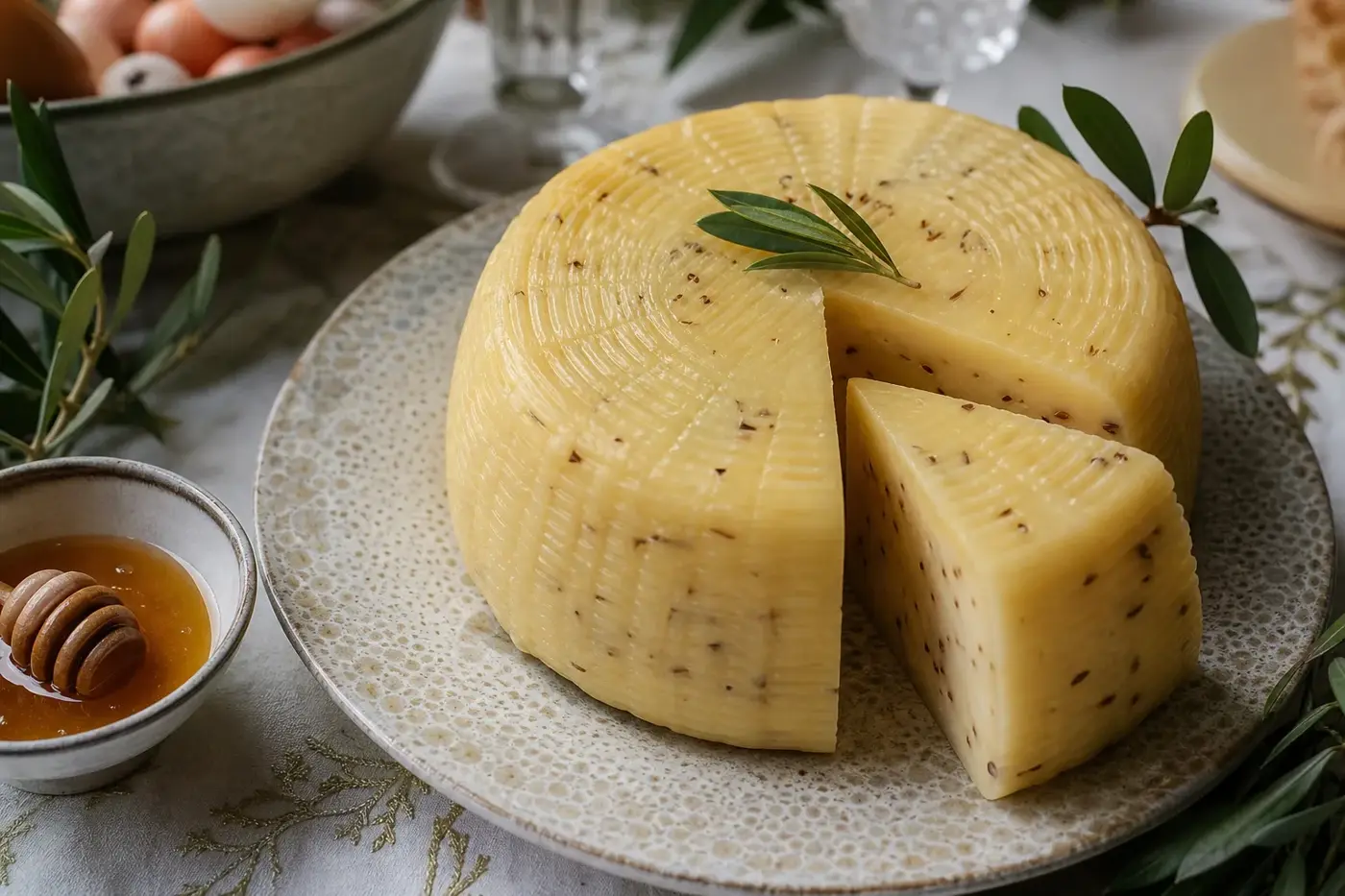
Picture a Seto celebration table: sõir on its own plate, with butter, honey or garlic sauce close by. This fresh curd cheese has no ambitions to disappear into a sandwich. Rooted in southeastern Setomaa and Võrumaa, it is a dish in its own right, and your starting point for island dairies, everyday ripened cheeses and a newer generation of farm producers. [2,5,9]
Your first taste, and where it takes you
| What to know | Your starting point |
|---|---|
| Where to look | Estonia; sõir centres on historical Võrumaa and Setomaa. [1,2] |
| Main milk | Cow’s milk. [3,4] |
| Registered name explored here | Sõir. [1] |
| EU protection | Consult the current official register. |
| EU category, current register status and register ID | Consult the current official register for these details. |
| Sheep’s milk cheese production | Ask the maker about production and milk origin. |
Give sõir its own place at the table
Before you put sõir on a national cheeseboard, picture its place at a Seto table. Seto Küük, the local food organisation, describes it as festive food, served separately with butter, honey or garlic sauce. Give your first piece a little space on the plate and your full attention. [2]
From there, the story opens out into household curds, dairy factories and small farms. Saaremaa’s dairy history follows organised island cheesemaking through the twentieth century. Ethnographic research published in 2021 brings you into southeastern businesses making regional sõir and newer goat’s milk cheeses: there is much more to discover than one signature cheese. [5,9]
Follow the milk from summer pasture to island dairy
Cow’s milk underpins large-scale production. Statistics Estonia reported 969,000 tonnes of milk production in 2025 and 85,200 dairy cows in the second quarter of 2026. Those are agricultural figures, not cheese output: the milk also becomes drinking milk, butter and other dairy products. [3]
In the older farm economy, summer grazing brought plentiful household milk. Winter feed sustained a much leaner season, as the Estonian dairy cluster’s historical account describes. Keep that seasonal rhythm in mind and you begin to see why fresh curds and homemade cheeses mattered. [4]
On the islands, another substantial dairy story unfolds. Saaremaa’s dairy records cooperatives established in Valjala and Püha in 1912 and 1913, followed by a model cheese factory in Valjala in 1963. Today, its catalogue includes cheeses described as Gouda, Edam and Tilsit, alongside quark and processed products. [5,8]
For goat’s milk, turn towards smaller farms. The 2021 ethnographic study documents Kolotsi’s goat keeping and cheesemaking, along with cow’s milk cheeses made using a neighbouring farm’s milk. It presents the growth of goat cheese as a relatively recent development, rather than an ancient speciality shared across Estonia. [9]
If you are offered goat’s or sheep’s milk cheese, ask who made it and where the milk came from. Ask whether it contains a mixture of milks, too. A local shop does not necessarily mean an Estonian flock, so let the maker explain the origin.
Meet the cheeses worth a conversation
Sõir: get to know the curd and caraway
Fresh curd, eggs, butter and caraway come together in sõir. The ministry’s specification describes Sõir as an unripened curd cheese made with cow’s milk, kohupiim, eggs, butter, salt and caraway. The curd is heated in milk, drained, worked with the remaining ingredients and moulded; baking is an allowed finish, but rennet, additives and flavourings are excluded. [1]
Cut yourself a piece and, according to that specification, you should find a firm, elastic body that holds together. Inside, it is pale yellow to yellow, with slight acidity, moderate salt and discernible caraway. Less thorough draining leaves it softer, while baking can give it a yellow-brown crust. [1]
At a household table, the recipe may take another turn. Seto Küük describes methods with optional caraway, whereas the ministry’s Sõir specification makes it compulsory. Ask which recipe you are tasting: a family preparation and the defined product specification each have their own terms. [1,2]
Eesti juust: follow the name to Vändra
Eesti juust means Estonian cheese, but it also names a particular product. Estover traces its development to work on cheese technology at Vändra in 1956. If sõir draws you into regional food culture, Eesti juust takes you through the doors of dairy research and factory production. [6]
At the counter, look past the style wording to the full commercial name on the packet. Compare the maker, any declared age and the label’s description of texture. Taste two makers’ cheeses side by side and the differences become more useful than the name alone.
Smoked cheese: taste beyond the smoke
Before the smoke claims all your attention, ask about the cheese underneath. Is it ripened, fresh or processed, and how was the smoke character introduced? Those answers give you a better basis for comparison than a brown exterior or a distinctive shape.
Kohupiim: start where sõir starts
Kohupiim is the fresh curd behind sõir. Seto Küük’s account follows its transformation from curds into moulded cheese, while Estover’s current production account lists kohupiim separately from its wider cheese range. Ask for the plain curd as well as the finished sõir. [2,7]
Buy them separately for your first tasting and see how each behaves under a spoon or knife. If you choose a sweetened curd preparation, read its description carefully. The pleasure here is in noticing the change in structure, rather than expecting every fresh dairy product to submit neatly to a cheese knife.
Put sõir’s homeland on your map
The ministry’s Sõir specification draws a regional boundary, not a national one. It covers historical Vana-Võromaa and the Estonian part of Setomaa. Those cultural boundaries reach beyond today’s Võru county. [1]
When you follow the name on a label, keep three questions separate. What does the product specification require, which geographical area does it define, and what does the current official registration record? The first two explain the cheese’s regional identity; the guide to protected names explains the different protection categories.
Pull up a chair at the Estonian table
You might meet sõir at the beginning of a meal, at the end, or standing separately on a celebration table. Seto Küük records all three settings and suggests butter, honey and garlic sauce alongside it. Taste a plain piece first, then try one accompaniment at a time, keeping the curd and caraway in view. [2]
For an informal tasting at home, choose contrast rather than quantity. Try sõir, one everyday ripened cheese and a goat’s milk cheese if a local maker has one. Leave smoked cheese until after the unflavoured examples, and note each maker so you can make sense of your comparisons afterwards.
At a household table or farm tasting, ask what your host normally serves with that cheese. The recipe, the occasion and the maker’s favourite way of cutting it can all start a conversation. For the practicalities afterwards, turn to the guide to storing cheese at home.
Get to know the people behind the dairy counter
Estonia’s dairy history moves between farms, manor dairies and organised processing. The dairy cluster’s historical account describes the influence of manor dairies and the spread of cooperative working. Saaremaa’s dairy chronology gives those changes an island setting, following the early cooperatives and their later nationalisation. [4,5]
During the Soviet period, processing gathered into larger plants. The dairy cluster records a cheese industry in Võru and the gradual closure of smaller dairies and cream stations. Estover’s Vändra account follows another thread: the cheese production technology that became associated with Eesti juust. [4,6]
After independence was restored in 1991, agriculture and processing were privatised, according to the dairy cluster’s account. Saaremaa’s dairy dates its farmer-led privatisation to 1995. The 2021 ethnographic study brings you into smaller businesses, where cheesemaking connects farm identity with customers through markets, restaurants and rural tourism. [4,5,9]
A larger dairy’s published range gives you another view of that breadth. Estover describes production at Kaarlijärve covering cheese, kohupiim, cottage cheese, ricotta, fresh cheese and mozzarella. Compare how these are made and used: a simple division into old and new only tells part of the story. [7]
Plan a visit, then ask the good questions
In Tallinn, start your enquiries at Balti Jaama Turg. Its current directory lists Talupood Härjapea and other food traders. Ask specifically for cheese made in Estonia, then for the producer’s name: that tells you more than the country a shop’s name might suggest. [10]
In southeastern Estonia, begin with the Seto Küük food network. Its current dining directory includes Seto Tsäimaja and Taarka Tarõ Köögikõnõ. Before travelling, use the venue’s official information to make contact and ask whether sõir is on the menu, who makes it and whether you need to arrange a tasting. [11]
For a farm shop visit, identify the maker first. Confirm visitor arrangements, accessibility and what you can taste or buy. The ethnographic research documents farm sales and market selling in the southeastern cheese economy, but consult the farm’s own current information before making a special journey. [9]
Let your tasting start a conversation
Build your comparison around questions the seller can answer. Which milk is used, and is the cheese fresh or ripened? Does its character come from maturation, caraway, smoking or another treatment? For sõir, ask about draining and baking: the specification explains how those choices affect texture and the exterior. [1]
Before tasting, write down the maker and product name; cheese lovers’ memories can be impressively selective once the plate is empty. Then capture what you notice: how readily it slices, whether the curd feels smooth or granular, how strong the seasoning is and what remains after swallowing. Those details will help you compare another maker’s version of the same named style.
Read the full product description at the counter, not just the largest word on the label. The guides to reading a cheese label and telling cheese styles apart give you vocabulary for those conversations. When you find a cheese you love, record its producer as carefully as its style.
Questions people ask
What is sõir?
Sõir is an unripened curd cheese associated with southeastern Estonia. The ministry’s specification includes cow’s milk, kohupiim, eggs, butter, salt and caraway.
How is sõir made?
The curd is heated in milk, drained, worked with the remaining ingredients and moulded. Baking is an allowed finishing treatment and can give it a yellow to brown crust.
What is Eesti juust?
Eesti juust means Estonian cheese, but the words also name a particular product. Estover traces its development to work on cheese technology at Vändra in 1956.
Where can I look for Estonian cheese in Tallinn?
Balti Jaama Turg is a starting point. Its directory lists Talupood Härjapea and other food traders, where you can ask specifically for cheese made in Estonia and for the producer’s name.
Is sõir protected by the EU?
The page says EU protection for Sõir has not been verified. Its current register status, EU category and register ID have also not been verified.
Sources
[1] Estonian Ministry of Regional Affairs and Agriculture, Tootespetsifikaat: Sõir, ministry-hosted product specification, undated edition retrieved November 2026. Sections 3.2 to 3.7 and 4 cover ingredients, production, sensory characteristics and geographical scope.
[2] MTÜ Seto Küük, Sõir, the curd cheese, undated webpage, retrieved November 2026. Local food organisation’s account of festive use, household methods, accompaniments and reported European recognition.
[3] Statistics Estonia, Sea- ja veisekasvatus kogub taas veidi hoogu, 14 September 2026. Statistics for 2025 milk production and the second quarter of 2026 dairy herd.
[4] Estonian dairy cluster, History of Estonian dairying, undated webpage, retrieved November 2026. Industry historical synthesis based on dairy museum and performance-recording materials.
[5] Saaremaa Piimatööstus, History, undated company chronology, retrieved November 2026. The dairy’s account of island cooperatives, nationalisation, factory development and privatisation.
[6] Estover, Eesti juustu lugu, undated company historical account, retrieved November 2026. Sections on Vändra and the development of Eesti juust.
[7] Estover, Esileht, company and production overview, undated webpage, retrieved November 2026. Published account of production at Kaarlijärve and its product categories.
[8] Saaremaa Piimatööstus, MoSaaremaa, product catalogue homepage, undated webpage, retrieved November 2026. Listings include Gouda, Edam, Tilsit, quark and processed cheese categories.
[9] University of Tartu, Journal of Ethnology and Folkloristics, “Negotiating Food Heritage Interpretations”, volume 15, issue 2, pages 112 to 134, 2021. Qualitative research on food heritage collaborations, including southeastern dairy producers.
[10] Astri Group, Balti Jaama Turg, official market website and trader directory, retrieved November 2026. Lists Talupood Härjapea and gives the market’s Tallinn address.
[11] MTÜ Seto Küük, Where to eat, dining directory, undated webpage, retrieved November 2026. Lists Seto Tsäimaja and Taarka Tarõ Köögikõnõ among regional venues.
This desk-researched draft brings together a ministry-hosted specification, official agricultural statistics, local food records, ethnographic research and attributed producer histories.
Last checked: November 2026
Last checked November 2026.
The editors suggest you read next
French Cheese: The Complete Guide
Picture Normandy’s pastures, then follow the milk towards the Loire’s goat dairies, the Jura’s shared cheesemaking traditions and the sheep country of the Pyrenees.