Famous Cheeses and Record Breakers
Open the lorry and imagine the view.
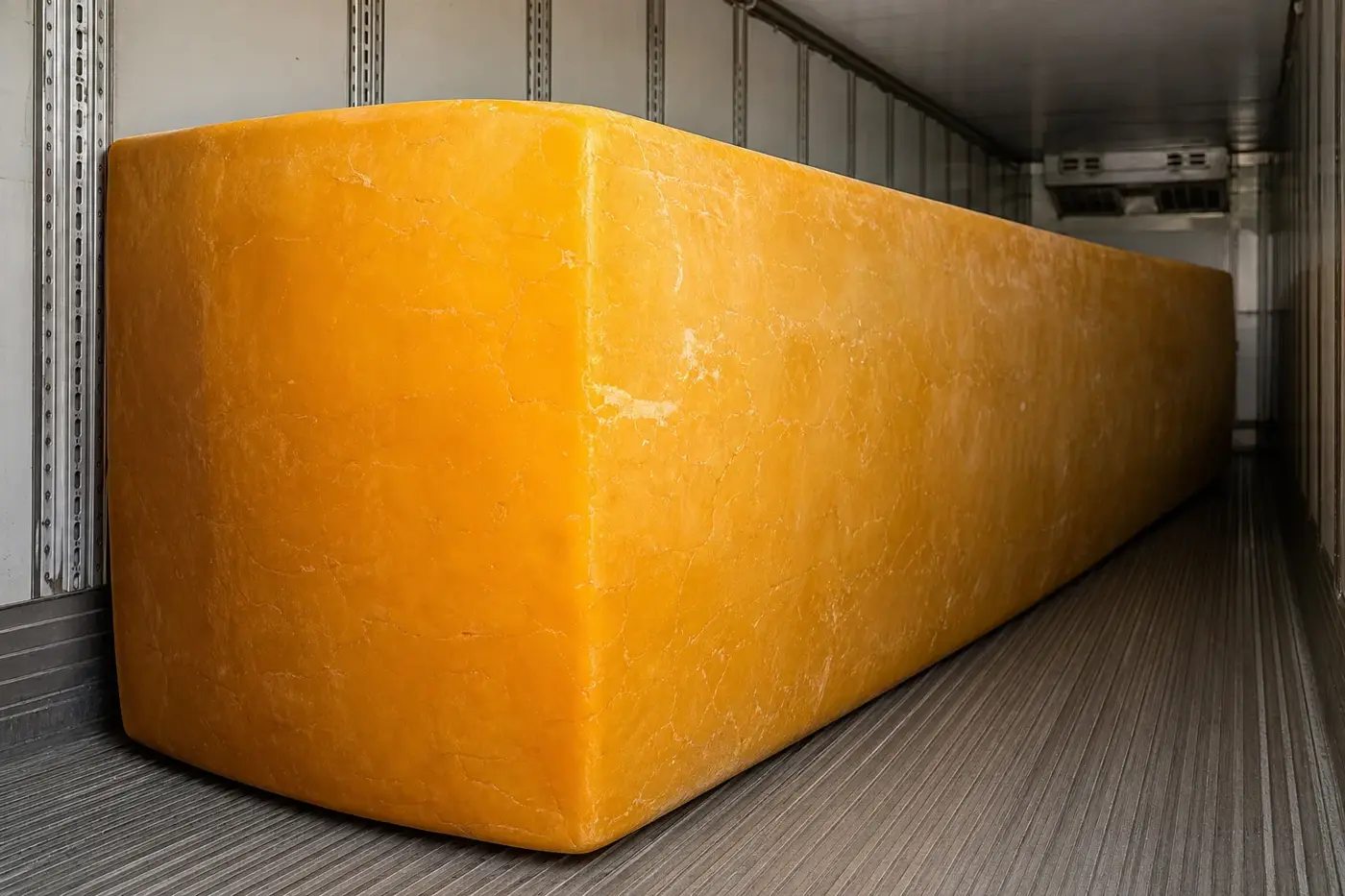
Open the lorry and imagine the view. Inside its specially designed refrigerated body sits a Canadian cheddar more than 10 m long, weighing 26,090 kg. Guinness World Records dates its achievement to 7 September 1995. You may need to reconsider the size of your cheese board. [7]
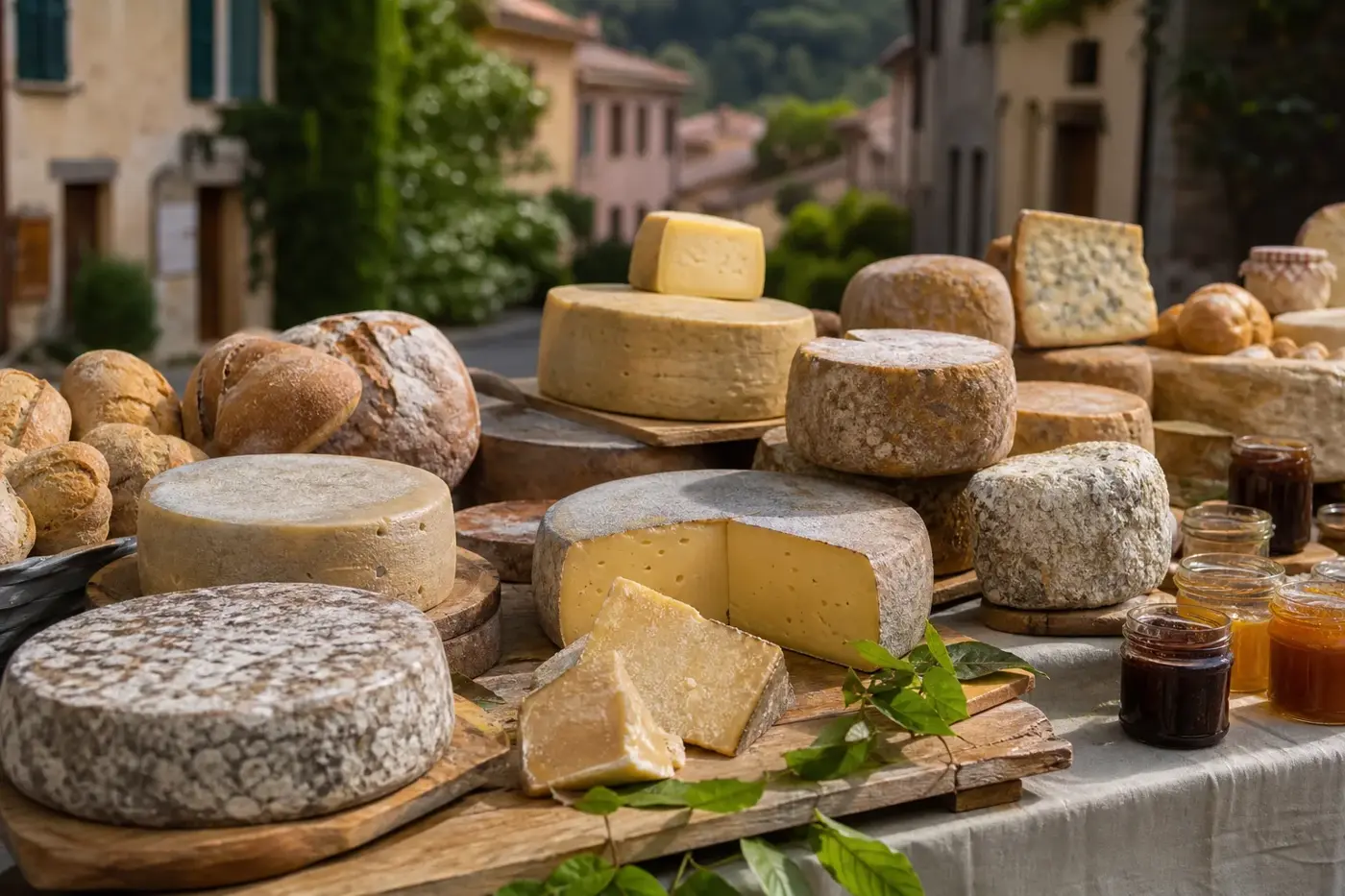
Size, though, is only one way to become famous. Parmigiano Reggiano’s long maturation, Roquefort’s sheep’s milk tradition and Stilton’s English production rules tell stories of place and craft. Some cheeses become familiar through their makers and regular appearances at your table. Record breakers earn a more precisely defined distinction. [1,3,4,7]
Famous names, and the stories behind them
Think of a famous cheese and you might almost feel its texture before you picture its name. Behind that familiar mouthful are farms, a place of production and generations of people making and eating it. Parmigiano Reggiano, Roquefort and Stilton each connect their name to a specified way of making cheese. Their reputations reach beyond any single wheel or tasting. [1,3,4]
A record asks you to look more narrowly. Is this the heaviest individual cheese, the largest display, the oldest surviving material or the winner of a particular competition? Start with the category rather than the headline. Each achievement becomes more interesting when you understand exactly what it celebrates.
Parmigiano Reggiano: a little history with your next bite
Imagine a mountain of grated cheese. That image appears in fourteenth-century literature reproduced in the Parmigiano Reggiano consortium’s historical account, giving you an extravagant glimpse of the cheese’s reputation. The same account traces its origins to the Middle Ages. Clearly, modest portions were not the literary ambition. [2]
Behind that cultural history sits a precise production specification. The Great Britain register defines an area in northern Italy covering Parma, Reggio Emilia and Modena provinces, plus specified parts of Bologna and Mantua provinces. It requires raw cow’s milk, calf rennet and at least 12 months of maturation. [1]
Rennet coagulates the milk, turning it into the curd from which the cheese is formed. Milk, place, method and time all contribute to this hard, slowly matured cheese’s identity. Try irregular fragments rather than a spoonful grated over dinner. You can appreciate its structure more easily that way. [1]
For more of the making story, follow the guide to parmigiano reggiano. There is plenty behind that familiar name before you reach for the grater.
Roquefort and Stilton: there is more to blue than veins
Start with the milk and these celebrated blues take different paths. The Roquefort industry body describes Roquefort as made from raw sheep’s milk. The Great Britain Stilton specification requires pasteurised cow’s milk and limits production to Derbyshire, Leicestershire and Nottinghamshire. [3,4]
Roquefort’s official production area and maturation rules are separate details for you to explore. With Stilton, the specification also takes you into the cheese’s development. It distinguishes Blue Stilton from cheeses selected for further maturation, with grading for flavour, texture, body, veining, shape and coat condition. [4]
That list offers you a useful tasting lesson. Enjoy the blue pattern, certainly, but pay attention to texture, flavour and condition too. The veins tell only part of the story. [4]
In the November 2026 Great Britain register, Roquefort and Stilton Blue Cheese both appear as registered protected designations of origin, or PDOs. Protection applies within the territory covered by the scheme, so keep the jurisdiction beside the registered name. You can explore the wider picture in the guide to protected names. [3,4]
Cheddar and Gouda: read the whole name
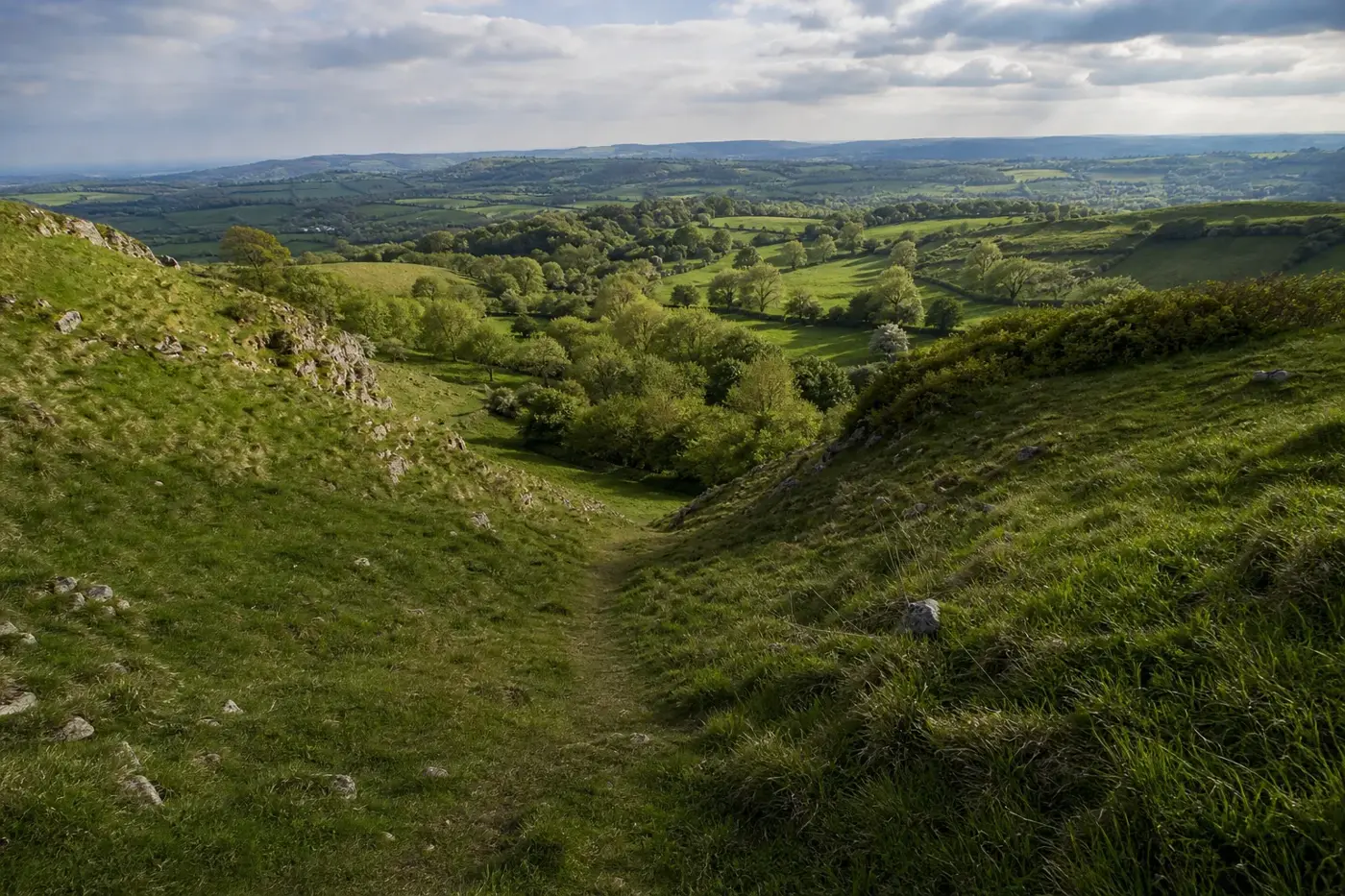
Cheddar has travelled far, as that Canadian giant rather emphatically demonstrates. Add a regional name, though, and you have a more specific story. West Country Farmhouse Cheddar Cheese is registered as a PDO in Great Britain. Its specification identifies Dorset, Somerset, Devon and Cornwall and requires at least nine months of storage before sale. [5,7]
Gouda rewards the same careful reading. Gouda Holland is the exact name registered as a protected geographical indication, or PGI, in the November 2026 Great Britain register. The original European registration instrument for Noord-Hollandse Gouda separately states that protection of the word Gouda alone was not sought. [6]
Its corresponding Cheddar footnote makes the same distinction. Cheddar and Gouda on their own are therefore different from the registered names West Country Farmhouse Cheddar Cheese and Gouda Holland. Those extra words carry meaning. [6]
Read the full name, find the stated country of production and maker, then consult the register for the relevant jurisdiction. Once you have the wording clear, explore the histories and styles in the guides to cheddar and gouda.
Meet the Canadian cheddar with its own lorry
At Granby in Quebec, a cheddar made for Loblaws Supermarkets Ltd reached 26.09 tonnes, or 26,090 kg. Guinness World Records lists it under the exact category “Largest cheese (cow’s milk)”, with an achievement date of 7 September 1995. Its public record entry carries that distinction as of November 2026. [7]
Now picture the dimensions behind that weight. Guinness describes a cheese about 1.83 m high, more than 10 m long and 1.4 m wide. Production took more than ten hours. [7]
Making it was one task; taking it anywhere was another. The cheese travelled in a specially designed refrigerated lorry, bringing the spectacle beyond its place of production. You begin with cheesemaking and soon find yourself thinking about transport. [7]
That refrigerated tour forms part of the documented achievement, rather than an incidental detail. At this scale, the making and the moving belong in the same story. [7]
Ancient cheese: a remarkable survival, a careful question
Cheese fragments placed around the necks of buried people have survived for thousands of years. A 2024 study in Cell examined three dairy remains from the Xiaohe cemetery in Xinjiang, China. Researchers dated the samples to about 3,600 to 3,400 years before present and identified them as kefir cheese, made from fermented milk. [8]
They recovered ancient DNA and investigated milk sources and microbial communities, including bacteria associated with kefir fermentation. Here you encounter an unusually intimate survival: food accompanying people into burial, still carrying molecular evidence of its making. Both the substance’s identity and the material’s age matter to the archaeological questions. [8]
Guinness’s public “Oldest cheese” page describes an Egyptian find dated to about 3,200 years ago. Place that beside the older Xiaohe material reported in Cell and you can see why dates belong alongside record entries and research papers alike. Archaeological analysis and claims about old cheese kept for eating follow different evidential paths. [8,9]
For an exceptionally old cheese offered for eating, you need a documented making date, a clear account of what survived and evidence linking the present cheese to that date. A tasting report describes someone’s experience of a sample. Its age depends on the production and storage record, not the taster’s enthusiasm.
One enormous cheese, or an enormous display?
You can weigh one cheese, a display of cheeses and a dairy’s annual output in kilograms. That shared unit does not make them the same achievement. Add separate cheeses and a display grows; add batches over time and an annual production total grows.
Neither figure compares directly with the mass of a single cheese, however impressive it looks. Match the category, unit, measurement date and rules about what is included. Then establish whether you are reading about an attempt or an achievement accepted by the named authority.
A photograph lets you enjoy the spectacle. A dated record entry supplies the category and measurement you need to assess the claim. There is room to appreciate both, provided you keep the distinction clear.
What a competition medal can tell you
A competition can introduce you to a particular cheese entry through judges, published results and the publicity that follows. Keep the competition name and year attached whenever you read about an award. Those details show you exactly where the recognition belongs.
The win recognises that entry in that contest. It does not establish a permanent record or pass judgement on every cheese made under the same name. Treat it as a particular achievement, rather than a lifetime verdict.
Cheese rolling and the theatre of the town square
With cheese rolling, the action around the cheese becomes the attraction. The contest draws attention as much as the food itself. When you read an account, keep the particular event, its rules, the cheese involved and any story about its historical origins distinct.
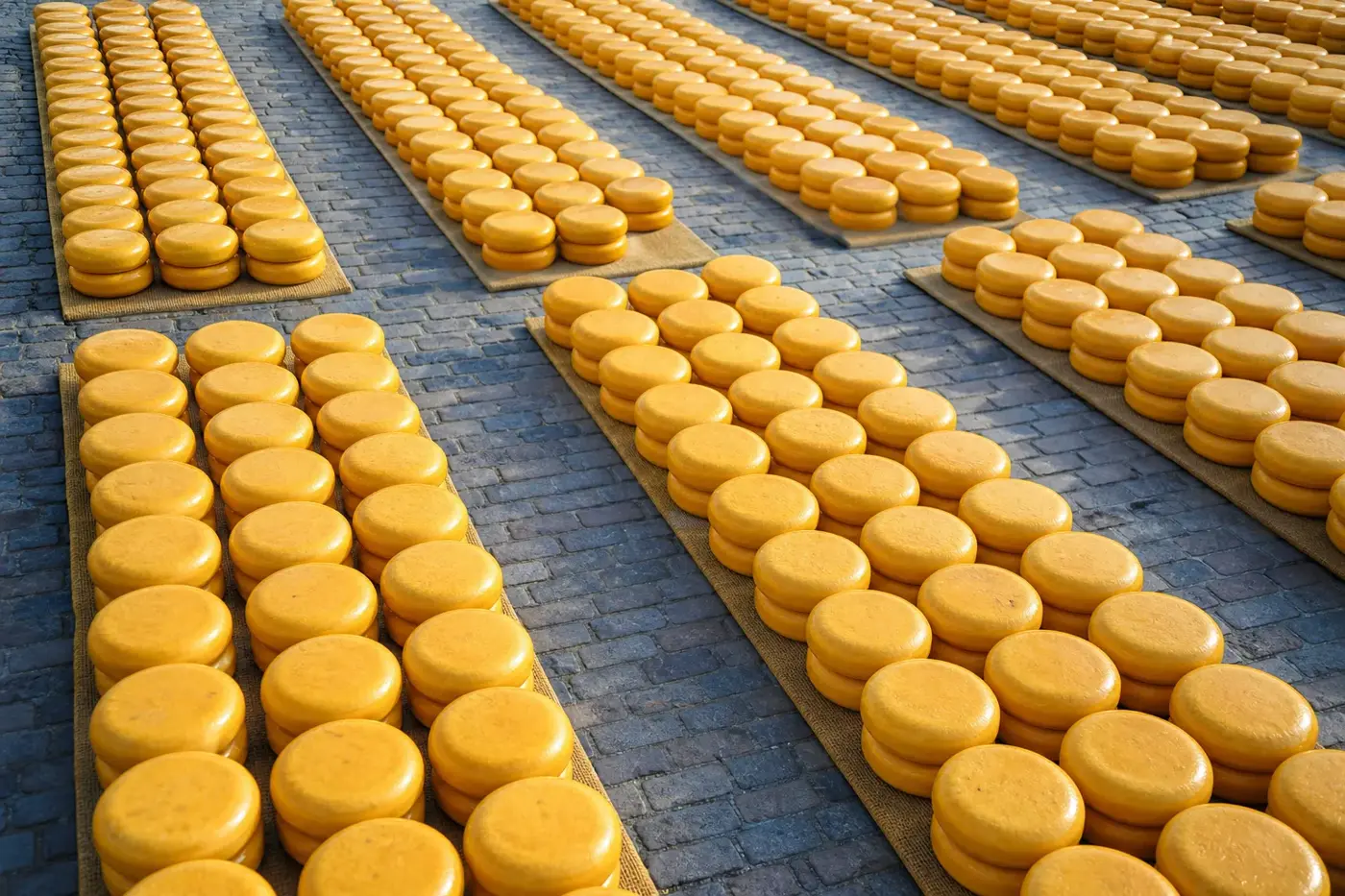
At Alkmaar, another kind of theatre unfolds. The cheese market’s official website describes the Waagplein filled with cheese and cheese carriers, presenting the proceedings as a visitor attraction. The arrangement and movement of cheeses make the craft visible across a town square. The carriers are central to that scene. [11]
Before you travel, visit the event’s official website for current arrangements, booking requirements and accessibility information. Earlier photographs may capture the occasion beautifully. Your practical plans need current details.
Bring the famous names to your own table
Set out Parmigiano Reggiano, a cheddar, a gouda, Roquefort and Blue Stilton for a small comparative tasting. Ask your cheesemonger for each maker, stated age and exact product name. Give every cheese a question of its own. Your board need not hold an election.
- Let the names introduce themselves. Write down the full names and origins. Keep the complete wording of a protected name rather than shortening it to a style.
- Look closely at the cut surface. Compare the blue veins with the structure of the hard cheeses. Note what you can see: openings, fractures, a close paste or a crumbly edge.
- Give the rind a moment. Notice its colour and surface, then compare them with the interior. You will see how much of the cheese’s appearance belongs to its outside.
- Taste first, then find your words. Begin with whichever sample seems least forceful to you. Notice texture first, then salt, acidity, aroma and finish. Keep plain bread and water alongside so you can return to a cheese without a competing accompaniment.
The guide to cheese styles can help you build your vocabulary. Keep your impressions separate from the maker’s tasting notes: both are useful, but they do different jobs. A famous name becomes more rewarding when you can describe the particular piece on your plate.
Does that record still stand? Follow it to the source
Go to the record authority first, rather than a reposted headline. Find the exact category, compare the measurement and achievement date, and note your access date. Guinness warns that records change and updates are not immediately published online. A dated account of a listing is therefore more precise than an undated declaration. [7,9]
For an award, turn to the organiser’s results for the named year. For ancient remains, read the original research and establish whether it concerns surviving cheese, chemical residues or evidence of cheesemaking. Those distinctions help you appreciate the achievement on its own terms, whether it is a competition entry, an immense cheddar or a fragment preserved for thousands of years. [8,10]
Questions people ask
What is the largest cow’s milk cheese listed by Guinness World Records?
Guinness lists a cheddar weighing 26,090 kg, made at Granby in Quebec for Loblaws Supermarkets Ltd. Its achievement date was 7 September 1995, and the entry was checked in November 2026.
How old is the oldest cheese found by researchers?
A 2024 study in Cell examined kefir cheese fragments from the Xiaohe cemetery and dated them to about 3,600 to 3,400 years before present. Guinness’s public oldest cheese page describes an Egyptian find dated to about 3,200 years ago.
What is the difference between Roquefort and Stilton?
The Roquefort industry body describes Roquefort as made from raw sheep’s milk. The Great Britain Stilton specification requires pasteurised cow’s milk and confines production to Derbyshire, Leicestershire and Nottinghamshire.
Where is Parmigiano Reggiano made and how long is it matured?
Its Great Britain specification defines an area in northern Italy covering Parma, Reggio Emilia and Modena, plus specified parts of Bologna and Mantua. It requires at least 12 months of maturation.
Are the names Cheddar and Gouda protected?
West Country Farmhouse Cheddar Cheese is registered as a protected designation of origin in Great Britain, while Gouda Holland is registered as a protected geographical indication. The page distinguishes these full registered names from Cheddar and Gouda used alone.
Sources
-
Department for Environment, Food & Rural Affairs. Parmigiano Reggiano, protected food name register entry, published 2021; and Production specifications for Parmigiano Reggiano cheese, version linked by the register when checked in November 2026. These establish the Great Britain registration and the cited production requirements.
-
Consorzio del Formaggio Parmigiano Reggiano. The history, undated, retrieved November 2026. An industry body’s presentation of the cheese’s history and literary reputation, attributed as such.
-
Department for Environment, Food & Rural Affairs. Roquefort, protected food name register entry, published 2021. Confédération Générale de Roquefort. Official Roquefort website, undated, retrieved November 2026. The register establishes Great Britain PDO status; the industry website describes the raw sheep’s milk tradition.
-
Department for Environment, Food & Rural Affairs. Stilton Blue Cheese, protected food name register entry, published 2021; and Stilton Cheese product specification, undated version linked by the register, retrieved November 2026.
-
Department for Environment, Food & Rural Affairs. West Country Farmhouse Cheddar Cheese, protected food name register entry, published 2021; and West Country Farmhouse Cheddar product specification, undated version linked by the register, retrieved November 2026.
-
Department for Environment, Food & Rural Affairs. Gouda Holland, protected food name register entry, published 2021. European Commission. Commission Regulation (EC) No 1107/96 of 12 June 1996, original published text, including the annex footnotes concerning Gouda and Cheddar. The historical instrument is used for those express exclusions, rather than as a current consolidated register.
-
Guinness World Records. Largest cheese (cow’s milk), achievement dated 7 September 1995; public entry retrieved November 2026.
-
Cell, published by Elsevier. Bronze Age cheese reveals human-Lactobacillus interactions over evolutionary history, 2024, DOI 10.1016/j.cell.2024.08.008. Original research paper, accessed through a publicly available copy of its open-access article PDF.
-
Guinness World Records. Oldest cheese, undated public entry, retrieved November 2026. Its Egyptian identification and age are reported as the record authority’s listing.
-
Guild of Fine Food. Le Gruyère AOP wins World Champion Cheese in record-breaking year for Swiss entries, 13 November 2025; and World Cheese Awards, 2026 event information, retrieved November 2026.
-
Alkmaar Cheese Market. Visit the cheese market, undated official visitor information, retrieved November 2026.
Researched through official food-name records and specifications, record-authority entries, original archaeological research, and the published accounts of industry bodies and event organisers.
Last checked: November 2026
Last checked November 2026.
The editors suggest you read next
Cheese Festivals Around the World
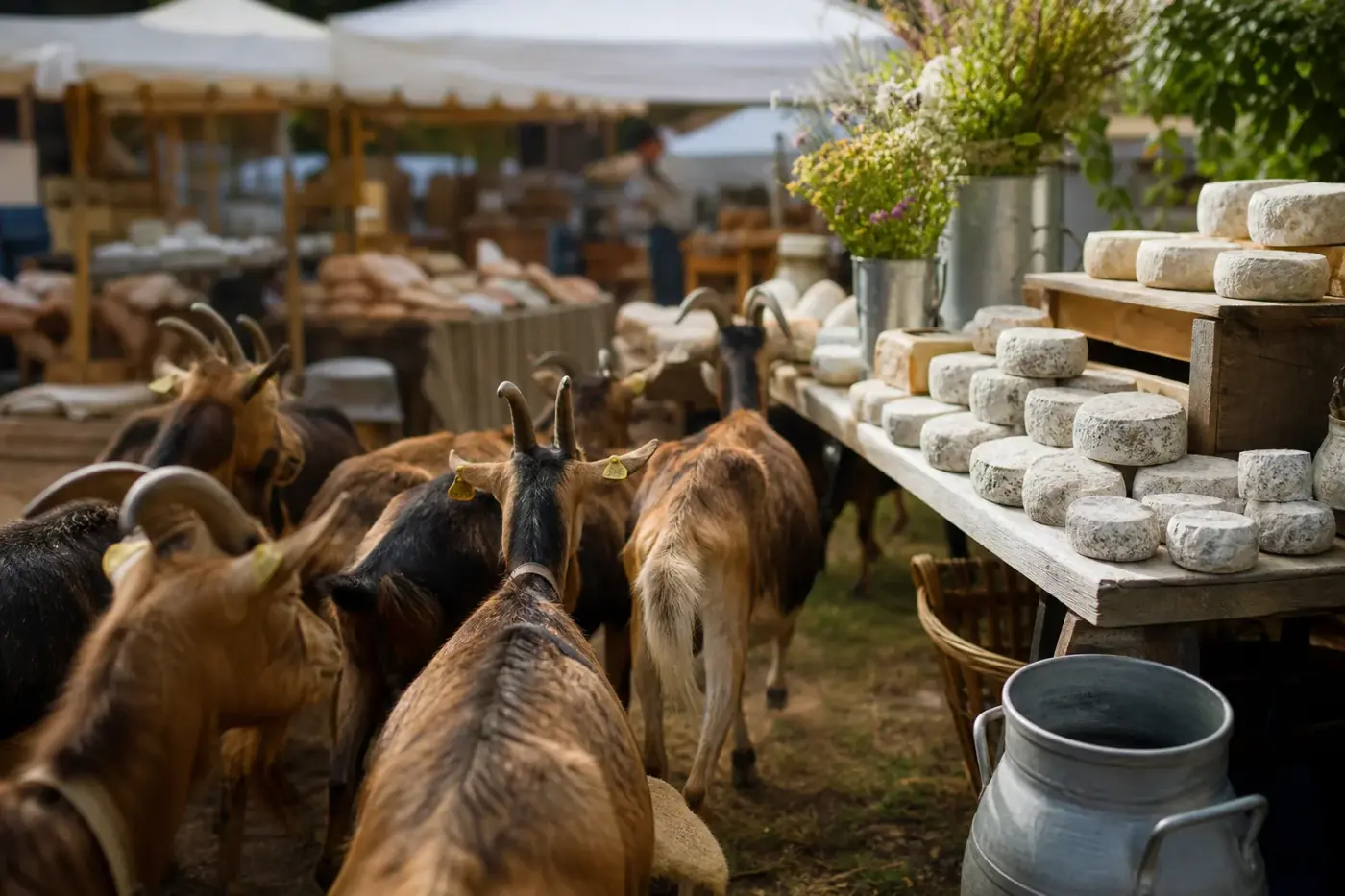
A herd of goats arrives at Rocamadour's cheese festival.