Fiore Sardo
Near the fire, young Fiore Sardo rests on a reed rack, drying and taking on smoke.
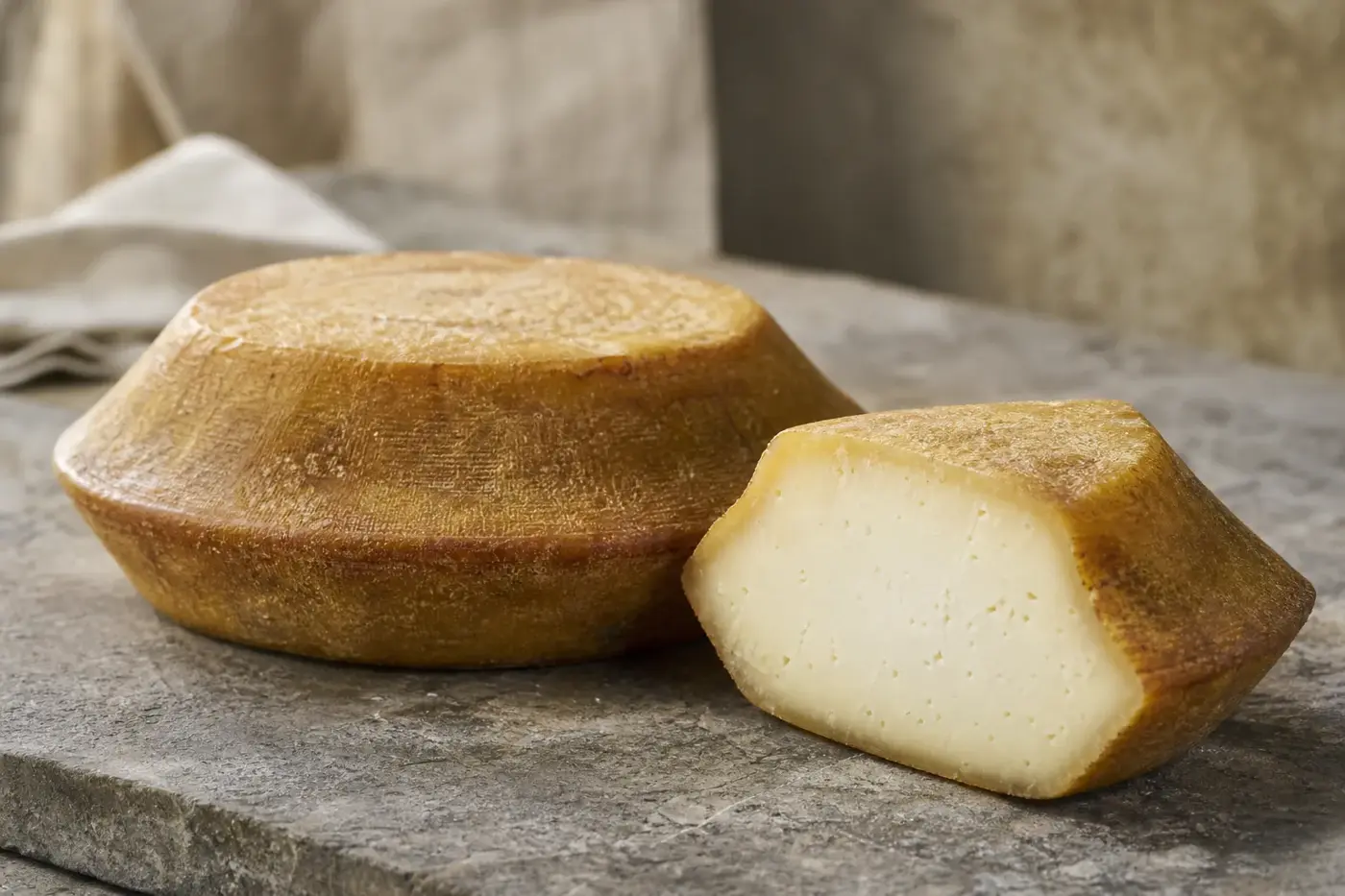
Near the fire, young Fiore Sardo rests on a reed rack, drying and taking on smoke. This is Sardinia’s pastoral cheesemaking tradition at work, turning raw, whole sheep’s milk into younger wheels for your table or harder, more piquant cheese for grating. How smoky will your slice be? How mature? The maker has a say in both. [2,3,4]
Meet the shepherds behind the flower’s name
Picture the sheepfolds of inland Sardinia, especially Barbagia. Slow Food describes shepherds making Fiore Sardo to keep milk useful through the dry season, when their flocks stopped giving milk. A firm cheese that matured for months carried something precious beyond the milking season. [4]
The documented history gives you three milestones: the 1951 Stresa Convention, recognition as a typical cheese in 1955 and Italian denomination-of-origin recognition in 1974. The Sardinian agricultural authority records all three. They offer firmer historical ground than claims that today’s cheese has survived unchanged since antiquity. [8]
And the flower in the name? Slow Food offers two possible explanations: flowers carved into wooden moulds to identify individual producers, and a possible connection with thistle-flower coagulant. Both belong to the name’s history, but today’s production guide specifies animal rennet. [2,4]
Take a closer look at that double cone
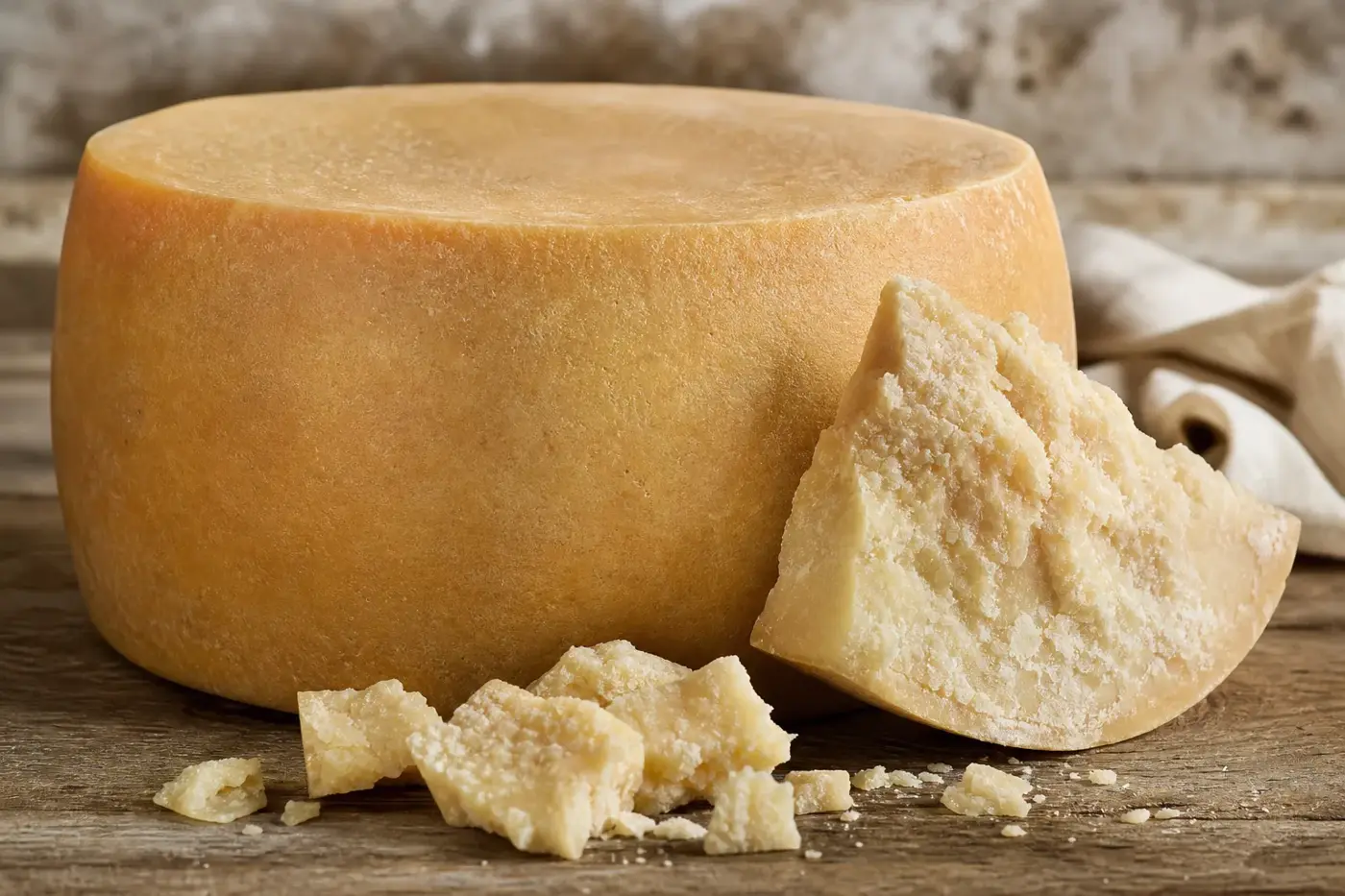
Before you cut into a whole wheel, look at its shape. Two flattened truncated cones meet at their broadest bases, creating a raised middle and sloping edges rather than a cylinder’s straight sides. The production guide describes a deep yellow to dark brown rind surrounding white or straw-coloured paste. [2,6]
This page summarises published guidance from the official sources it cites. It is not medical advice. Guidance differs between countries and changes over time, so check the current source for where you live, and ask your doctor, midwife, pharmacist or dietitian about your own circumstances.
Follow the milk from flock to mould
It begins with fresh, raw, whole milk from Sarda sheep. The production guide allows evening and morning milkings to be worked separately or together, and permits local lactic cultures. Curious about whether your chosen dairy uses those cultures? Ask the maker. [6]
Lamb or kid rennet paste sets the milk into curd, the solid mass that becomes your cheese. The maker breaks it finely, gathers it into truncated-cone moulds, then repeatedly turns and works the forms. This releases whey, the liquid that separates from the curd. [3,6]
Hot water or hot whey helps strengthen the surface before brining. That treatment is for the surface; it does not mean the curd is cooked in the vat. You can follow the stages in how cheese is made and rennet explained. [3]
By the fire, then into the ageing room
Traditional smoking begins close to the fire, where young cheeses dry on a reed rack and take on smoke. Slow Food describes this first period as about two weeks. Months of ageing follow, with turning and, later, attention to the rind. [4]
The production guide describes natural smoke from fresh branches of typical shrubs and trees, and says the cheese may undergo smoking. Later, the rind receives olive oil, wine vinegar and salt. Before you buy, ask about smoking and age: a dark rind tells you surprisingly little about how assertive the smoke will taste. [2]
Taste how a slice becomes a crumble
For cheese to eat at the table, start with younger Fiore Sardo. Maturation takes it towards a harder grating texture. The Italian cheese-tasting organisation ONAF describes mature examples as friable and granular, breaking with a rocky fracture, with smoke, cooked-milk, animal and herbaceous notes leading to an intense, persistent finish. [3,5]
More age can also bring pronounced saltiness, acidity or bitterness alongside that firmer texture, ONAF notes. Let balance guide you, rather than treating age as a competitive sport. The oldest wheel might be compelling over a dish without being your favourite to eat in pieces. [5]
What the Fiore Sardo name promises you
PDO means Protected Designation of Origin; DOP is the Italian abbreviation. Italy’s agriculture ministry records Fiore Sardo as an EU PDO under register ID PDO-IT-0007. Milk production, cheesemaking and maturation belong within the whole of Sardinia, so its close association with Barbagia is more specific than its legal territory. [1,6]
Great Britain’s separate register also lists Fiore Sardo as a registered PDO. If you are untangling origin protection from other schemes, protected names explained will help. [7]
Slow Food’s Fiore sardo dei pastori Presidium is a separate project supporting pastoral production, particularly in Barbagia. Slow Food describes participating makers using self-produced rennet, natural rind treatment and no industrial starter cultures. Those practices belong to the Presidium project, not automatically to every wheel carrying the PDO name. [4]
Get to know three distinct pecorinos
Fiore Sardo, Pecorino Sardo and Pecorino Romano are three separate EU protected names, each with its own production requirements. Pecorino Sardo shares Fiore Sardo’s Sardinian production area. Pecorino Romano’s territory also includes Lazio and the province of Grosseto in Tuscany, so “Romano” does not necessarily put your cheese near Rome. [1,8]
When you choose, look beyond the broad word pecorino. Fiore Sardo’s raw Sarda sheep’s milk, uncooked curd and traditional smoking tell you much more about its character. Another cheese may work in your recipe, but substituting it changes the dish and does not transfer the protected name. [3,6]
Ask your way to the right wedge
First, look for the registered name Fiore Sardo on the label or in the cheesemonger’s original wheel information. Then ask who made it, how old it is and whether the smoke is delicate or pronounced. Those answers tell you more than the darkest rind or strongest aroma. [1,5]
Tell your cheesemonger what you have planned. For slices with bread, ask for younger table cheese; for finishing pasta, ask for mature grating cheese. If you can taste both, compare small pieces and pay as much attention to texture as to salt and smoke. [3,5]
Buying a cut wedge? Keep its original label so the identity and storage instructions stay with your cheese. The guide to reading a cheese label takes you through the wider label questions.
Bring bread and fruit, and let the cheese lead
Begin simply, with small pieces of cheese, Sardinian bread and water. Try crisp pane carasau with a younger wedge, or firmer cheese with a plainer, soft-crumbed loaf. Add accompaniments one at a time, giving the bread’s texture a part to play without making the cheese audition beneath a pile of toppings.
Pear, apple, grapes or figs are useful starting points. Taste your cheese alone, then with the fruit: crispness gives you one contrast, a ripe fig’s fuller sweetness another. With particularly assertive cheese, keep the selection small rather than piling on several sweet preserves.
ONAF recommends suitably aged reds, including Cannonau di Sardegna, Mandrolisai and Carignano del Sulcis. Treat these as starting points for mature cheese, served in small amounts to adults of legal drinking age. [5]
People who are pregnant, driving, taking medicines that interact with alcohol or recovering from alcohol dependence should not drink. Consult the NHS for current advice. Water or an unsweetened apple drink offers an alcohol free alternative; cheese and wine pairing explores the broader principles.
Slice it young, grate it mature
The distinction between table and grating cheese gives you a handy kitchen guide. Serve younger Fiore Sardo in slices or small wedges with bread. The production guide allows cheese matured for at least six months to be used for grating; that threshold is separate from the age a particular maker prefers for eating. [2,3]
When cooking, give yourself room to adjust. Grate a little mature cheese over tomato pasta, vegetable soup or roasted vegetables, then taste before adding more. If the dish is already strongly seasoned, start with less and adjust at the table: you can balance that savoury, piquant character more easily in small additions.
Keep your wedge well, and give the rind a thought
Follow the maker’s refrigeration and after opening instructions, and keep the original packaging information. For England, Northern Ireland and Wales, the Food Standards Agency advises a fridge temperature of 5 °C or below (41 °F or below). Consult its current guidance alongside the pack instructions. [9]
Keep wedge and label together, and cut only what you intend to serve. If yours came from an unlabelled wheel, ask the cheesemonger for specific storage instructions. You will find more on wrapping and fridge management in storing cheese at home.
Ask about the rind, too. The production guide describes treatment with oil, vinegar and salt, so find out what has been applied to your particular cheese. Trimming it away lets you concentrate on the paste; follow any specific rind instructions supplied with the product. [2]
Questions people ask
What milk is Fiore Sardo made from?
It is made from fresh, raw, whole milk from Sarda sheep. The production guide permits evening and morning milkings to be worked separately or combined.
What rennet is used in Fiore Sardo?
The production guide specifies lamb and/or kid rennet paste. The possible historical link between its name and thistle flower coagulant does not describe the rennet used today.
How long is Fiore Sardo matured?
The production guide allows cheese matured for at least six months to be used for grating. The minimum maturation for table cheese has not been verified.
Is Fiore Sardo the same as Pecorino Romano?
No. They are separate protected names with their own production requirements. Fiore Sardo’s production area is Sardinia, while Pecorino Romano’s also includes Lazio and the province of Grosseto in Tuscany.
How should I store Fiore Sardo?
Follow the maker’s refrigeration and after opening instructions, and keep the original label with the cheese. For England, Northern Ireland and Wales, the Food Standards Agency advises a fridge temperature of 5 °C or below; consult its current guidance alongside the pack instructions.
Sources
- Ministero dell’agricoltura, della sovranità alimentare e delle foreste, Elenco delle denominazioni italiane, iscritte nel Registro delle denominazioni, official list, edition retrieved November 2026, entries for Fiore Sardo, Pecorino Romano and Pecorino Sardo.
- Italian production dossier, hosted by IFCQ Certificazioni, Scheda guida per la produzione della DOP “Fiore Sardo”, compilation labelled 1996, including the production guide, application summary and historical national decree.
- IFCQ Certificazioni, Fiore Sardo DOP, production summary and document repository, web edition retrieved November 2026.
- Fondazione Slow Food, Fiore sardo dei pastori, Presidium account, undated web edition retrieved November 2026.
- Organizzazione Nazionale Assaggiatori di Formaggio, [Fiore sardo](../fiore-sardo/), sensory description and wine recommendations, undated web edition retrieved November 2026.
- AGRIS Sardegna, Piano dei controlli: Fiore Sardo DOP, version 2.5, drafted 12 September 2024, particularly section 8.4.2 and table 1.
- Department for Environment, Food & Rural Affairs, [Fiore Sardo](../fiore-sardo/), Great Britain protected food names register, published 4 January 2021, retrieved November 2026.
- Regione Autonoma della Sardegna, Sardegna Agricoltura, DOP e IGP, institutional descriptions of the three cheeses, undated web edition retrieved November 2026.
- Food Standards Agency, How to chill, freeze and defrost food safely, guidance published 18 December 2017, current page retrieved November 2026; applies to England, Northern Ireland and Wales.
This desk-researched article brings together official production records, Sardinian institutional history and attributed sensory descriptions, with editorial serving suggestions.
Last checked: November 2026
Last checked November 2026.
The editors suggest you read next
Parmigiano Reggiano
Break into a wheel of Parmigiano Reggiano and flakes fall away, revealing a finely granular cheese, pale straw to straw in colour.