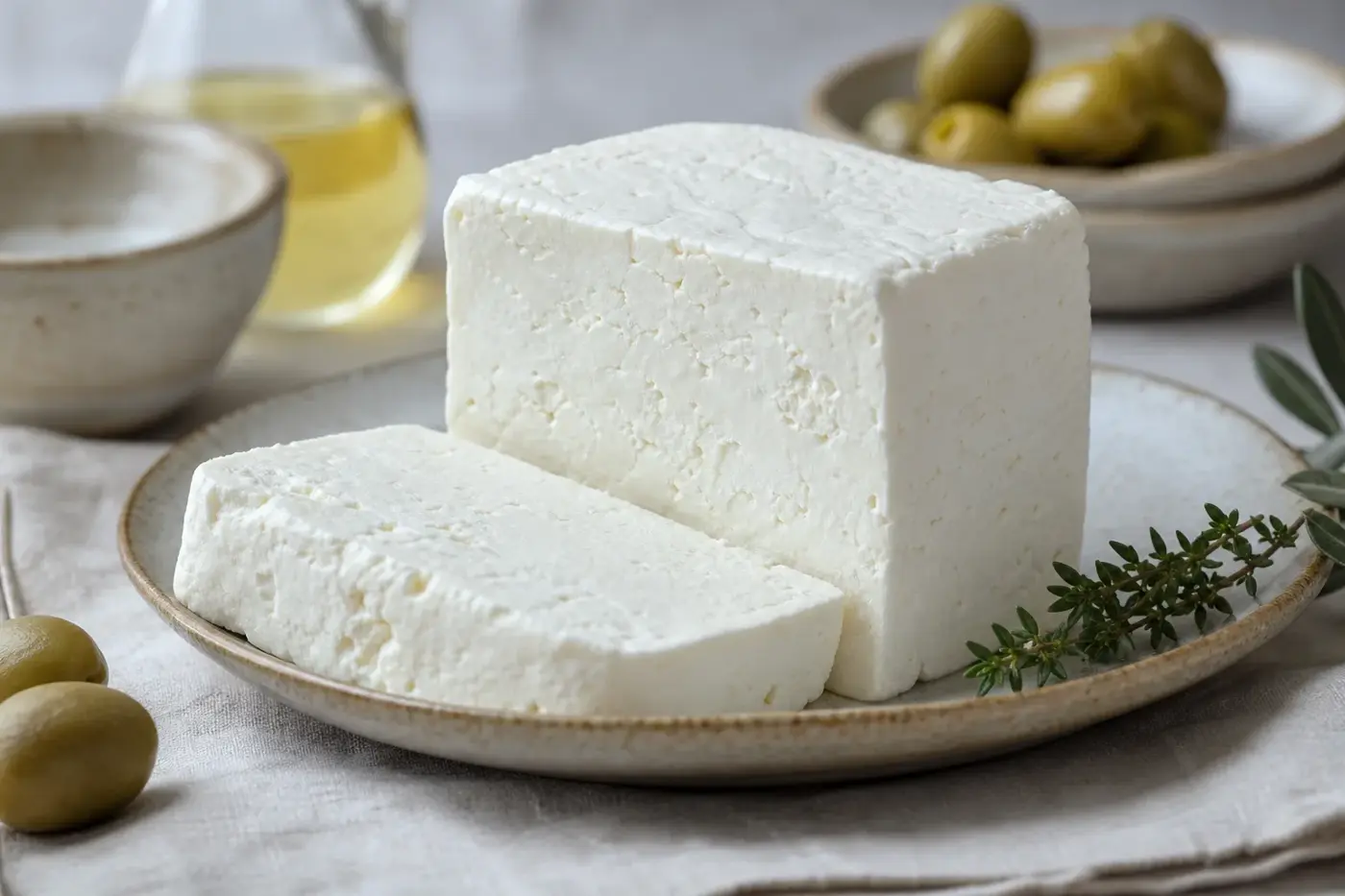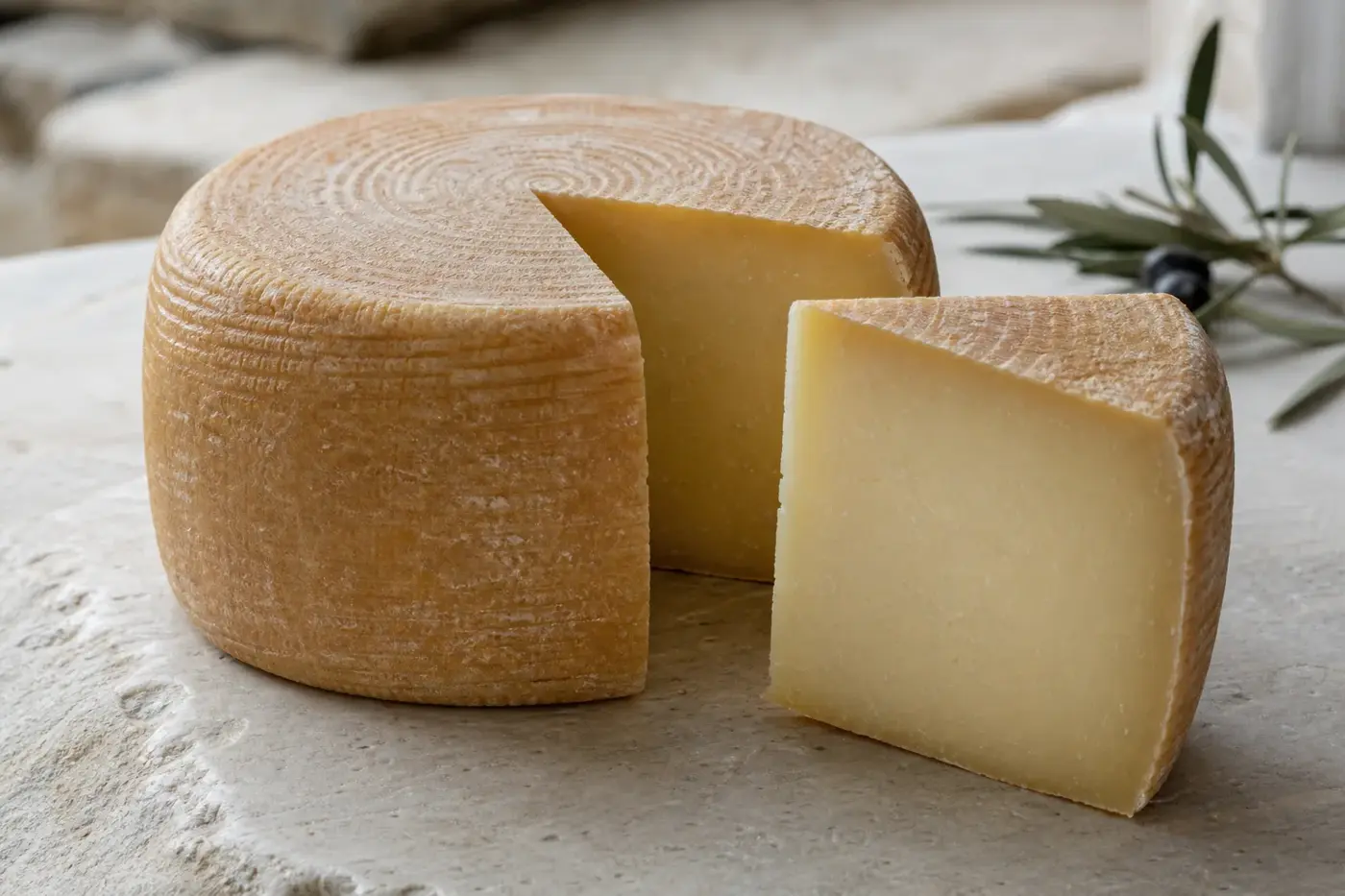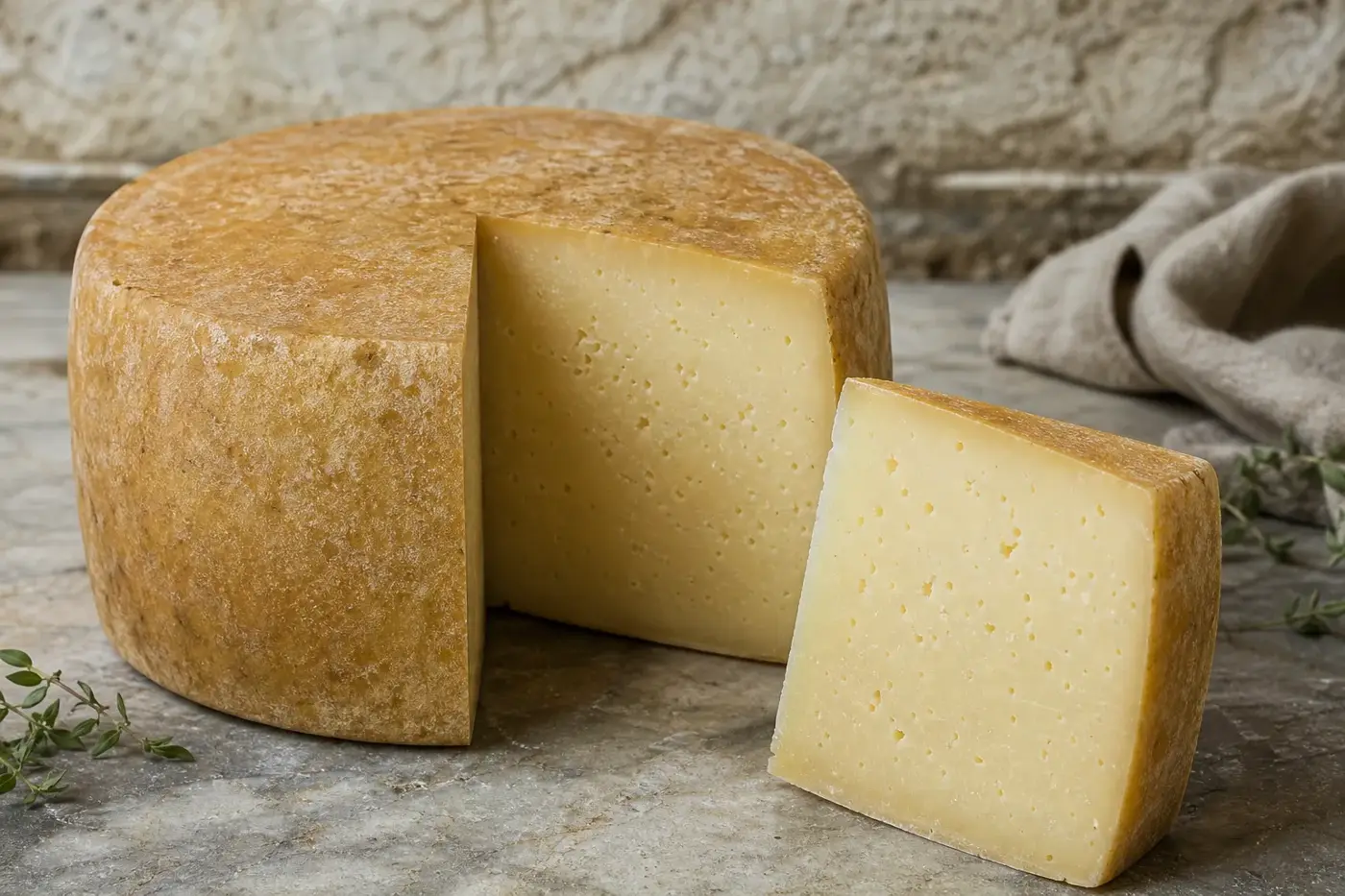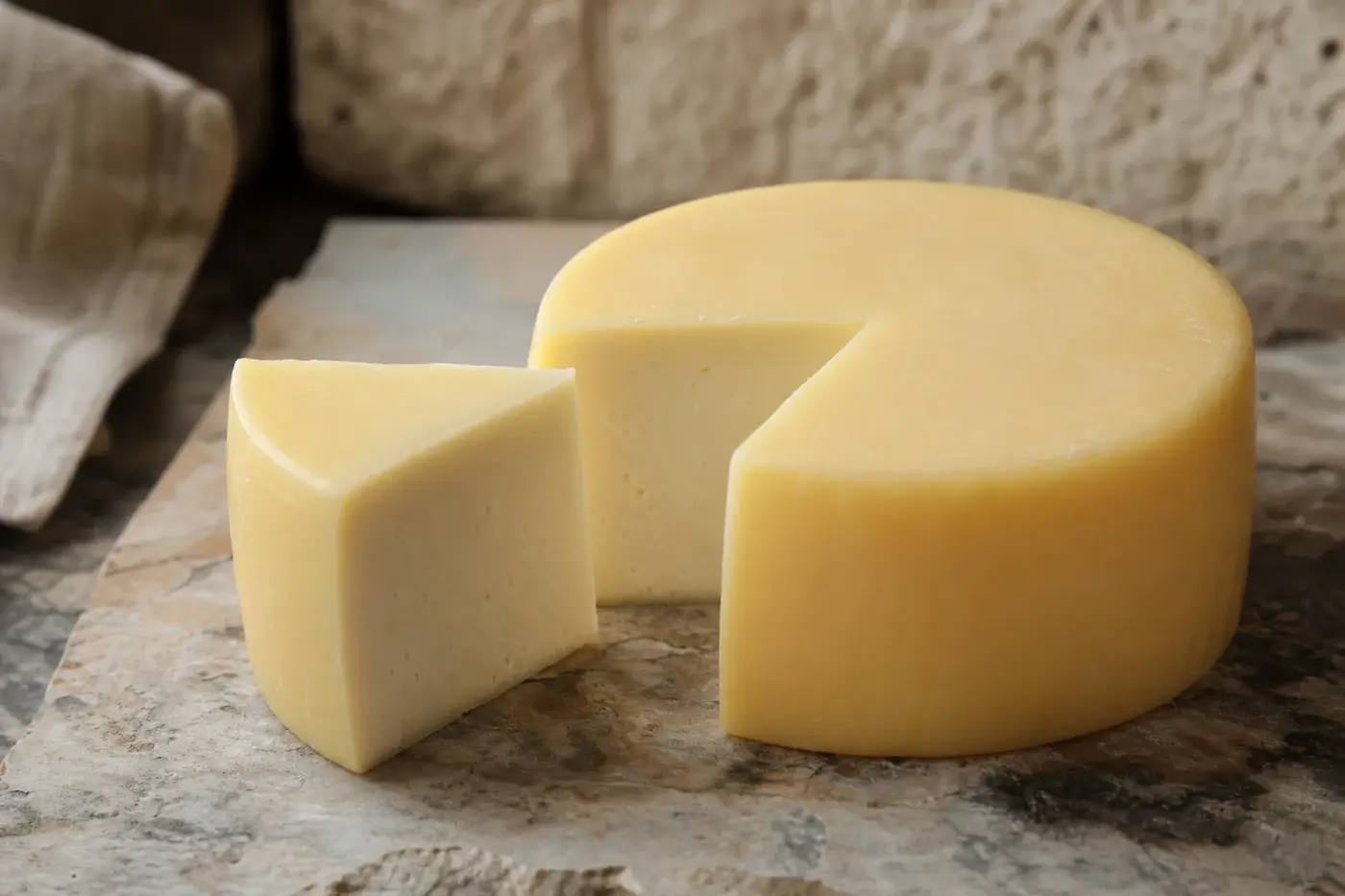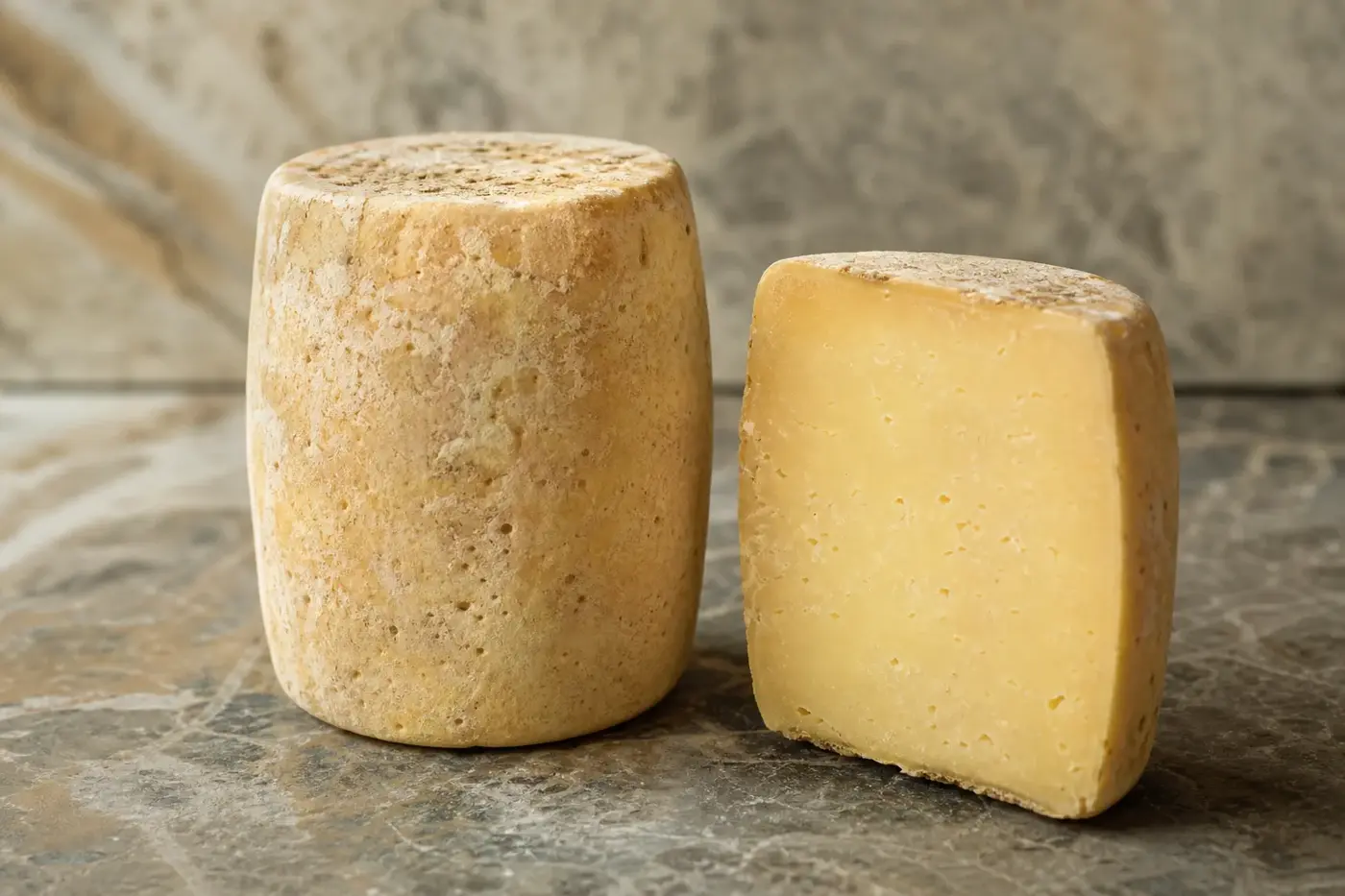
Into the hot whey goes the moulded cheese. An hour passes, then comes a turn and another spell in hotter whey, before salting and drying. This is Formaela, part of the sheep’s and goat’s milk tradition of Arachova, the mountain town on Mount Parnassos. [3,5]
The heat follows it to your plate. Greece’s national tourism organisation describes grilled Formaela as a characteristic local meze, a small dish served alongside other food. If hot cheese tends to command your full attention, here is one worth getting to know. [3,5]
Your Formaela essentials, at a glance
| What you want to know | The details |
|---|---|
| Familiar name | Formaela Arachovas Parnassou |
| Registered name | Φορμαέλλα Αράχωβας Παρνασσού (Formaella Arachovas Parnassou). [1,3] |
| Protected status | European Union PDO; listed by Greece’s agriculture ministry, November 2026. [1] |
| Register ID | Not given here |
| Official dossier reference | GR/0430/940121. [3] |
| Where it is made | Arachova Parnassou, Boeotia, Greece. [2] |
| Permitted milk | Sheep’s milk, goat’s milk or a mixture; no percentage limit specified. [2,3] |
| Permitted milk treatment | Raw or pasteurised. [2] |
| Style | Semi-hard, compact, pale yellow. [2] |
| Shape and size | Cylinder, approximately 8 cm across and 13 cm high, around 500 g. [2,4] |
| Minimum finishing period | 24 hours drying in moulds, then four days on shelves. [3] |
| Legal minimum ageing | Not specified separately from the drying sequence. [2,3] |
| Typical ageing | Not given here |
| Surface description | Not given here |
Let the name take you to Arachova
Formaela’s full name takes you straight to Arachova Parnassou in Boeotia, central Greece. Both production and maturation must happen within the defined area, according to the official registration summary. The Greek decision requires local milk too: this means the Arachova area specified in the dossier, not the whole of Mount Parnassos. [2,3]
The original application draws the boundary through neighbouring communities. Davlia lies to the east, Distomo to the south-east, Desfina to the south-west and Delphi to the west. Together, those names sketch the cheese’s home territory; its precise limits follow the administrative boundary in the specification. [4]
Greece’s agriculture ministry lists the name as an EU protected designation of origin, or PDO, with its registration legislation in the 1996 Official Journal. Those requirements tie the cheese to local milk and production within that defined area. If you have wondered how PDO differs from PGI and TSG, try protected names explained. [1,3]
Meet the sheep and goats behind your slice
Your Formaela may be made entirely from sheep’s milk, entirely from goat’s milk, or from both. The specification sets no maximum proportion of goat’s milk and no compulsory minimum proportion of sheep’s milk. No blend arithmetic required. [2,3]
The animals must be breeds traditionally kept and adapted to the region, with feeding based on its flora. The original producers’ application describes sheep’s milk as the principal milk and goat’s milk as secondary. That gives you a glimpse of local practice, rather than a numerical blending rule. [3,4]
Both raw and pasteurised milk are permitted. Read the label or ask the seller which was used for the piece you are buying. If those terms leave you hesitating, the guide to milk treatments explains them. [2]
Follow the cheese through its hot whey bath
The distinctive step comes once the cheese has taken shape. Whey, the liquid separated from the curd, becomes a hot bath for the filled moulds. As the official summary describes, the cheese is heated, turned and heated again before salting and drying. [3]
| The stage | What happens to your cheese |
|---|---|
| Setting the milk | Milk sets at about 32 °C over approximately two hours. [4] |
| Heating the curd | Curd is heated to 40 °C for ten minutes, then divided to fit the moulds. [4] |
| The hot whey bath | Filled moulds spend one hour in whey at 60 °C; cheeses are turned, then heated for another hour at 75 to 80 °C. [4] |
| Salting and drying | Cheeses are salted, dried in their moulds for 24 hours, then placed on shelves for four days. [4] |
The archived documents describe this short drying sequence, first in the moulds and then on shelves. For the exact salting method and any separate legal minimum maturation period, consult the current specification. [2,3]
Want to make sense of curd, whey and moulding? Start with how cheese is made. The temperatures and timings above describe the manufacture of the protected cheese, rather than instructions for your kitchen. [3]
Cut into a little cylinder with a substantial bite
A whole Formaela is approximately 8 cm across and 13 cm high, weighing about 500 g. Inside, the specification describes a compact, pale yellow paste: that is the body beneath the outer surface. Its formal texture class is semi-hard. [2,4]
Visit Greece describes a chewy cheese with a slightly peppery flavour. Its delicate aroma changes with maturation. Expect a substantial bite, rather than a soft, spoonable centre, and you can see why it finds a place on a hot cheese plate. [5]
Ask when your piece was made and whether the seller recommends it for the pan or for eating uncooked. Maturity matters to that choice, since the tourism authority specifically identifies its effect on aroma. For your first taste, try a small piece plain before adding anything sweet or sharp. [5]
Give a thick slice its moment in the pan
Grilling is the preparation highlighted by Visit Greece. It also records frying, serving Formaela with honey or jam, adding it to salads and cooking it in clay-pot dishes. That firm, chewy character gives a hot slice plenty of appeal as the centrepiece of your plate. [5]
Choose a frying pan or flat griddle so you can support a thick slice with a broad spatula as you turn it. Get the accompaniments ready first, and cook only what you intend to serve immediately. Treat the following as a serving suggestion, rather than a precise recipe.
- Cut an even, substantial slice, not a thin shaving. Remove the packaging and follow any preparation instructions supplied with the cheese.
- Pat the cut faces dry. Use a non-stick pan, or lightly oil the cooking surface, and start over moderate heat.
- Let the first side colour before lifting it with a broad spatula. Turn carefully and colour the second side. Reduce the heat if the outside darkens too quickly.
- Transfer straight to the plate. Taste before adding salt, and offer lemon or honey separately so each person can adjust their portion.
You are looking for a coloured surface and a warm, yielding bite. Let the slice’s thickness, your equipment and the maker’s instructions guide you. A single cooking time cannot account for all three.
Leave the cheese some room on your plate
Honey and jam are pairings documented by Visit Greece. For a savoury plate, try plain bread, sliced tomatoes and lemon wedges. Choose one or two accompaniments: you want to taste the cheese, not excavate it from beneath the toppings. [5]
Offer lemon for sharpness or a little honey for sweetness, leaving both on the table for you and your guests to add yourselves. Bread makes the cheese easy to share as part of a meze spread. A salad alongside turns your hot slice into a more complete plate.
To drink, try sparkling water with lemon or unsweetened iced tea. Either gives you a refreshing contrast alongside the salted cheese. Keep the accompaniments simple and let that warm slice lead.
Bring home the right piece, label and all
Look for the full protected name and a traceable producer. Read the milk treatment, date marking and storage instructions before taking your cheese home. For a cut portion, ask to see the original label. [2,6]
The guide to reading cheese labels explains the distinction between the food’s name and the seller’s details. Turn to it when you want help making sense of the information in front of you.
For home storage and leftovers, follow the packaging instructions and consult the Food Standards Agency guidance for England, Wales and Northern Ireland. [6] You can also turn to storing cheese at home for the broader routine.
Considering Kefalotyri or Halloumi? Think about your slice
Formaela’s documentation specifies a compact, firm body, while grilling and frying are recorded local uses. Those give you useful starting points when choosing another cheese for the same dish. Begin with what you want your cheese to do on the plate. [2,5]
Whether you are considering Kefalotyri, Halloumi or another alternative, compare the actual products’ milk, maturity, salt information and cooking instructions. Ask the seller whether your replacement suits the same slice thickness and cooking method. Call it by its own name, and taste before adding further seasoning.
For your first encounter with Formaela itself, choose the simplest documented local preparation: a hot slice, with accompaniments beside it. Keep your plate simple. Give that texture your attention.
Follow your appetite a little further
- How to Tell Cheese Styles Apart: Milk, Rind, Texture and Method: a practical way to compare the cheeses in front of you.
- Cheese and Wine Pairing: The Complete Guide: explore balancing cheese and drinks, including alcohol-free choices.
General information only, not medical advice: follow the official guidance where you live.
Questions people ask
Where does Formaela come from?
Formaela comes from the defined area of Arachova Parnassou in Boeotia, Greece. Its milk, production and maturation must all come from within that area.
What milk is used to make Formaela?
Formaela may be made entirely from sheep’s milk, entirely from goat’s milk, or from a mixture of the two. Both raw and pasteurised milk are permitted.
What does Formaela taste like?
Visit Greece describes Formaela as chewy and slightly peppery, with a delicate aroma. The aroma changes with maturation.
How is Formaela traditionally served?
Visit Greece describes grilled Formaela as a characteristic local meze. It also records frying it, serving it with honey or jam, adding it to salads and cooking it in clay pots.
How is Formaela made?
The curd is placed in moulds and heated in whey, then turned and heated again. The cheeses are salted, dried in their moulds for 24 hours and placed on shelves for four days.
Sources
-
Greek Ministry of Rural Development and Food, Τυριά, current online list, checked November 2026. The Formaela entry identifies its PDO classification, national recognition decision and 1996 EU registration publication. Official ministry list.
-
Hellenic Republic, Ministry of Agriculture, Decision 313063 of 17 January 1994, recognition of the designation Formaela Arachovas Parnassou, Government Gazette, Series B, issue 25, 18 January 1994, printed pages 241 to 243, especially Articles 1 to 5. Official Gazette PDF hosted by the ministry.
-
European Commission registration archive, Formaella Arachovas Parnassou, registration summary, document VI/5015/95, national dossier TY (DOP) 15, reference GR/0430/940121, 1995. Italian-language summary attached to the official register. Official registration summary.
-
Arachova Parnassou livestock association, European Commission registration archive, Requête, French translation of the original application, document VI/5014/95, dossier 0430, 1995. Used for the applicants’ account of local practice, geographical boundaries and production. Official archived application.
-
Greek National Tourism Organisation, Visit Greece, Formaela of Parnassus, undated online account, checked November 2026. Used as an attributed tourism authority account of sensory character and local serving practices. Official tourism account.
-
Food Standards Agency, How to chill, freeze and defrost food safely, published 18 December 2017, live guidance checked November 2026; applies to England, Northern Ireland and Wales. Official food handling guidance.
This desk-researched article brings together the official production documents, an attributed Greek tourism account and jurisdiction-specific food handling guidance.
Last checked: November 2026
Last checked November 2026.
The editors suggest you read next