First comes the aroma. Then you cut through the rind to a soft centre, and Golden Cenarth has your attention before the first bite. Its story begins in the valley of the river Cych, where a farming family revived cheesemaking in 1987 in response to milk quotas, with Caerffili its early speciality. Today, Caws Cenarth’s soft, cider-washed cheese brings another character to that Carmarthenshire story: mild when young, increasingly pungent as it matures.[1,2]
Let the rind make its introduction
An aromatic rind knows how to announce itself. It cannot, however, tell you everything about the cheese beneath it. Caws Cenarth puts maturity at the heart of Golden Cenarth’s character: comparatively mild when young, more pungent as it matures, with a nut-like flavour and pronounced savouriness in the maker’s tasting notes.[1,3]
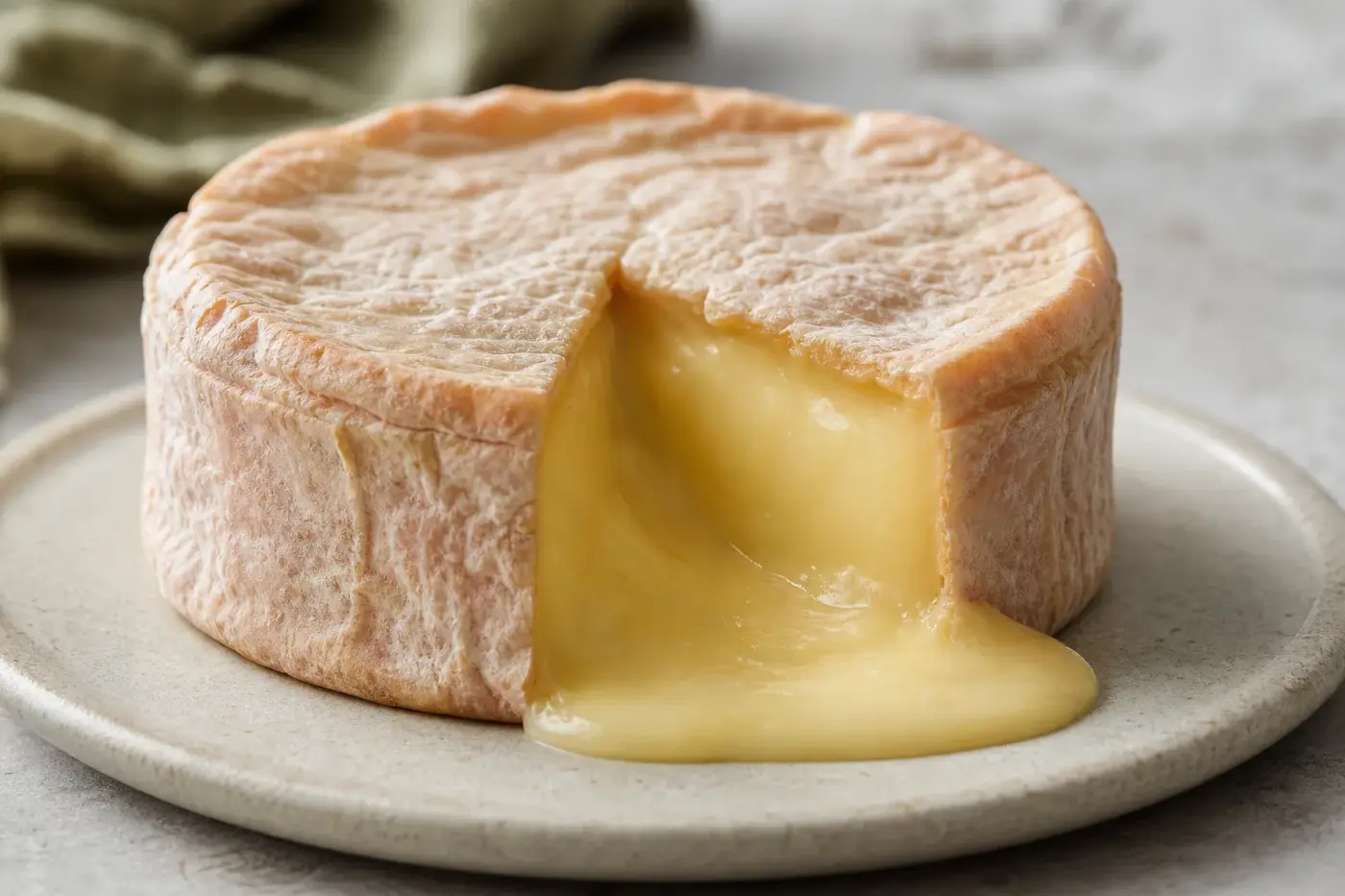
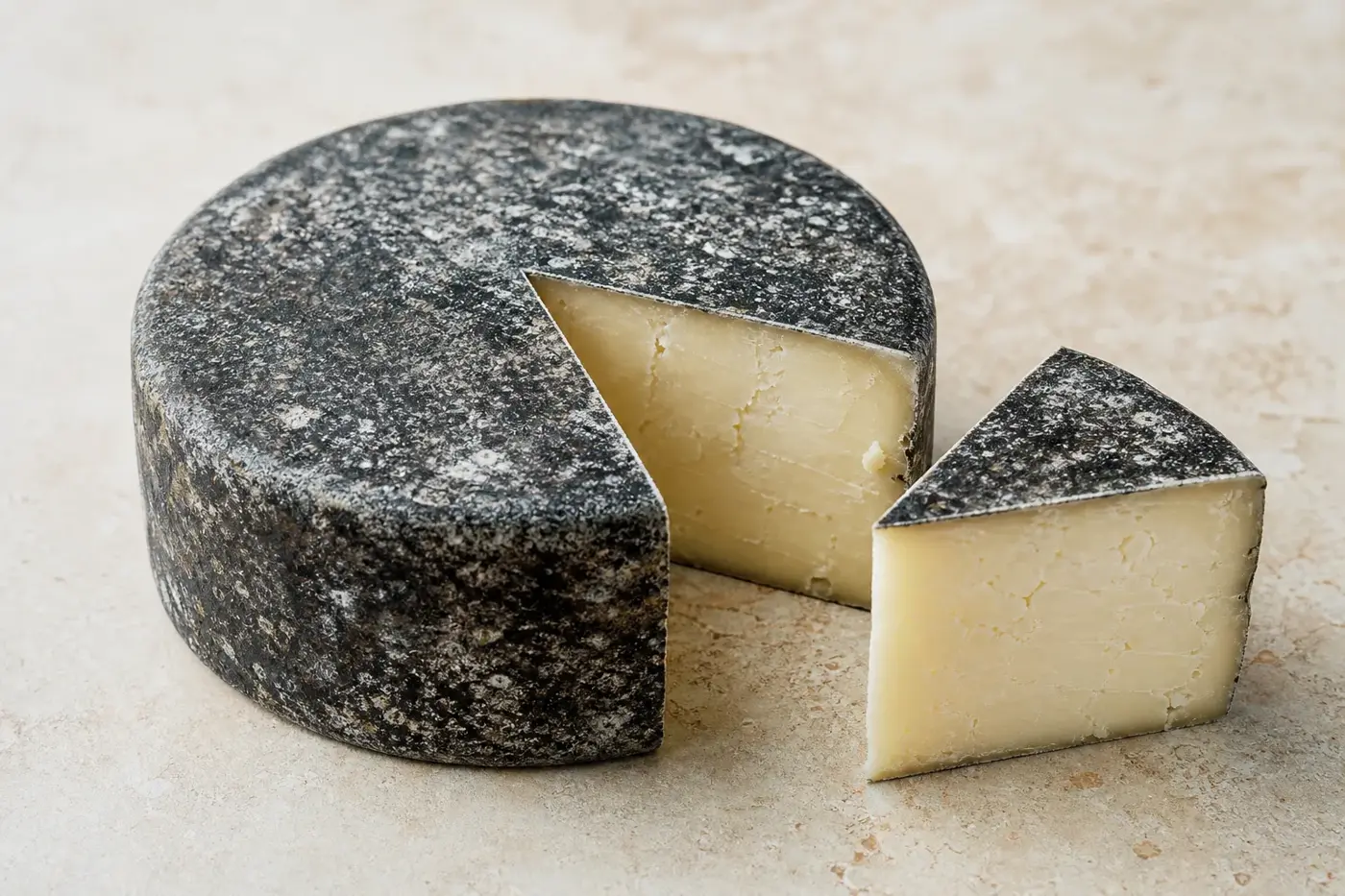
In the maker’s current photograph, you see a small round with a pale, pinkish-buff rind, warmer edges and a yellow interior. The cut paste, the cheesemaking word for the body beneath the rind, looks soft and yielding, with some spreading onto the board. Keep that picture in mind when choosing: a washed rind need not be orange all over.[5]
If you usually reach for white-rinded soft cheeses, a younger Golden Cenarth offers a place to begin. Ask for a taste where sampling is available, then meet it on its own terms. For more on how rind, texture and method fit together, explore telling cheese styles apart.
Follow the family to the Cych valley
Picture Glyneithinog, in the valley of the river Cych, where Caws Cenarth places its dairy. The business dates its establishment to 1987, when milk quotas prompted the farming family to revive cheesemaking. Caerffili was the early speciality.[2]
Golden Cenarth belongs to that Welsh farm dairy, alongside its other cheese styles. That family history gives this distinctive washed rind more than a name on a label. You have a place to picture as you taste.
Fancy seeing the dairy at work? Contact Caws Cenarth before travelling to observe cheesemaking, as the maker requests, because production times vary. Ask directly about current visiting arrangements and accessibility too.[4]
Meet the milk, rennet and cultures
The small-cheese listing declares pasteurised cow’s milk and vegetarian rennet.[1] Rennet helps milk form curd, the solids that become cheese. In the dairy’s general production account, this coagulant goes in after an initial fermentation stage.[2]
If rennet type matters to your choice, begin with the maker’s current declaration for this cheese. The guide to rennet and its different sources explains the terminology and the distinctions behind it.
The larger wheel’s ingredient list also names annatto colouring and Brevibacterium culture. These are ingredients declared for the product itself, rather than assumptions you might make from its washed-rind style.[3]
From fresh milk to a cider wash
Cider gives Golden Cenarth its defining wash. The product information identifies that washing liquid, while Caws Cenarth’s tasting description links the cheese’s developing character to its maturity.[1,3] When you choose one, the wash and the stage of maturity both deserve your attention.
The dairy’s broader production account begins with pasteurising locally sourced milk. Cultures go in, fermentation follows, then coagulant is added. The resulting curd is cut to release whey, milk’s liquid portion, before gravity carries it into moulds to form rounds.[2]
Overnight acidification comes next. The cheeses are salted by hand and moved towards maturation. This is the dairy’s wider account, covering several cheeses and separate passages on white-rinded and blue varieties, rather than a recipe solely for Golden Cenarth. Follow the broader sequence in how cheese is made.[2]
At the counter, ask: “How is this particular cheese eating now?” Find out whether it is relatively mild or more pungent, and whether the centre holds its shape or yields more readily. For tonight’s supper, those answers tell you more than a general description of age alone.
Give your first mouthful a moment
Savouriness, a nut-like flavour and growing pungency with maturity lead Caws Cenarth’s description. Retailer Riverford adds a smooth, creamy texture and an amber rind, and attributes a distinctive flavour note to the cider washing.[3,6] Your nose has made the introduction; now let your taste buds join in.
Smell first, without feeling obliged to name every impression. Then taste a small piece of the interior, noticing its savouriness and how readily it spreads across your tongue. Before adding anything, decide whether your next mouthful wants bread, fruit or absolutely nothing.
The maker’s photograph shows a yielding example, and its product description says the cheese is supplied ready to eat.[3,5] Tell your cheesemonger whether you want a neat wedge or something softer for spreading. The feel of the centre deserves as much attention as the strength of the aroma.
Find your kind of Golden Cenarth
Think about serving before you choose a size. Caws Cenarth lists a small 200 g cheese and a much larger wheel, so check the format before ordering or asking the counter to cut a portion.[1,3] For your first encounter, choose enough to give the cheese the focus of one meal.
Take these three questions to the counter:
- Is this example relatively mild or more pungent?
- Will the centre cut cleanly, or is it better suited to spreading?
- What storage and date instructions come with this cheese?
Tell the cheesemonger when you plan to eat it. “For lunch tomorrow” gives a clearer brief than “a ripe one”. Ripe might mean a soft centre to one person and a stronger aroma to another, so describe both.
Buying packaged cheese? Read the product name, date, storage instructions and ingredients together, and keep the label until you have finished the cheese. The guide to reading a cheese label helps you make sense of those details.
Keep it chilled and follow the label
Keep Golden Cenarth refrigerated, as Caws Cenarth instructs. Follow the storage and opening directions supplied with your particular cheese.[1]
If you follow Food Standards Agency consumer guidance in England, Wales and Northern Ireland, your fridge should be at 5 °C or below. Follow packaging instructions and date marks too.[8] For the wider routine, turn to the home cheese storage guide.
Leave a little room on the plate
Start with a plain plate, bread and one fresh accompaniment. You can discover whether you prefer the interior alone or each mouthful with something crisp. The cheese does not need an entourage.
Try this simple tasting sequence:
- Put the cheese on a plate with enough space to cut or spread it.
- Taste a small piece before adding an accompaniment.
- Try the next mouthful with plain bread.
- Add a slice of apple or pear, then decide which combination you prefer.
Remove the wrapping before serving. Check the pack or ask Caws Cenarth whether the rind on your particular cheese is intended to be eaten. Treat that as a separate question from whether you enjoy its aroma.
For bread, begin with a crusty loaf or a lightly toasted slice rather than strongly flavoured crackers. Crisp apple, ripe pear or a few grapes give you a choice of fruit. Put chutney or honey on the side, so everyone can choose how much sweetness joins the cheese.
Pour a drink and follow your curiosity
The maker’s savoury description and the cider wash give you the starting points for these pairing suggestions.[3] Keep things simple enough to notice what each addition brings.
| What to pour | Why try it? |
|---|---|
| Still or sparkling water | A simple alcohol-free starting point for exploring the cheese. |
| Alcohol-free apple drink | A way to try apple alongside the cider-washed cheese. |
Begin with one accompaniment and one drink. Add another if you fancy, but leave space on the plate and between mouthfuls. You are finding combinations you enjoy, not trying to fill every available gap.
Make lunch of it, or bring it to the oven
For an easy lunch, serve Golden Cenarth ready to eat with crusty bread and sliced apple. Offer a little honey separately. You and your fellow diners can each find your own balance of bread, fruit and cheese.
Caws Cenarth also publishes ideas for baked Golden Cenarth. One uses sourdough bread, honey and thyme; another comes with cheese twists.[9] Once you know the cheese’s character, these give you a route to a warmer dish.
For your first purchase, taste it unheated. Choose a younger example if the maker’s milder description appeals. If developing pungency is what draws you in, ask for greater maturity.[1]
General information only, not medical advice: follow the official guidance where you live.
Questions people ask
What does Golden Cenarth taste like?
The maker describes a nut-like flavour and a pronounced savoury character. Younger cheese is comparatively mild, while more mature cheese becomes more pungent.
Is Golden Cenarth suitable for vegetarians?
The maker declares vegetarian rennet in Golden Cenarth. The small cheese listing also declares pasteurised cow’s milk.
Can you eat the rind of Golden Cenarth?
Check the pack or ask Caws Cenarth whether the rind on your particular cheese is intended to be eaten. Make that decision separately from whether you enjoy its aroma.
How should Golden Cenarth be stored?
Caws Cenarth says to keep it refrigerated and follow the storage and opening directions supplied with the cheese. The Food Standards Agency advises a fridge temperature of 5 °C or below in England, Wales and Northern Ireland; see its consumer guidance.
Can you bake Golden Cenarth?
Yes, Caws Cenarth publishes ideas for baked Golden Cenarth. These include a version with sourdough bread, honey and thyme, and another accompanied by cheese twists.
Sources
- Caws Cenarth, Golden Cenarth, 200g, undated live product listing, retrieved November 2026. Product description, milk treatment, rennet, format and refrigeration instructions. Verified source.
- Caws Cenarth, Our Story, undated live page, retrieved November 2026. Family business history, river Cych setting, local milk sourcing and general dairy production account. Verified source.
- Caws Cenarth, Golden Cenarth Wheel, approx 1.2kg, undated live product listing, retrieved November 2026. Format, flavour description, cider wash and ingredient declarations. Verified source.
- Caws Cenarth, Visit Us, undated live page, retrieved November 2026. Dairy address and advice to contact the dairy before travelling to observe production. Verified source.
- Caws Cenarth, Golden Cenarth product photograph, image displayed on the small-cheese product listing, retrieved November 2026. Visual evidence for shape, surface colouring and the photographed cut interior. Source product page.
- Riverford, Organic Golden Cenarth, undated live retailer listing, retrieved November 2026. Attributed retailer descriptions of texture and rind. Riverford sells the product and has a commercial interest. Verified source.
- British Cheese Awards, British Cheese Awards 2016: Medal Winners by Class, 2016. Semi-soft cheese, class BC18, Golden Cenarth entry. Official results.
- Food Standards Agency, How to chill, freeze and defrost food safely, published 18 December 2017, live guidance retrieved November 2026. Applies to England, Northern Ireland and Wales; section 1, “Chilling food”. Official guidance.
- Caws Cenarth, Our Recipes, undated live recipe index, retrieved November 2026. Descriptions of baked Golden Cenarth with cheese twists and in sourdough bread. Verified source.
This piece was researched from the maker’s published information and photography, official competition results and national food safety guidance, with retailer tasting descriptions explicitly attributed.
Last checked: November 2026
Last checked November 2026.
The editors suggest you read next
Caerphilly
Your knife meets a rind-ripened Caerphilly, and one wedge offers two pleasures: a fresh, crumbly centre and a softer, creamy layer just beneath the rind.