Harbison
Slip a spoon inside Harbison’s spruce bark band and the pale centre tells you why the knife can stay in the drawer.
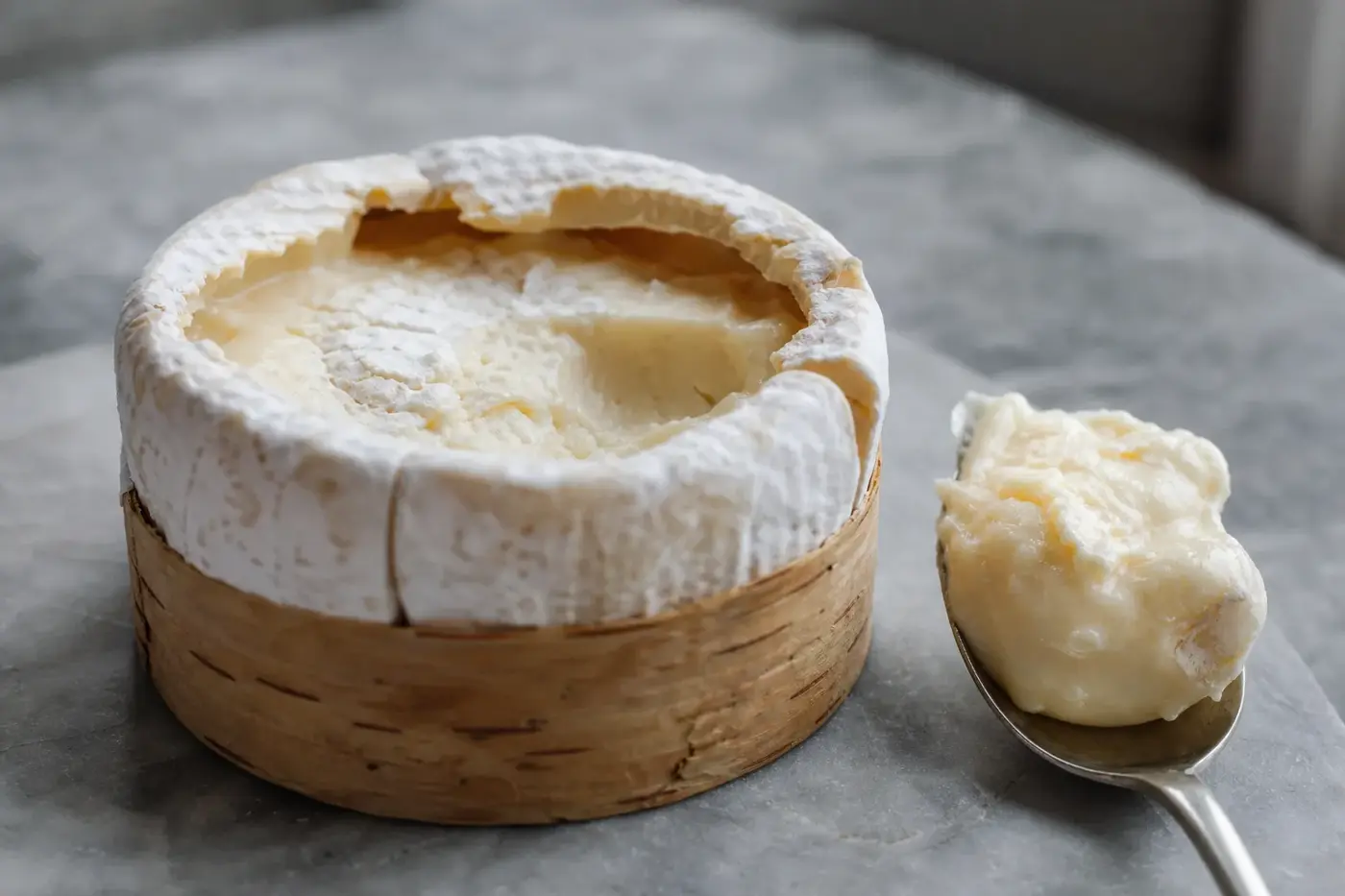
Slip a spoon inside Harbison’s spruce bark band and the pale centre tells you why the knife can stay in the drawer. As this soft Vermont cows’ milk cheese ripens, neat slices cease to be the point. The bark holds everything together and lends a woodsy flavour, according to maker Jasper Hill, while a white, surface-ripened rind completes the package. [1][2]
| Your quick guide | Harbison |
|---|---|
| Maker | Jasper Hill Farm, Vermont, United States. [1] |
| Where it is made and matured | Made at Jasper Hill’s Hardwick creamery for pasteurised cheeses; matured in its Greensboro cellars. [3][4] |
| Milk | Pasteurised cows’ milk from local pastured herds, according to the maker. [1] |
| What goes into it | Pasteurised cows’ milk, salt, rennet, cultures. Contains milk. [2] |
| Coagulant | “Traditional rennet” in the maker’s information sheet; specific source uncertain. [2] |
| Rind and wrapping | White bloomy rind with a spruce bark band. [1][5] |
| Usual size | Round, approximately 255 g (9 oz). [1][2] |
| Maker’s maturation range | Uncertain. [1][2] |
| Spruce species | Uncertain |
| Protected-name registration and register ID | Uncertain |
| Pregnancy guidance | UK NHS and US CDC advice, November 2026, summarised below. [10][11] |
Take the journey from Hardwick to Greensboro
Harbison begins in Hardwick and ripens underground in Greensboro. Both are in Vermont’s Northeast Kingdom, where Jasper Hill runs its cheesemaking and maturation facilities. The journey between them takes your cheese from one set of skilled hands to another. [3][4]
Jasper Hill makes its raw milk cheeses at the original Greensboro creamery. Its pasteurised cheeses, including Harbison, begin at the Hardwick operation in the Vermont Food Venture Center. From there, Harbison heads to the Greensboro cellars to mature. [3][4]
Making fresh cheese and guiding it towards ripeness are separate skills, practised here in different places. Jasper Hill calls the second affinage: caring for cheese during maturation. Its cellars accommodate cheeses with different needs, giving each kind of rind the conditions it requires. [4]
The name takes you back to the community above those cellars. Harbison honours a Greensboro figure Jasper Hill describes as the grandmother of the town; its 2022 information sheet records her connections with a local bed-and-breakfast and the public library. Local milk, woodland materials and a dedication to someone woven into town life come together in this small wheel. [1][2]
Follow the milk, the bark and the patient cellar work
Harbison starts with pasteurised cows’ milk, cultures, rennet and salt. Rennet helps the milk set into curd. Jasper Hill’s information sheet describes its rennet as traditional. [1][2]
The spruce band goes on while the cheese is young, before its centre reaches ripe Harbison’s fully softened texture. Jasper Hill documents that wrapping stage and the cellar maturation that follows. The finer details of making the young cheese remain uncertain. [1][2][4]
Wrapped wheels enter the cellars’ bloomy-rind vault, where the team manages conditions for the surface flora. Meanwhile, the paste, the cheesemaker’s word for the interior, softens. Rind and centre develop together under that care; you can explore the wider journey from setting milk to finished cheese in how cheese is made. [1][4]
Get acquainted with that living white rind
The white bloom you see is cultivated during maturation, not simply left to chance. Jasper Hill names Penicillium candidum and Penicillium camemberti among the moulds that form it. They need oxygen, and the maker describes high air exchange in its bloomy-rind vault. [4][5]
The result is the soft, velvety exterior characteristic of a bloomy-rind cheese. Jasper Hill calls Harbison’s rind rustic, so expect variation rather than a perfectly uniform white disc. Its photographs and guidance also show mottling on the surrounding bark. [1][5][6]
Think of the rind and spruce band as two separate surfaces for flora. Jasper Hill documents blue-green growth on its bark-wrapped cheeses and identifies it as Penicillium commune. This is an expected part of Harbison’s appearance, but consider it alongside the cheese’s handling history and the instructions on your pack. [5]
Discover what the woodland wrapping brings
The band comes from Jasper Hill’s own woodlands. The maker describes it as spruce cambium, the tree’s inner bark layer. Its first job is practical: holding the cheese together as the centre loosens and your plans for tidy portions become increasingly optimistic. [1][2]
Contact with the bark also adds a woody nuance alongside the flavours of milk and ripening, the producer says. In its account of the bloomy-rind vault, Jasper Hill describes freshly wrapped cheeses giving off aromas that mingle with white button mushroom notes. The woodland contribution goes beyond appearances. [2][4]
That supporting role continues at your table. With a younger, firmer wheel, the maker says you can peel the band away before slicing. Once the paste softens and attaches to the bark, leave it intact: it contains the cheese and gives your spoon something to work against. [2]
Find your favourite moment between firm and flowing
A standard Harbison is a small round weighing approximately 255 g. Jasper Hill’s photographs show a pale interior framed by white rind and a brown band. Its descriptions follow the paste as it becomes spoonable in the vaults, then continues softening on the journey to market. [1][2]
Sweet cream, button mushroom, wood, lemon, mustard and vegetal notes all appear in the maker’s tasting vocabulary. Try a small spoonful alone before bringing in bread or fruit, and notice what comes forward. These are clues to its character, not a tasting exam you have accidentally signed up for. [1]
Ripeness changes the experience considerably. Jasper Hill describes younger cheese as denser and more stable, while riper cheese becomes runnier and spoonable. Its general guidance also notes that stronger ammonia aromas can develop as cheeses move beyond their preferred eating condition, so softer is not automatically better. [6]
Ask your cheesemonger one useful question: is this wheel ready to slice or ready to scoop? The answer helps you plan how to serve it. You need not expect every Harbison to flow in precisely the same way.
Taste the rind and leave the bark behind
Harbison’s cheese rind is edible, Jasper Hill confirms. Try some with the paste, or leave it aside if you prefer the texture of the centre. Cutting away the top for spooning is a presentation choice, not a reason to discard every bit of rind. [6]
The spruce band is different: the producer explicitly advises against eating it. It contributes structure and flavour, but remains woody material around your cheese. Keep it in place to support a very soft wheel, remove any fragments that come away in a spoonful, and discard the band with the remaining packaging afterwards. [2][6]
Set the table before you lift the lid
Jasper Hill recommends letting its cheese lose its refrigerator chill so you can appreciate its aroma and texture. Keep that preference within official handling limits: the US FDA advises no more than two hours out of refrigeration for perishable food, or one hour when the air exceeds approximately 32 °C (90 °F). Preparation and eating time both count. [6][7]
- Get everything ready first. Set out bread, plates and a clean serving spoon before you take the cheese from the fridge.
- Support a ripe wheel. Put it on a plate and leave the bark around it if the paste is loose. [2]
- Lift back the top. Carefully cut around the upper rind and lift it back to reveal the paste, following Jasper Hill’s illustrated presentation. [1]
- Let the texture guide you. Scoop a soft wheel from the top, leaving its band in place to contain the rest. A firmer wheel can be unbanded and sliced. [2]
- Return leftovers promptly. Follow FDA advice to return perishables to refrigeration promptly and observe their storage instructions. [7]
Put out a shared serving spoon for everyone to use. It makes portioning easier than asking each person to pull bread through the wheel.
Bring good bread and choose your drink
Crusty bread and fruit mostarda, a fruit condiment with mustard character, are Jasper Hill’s suggested companions. The maker recommends oaked white wine and barrel-aged sour beer. Its information sheet adds sparkling wine and apple cider to the possibilities. [1][2]
For your first serving, give the cheese a little space. Taste it before introducing stronger contrasts, then see which accompaniment you enjoy beside it.
| What to put alongside | How to enjoy it |
|---|---|
| Plain crusty bread | Start here and let the cheese lead. |
| Fruit mostarda | Keep it separate; try a little after tasting the cheese alone. |
| Fresh apple or pear | Offer plain slices if you fancy a contrast. |
| Alcohol-free apple drink or sparkling water | Set these out alongside any alcoholic options. |
| The maker’s wine or beer suggestions | Choose one in a small serving, rather than several competing drinks. |
Alcoholic pairings are for adults of legal drinking age. If you are pregnant, do not drink; see the NHS pregnancy guidance. [10] You should also avoid alcohol if you are driving, taking medicines that interact with it or recovering from alcohol dependence. For more pairing principles, explore cheese and wine pairing.
Keep your cheese cold and recognise when to discard it
Refrigerate Harbison and follow your pack’s instructions for storage and use after opening. FSA household guidance for England, Wales and Northern Ireland recommends a fridge temperature between 0 and 5 °C; Food Standards Scotland gives the same range. US FDA guidance recommends 4 °C (40 °F) or below, so use a fridge thermometer to see where yours sits. [7][8][9]
Cover any remaining cheese and use ready-to-eat food promptly, following FDA guidance. For help with wrapping and choosing its place in the fridge, see storing cheese at home. [7]
A softening centre and blue-green flora on the bark are characteristics Jasper Hill documents. Distinguish those from suspicious changes that mean the cheese should be discarded: FDA advice is to throw away food that looks or smells suspicious. It also warns that harmful bacteria can be present without visible spoilage, so smell alone cannot establish safety. [5][6][7]
If your UK pack carries a use-by date, follow it and the stated storage conditions. The FSA says a sniff test cannot tell you whether food is safe to eat after that date. Smell cannot replace the date or storage instructions. [12]
This page summarises published guidance from the official sources it cites. It is not medical advice. Guidance differs between countries and changes over time, so check the current source for where you live, and ask your doctor, midwife, pharmacist or dietitian about your own circumstances.
Pregnant? Let your country’s guidance lead
For pregnant readers in the UK, NHS guidance says pasteurised and unpasteurised mould-ripened soft cheeses with a white coating must be thoroughly cooked. It lists cheese cooked until steaming hot as suitable. Harbison uses pasteurised milk, but its mould-ripened style still matters to that advice. [1][10]
For pregnant readers in the United States, CDC guidance lists soft cheese made from pasteurised milk as a safer choice. It also lists soft cheese heated to an internal temperature of 74 °C (165 °F), or until steaming hot. Consult the current CDC guidance for the full advice. [11]
Cooking until steaming hot is not the same as letting cheese warm before serving. Read the linked official guidance for your country and discuss your circumstances with your midwife or doctor. For the wider subject, see Listeria and cheese safety.
Questions people ask
What does Harbison taste like?
Jasper Hill describes notes of sweet cream, button mushroom, wood, lemon, mustard and vegetables. The spruce bark also lends the cheese a woody flavour, according to the maker.
Can you eat the rind and bark of Harbison?
The white cheese rind is edible, but Jasper Hill advises against eating the spruce bark. Leave the band in place to support a very soft wheel and pick out any bark fragments that come away.
How do you serve Harbison?
A soft wheel can be served by cutting around the upper rind and spooning out the centre, with the bark left in place. A firmer wheel can be unbanded and sliced.
Can you eat Harbison during pregnancy?
In the UK, the NHS advises that soft cheeses ripened with mould and a white coating must be thoroughly cooked, even if made with pasteurised milk. See the current NHS guidance at https://www.nhs.uk/pregnancy/keeping-well/foods-to-avoid/. In the United States, the CDC lists soft cheese made from pasteurised milk as a safer choice and also lists soft cheese heated to 74 °C or until steaming hot; consult the current CDC guidance.
How should Harbison be stored?
Refrigerate it and follow the packaging instructions for storage and use after opening. The FSA recommends a fridge temperature between 0 and 5 °C in England, Wales and Northern Ireland, and Food Standards Scotland gives the same range.
Sources
- Jasper Hill Farm, Harbison, current product page, undated, retrieved November 2026. Producer’s product description.
- Jasper Hill Farm, Harbison: Bark-Wrapped Bloomy Rind, information sheet, 2022, linked from the current product page. Producer’s information sheet.
- Jasper Hill Farm, The Creameries, current webpage, undated, retrieved November 2026. Creamery locations and production.
- Jasper Hill Farm, The Cellars, current webpage, undated, retrieved November 2026. Maturation facilities and bloomy-rind vault.
- Jasper Hill Farm, Blue-Green Mold: Is this normal?, technical information sheet, undated, retrieved November 2026. Producer’s explanation of surface flora.
- Jasper Hill Farm, How Should My Cheese Arrive?, current guidance, undated, retrieved November 2026. Ripeness, rind and bark guidance.
- US Food and Drug Administration, Are You Storing Food Safely?, current consumer guidance, retrieved November 2026. FDA storage guidance.
- Food Standards Agency, How to chill, freeze and defrost food safely, published 2017, current text retrieved November 2026. FSA household chilling guidance.
- Food Standards Scotland, Chilling food, current consumer guidance, retrieved November 2026. Scottish household chilling guidance.
- NHS, Foods to avoid in pregnancy, current guidance, retrieved November 2026. NHS pregnancy guidance.
- US Centers for Disease Control and Prevention, Safer Food Choices for Pregnant Women, 31 January 2025, current text retrieved November 2026. CDC pregnancy guidance.
- Food Standards Agency, Home food fact checker, updated 21 August 2026. Use-by dates and the sniff test.
Researched from Jasper Hill’s published product and technical records, with household handling and pregnancy guidance checked separately against official UK and US sources.
Last checked: November 2026
Last checked November 2026.
The editors suggest you read next
American Cheese: The Processed Slice Explained
Watch a slice of American cheese soften over your burger.