Hollandse Geitenkaas
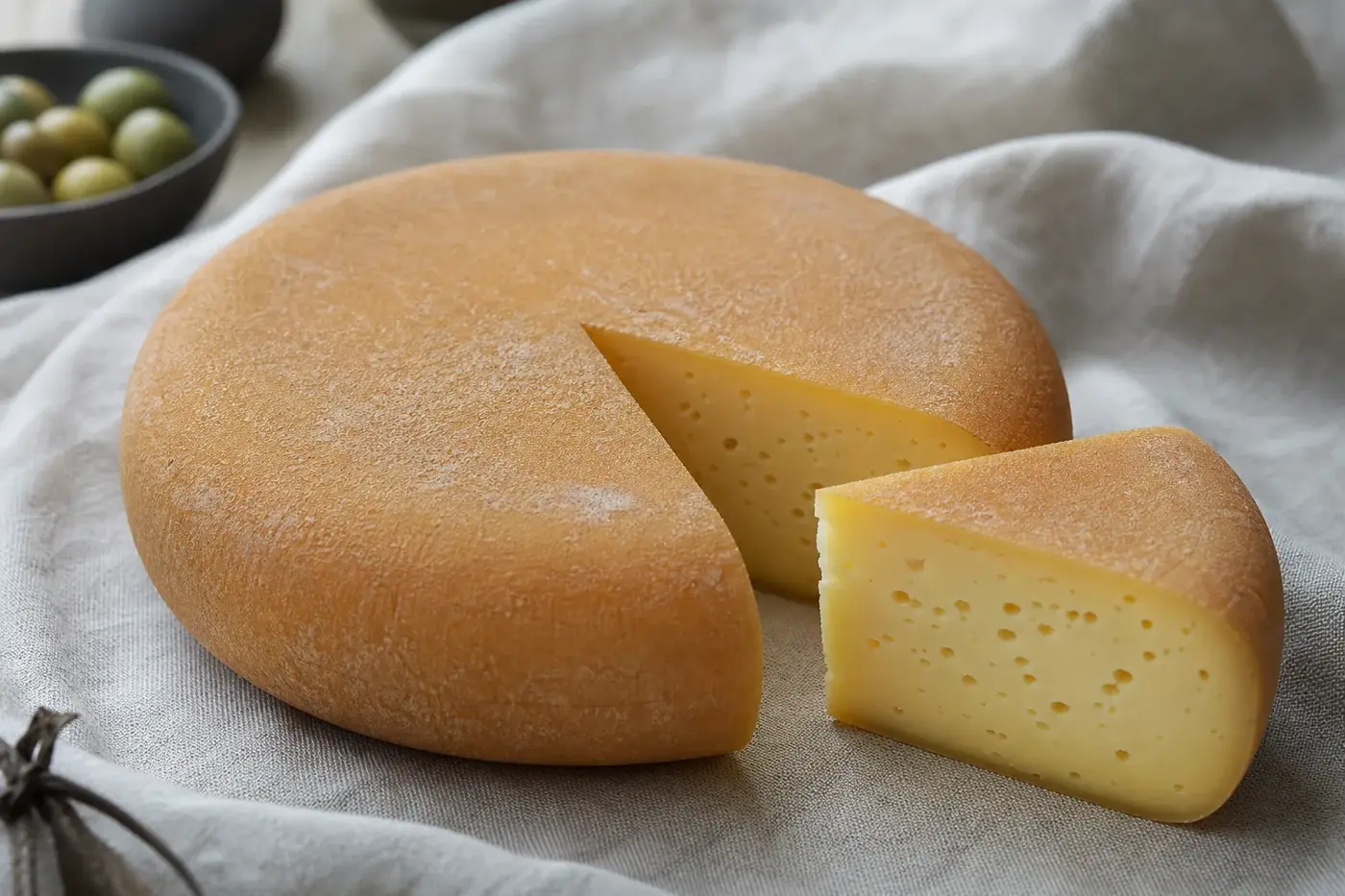
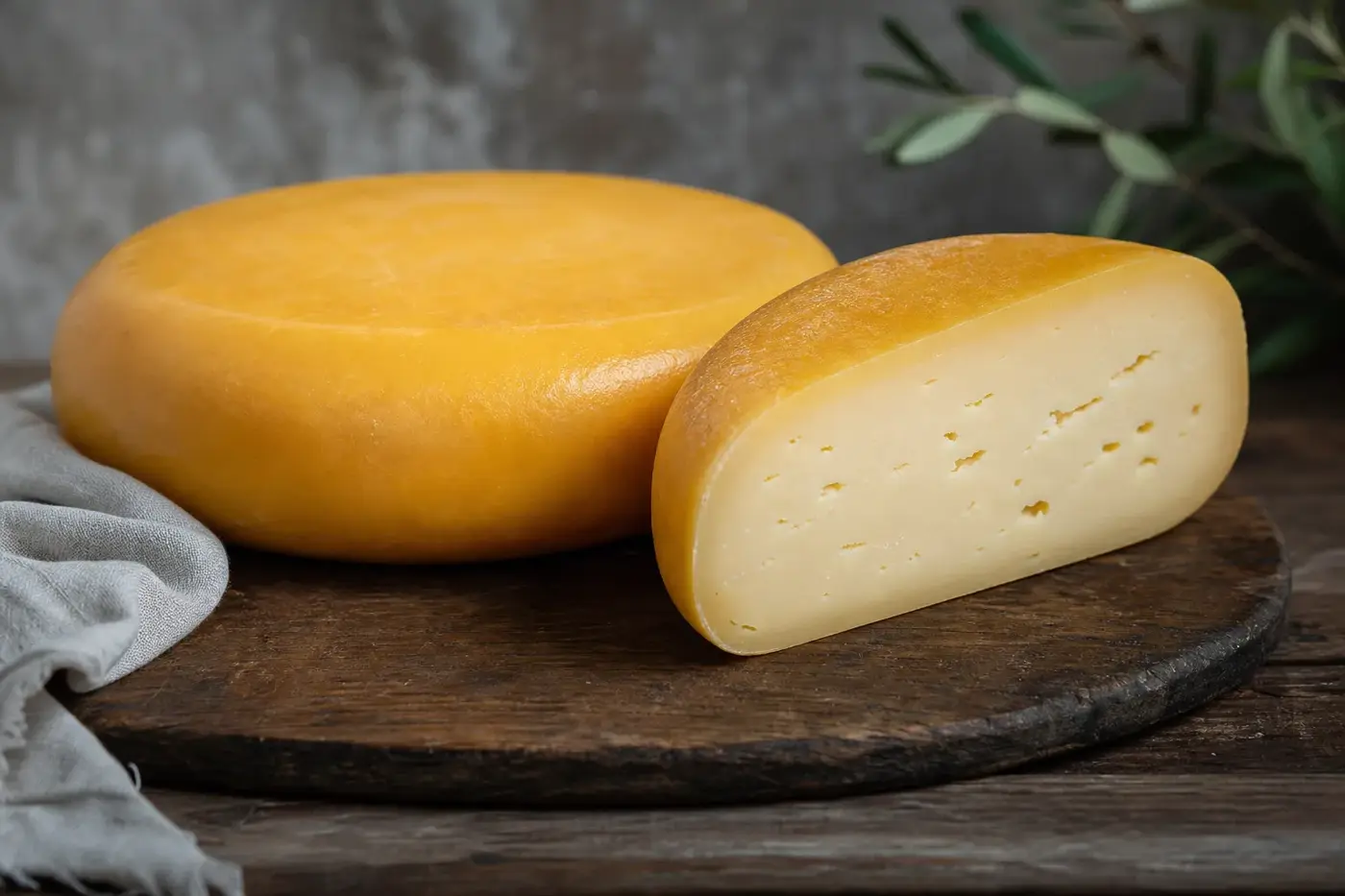
Cut into a wheel of Hollandse Geitenkaas and that familiar Dutch outline gives way to something paler: white cheese, shading towards ivory with age.
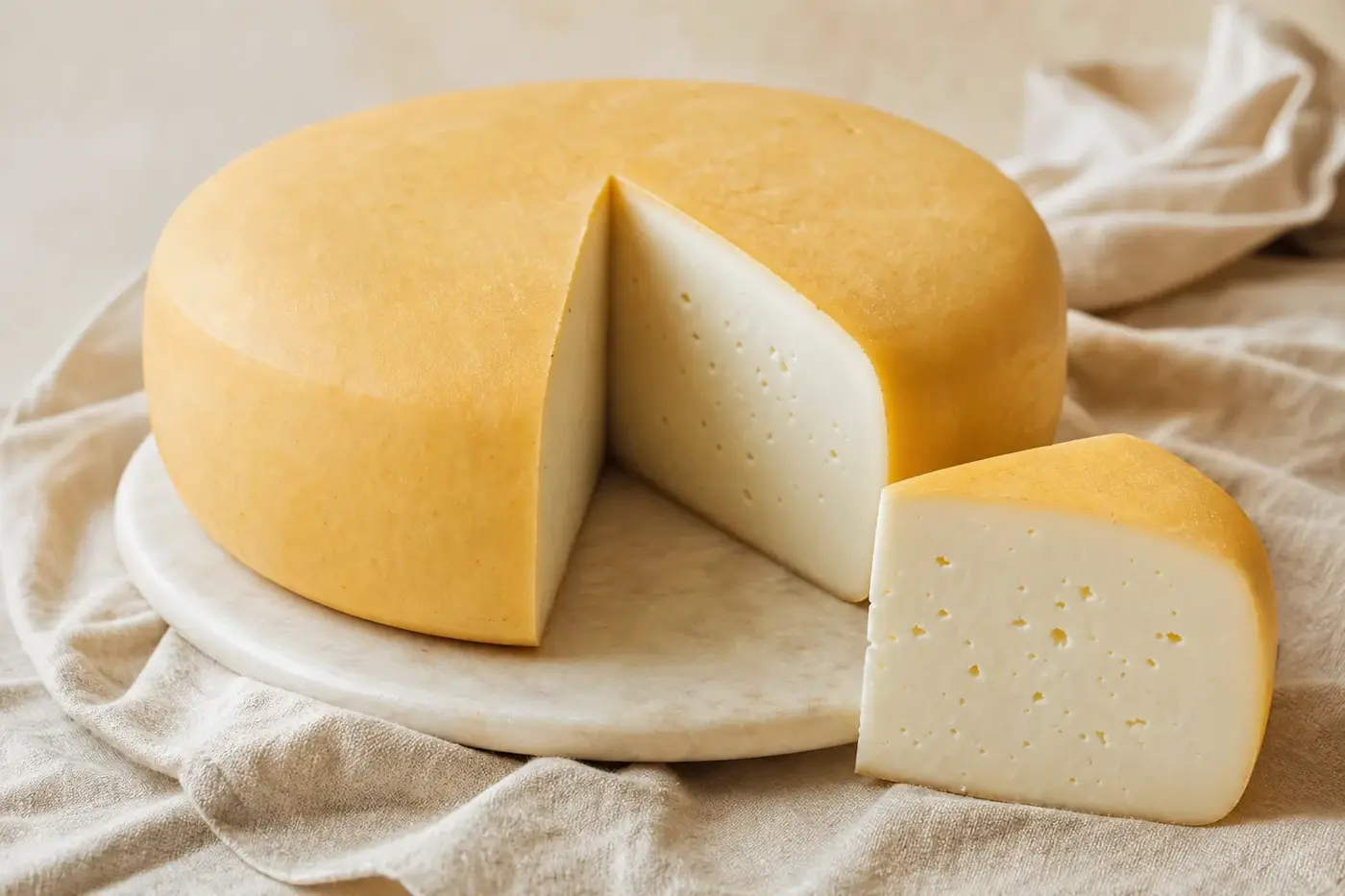
Cut into a wheel of Hollandse Geitenkaas and that familiar Dutch outline gives way to something paler: white cheese, shading towards ivory with age. Young, this semi-hard goats’ milk cheese is pliable and mild. Give it longer and the texture firms, the aroma deepens and the flavour finds a stronger voice.[1][2][5]
Meet your cheese-counter companion
| What you want to know | The detail |
|---|---|
| Registered name | Hollandse geitenkaas.[3] |
| EU registration | PGI, Commission Implementing Regulation (EU) 2015/745, Article 1. Current register status: Not verified.[3] |
| EU application identifier | NL-PGI-0005-01176.[1] |
| Great Britain | Registered PGI, November 2026; UK scheme entry 31 December 2020.[4] |
| Where it comes from | European Netherlands; milk from Dutch goat farms.[1][2] |
| Milk and treatment | Goats’ milk only; pasteurised.[1] |
| What sets the milk | Animal or microbial rennet.[1] |
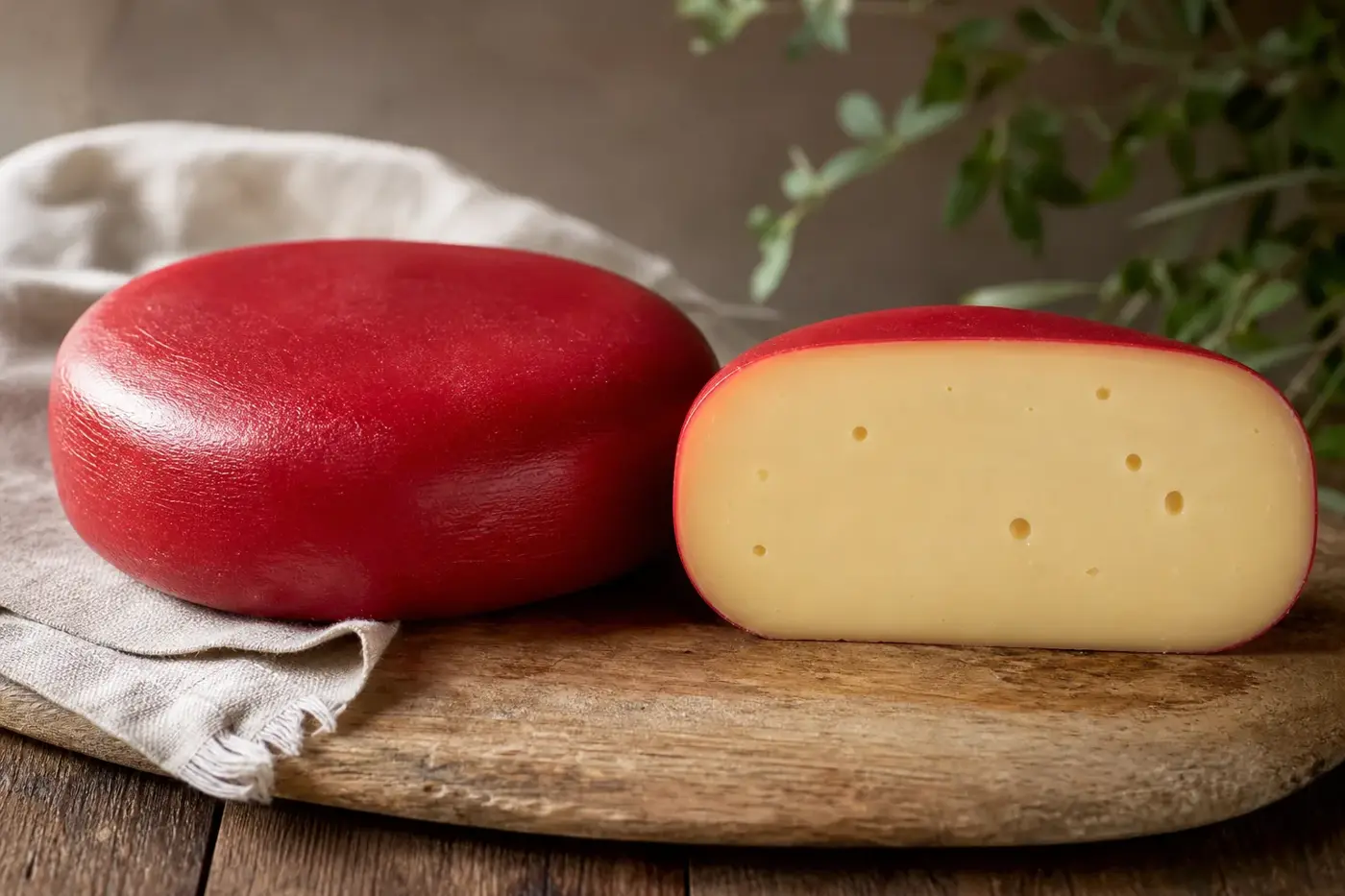
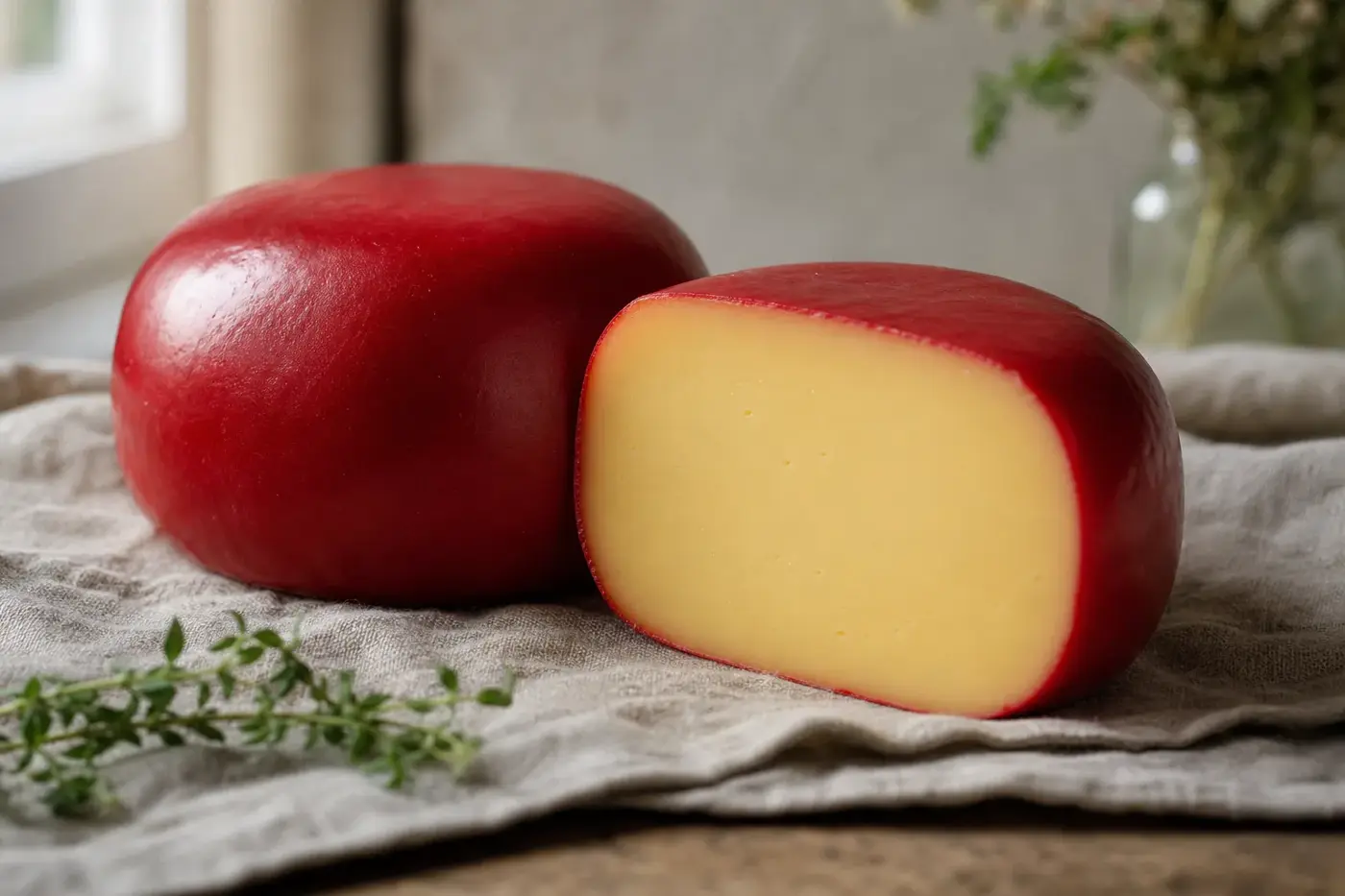
| Shapes and sizes | Wheels, angular forms, loaves and blocks; 1.5 to 20 kg.[2] |
| Minimum maturation | 25 days.[1][5] |
| What you’ll see | White to ivory paste; naturally ripened rind or rindless foil-ripened cheese.[2] |
A Dutch name with roots to match
Dutch goat farms supply the milk. Dutch cheesemakers follow the specified method. But look beyond the two provinces with Holland in their names: the defined area covers the European part of the Netherlands, where the cheese is made and natural rind development and maturation take place.[1][2]
The EU registered “Hollandse geitenkaas” as a protected geographical indication, or PGI, through Regulation (EU) 2015/745. The act was adopted on 4 May 2015 and published on 12 May 2015. It provides for entry into force twenty days after publication, a separate point from either of those dates.[3]
Foil-ripened cheese has one important allowance: it may mature outside the Netherlands. Its milk and cheesemaking must still be Dutch. When you compare labels, ask whether the cheese ripened naturally or in foil; that answer tells you more than its shape.[1]
Great Britain also lists the name as a registered PGI in its own scheme. If you’re curious about how the geographical schemes differ, turn to protected names explained.[4]
Follow the milk from farm to brine bath
Only goats’ milk belongs here. The specification requires pasteurisation and allows whole, semi-skimmed or skimmed milk, plus goats’ cream. It excludes other species’ milk and names the Dutch White Goat and crosses with other dairy goat breeds as the milk source.[1]
Animal or microbial rennet, the enzyme preparation that sets milk, forms the curd. Starter bacteria help develop acidity. Once set, the curd is treated and the whey removed, before moulding, pressing and a brine bath to salt the cheese.[1]
Then the ripening paths divide. Natural maturation takes place at 10 to 14 °C, with regular turning and an applied coating to discourage mould. Foil maturation runs at 4 to 7 °C, and both routes require at least 25 days.[1][2]
So a rindless block can belong to the same registered cheese as a wheel. The wheel may look more ready for its portrait, but shape alone doesn’t define Hollandse Geitenkaas. At the counter, let the age and texture you fancy guide you.
Look inside, then trust your taste buds
On a naturally ripened example, look for a smooth, dry, clean rind without a covering of mould. Inside, the paste may be closed or dotted with eyes, those holes you see on the cut face. Foil-ripened cheese has no hard rind.[2]
If you expect every goats’ cheese to arrive with a forceful animal aroma, give this one a moment. The industry account describes a clean, mild flavour when young. Longer maturation makes both smell and taste more intense: that gradual change is part of its character.[5]
Age, ripening route and producer all help explain why two pieces taste different. Herbs, spices and vegetables are permitted, so thyme or fenugreek can change the tasting considerably. To get acquainted with the cheese itself, compare two plain examples with simple accompaniments.[1][2]
Before serving, ask what’s on the outside. Remove packaging and any non-food coating, then follow the maker’s instructions for that particular rind. A neat exterior does not mean its covering is edible.
Find your age: soft slices or firmer bites?
At about four weeks, the dossier describes Hollandse Geitenkaas as slightly soft to pliable. As moisture escapes, the texture gradually firms and the white paste moves towards ivory. The industry account records the accompanying increase in aroma and flavour.[2][5]
Want pliable slices for bread, or a quieter presence on a mixed board? Choose a younger piece. Turn to an older one when you want more flavour from the cheese itself, but don’t mistake greater age for automatically greater quality.
Ask what “young”, “mature” or “old” means for the piece in front of you. You want its maturation time in weeks or months, plus its ripening route. The cited specification sets a minimum maturation period, but gives no complete age scale for those English retail descriptions.[1][2]
Where Gouda joins the conversation
There’s a cheesemaking connection with Gouda: the official description explicitly compares their methods. But Gouda is a broader name, not another name for Hollandse geitenkaas. Noord-Hollandse Gouda is a separate registered name altogether, listed as a PDO in Great Britain.[2][6]
If you spot “Gouda-style goats’ cheese” on a label, ask where it was made, which milk it contains and how it matured. Similar methods and shapes can help you find a substitute. Only the full registered name carries these defined origin and production requirements.[1][3]
Start with the job you want your cheese to do. For sandwiches, compare a plain, younger pressed goats’ cheese; for shaving, look for a firmer, longer-matured example. Read its label too: a useful substitute keeps its own identity, not somebody else’s protected name.
Choosing vegetarian? Get to know the rennet
The protected name won’t answer the vegetarian question for you. Both animal and microbial rennet are permitted, so look for an explicit suitability statement on the product or ask the maker which coagulant it uses. If the answer stops at “rennet”, ask where it comes from.[1]
Buying a cut wedge? Ask to see the information that came with the original wheel or block, and keep the maker’s name, age description and storage instructions with your cheese. The guides to rennet and reading a cheese label take you through these checks in more detail.
Let the first bite have the floor
Before you add anything, taste the cheese on its own. That first bite gives you a starting point for the suggestions below. They follow its documented journey from mild and pliable to firmer and more intense, before the accompaniments start competing for your attention.[2][5]
Try thin slices of a younger piece with plain bread, cucumber or pear. For a more mature piece, offer smaller bites with apple, unsalted walnuts or a little fruit preserve. Put preserves and pickles beside the cheese, not over it, so you can choose your own balance.
Start with water to drink. If you want another alcohol-free option, try lightly brewed black tea or a small glass of apple juice diluted with sparkling water. Take a sip, taste again and notice whether the cheese’s flavour stays distinct or gets overwhelmed.
In the kitchen, try slices in a toasted sandwich or grate a firmer piece over a vegetable gratin. Remove packaging or non-food coating first, and taste the dish before seasoning. For your first trial, keep the cheese easy to taste rather than mixing it with several others.
Bring home the right piece, then keep it chilled
At the counter, ask for the maker, actual age, ripening route, cutting date and storage instructions. Choose a piece that suits your plans. For chilled shopping in hot weather in England, Wales and Northern Ireland, the Food Standards Agency advises buying chilled foods last, using a cool bag with ice packs and heading home promptly.[8]
At home in England, Wales and Northern Ireland, the FSA advises a fridge temperature of 0 to 5 °C, measured with a thermometer, and following the product’s storage and date instructions. Keep your cheese covered and hold on to the label. Follow any stated period after opening: not every wedge has the same shelf life.[7]
For current preparation and serving guidance in England, Wales and Northern Ireland, consult the FSA sources on chilling food and hot weather.[7][8] You’ll also find broader practical advice in how to store cheese at home.
This page summarises published guidance from the official sources it cites. It is not medical advice. Guidance differs between countries and changes over time, so check the current source for where you live, and ask your doctor, midwife, pharmacist or dietitian about your own circumstances.
Milk allergy: know what you’re choosing
Hollandse Geitenkaas is made from milk. In England, Wales and Northern Ireland, the FSA advises consumers to read allergen information and ask the food business about specific requirements, including for loose food. Its guidance states that ordinary kitchen heating does not remove the allergenic potential of food proteins.[9]
Food allergy is an immune reaction, distinct from food intolerance, and the NHS advises seeing a GP if you suspect an allergy.[10] Don’t assume goats’ milk cheese is a suitable substitute for someone with a cow’s milk allergy. Ask your doctor or dietitian about suitable alternatives; the cheese allergy and lactose intolerance guide explains the distinction.
Questions people ask
What is Hollandse Geitenkaas made from?
It is made only from pasteurised goats’ milk. The specification permits whole, semi skimmed or skimmed milk, as well as goats’ cream.
Does Hollandse Geitenkaas have to be made in the Netherlands?
The milk comes from Dutch goat farms, and the cheese is made in the European Netherlands. Foil matured cheese may mature outside the Netherlands, but naturally ripened cheese must mature there.
Is Hollandse Geitenkaas vegetarian?
The specification permits both animal and microbial rennet, so the protected name does not tell you whether a particular cheese is vegetarian. Look for a suitability statement or ask the maker which coagulant it uses.
What does Hollandse Geitenkaas taste like?
When young, it has a clean, mild flavour and a pliable texture. With longer maturation, its aroma and flavour become more intense and its texture firms.
Can someone with a milk allergy eat Hollandse Geitenkaas?
Hollandse Geitenkaas is made from milk. For consumers in England, Wales and Northern Ireland, the Food Standards Agency advises checking allergen information and asking the food business about specific requirements, including when buying loose food. Consult the FSA’s food allergy guidance.
Sources
[1] European Commission. Publication of an application pursuant to Article 50(2)(a) of Regulation (EU) No 1151/2012, single document for “Hollandse geitenkaas”, 2014/C 443/06, Official Journal C 443, 11 December 2014, pages 11 to 16. Official document.
[2] Nederlandse GeitenZuivel Organisatie, hosted by the Netherlands Enterprise Agency, RVO. Productdossier BGA Hollandse Geitenkaas, dossier supplied with the registration application; RVO-hosted copy, 2014. Product dossier.
[3] European Commission. Commission Implementing Regulation (EU) 2015/745 of 4 May 2015 entering a name in the register of protected designations of origin and protected geographical indications (Hollandse geitenkaas (PGI)), Articles 1 and 2, published 12 May 2015. Binding registration act.
[4] Department for Environment, Food & Rural Affairs. Hollandse geitenkaas, protected food and drink names register entry, published 4 January 2021; accessed November 2026. Great Britain register entry.
[5] Hollandse Geitenkaas industry website. Dutch Goat Cheese with an EU Quality Seal, undated; accessed November 2026. Its sensory descriptions are industry statements. Industry account.
[6] Department for Environment, Food & Rural Affairs. Noord-Hollandse Gouda, protected food and drink names register entry, published 4 January 2021; accessed November 2026. Great Britain register entry.
[7] Food Standards Agency. How to chill, freeze and defrost food safely, published 18 December 2017; current retrieved guidance, November 2026. Applies to England, Northern Ireland and Wales. Official storage guidance.
[8] Food Standards Agency. Food safety in a heatwave, advice for consumers, published 27 June 2024; accessed November 2026. Applies to England, Northern Ireland and Wales. Official hot-weather guidance.
[9] Food Standards Agency. Food allergy and intolerance advice for consumers, published 18 February 2020; publication page updated 7 August 2026. Official allergen guidance.
[10] NHS. Food allergy, current retrieved page, November 2026. Official health guidance.
This desk-researched article compares the published registration documents, the Great Britain register and industry descriptions, with handling and allergy guidance checked separately against official UK sources.
Last checked: November 2026
Last checked November 2026.
The editors suggest you read next