In What Order Should You Taste Cheeses?
First, a milky bite of ricotta.
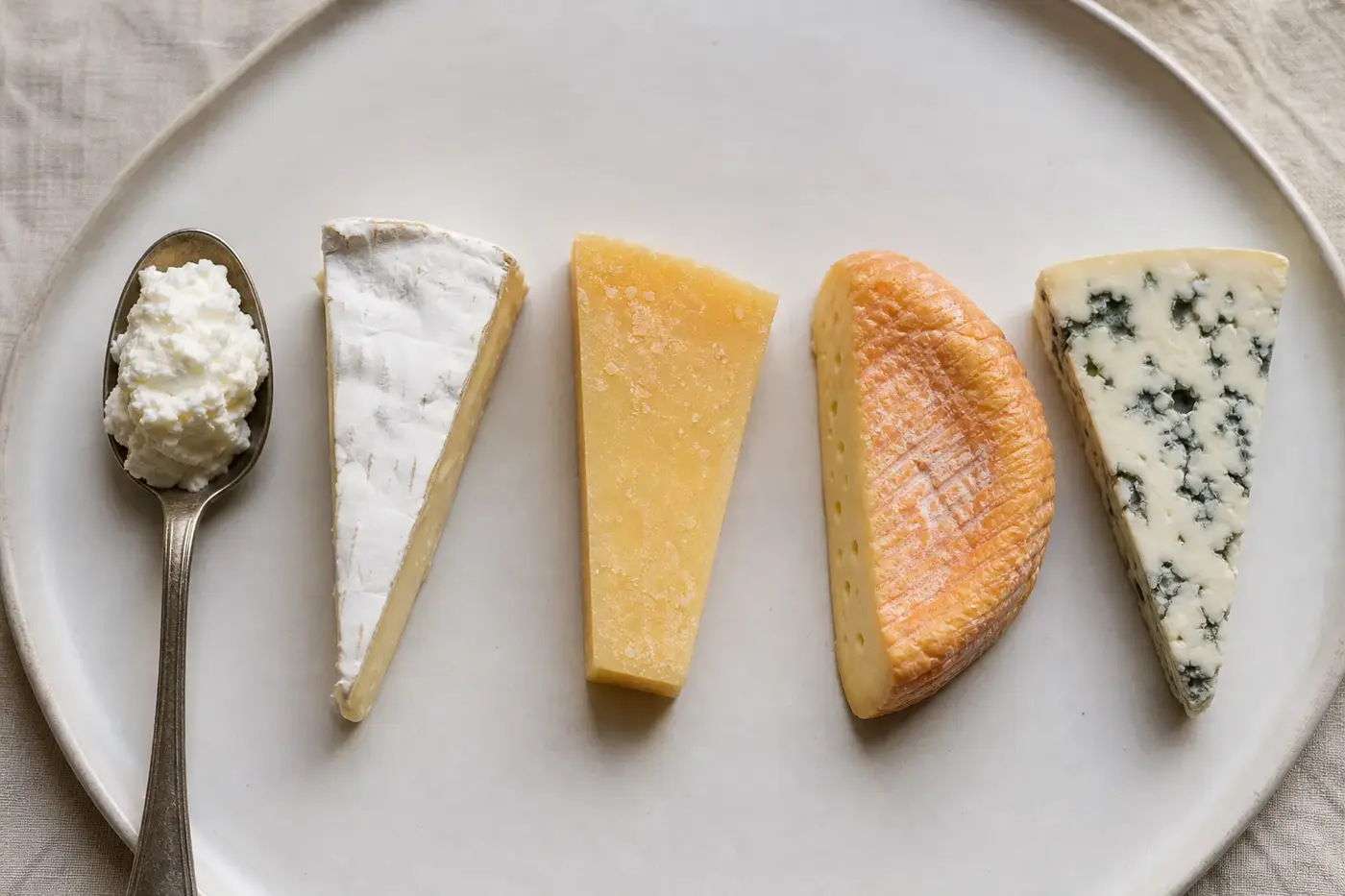
First, a milky bite of ricotta. Then the sharp aroma of a piquant blue, suddenly claiming your attention. BelGioioso describes its ricotta as fresh, mild and milky; Castello’s intense blue brings that piquancy and sharp aroma. There is your tasting route taking shape: give the quietest flavours a turn before the persistent ones settle in.[3][7]
Begin with a mild fresh cheese, then try a modestly flavoured bloomy cheese. Leave pungent washed rinds and assertive blues for later. Let your nose and mouth choose the order, rather than how soft a cheese feels or what colour it happens to be.[1]
Give the quiet cheeses their moment
That fresh cheese’s milkiness is easier to catch before a blue’s sharpness fills your mouth. Start gently and you give the smaller details room to emerge. The Academy of Cheese recommends arranging a tasting by flavour.[1]
An earlier bite can influence how you judge the next: researchers call this carryover. In an experiment using eight cheeses, trained tasters showed no evidence of carryover when assessing 25 attributes, but weak, consistent contrast effects when assessing fewer. How much the order matters depends on the tasting task.[2]
For a relaxed tasting, begin with your mildest cheese and leave a little space between samples. Still tasting the last one? Pause before judging the next. You want to meet each cheese on its own terms.
Take five steps across your cheese plate
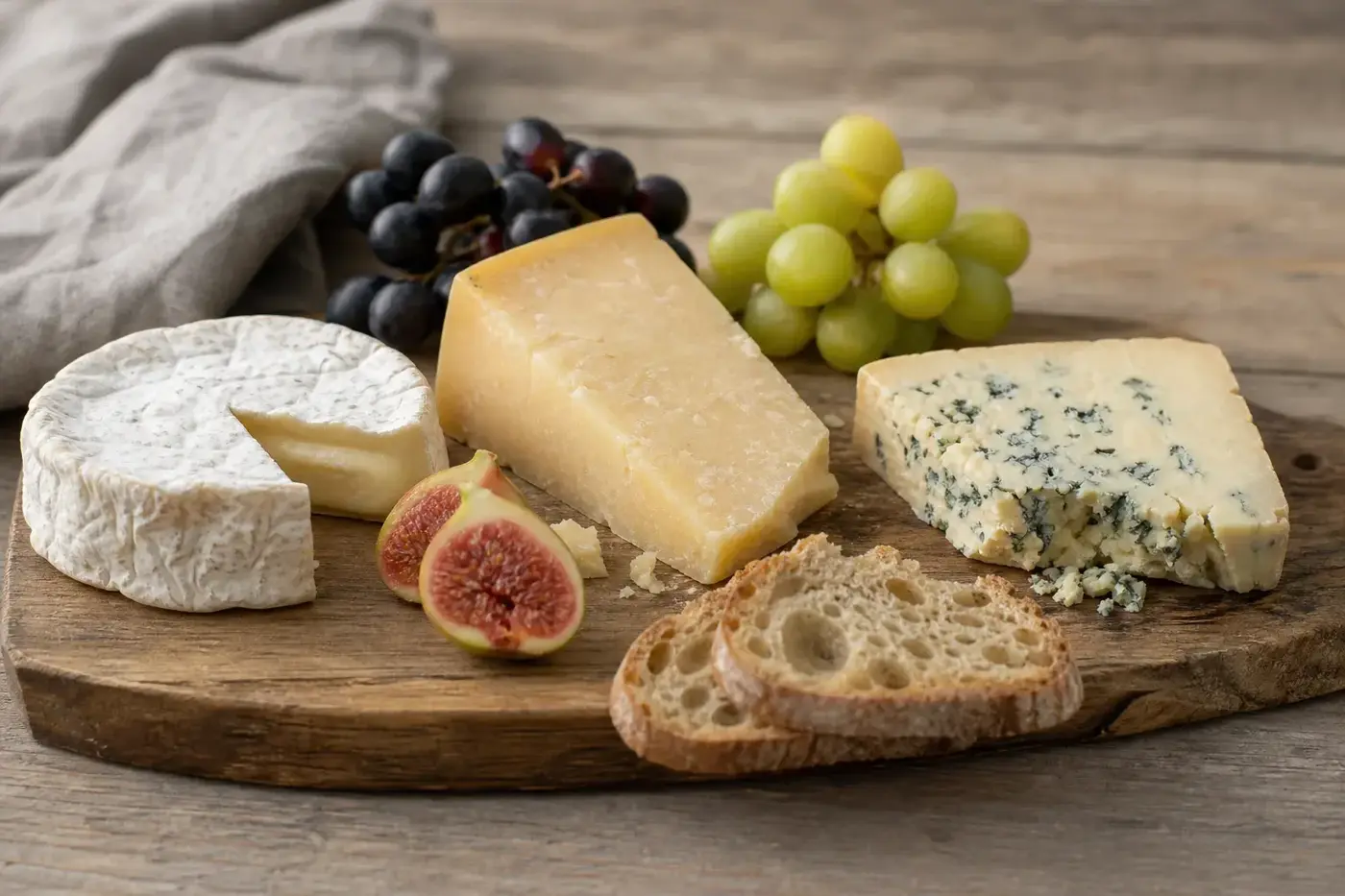
Treat this five-stage sequence as a starting point, not a set of marching orders. Adjust it to the cheeses in front of you. The flavour descriptions below come from makers’ published notes for examples within each style.[3][4][5][6][7]
| Stage | Cheese and the maker’s description | Your next bite |
|---|---|---|
| 1. Mild fresh | Ricotta: BelGioioso describes its ricotta as fresh, mild and milky.[3] | Start with an unseasoned piece. |
| 2. Bloomy | Brie: Castello describes its version as mild, slightly tangy and smooth.[4] | Try a gentle white-rinded cheese next. |
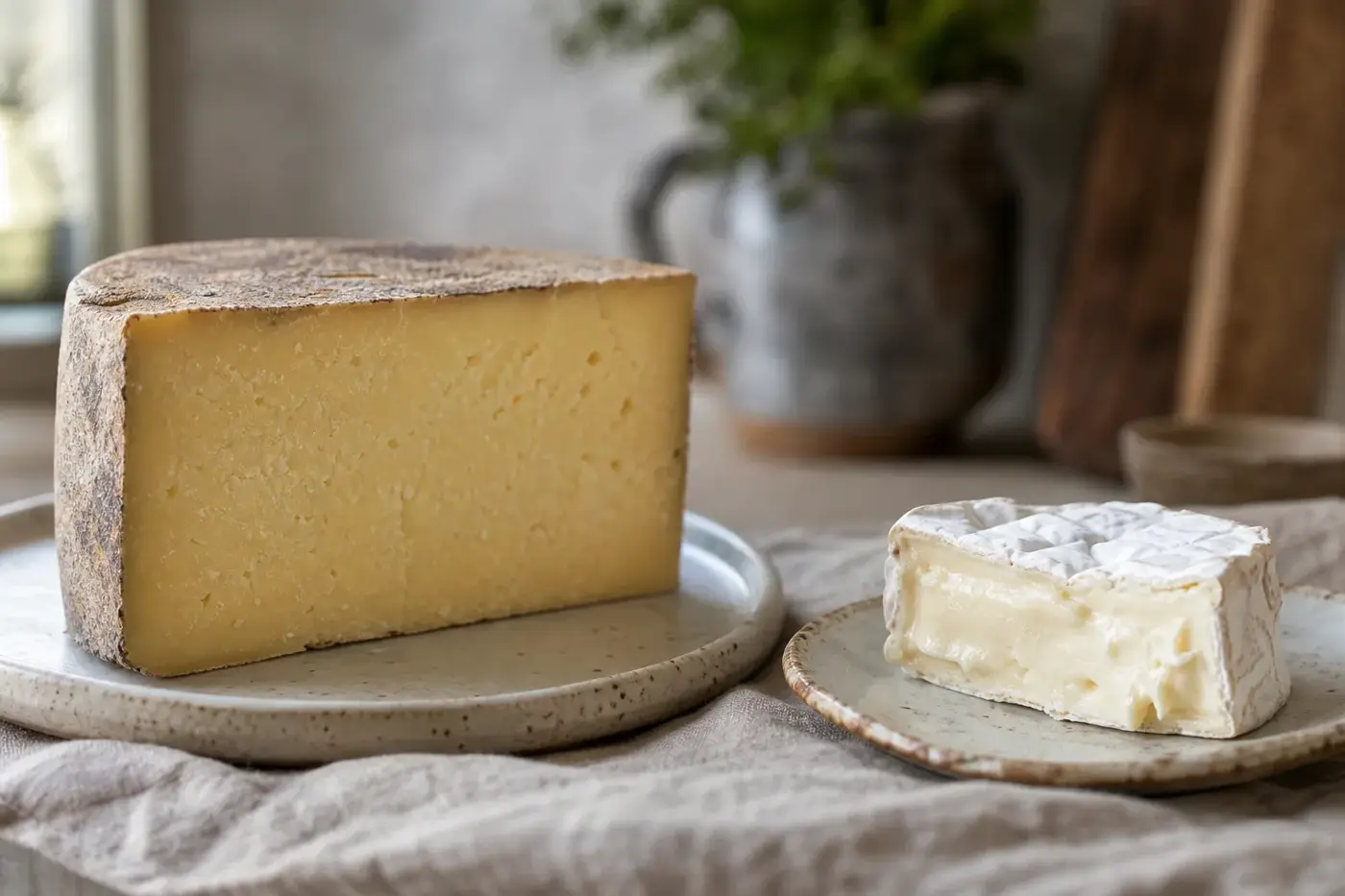
| 3. Mature firm | Aged Gouda: Castello describes sweet caramel notes and a smooth texture.[5] | Give this a turn before the pungent finishers. |
| 4. Washed rind | Choose a pungent washed rind cheese, checking the maker’s description. | Place it here if it is stronger than the earlier samples; adjust after tasting. |
| 5. Blue | Castello describes its intense blue as piquant, with a sharp aroma.[7] | Finish with an assertive blue whose flavour stays with you. |
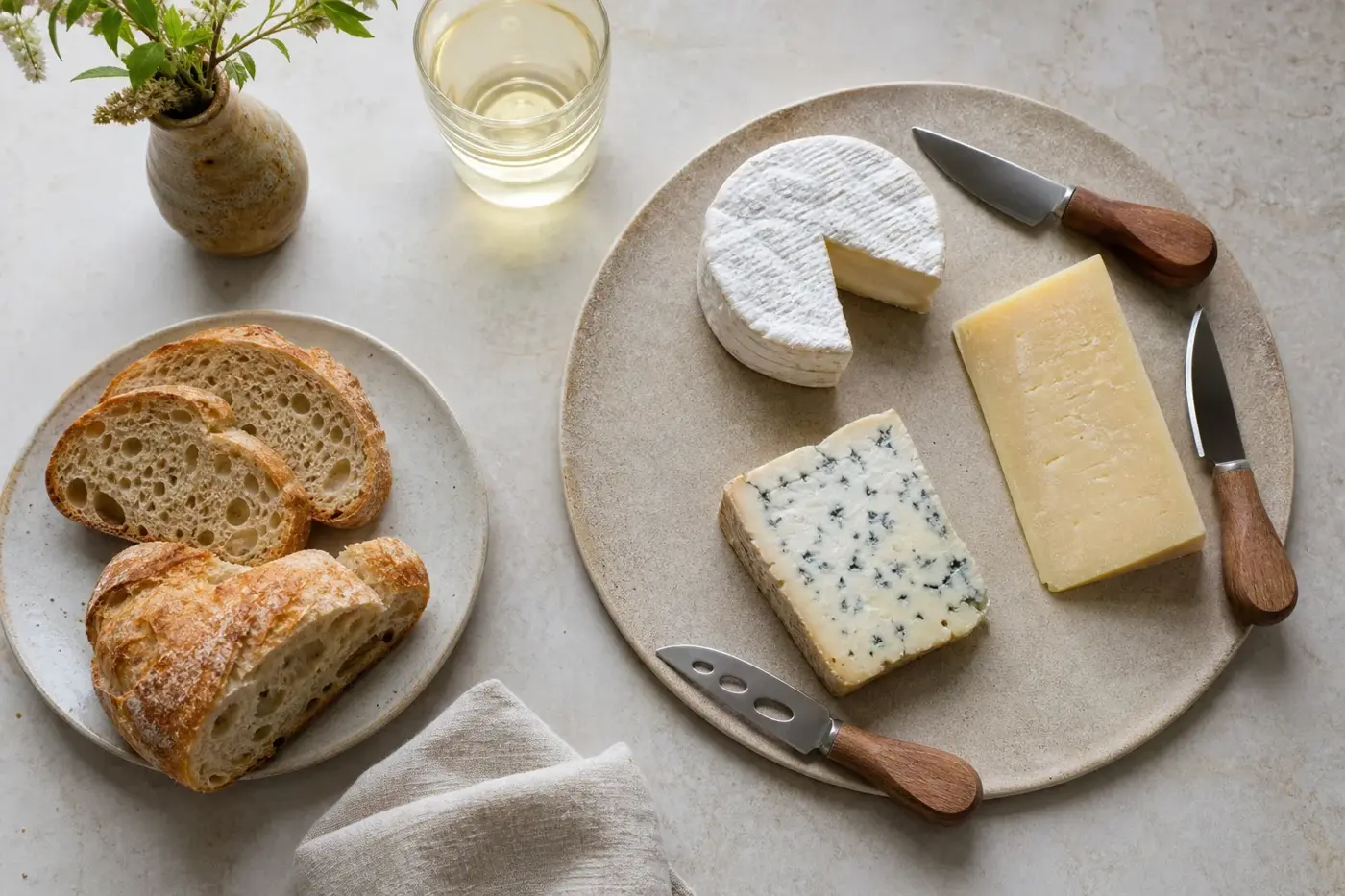
Arrange separate samples from left to right on each plate, with gaps between them. Put the names beside the plate so nobody has to guess the sequence from appearances. Cheese already gives you plenty to ponder without a seating puzzle. For help recognising the families, see how to tell cheese styles apart.
Trust the flavour, not the looks
Intensity has several parts. Notice the strength of the aroma, the salt and acidity, any lingering bitterness, and how long the flavour stays after swallowing. Keep smell and taste as separate notes: a striking aroma and a powerful flavour each deserve their own description.[1][9]
Age offers a clue, not an automatic place near the end. When you compare younger and older examples, taste for greater intensity before moving the older piece later. If saltiness or sharp acidity dominates the sample that follows, give that cheese more space.
Pay attention to a bitter finish, too. Notice how long it lasts, then decide where the next cheese belongs. Texture need not decide the order: a yielding cheese can sit near the end, while a firm cheese with restrained flavour can come earlier.
Give each blue its own consideration. Castello publishes different tasting descriptions for its mild blue and intense blue. If your tasting supports it, let a mild blue go before a more forceful washed rind.[7][8]
Slow down and get to know your bite
Take a small piece you can chew comfortably, rather than a thick mouthful. This is a tasting, not a test of jaw stamina. Follow the Academy of Cheese’s sequence: inspect, smell, then taste slowly.[9]
-
Look at the cut surface. Notice its colour and structure. The interior, called the paste, might be even, crumbly, or split between a firmer centre and softer edge.
-
Have a sniff before eating. Bring the cheese towards your nose and notice the aroma’s strength and character. Write down your first recognisable impression. A clear description is more useful than an impressive one.
-
Chew slowly. Does it break, crumble, feel springy or turn into a smooth paste? Breathe through your nose as you chew, as the Academy advises.[9]
-
Separate the sensations. Think about saltiness, sweetness, acidity, bitterness and savouriness. Then describe any specific flavours you recognise. You do not have to track down every possible note.
-
Wait for the finish. After swallowing, notice what remains and how long you can recognise it. Record that impression before reaching for another cheese or an accompaniment.
Let two similar cheeses tell their stories
Two examples of the same style give you a useful comparison within the wider tasting. Place them beside each other, cut similarly sized pieces and give both equal attention. Choose one clear question: which has sharper acidity, perhaps, or a longer finish?
Taste A then B, pause, and try B then A. Write down whether the contrast still seems clear. Reversing the pair lets you question your first impression in light of the context effects investigated in sensory research.[2] Finish that comparison before moving to the next, stronger style.
Find out what the rind brings
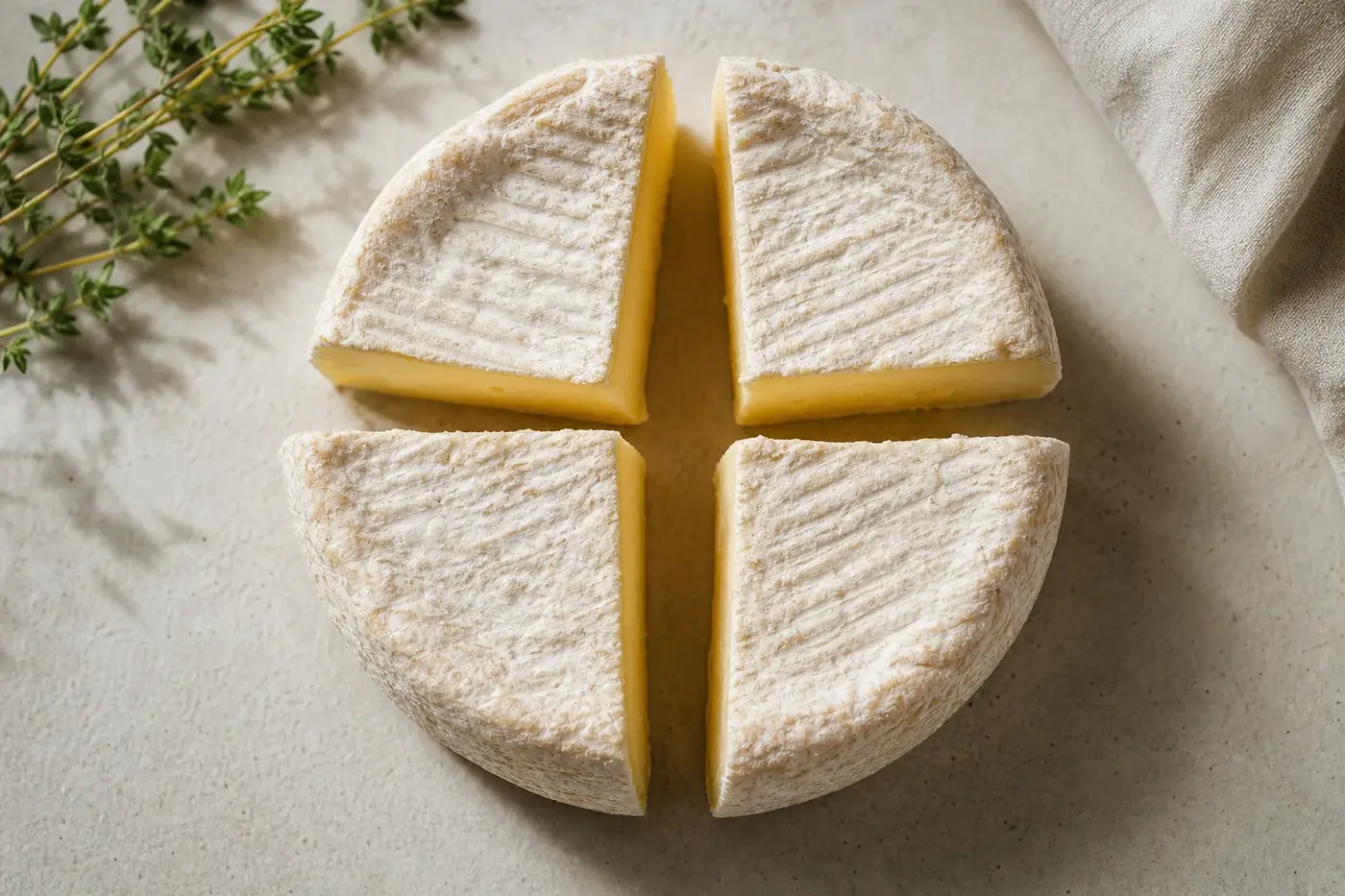
Start with the maker’s instructions for your cheese. If its rind is edible, taste the paste first, then try another small piece with a little rind. Those two bites tell you more than stripping every rind away or making your first mouthful mostly rind. Castello’s Brie instructions, for example, recommend eating thin wedges as they are.[4]
Wax, plastic coatings and cloth must come off before tasting. They are coverings, not food; the Academy distinguishes them from the cheese itself.[9] If you are unsure about a covering or surface treatment, check the packaging or ask the maker. Keep those instructions with the cheese when you serve guests.
Give your palate a little breathing room
Keep water and plain bread or neutral crackers within reach. Have a sip, eat a small piece if you fancy one, and pause until you feel ready for the next cheese. For this first pass, choose unflavoured options, following the Academy’s preference for neutral accompaniments.[1]
Let the previous impression recede rather than rushing into the next bite. Water and crackers cannot reliably wipe away every lingering flavour or context effect. If the last cheese is still making itself known, wait longer, make your next bite smaller or return to that comparison later.[2]
Meet the cheese before adding company
Taste each cheese alone before bringing in chutney, fruit, honey or a drink. Then change one thing at a time: cheese with bread, cheese with fruit, or cheese followed by a sip. Notice what changes in the combined mouthful, and keep those observations separate from your notes on the cheese alone.
Water remains a neutral option throughout. When you are ready for the separate task of matching cheese with wine, turn to cheese and wine pairing.
Leave room for a cheese to surprise you
Sometimes a supposedly gentle cheese takes over the tasting. Move it towards the end, set its remaining portion aside, and offer water and a pause before returning to the next quieter sample. A simple explanation is enough: its finish lasts longer than expected, so it will work better later.
Give your guests room to pass on a style they dislike. Someone skipping blue can finish with a favourite firm cheese; someone avoiding a pungent rind can choose another sample. Separate portions let everyone follow a preferred route without choosing for the whole table. Curiosity makes a better host than persuasion.
Bring out the flavour and watch the clock
For flavour, the Academy of Cheese recommends bringing cheese to room temperature.[9] Bring out tasting portions rather than your whole supply, and watch the time. In England, Wales and Northern Ireland, the Food Standards Agency advises keeping chilled food out for the shortest possible time, with a maximum of four hours during preparation. Count preparation and tasting together when planning your session.[11]
The same FSA guidance recommends a fridge between 0 and 5 °C and following the pack’s storage instructions.[11] Keep your reserve chilled, and use clean hands, boards, plates and utensils. The FSA advises washing utensils between tasks and keeping equipment for ready-to-eat food separate from equipment used for raw food requiring cooking.[12]
Give every cheese its own serving knife so you do not transfer one into another. For broader serving and handling guidance, follow cheese food safety and storing cheese at home. Outside these countries, follow your local food safety authority’s advice.
Jot down a few thoughts, then revisit a favourite
Your tasting note need not be an essay. Record the name, first aroma, texture, strongest taste and finish, plus whether you tasted the rind and any accompaniment. Write in your own words before discussing the cheese with the group, then compare observations. Agreement is not the aim.
The Academy encourages returning to a cheese and recording it again.[1] Choose an earlier sample you wanted to understand better, have some water, and revisit it. If your impression changes, keep both versions and note what you tasted between them. You will have something useful to compare at your next tasting.
Once the first pass is over, let everyone choose where to go next. Keep the discoveries you want to return to: the two cheeses that made an interesting comparison, the one that needed more time, and the accompaniment you would happily try again.
General information only, not medical advice: follow the official guidance where you live.
Questions people ask
In what order should I taste cheeses?
Start with a mild fresh cheese such as ricotta, then move to a gentle bloomy cheese such as Brie. Try a mature firm cheese next, followed by a pungent washed rind and an assertive blue, adjusting the order to the flavours you taste.
Should I eat the rind when tasting cheese?
Follow the maker’s instructions. If the rind is edible, taste the paste first, then compare it with a small piece that includes some rind.
What should I have between cheeses?
The Academy of Cheese favours neutral accompaniments, so have water and plain bread or unflavoured crackers within reach. Pause if the previous cheese still dominates your mouth.
How long can cheese be left out during a tasting?
In England, Wales and Northern Ireland, the Food Standards Agency advises keeping chilled food out for the shortest possible time, with a maximum of four hours during preparation. Check the Food Standards Agency guidance and count preparation and tasting together.
How should I compare two similar cheeses?
Place them beside each other and cut similarly sized pieces. Try one then the other, pause, and reverse the order to see whether the contrast still seems clear.
Sources
-
Academy of Cheese. The Ultimate Guide To Tasting Cheese, undated online edition, retrieved November 2026. Sections on preparation, assessment, tasting order and repeat assessment.
-
Food Quality and Preference. Carryover in sensory trials, volume 14, issue 4, 2003, pages 299 to 304. DOI: 10.1016/S0950-3293(02)00090-3. Publisher abstract and article preview.
-
BelGioioso Cheese. Ricotta con Latte, undated product information, retrieved November 2026. “About This Cheese” tasting description. Producer source with a commercial interest in the product.
-
Castello, Arla Foods. Brie Cheese, undated product information, retrieved November 2026. Product description and “How To Use”. Producer source with a commercial interest in the product.
-
Castello, Arla Foods. Aged Gouda Cheese, undated product information, retrieved November 2026. Product description and texture information. Producer source with a commercial interest in the product.
-
BelGioioso Cheese. Our Family of Cheeses, undated product directory, retrieved November 2026. Aged Fontina entry. Producer source with a commercial interest in the product.
-
Castello, Arla Foods. Intense Blue Cheese, undated product information, retrieved November 2026. Opening aroma and flavour description. Producer source with a commercial interest in the product.
-
Castello, Arla Foods. Mild Blue Cheese, undated product information, retrieved November 2026. Opening flavour and texture description. Producer source with a commercial interest in the product.
-
Academy of Cheese. How to use the tasting model, Structured Approach to Tasting Cheese, 2019, version 3. Preparation, pre-taste assessment, taste assessment and conclusion.
-
Journal of Food Science. Use of Multi-Intake Temporal Dominance of Sensations (TDS) to Evaluate the Influence of Wine on Cheese Perception, volume 82, issue 11, November 2017, pages 2669 to 2678. DOI: 10.1111/1750-3841.13932. Abstract and author manuscript consulted.
-
Food Standards Agency. How to chill, freeze and defrost food safely, published 18 December 2017, current online text retrieved November 2026. Applies to England, Northern Ireland and Wales. “Chilling food” section.
-
Food Standards Agency. Why is cleaning important, published 18 December 2017, current online text retrieved November 2026. Applies to England, Northern Ireland and Wales. Hand washing, preparation surfaces and utensils sections.
This piece combines published cheese education guidance, original sensory research, attributed producer descriptions and official food handling advice through desk research.
Last checked: November 2026
Last checked November 2026.
The editors suggest you read next