Jasper Hill Farm
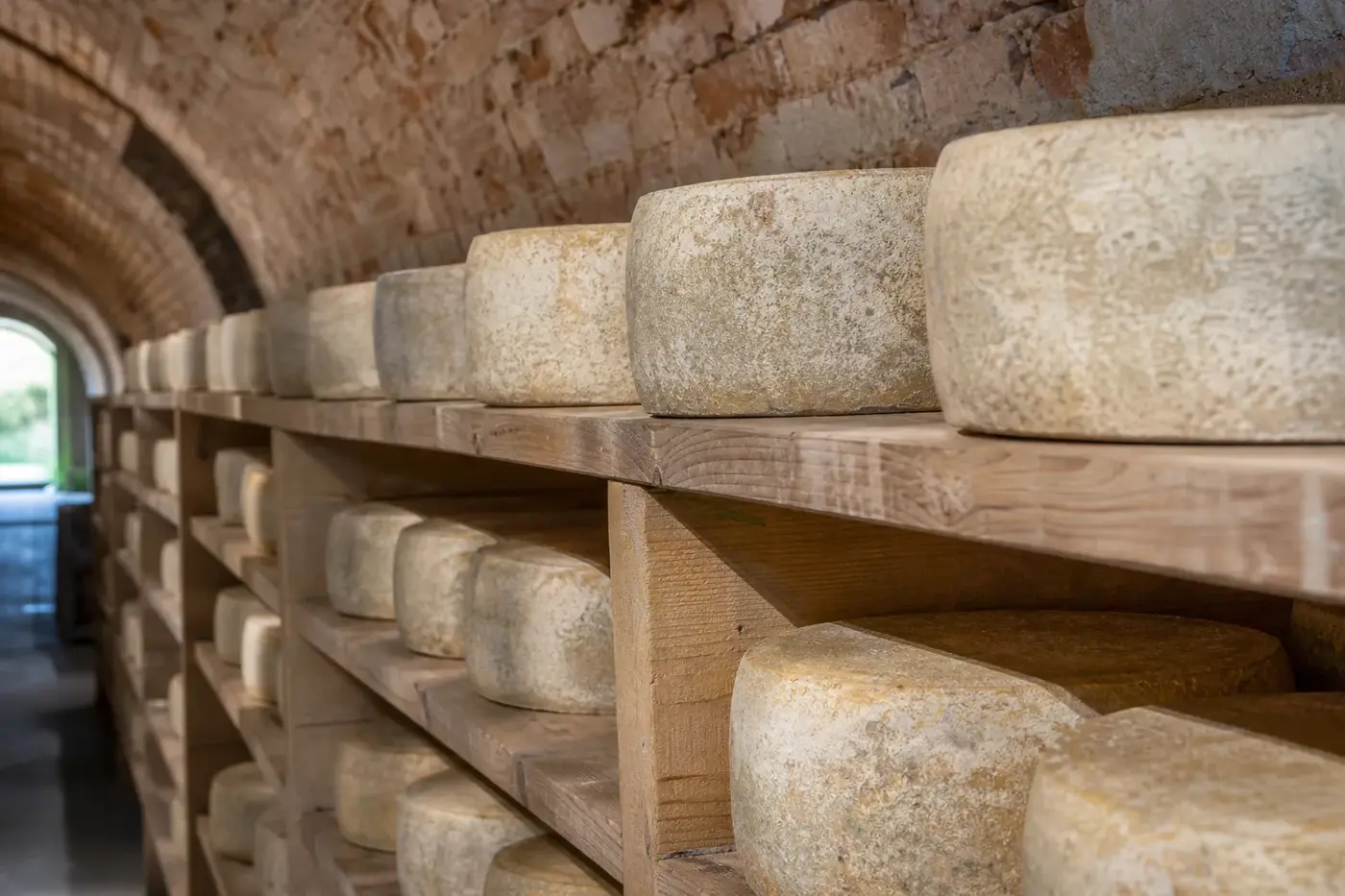
Beneath a Greensboro hillside, seven climate-controlled vaults are busy with the quiet work of ripening.
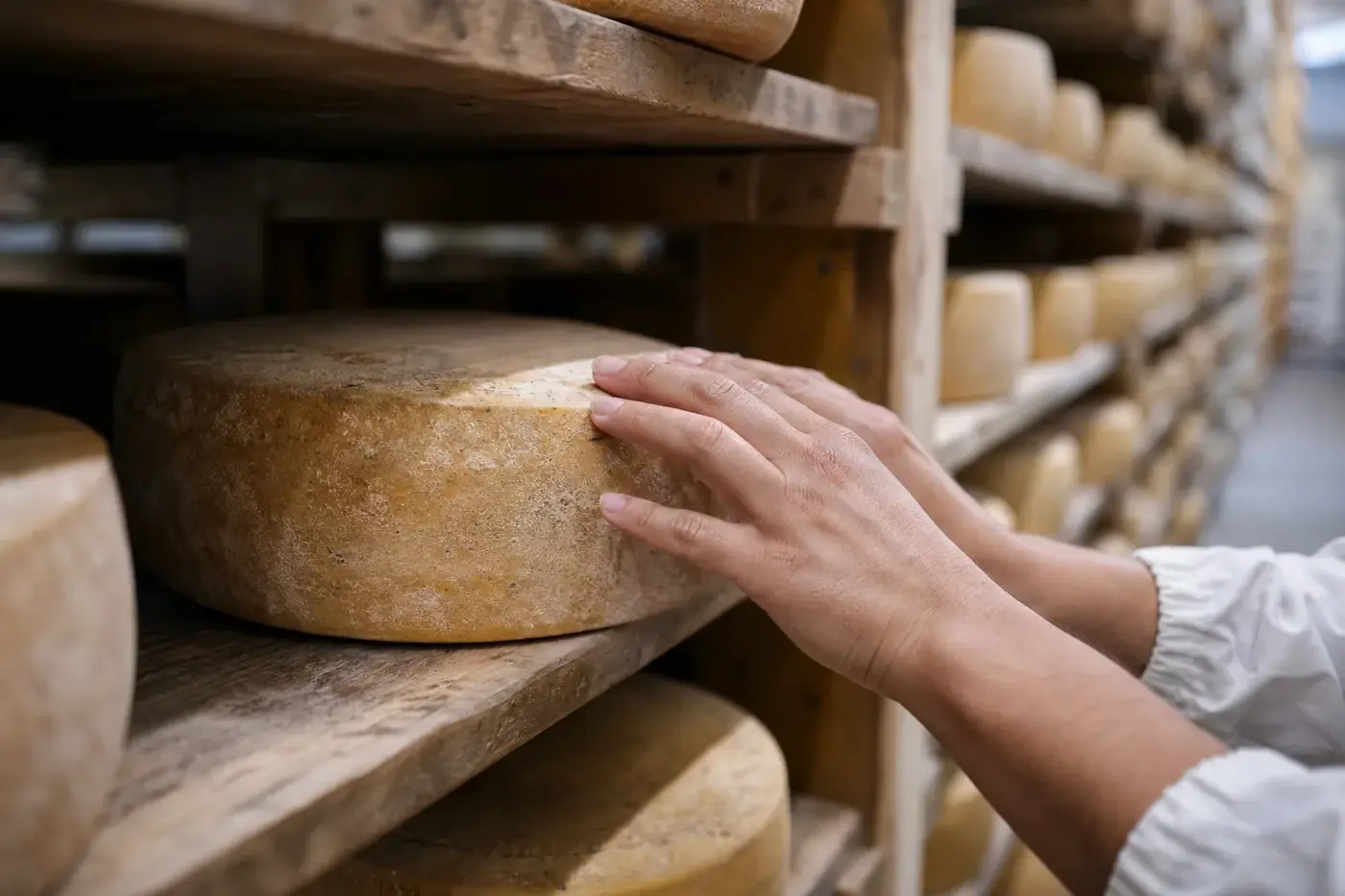
Beneath a Greensboro hillside, seven climate-controlled vaults are busy with the quiet work of ripening. Cheeses are turned, brushed, washed, salted and wrapped. You are in Vermont’s Northeast Kingdom, at the Cellars at Jasper Hill, where some wheels come from the farm and others arrive from fellow producers. None gets to skip the patient part. [2]
That shared skill is the heart of Jasper Hill’s contribution. It connects dairy farming and cheesemaking with finished cheese, then helps that cheese find its way beyond the cellar door. [2]
Your bearings, from farm to cellar
| A quick introduction | The details |
|---|---|
| Home base | Greensboro, Vermont, United States. [1] |
| How it began | Farm purchased in 1998; first cheeses marketed in 2003. [1] |
| What happens here | Dairy farming, cheesemaking, affinage and cheese marketing. [2,3,4] |
| Where the milk comes from | Own Andersonville herd and other regional herds. [3,6] |
| Production status | Producing, according to current producer information. [4] |
| Planning a visit | No public farm, creamery or cellar tours. [14] |
| Information date | November 2026. [1,2,3,4] |
The brothers who brought the cows back
The barn had been without cows for almost 40 years. In 1998, two brothers and their wives bought the rocky hillside farm. Their family had longstanding ties to nearby Caspian Lake, but a connection to a place is one thing. Making a dairy work there takes rather more. [1]
Restoring the farm, building a creamery and learning the work filled another five years. Jasper Hill’s first cheeses reached market in 2003. You begin to see why the barn belongs in this story every bit as much as the cheese counter. [1]
Around them, dairying was retreating. According to the farm’s history, about a third of Greensboro’s farms sold their cows in 1998. Jasper Hill’s response was to turn milk into cheese close to home, keeping production, ripening and selling connected to the agricultural community. [1]
Follow the Ayrshires through the year
Jasper Hill’s dairy cows are Ayrshires. The producer records buying Andersonville Farm in 2012, then moving its original Greensboro herd there in early 2020. Today, both Bayley Hazen Blue and Winnimere name the Andersonville herd as their milk source. [3,5,7]
The cows’ year has a clear rhythm. They generally graze from May to October, weather permitting, then eat dry hay through winter, with a balanced grain ration throughout the year. Jasper Hill’s cropping team harvests hay locally and mechanically dries the bales, because Vermont’s weather makes dependable field drying difficult. [3]
From there, you can follow the milk in two directions. The Greensboro creamery makes Jasper Hill’s raw milk cheeses; the creamery at the Vermont Food Venture Center in Hardwick makes its pasteurised cheeses. Harbison’s current listing names local pastured herds, rather than Andersonville, as its milk source. [4,6]
Inside the seven vaults
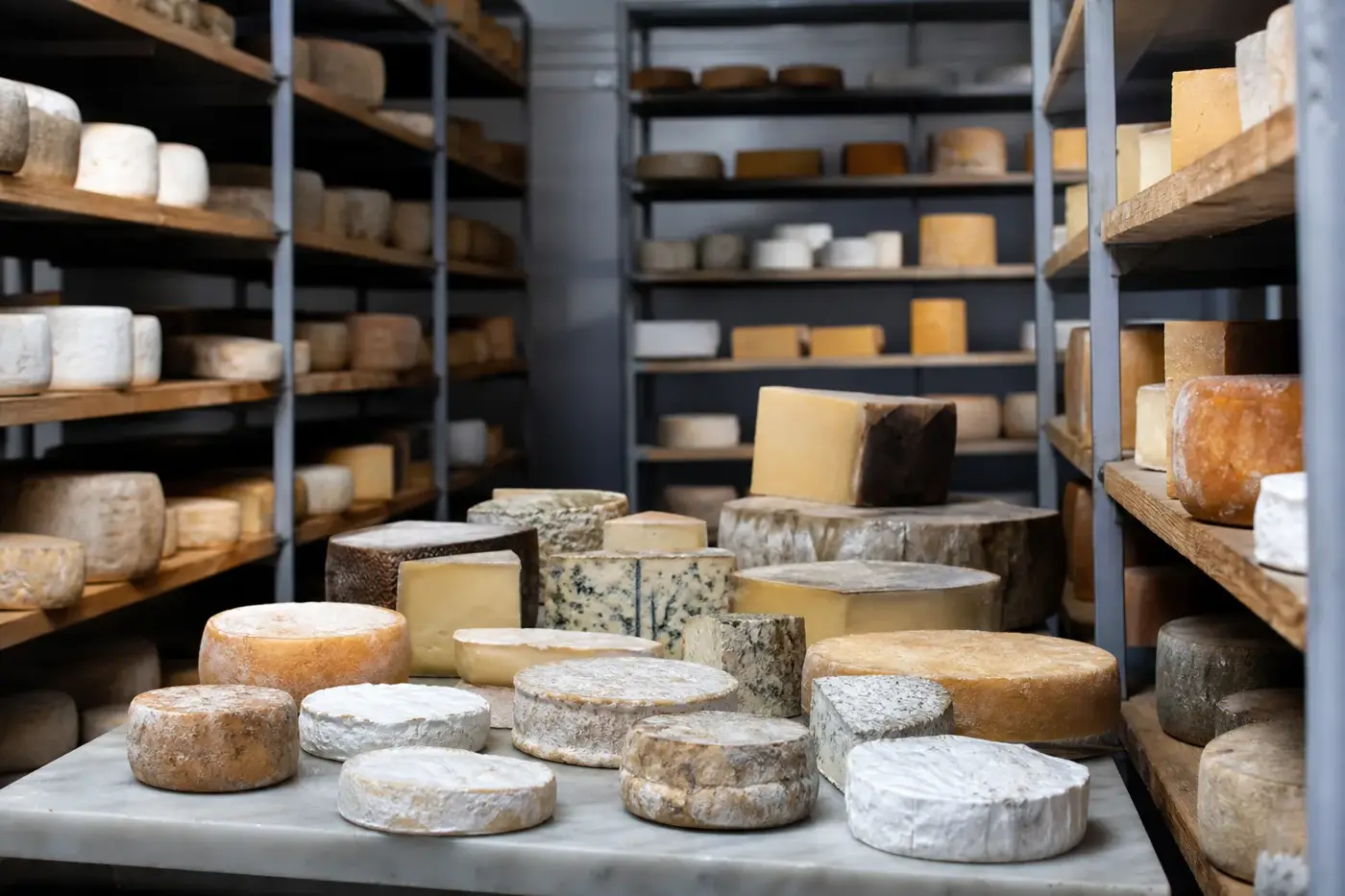
Affinage is the skilled work of maturing cheese. At Jasper Hill, seven distinct, climate-controlled vaults make room for it, with different spaces serving different goals for rind and texture. You are looking at much more than somewhere to leave a wheel. [2]
Staff turn, brush, wash, salt and wrap the cheeses, changing their care as ripening progresses. The cellars also provide marketing and distribution services for other makers. Getting the rind right is part of the job; helping the finished cheese reach its market is another. [2]
Cabot makes it, Jasper Hill brings it on
To understand the partnership, start with Cabot Clothbound Cheddar. Cabot produces the cheese; Jasper Hill matures it. The current listing specifies pasteurised cows’ milk from Cabot Cooperative’s family farms and a typical maturation of nine to fourteen months. [8]
According to Jasper Hill, the collaboration began in 2003, when Cabot asked it to age a special batch. At the cellars, young wheels receive lard and an extra layer of cloth. Regular brushing, turning and assessment follow. [8]
What does all that attention bring to your plate? Jasper Hill describes a crumbly cheddar, deeply savoury and slightly tangy, with caramel sweetness. There is plenty to linger over in a mouthful. [8]
Three cheeses worth getting to know
A dense blue, a spoonable bloomy rind and a winter washed rind give you a feel for the range. These milk treatments and maturation periods reflect producer specifications current in November 2026. The timings describe Jasper Hill’s stated practice. [5,6,7]
| Cheese | Milk and treatment | What you can expect | Stated maturation |
|---|---|---|---|
| Bayley Hazen Blue | Cow, raw | Natural-rind blue | 3 to 4 months. [5] |
| Harbison | Cow, pasteurised | Spruce-wrapped bloomy rind | 6 to 13 weeks. [6] |
| Winnimere | Cow, raw | Spruce-wrapped washed rind | 60 days. [7] |
Bayley Hazen Blue: beyond the blue veins
Blue veins thread a dense, fudge-like paste beneath Bayley Hazen Blue’s natural rind, in Jasper Hill’s description. Follow the maker’s tasting notes and you find toasted nut sweetness and anise. Grassy flavours and a subdued peppery character round things out. [5]
Harbison: a good reason to fetch a spoon
Harbison pairs pasteurised milk with a bloomy rind and an interior that becomes spoonable as it ripens. Jasper Hill describes woodsy sweetness balanced by lemon, mustard and vegetal flavours. A spruce band surrounds the cheese as its texture keeps softening on the journey from vault to counter. Your knife may reasonably feel overlooked. [6]
Winnimere: winter under a spruce band
Winnimere is made only in winter, from the raw milk of hay-fed cows. Unlike Harbison’s bloomy rind, its rind receives a cultured salt brine wash. At 60 days, Jasper Hill describes a spoonably soft cheese tasting of bacon, sweet cream and spruce. [7]
Ask your stockist about the current batch. The production season and the timing of retail supplies are separate matters. “Winter cheese” tells you when it is made, but not the whole story of when you can buy it. [7]
What the spruce brings to the cheese
Harbison and Winnimere wear bands of spruce cambium, the flexible inner bark layer harvested from Jasper Hill’s woodlands. The maker describes spruce or woodsy notes in both. Their rind care follows different paths, though: a bloomy rind for Harbison, a cultured brine wash for Winnimere. [6,7]
The band is only part of their character. Milk treatment, rind management and ripening time distinguish these cheeses as clearly as spruce connects them. Taste them together and you have a useful way into those differences. [6,7]
The cellar has its part to play too. Jasper Hill assigns different vault environments to rind development, adjusting humidity and air exchange to suit the cheeses. Think of the bark within that broader work of maturation, rather than apart from it. [2]
Raw milk: look beyond the ageing period
American requirements depend on the cheese category. The applicable federal provisions for the cheeses on this page remain unconfirmed. [9]
Ageing alone does not establish that a cheese is free of pathogens. During its 2014 to 2016 surveillance programme, the FDA tested raw milk cheeses aged at least 60 days and found pathogenic contamination in some samples. Meeting an ageing requirement and controlling contamination throughout production and handling are distinct tasks. [10]
Pasteurised milk needs protection from later contamination too. The CDC explains that soft cheeses can acquire Listeria during production. You can explore the treatments in raw, thermised and pasteurised milk. [11]
This page summarises published guidance from the official sources it cites. It is not medical advice. Guidance differs between countries and changes over time, so check the current source for where you live, and ask your doctor, midwife, pharmacist or dietitian about your own circumstances.
Pregnancy and higher risk: start with official advice
Under UK pregnancy advice current in November 2026, the NHS says mould-ripened soft cheeses with a white rind and soft blue-veined cheeses must be thoroughly cooked. That applies whether the milk is pasteurised or unpasteurised. [13]
The NHS includes cheese cooked until steaming hot among foods that can be eaten during pregnancy. Check the official guidance for your own circumstances. [13]
From the cheese counter to your table
Start with the texture you fancy. Would you like a sliceable blue, a spoonable bloomy rind or a winter washed rind? Tell your cheesemonger when you plan to serve it and ask which batch will be ready. [5,6,7]
Check the current label for milk treatment and handling instructions. [5,6,7] The guide to reading cheese labels explains the distinctions worth checking.
For storage, Jasper Hill advises keeping cheese in its original wrapper. Alternatively, wrap it in parchment or waxed paper and put it in a resealable container. [14]
For US household storage, the FDA recommends a fridge at 4 °C (40 °F) or below and prompt refrigeration of perishable foods. Follow the product’s own storage directions. [15]
At the table, let the texture guide you. Jasper Hill suggests leaving Harbison’s bark in place and spooning from the top once the paste has softened. You can also open Winnimere from above and spoon it. [6,7]
For Bayley Hazen Blue, the producer suggests dark chocolate or crumbling the cheese into a salad. You have two quite different routes to explore, depending on what you fancy putting on the table. [5]
Take out only the amount you intend to serve. Under the FDA’s US household advice, foods requiring refrigeration should spend no more than two hours at room temperature, or one hour above 32 °C (90 °F). [15] See storing cheese at home for more wrapping and handling guidance.
Before you serve, check official recall notices for the product and batch. Make that part of your serving preparations. [18]
Finding Jasper Hill, and bringing cheese into Great Britain
Your local cheesemonger is the best starting point for current supplies, particularly seasonal Winnimere. International availability also depends on import requirements. If you are carrying cheese for personal consumption directly from the United States to Great Britain, with no transit country, check current GOV.UK guidance and the applicable rules before travelling. [16]
Travelling through another country? Check the current government guidance for that route too. Commercial imports follow a separate process. [16]
If you are buying from a domestic stockist, ask the retailer about availability. Personal luggage rules do not determine what can be sold locally. [16]
Beyond the wheel, a shared craft
Specialist maturation can connect another cheesemaker’s work to a market. Cabot Clothbound makes that arrangement easy to picture: Cabot makes the young wheels, and Jasper Hill matures them. The cited material does not quantify the effect on regional dairy livelihoods. [8,17]
A case study hosted by the Vermont Agency of Agriculture, Food and Markets highlights another contribution: telling the stories of the people behind the cheeses. It points to educational material about cheesemaking and acknowledgement of contributors, from suppliers to cheesemongers. That gives the trade a way to explain how a cheese came to be, carrying the shared work beyond the cellar. [17]
If you are exploring American artisan cheese, Jasper Hill makes those connections unusually clear. Farm, creamery, affineur and cheesemonger each have a distinct role. Follow their work and the wheel in front of you tells a story that reaches well beyond one place. [17]
Questions people ask
Where is Jasper Hill Farm?
Jasper Hill Farm is based in Greensboro, Vermont, in the United States. Its seven climate controlled cheese vaults lie beneath a Greensboro hillside.
Can you visit Jasper Hill Farm and its cheese cellars?
Jasper Hill does not offer public farm, creamery or cellar tours. Its cellars mature cheeses from the farm and other producers.
What is the difference between Harbison and Winnimere?
Harbison is made with pasteurised milk and has a bloomy rind. Winnimere is made in winter with raw milk and has a rind washed with cultured salt brine.
How should Jasper Hill cheese be stored?
Jasper Hill advises keeping cheese in its original wrapper, or wrapping it in parchment or waxed paper and putting it in a resealable container. Follow the product’s own storage directions.
How do you serve Harbison?
Jasper Hill suggests leaving the bark in place. Once the cheese has softened, spoon it from the top.
Sources
Producer descriptions below establish Jasper Hill’s published practices and tasting notes; they are commercially interested sources.
- Jasper Hill Farm, About, undated live company history, retrieved November 2026. Farm purchase, family origins, first sales and account of local dairy farming.
- Jasper Hill Farm, The Cellars, undated live facility description, retrieved November 2026. Shared maturation services, seven vaults, physical care and environmental management.
- Jasper Hill Farm, Regenerative agriculture, undated live farming account, retrieved November 2026. Ayrshire herd, Andersonville, grazing, hay and supplementary grain.
- Jasper Hill Farm, The Creameries, undated live production description, retrieved November 2026. Greensboro and Hardwick production routes.
- Jasper Hill Farm, Bayley Hazen Blue, undated live product specification and maker’s tasting notes, retrieved November 2026.
- Jasper Hill Farm, Harbison, undated live product specification and maker’s tasting notes, retrieved November 2026.
- Jasper Hill Farm, Winnimere, undated live product specification and maker’s tasting notes, retrieved November 2026.
- Jasper Hill Farm, Cabot Clothbound, undated live product specification and collaboration history, retrieved November 2026.
- US Food and Drug Administration, 21 CFR Part 133, Cheeses and Related Cheese Products, eCFR live edition retrieved November 2026, § 133.182(a). See the legal verification flag below concerning a displayed amendment cross-reference.
- US Food and Drug Administration, Microbiological Surveillance Sampling: FY14-16 Raw Milk Cheese Aged 60 Days, programme covering 2014 to 2016, live summary retrieved November 2026.
- US Centers for Disease Control and Prevention, Food Safety First: While Pregnant, Be Careful with Queso Fresco, archived leaflet, publication date not verified. Used only for its explanation of contamination after pasteurisation, not its historical dietary advice.
- US Centers for Disease Control and Prevention, Preventing Listeria Infection, 31 January 2025 edition displayed, retrieved November 2026.
- NHS, Foods to avoid in pregnancy, live guidance retrieved November 2026.
- Jasper Hill Farm, Shipping & Cheese FAQ, undated live guidance, retrieved November 2026. Used for wrapping and public visitor access only.
- US Food and Drug Administration, Are You Storing Food Safely?, live consumer guidance retrieved November 2026.
- GOV.UK, Bringing food into Great Britain: Meat, dairy, fish and animal products, live traveller guidance retrieved November 2026.
- Vermont Agency of Agriculture, Food and Markets, hosting organisation, Marketing and Branding for Small Dairy Processors: Northeast Case Studies, undated report, case study 3.
- US Food and Drug Administration, Recalls, Market Withdrawals, & Safety Alerts, and UK Food Standards Agency, Alerts, live notice indexes retrieved November 2026.
This desk-researched profile combines the producer’s published farming, production and maturation accounts with official legal, food safety and travel guidance and a government-hosted industry case study.
Last checked: November 2026
Last checked November 2026.
The editors suggest you read next
Farmhouse, Artisan and Industrial Cheesemakers Explained
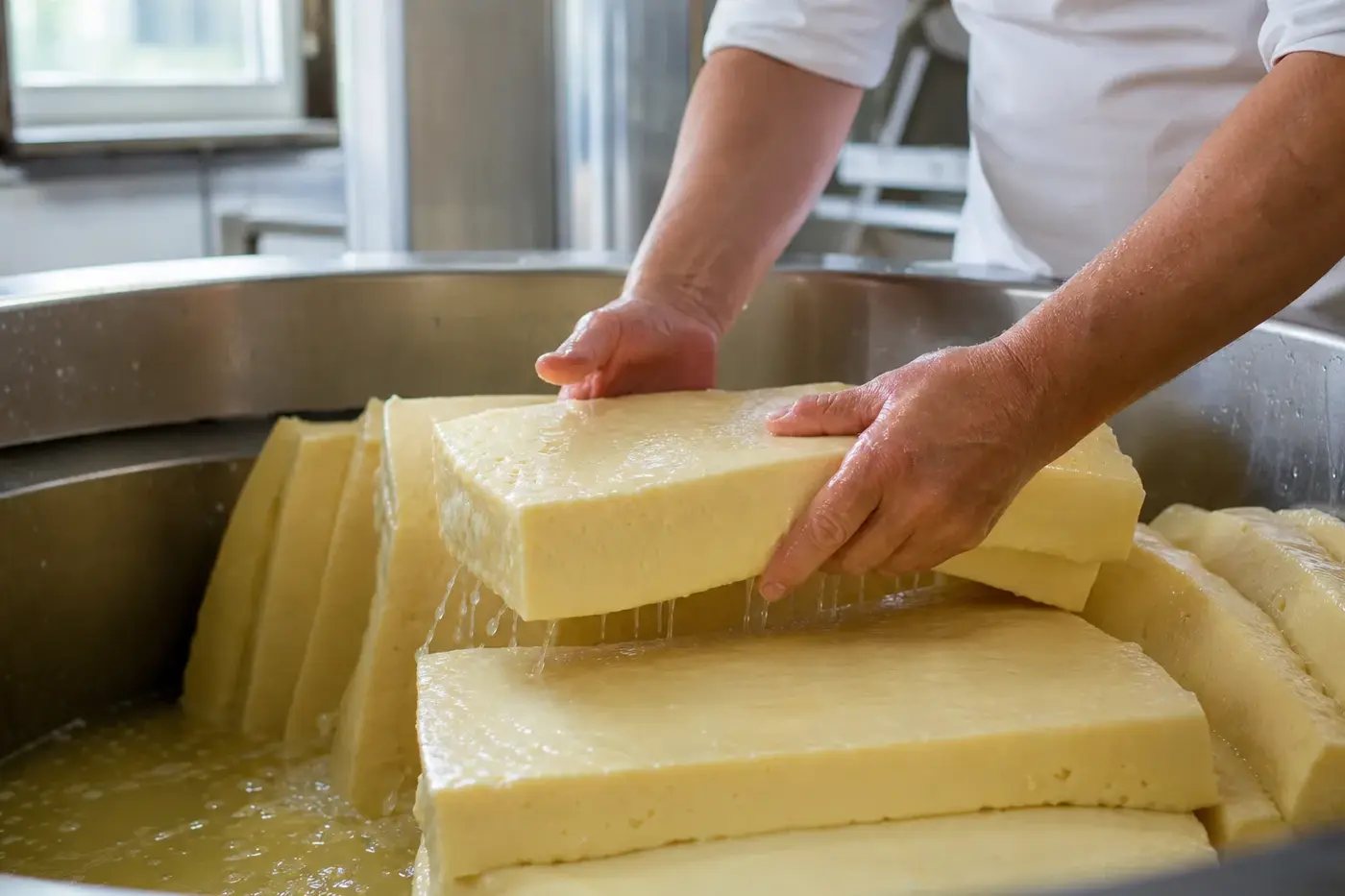
Slabs of curd are turned and stacked by hand.