The Fine Cheese Co.
Before a wheel reaches the counter, there is a tasting with its maker: a discussion of condition, a choice of cheese, a decision about where it should mature.
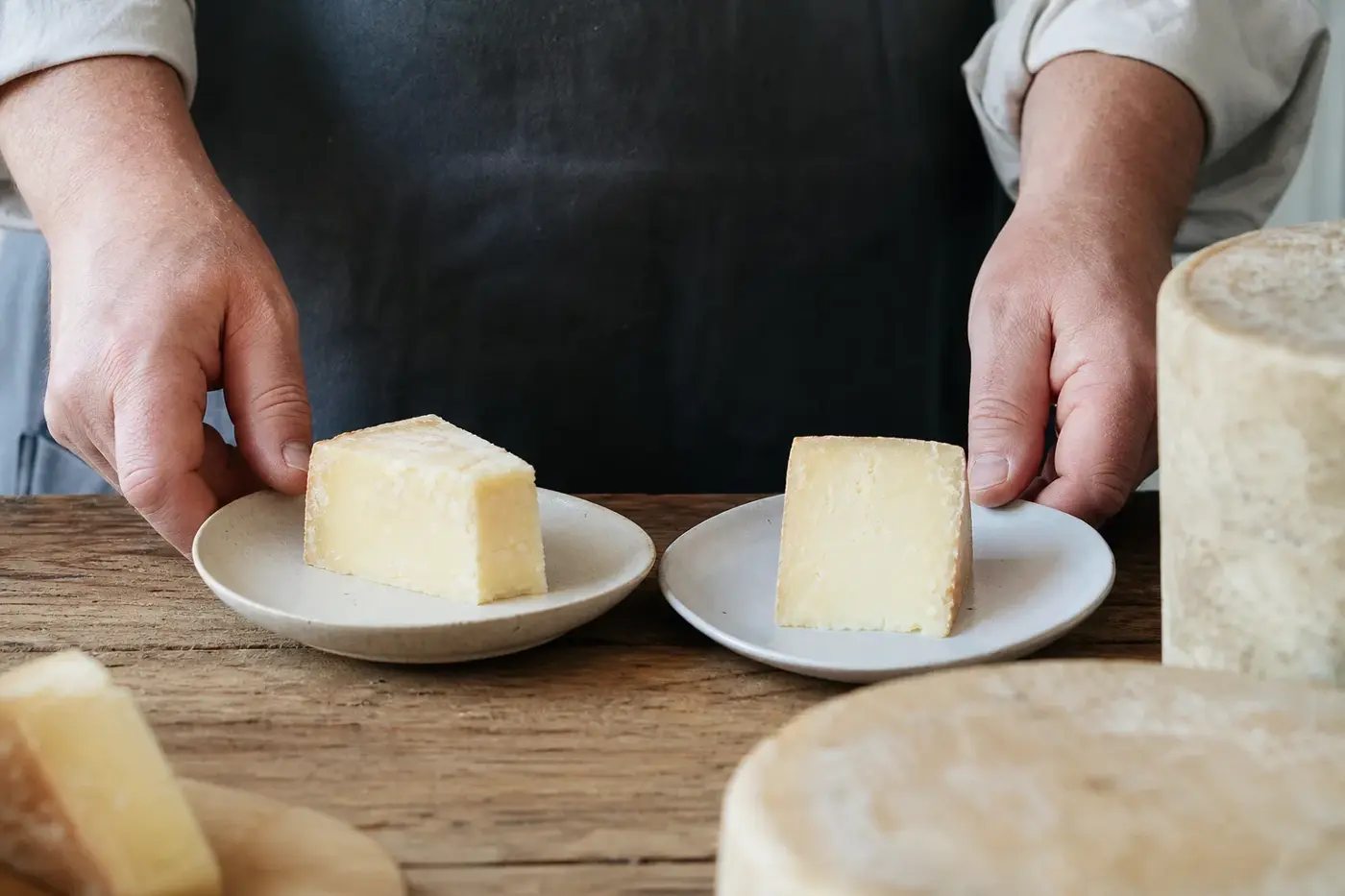
Before a wheel reaches the counter, there is a tasting with its maker: a discussion of condition, a choice of cheese, a decision about where it should mature. This is the work at the heart of The Fine Cheese Co. The Bath-based business brings the judgement of an affineur, a specialist cheese maturer, to cheesemongering, connecting independent makers with customers through cheese care, retail, wholesale and export. [3,7]
| Field | Detail |
|---|---|
| Founded | 1990, according to the company's history. [4] |
| Base | Bath, England. [5] |
| Work | Selection, maturation, retail, wholesale and export. [1,3] |
| Legal entity | THE FINE CHEESE CO. LIMITED, company number 04379739. [2] |
| Business status | Active on Companies House, checked November 2026. [2] |
| Ownership | Family-owned, according to the company; ultimate parent not verified. [1,6] |
| Retail location | 29 and 31 Walcot Street, Bath. [5] |
| Visitor access | Bath shop and café listed; current access conditions not verified. [5] |
| Official website | The Fine Cheese Co. [1] |
From the dairy to the cheese counter
Selection gives The Fine Cheese Co. its particular place in the British cheese trade. Its specialists visit cheesemakers and affineurs across Britain and Europe, the company says, discussing appearance, condition, age and flavour before agreeing what to buy. The work bridges a producer's dairy and somebody else's counter or table. Buying, care and distribution belong together: each cheese is chosen for a purpose, rather than simply ordered by name. [1]
British cheese anchors the business. Imports extend the counter into France, Italy, Spain and the Netherlands, while biscuits and condiments broaden its work beyond cheese distribution. The company develops accompaniments intended to be eaten with particular cheese styles, taking an interest in what sits beside the cheese as well as the cheese itself. [3]
A Bath beginning, a wider cheese trade
The business began in Bath in 1990, according to its published history. Its founder had judged British and international cheese competitions and wanted to introduce farmhouse cheeses, along with their makers' stories, to a wider public. The original shop was in Bath; the business still lists its shop and café on Walcot Street. [4,5]
The founding date and the legal company's age tell different parts of that history. Companies House records THE FINE CHEESE CO. LIMITED as incorporated on 22 February 2002, with active status checked in November 2026. Its control register identifies one active individual holding more than 25% and no more than 50% of shares. The company describes itself as family-owned. Today, dedicated cheese quality and care, buying, food service, wholesale and export functions show how that original retail business has grown into a wider trade operation. [1,2,5,6]
What makes a hand-selected cheese different?
Selection starts with a conversation and a tasting. In the company's account, specialists taste with the maker, agree the condition they want, then decide which cheeses to select young and which should be held longer. Its American market account describes tasting different batches on farm and setting chosen cheeses aside for customers. [1,7]
Two selected Cheddars make the process tangible. The catalogue describes Hand-Selected Montgomery's Cheddar as dense and savoury, and Hand-Selected Keen's Extra Mature Cheddar as powerful and tangy. For Keen's, it credits additional maturation in the family's own rooms. The tasting descriptions belong to the retailer; the ageing detail identifies the people responsible for that stage of the cheese's development. [8,9]
At the counter, ask: what distinguishes this selection, and who matured it? The producer's name, the selected batch and the intended condition give a clearer picture than “mature” alone. Those details help explain what has been chosen and why it is ready for your table. [1,7]
The care that brings cheese to readiness
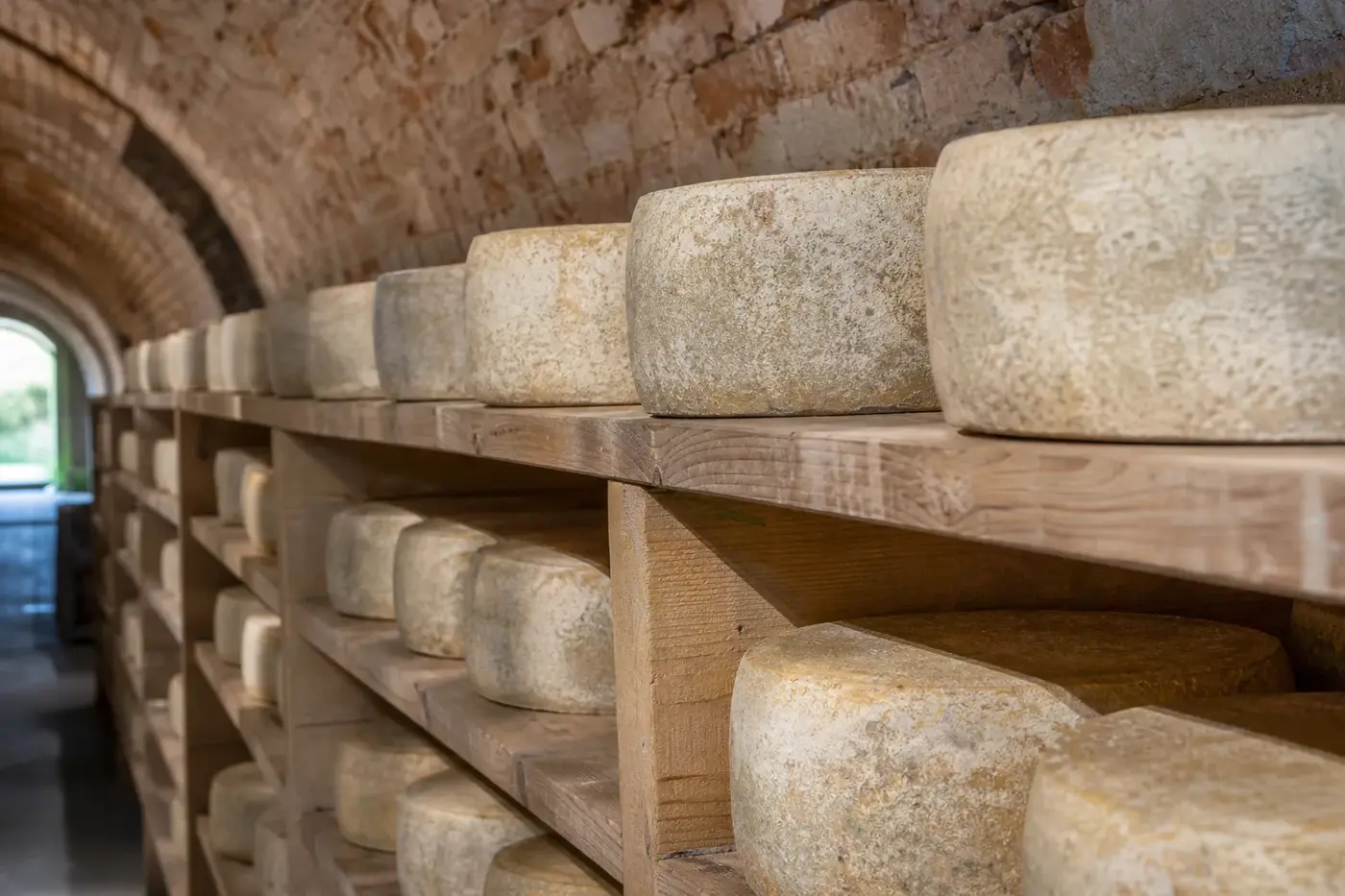
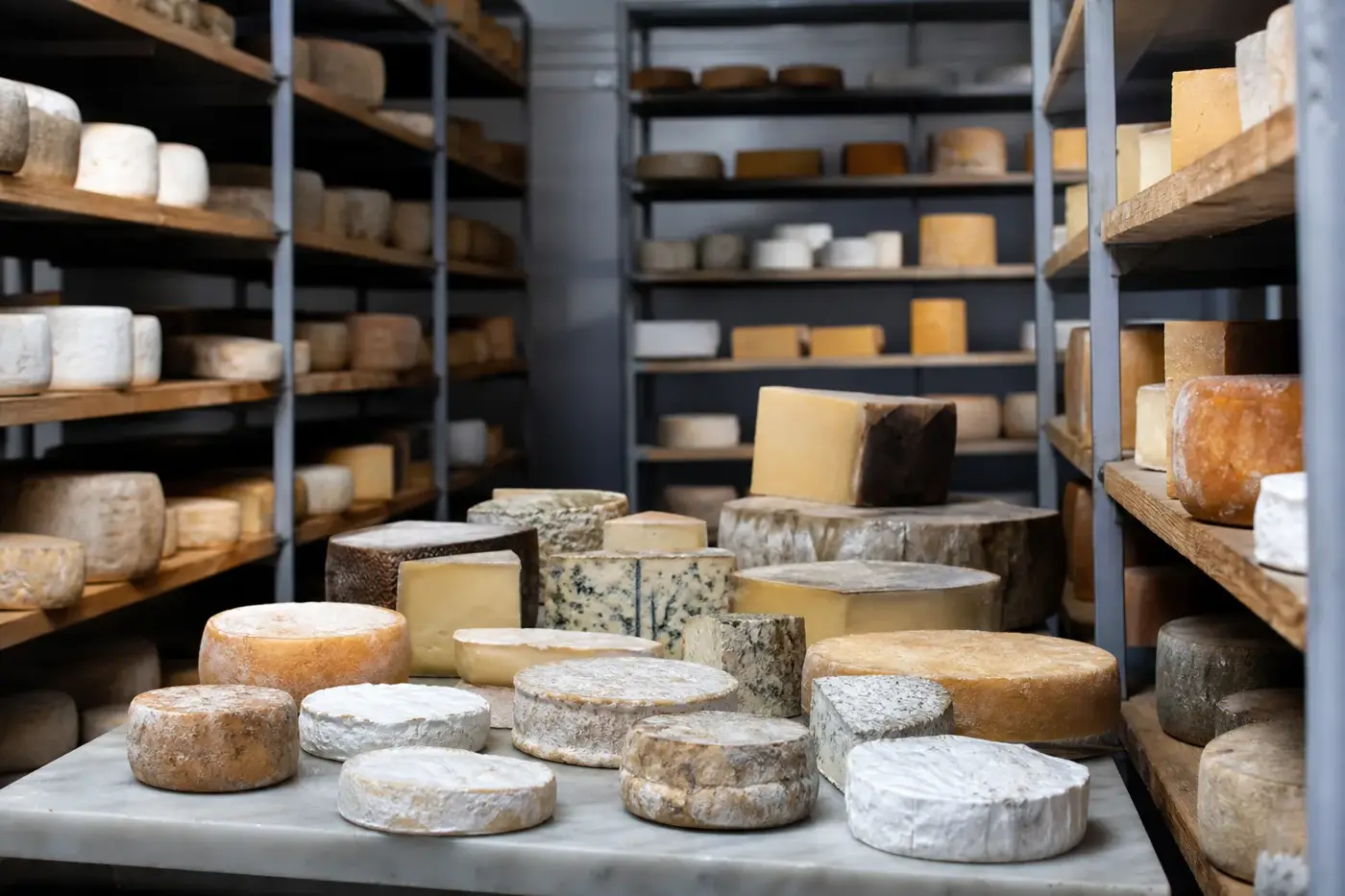
Rubbing, turning, assessing and deciding when to release a cheese are all part of The Fine Cheese Co.'s account of its work. This is affinage: caring for cheese as it matures. Its American website describes rooms with different conditions, where temperature, humidity and airflow are adjusted and cheeses rest on wooden shelving or stainless steel racks. [1,7]
The maker produces the cheese; the affineur cares for its subsequent development. A cheese sold through the business can therefore have both a named maker and a separate selection or maturation history. For the earlier stages, from milk to curd and whey, see how cheese is made. [1,7]
The company's consumer care guide says it aims to send cheese ready to eat. If you are ordering for a particular meal, give the intended eating date and ask which cheese will suit it. The point is to use the company's judgement about condition, rather than assume that further ageing at home will improve the cheese. [10]
Cheddars, Tunworth and continental names
The two Cheddars and Tunworth appear in the company's catalogue. Brie de Meaux and Fourme d'Ambert feature in its care guide. These sources were checked in November 2026. For both Cheddars, the retailer says production usually uses raw milk but may occasionally use pasteurised milk; the supplied piece is clearly labelled. [8,9,10,11]
| Cheese | Producer | Milk | Treatment | Evidence |
|---|---|---|---|---|
| Montgomery's Cheddar | Montgomery's, Somerset | Cow | Usually raw; check supplied label | Product listing. [8] |
| Keen's Extra Mature Cheddar | Keen's family | Usually raw; check supplied label | Catalogue listing. [9] | |
| Tunworth | Cow | Pasteurised | Product listing. [11] |
Tunworth brings a soft cheese contrast to the Cheddars. The retailer describes its thin, wrinkled rind, earthy fragrance and vegetal flavour. The continental references include soft Brie de Meaux and blue Fourme d'Ambert. Ask who made the actual piece on offer, particularly where several producers use the same cheese name. [10,11]
Visiting Bath and finding cheese further afield
The Bath cheese shop and café are at 29 and 31 Walcot Street, according to the current contact page. Before travelling, check the official site for opening arrangements, accessibility and any booking requirements. Online, the choice includes individual cheeses, assembled selections, and cheese wedding and celebration cakes. [1,5,9]
Wholesale, food service and export each have separate contacts. The wholesale page offers advice, guidance and training alongside cheese supply; the export page describes distribution to more than 50 countries across several continents. These company statements were checked in November 2026. Overseas customers can start with a local stockist or the relevant export contact. [5,12,13]
Crackers, chutneys and other companions
The crackers come from Artisan Biscuits, which The Fine Cheese Co. describes as its sister company. Its bakery is in Ashbourne, Derbyshire. Chutneys, fruits and pickles complete a wider accompaniment range, extending the company's attention from the cheese to the way it is served. [3]
There is a useful choice here: crackers designed to bring flavour to a particular cheese, or deliberately neutral ones that leave more room for the cheese itself. The wholesale account distinguishes the two. In the cracker catalogue, the company recommends Extra Virgin Olive Oil and Sea Salt Crackers for hard cheese; its selection box includes fig, honey and rosemary versions. [12,14]
Build a board around contrasts
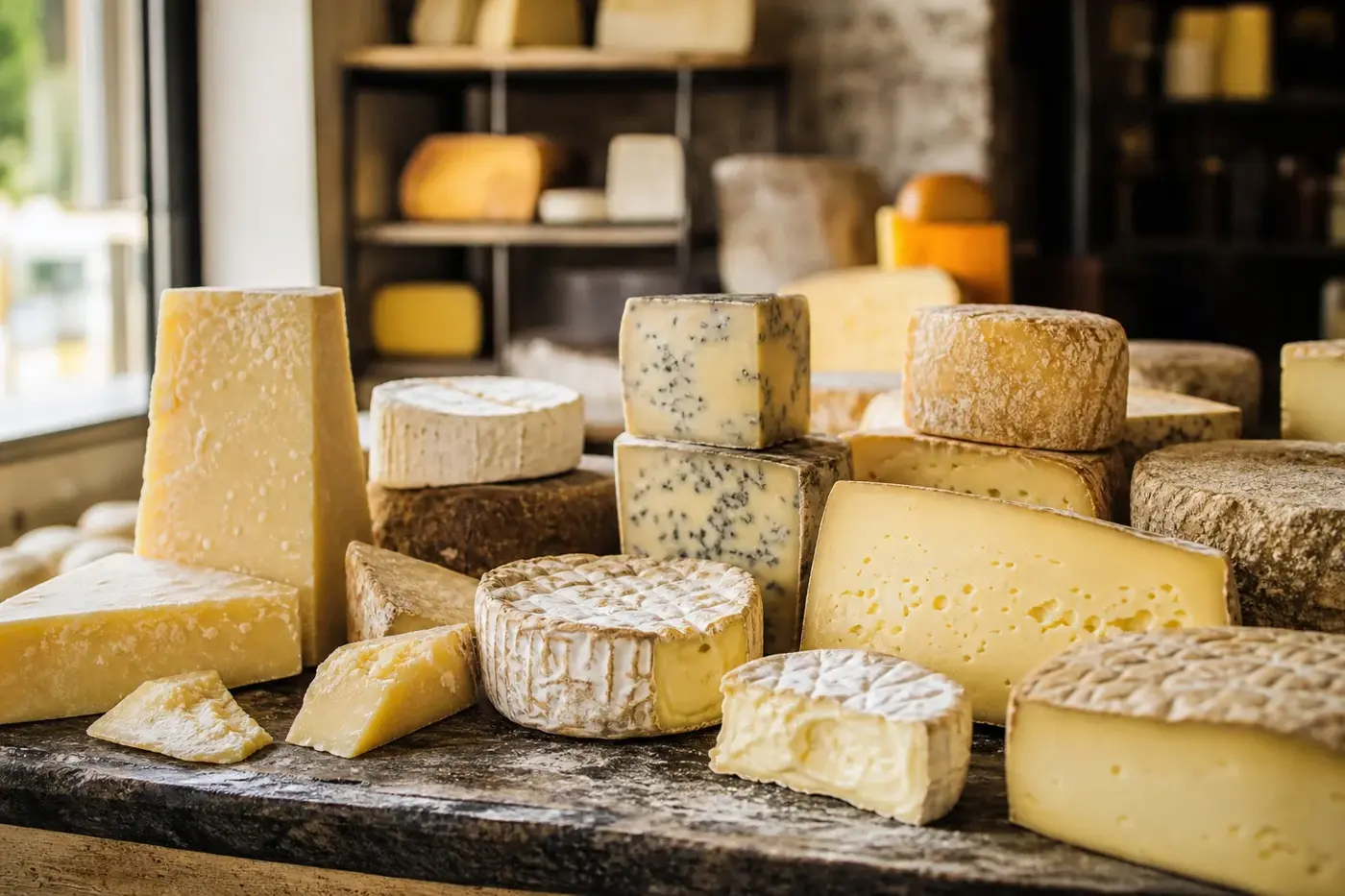
A small board with clear contrasts is a useful starting point: one of the selected Cheddars, a soft cheese such as Tunworth, and a blue if your guests would enjoy one. That draws on the different textures represented in the catalogue, rather than gathering several cheeses that do much the same job. Tell the cheesemonger what your guests like and how adventurous you want to be. [8,9,11]
For a straightforward pairing, follow the company's hard cheese recommendation and serve the olive oil and sea salt crackers with Cheddar. A suggested comparison is to put a neutral cracker beside Tunworth, allowing guests to explore its described vegetal character without a strongly flavoured accompaniment. This second pairing draws on the company's distinction between neutral and flavoured crackers. [11,12,14]
Keep it chilled, serve it thoughtfully
For home handling in England, Wales and Northern Ireland, the Food Standards Agency advises keeping the fridge between 0 and 5 °C (32 to 41 °F) and following the product's storage instructions. Refrigerate cheese promptly when it arrives. Once opened, follow the individual label: cheeses across this range have different handling needs. [15,16]
Take out the portion you intend to serve and leave the rest chilled. The FSA advises keeping chilled food out of the fridge for the shortest possible time during preparation, with a maximum of four hours in that guidance. If you allow cheese to lose its refrigerator chill, count preparation and display time together within that limit. [15]
Use by dates concern safety; best before dates concern quality, under UK guidance. Do not eat food after its use by date. Follow the supplied storage and opening instructions rather than relying on a general estimate for the cheese style. For fuller handling guidance, read how to store cheese at home. [16]
Read the label on the cheese you receive
The actual piece matters more than a familiar name. Both the Montgomery's and Keen's listings tell customers to check their supplied cheese's label for milk treatment. For an explanation of the distinctions, see raw, thermised and pasteurised milk. [8,9]
Milk is among the allergens that businesses must disclose when used as ingredients, according to UK official allergen guidance. For prepacked food, allergens are identified within the ingredients list. Read accompaniment information just as carefully as cheese information, including details about wheat, nuts, sesame and mustard. At the counter, ask for product-specific allergen information and discuss any cross-contact concerns with staff before buying. [17]
Keep the product name and label to hand when asking questions. The company's published contacts include a cheese quality and care team, a useful point of contact when a web description leaves a product detail unclear. Use how to read a cheese label to organise those checks. [5]
General information only, not medical advice: follow the official guidance where you live.
Questions people ask
What does The Fine Cheese Co. do?
It selects and cares for cheese as it matures, as well as selling, wholesaling and exporting it. Its specialists taste with makers and decide which cheeses to select young and which to hold longer.
Can I visit The Fine Cheese Co. in Bath?
The company lists a shop and café at 29 and 31 Walcot Street. Check its official website before travelling for opening arrangements, accessibility and any booking requirements.
Are its Cheddars made with raw milk?
The retailer says Montgomery's Cheddar and Keen's Extra Mature Cheddar usually use raw milk but may occasionally use pasteurised milk. Check the label on the piece supplied.
How should I store cheese at home?
For England, Wales and Northern Ireland, the Food Standards Agency advises keeping the fridge between 0 and 5 °C and following the product's storage instructions. It also advises keeping chilled food out of the fridge for the shortest possible time during preparation, with a maximum of four hours in that guidance. See the Food Standards Agency's food storage guidance.
Does The Fine Cheese Co. sell cheese outside the UK?
The company's export page describes distribution to more than 50 countries across several continents. Overseas customers can start with a local stockist or the relevant export contact.
Sources
- The Fine Cheese Co., company homepage, undated live edition, retrieved November 2026. Company account of selection, maturing rooms, family ownership and retail range.
- Companies House, THE FINE CHEESE CO. LIMITED, company number 04379739, live register record, retrieved November 2026.
- The Fine Cheese Co., About Us, undated live edition, retrieved November 2026. Company account of its activities, imports, accompaniments and Ashbourne bakery.
- The Fine Cheese Co., FAQ's, undated live edition, retrieved November 2026. Founding date, founder's background and original Bath shop.
- The Fine Cheese Co., Contact Us, undated live edition, retrieved November 2026. Bath shop address and departmental contacts.
- Companies House, THE FINE CHEESE CO. LIMITED: persons with significant control, live register record, retrieved November 2026.
- The Fine Cheese Co. USA, company website, “Selecting and Maturing Artisan British Cheese”, undated live edition, retrieved November 2026. Company account of batch selection and maturation conditions.
- The Fine Cheese Co., Hand-Selected Montgomery's Cheddar, undated product listing, retrieved November 2026.
- The Fine Cheese Co., Cheese, live catalogue, retrieved November 2026, particularly Hand-Selected Keen's Extra Mature Cheddar.
- The Fine Cheese Co., Choosing and caring for cheese, undated live edition, retrieved November 2026.
- The Fine Cheese Co., Tunworth, undated product listing, retrieved November 2026.
- The Fine Cheese Co., UK Wholesale, undated live edition, retrieved November 2026.
- The Fine Cheese Co., Cheese and Cheese Partners' Export, undated live edition, retrieved November 2026.
- The Fine Cheese Co., Crackers for Cheese, live catalogue, retrieved November 2026.
- Food Standards Agency, How to chill, freeze and defrost food safely, published 18 December 2017, live edition retrieved November 2026; applies to England, Northern Ireland and Wales.
- GOV.UK, Understanding food labelling: Best before and use-by dates, live edition retrieved November 2026.
- GOV.UK, Understanding food labelling: Allergen labelling, live edition retrieved November 2026.
Researched through company accounts and product listings, Companies House records and official food handling and labelling guidance.
Last checked: November 2026
Last checked November 2026.
The editors suggest you read next
Farmhouse, Artisan and Industrial Cheesemakers Explained
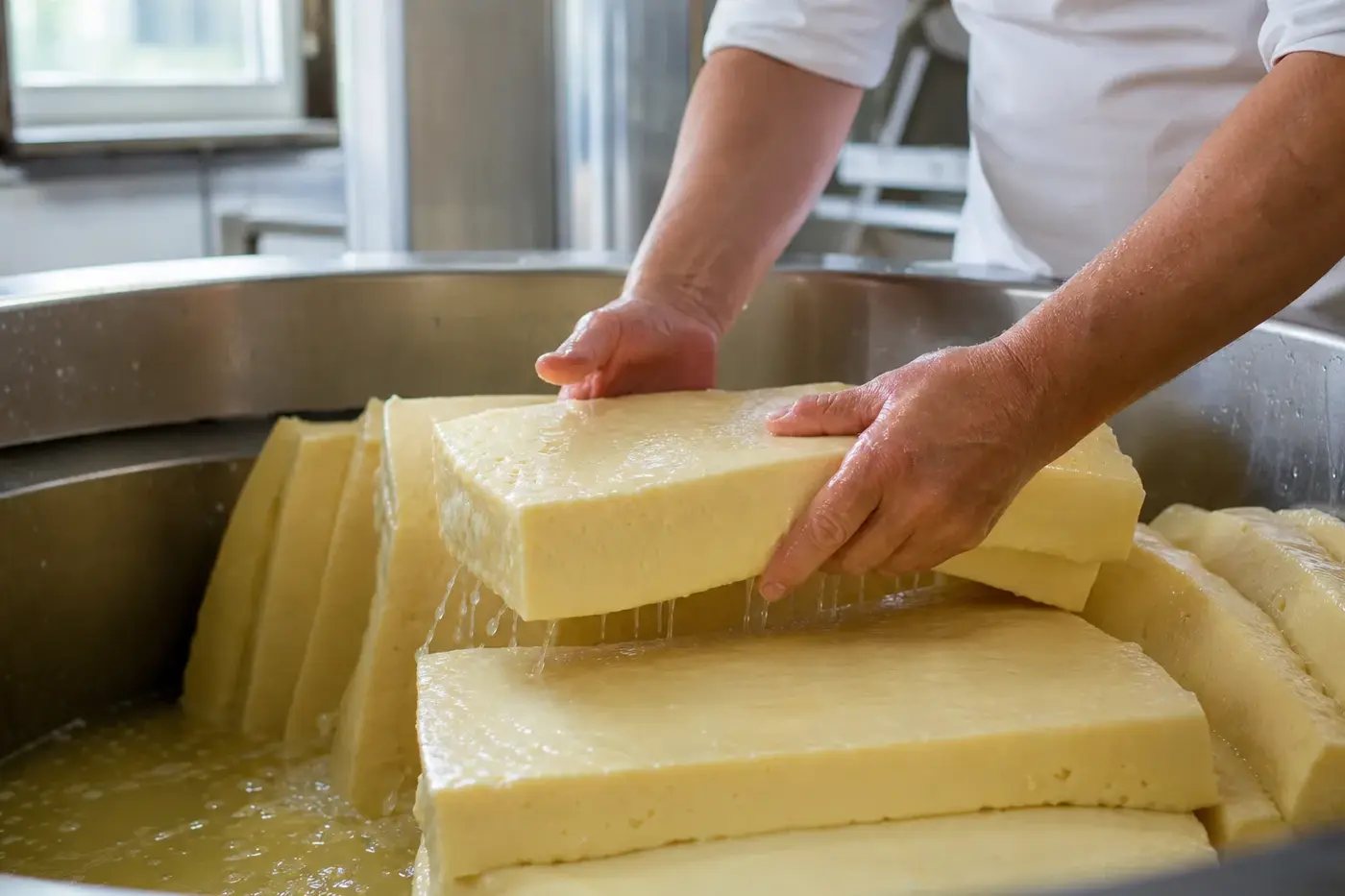
Slabs of curd are turned and stacked by hand.