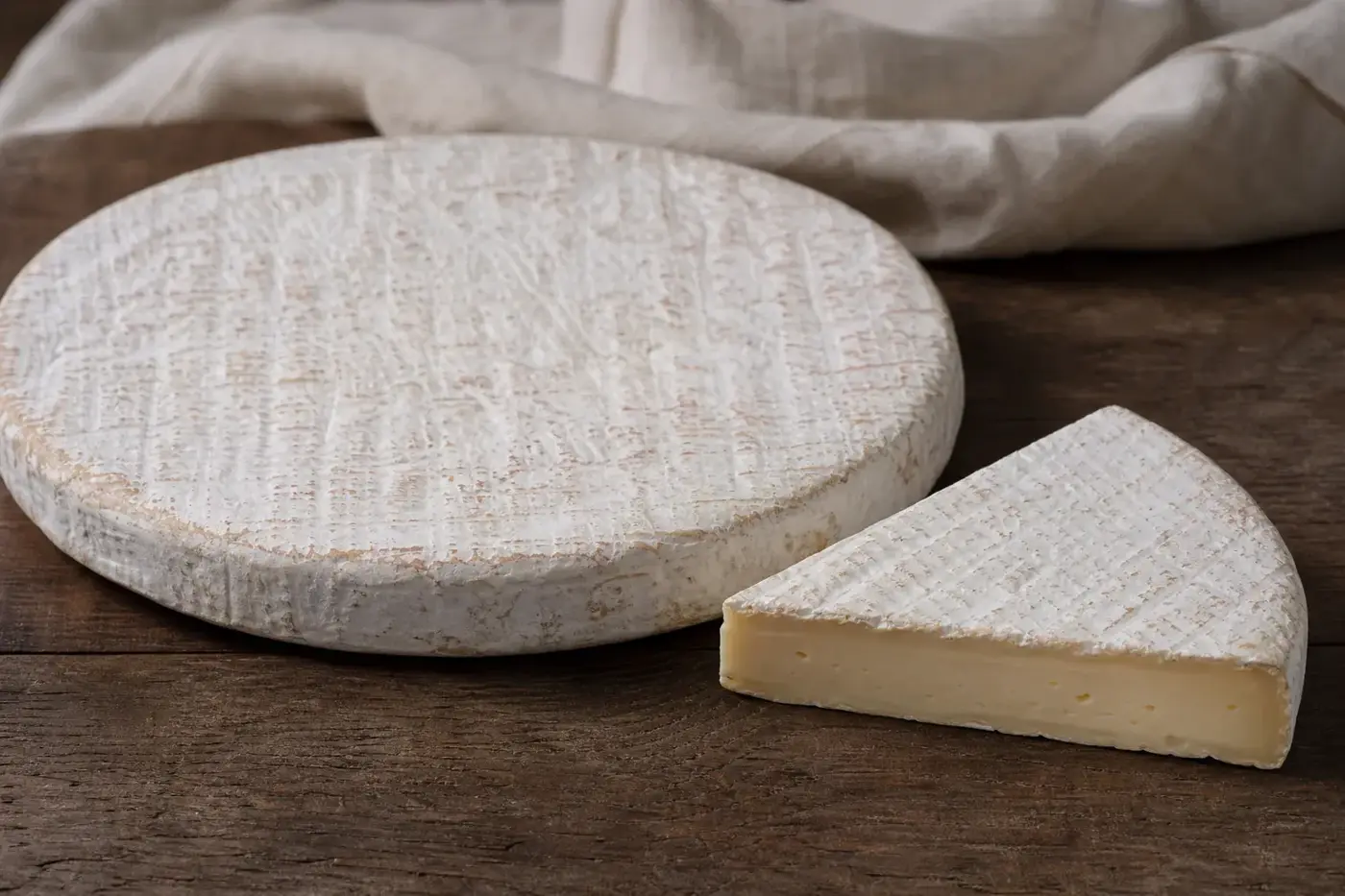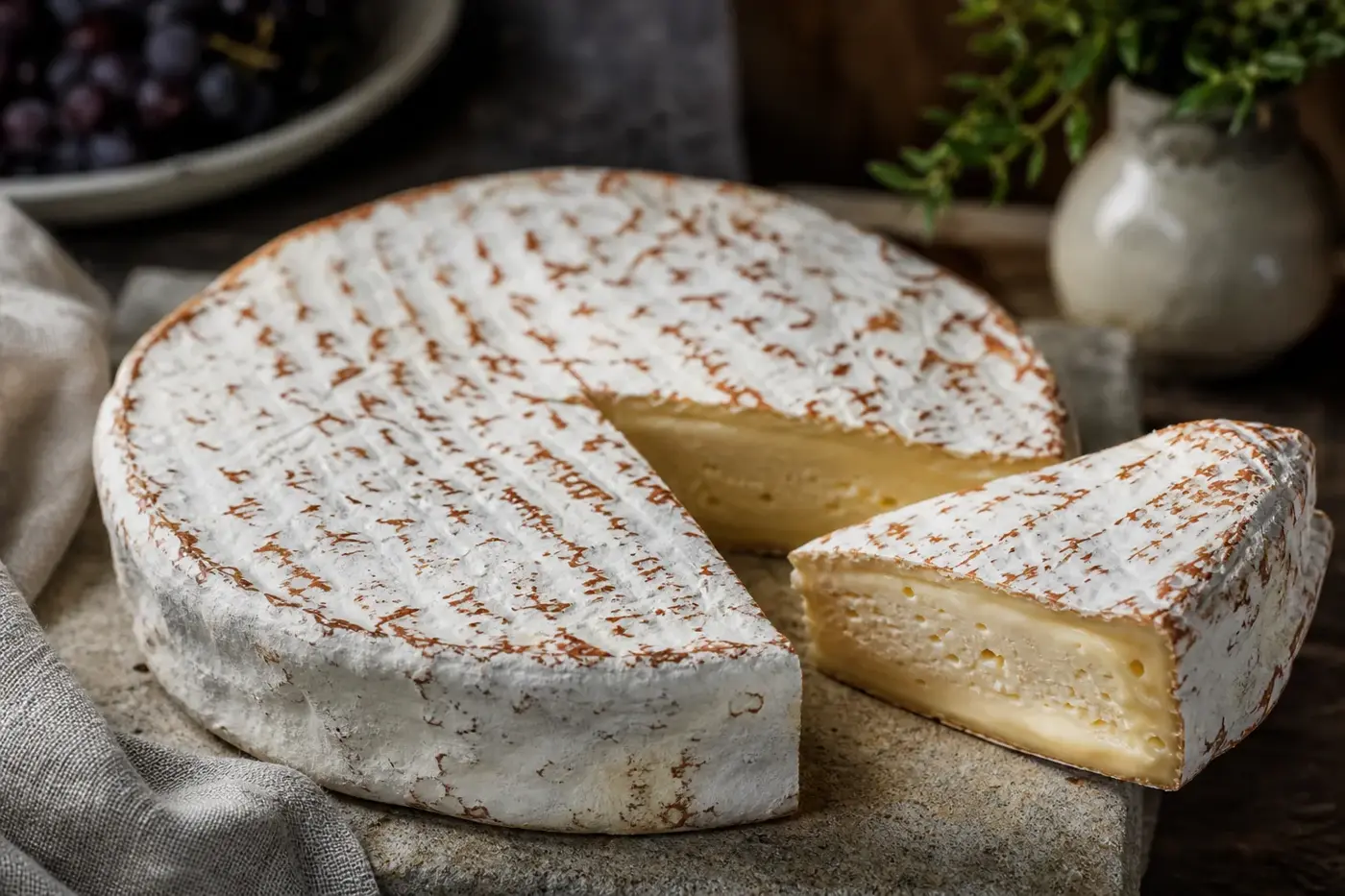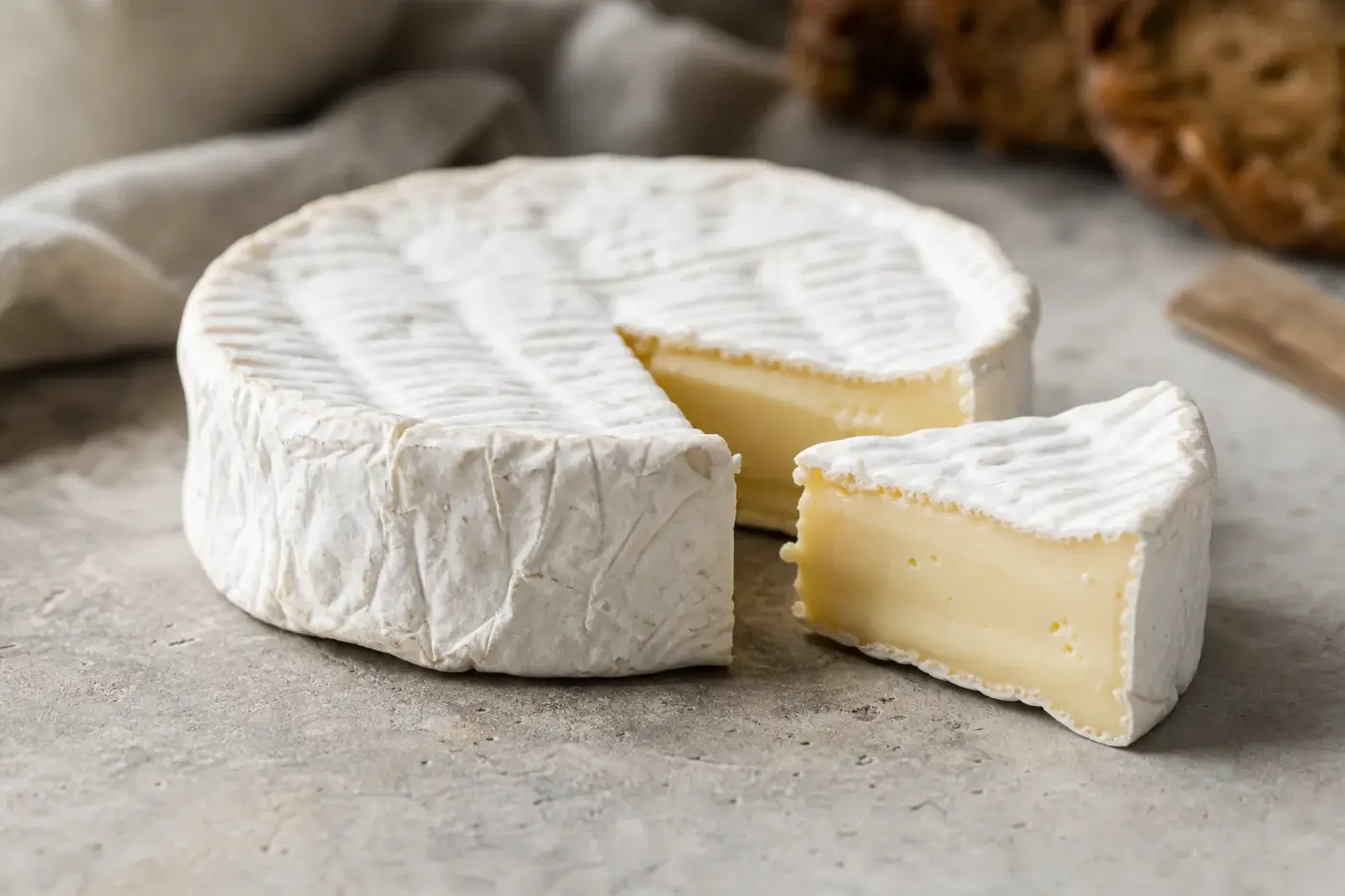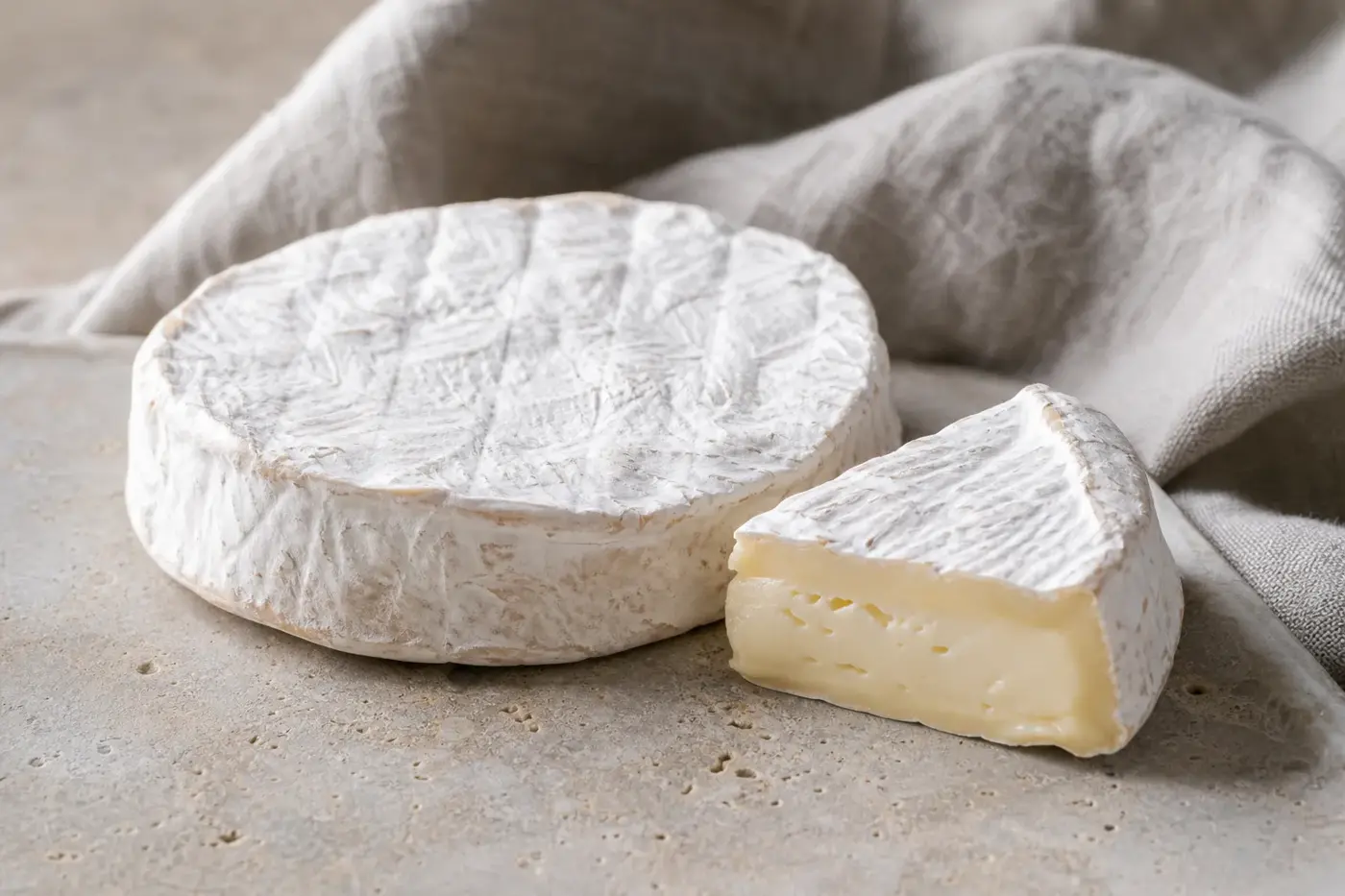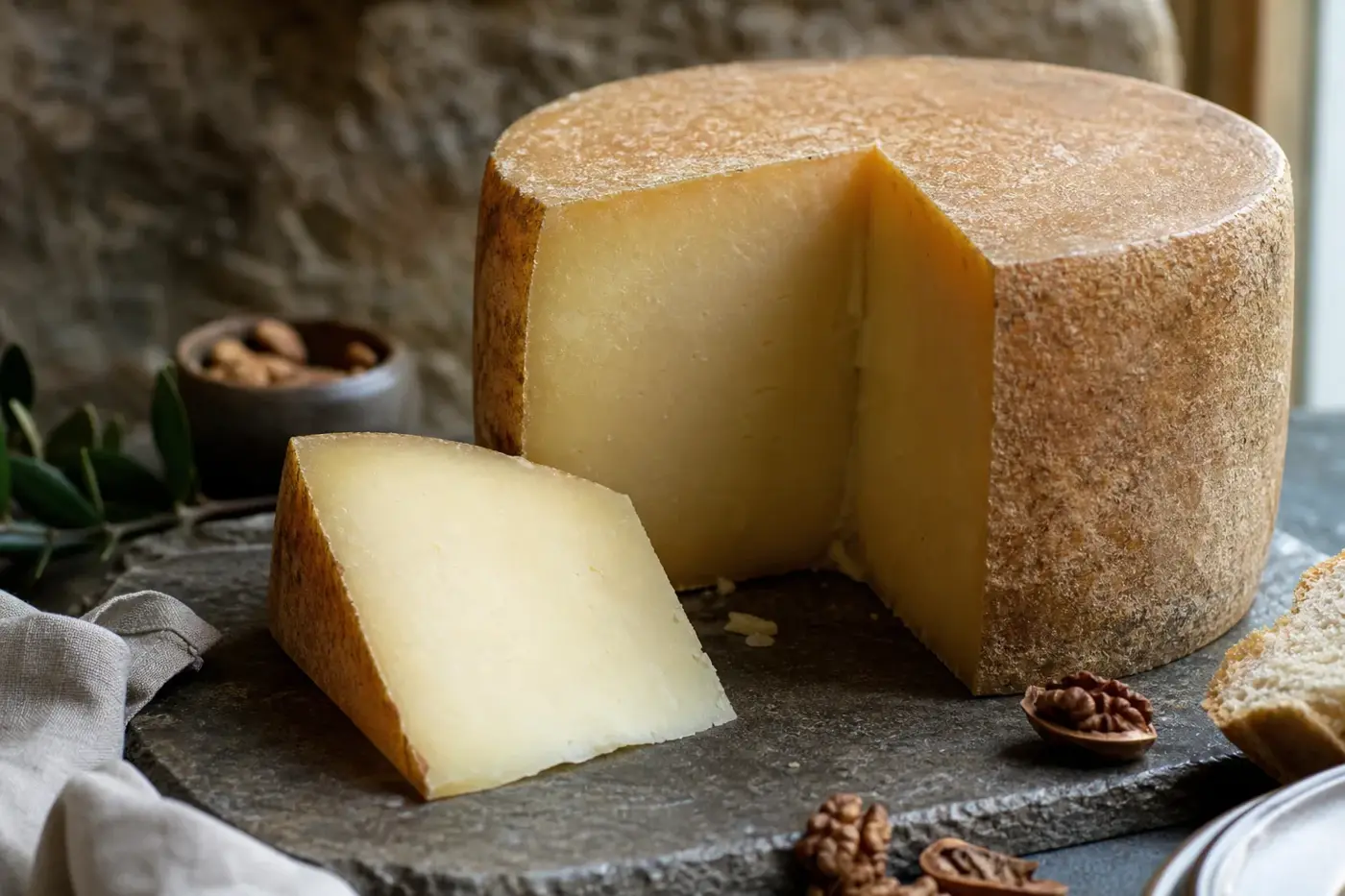
Fresh hay, then dried hazelnut. Follow those flavour landmarks, offered by the appellation syndicat, and you arrive on the Aubrac plateau, with a substantial cylinder of Laguiole before you. Raw cows' milk and two distinct pressings take it from fresh tomme to finished wheel. Its French protected designation of origin ties it to parts of Aveyron, Cantal and Lozère. [2, 6, 10]
Get acquainted with a substantial wheel
- Registered name: Laguiole. [2, 3]
- Registration authorities: European Commission, EU; Defra, Great Britain. [2, 3]
- Protection: EU status and registration date: unconfirmed. Great Britain: PDO, registered 31 December 2020; information as of November 2026. [3] Northern Ireland, Switzerland and the US: status unconfirmed.
- Where it belongs: Aubrac, across the legally defined parts of Aveyron, Cantal and Lozère. [10]
- Milk: Raw, whole cows' milk. [10]
- What sets the milk: Rennet. [1]
- Minimum ageing: Four months from renneting. [1]
- Time in the cellar: The syndicat reports examples matured up to 18 months. [5]
- Wheel size: Cylinders weighing 20 to 50 kg, measuring 30 to 40 cm in diameter; height-to-diameter ratio 0.8 to 1. [10]
- Composition: At least 45% fat in dry matter. [10]
- Allergen: Milk. [10]
- Production rulebook: INAO cahier des charges, sections II, III and V. [10]
Head up to the Aubrac plateau
Laguiole belongs to a plateau, not just a village. Aubrac stretches across three departments in southern France's Massif central, and these uplands remain part of the story throughout production. INAO requires milk production, cheesemaking and maturation to happen within the designated area. Farm and cellar share the same geographical home. [2]
For you, origin is more useful than an address on a wrapper. Start with the protected name, then ask who made the cheese, where it was made and how long that particular wheel matured. A packer's or seller's location answers a different question. The maker and the wheel tell you more about what you are about to eat. [2, 3]
Meet the cattle that make it possible
It begins with raw, whole cows' milk, with neither fat nor protein standardised. The permitted cattle are French Simmental, Aubrac and specified, pedigree-certified crosses between the two. Beyond the first cross, the rules require an Aubrac sire. Those rules reach right into the animals' daily feed. [10]
The base forage ration must come from the production area. When grass and weather permit, the published rules require a predominantly grazed ration for at least 120 days annually. Silage and other wet-preserved forage are excluded from the dairy herd's base ration. The local syndicat, which represents the appellation, describes a pasture-and-hay system suited to plateau life. [5, 10]
If you are wondering what milk treatment changes, raw and pasteurised milk explains the differences.
Two pressings, with time to pause
Laguiole's double pressing is not simply the same job done twice. First, the cheesemaker presses the fresh tome. Later, a second pressing brings its milled, salted pieces together into a wheel. Between them comes a deliberate maturation stage: this cheese is not one for rushing out of the door. [4]
Rennet starts things moving, setting the milk into curd. This solid part separates from the liquid whey, then is cut, stirred and gathered into a block called a tome. The syndicat's account emphasises two drainage stages, one before and one after the cheese takes its final cylindrical shape. [4, 5]
For the first pressing, the tome goes into cloth and a presse-tome. The cheesemaker repeatedly cuts, stacks and presses it, turning it at least five times during a pressing lasting at least one hour. Then comes the pause. The pressed tome matures for at least 12 hours. [1]
Next comes milling, which breaks the matured block into small pieces, ready for salt to be mixed through them. After a rest, the salted curd goes into cloth-lined moulds for vertical pressing. This second pressing lasts at least 40 hours, with at least four turns. [1, 4]
To see where those steps fit into the wider craft, explore how cheese is made.
Find the bull on the wheel
Think tall cylinder, not shallow disc, with the substantial dimensions in the fact box. Beneath the dry, natural rind, you find firm paste, meaning the cheese itself. Its colour runs from ivory to straw-yellow. [10]
Look at a flat face of the wheel for a raised bull and the Laguiole name, both moulded into it and highlighted by INAO. Your cut portion may show only a fragment of rind. At the cheese counter, ask to see the whole wheel's identity or its accompanying information. [2]
Spend a little time with the cellar
At least four months must pass from the addition of rennet before Laguiole completes its minimum maturation. This controlled maturing, called affinage, takes place in cellars specified at 6 to 12 °C and above 90% relative humidity. The wheels are rubbed and turned regularly. [1, 4]
Time leaves its mark outside as well as within. The specification describes a rind deepening towards amber brown or mottled grey. [1] The syndicat describes well matured Laguiole as supple, with a lingering dairy flavour, nuances from fresh hay to dried hazelnut, and a brown rind with orange reflections. [6]
Let those descriptions guide your tasting, rather than set you an exam. Begin with the dairy character, then look for hay-like or dry-hazelnut notes and notice how long they linger. Ask about the wheel's age, its season of manufacture and the maker's account of that batch. Greater age is not a ranking, so choose the character you enjoy. [5, 6]
For aligot, ask for fresh tomme
The cheese used for aligot comes from an earlier production stage, not a slice of the matured wheel. The syndicat calls it tome fraîche, often written fresh tomme in English. Mature Laguiole carries on through salting, moulding and prolonged maturation. [4, 5]
Your shopping request matters here. For an aligot recipe, ask specifically for fresh tomme intended for aligot; for the table, ask for matured Laguiole. Keep the fresh product's handling instructions with it. The finished wheel's long maturation tells you nothing about storing a different, fresh product.
Say hello to Cantal, the cousin
The Laguiole syndicat calls Cantal a cousin rather than a twin. Both are pressed, uncooked cheeses made as substantial cylinders, a family resemblance that helps you find your bearings. Laguiole's Aubrac production area, milk requirements and maturation rules remain its own. [6, 10]
If you have the chance to compare them, choose named wheels at stated ages. Ask the seller to describe each separately, rather than letting one name stand in for the other. For the distinction between a protected name and a broad style, see protected cheese names.
Take three questions to the counter
Start with name, maker and age. Then ask when the portion was cut, what the seller knows about the wheel's maturation and which character suits your plans. For a straightforward first taste, request a piece they consider representative of Laguiole, rather than simply their oldest wheel.
Read the storage and date information before buying, and keep it with your cheese. A manageable portion is easier to handle according to those instructions, without repeatedly exposing a large cut surface. The guide to reading a cheese label helps you distinguish the food name, producer and other label information.
This page summarises published guidance from the official sources it cites. It is not medical advice. Guidance differs between countries and changes over time, so check the current source for where you live, and ask your doctor, midwife, pharmacist or dietitian about your own circumstances.
From fridge to table, safely
Follow the pack's instructions first. For England, Wales and Northern Ireland, the Food Standards Agency advises keeping a domestic fridge between 0 and 5 °C. Keep your cheese covered, separate it from raw foods and follow its use-by date where one is given. [8, 9]
For opened ready-to-eat foods, the NHS advises use within two days unless the packaging says otherwise. Keep the seller's specific instructions for your cut portion, too. For broader handling principles, see storing cheese at home. [8]
Serve modest pieces so everyone can examine the paste and taste the cheese before adding accompaniments. Put out what you expect to eat, rather than the whole purchase. UK NHS guidance says to eat ready-to-eat foods within four hours of taking them out of the fridge, with preparation and display both counting towards that time. [8]
Give Laguiole a little breathing space
Start with plain bread, then try a crisp apple or pear, keeping your attention on the cheese's dairy and hay-like character. Water makes a simple drink for comparing bites. These are editorial serving suggestions, rather than a recorded tasting.
Raw milk cheese: find the guidance for you
UK pregnancy guidance distinguishes between cheese types. The NHS's Foods to avoid in pregnancy page lists pasteurised or unpasteurised hard cheeses among foods that can be eaten, and separately advises that pasteurised semi-hard cheeses can be eaten. Check which category applies to the product you have bought. [7]
The NHS's general listeriosis page gives broader advice, telling pregnant readers to avoid unpasteurised dairy products. It also identifies weakened immunity as a reason infection can be more serious. Read both official sources, with November 2026 as the reference point here, and ask your midwife or clinical team how the advice applies to your circumstances. [7, 8]
A little more on milk and storage
- Raw Milk, Thermised and Pasteurised Cheese: get to know the milk treatments behind the terminology.
- How to Store Cheese at Home: look after your cut portion with its label instructions in view.
Questions people ask
Where is Laguiole cheese made?
Laguiole comes from Aubrac, across parts of Aveyron, Cantal and Lozère in southern France. Milk production, cheesemaking and maturation must all take place within the designated area.
What does Laguiole taste like?
The appellation syndicat describes well matured Laguiole as supple, with a lingering dairy flavour. Its flavour notes include fresh hay and dried hazelnut.
Is Laguiole made from raw milk?
Yes, Laguiole is made from raw, whole cows' milk. The permitted cattle are French Simmental, Aubrac and specified pedigree certified crosses between the two.
Is Laguiole the cheese used in aligot?
Aligot uses an earlier stage of production called tome fraîche, often written fresh tomme in English. Mature Laguiole goes on through salting, moulding and prolonged maturation.
Can you eat Laguiole during pregnancy?
The NHS's Foods to avoid in pregnancy page lists pasteurised or unpasteurised hard cheeses among foods that can be eaten and separately says pasteurised semi-hard cheeses can be eaten. Its general listeriosis page advises pregnant readers to avoid unpasteurised dairy products. Check which category applies to your cheese, read both NHS sources and ask your midwife or clinical team how the advice applies to you.
Sources
- INAO. Cahier des charges de l'appellation d'origine « Laguiole », undated 14-page document hosted by INAO. Sections V and VI cover manufacture, maturation and geographical links. Specification PDF.
- INAO. Laguiole, official product entry, undated, retrieved November 2026. The available entry describes the Aubrac production area, raw milk, cattle and identification. Product entry.
- Department for Environment, Food & Rural Affairs. Laguiole, protected food name register entry, published 4 January 2021, retrieved November 2026. GB register entry.
- QUALISUD. Certification SIQO hors AB: dispositions de contrôle spécifiques AOP Laguiole, reference CA/AO015/DCS-0, index 0, approved 18 August 2023. Control plan PDF.
- Syndicat de défense et de promotion du fromage de Laguiole. Un cahier de ressources, undated. Industry account of feeding, manufacture, fresh tome and maturation; the organisation represents and promotes the appellation. Resource page.
- Syndicat de défense et de promotion du fromage de Laguiole. Savourez le Laguiole, undated. Attributed tasting descriptions, regional wine suggestions and comparison with Cantal. Tasting and serving page.
- NHS. Foods to avoid in pregnancy, live guidance retrieved November 2026, section “Cheese, milk and other dairy”. Pregnancy guidance.
- NHS. Listeriosis, live guidance retrieved November 2026, sections on treatment, prevention and foods to avoid. Listeriosis guidance.
- Food Standards Agency. How to chill, freeze and defrost food safely, published 18 December 2017, live guidance retrieved November 2026; applies to England, Northern Ireland and Wales. Consumer guidance.
- French Ministry of Agriculture. Cahier des charges de l'appellation d'origine « Laguiole » homologué par le décret n°2014-1131 du 3 octobre 2014, Bulletin officiel 41, 2014. Sections II, III and V cover format, composition, boundaries, milk and cattle. Official specification PDF.
Researched from official French specifications, the GB register, the appellation organisation's published accounts and UK agency guidance, with editorial suggestions distinguished from documented tasting.
Last checked: November 2026
Last checked November 2026.
The editors suggest you read next