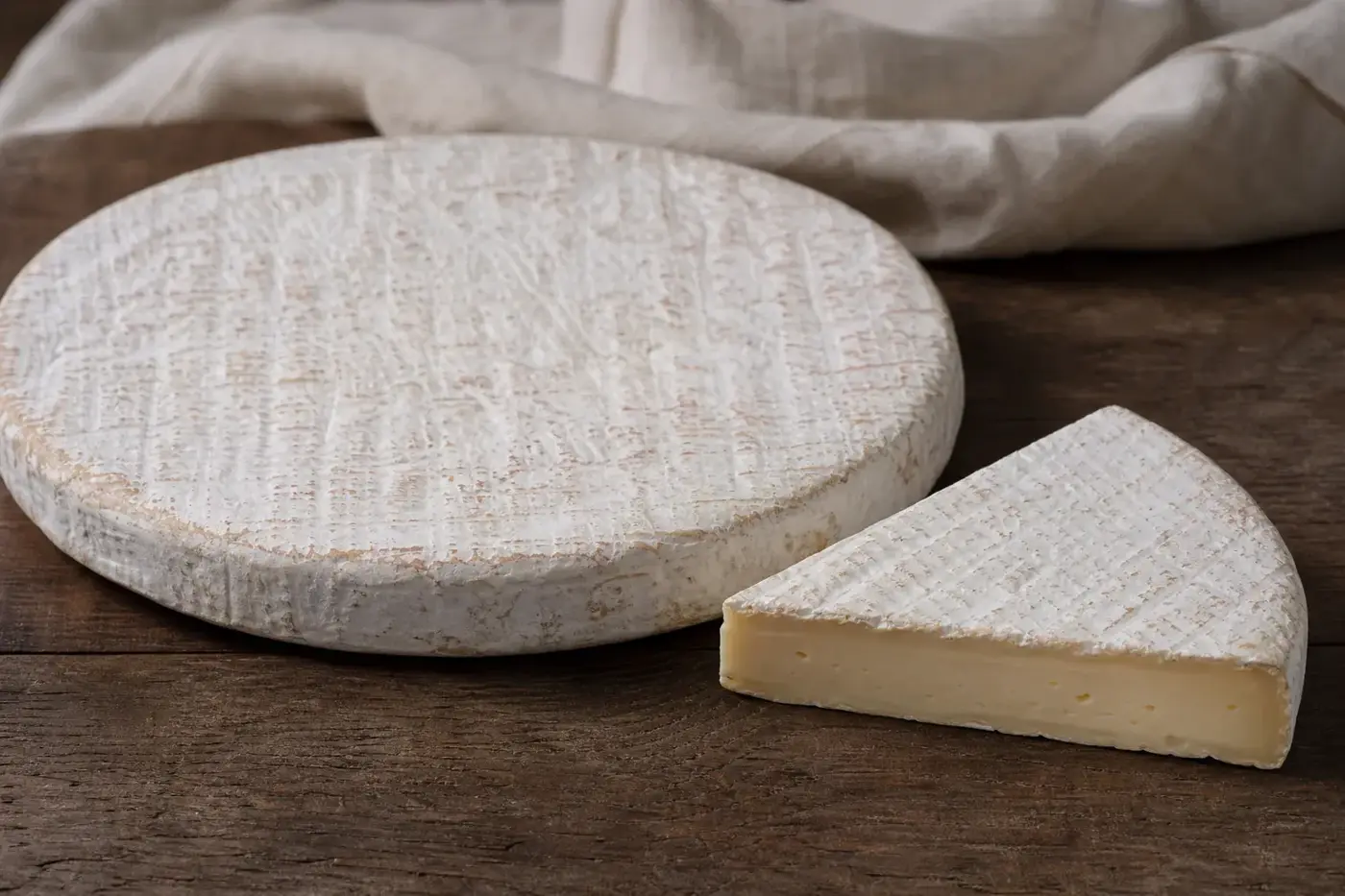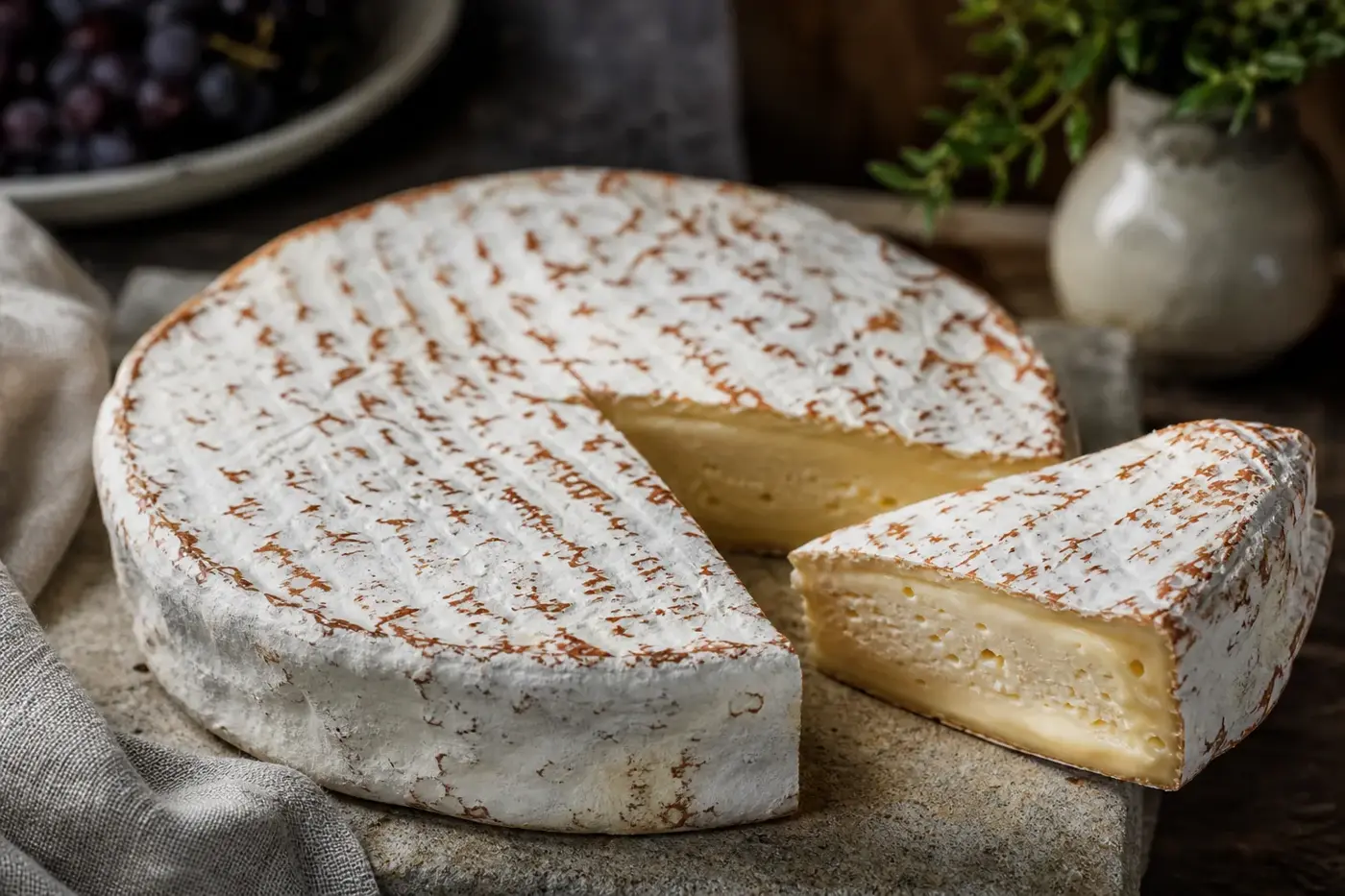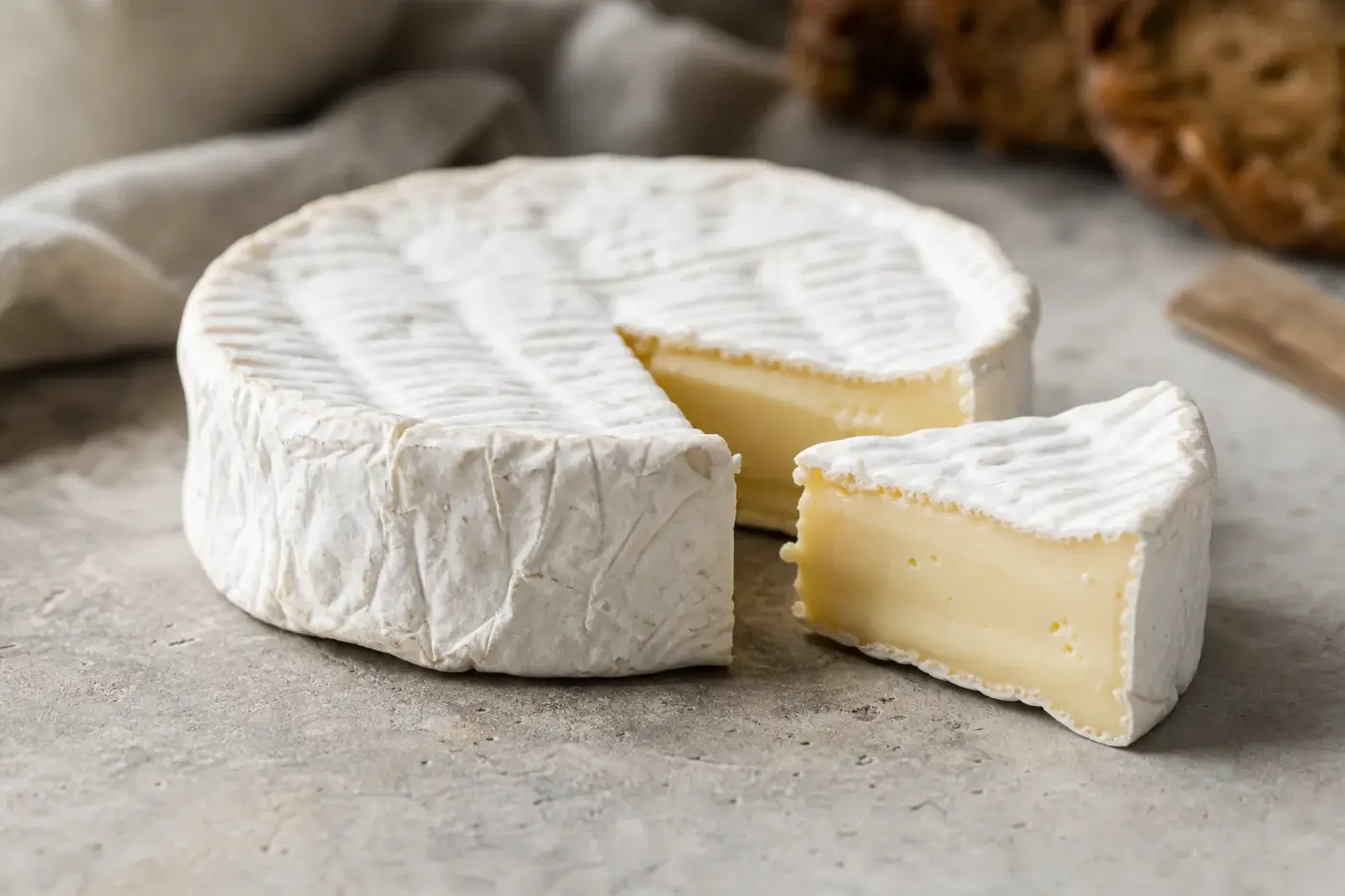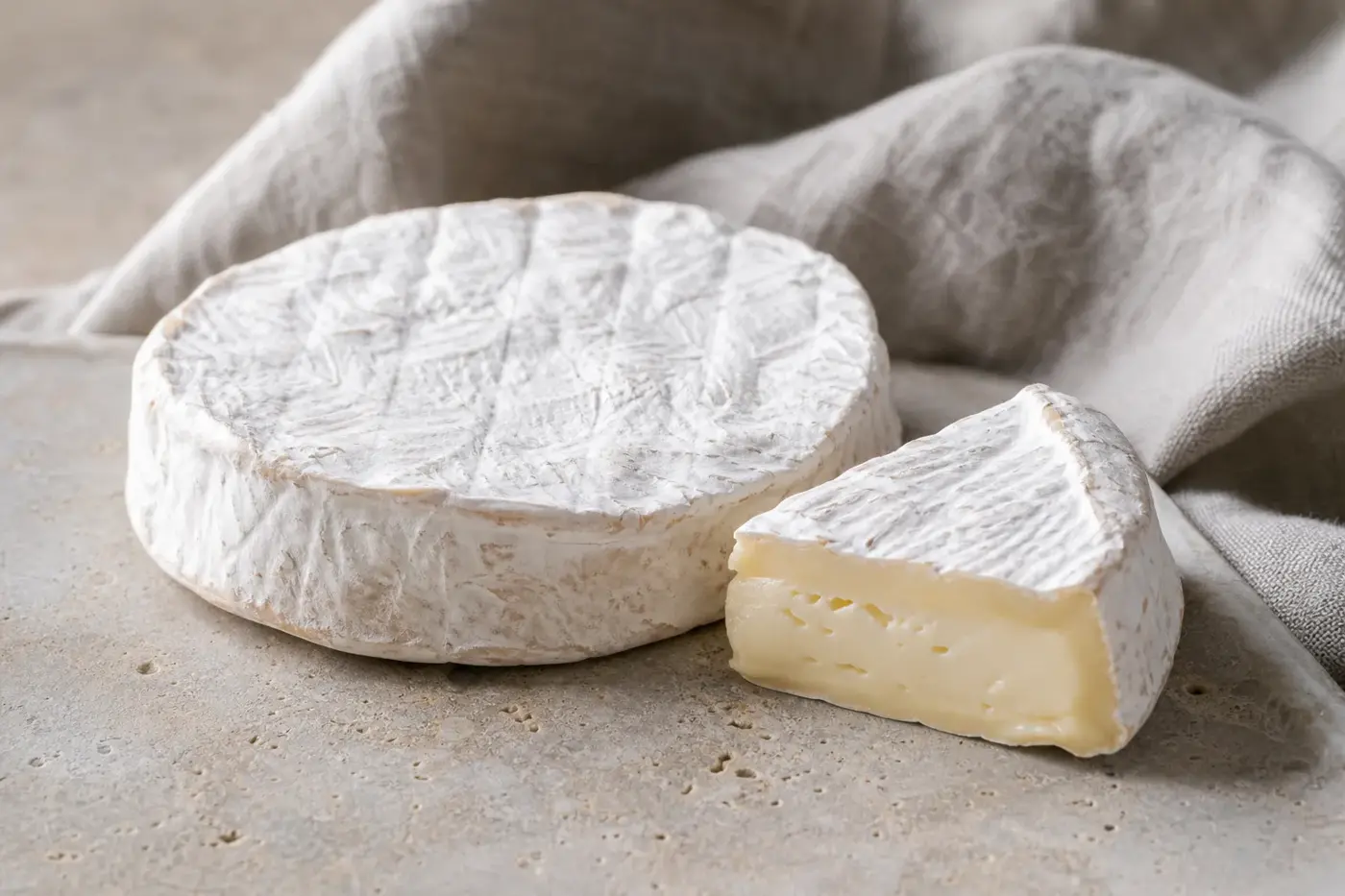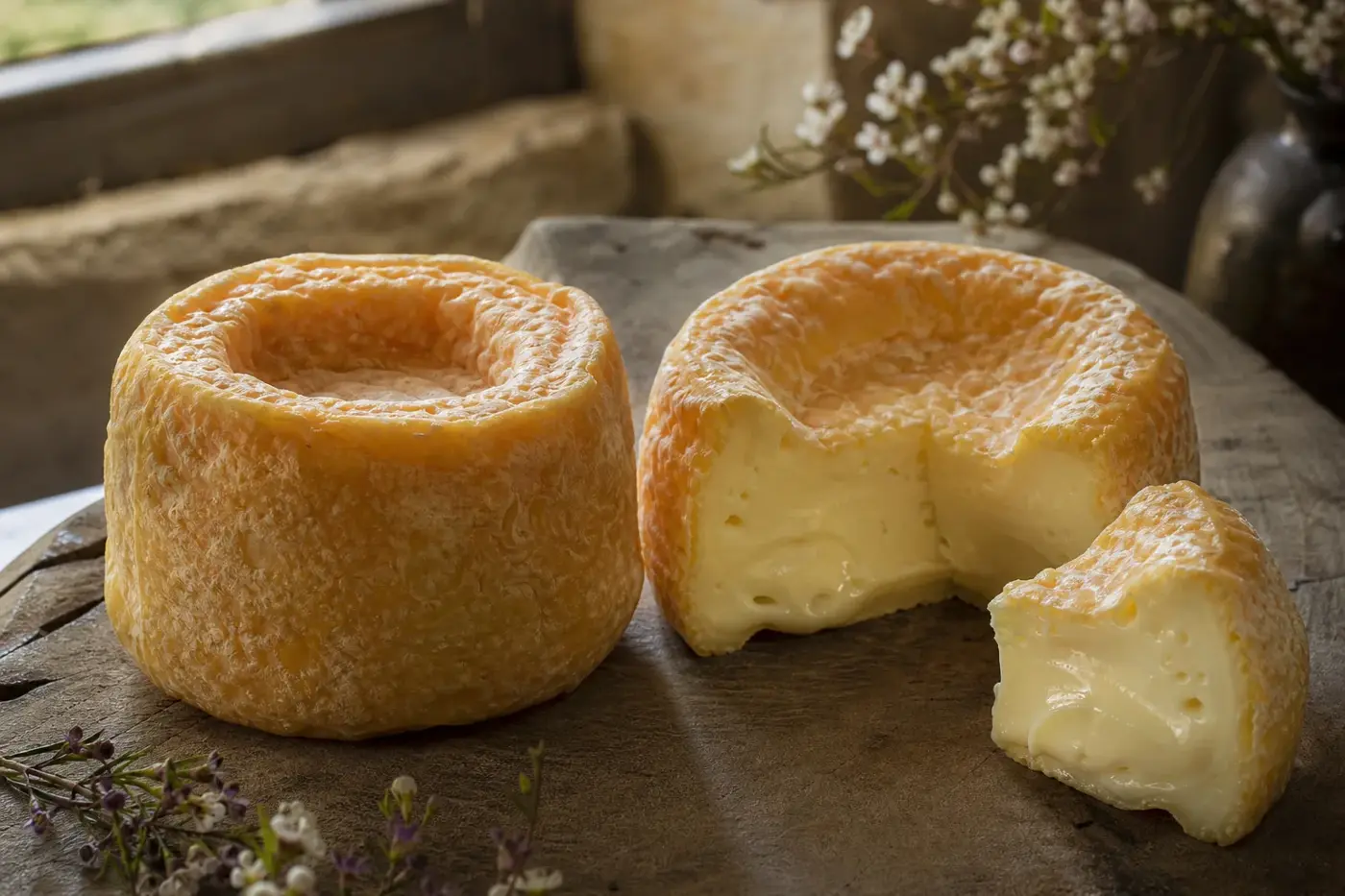
A few drops of Champagne settle into the hollow on top of a Langres. This little pool has a name, the fontaine, and it forms naturally as the French cow’s milk cheese drains and ripens with very little turning. Champagne or marc is sometimes added in a regional serving tradition; an orange washed rind surrounds the hollow, with soft paste beneath. A cheese with somewhere to put your Champagne is clearly thinking ahead. [1,3,8,9]
Langres is registered as a PDO in Great Britain. [2]
Your first look at Langres
| What you want to know | The details |
|---|---|
| Name | Langres [1,2] |
| Cheese style | Soft cow’s milk cheese with a washed rind [1] |
| EU protection | PDO, confirmed by INAO; original registration 21 June 1996 [1,2] |
| Great Britain protection | Registered PDO, 31 December 2020 at 23:00 [2] |
| Register identifier | Not supplied here |
| Home territory | Bassigny, the Langres plateau and surrounds, principally Haute-Marne [1] |
| Milk | Cow’s; industry sources list raw, thermised and pasteurised versions [8] |
| Ripening | Current legal minimum unspecified here; the 2011 amendment application records periods by format [3] |
| Rind | Washed; golden yellow to reddish brown [1] |
| Pregnancy guidance | UK NHS advice, November 2026 [6] |
Find Langres between Burgundy and Champagne
You find Langres in the grazing country of the Bassigny and on the plateau around the town that gives the cheese its name. INAO places these small agricultural regions between Burgundy and Champagne, predominantly in Haute-Marne. Here, the cheese’s connections with both regions make sense. Its home does not fit neatly into a single familiar wine region. [1]
The PDO, or protected designation of origin, keeps milk production, cheesemaking and ripening within a defined area. The EU single document describes territory taking in parts of Vosges and four communes of Côte-d’Or, as well as Haute-Marne. When you choose Langres, distinguish that specified production area from its broader cultural associations with Champagne and Burgundy. [1,3,9]
France recognised Langres as an appellation in 1991. Defra records its original EU registration as 21 June 1996 and its entry into the Great Britain scheme as 31 December 2020. AOP in French and PDO in English name the same category of geographical protection. If the initials leave you wondering, the guide to protected names helps untangle them. [1,2,11]
Get to know that hollow and glowing rind
Start at the top. The fontaine is a depression in the upper face of a short cylinder, sometimes slightly tapered. The EU product description specifies a hollow deeper than 5 mm and recognises three formats. The small individual cheese you might recognise from the counter is only one of them. [3]
| Format in the 2011 EU amendment application [3] | Cheese weight | Mould diameter |
|---|---|---|
| Small | 150 to 250 g | 7 to 8 cm |
| Medium | 280 to 350 g | 9 to 10 cm |
| Large | 800 to 1,300 g | 16 to 20 cm |
Those measurements are mould diameters, not finished cheese widths. Langres changes shape as it drains and matures, and you can see that process in its outline. The sides remain cylindrical while the upper surface settles towards the centre. There is your unmistakable hollow. [3,9]
Now look at the rind. INAO describes a smooth to lightly wrinkled surface, ranging from golden yellow to reddish brown. The producers’ syndicate explains that washing may include rocou, the plant colouring also called annatto. A pale orange Langres can look quite different from a darker, more mature cheese. [1,9]
This page summarises published guidance from the official sources it cites. It is not medical advice. Guidance differs between countries and changes over time, so check the current source for where you live, and ask your doctor, midwife, pharmacist or dietitian about your own circumstances.
Follow the milk into the mould
Langres starts with cow’s milk, but there is more to discover on the label. The French dairy AOP industry body lists raw, thermised and pasteurised versions. Thermisation is a heat treatment distinct from pasteurisation; milk treatments explains the differences. Ask the seller which treatment was used for the cheese in front of you. [8]
The syndicate’s production account begins with lactic cultures, followed by coagulation with cultures and rennet. This sets the milk into curd, the solid portion that becomes cheese. The curd is cut and placed in moulds, where liquid whey drains away naturally. Then the cheeses are unmoulded and salted. [9]
As ripening begins, attention turns to the surface. The syndicate describes hand washing, while the EU account identifies repeated saltwater washing as a defining stage. Here, washed rind means an exterior tended throughout maturation. It is not simply left to develop a dry surface. [3,9]
Discover the quiet work behind the fontaine
Nobody presses that hollow into place. The approved EU single document limits turning during draining to two occasions and links that practice directly to the fontaine. The syndicate also describes very limited turning during ripening, allowing the centre to subside. [3,9]
You are looking at a record of how the cheese has been handled and rested, not just a handy serving detail. At the counter, consider the hollow alongside the feel of the paste and the development of the rind. Ask about maturity, too. Appearance tells part of the story; texture helps complete it. [3,8,9]
Taste cream, yoghurt and a little more character
Think yoghurt and cream, with fruity, lactic flavours. That is how the French dairy AOP industry body describes Langres. Its account also records an animal aroma that can be intense, and a fine, yielding paste that softens without necessarily becoming runny. These give you useful starting points when asking for a particular maturity. [8]
As Langres ages, its animal character comes forward. The same industry account describes those flavours becoming more pronounced, while INAO notes the white paste becoming creamier. Choose a younger cheese for its yoghurt and fresh dairy side. For a more developed savoury, animal character, ask for greater maturity. [1,8]
Start with a small slice and notice the aroma before you bite. Then follow the texture: resistance at the centre, softer paste nearer the surface. Try separating what you smell from what you taste. Next time, you will have more to tell your cheesemonger than the cheese lover’s wonderfully elastic verdict, “strong”.
Shall you put Champagne in the fontaine?
A few drops of Champagne in the hollow is a serving suggestion from the French dairy AOP body. The Langres syndicate also describes cheeses treated with marc de Champagne or marc de Bourgogne. That treatment is different from adding Champagne at the table. [8,9]
For your first taste, leave the fontaine empty and try Langres plain. Keep any addition for a separate portion, so you can still recognise the cheese’s own flavour. This is an option, not an obligation. Tell guests when you have added alcohol, and reserve an untouched portion for anyone avoiding it.
Alcoholic pairings are for adults of legal drinking age, in small servings. During pregnancy, the UK NHS recommends avoiding alcohol. Choose an alcohol-free accompaniment and leave the fontaine unfilled. [7]
Have a good conversation at the cheese counter
Take three questions to the counter: which milk treatment was used, how developed is the cheese now, and when do you plan to eat it? If you are buying a cut portion, ask to see the label. “Ready for tomorrow’s meal” gives the seller more to work with than a request for the darkest rind or deepest hollow.
On a board of several cheeses, give Langres the washed-rind role. Several similar cheeses together can make their differences harder to appreciate. If your meal centres on Langres, ask the cheesemonger to describe the available cheeses side by side. Compare milk treatment, maturity and texture, rather than letting size or rind colour decide for you.
At home, follow the pack’s temperature and after-opening instructions. The Food Standards Agency’s guidance for England, Wales and Northern Ireland recommends a fridge between 0 and 5 °C and refrigeration of dairy products. Observe the use-by date and keep the cheese protected in its packaging as directed. The home storage guide covers broader handling questions. [5]
Make a little room for Langres at the table
Shortly before the meal, take out only the portion you intend to serve. Let it lose its refrigerator chill while you prepare the bread and plates, keeping track of time. FSA guidance for England, Wales and Northern Ireland says chilled food should spend the shortest possible time outside refrigeration, with a maximum of four hours during preparation. Follow any stricter pack instructions. [5]
Cut wedges from the centre towards the outside, as the dairy AOP body advises. [8] On a shared board, leave a little space around Langres and give it its own knife. You will find the soft cheese easier to portion neatly. Guests can choose how much they want without crowding the other cheeses.
Bring good bread, crisp fruit and something to sip
Wholemeal or cereal bread are the dairy AOP body’s recommendations. Its suggested accompaniments include brut Champagne, dry white Burgundy, amber beer and apple juice. [8] Start simply with plain bread, a few slices of apple or pear, and one drink. The fruit gives you a fresh, crisp contrast to the soft paste without making every bite sweet.
For an alcohol-free table, put apple juice alongside water so everyone can alternate. With Champagne, taste the cheese and wine separately before trying them together. Keep bread, fruit and drinks alongside, rather than piling anything over the cheese. You can explore a combination, then return to a plain bite of Langres.
Langres or Époisses: follow your appetite
Langres and Époisses are both soft, washed-rind cow’s milk cheeses. The French dairy AOP body lists raw, thermised and pasteurised versions of each. Both might tempt you for the same place on a cheese board. Its flavour descriptions, though, give you clear reasons to choose one over the other. [8,10]
For Langres, it emphasises yoghurt and cream, fruitiness and animal flavours that grow more pronounced with age. Its Époisses account adds woodland and dried-fruit notes, alongside a creamy, yielding paste. Choose according to the individual cheese’s maturity and the character you enjoy. For a quick visual distinction, look for the fontaine on Langres. [1,8,10]
Choosing during pregnancy: begin with the label
UK NHS guidance advises pregnant people not to eat soft cheeses made from unpasteurised milk unless cooked until steaming hot. It also advises against mould-ripened soft cheeses with a white outer coating, whether made from pasteurised or unpasteurised milk, unless cooked until steaming hot. Hard cheeses made from unpasteurised milk are listed among cheeses that can be eaten during pregnancy. This guidance is dated November 2026. [6]
If you are asking about a pasteurised or thermised Langres, take the individual label to your midwife or other healthcare professional. Consult the NHS pregnancy guidance for the current UK wording. For the wider handling context, Listeria and cheese safety considers both milk treatment and subsequent food handling.
Questions people ask
Where does Langres come from?
Langres comes from Bassigny and the plateau around the town of Langres, predominantly in Haute Marne. Its protected production area also includes parts of Vosges and four communes of Côte d’Or.
Is Langres made from pasteurised milk?
Langres is made from cow’s milk and can be made with raw, thermised or pasteurised milk. Check the individual label or ask the seller which treatment was used.
What does Langres taste like?
Langres is described as fruity and lactic, with flavours recalling yoghurt and cream. Its animal flavours become more pronounced as it matures.
Can I eat Langres during pregnancy?
The UK NHS advises pregnant people not to eat soft cheeses made from unpasteurised milk unless cooked until steaming hot. For a pasteurised or thermised Langres, the page suggests taking the individual label to your midwife or another healthcare professional. See the NHS pregnancy guidance for the current UK advice.
How should I store Langres?
Follow the pack’s temperature and after opening instructions, observe the use by date and keep the cheese protected in its packaging as directed. The Food Standards Agency recommends refrigerating dairy products and keeping the fridge between 0 and 5 °C in England, Wales and Northern Ireland.
Sources
-
Institut national de l’origine et de la qualité, Langres, undated product record, accessed November 2026. Product identity, appearance, territory and French recognition. Official product record.
-
Department for Environment, Food & Rural Affairs, Langres, protected food name register entry, published 4 January 2021, accessed November 2026. Registered name, GB status and recorded registration dates. Register entry.
-
European Commission, Publication of an amendment application pursuant to Article 6(2) of Council Regulation (EC) No 510/2006 on the protection of geographical indications and designations of origin for agricultural products and foodstuffs, 2011/C 247/06, 25 August 2011. Langres amendment application and single document, particularly sections 3.2, 4 and 5. Official Journal document.
-
European Commission, Règlement d’exécution (UE) n° 762/2012 de la Commission du 24 juillet 2012 approuvant une modification non mineure du cahier des charges d’une dénomination enregistrée dans le registre des appellations d’origine protégées et des indications géographiques protégées [Langres (AOP)], published 23 August 2012. Official Journal regulation.
-
Food Standards Agency, How to chill, freeze and defrost food safely, published 18 December 2017, accessed November 2026. Applies to England, Northern Ireland and Wales. Official guidance.
-
NHS, Foods to avoid in pregnancy, live guidance accessed November 2026, section “Cheese, milk and other dairy”. Official pregnancy guidance.
-
NHS, Drinking alcohol while pregnant, reviewed 13 March 2023, accessed November 2026. Official alcohol guidance.
-
Produits laitiers AOP, Langres, undated dairy industry promotional reference, accessed November 2026. Milk treatments, sensory descriptions, cutting, accompaniments and Champagne tradition. Its commercial interest is promoting dairy AOP products. Industry reference.
-
Syndicat interprofessionnel du fromage de Langres, AOP Fromage de Langres, undated producer-group website, accessed November 2026. Production account, fontaine formation, rocou and marc traditions. The syndicate represents the cheese’s producers. Producer-group account.
-
Produits laitiers AOP, Epoisses, undated dairy industry promotional reference, accessed November 2026. Attributed comparison of milk treatments and sensory character. Industry reference.
-
European Commission, Geographical indications and quality schemes explained, live explanatory guidance accessed November 2026. PDO terminology and geographical production requirements. Official explanation.
-
Food Standards Agency, Alerts, live official alert index accessed November 2026. Publication checks are recorded below. Official alert index.
This desk-researched article brings together official designation records, the published EU single document, attributed industry descriptions and official consumer guidance.
Last checked: November 2026
Last checked November 2026.
The editors suggest you read next