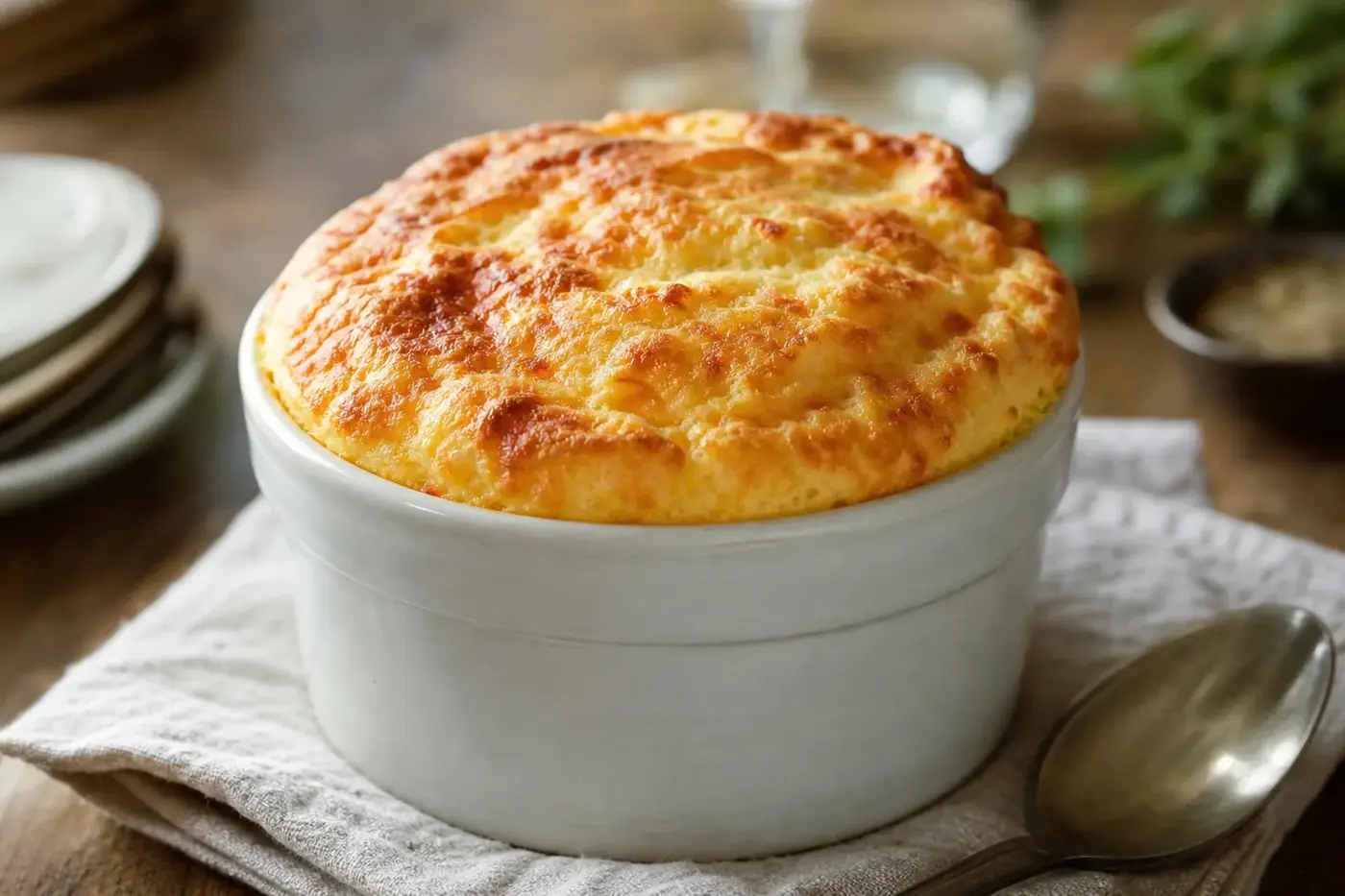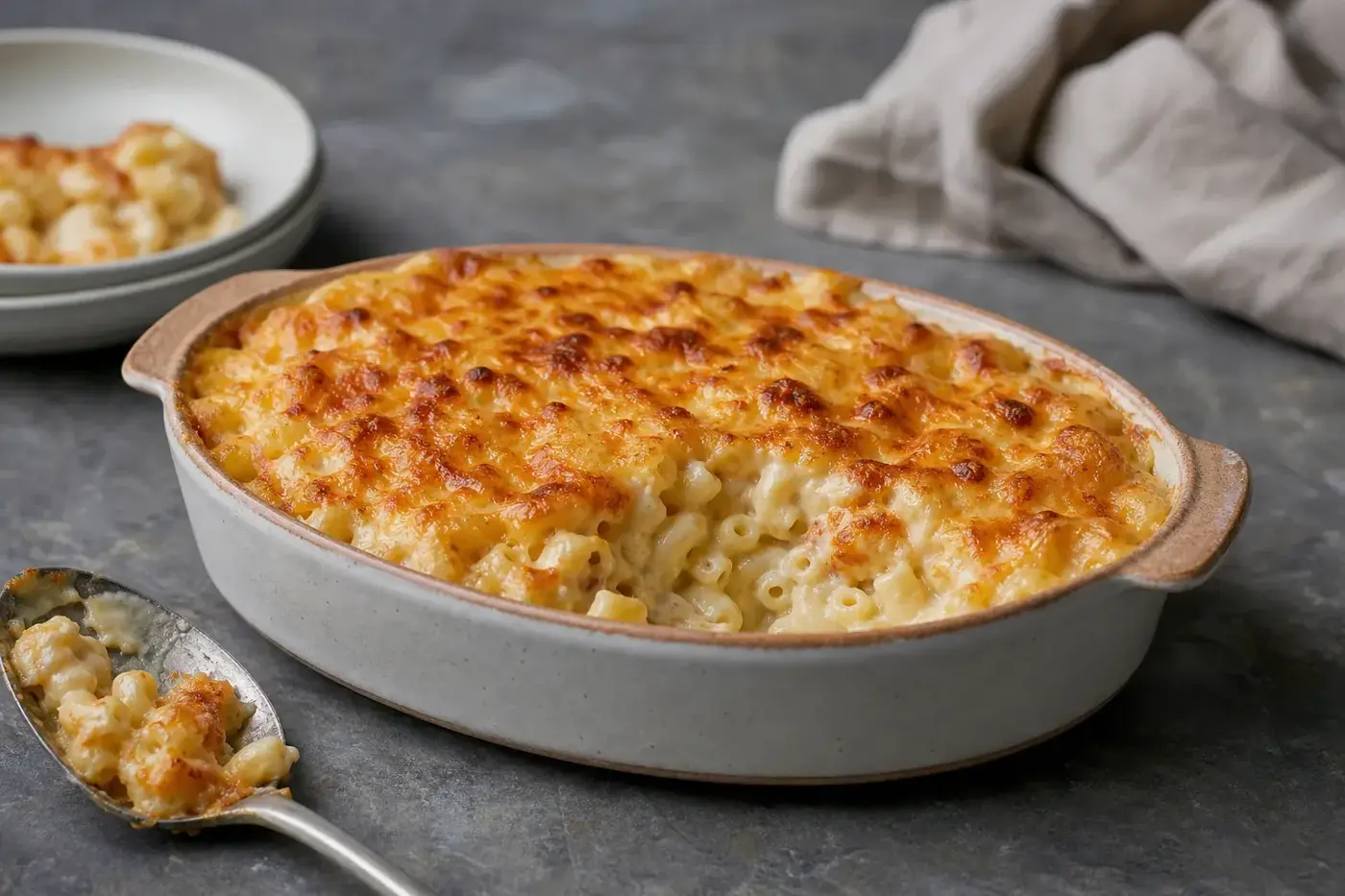
Your spoon cracks the golden crust. Beneath it, soft macaroni sits snugly in its sauce: the little contrast that makes a good bake worth waiting for. Mature Cheddar brings the flavour, while a properly thickened white sauce stays smooth when you stir in the cheese away from direct heat. A short spell in the oven finishes the top without drying the middle. [1][2]
Before the oven, a place by the fire
Open the 1861 Book of Household Management and you’ll find macaroni layered with grated Parmesan or Cheshire cheese, butter and breadcrumbs. Recipe 1645 sends it before a fire, or under a salamander, a tool that applies heat from above, to brown the surface. You might recognise the instruction to preserve the pasta’s shape. The cooking times belong to a different kitchen and different pasta. [3]
Another version in the same book calls for egg yolks and cream. Nineteenth-century British cooks already had several ways with macaroni and cheese; today’s flour-thickened sauce is part of that longer story. These recipes give you a published record, not an inventor. Publication dates alone cannot tell you where the combination began. [3]
Let mature Cheddar lead the way
British mature Cheddar does the main work here. Good Food’s baked macaroni recipe uses mature Cheddar too, while its cheese sauce recipe recommends strong Cheddar, stirred in gradually off the heat. You’re after a proper cheese flavour without sacrificing a smooth sauce. [1][2]
Prefer a gentler mouthful? Replace 75 g of the Cheddar with mild Cheddar or Double Gloucester. This suggested blend keeps most of the mature cheese’s contribution but softens its prominence. Check each cheese’s vegetarian suitability if that matters to you.
The strongest cheese is not automatically the smoothest melter. Melting involves liquefying fat and changes in the protein structure. Research on processed cheese made with differently matured Cheddar blends found that the blend affected both flow and the release of free oil. Age matters, but it does not tell the whole story. [4]
Grate from a block where practical. A dairy industry technical manual identifies excessive anti-caking treatment as one possible restriction on shredded cheese’s flow during heating. Your grater has a useful job here, beyond supplying the cook’s customary nibble. [5]
A golden dish for four
Recipe status: adapted from Good Food’s baked macaroni cheese and cheese sauce methods; not independently tested by fromage.co.uk. The all-Cheddar topping, metric roux quantities and additional milk are adaptations. [1][2]
Serves: four
Preparation: approximately 15 minutes
Cooking: approximately 35 to 40 minutes, including the hob stages
Oven: 200 °C conventional, 180 °C fan (400 °F conventional)
Equipment: large saucepan, medium heavy-based saucepan, colander, whisk, grater and an approximately 2 litre ovenproof dish.
Get everything ready by the hob
- 300 g (10.6 oz) dried macaroni
- 40 g (1.4 oz) unsalted butter
- 40 g (1.4 oz) plain flour
- 650 ml (22 US fl oz) whole milk, plus a little extra if needed
- 250 g (8.8 oz) mature Cheddar, grated
- 50 g (1.8 oz) mild Cheddar, grated, for the topping
- 2 g (0.07 oz) English mustard powder, optional
- 30 g (1.1 oz) breadcrumbs, optional
- Black pepper
- Salt for the pasta water, with any further seasoning added after tasting
Keep that extra milk within reach to loosen the mixture before baking. Check the consistency before you fill the dish, and add more only if it needs it.
Stir, scatter and bake
-
Heat the oven. Bring a large pan of water to the boil, season lightly and cook the macaroni for two minutes less than its packet instructions. Drain it. Good Food uses this shorter cooking stage before baking. [1]
-
Melt the butter over a moderate heat. Stir in the flour and optional mustard powder, then cook, stirring, for about one minute without browning. This is your roux: the butter-and-flour paste that starts the sauce. [1]
-
Whisk in the milk gradually, smoothing out each addition before pouring in more. Bring to a gentle simmer and cook for about five minutes until thickened. Keep stirring across the bottom and into the corners. [1]
-
Take the pan off the heat. Add the mature Cheddar in several batches, stirring until melted, then taste before adding pepper or salt. You want a sauce that pours readily, rather than sitting in a stiff mound. [2]
-
Fold in the drained macaroni. If the mixture looks tight, stir in a little extra milk. Spoon it into the dish and scatter over the mild Cheddar and optional breadcrumbs.
-
Bake for approximately 20 minutes, until golden and bubbling. Before serving, check that the centre is steaming hot, following the Food Standards Agency’s guidance for cooked dishes in England, Wales and Northern Ireland. [1][6]
Judge the finished dish, especially its centre, rather than trusting the cooking times alone. For cooling and reheating, follow the official guidance in the storage section below.
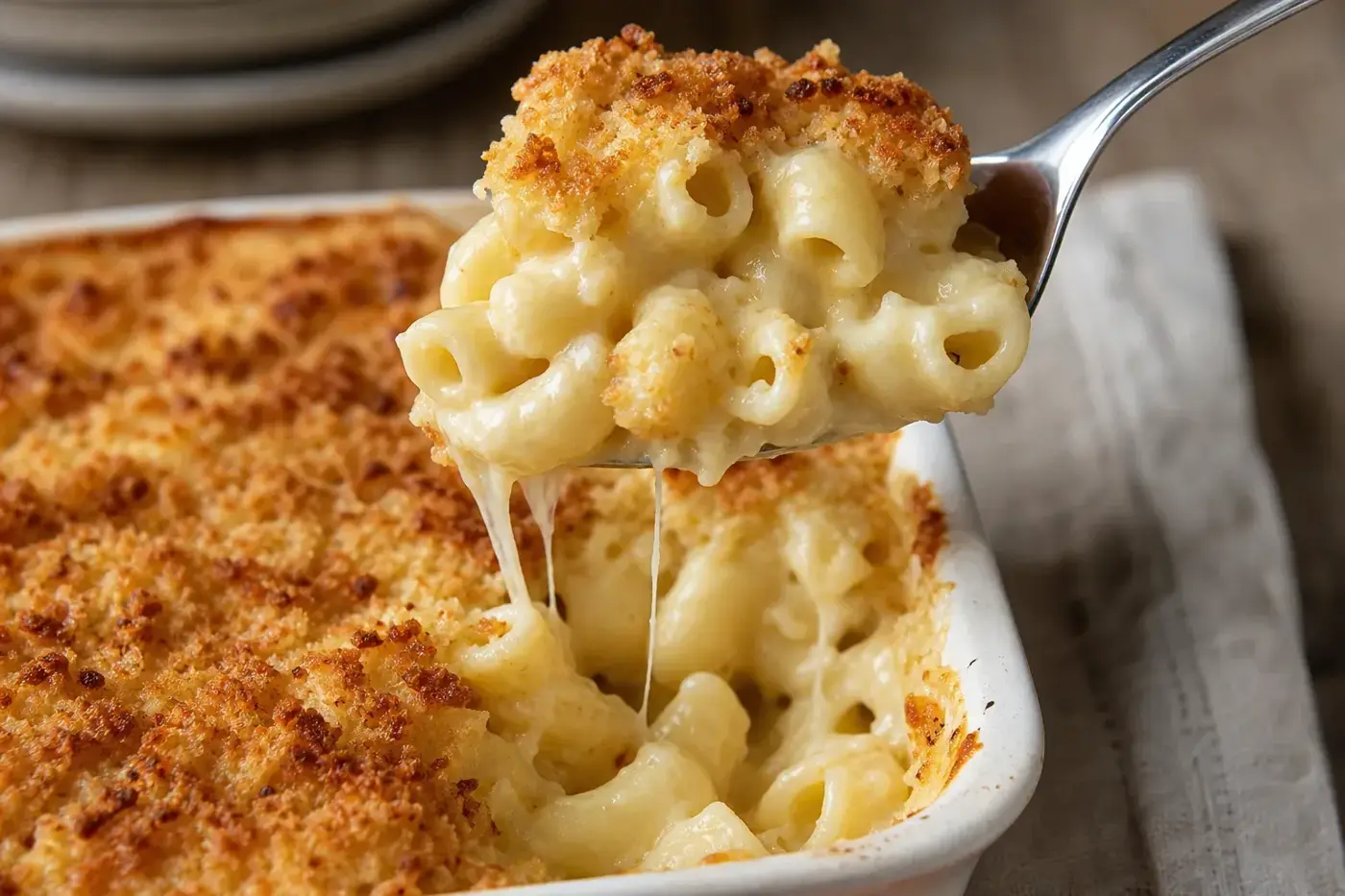
Give your macaroni a little bite
Stop boiling while the pasta still offers some resistance. Another cooking stage lies ahead, so reducing the packet time by two minutes is a useful starting point. Follow the instructions for your particular macaroni rather than giving every shape and brand the same boiling time. [1]
Taste a piece before draining: you want a firm centre, not a hard, brittle core. If it is already completely soft, shorten the final bake to the time needed to heat and brown the dish, checking the centre thoroughly. Have your sauce ready so the drained macaroni can go straight in.
Take your time with the sauce
Add the milk gradually, while you can still work out any lumps easily. Sweep your whisk across the base and around the sides. Even a smooth-looking surface can hide flour tucked into a corner.
Once the white sauce is ready, take the pan away from direct heat before adding the cheese. Give it patient stirring rather than returning it straight to a strong flame. Good Food recommends adding cheese gradually off the heat and warns that boiling the finished sauce can make it stringy or grainy. [2]
Spot little grains or a slick of oil? Stop heating rather than turning up the heat, and stir gently. A small addition of milk may improve the consistency, but you cannot rely on it to repair the sauce.
Send plenty of sauce into the oven
Before you add the pasta, the sauce should coat a spoon but still run from it easily. Once mixed, the macaroni should move readily as you fold it. You should be able to see sauce between the pieces.
If the mixture already holds its shape firmly in the saucepan, loosen it before baking. Good Food’s test kitchen advises keeping the sauce loose because the pasta absorbs some during its time in the oven. Leave enough for the finished dish, not just the saucepan stage. [1]
Spread the macaroni in the dish without pressing it down. Aim for a lightly browned surface rather than crisping every exposed piece. If the topping colours before the centre is thoroughly hot, cover loosely and keep checking the middle. A browned top and a hot centre are two separate checks.
Find your favourite finishing touches
Mustard is optional; let the cheese lead. Start with the measured amount, then decide whether your next batch needs more. Good Food’s cheese sauce guidance also suggests mustard and a small pinch of nutmeg. [2]
Breadcrumbs sharpen the contrast between the topping and the soft sauce beneath. Scatter a thin layer, leaving some cheese visible. You’re making a topping, not concealing the evidence.
You can fold in cooked, well-drained leeks or broccoli before baking. Keep the quantity modest, so you still have macaroni cheese rather than a crowded vegetable bake. Serve particularly juicy vegetables alongside, where their liquid cannot alter the sauce. These additions and serving ideas are suggestions rather than part of the adapted recipe.
Make it vegetarian or gluten-free
For a vegetarian version, choose cheeses explicitly labelled suitable for vegetarians, or ask the maker to confirm the coagulant used. Remember both the main cheese and the topping. The rennet explanation takes you through the distinction between animal, microbial and fermentation-produced coagulants.
For gluten-free cooking, choose macaroni and breadcrumbs labelled gluten-free. Use a gluten-free flour blend whose manufacturer gives instructions for thickening a white sauce, and follow them. These blends do not all behave like wheat flour.
Check the mixture’s consistency before baking, just as you would for the standard recipe. Follow your gluten-free pasta’s own cooking instructions and check its texture early.
In England, Wales and Northern Ireland, the FSA advises checking ingredient information and managing cross-contamination when preparing food for someone with an allergy or other food hypersensitivity. Include mustard, seasonings and every replacement ingredient in those checks. Small ingredients count too. [8]
Bring something fresh to the table
A sharply dressed green salad, steamed green beans or simply cooked broccoli gives you a fresh accompaniment. Keep the seasoning plain. If you enjoy the contrast, bring vinegar or lemon into the dressing.
To drink, try sparkling water with lemon, unsweetened iced tea or an alcohol-free apple drink with some acidity. These serving and pairing suggestions offer a change from the warm, cheese-coated pasta. You need not match its richness in the glass or alongside it.
This page summarises published guidance from the official sources it cites. It is not medical advice. Guidance differs between countries and changes over time, so check the current source for where you live, and ask your doctor, midwife, pharmacist or dietitian about your own circumstances.
Save tomorrow’s portion safely
For England, Wales and Northern Ireland, FSA guidance dated November 2026 advises cooling leftovers as quickly as possible, ideally within one to two hours, then putting them in the fridge. Divide your macaroni cheese into smaller containers to help it cool. Keep the fridge at 5 °C (41 °F) or below, and eat leftovers within 48 hours or freeze them. [7]
For England, Wales and Northern Ireland, the FSA advises reheating leftovers only once, until steaming hot throughout. Reheat only the portion you need. In a microwave, stir the food and follow the appliance’s standing instructions. [6]
For Scotland, Food Standards Scotland similarly advises cooling leftovers quickly, ideally within one to two hours. Refrigerate at 0 °C to 5 °C, use within two days and reheat only once until steaming hot throughout. [9]
A little milk can loosen refrigerated macaroni cheese as you reheat it. That changes the texture, not the storage limit.
Know what goes into your dish
The standard recipe contains milk in the butter, milk and cheese, and wheat in ordinary pasta, flour and breadcrumbs. Optional mustard adds mustard. Check the pasta label for egg, and read every ingredient label for other allergens and precautionary statements. The FSA includes milk, cereals containing gluten, eggs and mustard among its regulated allergen categories. [8][10]
For your individual dietary requirements, follow the relevant official advice and your healthcare professional’s guidance. The cheese allergy and lactose intolerance guide explains those separate subjects.
Questions people ask
How long should I cook macaroni before baking it?
Cook it for two minutes less than the packet instructions suggest, then drain it. The recipe bakes it for approximately 20 minutes, until golden and bubbling.
How do I stop macaroni cheese sauce becoming grainy?
Take the white sauce off the heat and stir in the grated cheese gradually. Good Food warns that boiling the finished sauce can make it stringy or grainy.
Can I make macaroni cheese vegetarian?
Choose cheeses labelled suitable for vegetarians, or ask the maker to confirm which coagulant is used. Check both the cheese in the sauce and the topping.
Can I make macaroni cheese without gluten?
Use macaroni and breadcrumbs labelled gluten free. Choose a gluten free flour blend whose manufacturer provides instructions for thickening a white sauce, and follow those instructions.
How should I store and reheat leftover macaroni cheese?
For England, Wales and Northern Ireland, the Food Standards Agency advises cooling leftovers quickly, ideally within one to two hours, refrigerating at 5 °C or below, and eating them within 48 hours or freezing them. It advises reheating leftovers only once, until steaming hot throughout. For Scotland, see Food Standards Scotland guidance, which advises refrigerating at 0 °C to 5 °C and using leftovers within two days.
Sources
- Good Food. Best ever macaroni cheese recipe. January 2009 recipe, current retrieved version. Baking temperature, shortened pasta cooking, roux method, off-heat cheese addition and loose sauce guidance. Source.
- Good Food. Cheese sauce. Undated, current retrieved version. Strong Cheddar, gradual off-heat addition, graininess and optional seasonings. Source.
- Project Gutenberg. The Book of Household Management. Original work published 1861, electronic transcription, recipes 1645 and 1646. Source.
- ICAR-National Dairy Research Institute researchers. An assessment of the intact casein content in natural cheddar cheese to determine its suitability in processed cheeses with desired properties. Journal of Food Science and Technology, February 2023. Source.
- US Dairy Export Council. Reference Manual for U.S. Cheeses. Retrieved edition, technical guide 8.4, “Cooking and melting guide”. Industry technical publication. Source.
- Food Standards Agency. Cooking your food. GOV.UK publication dated 18 December 2017, current retrieved text, particularly sections 2 and 7. Applies to England, Wales and Northern Ireland. Source.
- Food Standards Agency. How to chill, freeze and defrost food safely. GOV.UK publication dated 18 December 2017, current retrieved text, section 1. Applies to England, Wales and Northern Ireland. Source.
- Food Standards Agency. Food allergy and intolerance advice for consumers. Updated 7 August 2026. Applies to England, Wales and Northern Ireland. Source.
- Food Standards Scotland. Cooking food. Undated, current retrieved version, “Leftovers”. Source.
- Food Standards Agency. 14 Allergens. November 2021 document. Ingredient examples for milk, wheat, eggs and mustard. Source.
Researched through published cookery methods, a digitised historical cookbook, dairy research and official food safety guidance, with editorial adaptations identified separately.
Last checked: November 2026
Last checked November 2026.
The editors suggest you read next