Mons Fromager-Affineur
Step inside the converted railway tunnel at Ambierle and you enter a different sort of timetable: six months to more than two years.
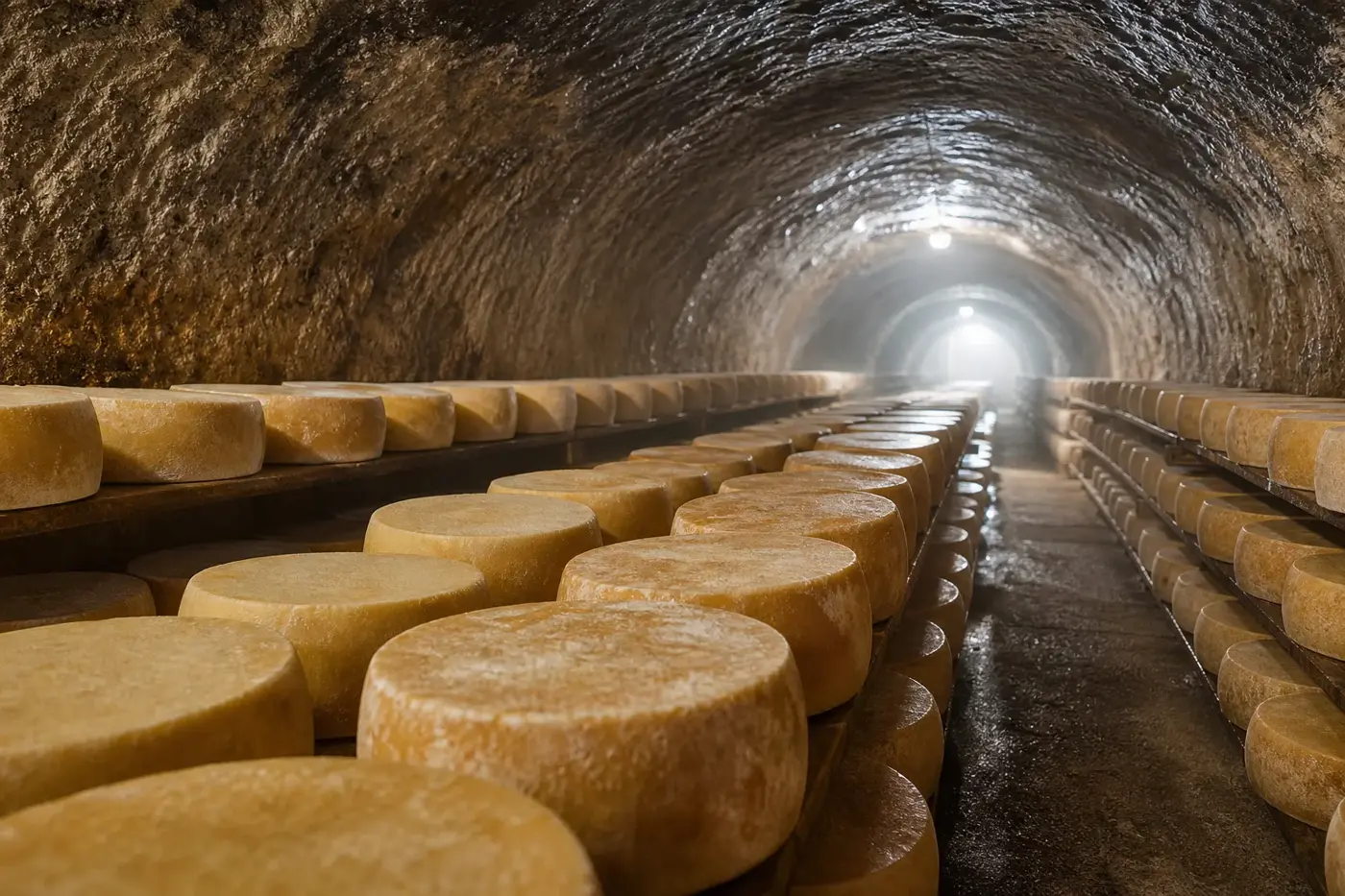
Step inside the converted railway tunnel at Ambierle and you enter a different sort of timetable: six months to more than two years. The cheeses are in no hurry, and neither is Mons. Here, in a network of cellars in France's Roanne region, this family business gives other makers' cheeses the surroundings and daily care they need to mature, alongside cheeses from its own dairies. [4][5][6]
Your quick introduction to Mons
- Founded: 1960s, according to the company's history. [1]
- Base: Saint-Haon-le-Châtel, Loire, France. [3]
- Work: choosing cheeses, maturation, retail, professional supply and training. [1][7][8]
- French maturation sites: Saint-Haon-le-Châtel, Sauvain and the Tunnel de la Collonge at Ambierle. [1]
- Advertised services, November 2026: retail and professional services. [2][8]
Three generations, starting at the market
Picture the markets around Roanne in the 1960s, where a husband and wife began selling cheese. The Mons story starts there, at the market stall. The company's current French history gives you the decade rather than a precise founding year. [1]
In 1983, their elder son opened the Halles Diderot shop in Roanne. Alongside it, he developed the search for producers and the facilities to mature their cheeses. Finding good cheese and helping it ripen became two parts of the same job. [1]
The UK business's account describes the two sons dividing responsibility between the shop and cheese ripening, while exports grew alongside the cellars. Today, the French website identifies the founders' grandson as taking the lead, working with producers, affineurs and the wider team. The other second-generation brother heads Mons Formation. [1][2][7]
Seeing the cheese it could become
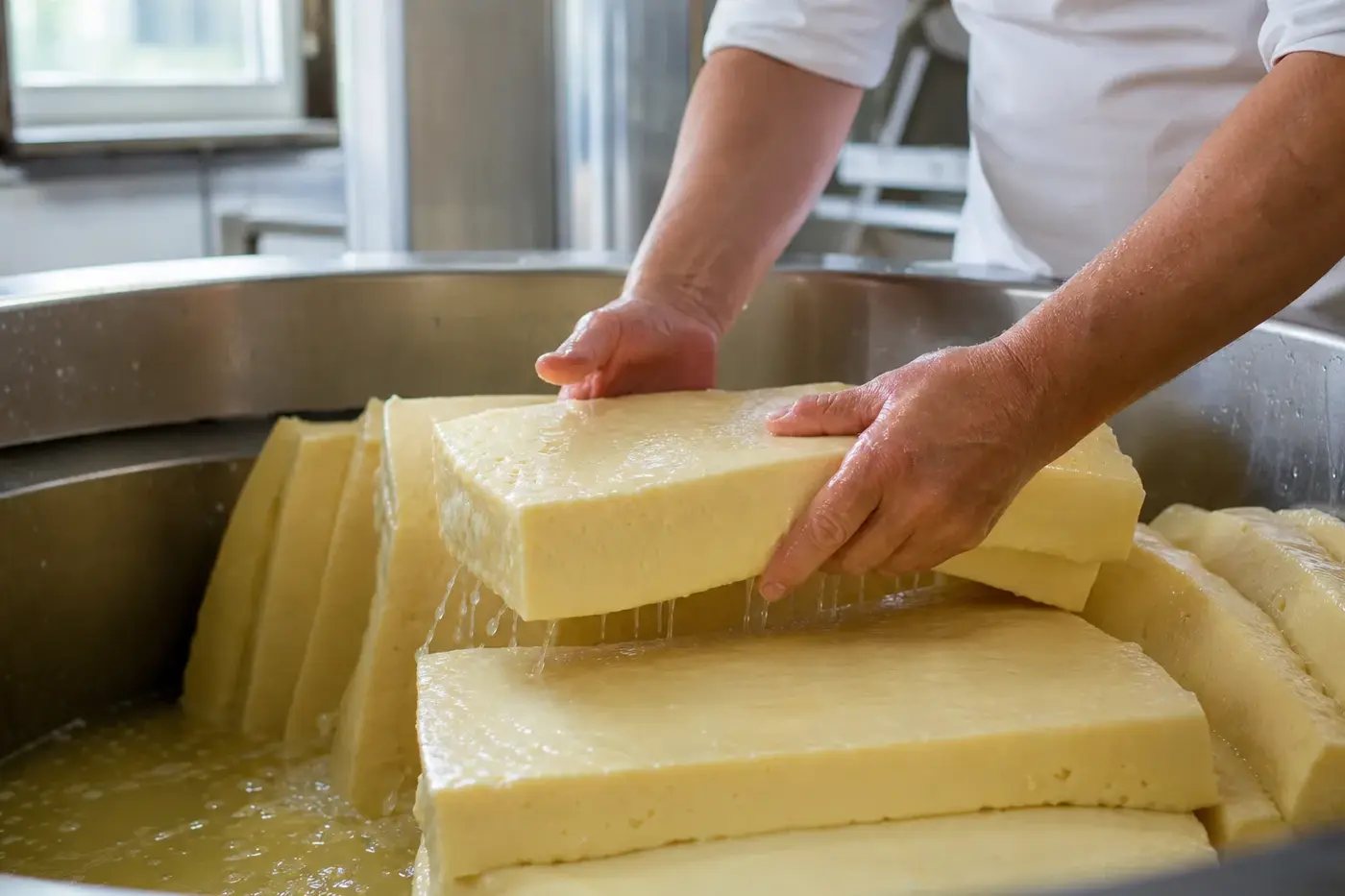
When you buy from an affineur, you are buying judgement as well as cheese. The affineur decides how it should develop, cares for it through maturation and judges when it is ready. Before any of that, the cheesemaker turns milk into curd, the coagulated solids separated from whey, establishing the cheese's composition and structure. [10]
Affinage develops that starting material through climate, time and handling. Mons describes choosing cheeses for their seasonality and the maturation they need, then controlling temperature, humidity and ventilation. The question is not simply how a cheese looks on arrival, but what it could become. [3][10]
Want to follow the story back beyond the cellar door? Start with how cheese is made.
Good cheese begins with the makers
Mons says its selection comes mainly from raw-milk cheeses made by small farmhouse or artisan producers. That is a sourcing preference, not a description of everything on its counters. For the cheese in front of you, ask who made it, when it was made and what maturation it has had since. [3]
The company's account puts daily work with producers alongside work with cellar staff. Add its seasonal selection policy, and this becomes something more involved than buying finished stock. The cheese and the conditions waiting for it need to suit each other. [1][3]
Into the cellars, then down the railway tunnel
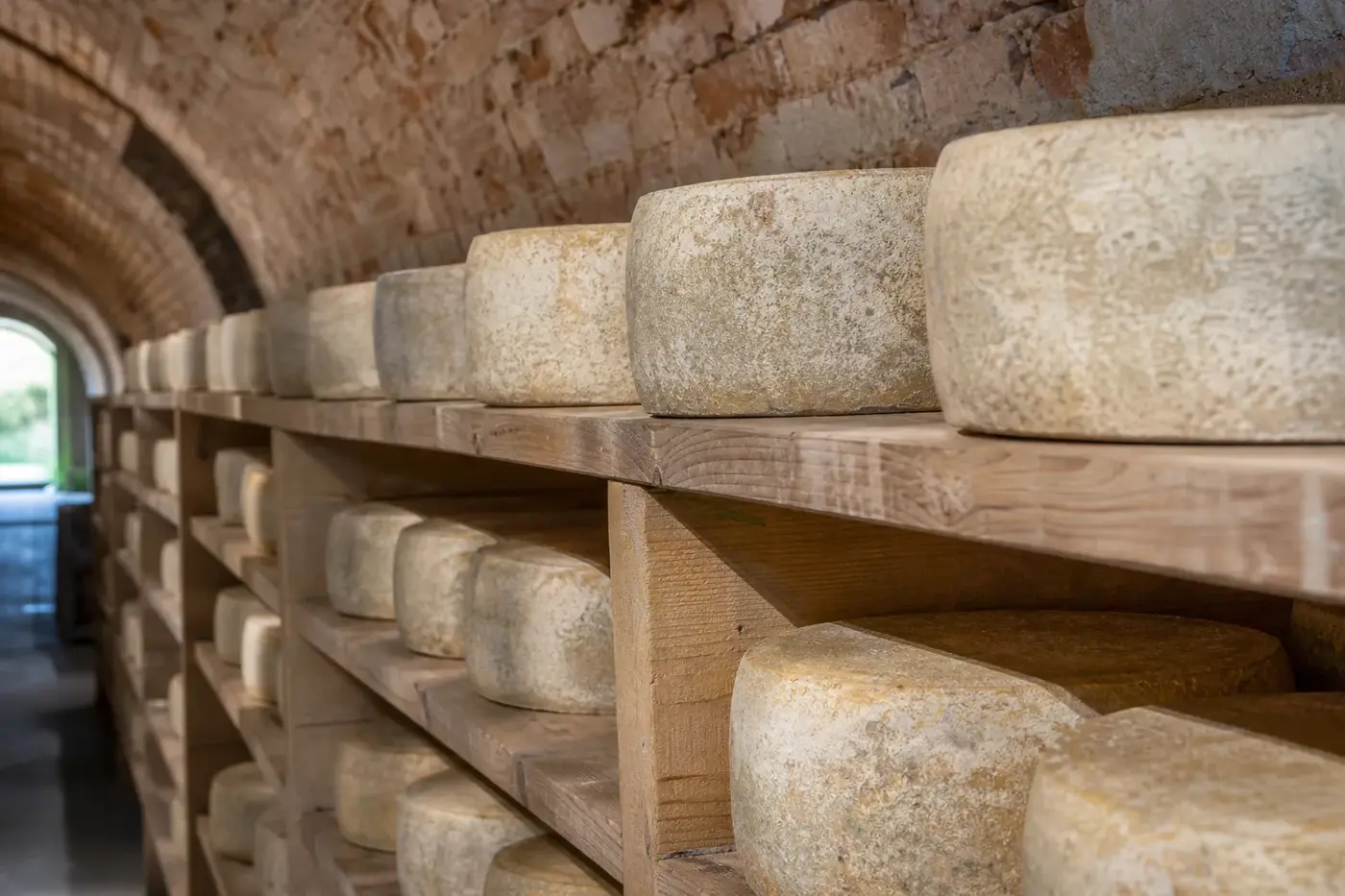
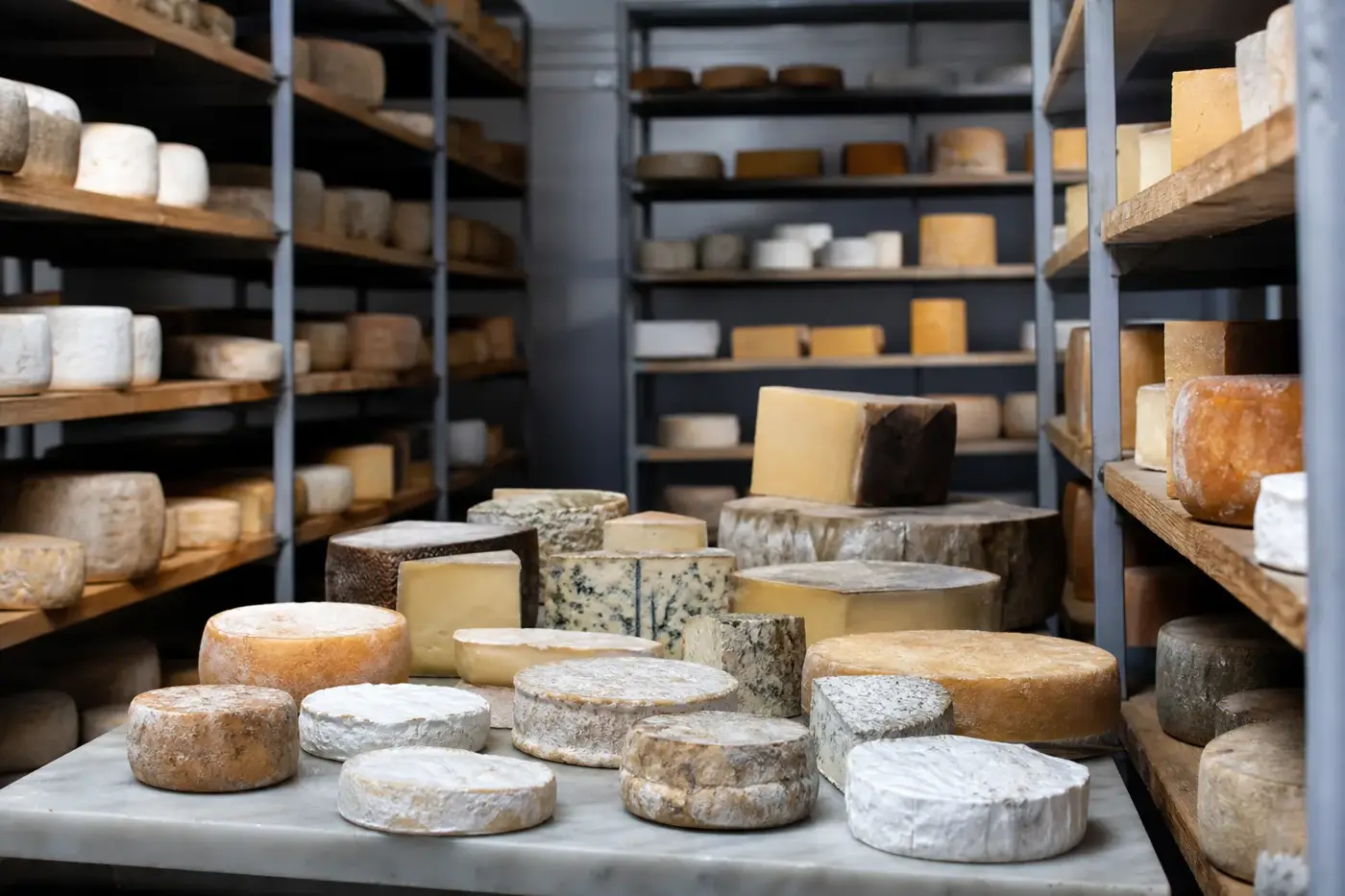
Saint-Haon-le-Châtel is the main cellar base. Mons says the original cellars were rebuilt in 2016, with different cheeses receiving daily attention in controlled conditions. At Sauvain, the Fromagerie des Hautes Chaumes combines production with maturation in natural cellars, while nearby Ambierle's railway tunnel gives longer-ripening cheeses their space. [3][4][6]
Before renovating the tunnel, Mons put cheese inside it. The project began in 2007, with temperature, humidity and air movement monitored over 18 months while the cheeses were there. Renovation followed in 2009, once Mons had assessed how the building behaved: a rather thorough audition for a cellar. [4]
Today, the Tunnel de la Collonge matures cooked and uncooked pressed cheeses. Mons names Saint-Romain among them, along with several cheeses from its own production. The railway tunnel has found a very different daily purpose. [4]
Turning, tending and knowing when to adjust
Turning and cleaning are not finishing touches. They are part of ripening itself. FAO's technical account of cheesemaking places them alongside temperature, humidity, airflow and time as practical tools of maturation. [10]
Different varieties need different combinations of those tools. The conditions must suit the cheese, rather than simply the building it happens to occupy. Mons says its cellar team adjusts both conditions and care to the cheese in front of them. [3][10]
Made by Mons, or chosen by Mons?
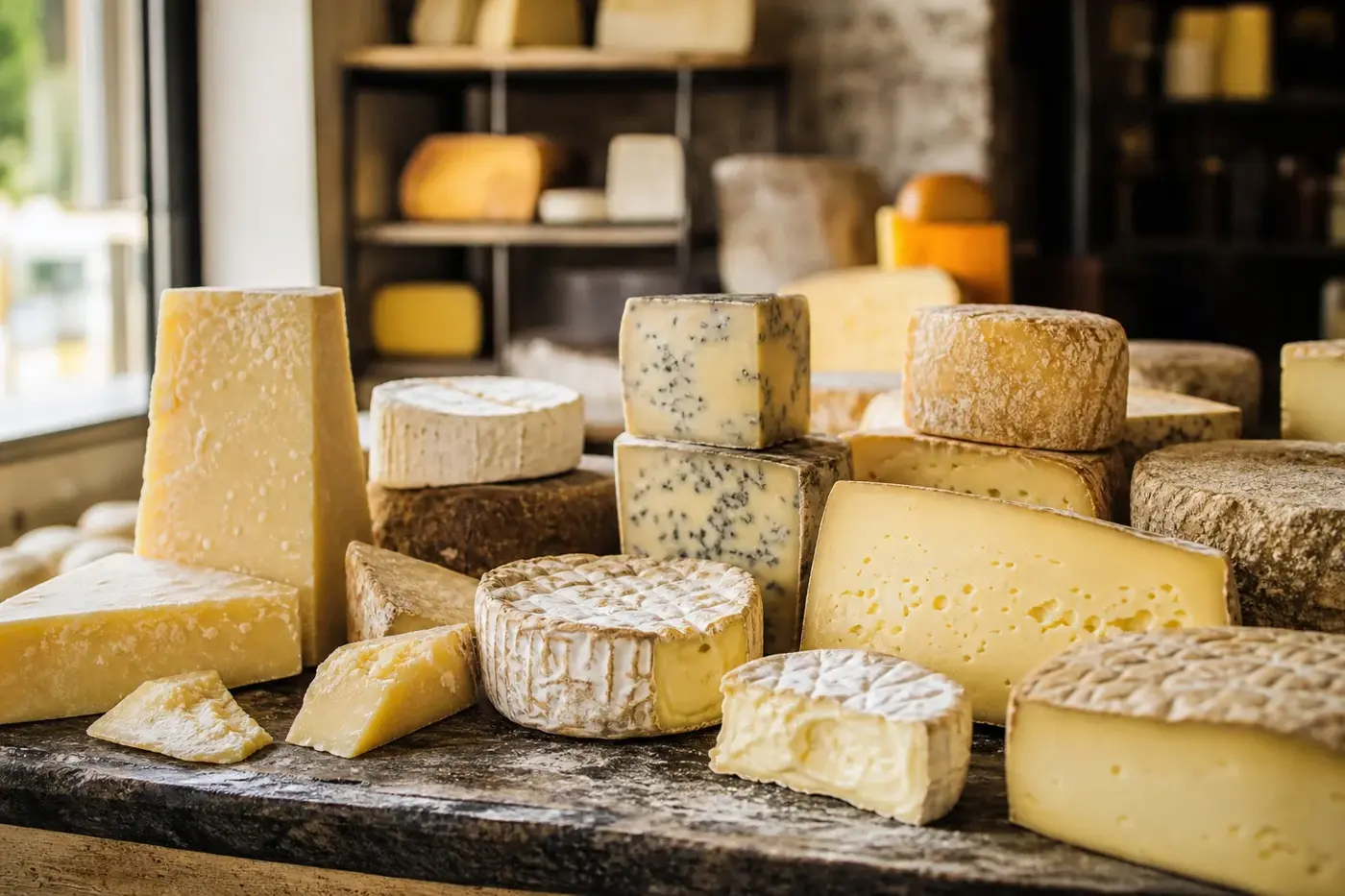
You will find both dairy production and cheese selection under the Mons name. Its Laiterie de la Côte Roannaise names Barriquet, Tomme tressée and Montvernay among its own products. The dairy describes milk arriving by gravity and being transformed directly after collection, bringing making and maturation close together. [5]
At Sauvain, Mons identifies Fromagerie des Hautes Chaumes as the maker of its raw whole-milk Fourme de Montbrison. The company dates its takeover of the dairy to October 2020. It says the cheese matures in natural cellars created for the business. [6]
The UK Mons catalogue also lists Comté, Salers and Brie de Meaux. Ask the seller who made your particular cheese, rather than assuming the catalogue name is the maker's name. The distinction between maker, affineur and seller is a useful part of reading a cheese label. [14]
What patience brings to the cheese
Cut into Fourme de Montbrison and you find a cream-coloured interior marbled with pale blue, enclosed by a dry, orange-toned rind. That is INAO's description. Its typical texture is slightly firm yet yielding, with a restrained blue character. [9]
Behind that character, proteins, fats and other compounds are changing. The peer-reviewed review Biochemistry of cheese ripening describes protein breakdown, called proteolysis, and fat breakdown, called lipolysis, followed by reactions that produce flavour compounds. The enzymes doing this work come from several sources, including milk, coagulant and microorganisms. [11]
The cellar cannot start from scratch, though. FAO explains that draining determines much of a young cheese's composition and structure before maturation begins. Milk and making supply the material; maturation guides its development, with producer and affineur doing complementary work. [10]
From the cheese counter to tables further afield
Mons supplies retail customers and professionals. Its French trade page invites restaurants, caterers and cheesemongers into a distribution network serving France and international customers. If you are buying professionally, discuss your service date, the condition you need on delivery and which cheeses will suit the job. [8]
The UK business says it opened at Borough Market in 2006. It selects Continental and British cheeses for maturation in London and on the Côte Roannaise. Its current website lists shops in Bermondsey and East Dulwich, stalls at Borough and Brockley, and nationwide wholesale supply. Consult the current location pages before you travel. [2]
Teaching belongs in the story too. Founded in 2005, Mons Formation covers product knowledge, selling, counter management and affinage, with practical work connected to the running business. Its published account also describes international programmes involving trainers and schools. [7]
This page summarises published guidance from the official sources it cites. It is not medical advice. Guidance differs between countries and changes over time, so check the current source for where you live, and ask your doctor, midwife, pharmacist or dietitian about your own circumstances.
Understanding protected names and batch safety
A protected name can carry conditions for both production and maturation. It is not the same thing as a business name. If you want to untangle the two, turn to protected cheese names.
Food safety comes down to the individual product and batch. France's RappelConso records a recall published on 14 February 2024 for one lot of Mons raw-milk Saint Nectaire Fermier; the procedure ended on 7 April 2024. If a recall affects your purchase, follow the official notice's product identification and instructions. [15]
Buy for your table, then look after it
Start with your meal and your date, not just a cheese name. Tell the cheesemonger whether you are buying for tonight, a later gathering or cooking, and describe the textures you enjoy. Ask who made it, where it matured and how this piece compares with the next one on the counter. A little conversation is a useful defence against wanting everything.
Mons's UK FAQ recommends buying close to the occasion. Rewrap your cheese in the paper supplied, then put it in a container in the refrigerator. Use the date and storage directions on your particular purchase as your working instructions. [12]
For UK home storage, the Food Standards Agency advises keeping your refrigerator at 5 °C (41 °F) or below and following the pack's storage instructions. The guidance reference date here is November 2026. Elsewhere, consult the current advice from your national agency. [13]
For more detail, visit storing cheese at home. If you want words for what you like, milk, rind, texture and method offers a useful vocabulary. Before ordering, look at the seller's current range and delivery coverage: available cheeses and their maturity change. [12]
Questions people ask
What does Mons do as an affineur?
An affineur specialises in ripening cheese, caring for it during maturation and judging when it is ready. Mons selects cheeses for their potential and adjusts conditions and care to suit them.
Does Mons make its own cheese?
Yes. Its Laiterie de la Côte Roannaise names Barriquet, Tomme tressée and Montvernay among its products. Mons also identifies Fromagerie des Hautes Chaumes as the maker of its Fourme de Montbrison.
What cheeses mature in the Mons railway tunnel?
Mons uses the Tunnel de la Collonge at Ambierle for cooked and uncooked pressed cheeses. It names Saint Romain and several cheeses from its own production among those ripened there.
Where can I buy Mons cheese in the UK?
The UK business lists shops in Bermondsey and East Dulwich and market stalls at Borough and Brockley. Check its current location pages before travelling.
How should I store Mons cheese at home?
Mons's UK FAQ recommends rewrapping cheese in the paper supplied and keeping it in a container in the refrigerator. For UK home storage, the Food Standards Agency advises keeping the refrigerator at 5 °C or below and following the pack's storage instructions. See the Food Standards Agency's current guidance.
Sources
Company sources below establish what Mons publishes about its operations, products and history; their quality claims have not been adopted as independent judgements.
- Maison Mons, Découvrez la Maison Mons, undated current company history, retrieved November 2026. Official history.
- Mons Cheesemongers, About, undated current company account, retrieved November 2026. UK business history and activities.
- Maison Mons, Nos Caves d’Affinage, undated current company account, retrieved November 2026. Cellars and selection.
- Maison Mons, Tunnel de la Collonge, undated current company account, retrieved November 2026. Tunnel history and use.
- Maison Mons, Laiterie de la Côte Roannaise, undated current company account, retrieved November 2026. Dairy and named products.
- Maison Mons, Fromagerie des Hautes Chaumes, undated current company account, retrieved November 2026. Sauvain production and maturation.
- Maison Mons, Mons Formation, undated current company account, retrieved November 2026. Training activities.
- Maison Mons, Vous êtes un professionnel ?, undated current company account, retrieved November 2026. Professional supply.
- Institut national de l'origine et de la qualité, Cahier des charges de l'appellation d'origine « Fourme de Montbrison », official 15-page PDF, revision date not established from the retrieved copy. Published specification.
- Food and Agriculture Organization of the United Nations, The Technology of Traditional Milk Products in Developing Countries, FAO Animal Production and Health Paper 113, 1990, cheesemaking and ripening sections. Technical account.
- International Journal of Dairy Technology, Biochemistry of cheese ripening, volume 57, issues 2 to 3, pages 127 to 144, 2004. Literature review, abstract consulted. Publisher's record.
- Mons Cheesemongers, Frequently Asked Questions (FAQ's), undated current retailer guidance, retrieved November 2026. Only buying, wrapping, refrigeration and flavour-related serving passages used. Retailer guidance.
- Food Standards Agency, How to chill, freeze and defrost food safely, current GOV.UK publication reached through the FSA's chilling guidance, retrieved November 2026. Official UK consumer guidance.
- Mons Cheesemongers, Cheese A-Z, undated current catalogue, retrieved November 2026. Named cheese selection.
- RappelConso, MONS, FROMAGER AFFINEUR SAS MONS FROMAGER AFFINEUR rappelle Saint Nectaire Fermier au lait cru, published 14 February 2024, recall procedure ending 7 April 2024. Official batch-specific notice.
This desk-researched account brings together Mons's published operating history, its accounts of individual facilities, an official cheese specification, technical literature and official consumer guidance.
Last checked: November 2026
Last checked November 2026.
The editors suggest you read next
Farmhouse, Artisan and Industrial Cheesemakers Explained
Slabs of curd are turned and stacked by hand.