Mont d'Or ou Vacherin du Haut-Doubs
Lift the lid and the woods arrive before your spoon does.
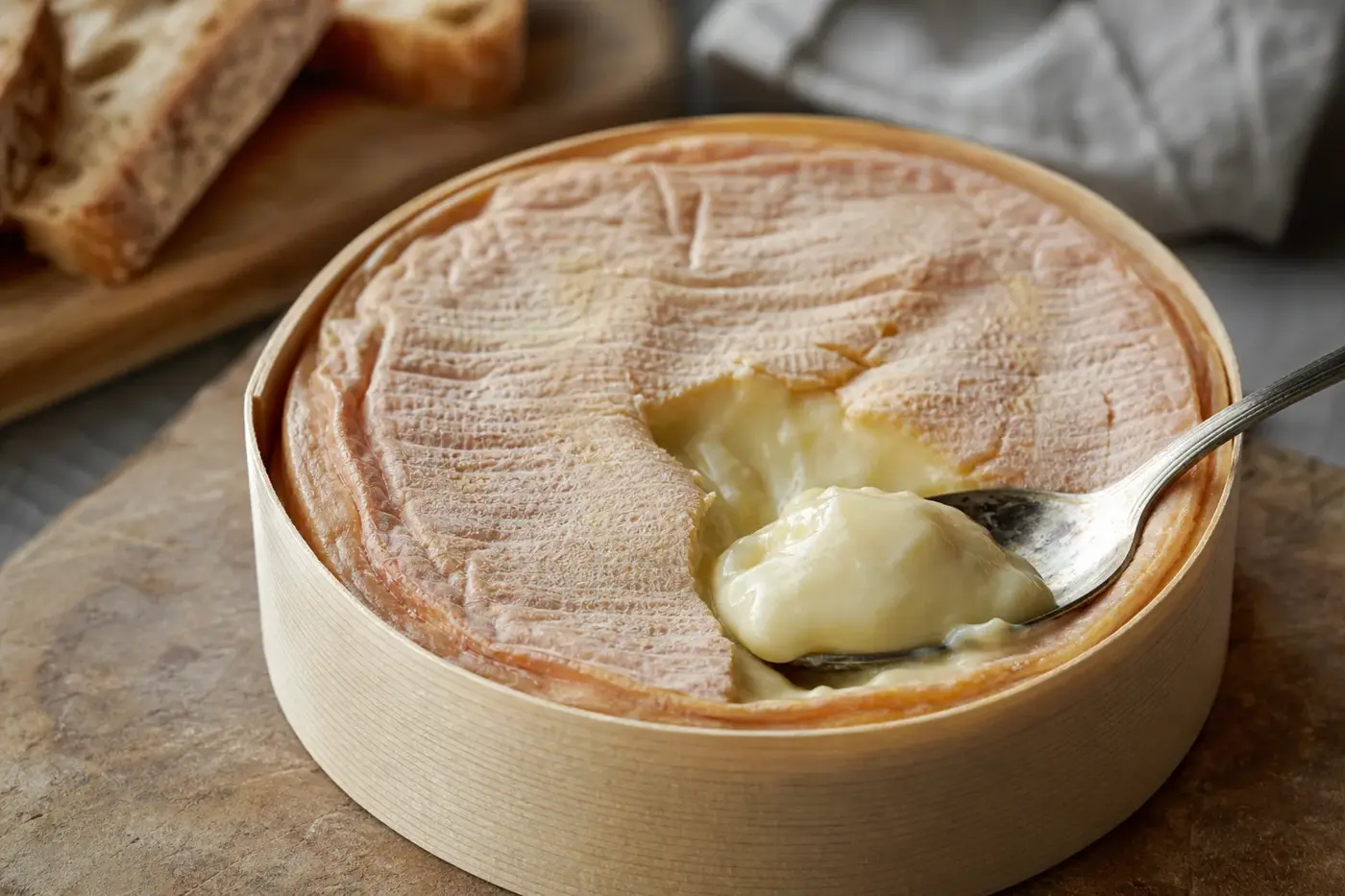
Lift the lid and the woods arrive before your spoon does. Spruce surrounds a soft, pale cheese from the high pastures and forests of the Haut-Doubs: French Mont d'Or, made seasonally from raw cow's milk, held by a wooden band and sold in a spruce box. Protected as a designation of origin in the EU, it is ready for spooning or baking according to its packaging instructions. Restraint is not included in the box. [1,2,8,9]
| What you might want to know | The essentials |
|---|---|
| Familiar name | French Mont d'Or. [2] |
| Registered names | “Mont d'Or” ou “Vacherin du Haut-Doubs”. [1] |
| Authority and identifier | EU PDO; eAmbrosia identifier: Not verified. [2] |
| French production rules | Specification homologated by the order of 18 December 2025. [1] |
| EU status | PDO reported by INAO; eAmbrosia entry not verified. [2] |
| Its mountain home | Defined communes of the Doubs, France, at least 700 metres above sea level. [2] |
| Milk | Whole raw cow's milk. [1,3] |
| What sets the milk | Calf rennet. [1] |
| Minimum maturation | Release from the maturing workshop from day 21, counted from renneting. [1] |
| Making season | 15 August to 15 March inclusive. [1] |
| Sale season | 10 September to 10 May. [1] |
| UK pregnancy guidance | NHS foods to avoid in pregnancy, November 2026. [6] |
Follow the spruce into the Haut-Doubs
You will find Mont d'Or's home on the French side of the Jura mountains, close to the Swiss border. INAO places its milk production, cheesemaking and maturing in specified communes between the source of the Doubs and the Saut du Doubs, at least 700 metres above sea level. Pasture, dairy and maturing room must all belong to this mountain area. That is a deeper connection than an address printed on a box. [2]
Grass feeds the cows; spruce holds the cheese. The Mont d'Or producers' organisation describes it encircled with spruce, matured on spruce boards and finally tucked into a box of the same wood. Before you taste anything, the woodland has already introduced itself. [9]
A hard winter, a smaller cheese
Less milk, harsh winter weather and a difficult journey to the communal dairy: imagine the farmer's problem. According to the producers' organisation, the answer was to make smaller cheeses at home, while spring and summer milk went into comté. This small, soft cheese has a practical history in a region also known for great wheels. [4]
The organisation's published history records French appellation d'origine contrôlée recognition in 1981 and European PDO recognition in 1996. Seasonality became part of its defined identity, alongside the milk, mountain area and wooden binding. When you meet the initials on a label, AOC is the French designation; AOP is the French abbreviation corresponding to PDO. [2,4]
Meet the cows and the hands behind the cheese
Whole raw cow's milk and calf rennet are required by the current French specification. Rennet is the enzyme preparation that sets milk into curd, and here it comes from an animal. If you avoid animal rennet, check the cheese's identity rather than expecting a vegetarian version within this designation. [1]
The permitted cattle are Montbéliarde and French Simmental, with authorised crosses covered by the specification. The producers' organisation describes summer grazing and winter hay, with fermented forage prohibited and supplementary cereals limited. Grassland underpins their diet, supported by regulated supplementation. It does not mean fresh pasture at every meal. [1,3]
Once the milk sets, the makers shape the curd in cylindrical moulds, then unmould it and wrap it with spruce. During maturing, they turn it and rub it with salted water, handling it almost daily according to the producers. The band supports a fragile cheese while its surface develops under that regular attention. You can follow the wider sequence in how cheese is made. [3]
Two pieces of spruce, two important jobs
Look closely and you will see that band and box have different duties. The band, called a sangle, goes around the cheese immediately after unmoulding and supports it through handling and maturing. The box arrives later, containing it for its final stage and sale. The French specification requires both to be spruce. [1,3,9]
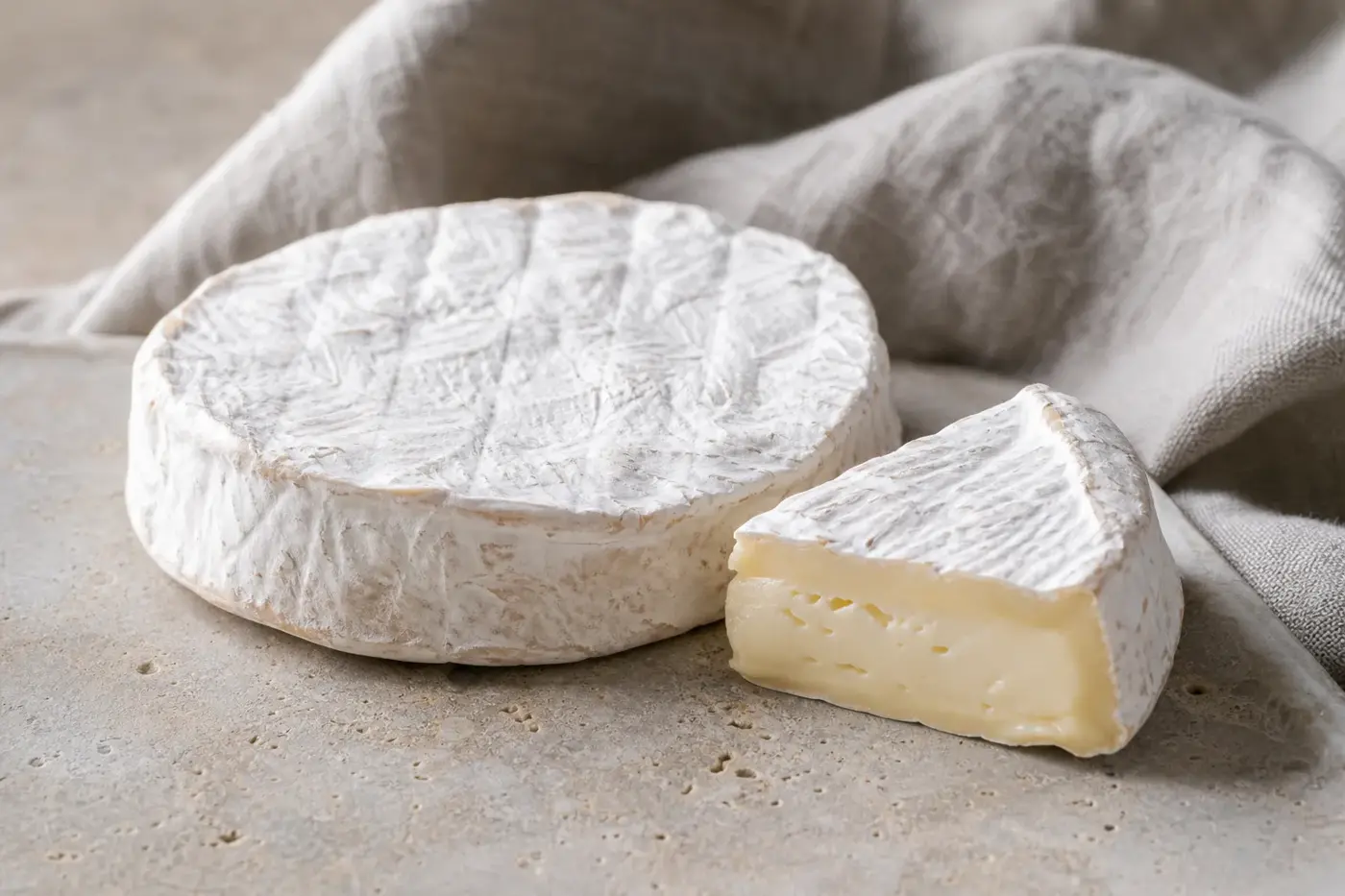
The box is deliberately a little smaller in diameter than the cheese, the producers explain. That snug fit encourages the rind to wrinkle into folds, while the wood supplies the characteristic spruce note they describe. What you see and what you smell owe something to the same material. [3,9]
At the table, leave the wood where it is and eat only the cheese. You can work a spoon inside the band without dismantling anything. The binding and box support that soft interior; they are not part of your portion.
Those wrinkles have a story to tell
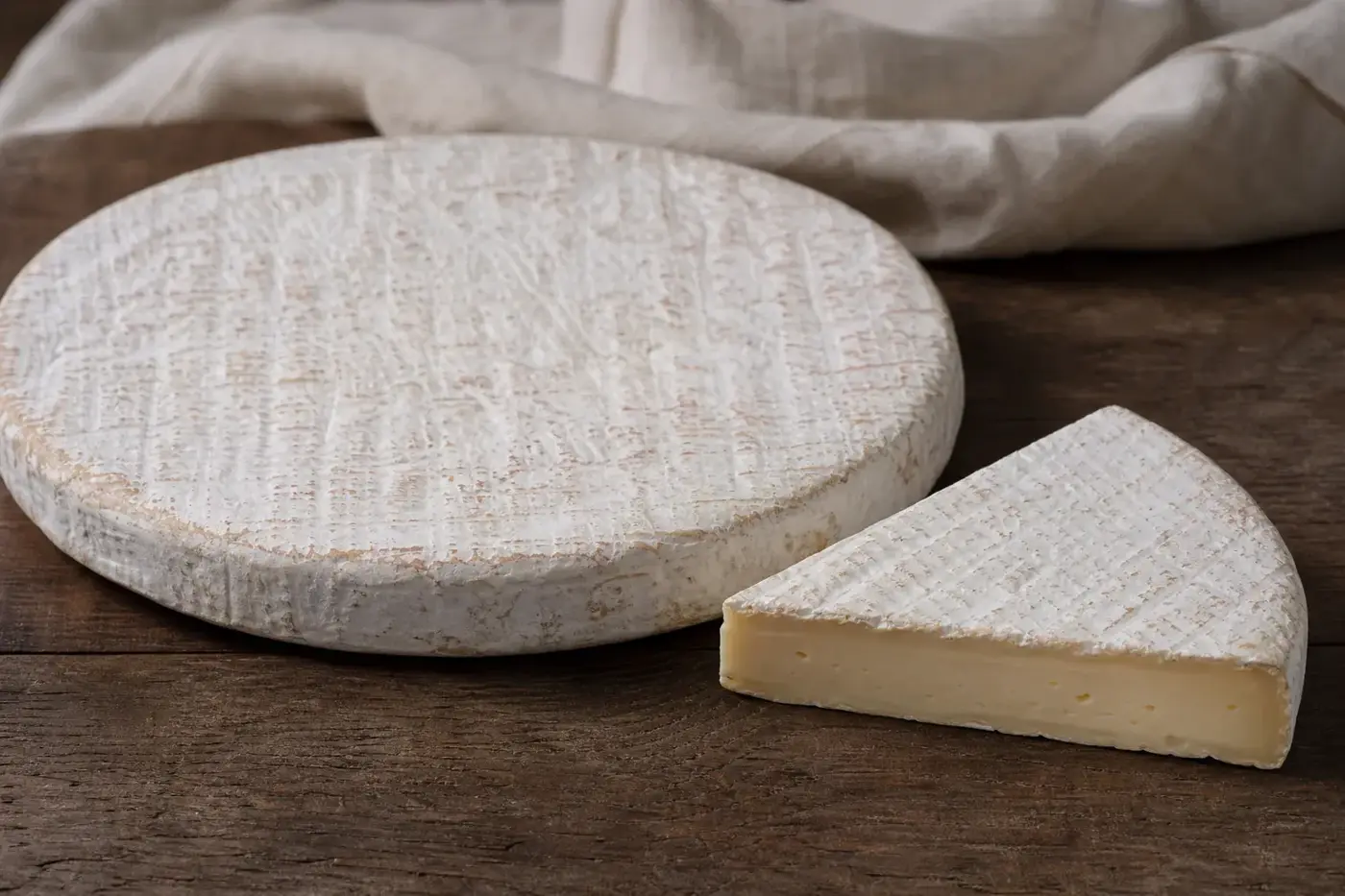
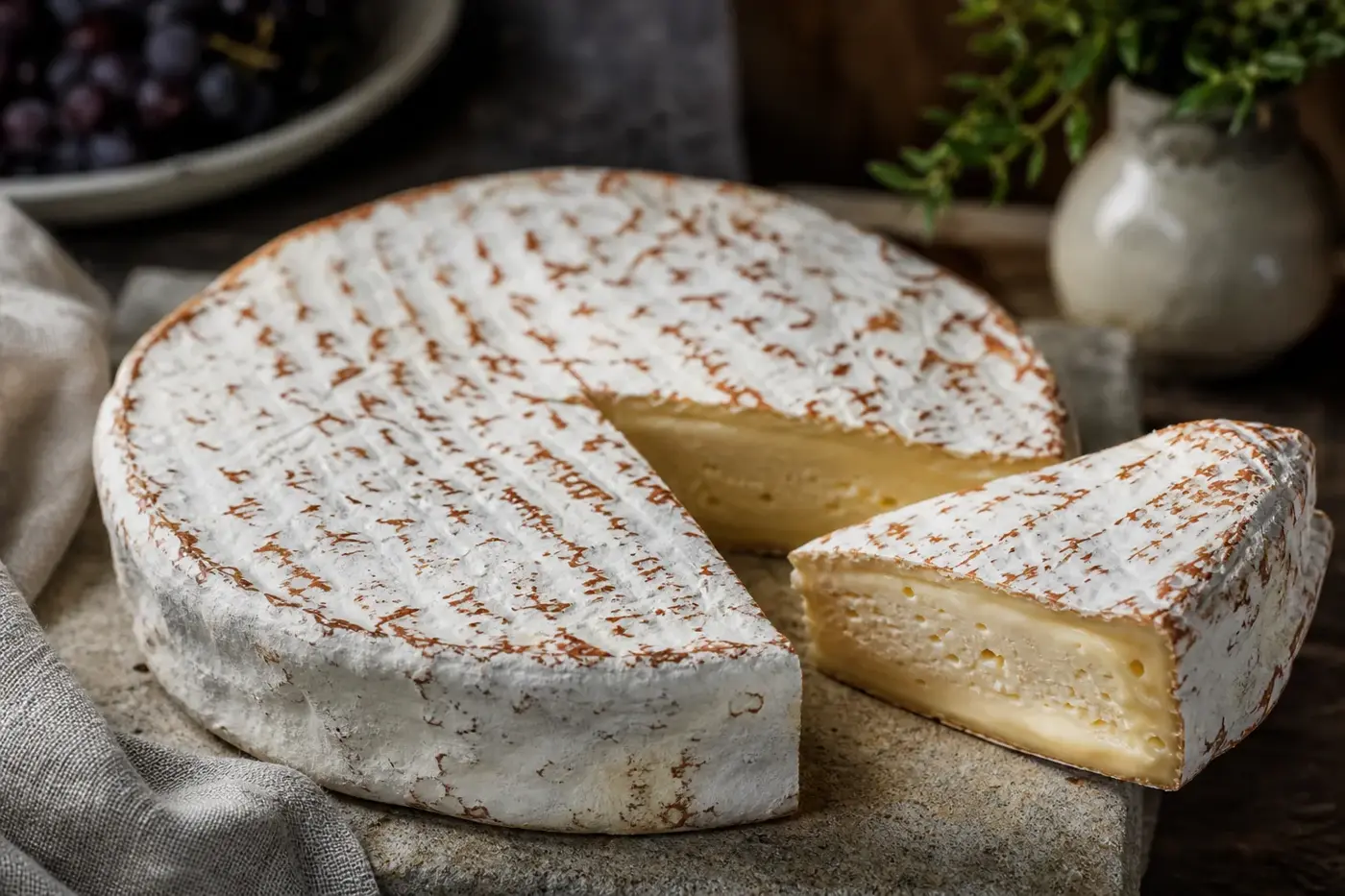
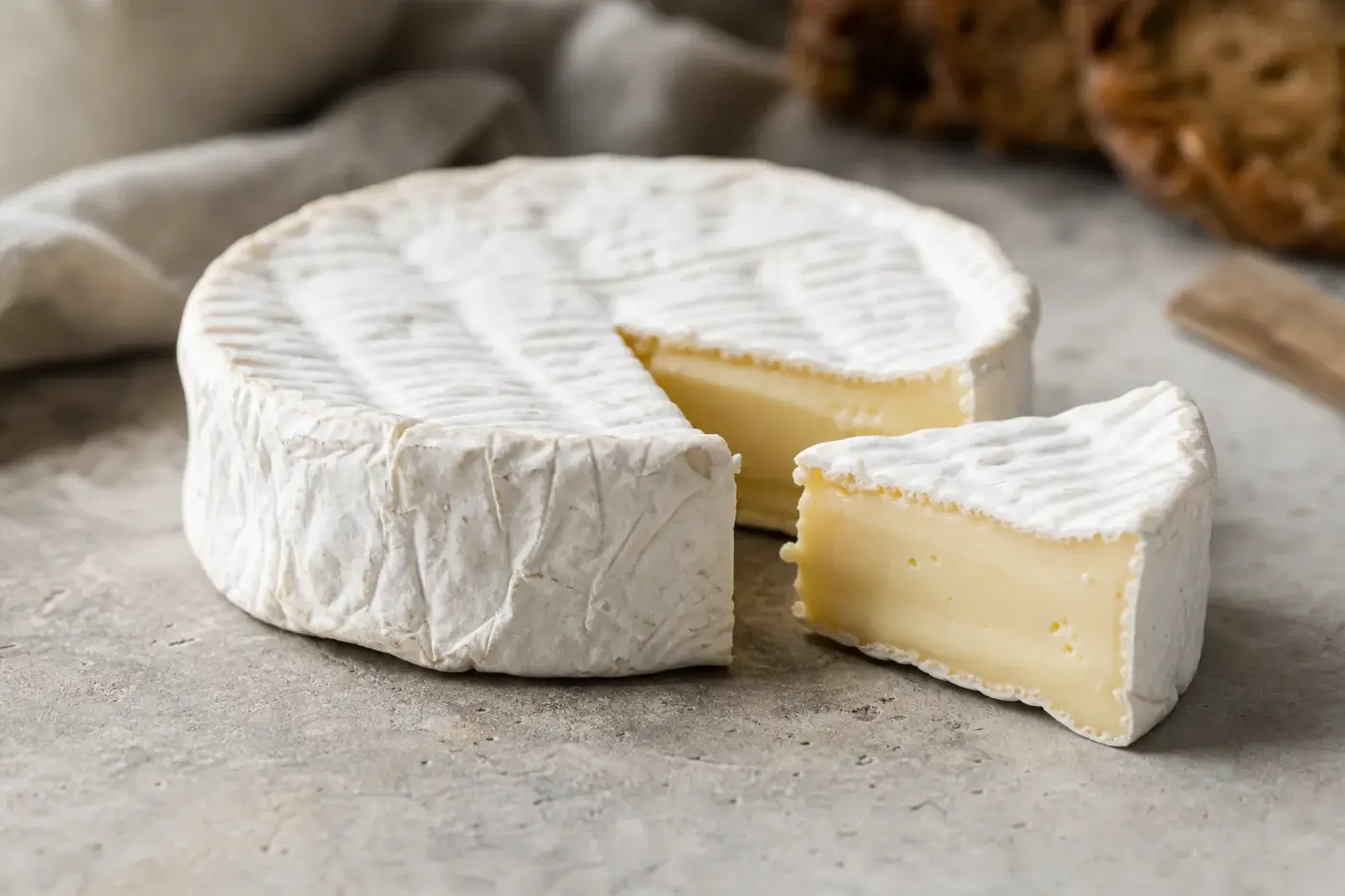
A smooth, taut rind is not the aim here. Expect a flat, round cheese: the French specification describes a washed rind, lightly bloomed, ranging from pale yellow to pinkish brown. Beneath it sits white to ivory paste. Washing and a little surface bloom are quite at home together. [1,2,3]
For aroma, INAO offers mushrooms with cream, lifted by spruce. The approved French description adds lactic, woody and mushroom notes. These give you a sense of its typical character, while your cheesemonger can explain how the particular cheese in front of you is developing. [1,2]
As it matures, the paste grows softer and more yielding. Tell the cheesemonger when you plan to serve it, then ask whether it will be ready to cut or better spooned from the box. That gives you a more useful answer than simply asking for something ripe. [2]
Make room in your autumn diary
French Mont d'Or follows two calendars: one for making, another for selling. Production runs from 15 August to 15 March inclusive, while sale to consumers runs from 10 September to 10 May. These specification requirements, as of November 2026, explain the wait between the first cheesemaking and the first autumn sale. Some diary appointments are considerably more appealing than others. [1,3]
Season tells you when the designation can be made and sold. Age tells you how far an individual cheese has travelled through maturing. Ask about both at the counter: autumn brings availability, but age helps you decide how and when to serve your cheese.
That annual cycle means you cannot have it whenever the mood strikes. Asking for French Mont d'Or in midsummer is not the same as asking for a soft cheese to bake. Once its season ends, choose an alternative suited to serving soft or baking, and let that cheese keep its own name. [1,3]
Across the border with Swiss Vacherin Mont-d'Or
A similar name does not mean the same rulebook. Swiss Vacherin Mont-d'Or has its own AOP specification and a stated production area in the canton of Vaud. Its milk must be thermised, a specified heat treatment distinct from the raw milk required for French Mont d'Or. [1,5]
| What to look for | French Mont d'Or | Swiss Vacherin Mont-d'Or |
|---|---|---|
| Its home | Haut-Doubs, France. [2] | Defined Vaud area, Switzerland. [5] |
| Milk treatment | Raw. [1] | Thermised, at least 62 °C for 15 seconds or equivalent. [5] |
| Making season | 15 August to 15 March inclusive. [1] | 15 August to 31 March; opening date set by producer group. [5] |
| Earliest release or minimum maturing | From day 21 after renneting. [1] | At least 17 days of maturing. [5] |
Both use spruce, but their specifications, milk treatments and seasonal limits differ. Read the full designation and country on the label rather than letting “Vacherin” do all the work. For the distinctions behind those words, see raw milk, thermised and pasteurised cheese and protected names explained. [1,5]
From the cheese counter to your fridge
Your first useful questions belong at the counter. Check the full name, date and storage instructions, ask whether the cheese suits your serving day, and choose a size you can use within the pack's instructions. The box may catch your eye, but the label tells you how to handle that particular cheese.
At home, UK NHS guidance says to keep chilled ready-to-eat foods at 5 °C (41 °F) or below. Follow the label and use opened food within two days unless the packaging says otherwise. Keep the cheese covered and separate from raw foods, and observe its use-by date. The NHS advises eating, cooking or freezing foods by that date. [7]
If you are serving it unheated, let your portion lose its refrigerator chill shortly before the meal, not over an entire afternoon. The NHS says to eat ready-to-eat foods within four hours of taking them out of the fridge. Include preparation and time at the table in that total. [7]
Set the table with bread and potatoes
You do not need an elaborate spread. Bread carries a spoonful beautifully, while hot boiled potatoes give you somewhere to spread the cheese. The producers' published baked dish also uses potatoes and serves the hot cheese with a spoon. Bring the box to the table on a plate, with a clean serving spoon and room for everyone to help themselves. [8]
For an alcohol-free glass alongside, sparkling water leaves those woodland and mushroom notes easy to follow. Unsweetened apple juice diluted with water offers another refreshing option with bread and potatoes. Choose the contrast and refreshment you enjoy, and let the cheese remain the centre of the meal.
La Boîte chaude: a boxful from the oven
La Boîte chaude is the baked version published by the Mont d'Or producers' organisation, served straight from the oven over potatoes. It is a familiar way to enjoy this cheese. Before you heat anything, read your particular pack's instructions: they determine whether its box and other packaging are suitable for the oven. [8]
Choose a pack with clear baking instructions and follow them for removing wrapping, using or removing the lid, supporting the box, setting the oven and timing the cooking. If those instructions are missing, ask the maker before putting the packaging in the oven. When serving, set the hot container on a heatproof surface.
Give the centre as much attention as the edges. UK NHS guidance says to follow packaging instructions and cook or reheat until steaming hot right through. A browned top and flowing texture can arrive before the middle is thoroughly heated. Check throughout rather than judging by the surface, then serve promptly. [7]
Raw milk and the UK precautions to know
French Mont d'Or is a raw milk soft cheese. If you are pregnant, the UK NHS advises against eating soft cheeses with a white rind unless cooked until steaming hot all the way through. That advice includes cheeses made with pasteurised milk, so consult the current NHS guidance before choosing or serving Mont d'Or. [1,6]
People with a weakened immune system are at higher risk of serious listeriosis, according to the UK NHS. Consult its current advice on avoiding listeriosis and ask your doctor about your own circumstances. [7]
For more detail, turn to listeria and cheese safety and how to store cheese at home.
General information only, not medical advice: follow the official guidance where you live.
Questions people ask
When is French Mont d'Or in season?
It can be made from 15 August to 15 March inclusive. It can be sold to consumers from 10 September to 10 May.
What is the difference between French and Swiss Mont d'Or?
French Mont d'Or comes from the Haut Doubs and is made with raw milk. Swiss Vacherin Mont d'Or comes from a defined area of Vaud and must be made with thermised milk.
Can you bake Mont d'Or in its box?
La Boîte chaude is a baked dish served over potatoes. Check the instructions on your pack to see whether its box and other packaging are suitable for oven use; if instructions are missing, ask the maker.
Is Mont d'Or vegetarian?
The French specification requires calf rennet, an animal coagulant. Anyone avoiding animal rennet should check the cheese's identity rather than expect a vegetarian version within this designation.
Can you eat Mont d'Or during pregnancy?
The UK NHS advises pregnant people against eating soft cheeses with a white rind unless cooked until steaming hot all the way through. Check the current NHS guidance on foods to avoid in pregnancy.
Sources
-
French Ministry of Agriculture and INAO, Cahier des charges de l'appellation d'origine « Mont d'Or » ou « Vacherin du Haut-Doubs », homologated by the order of 18 December 2025, published in the ministry's Bulletin officiel, number 2026-03, 15 January 2026. Principal source for the French production requirements.
-
Institut national de l'origine et de la qualité, [Mont d'Or ou Vacherin du Haut-Doubs](../mont-d-or-ou-vacherin-du-haut-doubs/), current product record, retrieved November 2026. Official confirmation of AOP identity, geographical description and attributed sensory profile.
-
Syndicat interprofessionnel du Mont d'Or, Les règles du Mont d'Or, undated, retrieved November 2026. Producers' account of feeding, making, handling and the spruce box.
-
Syndicat interprofessionnel du Mont d'Or, L'histoire et les origines, undated, retrieved November 2026. The historical explanation is attributed to this industry organisation.
-
Swiss Federal Office for Agriculture, Cahier des charges: Vacherin Mont-d'Or, specification incorporating amendments through 13 October 2020, retrieved November 2026. Official source for the Swiss comparison.
-
NHS, Foods to avoid in pregnancy, current online guidance, retrieved November 2026. UK pregnancy advice on unpasteurised dairy foods and thoroughly cooked cheese.
-
NHS, Listeriosis, reviewed 10 November 2023, retrieved November 2026. UK guidance on refrigeration, opened food, time outside refrigeration, cooking and higher-risk circumstances.
-
Syndicat interprofessionnel du Mont d'Or, La Boîte chaude, undated recipe, retrieved November 2026. A commercial-interest industry source for the documented baked serving tradition, not a site-tested recipe.
-
Syndicat interprofessionnel du Mont d'Or, AOP Mont d'Or: Le vacherin du Haut-Doubs, current website, retrieved November 2026. Producers' description of the cheese's successive uses of spruce.
This article was researched from official specifications, INAO's product record, attributed producers' accounts and published NHS guidance, with editorial serving suggestions identified separately.
Last checked: November 2026
Last checked November 2026.
The editors suggest you read next