Montasio
At the cheese counter, a cut face of Montasio gives you something to study: little holes scattered through a pale straw-coloured interior.
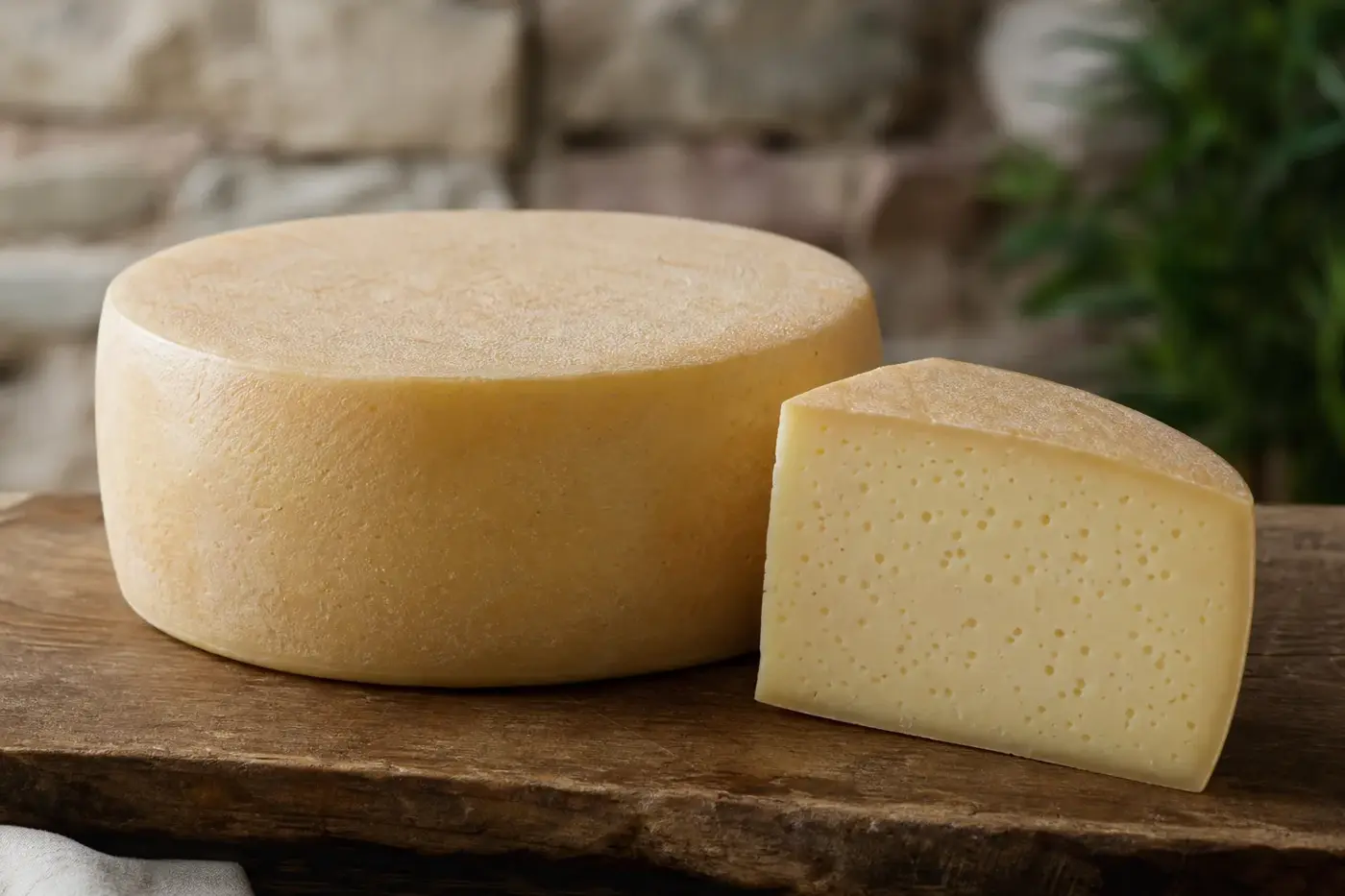
At the cheese counter, a cut face of Montasio gives you something to study: little holes scattered through a pale straw-coloured interior. A young piece yields; an older one turns firmer and crumblier. Age leaves its calling card before you take a bite.[1][3]
This Italian cow’s milk cheese takes its name from a plateau in the Friulian mountains. Its home reaches beyond that landscape, through the dairies of Friuli Venezia Giulia and eastern Veneto. In Great Britain, Montasio is registered as a protected designation of origin, or PDO.[1][2][4]
Get acquainted before the first slice
| What you might ask | What to know |
|---|---|
| Familiar and registered name | Montasio.[1][2] |
| Registration authority and identifier | European Commission; published amendment identifier PDO-IT-02251. Current register record ID: Not verified.[1] |
| Protection by jurisdiction | Great Britain: registered PDO, registration dated 31 December 2020; status information dated November 2026. Current EU and Northern Ireland status and procedural stage: Not verified. Swiss status and US rights: Not verified.[2] |
| Legally defined production area | All Friuli Venezia Giulia; Belluno and Treviso provinces and specified parts of Padova and Venezia provinces in Veneto.[1] |
| Milk and treatment | Cow’s milk. Treatments permitted by the current specification: Not verified.[1] |
| Coagulant | Calf rennet, liquid or powdered.[5] |
| Minimum maturation | 60 days.[1] |
| Wheel at 60 days | 5.5 to 8 kg; diameter 27 to 35 cm; height no more than 8 cm.[1] |
| Composition at 60 days | At least 40% fat in dry matter; no more than 36.72% moisture in the whole cheese.[1] |
Follow that mountain name into dairy country
The plateau lends Montasio its name and mountain associations. But follow the cheese home and you find a whole regional dairy landscape, not just one mountain or valley. Its legally defined territory covers all of Friuli Venezia Giulia and part of neighbouring Veneto.[1][3]
In Veneto, Belluno and Treviso provinces qualify in full. Only defined portions of Padova and Venezia qualify, with boundaries following provincial borders, the Serenissima motorway and the River Brenta. “Made in Veneto” alone does not tell you enough.[1]
Those boundaries matter throughout the cheese’s life. Milk production, cheesemaking and maturation must all happen within the area. The rules tie together cattle farms, the dairy where the curd forms and the establishments where wheels mature.[1][5]
If you want a specifically mountain-produced wheel, look for prodotto della montagna and the letters PDM. The published specification reserves this additional designation for production in qualifying mountain areas. That applies from the milk through the minimum maturation period.[1][5]
Meet the monks, then follow the paperwork
In the consortium’s festival history, Benedictine monks and the abbey at Moggio take centre stage. Its account describes monks refining mountain herders’ techniques, turning perishable milk into cheese that would keep for months. Milk needed a longer life, and cheese offered one.[6]
The European Commission’s published specification points to commercial lists from San Daniele and Udine dated 1773 and 1775.[1] These tell a different part of the story from the inherited account of monastic involvement: the cheese’s place in regional trade.
| A question from the history books | Status |
|---|---|
Together, monastic tradition and dated references to regional commerce root Montasio in this corner of north-eastern Italy. That regional identity travels with the name. It does not promise that every wheel began on a summer pasture.[1][6]
Take a closer look at the wheel
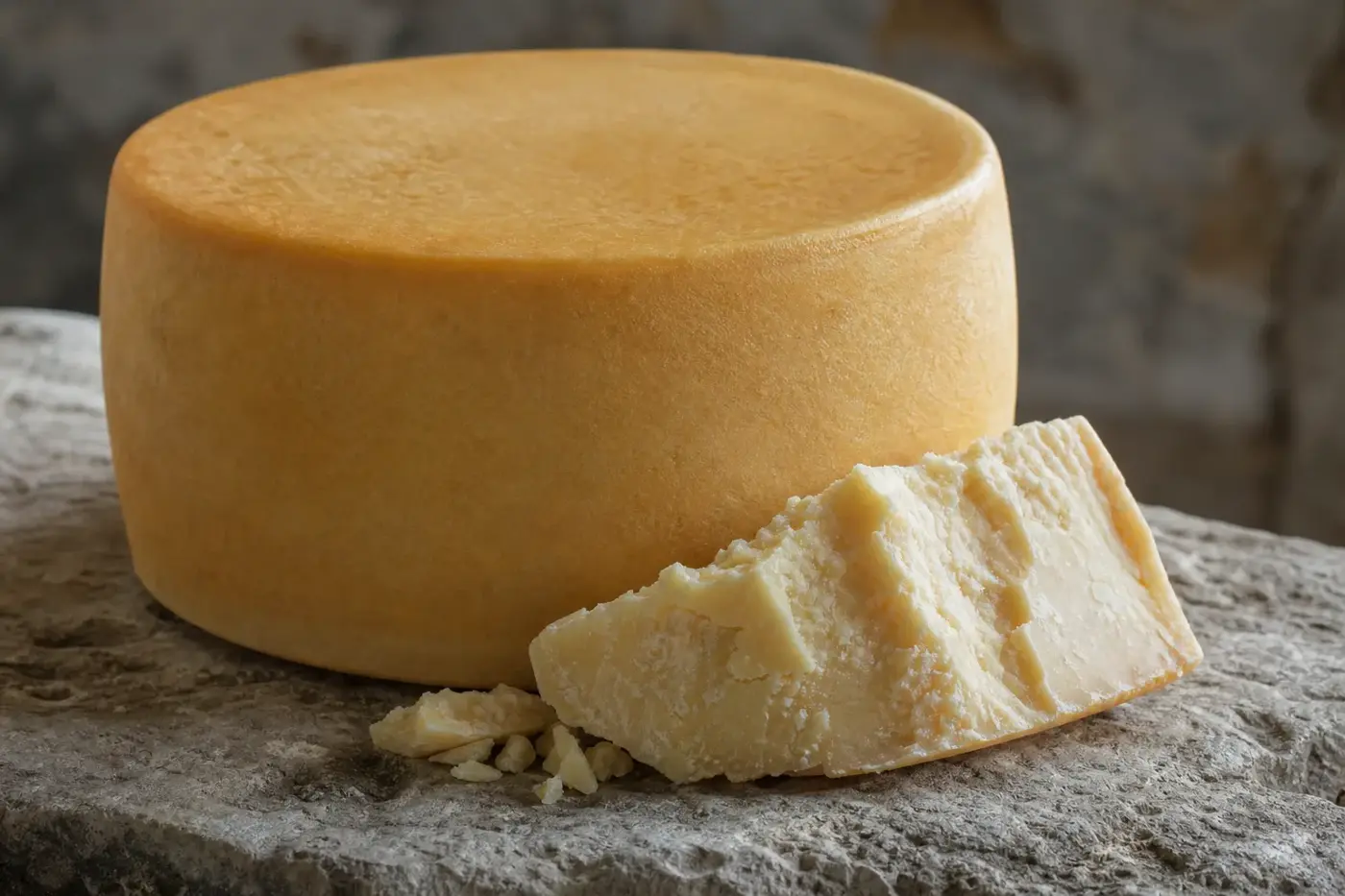
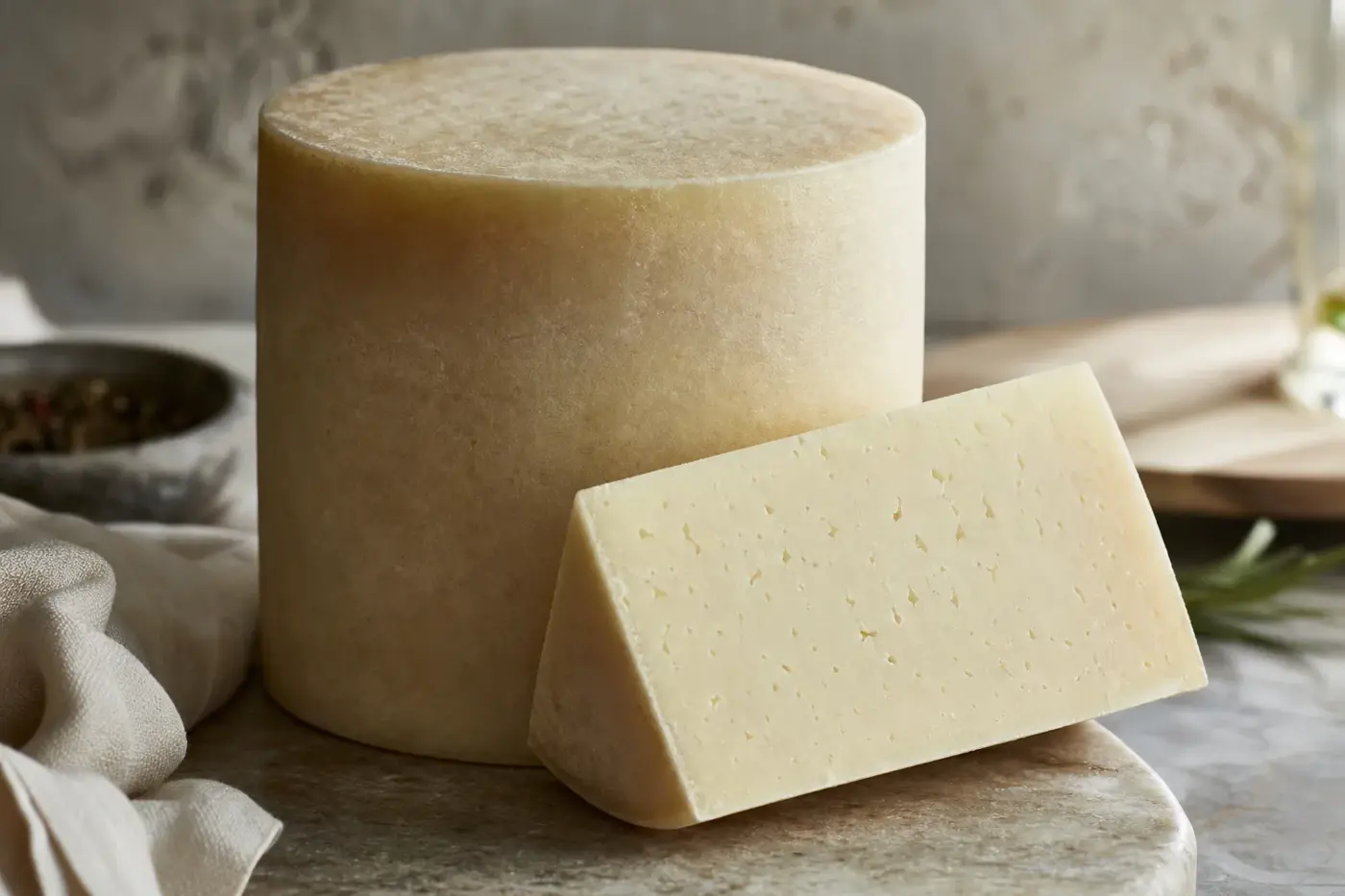
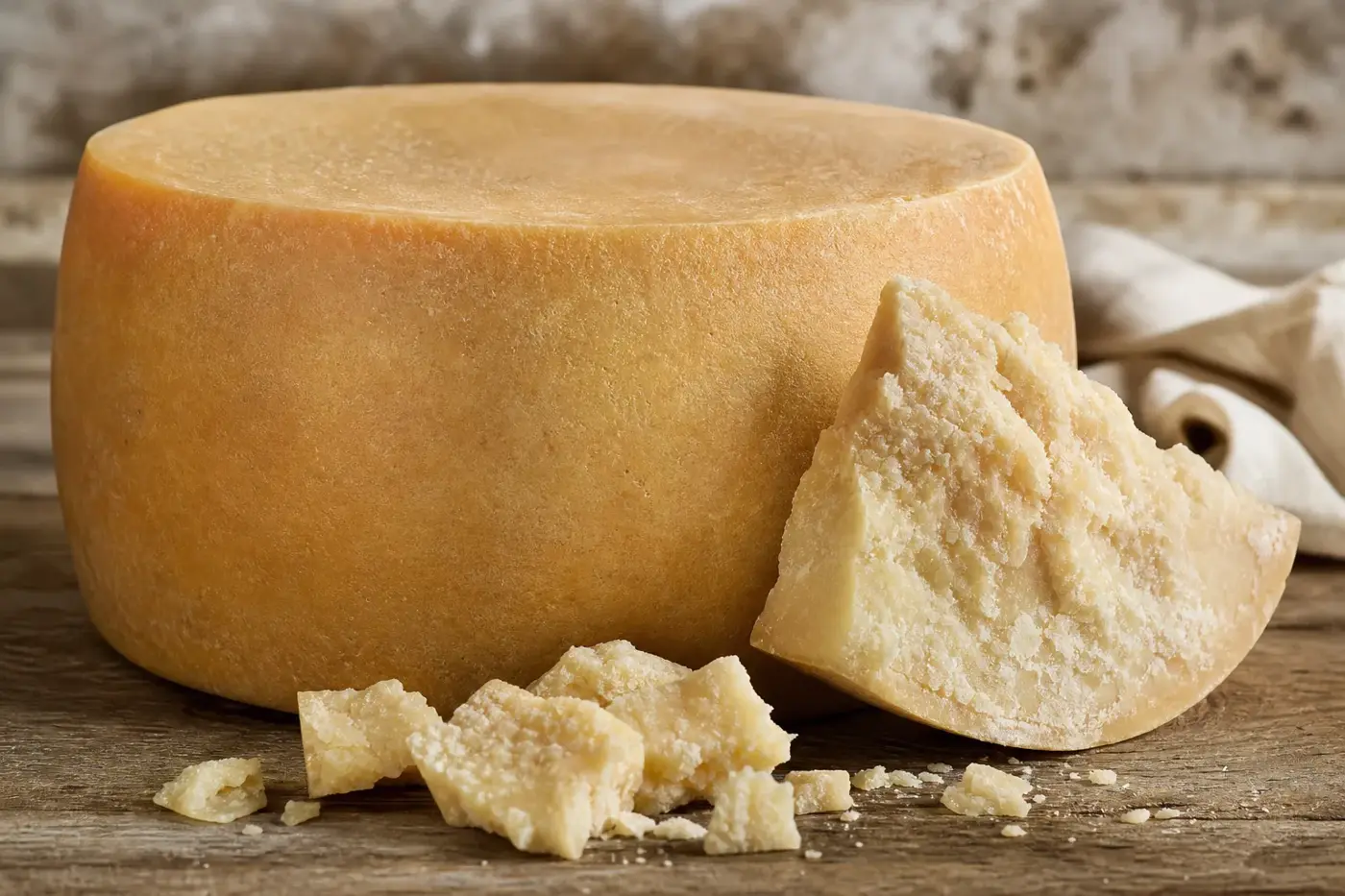
Montasio is a low cylinder with straight or nearly straight sides. Its faces are flat or slightly convex, and the specification describes a smooth, regular, elastic rind. Cut through it and you find compact, pale straw-coloured cheese with some holes.[1]
The consortium describes those holes as small and scattered throughout the cut surface. Alongside the pale paste and relatively shallow shape, they help you recognise Montasio. At the counter, ask to see a freshly cut face as well as the rind.[3]
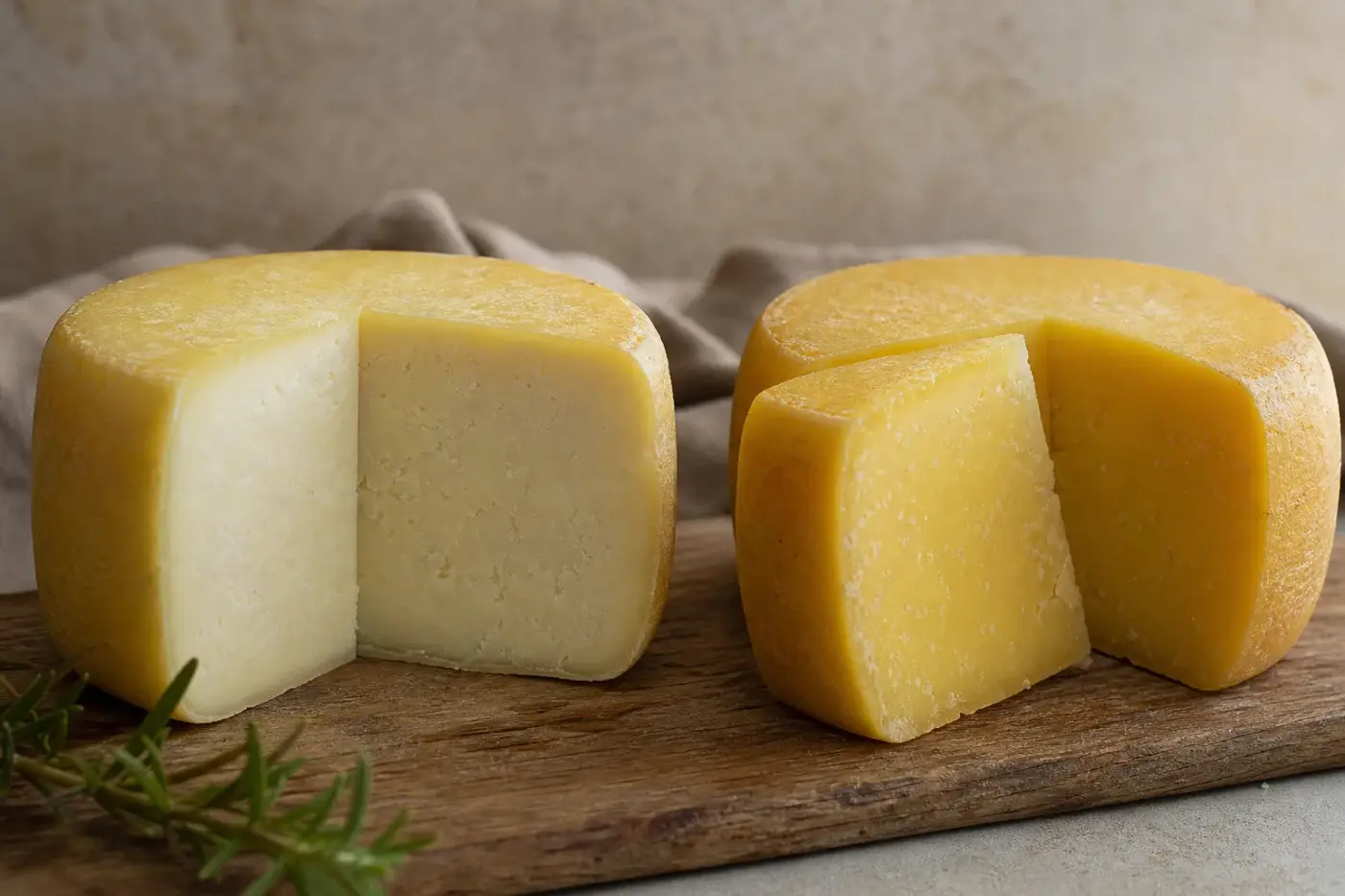
Age changes the interior more than the outline. The official description gives young Montasio a medium-firm texture and delicate character; time makes it firmer and crumblier.[1] Keep that in mind when choosing a piece to slice, break or grate.
Step into the dairy, from milk to curd
Montasio starts with unpasteurised cow’s milk. The consortium distinguishes raw milk from thermised milk, which receives heat treatment short of pasteurisation.[4] You can explore the difference in raw, thermised and pasteurised milk.
The sequence below comes from an older ministry specification. Read it as that older account of production, rather than as a statement of the current rules.[5]
| A moment in the making | What happens in the dairy |
|---|---|
| Preparing the milk | Milk is warmed to 32 to 36 °C before starter and rennet are added.[5] |
| Adding cultures and rennet | A natural selected starter goes in, then liquid or powdered calf rennet coagulates the milk.[5] |
| Cutting and heating | The curd is broken, heated to 42 to 48 °C and stirred off the heat.[5] |
| Forming and pressing | The curd is extracted and pressed. Wheels are turned, and identifying moulds mark their sides.[5] |
| Salting | Dry salt or a light brine is used, with possible additional dry salting.[5] |
Curd is the coagulated milk that becomes your cheese; whey is the liquid separated from it. Working that curd, pressing it and giving the wheel time to mature together create Montasio’s compact body. Each stage helps shape the piece you eventually take home.[1][5]
Cultures have a role here too. The published specification permits natural milk starters or authorised cultures, while the consortium describes a process that retains the milk’s original microbial character.[1][4] For a closer look at what happens in the dairy, visit How cheese is made.
Let your appetite choose the age
Montasio’s maturation names have defined starting points in the published specification. Fresco begins at 60 days, mezzano at 120 days, stagionato at 10 months and stravecchio at 18 months.[1]
The consortium’s consumer presentation follows three principal tasting stages and describes mezzano as five to ten months. Ask for the actual age in months alongside the category name. It gives you a clearer idea of the piece heading into your shopping bag.[4]
| Age to ask for | Texture and character described by the sources | A good way to try it |
|---|---|---|
| Young, fresco | Compact and relatively supple, with sweet lactic notes recalling milk, yoghurt and cream in the consortium’s description.[1][4] | Slice it with bread, or let it open your cheese board. |
| Medium-aged, mezzano | More developed flavour, with melted butter, rind and hay notes identified by the consortium.[4] | Choose it when you want more aromatic presence on the board. |
| Mature, stagionato and stravecchio | Increasingly firm and crumbly, with dried-fruit, vegetal and savoury animal notes described by the consortium.[1][4] | Break off small pieces, or grate it over a finished dish. |
These tasting descriptions are the consortium’s published account, rather than a site tasting. Use them as a route through the ages: lactic delicacy first, fuller aromas in the middle, then greater firmness and savoury intensity.[4]
To follow that route yourself, choose two ages from the same producer. Taste the younger first, noticing how each piece bends or breaks and which aromas linger after swallowing. Then ask yourself how much you want in the next bite.
You need not turn the comparison into an examination. Nobody is collecting your tasting notes. The point is to find the age that suits your taste and the occasion.
Let the rind do some talking
On an origin-marked wheel, “Montasio” repeats diagonally around the side, alternating its orientation. Look for identifying details too, including the dairy code, provincial abbreviation and production date. These tell you more than the name alone.[1][5]
The consortium describes an optional additional quality mark for qualifying wheels matured beyond 100 days. This is separate from the ordinary origin marking. One signals that additional qualification; the other marks origin.[4]
If you are buying a cut portion, ask your cheesemonger for the producer’s name and the original wheel marking or accompanying product information. Then ask three questions: “How old is this piece?”, “Was the milk raw or thermised?” and “What treatment has the rind received?”
That last question matters before you eat the rind. The production specification permits transparent external protective treatments, and appearance alone cannot identify them.[5] How to read a cheese label helps you distinguish product information from a packer’s or distributor’s address.
Make room on the board, and in the frico
Young and medium-aged Montasio are comfortably at home on the table. ONAF, the Italian cheese-tasters’ organisation, describes them as cheeses for eating in slices. It also records their use with fresh vegetables and polenta.[7]
On your board, give Montasio a little space rather than surrounding it with strongly flavoured accompaniments. Begin with plain bread, then try pear or apple. Taste each separately: bread keeps the cheese central, while fresh fruit offers a contrasting mouthful.
With mature Montasio, let the texture guide you. ONAF records its use grated over pasta or a substantial soup, both inviting destinations for a crumbly piece.[7] Grate a little, taste, then decide whether your dish wants more.
Then there is Friulian frico. ONAF identifies frico made with potatoes and Montasio as a traditional regional preparation.[7] Tell your cheesemonger which recipe you are following and ask for an age that suits it.
Choose companions that leave room for cheese
Plain bread and fresh pear give you a useful starting point with young Montasio. For a more mature piece, try firmer-textured bread and apple. Keep the accompaniments in small portions so you can taste the cheese with and without them.
For an alcohol-free drink, begin with water, the clearest tasting companion. Lightly brewed black tea is another option when you fancy something with more aromatic presence. Neither asks you to assemble an elaborate tasting line-up.
Both can accompany mature Montasio too. Keep your comparison simple: cheese alone, then cheese with bread or fruit. The combination you prefer is the one worth remembering, even if your tasting notes never get beyond “another piece, please”.
Keep it cool and serve what you need
Follow the storage and opening instructions supplied with your particular cheese. For consumers in England, Wales and Northern Ireland, the Food Standards Agency advises refrigerating dairy products and setting the fridge between 0 and 5 °C.[8]
Cut only what you intend to serve and keep the rest refrigerated. If you let that portion lose its fridge chill, make the interval brief. The same FSA guidance says chilled food should spend the shortest possible time out during preparation, with a maximum of four hours.[8]
Keep the wrapper or label with the remaining cheese, so you have its instructions to hand. For wrapping choices and everyday handling, see how to store cheese at home.
This page summarises published guidance from the official sources it cites. It is not medical advice. Guidance differs between countries and changes over time, so check the current source for where you live, and ask your doctor, midwife, pharmacist or dietitian about your own circumstances.
Put lactose and rennet on separate lists
For lactose content, look at the particular product’s declaration and ask its producer for supporting information. You need information about the cheese you are considering. Its name alone is not enough.
| Detail to ask about | Status for the cheese you are considering |
|---|---|
The UK NHS distinguishes lactose intolerance from food allergy. It advises people with recurring symptoms to seek medical advice.[9] Take questions about your own tolerance to a qualified clinician or dietitian.
Rennet is a separate matter. The production specification names calf rennet, so if you avoid animal-derived coagulants, check the product directly.[5] Rennet explained takes you through the differences between animal, microbial and fermentation-produced coagulants.
Questions people ask
Where is Montasio made?
Its defined production area covers all of Friuli Venezia Giulia, the provinces of Belluno and Treviso, and specified parts of Padova and Venezia. Milk production, cheesemaking and maturation must all take place within that area.
Is Montasio made from raw milk?
Montasio starts with unpasteurised cow’s milk. The consortium distinguishes raw milk from thermised milk, which receives heat treatment short of pasteurisation. The treatments permitted by the current specification have not been verified.
Is Montasio suitable for vegetarians?
The production specification names liquid or powdered calf rennet. Anyone avoiding animal derived coagulants should check the product directly.
How long is Montasio aged?
The minimum maturation period is 60 days. In the published specification, fresco begins at 60 days, mezzano at 120 days, stagionato at 10 months and stravecchio at 18 months.
What is Montasio used for?
Young and medium aged Montasio can be eaten in slices, including with fresh vegetables or polenta. Mature Montasio can be grated over pasta or soup. It is also used with potatoes in frico, a traditional Friulian preparation.
Sources
[1] European Commission, Publication of an application for approval of a minor amendment, Montasio, 2017/C 286/08, published 30 August 2017. Official text.
[2] Department for Environment, Food & Rural Affairs, Montasio, Great Britain protected food name register, published 4 January 2021, retrieved November 2026. Register entry.
[3] Consorzio per la Tutela del Formaggio Montasio, Le 4 cose che non sapevi sul Formaggio Montasio, 15 November 2018. Producer-body statements on the name, appearance and reported lactose analysis. Published account.
[4] Consorzio per la Tutela del Formaggio Montasio, Montasio Cheese, undated, retrieved November 2026. Producer-body descriptions of milk treatment, maturation, sensory character and supplementary marking. Cheese information.
[5] Italian agriculture ministry, Disciplinare di produzione del formaggio “Montasio” D.O.P., undated ministry-hosted version, retrieved November 2026. Used for the manufacturing sequence, rennet, salting and surface-treatment provisions, not superseded wheel dimensions. Specification PDF.
[6] Consorzio per la Tutela del Formaggio Montasio, Festa del Montasio, La storia del Montasio DOP, page dated 29 May 2025. Attributed account of mountain and monastic traditions. Historical account.
[7] Organizzazione Nazionale Assaggiatori di Formaggio, Montasio, cheese information sheet, edition date not verified. Retrieved indexed table excerpt covering culinary uses and wine pairings. Information sheet.
[8] Food Standards Agency, How to chill, freeze and defrost food safely, published 18 December 2017, retrieved November 2026; applies to England, Northern Ireland and Wales. Official guidance.
[9] NHS, Lactose intolerance, current retrieved page, November 2026. Official guidance.
This desk-researched article compares official production documents with attributed consortium descriptions and national consumer guidance; pairing suggestions identified as editorial suggestions are not recorded tastings.
Last checked: November 2026
Last checked November 2026.
The editors suggest you read next
Parmigiano Reggiano
Break into a wheel of Parmigiano Reggiano and flakes fall away, revealing a finely granular cheese, pale straw to straw in colour.